Risk aversion reenters with negative news from Greece


By TraderVox.com

The troubles for Euro are far from over. A leader of Laos’ party which is a part of Greek coalition said he would not vote in favor of bailout as it would bind Greece for half a century. Creditors also demanded more measures from Greek. The threat of Greek default in March surfaced again. Euro fell to the low of 1.3154. It has come off the lows and is trading at 1.3180, still down about 0.75%. Now the support lies at 1.3140/50 and 1.3080. The resistance may be seen at 1.3200 and 1.3250.

The sterling pound rose to a daily high of 1.5849 during the European session. But it lost the gains in response to Greek development and formed a low of 1.5736. It is currently trading at 1.5650, down about 0.40%. The support now lies at 1.5735 and below at 1.5700. The resistance may be seen at 1.5800 and above at 1.5850.

The risk aversion is back in the market and it has reflected with US dollar gaining moves across the board. The USD/CHF pair as expected gained the levels and touched 0.9200, high for the day. But it was unable to pierce through and is currently trading at 0.9180, up about 0.70%. The support may be seen at 0.9160 and below at 0.9130. The resistance may be seen at 0.9200 and 0.9250.

The USD/JPY pair gave back the gains of the day and is currently trading marginally in red at 77.62. It is comfortably trading well above 77 levels. The support may be seen at 77.50 and below at 77.30. The resistance may be seen at 77.80 and above at 78.

The Australian dollar continued its fall during the US session as well. A fresh low of 1.0639, 150 pips down from the open, was formed during the US session. It is currently trading at 1.0670, still down more than one percent for the day. The support may be seen at 1.0650 and 1.0600. The resistance may be seen at 1.0700 and 1.0730.

The dollar index is trading comfortably above 79 levels at 79.10. The high for the day so far is 79.29. Some data came from US today. US trade balance came at $ 48.8 billion. The forecasted value was -$ 48.2 billion. Michigan CSI came at 72.5 against the expectation of 74.3. Greek will be voting on a bailout package on Sunday. So this weekend will not be an easy affair for markets.

Article provided TraderVox.com
Tradervox.com is a Forex News Portal that provides real-time news and analysis relating to the Currency Markets.
News and analysis are produced throughout the day by our in-house staff.
Follow us on twitter: www.twitter.com/tradervox

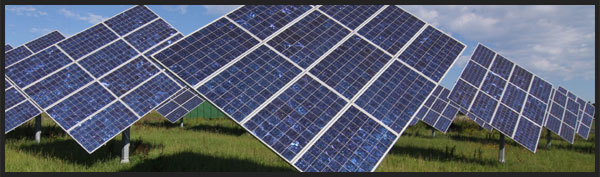
Investing in Solar Energy


Solar Power ETF

It almost doesn’t make sense…

Last year, Germany, the United States, Italy and the U.K. all installed a record number of solar panels in their respective countries.

In fact, Germany installed more solar panels in December than the United States did in all of 2009.

Yet solar stocks were blindsided by investors in 2011. Top firms like First Solar (Nasdaq: FSLR) fell as much as 80% during the year. Many others fell more than 50%.

What happened?

As our own energy guru David Fessler explained last week:

“Polysilicon prices have collapsed 90% in the last five years. By the end of 2011, they were halved to $0.90 per watt.”

This epic price collapse, coupled with the fact that manufacturers had ramped up production, sent most solar manufacturers plummeting.

Today, most investors see the huge sell-off as a reason to steer clear of solar stocks. But these crash-level prices have also created a number of opportunities to scoop up great companies at deep discounts.

A Solar Comeback

In addition to being undervalued, there are three more reasons 2012 is set to be a banner year for solar stocks…

  1. Record low prices boosting global demand: Some analysts worry a supply glut will continue suppressing solar stocks in 2012. Yet solar’s new low prices are sending demand for solar products much higher. Demand is expected to jump in the United States, Europe and Asia this year. China is poised to double its solar capacity for the second year in a row, 4 to 5 GW. Not to mention, solar is also quickly becoming a viable solution for the 1.3 billion people around the world with no access to grid energy.
  1. Solar is more efficient than Ever: On top of record low polysilicon prices, solar efficiency is also making leaps and bounds. According to MIT’s Technology Review, conventional silicon solar panels typically convert less than 15% of light. Yet a startup out of North Carolina, Semprius, just tested its solar panels and scored a 33.9% efficiency rating. This is the first time ever any solar module has been able to convert more than one-third of the sunlight that falls on it into electricity. And it makes solar energy generation look much more promising for the future.
  1. Big investors are getting involved: Even though government subsidies are set to wind down over the next few years in Europe and the United States for solar, big investors are already picking up the slack. Berkshire Hathaway owned MidAmerican Energy Holdings announced in December it purchased a solar farm in Southern California for $2 billion. Google reported it invested over $450 million last year as well in solar projects. GE announced in 2011 that it’s going to build the largest solar plant in America, capable of powering 80,000 homes each year. Billions of dollars more is expected to flood this market over the coming months.

The Solar ETF That Covers it All

There’s no doubt, the solar industry is set to grow immensely over the coming years. But tariffs, expected consolidation, and the steady removal of government subsidies make it hard to tell who is and isn’t set to profit.

Perhaps the easiest way to invest in solar today is simply looking to an ETF like the Global Solar Index ETF (NYSE: TAN). This fund is currently comprised of 33 securities all relative to solar energy. About a third of its holdings are in the United States, a third is in China and the rest is spread out between Europe and Canada.

Good investing,

Mike Kapsch

Article by Investment U

The Ultimate Alternative Investment?


alternative investment ideas

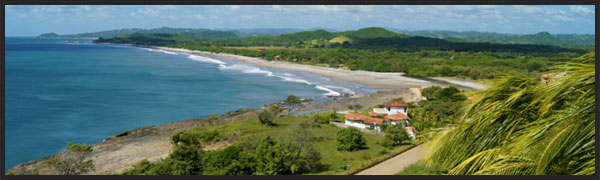
Last week I spoke at an investment conference at Rancho Santana, a charming resort community on the Pacific coast of Nicaragua, near the town of San Juan del Sur.

Set on more than two miles of coastline with rolling hills and dramatic cliffs, the reserve attracts expats, investors, surfers and nature lovers from all over the world. They like the idea of owning a piece of – or at least visiting – one of the most spectacular stretches of coastal land in the world.

Some are attracted because the property is so inexpensive. It’s hard to believe you can buy a stunning home site directly on the Pacific Ocean for less than $175,000.

And it’s not just the property that’s inexpensive. One evening 14 of us rode into town to have dinner at a favorite local restaurant, Yolanda’s. The proprietor served up heaping helpings of local lobster, fresh vegetables, black beans and rice, plantains and plenty of Corona beer. When I picked up the tab, I was shocked. The cost was less than $9 a person.

Some investors here are banking on increased foreign investment and commercial development. The International Monetary Fund estimates that Nicaragua’s economic growth hit 4% last year… and is on the verge of accelerating.

Exports jumped 23% last year. Tourism is up. MSN Money ranked Nicaragua at the top of their list of “Ten Exotic Retirement Spots for 2011,” telling readers “[Now] is the time to put this country at the top of your super-cheap overseas retirement list.” CNN Money calls it “the next Costa Rica.” Indeed, Rancho Santana is just 50 miles north of the Costa Rican border.

Good things are happening locally, too. A local business leader plans to invest $300 million next door in a world-class marina, golf and spa resort called Guacalito. Due to open in Spring 2013, it’s located just 30 minutes from Rancho Santana and is already bringing increased investment and improved infrastructure to the region. And an international airport is planned for the Tola area, located less than a half hour away.

Other investors are putting money to work here for privacy reasons. They want to diversify their portfolios beyond the prying hands of angry ex-spouses or potential litigants.

But for most, it’s the sheer beauty of the place. The New York Times points out that, “The beaches are among the finest in the Americas, and among the least developed.” Gaze out from atop one of the many bluffs on this 2,700-acre reserve and you’ll see what the coast of California looked like a hundred years ago, pristine and largely undeveloped.

Residential lots are selling quickly. Over 50 homes have been built and 24 more are under construction. It’s not hard to see why. The terrain is such that home sites can capture views of the ocean, the nearby valley and lovely sunsets. Labor costs are significantly lower here. And a master association and various sub-associations exist so that owners are assured that high and consistent standards of quality are maintained.

Is oceanfront property in Nicaragua the ultimate alternative investment? That’s for you to decide. But if you’d like to learn more, feel free to visit the website or, better yet, sign up for a property tour.

The cost is $500 per person ($600 per couple) and includes all transportation, breakfast and three nights in oceanfront accommodations at Rancho Santana. This is a great trip for those wanting to come down and investigate investment, second home or retirement opportunities. (Contact Bryan McMandon.)

In the interest of full disclosure, Rancho Santana is being developed, in part, by colleagues of mine at Agora Publishing. However, I am not compensated in any way (directly or indirectly) for any sales at the development. I just think it’s a beautiful place and an interesting investment.

And whether you decide to invest or not, I know you’d enjoy the experience.

Good Investing,

Alexander Green

Article by Investment U

Freddie Mac Does Not Hate America: It’s Actually Trying to Help


Last week a few articles were forwarded to me about the misconduct of government sponsored enterprises (GSEs) – specifically Freddie Mac. However, when you look closer you should come up with a different conclusion.

On January 30, ProPublica and NPR released Jesse Eisinger’s article, Freddie Mac bets against American Homeowners.

And it states:

“Freddie Mac, the taxpayer-owned mortgage giant, has placed multibillion-dollar bets that pay off if homeowners stay trapped in expensive mortgages with interest rates well above current rates.

“Freddie began increasing these bets dramatically in late 2010, the same time that the company was making it harder for homeowners to get out of such high-interest mortgages.”

In late 2010, Freddie Mac, according to the ProPublica story, started to retain a greater number of “inverse floaters,” an instrument created when mortgage pools are turned into collateralized mortgage obligations.

ProPublica contended that Freddie Mac’s use of inverse floaters represented a conflict of interests because it would lose money from the hedges if borrowers refinanced to a lower rate mortgage. They implied Freddie could abuse its influence in the housing market to prevent lower-interest refinancing programs, which are better for borrowers.

And from the title and the harsh language you come up with the idea that Freddie Mac is out to get you America. I think once you get a quick overview of what a collateralized mortgage obligation and how they usually work, I think you’ll see the change in their portfolio was the result of a numbers game and not the actions of “Big Brother.”

What Does Freddie Mac Do?

Hold the jokes…

In a nutshell, Freddie Mac purchases and bundles mortgages into pools of mortgages, then sells the expected mortgage payments to investors in the form of bond-like securities.

This process was and still is a vital component of today’s mortgage market, or most other credit markets for that matter, since securitization frees up capital that can then be used to make more mortgages.

These bundles of mortgages are called collateralized mortgage obligations (CMOs), which are securities issued by the Federal National Mortgage Association (Fannie Mae), the Federal Home Loan Mortgage Corp. (Freddie Mac), or the Government National Mortgage Association (Ginnie Mae).

So the structuring of a CMO creates a series of tranches from the cash flows from mortgage securities.

In structured finance of this sort, a “tranche” is one of a number of related securities offered as part of the same transaction. In other words, after you put all the mortgages together, you then slice it into pieces and sell those pieces depending on how risky the tranche. Remember, the set-up of Freddie and Fannie bonds is to tackle interest rate risk. GSEs are guaranteed in regards to principal.

Your tranches will usually look like this: some fixed-interest rate tranche of various maturities (created at a lower interest rate than the yield on the mortgages) and one medium-term maturity fixed-rate tranche, which is then decomposed into a floating rate bond and an “inverse floater,” which consists only of the inverse of the interest rate payments on the floating rate note.

The Undesirable Feature…

The undesirable feature of a mortgaged-backed security is their prepayment risk. People repay when they refinance. You’re paying off an existing loan to gain another one at a better rate. Prepayments are very unattractive to bond investors, since the time you’re happiest as a fixed-income investor is when interest rates fall, since your bonds go up in value. But if you hold a simple mortgage pass-through, the bond can disappear due to prepayments.

Both Freddie and Fannie have a long standing practice of hedging their prepayment risk.

Moreover, the inverse floater is the portion of the CMO that is most exposed to prepayment risk. Given the uncertainty about government intervention in the mortgage market, investors in both straight pass-throughs and in CMOs would be more leery than usual of taking prepayment risk.

Why the Increase in Inverse Floaters?

The article tried to argue that the increase in the last two years of inverse floaters on Freddie’s books were a sign of the GSE positioning itself to bet against homeowners. But they didn’t tell the story of an increase in Freddie’s CMO issuance during this period – it appears the increase in inverse floaters was due to an increase in mortgage funding.

I think what Freddie tried to do was keep the “refinancing risk” to itself, and since Freddie controls the levers and can obstruct refis, it can package securities that are attractively low-risk for investors while retaining the high-risk stuff and “game” the risk-management for its own benefit.

Is this evil? No. Can this be done in a different manner? Yes. But this style of risk management isn’t out to harm Americans. Innovative finance is complex and hard to explain. I believe that Freddie Mac’s inability to explain the subject matter is at the heart of the misunderstanding and maybe with a little more due diligence on the part of ProPublica and NPR, this would all be a moot point.

Good Investing,

Jason Jenkins

Article by Investment U

Why The AUD Is Growing Stronger


By TraderVox.com

Looking at a chart of the AUD/USD you will realize that since January the AUD has been growing stronger. In fact in under just about 3 months the AUD/USD has gained almost a 1000 pips!

Analysts have been left bemused by this recent rally of the AUD and some say it is just a matter of overvaluation on the part of traders. We try to examine what really is keeping the AUD as strong as it has been and where this trend is expected to continue.

1. Influence of foreign investment:

The mining industry in Australia nowadays is nothing but booming and seriously. This has led many foreign investors to increase their demand for the AUD. Of course, we know this is logical as in order to buy stocks and create the capital they need to partake in what they want, they first of all need to have the AUD.

Moreover there is increased focus by Japanese investors especially to partake in Australia’s mortgage market. This huge and obvious inflow of capital into Australia is considered one of the main reasons why the AUD has been on the up and if this trend of foreign investment in Australia continues you can expect the AUD to reach new highs.

2. Highly rated debt

There have been many debt downgrades in the past months that have affected many countries. Investors and portfolio managers who are in search of highly rated and investment grade debt have been pushed to Australia which has its credit rating unaffected.

3. A Safe Haven:

While the Australian dollar may not be on the same level as currencies such as the CHF, USD and JPY as far as safe havens are concerned; it still remains a good alternative for investors seeking a safe haven. It gets better when we put just Asia into perspective, as many believe that investing in Australia is by far safer than investing in the majority of Asian nations. With a good business environment, enhanced by supportive legal institutions, the AUD becomes a key way for many investors to preserve their capital.

To conclude though this rally of the AUD is shocking, it is justified. Expect this rally to continue if the euro zone remains risky and Australia remains a good investment alternative and safe haven.

Article provided TraderVox.com
Tradervox.com is a Forex News Portal that provides real-time news and analysis relating to the Currency Markets.
News and analysis are produced throughout the day by our in-house staff.
Follow us on twitter: www.twitter.com/tradervox

BoJ Expected to Reject More Easing Following Favorable Global Economy


By TraderVox.com

The Bank of Japan is expected to refuse any additional monetary easing expected next week since there are signs of stronger global economy. Moreover, the reconstruction efforts from last March’s earthquake have boosted the country’s economy.

The Bank of Japan Governor Masaaki Shirakawa together with his board is expected to uphold the overnight lending rate between zero percent and 0.1 percent on Valentine’s Day. According to some analysts, the 55 trillion yen asset-purchase proposed will remain unchanged. Yesterday BOK promised additional stimulus in the England’s economy and Fed in the US promised to keep the interest rates at their lowest.  Indications are there that in Tokyo; officials may focus of positive signs from the financial market and the low unemployment rate as indicators of growth in global economy. This is despite the strong yen crippling exports which analysts say might have caused the economy to shrink last year.

However, analysts are cautious about the sovereign problems in Europe and they are advising that the policy makers should leave an allowance of additional accommodative policies for April. It is estimated that the GDP declined by 1.4% over the last quarter after expanding by 5.6 percent over the previous three months.

The country’s economy had experienced some difficulties due to the recent weakness in exports due to a strong yen, the floods that hit Thailand which disrupted production significantly, and the reduced business and consumer confidence which was caused by the Europe’s debt crisis. Following the March earthquake, the government approved four supplementary budgets to strengthen demand and rebuild the country. The budgets were worth 20 trillion yen.

Japan officials are grappling with measures to take to ensure that their currency remains weak against the currencies of its major trading partners. Yesterday, the Japan’s Topix Index rose to its highest level since August and the currency remained 2.4 percent (77.21) weaker than the postwar level of 75.35 yen. The strong Euro has caused enormous losses to Panasonic Corp and Sharp Corp. necessitating the monetary easing that had been conducted.

Article provided TraderVox.com
Tradervox.com is a Forex News Portal that provides real-time news and analysis relating to the Currency Markets.
News and analysis are produced throughout the day by our in-house staff.
Follow us on twitter: www.twitter.com/tradervox

EUR Comes off Two-Month High to Close Out Week

Source: ForexYard

printprofile

The EUR/USD came off a two-month high today, following fresh concerns that Greece could soon default on its debt. The pair spiked as high as 1.3322 yesterday, after Greece reached a deal on austerity measures late in the European session. Hopes that the country would soon reach a debt swap deal with its creditors were dashed today, after euro-zone finance ministers demanded additional spending cuts from Greece before approving a second bailout.

The EUR/USD has dropped close to 100 pips so far today, while the EUR/CHF has dropped as low as 1.2090. The news adversely affected other riskier currencies, including the Australian dollar, which has tumbled well over 100 pips against the greenback since the beginning of the day. Crude oil has once again dropped below the psychologically significant $100 a barrel, and is currently approaching the $98 level.

Turning to next week, traders will want to continue monitoring any announcements out of the euro-zone. In addition to Greece, Portugal is likely to soon require a bailout. Further negative news out of Europe may result in riskier currencies extending thier bearish trends.

Forex Market Analysis provided by ForexYard.

© 2006 by FxYard Ltd

Disclaimer: Trading Foreign Exchange carries a high level of risk and may not be suitable for all investors. There is a possibility that you could sustain a loss of all of your investment and therefore you should not invest money that you cannot afford to lose. You should be aware of all the risks associated with Foreign Exchange trading.

National Bank of Serbia Pauses Interest Rate at 9.50%


The National Bank of Serbia held its 2-week repo rate unchanged at 9.50%.  The Bank said: “The key risks to inflation projection stem from the international environment due to the still unresolved crisis in the euro area, as well as from fiscal policy at home. Keeping the budget deficit within the framework earlier agreed with the IMF would serve as an additional safeguard of macroeconomic stability and leave more scope for future relaxation of monetary policy.”

The Bank previously cut the interest rate by 25 basis points in January, 75 basis points in December and November, 50bps in October, and 50bps in September, after pausing in August, while previously the Bank reduced the 2-week repo rate by 25 basis points to 11.75% at its July meeting, and cutting the rate 50 basis points at its June meeting to 12.00%.  Serbia reported inflation of 7% in December, down from 8.7% in October, 10.5% in August, 12.1% in July, 12.7% in June, 13.4% in May, 14.7% in April, and just above the bank’s inflation target range of 3-6%.  


The IMF is forecasting 2011 GDP growth in Serbia of 2%, and 3% in 2012.  The Serbian Dinar (RSD) last traded around 82.21 against the US dollar.  The National Bank of Serbia next meets on the 8th of March this year.

Vulnerable to External Influences – The Economic State of Australia (Part II)

By MoneyMorning.com.au

[Ed Note: You can read Part I here]

The commodity boom has created a “two track” economy. The mining and commodity boom benefits a small part of the economy whilst simultaneously creating problems for other parts.

The mining and energy sector account for less than 10% of the Australian economy. This is smaller than the Australian finance sector or manufacturing industry.


Mining and mining-related sectors, such as construction, manufacturing and services industries which benefit from mining activity, make up about 20% GDP. These sectors will contribute approximately two-thirds of the projected 4% GDP in 2011/12. The remaining 80% of economy will contribute one-third of growth.

Mining employs 1.5% of the workforce reflecting its capital intensive nature. Unfortunately, a portion of the equipment needed is imported adding to the current account problem, especially in the short run. A combination of high domestic costs and the strong Australian dollar means that a significant portion of project related work is now done offshore.

The revenue earned and the overall contribution to national income does boost the economy and creates employment. But dividends and interest payments to overseas investors reduce the amount of earnings that stays in Australia.

The concentration of mining activity in Western Australia and Queensland also creates imbalances within the domestic economy. Skill shortages in mining means rising salaries, attracting workers from other industries and placing pressure on general wage levels.

It also exaggerates property price increases in some areas. This creates inflationary pressure that forces the Reserve Bank of Australia to raise interest rates.

The rising demand for Australia’s mineral exports also pushed up the value of the Australian dollar. Since deregulation in 1983, one Australia dollar has purchased, on average, around 77 US cents. The commodity boom and Australia’s high interest rates relative to the rest of the world increased the value to around 95 to 100 US cents, peaking at around 110 US cents.

The high Australian dollar places exporters at a cost disadvantage and also makes it difficult to compete with cheaper imports. Affected sectors include key Australian industries that are significant employers such as education services, tourism and manufacturing. Australia may lose up to 170,000 manufacturing jobs over the next 10 years, almost double lost jobs in the past decade.

Unhappy Homes…


The domestic economy remains lack lustre. Consumers are affected by significant debt levels and weak wage growth. Public spending has fallen reflecting pressure to return the budget to surplus. Business investment has been weak, reflecting sluggish demand.

Debt levels remain high. Between 1991 and 2011, household debt rose from around 49% to 156% of disposable income. In 1989, when mortgage rates were 17%, the ratio of interest payments to disposable income was 9%.

Currently, despite the fact that mortgage rates are around 7.5%, the ratio has increased to around 12%. As households increase savings and reduce debt, consumption is lower, contributing to slower growth.

Slow growth in credit, reflecting households reducing debt and problem in the banking sector, also constrains growth. Employment in manufacturing, retail and financial services is weakening, with major employers announcing layoffs.

There are other unresolved problems. Housing prices remain high based on traditional measures such as affordability and rental returns.

According to the latest Economist survey (published on 26 November 2011), Australian house prices were overvalued by 53% based on rents and 38% measured against income levels relative to long run averages.

According to The Economist, Australian home prices are overvalued by at least 25% based on the average of these two measures. The level of overvaluation is greater than in America at the peak of its housing bubble.

The real issue is over investment in housing stock, which produces low or nil return for inhabitants. Encouraged by complex subsidies, large amounts of capital are locked up in housing, unavailable for more productive wealth creating activities such as new industries.

In international rankings, Australia regularly performs poorly in competitiveness, productivity and innovation. This is inconsistent with the national character, which prides over achievement in competitive sports. Australia believes it can “punch above its weight”.

In a recent paper entitled “Productivity – The Lost Decade”, economist Saul Eslake found that Australia’s productivity growth during the 2000s was 0.50% below that of the 1990s, when it was broadly comparable to the OECD average.

Between the mid-1990s and the mid- 2000s, annual labour productivity declined from 2.8% to 0.9% per annum. Over a similar periods, broader measures of productivity that incorporate capital as well as labour fell from 1.6% to near zero.

The GE Global Innovation Barometer ranked Australia 16th out of 30 countries, well behind the leaders like the US and Japan. While 18% of local business leaders, perhaps blinded by patriotism, nominated Australia, only 2% of global senior business executives cited the country as an innovation champion.

The GFC also significantly reduced the wealth of individuals, especially retirees. The value of their investments declined. At the same time, income and returns from investments also declined. The “wealth effect” limits consumption but also encourages those planning for retirement to increase their savings.

These problems mean that Australia’s non-mining sector is forecast to grow at a modest 1% per annum, compared to the mining sector which is forecast to grow at 5%.

Where Are We Now…


Despite the recovery, many parts of the economy, other than the buoyant mining sector, remain subdued. The stock market, although not an accurate measure of economic health, remains over 30% below its levels before the crisis.

Interest rates for 3 and 10 year government bonds have fallen sharply to record lows, reflecting increased pessimism amongst investors about economic prospects.

Australia remains vulnerable. A slowdown in Chinese growth and fall in commodity prices and volumes would affect the economy adversely. Australian history suggests that mining booms are finite and end suddenly causing significant disruption.

Problems in sovereign debt and attendant pressures on the banking system may decrease available funding and increase borrowing costs for Australian banks and companies. Overvalued house prices and high household debt increases vulnerability to an economic slowdown, with an accompanying rise in unemployment or to higher mortgage rates.

A credit crunch or recession could cause house prices to fall worsening domestic conditions, which would in turn affect domestic banks.

The perfect storm for Australia would be the coincidence of those events.

Australia has some flexibility. Public debt at around A$250 billion is a modest 22% of GDP providing flexibility to stimulate the economy. But this capacity can be over-estimated. Prior to the GFC, Ireland’s debt levels were modest, around 25% of GDP, but the need to bail out troubled banks and the collapse of the real estate market led to debt levels increasing rapidly
Australian interest rates are relatively high (official rates are 4.25%), providing flexibility to cut borrowing costs to buffer any shock. The currency is flexible and a fall in value of the Australian dollar would help cushion any weakness, as was the case in 1997/1998 Asian crisis and again in the GFC.

Australia Treasurer Wayne Swan was recently anointed as the world’s best Finance Minister. It is worth noting that a previous Australian Treasurer received similar accolades in 1984, only to subsequently preside over a deep recession, which “the country had to have”.

Australia’s economy remains vulnerable to a variety of external factors over which it has no control.

© 2012 Satyajit Das All Rights Reserved.

Satyajit Das is author of Extreme Money: The Masters of the Universe and the Cult of Risk (2011). He is a keynote speaker at After America: the Port Phillip Publishing Investment Symposium, March 14th-16th at Sydney’s Intercontinental Hotel.

From the Archives…

Facebook Shares – Notice for Mad Punters: Buy This Stock
2012-02-03 – Kris Sayce

Why Your Money is Better Off in Stocks Than in the Housing Market in 2012
2012-02-02 – Kris Sayce

Why You Should Pay Attention to the ASEAN Bloc
2012-02-01 – Cris Sholto Heaton

Will Australian Property Prices Keep Falling?
2012-01-31 – Dr. Alex Cowie

Is Ben Bernanke Secretly Buying Gold and Silver Stocks?
2012-01-30 – Dr. Alex Cowie


Vulnerable to External Influences – The Economic State of Australia (Part II)

Picking the Big Investment Story for 2012

By MoneyMorning.com.au

Warren Buffett is a hater.

He hates gold. And he’s keen to tell as many people as he can just how useless it is.

In an article for Fortune magazine, the multi-billionaire investor “proves” that stocks, farmland and cash are a better investment than gold.

In a moment we’ll show you why Buffett is right… but also why he’s dangerously wrong. First, let’s summarise Buffett’s position…


He compares two investments. One is to buy the entire stock of gold ever produced. He says it would “form a cube of about 68 feet per side”. And the estimated value would be USD$9.6 trillion.

The alternative is to invest USD$6.4 trillion in Exxon Mobil shares (this isn’t possible because the market cap of Exxon Mobil is only USD$409 billion. But for the purpose of his example he says you could buy 16 Exxon’s). And USD$2.2 trillion-worth of farmland.

The remaining USD$1 trillion is for “walking-around money”. In other words, pocket change.

In fact, Warren Buffett says gold is so useless when compared to other investments…

“A century from now the 400 million acres of farmland will have produced staggering amounts of corn, wheat, cotton, and other crops – and will continue to produce that valuable bounty, whatever the currency may be. Exxon Mobile (XOM) will probably have delivered trillions of dollars in dividends to its owners and will also hold assets worth many more trillions… The 170,000 tons of gold will be unchanged in size and still incapable of producing anything. You can fondle the cube [of gold], but it will not respond.”

Look, he’s using an extreme example. But we get the point he’s trying to make. He’s saying is that gold is useless because it doesn’t produce anything and doesn’t even earn its owners an income (unless you lend it to someone for a fee, which arguably defeats the purpose of owning gold in the first place).

In a way, Buffett makes the same argument for investing in Exxon Mobil and farmland that we make for investing in gold – they are hard assets. Exxon Mobil produces the world’s most important energy commodity.

Farmland is necessary for feeding the human population.

And gold is an asset the government can’t devalue by decree – even though governments may try. And unlike shares and farmland it’s very hard for the government to expropriate it (again, even though they may try).

Pinning Down Gold


For years the U.S. government rigidly tried to keep a lid on the gold price. Right up until the U.S. dollar gold-exchange standard ended in 1971, the U.S. government insisted the official price of gold was only USD$35 per ounce.

But that didn’t stop the market setting its own price. In the early 1960s the gold price “bubbled” to over USD$40 as traders bet the U.S. government would raise the official price. It didn’t and so the “bubble” popped.

But by the late 1960s there was no stopping the market from taking over the gold price. Before U.S. President Richard M. Nixon announced the end of convertibility of U.S. dollars into gold in 1971, the market had already pushed the free market price of gold back above USD$40. By 1972 it was USD$58 per ounce.

Or put another way, the value of a dollar in gold terms had fallen nearly 40%.

That’s why you should own gold.

(By the way, the U.S. government still sets the official price of gold at USD$42.22! There’s no accounting for the stubbornness of bureaucrats.)

We agree with Buffett. Stocks are a great investment. But not all the time… as anyone who bought shares at the top of the dot-com boom in 2000 or the mining boom in 2007 will tell you.

As we see it, gold isn’t just an alternative to stocks or other income-producing assets. Gold is also an insurance policy. And as many real money supporters will tell you, gold is also money… and has been for thousands of years.

But this isn’t an argument over whether one asset is better than another. That’s just dumb. Who cares if gold is better than stocks… or cash is better than property?

Better Than Gold?


What’s important is to figure out when to buy a particular asset. Take a look at the following table. It shows the respective returns for five assets since 1978:

respective returns for five assets since 1978
Note: Prices unavailable for BRK-A before 1992
Sources: Money Morning Australia, Google Finance,
Measuringwealth.org, State of Iowa

We’ve chosen five year intervals for no other reason than space limitations.

If investors followed Buffett’s advice in 1978, 1983 or 1987 they would have done well. Exxon Mobil [NYSE: XOM] shares have produced quadruple- and triple-digit gains for those investors who bought and still hold.

But in 1992 the best investment would have been in Warren Buffett’s Berkshire Hathaway A-Class [NYSE: BRK-A] shares. An investor would have made a 929.05% gain holding them from then until now.

Yet investors who followed Buffett’s advice since 1997 haven’t done as well. Either from buying shares in his company or in Exxon Mobil.

Because by far and away the best investment has been… gold. Iowa farmland and Exxon Mobil come a distant second and third. Berkshire Hathaway and the S&P 500 come in fourth and fifth.

What this simple exercise tells you is that you won’t achieve investing success by backing one investment and running with it forever. The trick is to identify a trend early on and stick with…

But only until you find the next trend.

Cheers.
Kris.

P.S. We’re betting on natural gas as the next big trend for 2012. But it isn’t the only potential trend. At the Port Phillip Publishing investment conference in Sydney next month, your editor, our colleagues and a select few guest speakers will highlight some of the best investment ideas for the year ahead.

It’s a must-see event for any serious investor. You can check out the subjects we’ll cover by clicking here…

Related Articles

The Conference of the Year for Australian Investors

Is Ben Bernanke Secretly Buying Gold and Silver Stocks?

Will the Gold Bull Keep Running in 2012?


Picking the Big Investment Story for 2012