What makes Kirkland Lake Gold a compelling investment and its areas of focus in 2020 are presented in a CIBC report.
In a March 18 research note, analyst Cosmos Chiu reported that CIBC upgraded Kirkland Lake Gold Inc. (KL:TSX; KL:NYSE) to an Outperformer rating from Neutral because “the protracted weakness in Kirkland Lake Gold’s share price has created an attractive entry point.”
Chiu highlighted the company’s “key attributes that will attract the interest of generalist investors.”
One is Kirkland Lake Gold’s significant production at a low all-in sustaining cost. Together, the company’s assets, located in mining friendly jurisdictions in Canada and Australia, produce about 1.5 million ounces of gold at an AISC of $825 per ounce.
Another is meaningful expected cash flow. CIBC projects that the Toronto-based miner will generate more than $700 million in free cash flow this year, an 8% yield.
Also, Kirkland Lake Gold should benefit from a weakening Canadian dollar and lower fuel prices. CIBC calculated that a 5% move in the U.S. to Canadian exchange rate equals a roughly 10% move in net asset value. Similarly, a 25% decrease in fuel prices translates to about a $25 per ounce drop in AISC at Detour Lake.
Chiu noted that for the remainder of this year, Kirkland Lake will continue to focus on operational execution at Detour Lake in Ontario and exploration at Fosterville in Australia.
For the latter, the company has budgeted $70$80 million. About $15$20 million of those are allocated for development of a 4.8 kilometer underground exploration drive to connect Robbin’s Hill to the Fosterville’s existing mine infrastructure. Other areas of interest at the Australian deposit are the Lower Phoenix system, Cygnet and Harrier.
Exploration results to date “support our longer-term assumption of exploration success driving a life-of-mine, 20 grams per ton head grade that keeps Fosterville running as a highly profitable, high-grade producer for another 10-plus years,” Chiu commented.
CIBC has a CA$62 per share target price on Kirkland Lake, the stock of which is trading now at around CA$45.21 per share.
Disclosure: 1) Doresa Banning compiled this article for Streetwise Reports LLC and provides services to Streetwise Reports as an independent contractor. She or members of her household own securities of the following companies mentioned in the article: None. She or members of her household are paid by the following companies mentioned in this article: None. 2) The following companies mentioned in this article are billboard sponsors of Streetwise Reports: None. Click here for important disclosures about sponsor fees. 3) Comments and opinions expressed are those of the specific experts and not of Streetwise Reports or its officers. The information provided above is for informational purposes only and is not a recommendation to buy or sell any security. 4) The article does not constitute investment advice. Each reader is encouraged to consult with his or her individual financial professional and any action a reader takes as a result of information presented here is his or her own responsibility. By opening this page, each reader accepts and agrees to Streetwise Reports’ terms of use and full legal disclaimer. This article is not a solicitation for investment. Streetwise Reports does not render general or specific investment advice and the information on Streetwise Reports should not be considered a recommendation to buy or sell any security. Streetwise Reports does not endorse or recommend the business, products, services or securities of any company mentioned on Streetwise Reports. 5) From time to time, Streetwise Reports LLC and its directors, officers, employees or members of their families, as well as persons interviewed for articles and interviews on the site, may have a long or short position in securities mentioned. Directors, officers, employees or members of their immediate families are prohibited from making purchases and/or sales of those securities in the open market or otherwise from the time of the interview or the decision to write an article until three business days after the publication of the interview or article. The foregoing prohibition does not apply to articles that in substance only restate previously published company releases.
Disclosures from CIBC, Kirkland Lake Gold Ltd., Rating Change-Upgrade, March 18, 2020
Analyst Certification: Each CIBC World Markets Corp./Inc. research analyst named on the front page of this research report, or at the beginning of any subsection hereof, hereby certifies that (i) the recommendations and opinions expressed herein accurately reflect such research analyst’s personal views about the company and securities that are the subject of this report and all other companies and securities mentioned in this report that are covered by such research analyst and (ii) no part of the research analyst’s compensation was, is, or will be, directly or indirectly, related to the specific recommendations or views expressed by such research analyst in this report.
Potential Conflicts of Interest: Equity research analysts employed by CIBC World Markets Corp./Inc. are compensated from revenues generated by various CIBC World Markets Corp./Inc. businesses, including the CIBC World Markets Investment Banking Department. Research analysts do not receive compensation based upon revenues from specific investment banking transactions. CIBC World Markets Corp./Inc. generally prohibits any research analyst and any member of his or her household from executing trades in the securities of a company that such research analyst covers. Additionally, CIBC World Markets Corp./Inc. generally prohibits any research analyst from serving as an officer, director or advisory board member of a company that such analyst covers.
In addition to 1% ownership positions in covered companies that are required to be specifically disclosed in this report, CIBC World Markets Corp./Inc. may have a long position of less than 1% or a short position or deal as principal in the securities discussed herein, related securities or in options, futures or other derivative instruments based thereon.
Recipients of this report are advised that any or all of the foregoing arrangements, as well as more specific disclosures set forth below, may at times give rise to potential conflicts of interest.
Important Disclosure Footnotes for Kirkland Lake Gold Ltd. (KL.TO)
2g CIBC World Markets Inc. expects to receive or intends to seek compensation for investment banking services from these companies in the next 3 months: Kirkland Lake Gold Ltd. 7 CIBC World Markets Corp., CIBC World Markets Inc., and their affiliates, in the aggregate, beneficially own 1% or more of a class of equity securities issued by these companies: Kirkland Lake Gold Ltd.
For important disclosure footnotes for companies mentioned in this report that are covered by CIBC World Markets Inc., click here: Disclaimers & Disclosures.
Draganfly and its partners aim to rapidly deploy the groundbreaking technology so it can help combat COVID-19.
In a news release, Draganfly Inc. (DFLY:CSE; DFLYF:OTCQB), which specializes in unmanned vehicle technology, announced it was chosen as the exclusive integration partner on a project aimed at combating COVID-19 and future health crises.
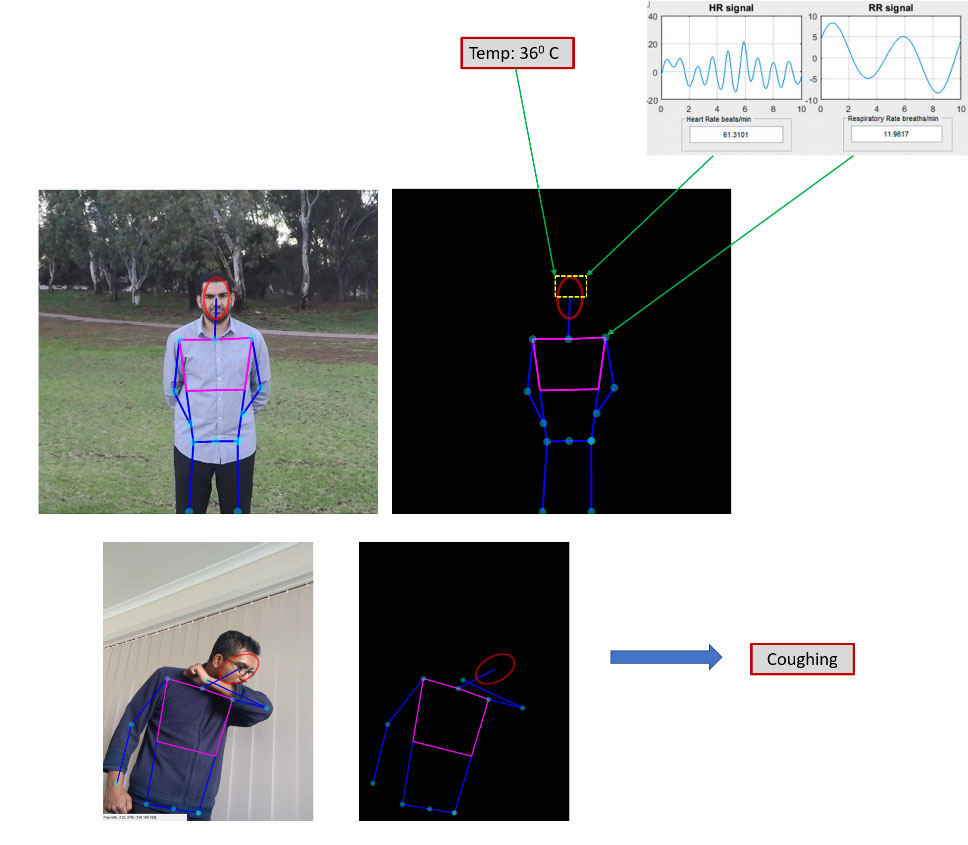
The Vital Intelligence Project combines a health and respiratory monitoring platform with new and existing camera networks and unmanned aerial vehicles (UAVs) and remotely piloted aircraft. The automated equipment monitors people’s health and vital signs, including temperature, heart rate and respiratory rate, and detects respiratory and infectious conditions.
The monitoring devices are ideal for use among crowds, workforces and at-risk groups, such as seniors, at care facilities for example, and high-traffic places, including airports, convention centers, cruise ships, border crossings and critical infrastructure facilities. Also, the data they collect can help in understanding certain health trends.
Draganfly’s role is to use its engineering, integration and distribution expertise and secure supply chain to commercialize and deploy the technology right away. Accordingly, the Canadian company signed a binding agreement, which affords an initial $1.5 million-plus budget.
The other partner in the project is Vital Intelligence Inc., a healthcare data services and deep learning company associated with the University of South Australia, which developed the technology with help from the Australian Department of Defense’s Defense Science and Technology Group.
“With fighting epidemics rising as a global priority, new versatile technologies, such as humanitarian mission UAVs, are immediately needed to detect and track outbreaks so that critical interventions can be deployed sooner and with greater effectiveness,” Dr. Jack Chow, adviser to the Vital Intelligence Project and the former first assistant director-general of the World Health Organization, said in the release.
“Draganfly has been selected because of its proven leadership in an industry so important to public safety at such a critical time. We look forward to working with global agencies and industry to rapidly deploy this important technology,” said Cameron Chell, CEO of Draganfly.
“Draganfly is honored to work on such an important project given the current pandemic facing the world with COVID-19. Health and respiratory monitoring will be vital for not only detection, but also utilizing the data to understand health trends. As we move forward, drones and autonomous technology doing detection will be an important part of ensuring public safety,” said Andy Card, Director of Draganfly and former Secretary of Transportation and White House Chief of Staff.
Disclosure: 1) Doresa Banning compiled this article for Streetwise Reports LLC and provides services to Streetwise Reports as an independent contractor. She or members of her household own securities of the following companies mentioned in the article: None. She or members of her household are paid by the following companies mentioned in this article: None. 2) The following companies mentioned in this article are billboard sponsors of Streetwise Reports: None. Click here for important disclosures about sponsor fees. 3) Comments and opinions expressed are those of the specific experts and not of Streetwise Reports or its officers. The information provided above is for informational purposes only and is not a recommendation to buy or sell any security. 4) The article does not constitute investment advice. Each reader is encouraged to consult with his or her individual financial professional and any action a reader takes as a result of information presented here is his or her own responsibility. By opening this page, each reader accepts and agrees to Streetwise Reports’ terms of use and full legal disclaimer. This article is not a solicitation for investment. Streetwise Reports does not render general or specific investment advice and the information on Streetwise Reports should not be considered a recommendation to buy or sell any security. Streetwise Reports does not endorse or recommend the business, products, services or securities of any company mentioned on Streetwise Reports. 5) From time to time, Streetwise Reports LLC and its directors, officers, employees or members of their families, as well as persons interviewed for articles and interviews on the site, may have a long or short position in securities mentioned. Directors, officers, employees or members of their immediate families are prohibited from making purchases and/or sales of those securities in the open market or otherwise from the time of the interview or the decision to write an article until three business days after the publication of the interview or article. The foregoing prohibition does not apply to articles that in substance only restate previously published company releases. As of the date of this article, officers and/or employees of Streetwise Reports LLC (including members of their household) own securities of Draganfly, a company mentioned in this article.
Why it is a good time to get into Lundin Gold stock and the company’s major move in response to COVID-19 are covered in an Echelon Wealth Partners report.
In a March 23 research note, Echelon Wealth Partners analyst Ryan Walker wrote that the big recent pullback in Lundin Gold Inc. (LUG:TSX; FTMNF:OTCMKTS) stock “represents an excellent entry point as we look for the company to recapture the lost ground post COVID-19 on expectations of gold strength during the balance of 2020 and longer term.”
Walker highlighted that with most of Lundin Gold’s year-to-date gains gone, a rerating could be imminent. It is well below its recent high of $12.69 achieved when the company became a producer and gold prices were high.
Vancouver-based Lundin recently announced it achieved commercial production at Fruta del Norte, Walker noted. It successfully ramped up production to an average throughput of 70% of mill capacity and maintained that level for 90 consecutive days
Though no coronavirus infections have been reported among workers at Lundin Gold’s Fruta del Norte gold mine in Ecuador, the company, in a proactive move, temporarily halted production there in light of COVID-19, reported Walker. To minimize the effects of the shutdown, care and maintenance and special projects will be undertaken until production is resumed.
Walker also relayed that the Ecuadoran government waived for its mining industry the new restrictions on the domestic transport of goods and services initiated due to the coronavirus. Lundin is working with its contractors to ensure the export of its concentrate and doré continues uninterrupted and to secure the goods the company needs.
Echelon has a Buy rating and a CA$12.75 per share price target on Lundin Gold; the stock is trading now at around CA$8.62 per share.
Disclosure: 1) Doresa Banning compiled this article for Streetwise Reports LLC and provides services to Streetwise Reports as an independent contractor. She or members of her household own securities of the following companies mentioned in the article: None. She or members of her household are paid by the following companies mentioned in this article: None. 2) The following companies mentioned in this article are billboard sponsors of Streetwise Reports: None. Click here for important disclosures about sponsor fees. 3) Comments and opinions expressed are those of the specific experts and not of Streetwise Reports or its officers. The information provided above is for informational purposes only and is not a recommendation to buy or sell any security. 4) The article does not constitute investment advice. Each reader is encouraged to consult with his or her individual financial professional and any action a reader takes as a result of information presented here is his or her own responsibility. By opening this page, each reader accepts and agrees to Streetwise Reports’ terms of use and full legal disclaimer. This article is not a solicitation for investment. Streetwise Reports does not render general or specific investment advice and the information on Streetwise Reports should not be considered a recommendation to buy or sell any security. Streetwise Reports does not endorse or recommend the business, products, services or securities of any company mentioned on Streetwise Reports. 5) From time to time, Streetwise Reports LLC and its directors, officers, employees or members of their families, as well as persons interviewed for articles and interviews on the site, may have a long or short position in securities mentioned. Directors, officers, employees or members of their immediate families are prohibited from making purchases and/or sales of those securities in the open market or otherwise from the time of the interview or the decision to write an article until three business days after the publication of the interview or article. The foregoing prohibition does not apply to articles that in substance only restate previously published company releases.
Disclosures from Echelon Wealth Partners, Lundin Gold Inc., March 23, 2020
Echelon Wealth Partners compensates its Research Analysts from a variety of sources. The Research Department is a cost centre and is funded by the business activities of Echelon Wealth Partners including, Institutional Equity Sales and Trading, Retail Sales and Corporate and Investment Banking.
I, Ryan Walker, hereby certify that the views expressed in this report accurately reflect my personal views about the subject securities or issuers. I also certify that I have not, am not, and will not receive, directly or indirectly, compensation in exchange for expressing the specific recommendations or views in this report.
Important Disclosures: Is this an issuer related or industry related publication? Issuer.
Does the Analyst or any member of the Analysts household have a financial interest in the securities of the subject issuer? No
The name of any partner, director, officer, employee or agent of the Dealer Member who is an officer, director or employee of the issuer, or who serves in any advisory capacity to the issuer. No
Does Echelon Wealth Partners Inc. or the Analyst have any actual material conflicts of interest with the issuer? No
Does Echelon Wealth Partners Inc. and/or one or more entities affiliated with Echelon Wealth Partners Inc. beneficially own common shares (or any other class of common equity securities) of this issuer which constitutes more than 1% of the presently issued and outstanding shares of the issuer? No
During the last 12 months, has Echelon Wealth Partners Inc. provided financial advice to and/or, either on its own or as a syndicate member, participated in a public offering, or private placement of securities of this issuer? No
During the last 12 months, has Echelon Wealth Partners Inc. received compensation for having provided investment banking or related services to this Issuer? No
Has the Analyst had an onsite visit with the Issuer within the last 12 months? No
Has the Analyst or any Partner, Director or Officer been compensated for travel expenses incurred as a result of an onsite visit with the Issuer within the last 12 months? No
Has the Analyst received any compensation from the subject company in the past 12 months? No
Is Echelon Wealth Partners Inc. a market maker in the issuers securities at the date of this report? No
Jayant Bhandari, in conversation with Maurice Jackson of Proven and Probable, outlines dire consequences for Third World countries as a result of coronavirus, and mentions a handful of investments now at bargain prices.
Maurice: Today we will discuss the Coronavirus and a number of buying opportunities for your portfolio. Joining us for conversation is Jayant Bhandari, the founder of Capitalism & Morality, and a highly sought-out advisor to institutional investors. Sir, the world is a much, much different place since our last interview in January. May I ask, where are you these days?
Jayant: I am currently in India. I came here about two weeks back immediately after the end of PDAC in Toronto.
Maurice: For those of us in the West, can you provide us with some insight on how the overall sentiment is there regarding the coronavirus, and what type of precautions are being taken there by the government and the citizens alike?
Jayant: When I arrived in New Delhi, Maurice, they were testing the temperature of everyone, but they were more focused on collecting a self-declaration form that people were asked to fill up. And apart from the Delhi airport, there was virtually nothing happening in the country. I flew around to a couple more airports after that and there were booths that was supposed to be manned by health officials to test temperature of people, but the booths were empty. So, in a mere 20 days, the dysfunctionality of India was showing up in how they control a problem socially and politically. Those in charge of manning the booths disappeared because they knew there was no one checking on them, so they probably stayed home.
Maurice: Have you seen any estimates on the projections of how serious the situation may get in India?
Jayant: The World Health Organization has come out with a statement with a lot of praise for India. They say that India has been very proactive and India has done extremely well in terms of controlling the virus. The official numbers in India are around 150 people [as of the date of the interview].
But I am of the opinion that those numbers are not accurate. The World Health Organization should employ me as a consultant, and I could advise them on a few things. The reality is that a lot of people who are suspected of having the virus are absconding, a lot of people have run away from quarantine centers, and the Indian government is hardly testing anyone for the virus. And the reason is very simple, India is an extraordinarily dysfunctional place. They don’t really have the kits to test people, and people are absconding because they know what they will get into if they surrender themselves to an Indian hospital.
The quarantine centers in India is abysmal: The toilets are dirty, the beds are dirty, you are close to other people who are likely suffering from the virus; and the situation is so unhygienic in most places that people are running away. There was a British person who ran away from the quarantine center because he thought that he would die within the quarantine center because of the conditions.
So that is the situation with India. India is going to be, in my view, something very similar to Iran, except for a difference in temperature. India is a much warmer country, so the virus might lose its potency in this country. But it’s a very chaotic place. If the virus is spreading here, we could potentially see thousands of people die. No one knows about it because doctors are not very well trained. The Indian medical system is one of the worst medical systems on the planet.
The reader may recall that, about 10 to 15 years back, people were talking about medical tourism in India. But that all disappeared because people soon realize that the Indian medical system was cheap, meaning [low cost = low quality, versus low cost = inexpensive]. Indians go to the hospitals here to die.
So, in conclusion, if the virus gets hold of people in this country, thousands, and I guess hundreds of thousands, of people can easily die because people are so close together, they’re so superstitious, and they are ill equipped on how to deal with these kind of scenarios.
Maurice: Let’s expand the narrative here regarding the coronavirus and Third World nations. What are your thoughts on the impact of the coronavirus there?
Jayant: We may see a similar situation in Africa, the Middle East and the Latin American countries. There are not enough cases coming out of these countries. And my suspicion is that this is mostly because their governments are so completely dysfunctional. Nothing ever works in these countries.
And my guess is that if not this, something else will come up, which will be nothing but Malthus and Darwin working together to bring the populations of these societies under control. Certainly, within a few years or within a decadeat some point of time in the futurehundreds of millions of people in the Third World will disappear because these societies are so dysfunctional and so completely dependent on Western technology and Western help. And West can no longer continue to provide help to these people.
Maurice: I’m speaking as a Westerner here, but I noticed back in January and February there was daily reporting from China, almost by hour by hour, with updates there. And everything just seemed to stop. I know you have contacts in China. Do you have any discussions with them on the situation there?
Jayant: I keep in touch with people in China. I know several libertarian friends of mine from Western countries who live in China, and several of them prefer to stay back in China rather than leave China, because they think that China is not only more competent, [but is] better prepared to deal with coronavirus than probably than Western countries.
Now, of course, the virus started in China. . .Once they found out about it, and once they declared it, they have taken very good measures. The whole of East Asia has taken such strong measures, not just because of the governments, but because of how their societies are organized, where people feel individually self-responsible to control these kinds of things, that the virus has come under complete control. China today has fewer sick people from the virus than Italy, Iran, Spain or even Germany.
Maurice: There’s been some finger pointing between the China and U.S. regarding where and when the virus actually began. Could this lead to further escalations?
Jayant: It certainly can, and I completely agree with what Trump says, it is a China virus. And China should accept full responsibility and should take measures to control possibility of this happening again in the future. That said, I am very respectful of what the Chinese have been able to achieve. But I’m also completely on the side of Trump. . .because he is pointing fingers in the right direction.
Maurice: Which in today’s world seems like the wrong thing to do. Do you believe that the World Health Organization and governments around the world have reacted too late on the spread of the Coronavirus?
Jayant: I don’t think they have reacted too late. What has actually happened, in my view, is that governments have become [so] bigthey have taken over control of so much of our livesthat now they suddenly realize that, as this virus continues to spread, it will create complete chaos because they don’t really have organizations to put such a virus under control.
If you need 10,000 beds, let’s say, in Vancouver, you won’t be able to organize those beds at all. There is no system to put in place for such a measure. China can organize those beds. So simply put, our world governments have become very big and right now we have no other choice but to play the tune that the governments are playing for us.
But this is simply a sign that the governments are incapable of dealing with these kind of large-scale problems. They should have decentralized the world. And this virus issue is pointing fingers at over-centralization of governments around the world.
Maurice: What type of impacts are we going to see moving forward on the global economy?
Jayant: Clearly there is hysteria in response to the virus. Governments are overreacting because they don’t want to be held responsible if anything goes wrong. People are extremely emotional. I think people should find a refuge in the Bible. People are very emotional, very lustful, very greedy right now. When I see people running for toilet paper, I clearly see there’s a lot of fear in these people, and they should find some relief in the Bible. And that’s not for superstitious purposes, that’s to learn and understand that we have to keep our emotions under control. To become a human being, to become rational, we should keep our sins and our emotions under control, which should lead us, show us, more clarity in terms of what we should do.
Maurice: Amen to that, brother, I’m a Christian.
Well, let’s switch topics and discuss junior mining companies, sir. Jayant, it goes without saying you’re the most respected name when it comes to arbitrage opportunities. Do you have any to share with us?
Jayant: Oh, there are so many companies right now, Maurice, that I am interested in. A number of quality names have fallen by 50% to maybe 80% in the last few days. So, pretty much you can invest in any of the good names and you should be able to rewarded financially by buying at these depressed prices.
Maurice: We’ve been active buyers of Irving Resources, a company you and I have shared. We’re certainly looking at Novo Resources. And in your latest musing, I noticed that you had another one of our sponsors on there as well, which is Riverside Resources Inc. (RRI:TSX.V; RVSDF:OTCQB), which actually caught my attention as I am aware that you’re not a big advocate for project generators, so that really surprised me.
Jayant: I like John-Mark, the CEO of Riverside Resources. And this company has fallen to $0.095.
And I’m quite happy investing in companies that have cash in their treasury, which means that they are not going to go back to the market very soon. And such companies have a much better chance of providing me an upside or, in other words, they have a much higher chance of not diluting away my upside by raising money at low prices.
Maurice: Moving on to physical precious metals. For the person reading at home right now that does not own physical precious metals, what words of wisdom would you like to share with them?
Jayant: Everyone should have six months to one year’s worth of cash with them. It’s extremely important to not have to worry about daily expenses, which also means that once you have enough cash to survive, emotions don’t take over the rational part of your brain.
But apart from that, people have to invest where they see a good upside. Rather than sell in hysteria, they should be looking forward to buying companies that have fallen too much, and at the same time, they should keep some of their money in gold and silver because these are the commodities [that] are exchangeable into cash and other resources in a bad time.
Paper currency is going to get inflated away. So you can’t really sit on too much cash, and you can’t really be assured that your investments will do wellthe way you want them to doat least in the short and medium term. So, for short and medium term, you should also have enough gold and silver supplies with you to be able to do transactions if the emergency situation continues.
Maurice: Now let’s discuss a topic that is so vital to all the aforementioned yet so frequently overlooked, and that is philosophy. Mr. Bhandari, how does philosophy fit in today’s discussion?
Jayant: It’s extremely important. And I like the concept of reason, a concept that I witnessed only while I was living in the West. I grew up in India, a country where critical reasoning, and thinking, and questioning is almost completely absent. And the only sign of reasoning and critical thinking I saw outside the West was in East Asia. And I have become a huge fan of East Asia over the last few years, and that is why I run a philosophy seminar in Vancouver called Capitalism & Morality.
And I think what makes us human is the concept of reasoning that allows us to think into the future, that allows us to calculate and measure the future, and which enables us to take a position where you can improve your life as time goes by.
Maurice: You’re the founder of a philosophical forum focused on reason, argumentation and liberty. Please introduce us to Capitalism & Morality.
Jayant: This is a seminar I have been running for 10 or 11 years now. And the next one will be held in Vancouver; downtown Vancouver at the Simon Fraser University, but probably at a different location. It will be on July 25, 2020, which is a Saturday, and this will be immediately after the Sprott conference.
Maurice: In closing, sir, what keeps you up at night that we don’t know about?
Jayant: I think the virus situation has become a hysteria, and governments have made it much worse because they were not prepared for things that they told the public they were prepared for. So they are not prepared with the healthcare system, and they are not prepared to take the risks associated with the virus. These politicians are mostly uneducated, populists and demagogues. Look at the demagogue and populist we have in Canada.
Now, the situation in the Western countries is bad enough. The situation is far worse in Africa, Latin America and the Indian subcontinent. So, the situation by itself might not have been so bad, but because of the governments and because of hysteria, it will become much worse.
Two things, I think, will be a very horrible consequence of the current problem, the political, social and hysteria-related problems to do with the virus. One is that the Middle East will implode. I go to the Middle East twice a year. And I’m well aware of the fact that most Middle Eastern people have not worked for the last three generations because they have got easy money from oil. They don’t have the concept of owning money, and oil prices are heading toward zero right now. So these people rapidly are not making cash anymore, but also they’re depleting their savings because a lot of their savings were in sovereign wealth funds, and the stock market has crashed. So they have lost money there as well, and they have to now sell those shares to keep the societies going. So I think Middle East is in a terrible situation right now.
There’s another problem. There are a lot of people in America, probably as many as 50% of American population, who have no emergency cash with them. So now, in a lockdown situation, how will they find money to survive? And this is a problem with a country that is among the richest countries on the planet. What happens with billions of people in the Third World, where 90 to 99% of the people live hand to mouth? In a lockdown situation, these people have no choice but to stay hungry.
So, for a small likelihood of spreading the virus, we actually confined a huge population of world to poverty. But again, as I said, Malthus and Darwin will kick in at some point of time. The Industrial Revolution, Green Revolution, kept away Malthus and Darwin for awhile, but they will kick in, and hundreds of millions of people will perish in the Third World.
Maurice: Jayant, for reader that want to learn more about Jayant Bhandari and Capitalism & Morality, the website address is www.jayantbhandari.com.
Before you make your next bullion purchase, make sure you call me. I’m a licensed representative for Miles Franklin Precious Metals Investments. We provide a number of options to expand your precious metals portfolio, from physical delivery, offshore depositories, precious metal IRAs and private blockchain distributed ledger technology. Call me directly at (855) 505-1900, or you may e-mail [email protected].
Jayant Bhandari, the founder of Capitalism & Morality, thank you for joining us today on Proven and Probable.
Maurice Jackson is the founder of Proven and Probable, a site that aims to enrich its subscribers through education in precious metals and junior mining companies that will enrich the world.
Disclosure: 1) Maurice Jackson: I, or members of my immediate household or family, own shares of the following companies mentioned in this article: Riverside Resources, Novo Resources, Irving Resources. I personally am, or members of my immediate household or family are, paid by the following companies mentioned in this article: None. My company has a financial relationship with the following companies mentioned in this article: Riverside Resources, Novo Resources, Irving Resources are sponsors of Proven and Probable. Proven and Probable disclosures are listed below. Jayant Bhandari is a shareholder of all the companies referenced, but they do not sponsor his work. 2) The following companies mentioned in this article are billboard sponsors of Streetwise Reports: None. Click here for important disclosures about sponsor fees. 3) Statements and opinions expressed are the opinions of the author and not of Streetwise Reports or its officers. The author is wholly responsible for the validity of the statements. The author was not paid by Streetwise Reports for this article. Streetwise Reports was not paid by the author to publish or syndicate this article. The information provided above is for informational purposes only and is not a recommendation to buy or sell any security. Streetwise Reports requires contributing authors to disclose any shareholdings in, or economic relationships with, companies that they write about. Streetwise Reports relies upon the authors to accurately provide this information and Streetwise Reports has no means of verifying its accuracy. 4) This article does not constitute investment advice. Each reader is encouraged to consult with his or her individual financial professional and any action a reader takes as a result of information presented here is his or her own responsibility. By opening this page, each reader accepts and agrees to Streetwise Reports’ terms of use and full legal disclaimer. This article is not a solicitation for investment. Streetwise Reports does not render general or specific investment advice and the information on Streetwise Reports should not be considered a recommendation to buy or sell any security. Streetwise Reports does not endorse or recommend the business, products, services or securities of any company mentioned on Streetwise Reports. 5) From time to time, Streetwise Reports LLC and its directors, officers, employees or members of their families, as well as persons interviewed for articles and interviews on the site, may have a long or short position in securities mentioned. Directors, officers, employees or members of their immediate families are prohibited from making purchases and/or sales of those securities in the open market or otherwise from the time of the interview or the decision to write an article until three business days after the publication of the interview or article. The foregoing prohibition does not apply to articles that in substance only restate previously published company releases. As of the date of this article, officers and/or employees of Streetwise Reports LLC (including members of their household) own securities of Irving Resources, a company mentioned in this article.
Proven and Probable LLC receives financial compensation from its sponsors. The compensation is used is to fund both sponsor-specific activities and general report activities, website, and general and administrative costs. Sponsor-specific activities may include aggregating content and publishing that content on the Proven and Probable website, creating and maintaining company landing pages, interviewing key management, posting a banner/billboard, and/or issuing press releases. The fees also cover the costs for Proven and Probable to publish sector-specific information on our site, and also to create content by interviewing experts in the sector. Monthly sponsorship fees range from $1,000 to $4,000 per month. Proven and Probable LLC does accept stock for payment of sponsorship fees. Sponsor pages may be considered advertising for the purposes of 18 U.S.C. 1734.
The Information presented in Proven and Probable is provided for educational and informational purposes only, without any express or implied warranty of any kind, including warranties of accuracy, completeness, or fitness for any particular purpose. The Information contained in or provided from or through this forum is not intended to be and does not constitute financial advice, investment advice, trading advice or any other advice. The Information on this forum and provided from or through this forum is general in nature and is not specific to you the User or anyone else. You should not make any decision, financial, investments, trading or otherwise, based on any of the information presented on this forum without undertaking independent due diligence and consultation with a professional broker or competent financial advisor. You understand that you are using any and all Information available on or through this forum at your own risk.
By TheTechnicalTraders – Understanding the stock market and its potential through the use of technical analysis and historical price events has been proven repeatedly to outperform all forms of fundamental trading styles. The following is a story that walks you through my experience, the shift in my mindset and how I came to the conclusion that the three charts I share in this article are critical to your understanding of to make money in today’s market!
When I first learned to trade, I got all caught up with researching companies and finding the ones with the best earnings and future growth. I did that for several years after studying and following many “professional traders” who said it was the best way to trade and invest long term. We lost our shirts during the 2000 bear market by continuing to trade on fundamentals as stocks fell in value week after week. Even the companies that showed quarterly earnings growth fell in value – none of it seemed to make any sense to me, and it was very frustrating.
Losing money when buying the best companies made no logical sense, making me step back from the markets and ask myself, ‘what am I doing wrong here‘. People today are asking themselves the same question given today’s dizzying markets:
· Telsa shares fell from $971 a share down to $347, whopping 63% drop, in only a few weeks and then rebounded again too xx
· Netflix is down 30%, even though people are stuck at home desperately trying to find things to watch)
· Amazon has fallen 26% in the past couple of weeks despite soaring demand for their delivery services
· GDXJ, the gold miners sector that is typically a safe haven during times of volatility, crashed 57% even though gold is usually a safe haven during times of volatility.
So, what was I doing wrong? I started calling and visiting traders who were making money during the bear market to see what they were doing, and 100% of them were doing the same thing – Trading with Technical Analysis. I wasn’t doing anything wrong, per se. I was simply using the wrong tools and analysis for success!
What is Technical Analysis? In short, it’s the study of price, time, and volatility of any asset using price charts and indicators. Traders use technical analysis to find cycles and patterns in the market and trade on the analysis of preferred indicators as opposed to the fundamentals of a company and/or the economy in general.
When you start studying technical traders, you will notice every trader has a particular time frame, a preferred set of indicators, and trading frequency that fits their unique personality and lifestyle. Their brains can see the charts in ways you and I may not see them to predict future price direction over the next few hours, days, weeks, or months ahead. I quickly learned there are infinite ways to trade using technical analysis.
I was very surprised by how much these pro traders allowed me. While standing over their shoulders, I was looking at their charts to try to divine their high-level strategies and learn how they think, analyze, and trade. It was amazing how different each of them traded the market. Some traded currencies; others traded stocks, indexes, options, futures, etc. Most were day traders, swing traders, or a mix of the two. But none of them gave me their secret sauce. That is why I turned 100% of my focus to technical analysis. I was excited at the prospect of being able to profit from both rising and falling prices and no concern for anything other than price action reduced my research time dramatically. It was and is the biggest AH-HA moment of my life and a turning point for my career as a trader.
The year was 2001, when I made the shift to technical analysis. I unsubscribed from everything fundamental based. I canceled my CNBC, stopped listing to news, and stopped reading other people’s reports altogether. My goal was to create my own technical trading strategy that best suited my personality and lifestyle. I would have to discover the securities I was most comfortable trading, the frequency I would trade, and the type and amount of risk I was prepared to take.
I traded options, covered-calls, currencies, stocks, ETFs, and futures. From day trading to position trading (holding several months), I tried it all, hoping something would click for me to pursue at a much deeper level. Day trading, momentum, and swing trading were my sweet spots. Having three of them was a bonus as I know some traders only ever master one in their lifetime if they are lucky. I grew a liking for trading the major indexes like the DJIA, S&P 500, and Nasdaq… great liquidity with big money always at play.
Along my journey, I realized that if I could predict the overall market trend direction for the day or week, then I could day-trade small-cap stocks in the same direction as the index, knowing 80+% of the stocks follow the general stock market trend. I could generate much larger gains in a very short period of time. As time went on, I became comfortable predicting, trading, and profiting from the indexes, and my new trading strategy began to emerge.
I was fortunate enough to start learning about the markets and trading in college with a $2,000 E-Trade account, and then retiring (kinda) in 2009 at the age of 28. I built my dream home on the water, bought cars and boats, and spent time traveling with my growing family. I love trading and sharing my analysis with others – it is better than I had ever imagined and why I continue to help thousands of traders around the world every day with these video courses Trading System Mastery, and Trading As Your Business so you learn and make money from your home forever.
I contribute 100% of my trading success and lifestyle to the fact that I embraced technical analysis, where my strategy involves nothing more than price movement, position-sizing, and trade risk management techniques. All these allow me to easily reduce exposure, drawdowns, and losses with proper position sizing and protective strategies. If you want quick and simple, read about my journey and core trading tools in my book Technical Trading Mastery – 7 Steps to Win with Logic. My strategy is represented by human psychology and historical trading, as expressed in the three charts below.
Chart 1 – Human Psychology Is What Drives Price Action
This chart is my favorite as it explains trader and investor psychology at various market stages. It also includes a simplified market cycle in the upper right corner, letting you know where the maximum financial risk is for investors and the highest opportunity for a trade.
Chart 2 – 2000 Stock Market Top & Bear Market That Followed
The chart may look a little overwhelming, but look at each part and compare it to the market psychology chart above. What happened in 2000 is what I feel is happening this year with the stock market sell-off.
In 2000, all market participants learned of at the same time was that there were no earnings coming from their darling .com stocks. Knowing they were not going to make money for a long time, everyone started selling these terrible stocks, and the market collapsed 40% very quickly.
What is similar between 2000 and 2020? Simple really. COVID-19 virus has halted a huge portion of business activity, travel, purchases, sporting events, etc. Everyone knows earnings are going to be poor, and many companies are going to go bankrupt. It is blatantly clear to everyone this is bad and will be for at least 6-12 months in corporate earnings; therefore, everyone is in a rush to sell their stock shares and are in a panic to unload them before everyone does.
Chart 3 – The 2020 Stock Market Top Looks To Be Unfolding
As you can see, this chart below of this year’s market crash is VERY similar to that of 2000 thus far, it’s based on a similar mindset, which is the fear of losing money, which causes everyone to sell their positions.
I am hopeful that we get a 25-30% rally from these lows before the market starts to fall and continue the new bear market, which I believe we are entering. Only the price will confirm the direction and major trend to follow, and since we follow price action and do not pick tops or bottoms, all we have to do is watch, learn, and trade when price favors new low-risk, high reward trade setups.
It does not matter which way the market crashes from here, we will either profit from the next leg down, or will miss/avoid it depending on if we get a tradable setup. Either cause is a win, just one makes money, while the worst-case scenario just preserves capital in a cash position, you can’t complain either way if you ask me.
Before you continue, be sure to opt-in to our free market trend signals before closing this page, so you don’t miss our next special report!
Concluding Thoughts:
In short, is if you lost money during the recent market crash, then you likely have not mastered a technical trading strategy and do not have proper trade management rules in place. All traders must manage risk and trades to be sure you lock in profits and limit losses when prices start pullback or collapse. Without either of these, you will not be able to achieve long term success/gains, and that’s a fact.
While we can all make money during a bull market when stocks are rising, if you cannot retain or grow your account during market downturns, then you may as well be a passive buy and hold investors. You are better at riding the emotional investor rollercoaster without wasting your time and effort as a trader if you are not going to spend the time and money to learn to follow someone to become a successful trader. Without proven trading strategies or someone to follow, you are more likely to underperform a long-term passive investor.
I get dozens of emails from people every week trying to trade this wild stock market and use leveraged ETFs, which doing so during these unprecedented market conditions is absolute craziness if you ask me.
These people think that because there are big moves in the market, they should be trading. That big money should be made trading them, which drives me crazy because it could not be further from the truth unless you are a scalp or day trader. To me, in this market condition, it’s about preserving capital, not risking it, in my opinion.
A subscriber to my market video analysis and ETF trading newsletter said it perfectly:
“Always intrigues me how many amateur surfers get to the north shore beaches in Hawaii, take one look at monster waves and conclude it’s way too dangerous. Yet the amateur trader looks at treacherous markets like these and wants to dive right in!!”Richard P.
I have to toot my own horn here a little because subscribers and I had our trading accounts close at a new high watermark for our accounts. We not only exited the equities market as it started to roll over we profited from the sell-off in a very controlled way.
I hope you found this informative, and if you would like to get a pre-market video every day before the opening bell, along with my trade alerts, visit my ETF swing trading visit my website at TheTechnicalTraders.com.
The latest moves of Frontera Energy in response to depressed oil prices and its ability to endure the downturn are addressed in a CIBC report.
In a March 23 research note, CIBC analyst Dave Popowich reported that Frontera Energy Corp. (FEC:TSX; FECCF:OTCMKTS) reduced its 2020 capex budget and production guidance in response to weak oil prices.
Specifically, the Canadian oil and gas exploration and production firm removed about $200 million from its capex budget for the year and is keeping a “skeleton budget for the remainder of the year.”
Frontera’s revised 2020 production guidance is 55,00060,000 barrels of oil equivalent a day, down from 60,00065,000 before. The company expects to slash capital spending to $130150 million from $325375 million previously.
Popowich highlighted that Frontera has a healthy cash balance, $328 million at year-end 2019, but its margins are “razor thin, if not zero or negative, at current spot oil prices.” As such, it is expected that the company can endure a brief, but not a protracted, period of weak oil prices.
“The duration of the downturn will be critical,” Popowich added. “Frontera will be in danger of tripping debt covenants and/or having difficulty meeting its existing financial commitments within six months at current oil prices.”
Popowich noted that assuming a flat $30 per barrel Brent oil price, Frontera could benefit from about $77 million worth of hedging gains throughout 2020, but it has fixed costs to cover related to transportation and leases.
In other news, relayed Popowich, Frontera’s chief financial officer David Dyck will leave the company as of April 1, and the vice president of strategy and planning, Alejandro Pineros, will assume that role.
CIBC has a Neutral rating and a CA$8 per share price target on Frontera Energy, the current share price of which is about CA$3.21.
Disclosure: 1) Doresa Banning compiled this article for Streetwise Reports LLC and provides services to Streetwise Reports as an independent contractor. She or members of her household own securities of the following companies mentioned in the article: None. She or members of her household are paid by the following companies mentioned in this article: None. 2) The following companies mentioned in this article are billboard sponsors of Streetwise Reports: None. Click here for important disclosures about sponsor fees. 3) Comments and opinions expressed are those of the specific experts and not of Streetwise Reports or its officers. The information provided above is for informational purposes only and is not a recommendation to buy or sell any security. 4) The article does not constitute investment advice. Each reader is encouraged to consult with his or her individual financial professional and any action a reader takes as a result of information presented here is his or her own responsibility. By opening this page, each reader accepts and agrees to Streetwise Reports’ terms of use and full legal disclaimer. This article is not a solicitation for investment. Streetwise Reports does not render general or specific investment advice and the information on Streetwise Reports should not be considered a recommendation to buy or sell any security. Streetwise Reports does not endorse or recommend the business, products, services or securities of any company mentioned on Streetwise Reports. 5) From time to time, Streetwise Reports LLC and its directors, officers, employees or members of their families, as well as persons interviewed for articles and interviews on the site, may have a long or short position in securities mentioned. Directors, officers, employees or members of their immediate families are prohibited from making purchases and/or sales of those securities in the open market or otherwise from the time of the interview or the decision to write an article until three business days after the publication of the interview or article. The foregoing prohibition does not apply to articles that in substance only restate previously published company releases.
Disclosures from CIBC, Frontera Energy Corp., March 23, 2020
Analyst Certification: Each CIBC World Markets Corp./Inc. research analyst named on the front page of this research report, or at the beginning of any subsection hereof, hereby certifies that (i) the recommendations and opinions expressed herein accurately reflect such research analyst’s personal views about the company and securities that are the subject of this report and all other companies and securities mentioned in this report that are covered by such research analyst and (ii) no part of the research analyst’s compensation was, is, or will be, directly or indirectly, related to the specific recommendations or views expressed by such research analyst in this report.
Analysts employed outside the U.S. are not registered as research analysts with FINRA. These analysts may not be associated persons of CIBC World Markets Corp. and therefore may not be subject to FINRA Rule 2241 restrictions on communications with a subject company, public appearances and trading securities held by a research analyst account.
Potential Conflicts of Interest: Equity research analysts employed by CIBC World Markets Corp./Inc. are compensated from revenues generated by various CIBC World Markets Corp./Inc. businesses, including the CIBC World Markets Investment Banking Department. Research analysts do not receive compensation based upon revenues from specific investment banking transactions. CIBC World Markets Corp./Inc. generally prohibits any research analyst and any member of his or her household from executing trades in the securities of a company that such research analyst covers. Additionally, CIBC World Markets Corp./Inc. generally prohibits any research analyst from serving as an officer, director or advisory board member of a company that such analyst covers.
In addition to 1% ownership positions in covered companies that are required to be specifically disclosed in this report, CIBC World Markets Corp./Inc. may have a long position of less than 1% or a short position or deal as principal in the securities discussed herein, related securities or in options, futures or other derivative instruments based thereon.
Recipients of this report are advised that any or all of the foregoing arrangements, as well as more specific disclosures set forth below, may at times give rise to potential conflicts of interest.
Important Disclosure Footnotes for Frontera Energy Corporation (FEC.TO)
· 2g CIBC World Markets Inc. expects to receive or intends to seek compensation for investment banking services from these companies in the next 3 months: Frontera Energy Corporation · 3a These companies are clients for which a CIBC World Markets company has performed non-investment banking, securities-related services in the past 12 months: Frontera Energy Corporation · 3c CIBC World Markets Inc. has received compensation for non-investment banking, securities-related services from these companies in the past 12 months: Frontera Energy Corporation
For important disclosure footnotes for companies mentioned in this report that are covered by CIBC World Markets Inc., click here.
Bob Moriarty of 321gold predicts a depression that is going to turn the world upside down.
We entered a depression that is going to turn our world upside down. Before it ends the general stock market will be down 85-92%, banks will close and governments fall. People still do not realize the impact of the coronavirus. It will kill tens of millions of people in the world before it fades away. It will change how we physically interact with each other.
The quarantine is going to create a measurable increase in the number of babies born in about nine months. In two weeks or so, the number of divorces filed will skyrocket. Suicides are going to increase a lot, some people not only can’t be alone with others, they can’t even be alone with themselves.
In 1981 I got to fly in an air race from Paris to New York back to Paris with the most incredible pilot I ever flew with. He had an interesting saying that he had picked up as a child growing up in the depression. I heard it a lot, it was like a mantra to him: Use it up, make do or do without.
His name was Tom Danaher. He had been a night fighter pilot at the tail end of WW II. He could fly circles around anyone I ever flew with. He grew up poor during the depression as did most Americans. The depression had a giant impact on his family, indeed with his entire generation. We are about to go through the same.
You cannot have an honest economy without honest money. We went off honest money during the Great Depression. With any luck perhaps we will go back to honest money in this latest and Greatest Depression.
The government and most commentators are lying to you either deliberately or through ignorance. The US is broke, not quite as broke as Australia or China, but broke. Before things settle down the stock market will have crashed, the bond market with it, real estate in Canada, the UK and Australia will be twenty five percent of what it is today. Tens of millions of Americans have lost their jobs, many permanently.
But the most corrupt Congress in American history has come through for those who bribed them in a $6 trillion giveaway to reward all the fraud and financial mismanagement of the last dozen years.
Perhaps Congress, the airlines, hedge funds, bankrupt corporations and banks should think back to the French Revolution. At the beginning in 1789 France had a population of about 28 million. They had their 1%, the 300,000 in the nobility. By 1793 the nobility was down to 15,000 after many of the aristocrats had taken their final steps onto a platform to have their heads chopped off in front of a cheering crowd.
The $6 trillion is no less than the biggest raid on the US treasury in history. It benefits those who stole, not those who worked.
In a nation of 393 million guns stealing from the masses might be a really bad idea. Who knows what the peasants may come up with next?
Get used to this, use it up, make do or do without. You are going to hear it a lot in the coming years.
Bob Moriarty founded 321gold.com, with his late wife, Barbara Moriarty, more than 16 years ago. They later added 321energy.com to cover oil, natural gas, gasoline, coal, solar, wind and nuclear energy. Both sites feature articles, editorial opinions, pricing figures and updates on current events affecting both sectors. Previously, Moriarty was a Marine F-4B and O-1 pilot with more than 832 missions in Vietnam. He holds 14 international aviation records.
Disclosure: 1) Statements and opinions expressed are the opinions of Bob Moriarty and not of Streetwise Reports or its officers. Bob Moriarty is wholly responsible for the validity of the statements. Streetwise Reports was not involved in the content preparation. Bob Moriarty was not paid by Streetwise Reports LLC for this article. Streetwise Reports was not paid by the author to publish or syndicate this article. 2) This article does not constitute investment advice. Each reader is encouraged to consult with his or her individual financial professional and any action a reader takes as a result of information presented here is his or her own responsibility. By opening this page, each reader accepts and agrees to Streetwise Reports’ terms of use and full legal disclaimer. This article is not a solicitation for investment. Streetwise Reports does not render general or specific investment advice and the information on Streetwise Reports should not be considered a recommendation to buy or sell any security. Streetwise Reports does not endorse or recommend the business, products, services or securities of any company mentioned on Streetwise Reports. 3) From time to time, Streetwise Reports LLC and its directors, officers, employees or members of their families, as well as persons interviewed for articles and interviews on the site, may have a long or short position in securities mentioned. Directors, officers, employees or members of their immediate families are prohibited from making purchases and/or sales of those securities in the open market or otherwise from the time of the interview or the decision to write an article until three business days after the publication of the interview or article. The foregoing prohibition does not apply to articles that in substance only restate previously published company releases.
Welcome to this week’s Market Wrap Podcast, I’m Mike Gleason.
As we continue to deal with unprecedented volume here at Money Metals Exchange we will forego an outside guest interview this week, but once again there’s lots to cover in this week’s market update.
The roller coaster ride in markets took a sharp turn higher this week after the Federal Reserve and Congress together pledged over 6 trillion dollars to rescue the financial system. More on that in a bit.
But first, let’s review the extraordinary price action we’re seeing in the precious metals markets. Gold at one point on Tuesday was up over $100 for the day and nearly hit $1,700 per ounce. As of this Friday recording, the monetary metal trades at $1,647 and is up 9.4% since last Friday’s close.
The gold to silver ratio did come down some in favor of silver, though it still remains extremely elevated at over 110:1. Silver prices currently check in at $14.68 per ounce after surging an impressive 14.5% on the week.
Turning to the platinum group metals, we certainly would have expected them to take a hit during this economic crisis as automakers shut down assembly lines. But they are recovering powerfully this week on news of a “lifeline” from the federal government and hopes that the economy will – sooner rather than later – be able to fire on all cylinders again. Plus, many mines in South Africa have been shuttered and will be offline for weeks or longer.
Platinum is putting in a 20.3% weekly advance to trade at $746. And finally, palladium, talk about wild swings, is absolutely exploding for a 38% gain on the week to bring spot prices back to $2,312 an ounce.
Also exploding over the past couple weeks has been the physical bullion market. An unprecedented surge in demand for physical precious metals combined with an inability of refiners and mints to ramp up production has resulted in many products Money Metals Exchange normally offers being out of stock – or on delay.
Whether it’s coins, rounds, or bars — or whether it’s gold, silver, platinum, or palladium, hardly anything is left. And what does remain carries an elevated premium over spot prices. In terms of what is in stock and ready to ship today, the best deals we are offering right now are on Silver Eagles and pre-1965 silver coins, along with several gold coins.
Meanwhile, to help our customers bypass the higher premiums, Money Metals has also launched two new products – Vault Silver and Vault Gold – which enable investors to obtain ownership in bullion bars stored in secure vaults at the absolute lowest cost currently available.
For now, our Vault Metals storage program is the absolutely best way to own precious metals without having to pay abnormally high premiums or wait for inventory to become available. If the bullion market normalizes in the months ahead, you can always switch out of your Vault Metals and into the particular coins you may want delivered while incurring minimal transaction costs.
Perhaps this week was an inflection point for the mass fear and panic that has cleared out bullion dealers of coins and grocery stores out of toilet paper. Although the number of coronavirus cases hasn’t yet peaked, there are some signs that the hysteria surrounding the deadly outbreak has.
The stock market finally put together a sustained rally even though the economy remains locked down. But how can equities jump without the impetus of actual earnings from business operations? The answer, of course, is that Wall Street is being reinflated by trillions of stimulus dollars created out of thin air.
The U.S. Senate on Thursday voted unanimously to approve the largest stimulus bill in the nation’s history, totaling $2.2 trillion. Some of the money will be sent directly to taxpayers. Some of it will help bail out the airlines and other distressed industries. Some of it will go toward medical supplies and equipment. And some of it will go toward wish list items that have nothing to do with the current crisis because opportunistic politicians never let a good crisis go to waste.
As enormous as this bipartisan rescue package is, the emergency operations being rolled by the Federal Reserve are taking place on an even larger scale. Over the past two weeks, the Fed has executed a series of new lending facilities. This week, it also began purchasing corporate bonds and exchange-traded funds.
In combatting the economic freeze and attendant threats to the financial system, the Fed is expected to exceed $4 trillion in liquidity injections, otherwise known as currency printing.
The swift and aggressive actions by central bankers makes the Fed’s response to the financial crisis of 2008 seem measured and restrained by comparison. Back then, Fed chairman Ben Bernanke would go to great lengths to deny that they were monetizing debt or engaged in an open-ended money printing campaign.
Today, Fed officials aren’t even trying to obfuscate about what they’re doing. They seem to actually now want the public to believe that the Fed will pump unlimited amounts of currency into every organ of the financial system. Gone are concerns about moral hazards or inflation risk. The Fed seems to be saying it will bail everyone out no matter what.
In an interview that aired Sunday on 60 Minutes, Minneapolis Fed President Neel Kashkari told Americans there were no risks to the banking system because his fellow central bankers have unlimited authority to create cash in infinite quantities.
Neel Kashkari: Your banks are safe, there’s enough cash in the financial system and there is an infinite amount of cash at the Federal Reserve. We will do whatever we need to do to make sure that there’s enough cash in the banking system. So, there’s a range of things that the Federal Reserve could do, we’re far from out of ammunition.
Scott Pelley: Far from out of ammunition. Can you characterize everything that the Fed has done this past week, as essentially flooding the system with money?
Neel Kashkari: Yes, exactly.
Scott Pelley: And there’s no end to your ability to do that?
Neel Kashkari: There is no end to our ability to do that.
Scott Pelley: Is the Fed just going to print money?
Neel Kashkari: That’s literally what Congress has told us to do. That’s the authority that they’ve given us.
The United States has now apparently adopted the same monetary policy as Venezuela and Zimbabwe: Just print whatever the government needs… just print whatever the banks need… just print whatever the economy needs. That kind of thinking is what leads to hyperinflation.
Although we appear to be far from having an inflation problem in the U.S. right now, that can change quickly. Since nothing on this scale has ever been tried, nobody knows for sure what the consequences of QE-infinity will be once the country is open for business again.
It could possibly spark the most explosive rally ever recorded in the stock market.
It could also possibly blow up the bond market. Some short-term Treasury yields went slightly negative for the first time ever this week as long-term bond yields also fell. The entire yield curve is now well under 2% at a time when the Fed wants to lift inflation above 2%.
If the Fed gets its way – or worse pushes down too hard on the inflation pedal and doesn’t let up in time to stop prices from accelerating out of control – then bonds will crash in real terms.
But bondholders won’t get bailed out because they will continue to receive the puny rates of interest they were promised.
Meanwhile, precious metals holders stand to benefit from unlimited currency printing campaigns gone wrong as confidence in the U.S. dollar crashes.
Well that will do it for this week, thanks for listening. If you want to pick up some more financial insurance in the form of gold and silver, please visit MoneyMetals.com or call us at 1-800-800-1865. Check out our new Vault Metals storage program and also browse all the silver and gold coins that are ready to ship out to you immediately.
And don’t forget to check back next Friday for our next Weekly Market Wrap Podcast. Until then, this have been Mike Gleason with Money Metals Exchange. thanks for listening and have a great weekend everybody.
The Money Metals News Service provides market news and crisp commentary for investors following the precious metals markets.
McAlinden Research Partners takes a look at how telemedicine companies are positioned to profit both during and in the wake of the current pandemic, and offers a couple of options for investors.
Summary: Coronavirus could be the game changer that propels telemedicine into the mainstream. Virtual clinical services have been around since the ’90s but had failed to catch on. Now, a concerted effort by healthcare providers, insurance companies, the federal government and individuals to manage the COVID-19 pandemic has put telemedicine at the frontline of healthcare. Telemedicine companies have seen their usage volumes surge this year, along with their stock prices.
Telemedicine, a subset of telehealth, is hardly a new concept. Not only have virtual visits been around these past two decades, telemedicine is the most well-funded segment of digital health startups, having attracted billions of dollars to develop apps and websites that facilitate remote consultations with physicians. Telemedicine technology exists for follow-up visits, management of chronic conditions, medication management, specialist consultation and a host of other clinical services that can be provided remotely via secure video and audio connections.
At this point, most large health plans are on board with the notion. A 2019 Kaiser Family Foundation survey revealed that 82% of big U.S. employers include such a service in their biggest health plan, up from 27% in 2015. Yet, fewer than 10% of eligible employees have used a telemedicine service.
The biggest obstacles on the demand side have been the ingrained habit of people preferring in-person doctor visits, uncertainty about insurance reimbursement policies and lack of awareness by most people that they can connect with healthcare providers virtually.
There have been supply-side restrictions as well, one of them pertaining to physician licensing requirements. Most states, for example, will not allow physicians to practice across state lines, so a physician who wants to consult with patients residing in other states must be licensed to practice in those states.
While telemedicine has been slow to catch on so far, that’s about to change due to a concerted effort by the healthcare industry, government officials and individuals to stop the spread of the new coronavirus. As we noted in our EdTech report, black swan events can change the adoption rate of new technologies. The SARS crisis of 2003, for instance, contributed to the birth of China’s e-commerce industry, as quarantines and travel restrictions drove people to shop online. So too could the current pandemic mark a turning point for the telemedicine industry.
Health systems are deploying virtual services that can serve as their front line for coronavirus patients during the current crisis. The Centers for Disease Control & Prevention (CDC) has urged doctors and hospitals to conduct the initial triage of potentially infected patients remotely.
The CDC is also suggesting that patients with mild symptoms from COVID-19 be cared for at home when possible, but monitored closely using virtual check-ins. The goal is to avoid a run on the healthcare system. If the healthiest people don’t show up in emergency rooms, that could mean more resources are available to treat the sickest and most vulnerable patients.
Michigan-based Spectrum Health, which features 15 hospitals and 11 urgent care centers, began free telemedicine screenings for COVID-19 last week. The video-based visits determine whether a patient is at low risk or high risk of infection. Ideally, if a patient is deemed high risk, testing for the virus can be conducted at his/her home.
Members of Kaiser Permanentethe big, integrated healthcare provider and insurer based in Californiaare receiving care and instructions from their doctors via video, phone and text-style messaging. For these patients, telemedicine provides faster care and helps them avoid hospitals, where they risk either infecting others. Healthcare providers are also moving routine care (those unrelated to COVID-19) to virtual visits to free up capacity at hospitals and mitigate the risk of exposing patients to infection.
Telemedicine also received an additional boost under the $8.3 billion emergency funding measure from Congress, which eased restrictions on its use to treat people covered under the federal Medicare program. Until now, coverage of telemedicine had been limited primarily to residents of rural areas facing long road trips for treatment from specialists. The new bill, approved by Congress and signed by the president on March 6, extends that coverage to all 60 million Medicare enrollees.
Telemedicine companies in the U.S. are already benefitting from the disruption. Helped in part by a push from the federal government and health insurers, demand for their services have surged. Part of the increase is from people worried about COVID-19, but the surge was also driven by patients with other conditions seeking to avoid getting infected.
The volume of virtual visits has roughly doubled for artificial intelligence (AI)-enabled telehealth platform 98point6. Virtual clinic usage at Amwell (fka American Well) has surged roughly 40% above normal in recent days, and startup Ro said it has seen “significant” growth in coronavirus-related online visits. Shares of Teladoc Health Inc. (TDOC:NYSE), one of the rare publicly listed telemedicine companies, have skyrocketed since the start of the year.
If telemedicine establishes its worth during this period, that could accelerate the adoption of virtual health care nationally.
The same is true in other markets. Last year, China’s National Healthcare Security Administration (NHSA)the agency that oversees state-backed health insurance plansreleased new guidelines on pricing and insurance coverage for internet medical services. The move marked a significant milestone for telemedicine adoption in China, as it opened the way for local governments to provide reimbursement coverage for internet-based medical services.
How to Invest
The ETF that most closely captures this opportunity is the Robo Global Healthcare Technology and Innovation ETF (HTEC), which launched in June 2019. HTEC was a laggard last year, returning just +7% during the second half of 2019, while the SPY and U.S. Healthcare Providers ETF (IHF) posted respective returns of +10% and +17%. This year, HTEC’s performance is on par with SPY and a smidgeon better than IHF. With telemedicine catching on, HTECH could get a boost as well.
Investors seeking stock-specific exposure will quickly discover that most pureplay telemedicine companies are still private start-ups. There are two publicly listed companies: US-based Teladoc Health (TDOC) and China-based Ping An Healthcare and Technology Co. Ltd. (1833:HK). Year-to-date, Teladoc is up 42%, while Ping An is up 26%. Together, the two companies make up just 4.80% of HTEC’s portfolio, which is why they have had only a muted impact on the ETF’s performance.
This content was delivered to McAlinden Research Partners clients on March 16. To receive all of MRP’s insights in your inbox Monday – Friday, follow this link for a free 30-day trial.
McAlinden Research Partners (MRP) provides independent investment strategy research to investors worldwide. The firm’s mission is to identify alpha-generating investment themes early in their unfolding and bring them to its clients’ attention. MRP’s research process reflects founder Joe McAlinden’s 50 years of experience on Wall Street. The methodologies he developed as chief investment officer of Morgan Stanley Investment Management, where he oversaw more than $400 billion in assets, provide the foundation for the strategy research MRP now brings to hedge funds, pension funds, sovereign wealth funds and other asset managers around the globe.
Disclosure: 1) McAlinden Research Partners disclosures are below. 2) The following companies mentioned in this article are billboard sponsors of Streetwise Reports: None. Click here for important disclosures about sponsor fees. The information provided above is for informational purposes only and is not a recommendation to buy or sell any security. 3) Statements and opinions expressed are the opinions of the author and not of Streetwise Reports or its officers. The author is wholly responsible for the validity of the statements. The author was not paid by Streetwise Reports for this article. Streetwise Reports was not paid by the author to publish or syndicate this article. Streetwise Reports requires contributing authors to disclose any shareholdings in, or economic relationships with, companies that they write about. Streetwise Reports relies upon the authors to accurately provide this information and Streetwise Reports has no means of verifying its accuracy. 4) This article does not constitute investment advice. Each reader is encouraged to consult with his or her individual financial professional and any action a reader takes as a result of information presented here is his or her own responsibility. By opening this page, each reader accepts and agrees to Streetwise Reports’ terms of use and full legal disclaimer. This article is not a solicitation for investment. Streetwise Reports does not render general or specific investment advice and the information on Streetwise Reports should not be considered a recommendation to buy or sell any security. Streetwise Reports does not endorse or recommend the business, products, services or securities of any company mentioned on Streetwise Reports. 5) From time to time, Streetwise Reports and its directors, officers, employees or members of their families, as well as persons interviewed for articles and interviews on the site, may have a long or short position in securities mentioned. Directors, officers, employees or members of their immediate families are prohibited from making purchases and/or sales of those securities in the open market or otherwise from the time of the interview or the decision to write an article until three business days after the publication of the interview or article. The foregoing prohibition does not apply to articles that in substance only restate previously published company releases.
McAlinden Research Partners: This report has been prepared solely for informational purposes and is not an offer to buy/sell/endorse or a solicitation of an offer to buy/sell/endorse Interests or any other security or instrument or to participate in any trading or investment strategy. No representation or warranty (express or implied) is made or can be given with respect to the sequence, accuracy, completeness, or timeliness of the information in this Report. Unless otherwise noted, all information is sourced from public data.
McAlinden Research Partners is a division of Catalpa Capital Advisors, LLC (CCA), a Registered Investment Advisor. References to specific securities, asset classes and financial markets discussed herein are for illustrative purposes only and should not be interpreted as recommendations to purchase or sell such securities. CCA, MRP, employees and direct affiliates of the firm may or may not own any of the securities mentioned in the report at the time of publication.
Shares of Coty traded higher after the company reported that it has commenced production of hydro-alcoholic gel for use as hand sanitizer to help combat the COVID-19 virus.
Coty Inc. (COTY:NYSE) yesterday announced that “it has started producing hydro-alcoholic gel, which is used as hand sanitizer, to help combat the COVID-19 virus.” The company reported that production and donations are expected to reach tens of thousands of units per week.
The firm stated that the products will be distributed free of charge to medical and emergency services staff who are facing supply shortages due to the fast-spreading COVID-19 virus. The company also noted that it will be supplying the product to its employees who are working in its sanitizer producing plants for their own personal safety use and will also ship to pharmacy staff at some retail customer locations.
The firm advised that it has already produced the first batches of hand sanitizer at its factories in the U.S. and Monaco. The company stated that it expects that additional factories will begin production within a week subject to the amount of resources and materials available and local government guidelines and regulations.
The company’s CEO Pierre Laubies commented, “As a responsible beauty company, we make our resources and facilities available to help the communities we are operating in during these exceptionally challenging times…We are proud to support the brave professionals fighting on the frontlines against COVID-19 by providing hand sanitizer where it is needed.”
Coty’s COO Pierre-André Terisse added, “The health and safety of our employees is our top priority and we will take all possible measures and precautions to keep them healthy and safe as they work to protect our communities that we care for and serve…We are incredibly proud of our associates who are stepping up to contribute to the global fight against COVID-19.”
Coty is headquartered in New York, N.Y., and is one of the world’s largest beauty companies. The company owns a portfolio of many well-known brands in the beauty sector including fragrances, cosmetics, hair color, hair styling, and skin and body care. The company reports on its website that “it is the global leader in fragrance, a strong number two in professional hair color & styling, and number three in color cosmetics.” The firms products are sold worldwide over 150 countries.
Coty Inc. has a market capitalization of around $4.1 billion with approximately 760.6 million shares outstanding. COTY shares opened slightly higher today at $5.46 (+$0.08, +1.49%) over yesterday’s $5.38 closing price. The stock has traded today between $5.40 and $7.08 per share and is currently trading at $7.06 (+$1.68, +31.23%).
Disclosure: 1) Stephen Hytha compiled this article for Streetwise Reports LLC and provides services to Streetwise Reports as an independent contractor. He or members of his household own securities of the following companies mentioned in the article: None. He or members of his household are paid by the following companies mentioned in this article: None. 2) The following companies mentioned in this article are billboard sponsors of Streetwise Reports: None. Click here for important disclosures about sponsor fees. 3) Comments and opinions expressed are those of the specific experts and not of Streetwise Reports or its officers. The information provided above is for informational purposes only and is not a recommendation to buy or sell any security. 4) The article does not constitute investment advice. Each reader is encouraged to consult with his or her individual financial professional and any action a reader takes as a result of information presented here is his or her own responsibility. By opening this page, each reader accepts and agrees to Streetwise Reports’ terms of use and full legal disclaimer. This article is not a solicitation for investment. Streetwise Reports does not render general or specific investment advice and the information on Streetwise Reports should not be considered a recommendation to buy or sell any security. Streetwise Reports does not endorse or recommend the business, products, services or securities of any company mentioned on Streetwise Reports. 5) From time to time, Streetwise Reports LLC and its directors, officers, employees or members of their families, as well as persons interviewed for articles and interviews on the site, may have a long or short position in securities mentioned. Directors, officers, employees or members of their immediate families are prohibited from making purchases and/or sales of those securities in the open market or otherwise from the time of the interview or the decision to write an article until three business days after the publication of the interview or article. The foregoing prohibition does not apply to articles that in substance only restate previously published company releases. 6) This article does not constitute medical advice. Officers, employees and contributors to Streetwise Reports are not licensed medical professionals. Readers should always contact their healthcare professionals for medical advice.