Author Archive for InvestMacro – Page 424

Ichimoku Cloud Analysis 15.05.2018 (AUDUSD, NZDUSD, USDCAD)

Article By RoboForex.com

AUDUSD, “Australian Dollar vs US Dollar”

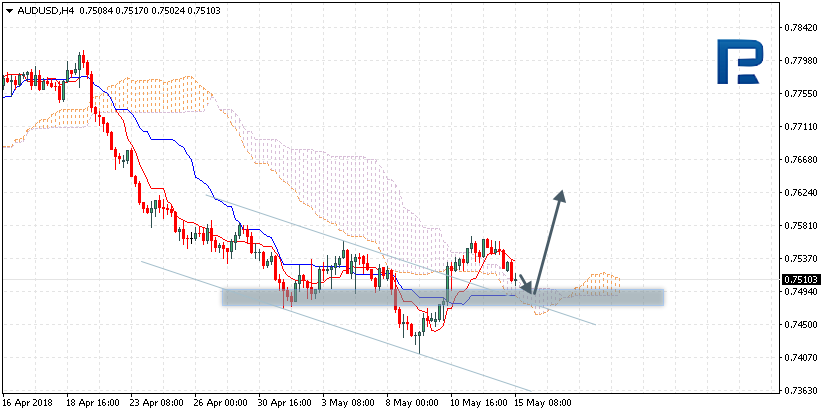
AUDUSD is trading at 0.7510; the instrument is moving above Ichimoku Cloud, which means that it may continue growing. The markets could indicate that the price may test the upside border of the cloud at 0.7500 and then continue moving upwards to reach 0.7625. Another signal to confirm further ascending movement is the price’s rebounding from the upside border of the descending channel. However, the scenario that Implies further growth may be cancelled if the price breaks the downside border of the cloud and fixes below 0.7455. In this case, the pair may continue falling towards 0.7400.

AUDUSD
Risk Warning: the result of previous trading operations do not guarantee the same results in the future


NZDUSD, “New Zealand Dollar vs US Dollar”

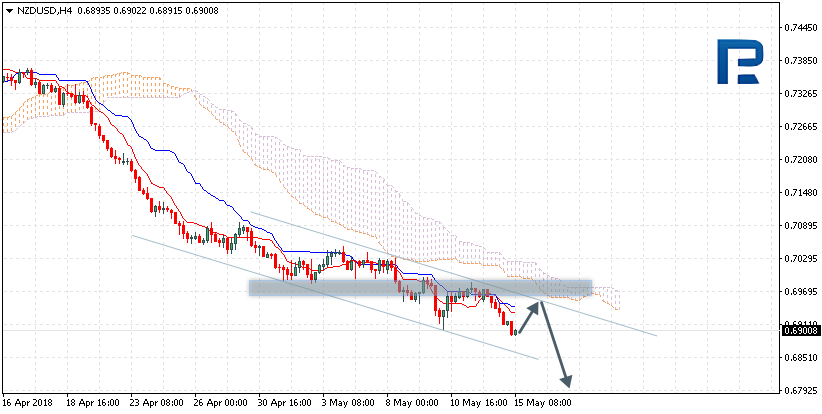
NZDUSD is trading at 0.6900; the instrument is moving below Ichimoku Cloud, which means that it may continue falling. The markets could indicate that the price may test the downside border of the cloud at 0.6950 and then continue moving downwards to reach 0.6805. Another signal to confirm further descending movement is the price’s rebounding from the resistance level. However, the scenario that implies further decline may be cancelled if the price breaks the upside border of the cloud and fixes above 0.7020. In this case, the pair may continue growing towards 0.7120.

NZDUSD
Risk Warning: the result of previous trading operations do not guarantee the same results in the future


USDCAD, “US Dollar vs Canadian Dollar”

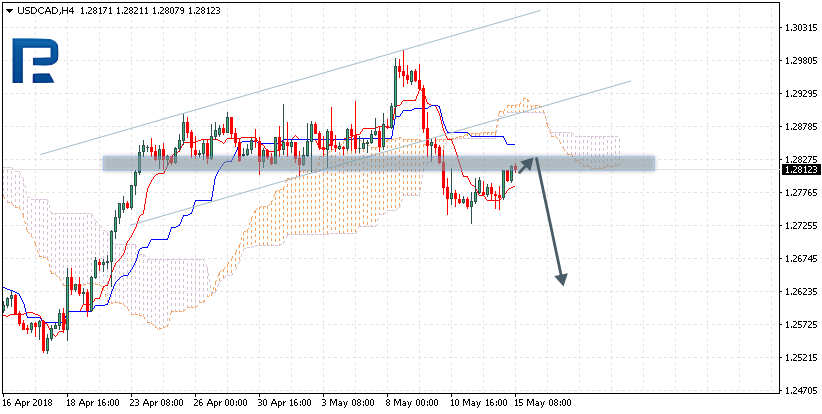
USDCAD is trading at 1.2812; the instrument is moving below Ichimoku Cloud, which means that it may continue falling. The markets could indicate that the price may test Tenkan-Sen and Kijun-Sen at 1.2825 and then continue moving downwards to reach 1.2625. Another signal to confirm further descending movement is the price’s rebounding from the resistance level. However, the scenario that implies further decline may be cancelled if the price breaks the upside border of the cloud and fixes above 1.2885. In this case, the pair may continue growing towards 1.3050.

USDCAD
Risk Warning: the result of previous trading operations do not guarantee the same results in the future


RoboForex Analytical Department

Article By RoboForex.com

Attention!
Forecasts presented in this section only reflect the author’s private opinion and should not be considered as guidance for trading. RoboForex LP bears no responsibility for trading results based on trading recommendations described in these analytical reviews.

Investors eye Eurozone GDP, UK jobs report

By Orbex Blog

Daily Forex Market Preview, 15/05/2018

The markets were seen trading mixed with the U.S. dollar showing signs of easing back on Monday. Economic data was sparse with only the speech by Cleveland Fed President Loretta Mester.

Speaking at a conference in Paris, Mester said that the Federal Reserve will most likely maintain its rate hike guidance for the year while at the same time tolerate an overshoot of inflation target. The comments however failed to push the U.S. dollar higher on the day.

Looking ahead, the economic data for the day will be dominated by the preliminary GDP release from Germany and the French final inflation rate. Later in the day, the UK’s labor market data will be released. Expectations show that the UK’s unemployment rate held steady at 4.2% in the three months ending April. Wage growth is expected to rise at a modestly slower pace of 2.7% compared to the 2.8% increase seen previously.

The Eurozone second revised GDP estimates will also be coming out today. The median expectations point to 0.4% increase, unchanged from the preliminary increase.

Economic data from the United States will see the release of the retail sales report followed by the Empire State Manufacturing Index.


EURUSD intra-day analysis

EURUSD 15.05.18

EURUSD (1.1933): The EURUSD rallied to a seven day high on Monday with price reaching intraday highs of 1.1963 before easing back on the day. The declines came off the highs as it coincided with the recently breached support level that has now turned into resistance. A bearish close below 1.1920 could potentially signal a near term decline in price. On the 4-hour chart, we see a hidden bearish divergence which is likely to signal the downside in price. A higher low being formed off this reversal could mean that prices are likely to rebound in the near term, provided the resistance level of 1.1920 – 1.1960.


GBPUSD intra-day analysis

GBPUSD 15.05.18

GBPUSD (1.3562): GBPUSD continues to trade flat with price action consolidating near 1.3530 level. The rather prolonged sideways movement is likely to trigger a volatile breakout in the near term. The support level at 1.3530 could hold the declines in the near term, with the downside breakout pushing prices closer to the 1.3500 level of support. To the upside, there is a strong possibility of a correction in prices with the intial target coming in around 1.3737 followed by the horizontal resistance level of 1.3902.


XAUUSD intra-day analysis

XAUUSD 15.05.18

XAUUSD (1313.58): Gold prices continued to drift lower after testing the upper resistance level of 1325 previously. We expect the sideways range to be maintained within 1325 resistance and 1311 level of support in the near term. The 4-hour Stochastics oscillator currently points to a hidden bullish divergence. This could mean that price action will likely test the lower support of 1311 ahead of another rebound in prices. Unless gold prices break out from the range, we expect this flat trading to continue.


US Quest for Iran Regime Change: Will EU Sustain the Nuclear Deal

By Dan Steinbock

Trump’s withdrawal from the Iran nuclear deal was the wrong decision in the wrong time. It is likely to compound global political, economic and security risks. Now EU must sustain the nuclear deal, along with Russia and China.

For three years, the comprehensive nuclear accord (JCPOA) has offered Iran relief from US, UN and multilateral sanctions on energy, financial, shipping, automotive and other sectors.

However, a shift in the U.S. policy began in late 2016, when the Senate and the House of Representatives unanimously extended the Iran Sanctions Act for a decade. Not only most Republicans, but many Democrats who had supported the JCPOA in the Obama era, reversed their positions surprisingly quickly.

That emboldened Trump’s far more muscular – and illicit – policy against Iran.

Effort to destabilize Iran to win the Middle East

Regionally, Trump’s stance leans on Saudi Arabia for economic and geopolitical support, as evidenced by the $110 billion arms deal with Riyadh a year ago, and reinforced security ties with Israel, as reflected by U.S. recognition of Jerusalem as capital of Israel – a fatal policy mistake denounced by international community in the UN and one that reversed almost seven decades of US foreign policy.

The increasing convergence of the US, Saudi and Israeli interests in the Middle East reflects an escalating quest for regional primacy. In last October, the Trump administration designated for sanctions additional missile and Islamic Revolutionary Guard Corps-related entities, while threatening to cease implementing the JCPOA. By weakening Iran’s “moderates,” the White House hoped to incite “hawks” into strategic moves that could be used as a pretext for regime change.

Supported by Republican neoconservatives and Democrats’ liberal interventionists, the plan relies on discontented Iranian exiles and Shah loyalists in the West, while Saudi Arabia and Israel try to soften Iran in military and covert operations in the region’s ongoing proxy wars.

Along with economic pressures, Trump seized covert operations naming the controversial Michael D’Andrea, who was deeply involved with the US interrogation program after 9/11 attacks, the head of CIA’s Iran operations, while the ultraconservative hawk Mike Pompeo replaced Rex Tillerson as Secretary of State. Both D’Andrea and Pompeo favor regime change in Iran.

Trump also made the neoconservative John Bolton his national security adviser and Gina Haspel the new head of CIA. While Bolton contributed to the “weapons of mass destruction” pretense that led to the war in Iraq, Haspel served as chief of a CIA black site torture prison and played a role in the destruction of some 100 interrogation videotapes.

In 2003, Bolton relied on false data from U.S.-based Iraqi exiles; now he is reliant on flawed information from Iraqi exiles. In November 2017, Bolton urged the US to have a contingency plan for a “Shah of Iran scenario.” Four months before, he had advocated Trump’s withdrawal from the deal, pledging a regime change before February 2019 – the 50th anniversary of the Iranian revolution (see Figure).

After Bolton replaced Trump’s national security adviser H.R. McMaster in early April, he is now positioned to execute the regime change plan.

Regime change, terror, puppets, and hot money

Bolton supports Mojahedin-e Khalq (MEK), an Iranian opposition group which he relies for information (and speaking fees). MEK advocates violent overthrow of Iran’s democratically-elected government. Until the early 2010s, the UK, EU and the US considered MEK a cultist terrorist organization but State Secretary Hillary Clinton de-listed the group, reportedly to use MEK for US purposes. Concurrently, Clinton effectively unblocked millions of dollars from the MEK to further lobby US Congress.

The U-turn followed after generous speaking fees by MEK lobbyists to prominent former government leaders supporting regime change in Iran, including former CIA directors R. James Woolsey and Porter Goss, Homeland Security Secretary Tom Ridge, FBI Director Louis Freeh, Republican Speaker of the House Newt Gingrich, NYC mayor Rudy Giuliani, chair of the House Intelligence Committee Mike Rogers, as well as Democrats, such as former Pennsylvania and Vermont Governors Ed Rendell and Howard Dean, and national security adviser to President Obama General Jim Jones, to mention just a few.

On the MEK side, the demands for regime change in Iran were orchestrated largely by its leader Maryam Rajavi, the “President-elect” of the National Council of Resistance of Iran (NCRI), who has been investigated for terrorism in and expelled from France (her husband is wanted by Iraq for crimes against humanity), and Alireaza Jafarzadeh, the NCRI’s public face, who has fed US and international agencies “information” about Iran’s alleged nuclear ambitions since the early 2000s.

Some of the MEK funds were accrued during the Iraq-Iran War (1980-88) when the MEK was hosted by Saddam Hussein to fight against Iran, reportedly in exchange for millions of dollars. From the ‘90s to early 2000s, MEK coordinated terror raids against Iranian diplomatic missions internationally. According to US NBC, the MEK – “financed, trained and armed by Israel’s secret service – has assassinated Iranian nuclear scientists since 2007. Even before de-listing, the US provided training and funding for the MEK on the US soil and in covert operations in Iran, according to the highly-regarded author Seymour Hersh. When MEK uses substantial funds to attract prominent Americans, the monies originate from oney-laundering front organizations in Europe, US and the Middle East, according to FBI and State Department. The case of the MEK, argues constitutional lawyer Glen Greenwald, indicates that the “US government is not opposed to terrorism; it favors it.”

Along with the former Shah’s supporters in the U.S. and elsewhere, the regime change planners rely on these shady figures, and their quasi-legal organizations, just as they did with Ahmed Chalabi of the Iraqi National Congress (NC) in 2003. That’s when sanctions led to the War in Iraq – which is their role now in Iran as well.

From old sanctions to new ones

Last week, the US, once again acting unilaterally, moved toward cutting Iran off from the global economy as the Treasury Department imposed new sanctions on several Iranian companies, individuals and officials presumably for an illegal currency-exchange network in the UAE. Through his 2016 campaign, Trump described the Iran nuclear deal as a “disaster.” Aggressive rhetoric is a key element in his deal-making. It is followed by redefinition of the terms. These unilateral efforts rest first on economic pressure, then political intimidation and, when necessary, military force.

Following the JCPOA, primary sanctions on energy, financial, shipping, automotive and other sectors were lifted after the International Atomic Energy Agency’s (IAEA) certification in January 2016 that Iran had complied with the agreement. Yet, secondary sanctions on firms remained in place, along with sanctions applying to US companies, including banks.

The White House will seek to strengthen the secondary sanctions, while seeking to restore the primary sanctions. Last October, Trump demanded the JCPOA to limit Iranian ballistic missile development and regional activities. Accordingly, the administration has imposed sanctions on additional entities related to Iran’s missile program, Navy operations in the Persian Gulf, and other activities in the region.

The spotlight is back on Iran sanctions enacted or under consideration in the Congress, such as the Countering America’s Adversaries through Sanctions Act of 2017 (CAATSA), plus pending legislation relating to Iran’s ballistic missiles, the assets of Iranian leaders, stricter oversight on Iran’s access to finance, the re-imposition of waived U.S. sanctions, and possible multilateral international sanctions.

Since Russia and China will stay solidly behind the Iran nuclear deal, the real question is whether the key European powers – Germany, France, the UK, and the EU itself – will defend it.

Effort to undermine EU-Iran ties

Prior to Trump’s decision, EU leaders stressed the importance of the full implementation of the JCPOA. French President Emmanuel Macron warned that “the nuclear non-proliferation regime is at stake.” Germany’s Foreign Minister Heiko Maas argued that the JCPOA “makes the world safer.” UK Foreign Minister Boris Johnson said that the “UK remains strongly committed to the JCPOA.” And the top EU diplomat Federica Mogherini pledged the EU will remain committed to the deal.

Yet, recently Macron said that “we will work collectively on a broader framework, covering nuclear activity, the post-2025 period, ballistic activity, and stability in the Middle East, notably Syria, Yemen and Iraq.” Such statements suggest that some EU leaders may try to redefine the EU approach by leaving the JCPOA intact, but coupling the deal with new and broader conditions, which would undermine the deal.

The Trump administration is likely to target European businesses that have done business in and with Iran since the Iran nuclear deal. It may extend sanctions over to companies that represent other JCPOA parties – that is, China, France, Russia, UK, Germany and the EU – thus raising risks for their U.S. access. As Treasury Secretary Steven Mnuchin recently put it, European-Iran business agreements will be voided as “the existing licenses will be revoked.”

Along with Renault, PSA Peugeot Citroen and Sanofi, French companies have huge stakes in the deal, thanks to the Airbus contract to provide Iran Air 100 airplanes for $21 billion and the oil giant Total’s $2 billion deal to develop the South Pars oil field. Some 120 German companies, including Volkswagen and Siemens, operate in Iran and another 10,000 do business with Iran. Royal Dutch Shell would be adversely affected. Economic pressure could harm significantly Iran’s oil industry in which the largest single buyers include China, South Korea, Turkey, Japan, Italy and India.

The White House’s message is loud and clear: “Get out of Iran, if you want to stay in the U.S.” It is an effort at regime change but without international legitimacy since Iran has fully implemented the JCPOA conditions.

What’s in line now is the very credibility of the EU powers.

About the Author:

Dr. Dan Steinbock is an internationally recognized strategist of the multipolar world and the founder of Difference Group. He has served as research director at the India, China and America Institute (USA) and visiting fellow at the Shanghai Institutes for International Studies (China) and the EU Center (Singapore). For more, see https://www.differencegroup.net/



Forex Technical Analysis & Forecast 14.05.2018 (EURUSD, GBPUSD, USDCHF, USDJPY, AUDUSD, USDRUB, GOLD, BRENT)

Article By RoboForex.com

EURUSD, “Euro vs US Dollar”

EURUSD has completed the five-wave ascending structure. Possibly, today the price may form a narrow consolidation range at the top of this structure. After breaking 1.1931, the pair may fall towards 1.1893, thus expanding the range downwards. If later the instrument breaks this range to the upside, the market may continue its growth to reach 1.2100; if to the downside – resume falling inside the downtrend with the target at 1.1735.

EURUSD
Risk Warning: the result of previous trading operations do not guarantee the same results in the future


GBPUSD, “Great Britain Pound vs US Dollar”

GBPUSD is still consolidating near the lows. If later the instrument breaks this range to the upside, the market may continue its growth to reach 1.3755; if to the downside – resume falling towards 1.3355.

GBPUSD
Risk Warning: the result of previous trading operations do not guarantee the same results in the future


USDCHF, “US Dollar vs Swiss Franc”

USDCHF is still trading upwards with the target at 0.9960 and may later resume growing towards 1.0000. If the instrument breaks this range to the downside, the market may start a new correction to reach 0.9900; if to the upside – continue growing with the target at 1.0060.

USDCHF
Risk Warning: the result of previous trading operations do not guarantee the same results in the future


USDJPY, “US Dollar vs Japanese Yen”

USDJPY is still consolidating around 109.32. If later the instrument breaks this range to the downside, the market may start another decline to reach the target at 108.60; if to the upside – extend this structure towards 109.80 and then resume falling to reach 108.60.

USDJPY
Risk Warning: the result of previous trading operations do not guarantee the same results in the future


AUDUSD, “Australian Dollar vs US Dollar”

AUDUSD has reached the target of the ascending impulse and right now is consolidating at the top of it. Today, the price may fall to reach 0.7486.

AUDUSD
Risk Warning: the result of previous trading operations do not guarantee the same results in the future


USDRUB, “US Dollar vs Russian Ruble”

USDRUB has reached another downside target and right now is consolidating around 61.75. If later the instrument breaks this range to the downside, the market may continue moving downwards to reach 59.90; if to the upside – start another correction towards 63.20 and then resume falling inside the downtrend.

USDRUB
Risk Warning: the result of previous trading operations do not guarantee the same results in the future


XAUUSD, “Gold vs US Dollar”

Gold is trading close to 1320.00. Possibly, today the price may form another descending wave towards 1309.00 and then grow to reach 1317.00. If later the instrument breaks this range to the downside, the market may resume falling with the target at 1295.00; if to the upside – continue the correction to reach 1331.00.

GOLD
Risk Warning: the result of previous trading operations do not guarantee the same results in the future


BRENT

Brent is consolidating above 76.40. Today, the price may test this level from above and then grow towards 78.10. If later the instrument breaks this range to the upside, the market may resume growing to reach 79.45; if to the downside – start another correction towards 74.60.

BRENT
Risk Warning: the result of previous trading operations do not guarantee the same results in the future


RoboForex Analytical Department

Article By RoboForex.com

Attention!
Forecasts presented in this section only reflect the author’s private opinion and should not be considered as guidance for trading. RoboForex LP bears no responsibility for trading results based on trading recommendations described in these analytical reviews.

Ichimoku Cloud Analysis 14.05.2018 (AUDUSD, NZDUSD, USDCAD)

Article By RoboForex.com

AUDUSD, “Australian Dollar vs US Dollar”

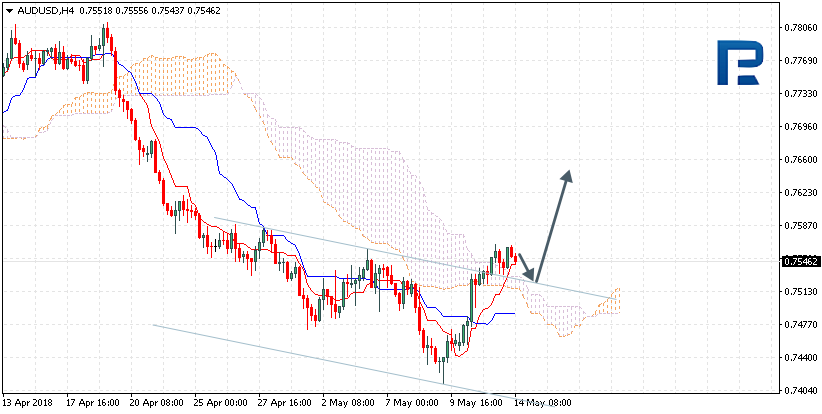
AUDUSD is trading at 0.7546; the instrument is moving above Ichimoku Cloud, which means that it may continue growing. The markets could indicate that the price may test the upside border of the cloud at 0.7535 and then continue moving upwards to reach 0.7645. Another signal to confirm further ascending movement is the price’s rebounding from the upside border of the descending channel. However, the scenario that Implies further growth may be cancelled if the price breaks the downside border of the cloud and fixes below 0.7455. In this case, the pair may continue falling towards 0.7400.

AUDUSD
Risk Warning: the result of previous trading operations do not guarantee the same results in the future


NZDUSD, “New Zealand Dollar vs US Dollar”

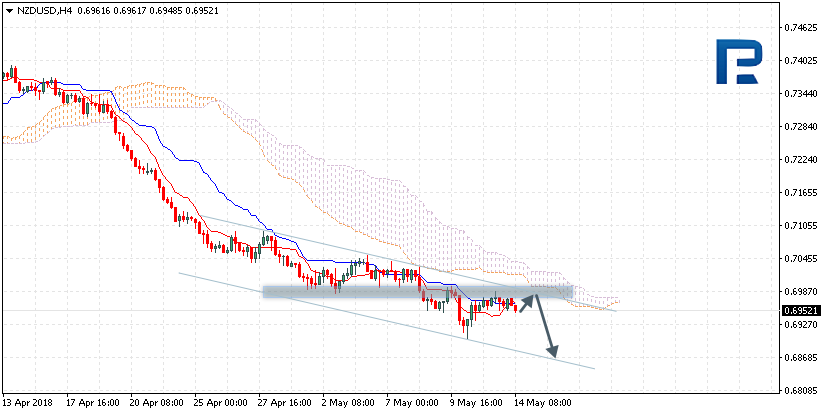
NZDUSD is trading at 0.6952; the instrument is moving below Ichimoku Cloud, which means that it may continue falling. The markets could indicate that the price may test the downside border of the cloud at 0.6985 and then continue moving downwards to reach 0.6865. Another signal to confirm further descending movement is the price’s rebounding from the resistance level. However, the scenario that implies further decline may be cancelled if the price breaks the upside border of the cloud and fixes above 0.7030. In this case, the pair may continue growing towards 0.7120.

NZDUSD
Risk Warning: the result of previous trading operations do not guarantee the same results in the future


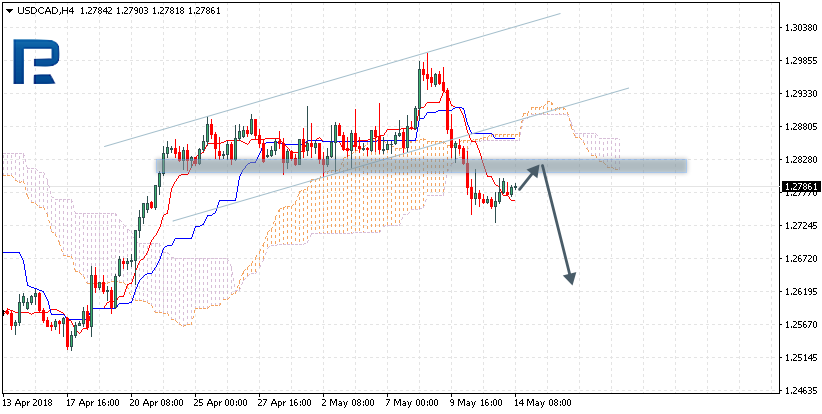
USDCAD, “US Dollar vs Canadian Dollar”

USDCAD is trading at 1.2786; the instrument is moving below Ichimoku Cloud, which means that it may continue falling. The markets could indicate that the price may test Tenkan-Sen and Kijun-Sen at 1.2825 and then continue moving downwards to reach 1.2620. Another signal to confirm further descending movement is the price’s rebounding from the resistance level. However, the scenario that implies further decline may be cancelled if the price breaks the upside border of the cloud and fixes above 1.2885. In this case, the pair may continue growing towards 1.3050.

USDCAD
Risk Warning: the result of previous trading operations do not guarantee the same results in the future


RoboForex Analytical Department

Article By RoboForex.com

Attention!
Forecasts presented in this section only reflect the author’s private opinion and should not be considered as guidance for trading. RoboForex LP bears no responsibility for trading results based on trading recommendations described in these analytical reviews.

Fast Money: Speed is Everything in the Cryptocurrency Mania

By Amram Margalit – Leverate

Speed matters a lot in the world of cryptocurrency. Why? Because cryptocurrencies are volatile and allow investors to quickly make billion-dollar fortunes. Consider how Bitcoin’s value, at one point, quickly went from $830 to $19,300. Digital currencies have enabled a lot of people to make a lot of money, one of them reaching a $60 billion net worth overnight!

There is plenty of interesting and engaging content to read on the current crypto hype, so you can find out what it takes to make a quick buck with this investment.

But what does it take to become a crypto billionaire?

Speed and Digital Currency

For starters, you have to be fast. Take founder and CEO of Binance, a cryptocurrency exchange, Changpeng Zhao (CZ), who proved to be the fastest by creating the largest crypto exchange in the world in under 180 days. The coder runs Binance in closet-sized offices in Tokyo to process 1.4 million transactions in a second. In January, CZ’s Binance peaked by processing 3.5 billion new trades, cancels, and orders. His BNB virtual coin capped a $1.3 billion in the market. Through Binance, CZ’s net worth has reached the $2 billion mark.

Up until now, speed has been the factor that has worked for Zhao, as he ranks second among the world’s crypto billionaires. For others, however, broad ties to finance is what gives them an edge. This is the case for top crypto billionaire Chris Larsen, Founder of Ripple, whose virtual coin XRP skyrocketed one season, making his net worth rise to $60 billion overnight.

Just as quickly as fortunes are made though, they can be lost. A drop in the value of cryptocurrencies has cut Larsen’s fortune down to $7.5 billion. It still puts Larsen ahead on the crypto billionaire’s list, but he is a living testament to the volatility of these instruments.

The Crypto Billionaire Boys Club

Who else is on this list? It’s a mixed bag of the young and the wild, financing world heavyweights and internet entrepreneurs. You’ll find banking heir Matthew Mellon alongside the now famous Winklevoss twins, Bitcoin Foundation chairman Brock Pierce, and a string of other already wealthy men made even wealthier by cryptocurrencies.

Then there are the unknowns: the college dropouts and young professionals who seemed to have hit the digital lottery, with all the degenerate effects accompanying such sudden wealth.

Is this a Mirage?

So is this alleged wealth “real”, or is this a fleeting glimpse of fortune that will soon slip away from all hands involved? It is important to note that Forbes magazine, who’s known for its annual “Billionaires List”, published its first crypto billionaires ranking last February, a list which might be completely out-of-date in time for next year’s list. But if this is a seal of universal financial recognition in the validity of these assets, then the crypto world has finally earned it.

From the early attempts at making secure online currencies, through the rise, the fall, and the rise again of Bitcoin, the appearance of competing altcoins, the emergence of Ethereum and the ICOs, and all the way to last year’s boom, it seems like the crypto world has been through a lot, and is finally able to shake off the embarrassments of the past and look forward to a unanimous legitimacy.

It’s no wonder Zhao’s convinced that crypto is the future.

About the Author:

Amram Margalit is a professional writer who has worked in a wide range of settings, including technology companies, nonprofits, and the entertainment industry. Within these positions, Amram has provided quality content and advertising services and is currently the Content Manager at Leverate.


COT Speculator Report: Dollar bearish bets fall again. Crude, SP500 Mini, VIX bets slide

By CountingPips.com – Receive our weekly COT Reports by Email

Hope you are having a wonderful weekend. Here is a short summary and this week’s links (below) to the latest Commitment of Traders changes that was released on Friday.


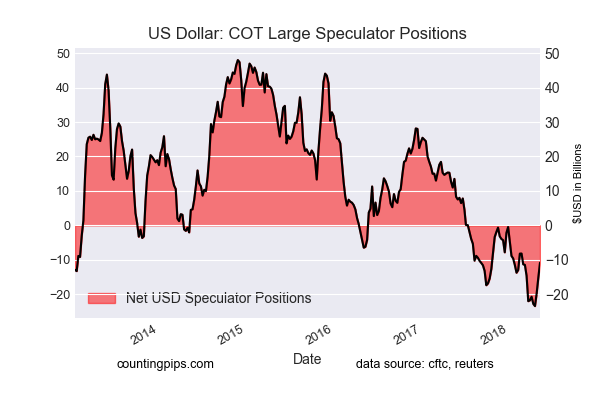
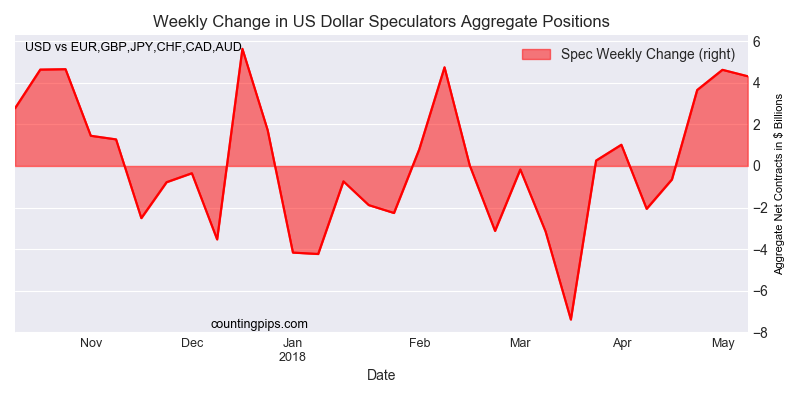
Forex Speculators cut US Dollar bearish bets for third week

US Dollar net speculator positions leveled at $-10.84 billion as of Tuesday

The latest data for the weekly Commitment of Traders (COT) report, released by the Commodity Futures Trading Commission (CFTC) on Friday, showed that large traders and currency speculators sharply reduced their aggregate bearish bets for the US dollar again this week. See full article


WTI Crude Oil Speculators lowered bullish bets for 3rd straight week

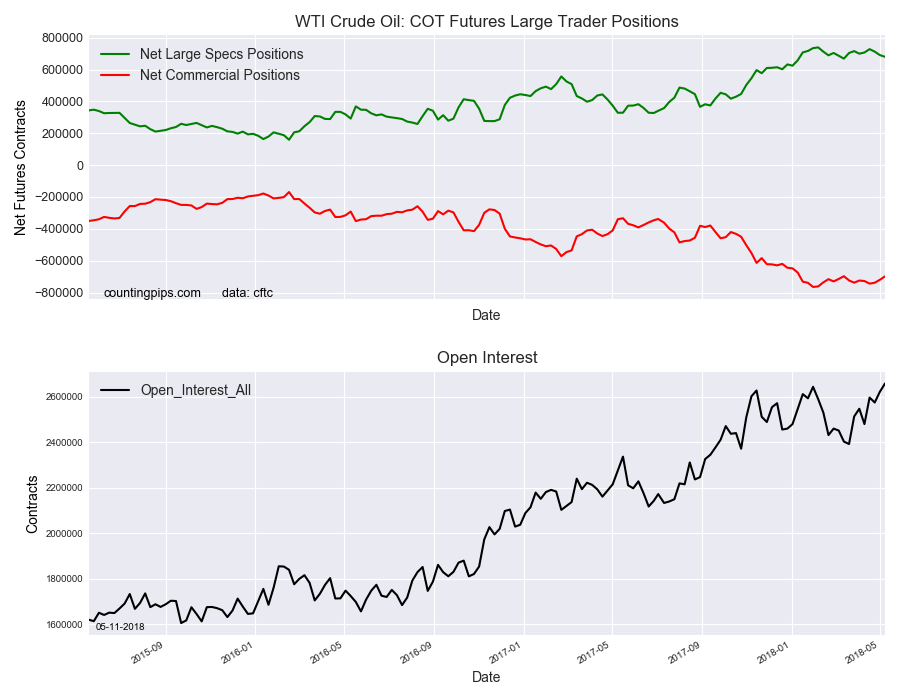
The non-commercial contracts of WTI crude futures totaled a net position of 679,928 contracts, according to data from this week. This was a slide of -10,799 contracts from the previous weekly total. See full article


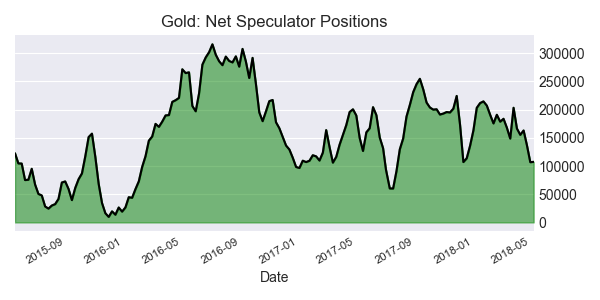
Gold Speculators edged their bullish bets slightly higher this week

The large speculator contracts of gold futures totaled a net position of 107,440 contracts. This was a weekly advance of 661 contracts from the previous week. See full article


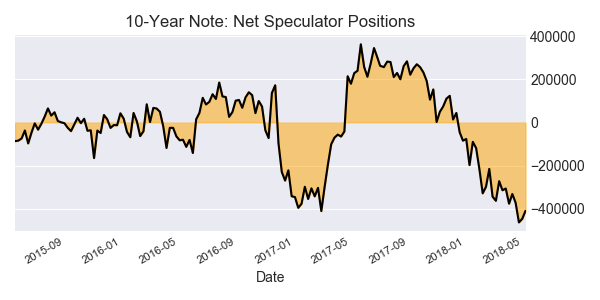
10-Year Note Speculators cut back on bearish net positions for 2nd week

The large speculator contracts of 10-year treasury note futures totaled a net position of -408,629 contracts. This was a weekly increase of 37,049 contracts from the previous week. See full article


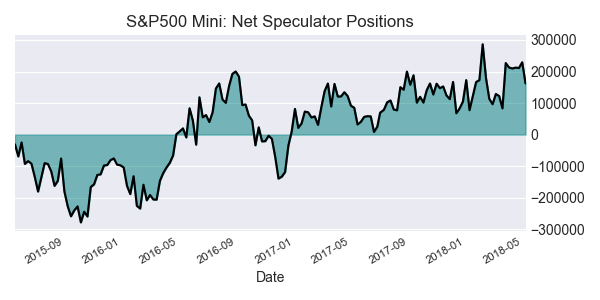
S&P500 Mini Speculators sharply cut their bullish net positions this week

The non-commercial futures contracts of S&P500 Mini futures, traded by large speculators and hedge funds, totaled a net position of 162,355 contracts in the data reported through Tuesday May 8th. See full article


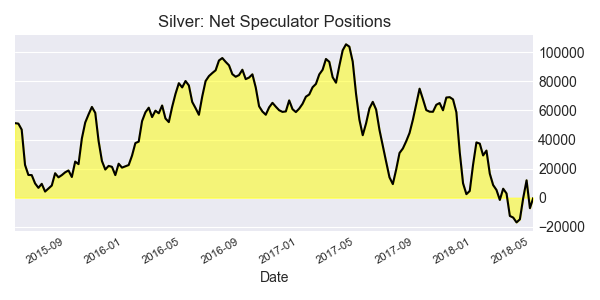
Silver Speculators cut bearish bets to a small short position this week

The non-commercial contracts of silver futures totaled a net position of -121 contracts, according to data from this week. This was a weekly gain of 7,075 contracts from the previous totals. See full article


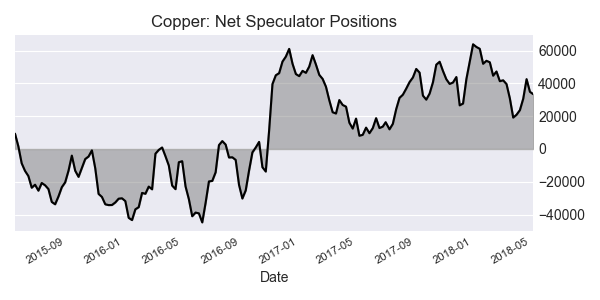
Copper Speculators reduced their bullish net positions for 2nd week

The large speculator contracts of copper futures totaled a net position of 33,452 contracts. This was a weekly shortfall of -1,464 contracts from the data of the previous week. See full article


Article by CountingPips.com – Receive our weekly COT Reports by Email

The Commitment of Traders report data is published in raw form every Friday by the Commodity Futures Trading Commission (CFTC) and shows the futures positions of market participants as of the previous Tuesday (data is reported 3 days behind).

To learn more about this data please visit the CFTC website at http://www.cftc.gov/MarketReports/CommitmentsofTraders/index.htm


Forex Speculators cut US Dollar bearish bets for third week

By CountingPips.comGet our weekly COT Reports by Email

US Dollar net speculator positions improved to $-10.84 billion this week

The latest data for the weekly Commitment of Traders (COT) report, released by the Commodity Futures Trading Commission (CFTC) on Friday, showed that large traders and currency speculators sharply reduced their aggregate bearish bets for the US dollar again this week.

Non-commercial large futures traders, including hedge funds and large speculators, had an overall US dollar net position totaling $-10.84 billion as of Tuesday May 8th, according to the latest data from the CFTC and dollar amount calculations by Reuters. This was a weekly rise of $4.31 billion from the $-15.15 billion total position that was registered the previous week, according to the Reuters calculation (totals of the US dollar contracts against the combined contracts of the euro, British pound, Japanese yen, Australian dollar, Canadian dollar and the Swiss franc).

The aggregate dollar position has strongly improved for three weeks in a row and by a total of $12.58 billion over that time frame. The dollar level has now landed at its best position since February 20th when the total was $-8.17 billion.


Weekly Speculator Contract Changes:

This week saw three substantial changes (+ or – 10,000 contracts) in the individual currency contracts for the speculator category.

British pound sterling speculative bets dropped sharply by over -10,000 contracts for a third straight week. The recent declines in bullish positions the last two weeks brings the sterling position to the lowest level in eight weeks.

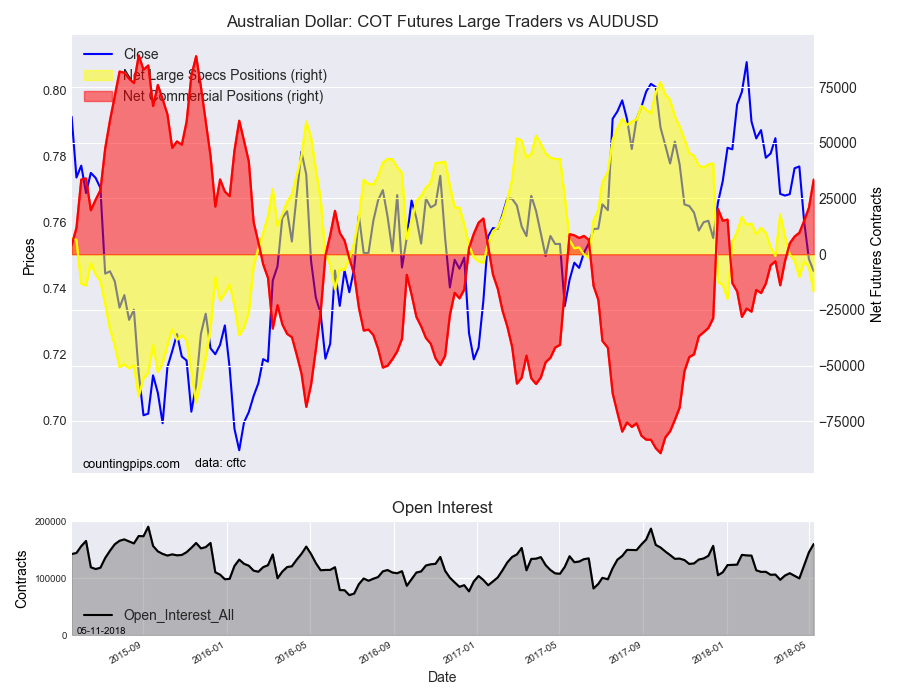
Australian dollar speculative bets fell by over -11,000 contracts this week as the AUD spec bets have now declined for two straight weeks and for six out of the past seven weeks. The overall AUD position has now been in bearish territory for six weeks in a row.

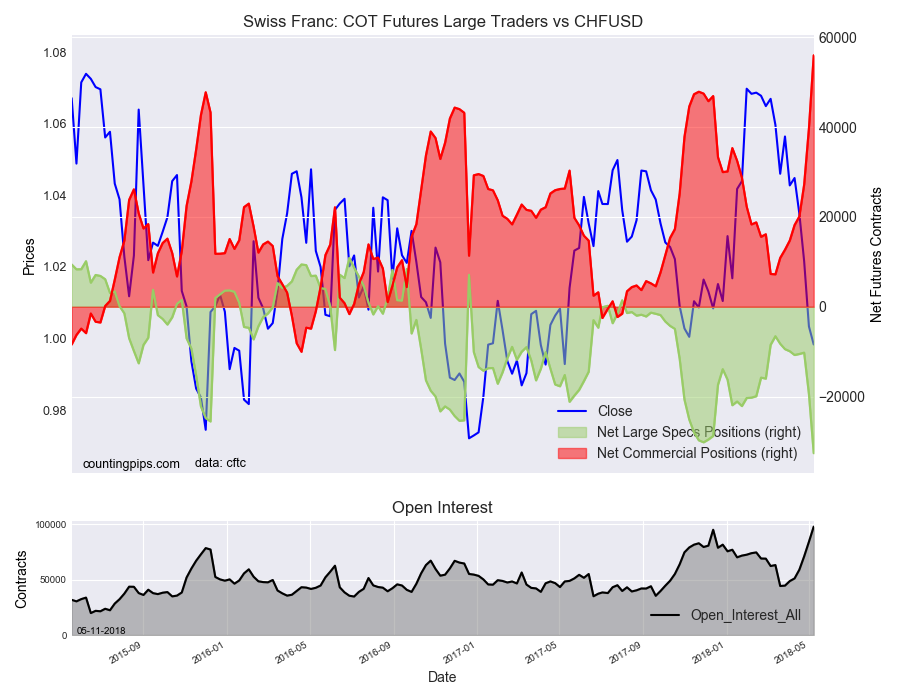
Swiss franc speculative bets decreased by over -13,000 contracts this week and fell for a second week. The overall franc position is now at the most bearish level since June 12th of 2012 when net positions totaled -33,301 contracts.

Overall, the only major currency that improved against the US dollar this week was the Canadian dollar with a gain of 3,674 contracts on the week.

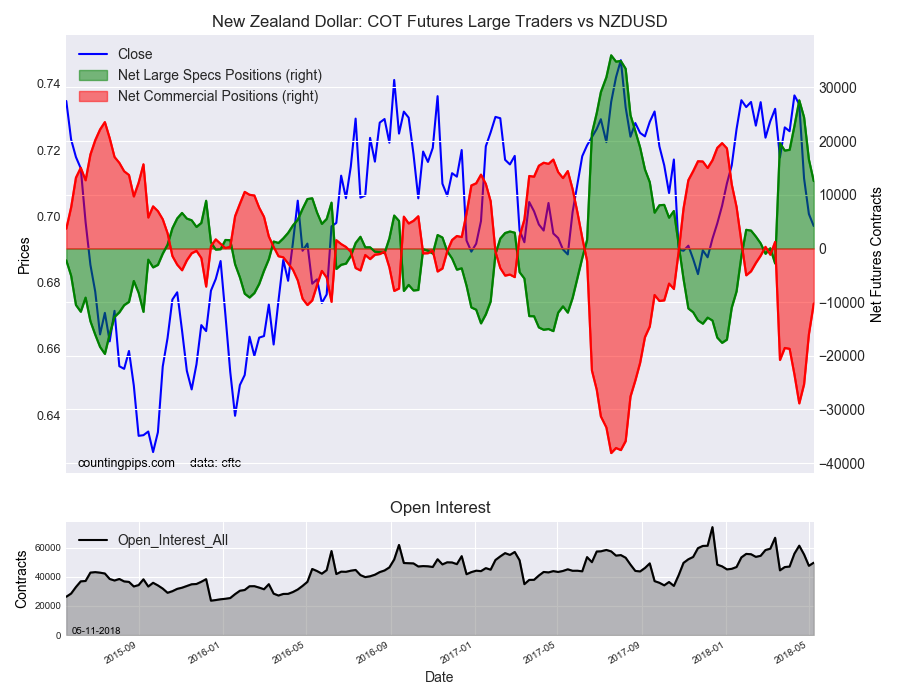
The currencies whose speculative bets declined this week versus the dollar were the euro (-63 weekly change in contracts), British pound sterling (-17,384 contracts), Japanese yen (-4,057 contracts), Swiss franc (-13,146 contracts),  Australian dollar (-11,094 contracts), New Zealand dollar (-4,027 contracts) and the Mexican peso (-9,853 contracts).


Table of Weekly Commercial Traders and Speculators Levels & Changes:

CurrencyNet CommercialsComms Weekly ChgNet SpeculatorsSpecs Weekly Chg
EuroFx-141,169931120,505-63
GBP-10,38021,5748,988-17,384
JPY8,7451,424-5,462-4,057
CHF55,97216,232-32,602-13,146
CAD27,477-1,768-23,8613,674
AUD33,50812,579-16,766-11,094
NZD-10,2845,70212,546-4,027
MXN-80,02710,49176,188-9,853


This latest COT data is through Tuesday and shows a quick view of how large speculators or non-commercials (for-profit traders) as well as the commercial traders (hedgers & traders for business purposes) were positioned in the futures markets. All currency positions are in direct relation to the US dollar where, for example, a bet for the euro is a bet that the euro will rise versus the dollar while a bet against the euro will be a bet that the dollar will gain versus the euro.


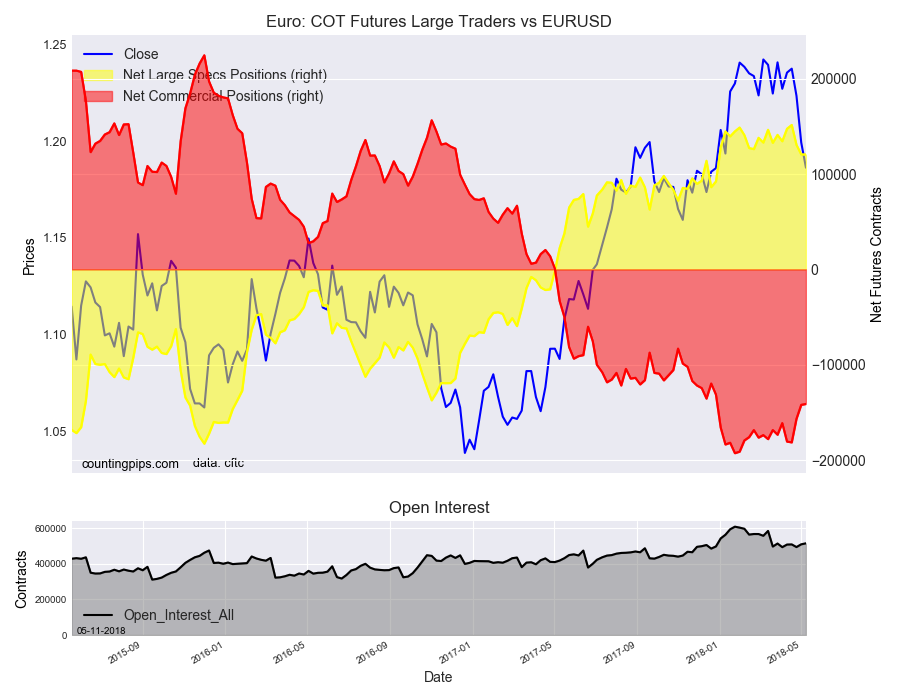
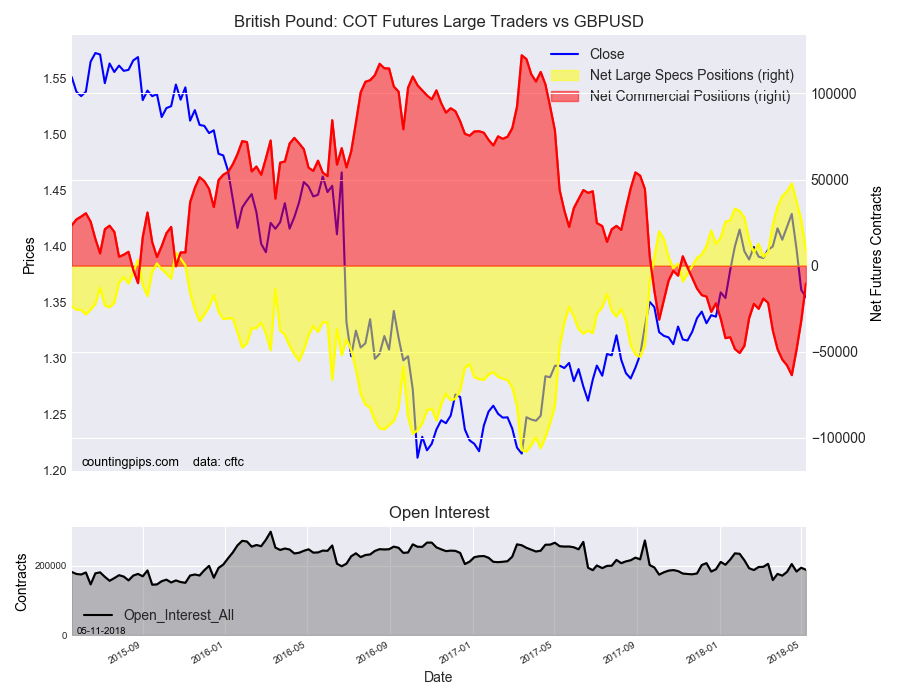
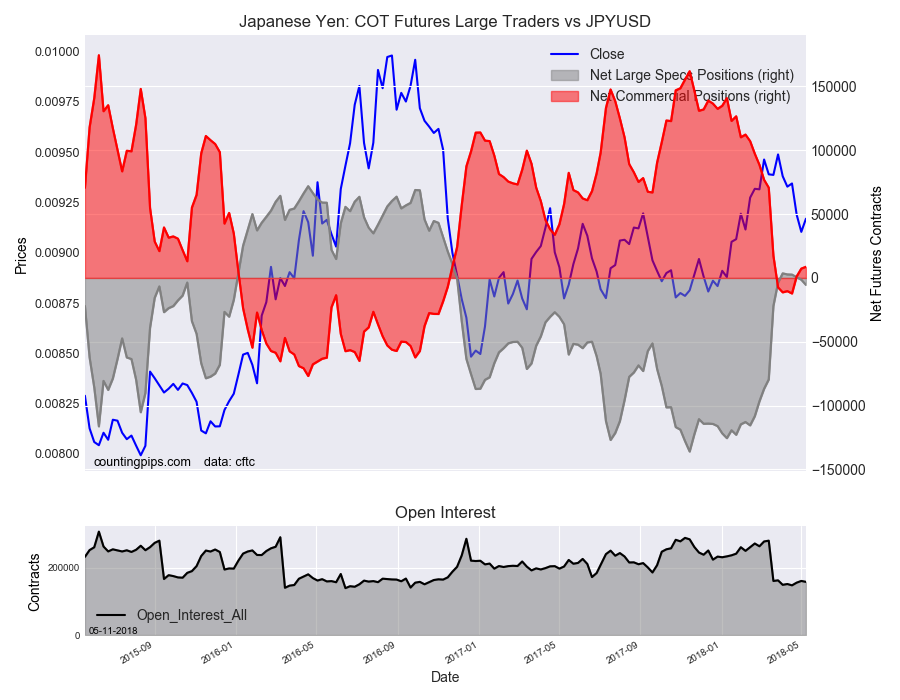
Weekly Charts: Large Trader Weekly Positions vs Price

EuroFX:


British Pound Sterling:


Japanese Yen:


Swiss Franc:


Canadian Dollar:


Australian Dollar:


New Zealand Dollar:


Mexican Peso:


*COT Report: The weekly commitment of traders report summarizes the total trader positions for open contracts in the futures trading markets. The CFTC categorizes trader positions according to commercial hedgers (traders who use futures contracts for hedging as part of the business), non-commercials (large traders who speculate to realize trading profits) and nonreportable traders (usually small traders/speculators). Find CFTC criteria here: (http://www.cftc.gov/MarketReports/CommitmentsofTraders/ExplanatoryNotes/index.htm).

The Commitment of Traders report is published every Friday by the Commodity Futures Trading Commission (CFTC) and shows futures positions data that was reported as of the previous Tuesday (3 days behind).

Each currency contract is a quote for that currency directly against the U.S. dollar, a net short amount of contracts means that more speculators are betting that currency to fall against the dollar and a net long position expect that currency to rise versus the dollar.

(The charts overlay the forex closing price of each Tuesday when COT trader positions are reported for each corresponding spot currency pair.) See more information and explanation on the weekly COT report from the CFTC website.

Article by CountingPips.com


Eurodollar Speculators raised their bearish net positions for 2nd week

By CountingPips.comReceive our weekly COT Reports by Email

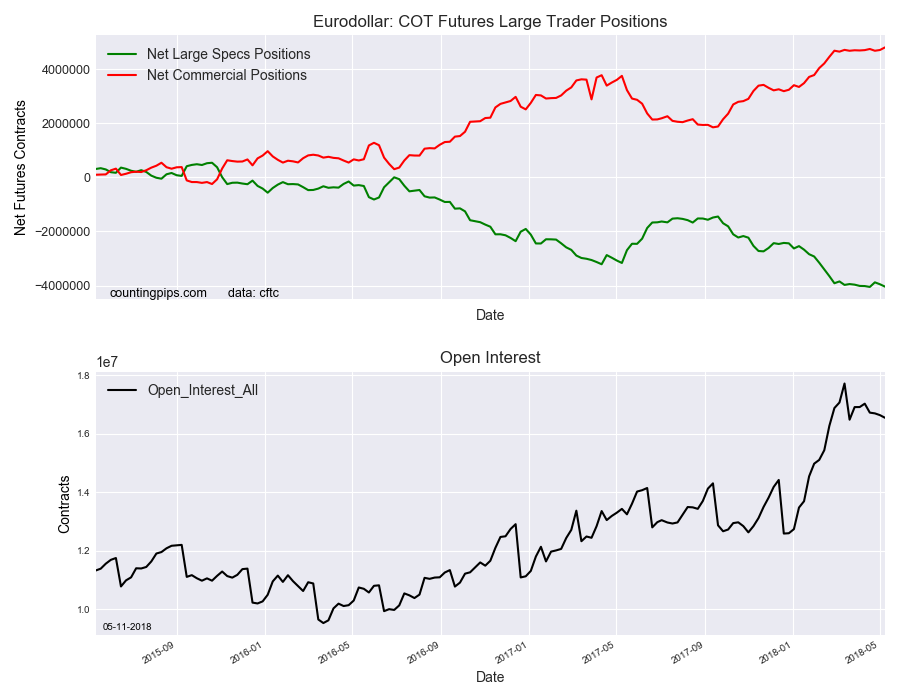
Eurodollar Non-Commercial Speculator Positions:

Large speculators increased their bearish net positions in the Eurodollar futures (not euro currency) markets this week, according to the latest Commitment of Traders (COT) data released by the Commodity Futures Trading Commission (CFTC) on Friday.

The non-commercial futures contracts of Eurodollar futures, traded by large speculators and hedge funds, totaled a net position of -4,040,294 contracts in the data reported through Tuesday May 8th. This was a weekly decrease of -88,212 contracts from the previous week which had a total of -3,952,082 net contracts.

Speculators raised their bearish bets for a second straight week and for the sixth out of the past seven weeks. The overall net position went back over the -4,000,000 net contract level for the first time in three weeks.

Eurodollar Commercial Positions:

The commercial traders position, hedgers or traders engaged in buying and selling for business purposes, totaled a net position of 4,810,763 contracts on the week. This was a weekly increase of 96,694 contracts from the total net of 4,714,069 contracts reported the previous week.

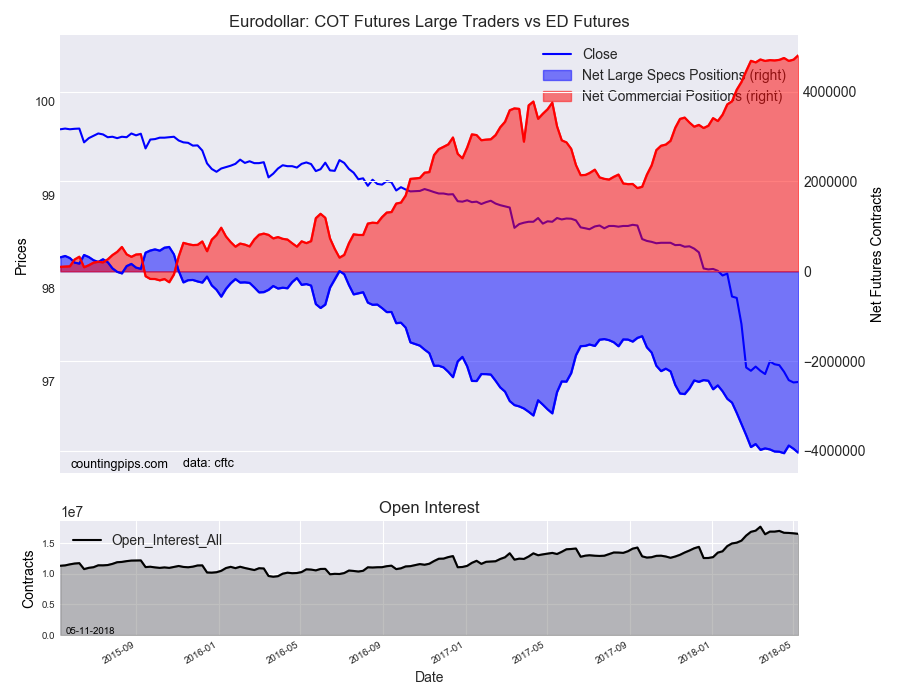
ED Futures:

Over the same weekly reporting time-frame, from Tuesday to Tuesday, the Eurodollar Futures closed at approximately $97.0 which was an increase of $0.005 from the previous close of $96.995, according to unofficial market data.

*COT Report: The COT data, released weekly to the public each Friday, is updated through the most recent Tuesday (data is 3 days old) and shows a quick view of how large speculators or non-commercials (for-profit traders) as well as the commercial traders (hedgers & traders for business purposes) were positioned in the futures markets. The CFTC categorizes trader positions according to commercial hedgers (traders who use futures contracts for hedging as part of the business), non-commercials (large traders who speculate to realize trading profits) and nonreportable traders (usually small traders/speculators). Find CFTC criteria here: (http://www.cftc.gov/MarketReports/CommitmentsofTraders/ExplanatoryNotes/index.htm).

Article By CountingPips.comReceive our weekly COT Reports by Email

WTI Crude Oil Speculators lowered bullish bets for 3rd straight week

By CountingPips.comReceive our weekly COT Reports by Email

WTI Crude Oil Non-Commercial Speculator Positions:

Large energy speculators reduced their bullish net positions in the WTI Crude Oil futures markets this week, according to the latest Commitment of Traders (COT) data released by the Commodity Futures Trading Commission (CFTC) on Friday.

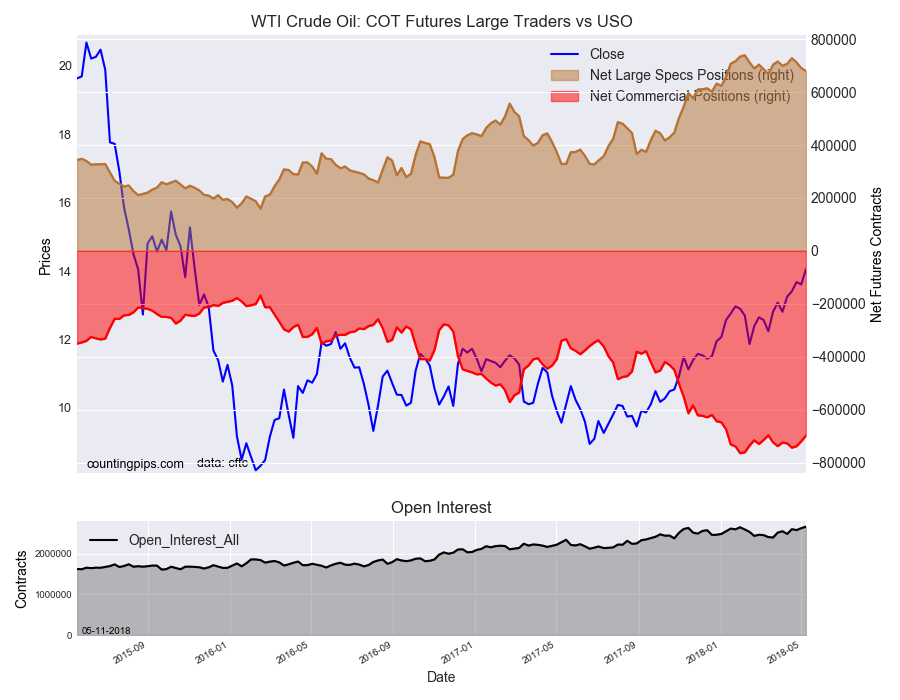
The non-commercial futures contracts of WTI Crude Oil futures, traded by large speculators and hedge funds, totaled a net position of 679,928 contracts in the data reported through Tuesday May 8th. This was a weekly decrease of -10,799 contracts from the previous week which had a total of 690,727 net contracts.

Speculative positions fell for the third week in a row with the net position declining to the lowest level in nine weeks. Overall, the bullish net position remains extremely bullish although the standing is under the +700,000 contract level for a second week.

WTI Crude Oil Commercial Positions:

The commercial traders position, hedgers or traders engaged in buying and selling for business purposes, totaled a net position of -698,340 contracts on the week. This was a weekly increase of 21,566 contracts from the total net of -719,906 contracts reported the previous week.

USO:

Over the same weekly reporting time-frame, from Tuesday to Tuesday, the USO Crude Oil ETF, which tracks the price of WTI crude oil, closed at approximately $14.06 which was an advance of $0.45 from the previous close of $13.61, according to unofficial market data.

*COT Report: The COT data, released weekly to the public each Friday, is updated through the most recent Tuesday (data is 3 days old) and shows a quick view of how large speculators or non-commercials (for-profit traders) as well as the commercial traders (hedgers & traders for business purposes) were positioned in the futures markets. The CFTC categorizes trader positions according to commercial hedgers (traders who use futures contracts for hedging as part of the business), non-commercials (large traders who speculate to realize trading profits) and nonreportable traders (usually small traders/speculators). Find CFTC criteria here: (http://www.cftc.gov/MarketReports/CommitmentsofTraders/ExplanatoryNotes/index.htm).

Article By CountingPips.comReceive our weekly COT Reports by Email