Is Fiscal Austerity the Answer?

Article by Investment U
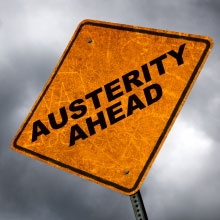
Is Fiscal Austerity the Answer?

Can fiscal austerity boost economic growth? There’s a movement sweeping through the debt-heavy developed world that says, “Yes!” But is there any proof of this?

In January of this year, two people were talking about the same question. However, their answers were quite different. And how this question is answered will have a dramatic affect on the world’s economy for years to come…

Famed economist Joseph Stiglitz, who won the Nobel Prize in 2001 for his work on how markets work inefficiently, has gone on record to say that imposing austerity measures as countries slow towards recession is a fundamentally flawed response.

“The answer, even though they see over and over again that austerity leads to collapse of the economy, the answer over and over [from politicians] is more austerity,” Mr. Stiglitz told the Asian Financial Forum – a gathering of thousands of finance professionals, businessmen and government officials in Hong Kong.

George Osborne, Chancellor of the Exchequer of the United Kingdom, told the same forum days earlier that the United Kingdom’s fiscal austerity measures were the only way to convince the market of the UK’s economic credibility. Keep in mind these measures have been in place for over a year now while the country’s economy has tipped into recession.

“When you have a high budget deficit, if you do not have a [disciplined fiscal] plan then you will not have sustainable growth because investors will be worried about investing in your country,” said Osborne.

So that’s the debate. Here’s the question: Can austere fiscal policy boost economic growth? There’s a movement sweeping through the debt-heavy developed world that says, “Yes!” But is there any proof of this?

The Austerity Debate in Economist speak

Since the global financial crisis of 2008 to 2009, sovereign debt in the developed world has gotten out of control. There are many factors related to the financial crisis that have fueled the debt increase, from stimulus packages to lower tax revenue.

And what’s more frightening is if these issues aren’t corrected down the road, the aging populations in advanced economies will put a strain on government debt levels that will be overwhelming.

In response to the growing concern, Europe has chosen austerity. Some experts argue that austerity programs effectively reduce debt by directly targeting the cause of high debt levels – that is, government spending that’s too high or tax revenue that’s too low.

The idea, as stated by Chancellor Osborne, is that austerity will actually increase economic growth. As the Chancellor said, his argument is that commitment to fiscal austerity will increase investor confidence in the government and thus lower the interest rates charged by investors on government bonds. If lower borrowing costs for the government also reduce interest rates for us individuals and corporations, consumer spending and investment may increase, thus you get an uptick in economic output.

On the other hand, austerity has been criticized by some economists – like Mr. Stiglitz – as possibly undermining a weak recovery from the global financial crisis. Many economists agree, however, that these programs are costly to implement.

They argue that austerity policies decrease aggregate demand in the short term. This causes the economy to contract and unemployment to go up. What can be fatal is if economic output falls faster than the debt. If this is the case, the debt-to-GDP ratio can actually rise.

And then, as we have seen in the PIIGS of the Eurozone, austerity programs can be a political nightmare to implement. Citizens don’t like it:

But is there any actual data out there to see who’s right?

What the IMF Found…

Jaime Guajardo, Daniel Leigh and Andrea Pescatori of the International Monetary Fund recently studied austerity plans implemented by governments in 17 countries over the past 30 years. They tried to key in on what the government actually intended in a variety of ways. For instance, by looking at media accounts of what officials were actually saying and not just at public debt patterns. They read budget speeches, reviewed stability programs and even watched television interviews with government officials.

In order to be classified as an austerity program, the government had to hike taxes or cut spending because they viewed it as a good policy with potential long-term benefits. They tried to weed out those policies that responded to short-term economic slumps or were implemented to stop overheating. (For example, if the government believes that future economic strength may cause economic overheating and inflation, it might try to cool down domestic demand by raising taxes and lowering government spending.)

The group found a pattern where austerity caused a decrease in consumption and weakened the economy. That conclusion should be a warning to policymakers in the developed world today.

Two Years into the Austerity Craze

It has been two years since the austerity craze swept across Europe and nothing has gotten better. Growth in European GDP was negative in the last quarter of 2011. Unemployment in the entire Eurozone in February of 2012 was 10.8%. If you look at sovereign debt yields, no one believes that fiscal stability is right around the corner.

It makes sense to put in place austerity measures when the world believes you might be able to pay off your debts. But right now, there’s a new normal. Short-term interest rates are so low that you can’t use large rate reductions to offset the bad effects of budget cutting. The Eurozone becomes even more peculiar because of the euro. Countries can’t use monetary policy to stimulate growth.

Because of all this, austerity has been a negative for Europe. Budget cutting has killed growth and debt-to-GDP ratios in Europe are still increasing.

So What Should Europe Do Instead?

A lot of European countries have long-run fiscal situations that are just unsustainable and must be dealt with. And what they should do is look at the United States for the solution – but not at our dysfunctional government.

The real answer lies in the work of our independent committees (think The Bowles/Simpson Commission).

The best approach is to pass the needed budget measures now, but to phase in tax increases and spending cuts over time to give specific economies time to rebound. Economists would say, “Measures should be backloaded.”

If you look at the proposals submitted by most of the deficit commissions out there, they are for the most part specific. If you’re going to have deficit targets, you must tell everyone how you will achieve them.

And here’s how they are typically laid out:

  • Disclose immediately whose taxes will be raised.
  • Disclose specifically what spending will be cut.
  • Specify when the measures will happen by setting a schedule or tying it specifically to certain economic indicators.

History shows that countries have been successful implementing “backloaded measures.” Here are two relatively recent examples:

  1. United States – In 1983, the Greenspan Commission came up with a Social Security reform package that was weighted towards the future. It included higher taxes and increases in the retirement age that would be implemented over a 30-year period. Everything has been on schedule since with little fuss.
  2. Sweden – In 1995, Sweden set up a program to cut its deficit by a whopping 8% of GDP by 1998. As Carl Delfeld recently wrote, it also got the job done.

It usually happens that when you pass laws, politicians really don’t want to revisit it later on. But if you go this route, it’s important to make sure there are no legislative backdoors to get out of the needed budget cuts or tax increases.

When you study austerity, the problem you run into is that you can’t control all the variables. It’s like the argument around dynamic scoring in the budgetary process. Too many random factors can occur that may account for your findings.

Policymakers cannot afford to hold the status quo while economists come up with concrete conclusions. We may never get a definitive answer. But, what needs to be done is the establishment of long-term goals and transparency to inspire confidence. If we do that, then markets will hopefully come around.

Good Investing,

Jason Jenkins

Article by Investment U

Gold & Silver on the Verge of Something Huge!

By Chris Vermeulen, thegoldandoilguy.com

Gold and silver have taken more of a back seat over the past 12 months because of their lack of performance after topping out in 2011. Since then prices have been trading sideways/lower with declining volume. The price action is actually very bullish from a technical standpoint. My chart analysis and forward looking forecasts show $3,000ish for gold and $90ish for silver in the next 18-24 months.

Now don’t get too excited yet as there is another point of view to ponder…

My non-technical outlook is more of a contrarian thought and worth thinking about as it may unfold and catch many gold bugs and investors off guard costing them a good chunk of their life savings. While I could write a detailed report with my thinking, analysis and possible outcomes I decided to keep it simple and to the point for you.

Bullish Case: Euro-land starts to crumble, stocks fall sharply sending money into gold and silver which are trading at these major support levels which in the past triggered multi month rallies.

Bearish Case: Greece, Spain and Italy worth through their issues over the next few months while metals bounce around or drift higher because of uncertainty. But once things have been sorted out and financial stability (of some sort) has been created and the END OF THE FINANCIAL COLLAPSE has been avoided money will no longer want to be in precious metals but rather move into risk-on.

Take a look at the gold and silver charts below for an idea of what may happen and where support levels are if we do see money start to rotate out of metals in the next 3-6 months.

Gold Forecast

Silver Forecast

Over the next few months things will slowly start to unfold and shed some light on what the next big move is likely going to happen to gold and silver.

The price movements we have seen for both gold and silver indicate were are just warming up for something really big to happen. It could be a massive parabolic rally to ridiculous new highs in 2012/2013 or it could be a huge  unwinding of the safe havens as countries sort out their issues and the big money starts moving out of metals and into currencies and stocks.

Only time will tell and that is why I analyze the market multiple times per week to stay on top of both long term and short term trends. So if you want to keep up with current trends and trades for gold, silver, oil, bonds and the stocks market checkout TGAOG at: http://www.thegoldandoilguy.com/free-preview.php

Chris Vermeulen


Gold still at risk of a large downward move before the rally

By David Banister, markettrendforecast.com

Gold has been busy consolidating in what I believe will be a 13 Fibonacci month Primary wave 4 correction.  The Gold bull market I’ve been following since 2001 is a likely 13 year bull cycle that will end in 2013 or 2014 depending on how you count.  This current correction pattern is working off a 34 Fibonacci month rally that took Gold from 681 to 1923 at its ultimate highs.  Last fall I warned about the parabolic run likely ending in the 1908 ranges and for investors to position themselves accordingly.

Today we have Gold trading around 1600 and our recent forecast in May was for a rally into Mid June topping around 1620-1650 ranges in US Dollars.  The intermediate forecast still calls for a possible drop to 1445-1455 ranges this summer, the same figures I gave out on TheStreet.Com interview last September for a Primary wave 4 low.

Only a close and a strong move over 1650 will eliminate the downside risk in my opinion.  Below we can see a weekly chart showing the 34 week moving average line as well as the obvious downtrend line. The 34 week moving average line acted as support during the Primary wave 3 rally from 681-1923.  It now is acting as a resistance ceiling to break through, and I don’t think we will until this fall.  The likely cyclical lows for this Gold correction will be in the October window and investors should make sure they are positioned long by that time.

Subscribe to our regular updates to stay informed on a dialy basis on the SP 500 and GOLD in the meantime with a discount offer.  Go to www.markettrendforecast.com to sign up or to ask for our free weekly reports.


www.markettrendforecast.com


Gold Hits 8-Session Low Post-Fed, But “Central Bank Buying Supports”

London Gold Market Report
from Adrian Ash
BullionVault
Thurs 21 June, 08:25 EST

The WHOLESALE MARKET gold price fell further Thursday in London, falling hard to 8-session lows at $1587 per ounce following last night’s “no change” decision from the Federal Reserve on new US quantitative easing.

Major-government bond prices pushed higher, but the Euro currency retreated, down nearly 1¢ from its post-Fed high to trade back down at $1.2650.

Silver prices hit a new low for the month of June at $27.70 per ounce, while commodity indices dropped to 19-month lows and US crude fell to 7-month lows beneath $80 per barrel.

European stock markets also fell, with London’s losses led by mining equities.

“Achieving a durable and prompt exit from the Euro area crisis, as well as avoiding the US ‘fiscal cliff’ [due start-2013] is crucial for sustained global recovery,” said a new report from the International Monetary Fund on the outlook for the G20 group of large economies.

First estimates for China’s manufacturing activity in June showed an eighth month of contraction on HSBC’s purchasing manager’ index – the longest such stretch since 2008.

Germany’s PMI joined the rest of the Eurozone in showing a sharp contraction in both manufacturing and the services sector.

With the gold price slipping 2.5% for the week so far, “Hats off to the players in the gold market,” says Edward Meir for INTL FC Stone, “who had the sense not to join in on the rallies [in commodities and equities] that were taking place” before the US central bank’s Wednesday announcement.
 
“The high expectations in advance of the US Fed’s meeting were priced out” of other asset classes, agrees Eugen Weinberg at Commerzbank in Frankfurt.

“[But] even without unconventional monetary policy,” he adds in today’s commodity note from the German bank, “central banks are currently shoring up the gold price…by diversifying their currency reserves and continuing to buy gold.”

Russia’s central bank bought another 14 tonnes of gold bullion in May, according to data from the Interfax agency Thursday.

That takes net purchases by the official sector to almost 150 tonnes for 2012 so far, based on data compiled by the World Gold Council market-development group.

“It is clear that BRICS countries have entered the stage when they can demand to be reckoned with,” said Russia’s deputy finance minister Sergei Storchak to reporters this morning, suggesting that Brazil, Russia, China, India and South Africa may launch a joint “anti-crisis” fund to challenge the IMF in Washington.

“It will be a parallel mechanism in addition to the IMF,” said Storchak.

Between them, the so-called BRICS countries now hold over $4 trillion in central-bank reserves, including 2,650 tonnes of gold bullion – more than 8% of national gold reserves worldwide, and greater than all single hoards but the US and Germany’s.

“Despite trading well through support in the low $1600s, gold managed to close with only a small loss on the day,” says last night’s report from bullion bank Scotia Mocatta.

“The bearish trendline off the March highs should provide resistance at $1632.”

“Gold’s dip below the $1600 level has confirmed our suspicion that the market was expecting something more [from the US Fed],” says today’s analysis from Standard Bank in London, citing support for the gold price at $1585.

Any move in the gold price on news of a Spanish bank rescue “could be a knee-jerk move” Standard Bank adds, “given that markets have already discounted that Spain needs a bank bailout.”

Madrid today enjoyed strong demand for €2.2 billion of medium-term debt sold at auction, but still had to pay investors record-high interest rates of 6.07% per year on 2017 bonds – up from 4.96% at last month’s sale.

Set to announce his coalition cabinet in Athens on Thursday, new Greek prime minister Antonis Samaras will also ask Brussels to give Greece a further two years to meet its agreed government spending and debt targets, according to press reports.

Next week European Union president Herman Van Rompuy will present a “blueprint” for the Euro currency union to national leaders, according to un-named officials cited by Bloomberg.

The plan includes “jointly issued short-term bills, a debt- redemption fund and common banking supervision,” says the newswire.

“There are no concrete plans that I know,” German chancellor Angela Merkel said at a press conference in Berlin last night, “but there is the possibility of [the EU bail-out funds] buying government bonds on the secondary market.

“But that is a purely theoretical comment,” she added – contracting Italian caretaker prime minister Mario Monti’s earlier call for discussion on the issue.

“This is not a subject for debate right now.”

Adrian Ash
BullionVault

Gold price chart, no delay   |   Buy gold online at live prices

Adrian Ash is head of research at BullionVault, the secure, low-cost gold and silver market for private investors online, where you can buy gold today vaulted in Zurich on $3 spreads and 0.8% dealing fees.

(c) BullionVault 2012

Please Note: This article is to inform your thinking, not lead it. Only you can decide the best place for your money, and any decision you make will put your money at risk. Information or data included here may have already been overtaken by events – and must be verified elsewhere – should you choose to act on it.


Dollar Declines on Fed Decision

By TraderVox.com

Tradervox (Dublin) – The Federal Reserve has decided to extend the current Operation Twist which was due to expire this month. In a statement given yesterday after FOMC meeting, the program has been extended with an extra $267 billion, where short term bonds are replaced with longer-term bonds to ensure interest rates on such debt are kept low. After the decision by the FOMC, the dollar dropped against most majors. The Fed also indicated the possibility of doing more if economic situation continues to deteriorate.

The euro from one-month high after German Chancellor Angela Merkel expressed doubts on the possibility of direct bond buys. The 17-nation currency also declined as speculation Greece election signaled progress in dealing with the region’s crisis receded. As the FOMC announced the continuation of Operation Twist, the yen dropped against all of its major counterparts. The extension of the program came as employment growth continued to decline in the country and the unemployment rate remained higher than the target. In the statement, the Fed also said that the household spending has declined in the recent months unlike earlier in the year.

According to Greg Anderson of Citigroup Inc, the Fed has decided to withhold QE3, to give it the ability to deal with any eventualities that may come out of Europe. Similarly, Andrew Busch, called the Fed move as “conservative” as they did not want to do additional quantitative easing without fast looking at more data from Europe and US to confirm the trend of global economy. The Fed also lowered their gross domestic product growth to 1.9-2.4 percent from the previous 2.4-2.9 percent.

The US dollar dropped by 0.2 percent against the euro to trade at $1.2707. However it rose against the yen by 0.8 percent to trade at 79.54 while the Japanese currency dropped by 0.9 percent against the euro to exchange at 101.07 per euro.

Disclaimer
Tradervox.com is not giving advice nor is qualified or licensed to provide financial advice. You must seek guidance from your personal advisors before acting on this information. While we try to ensure that all of the information provided on this website is kept up-to-date and accurate we accept no responsibility for any use made of the information provided. Opinions expressed at Tradervox.com are those of the individual authors and do not necessarily represent the opinion of Tradervox.com or its management. 

Article provided by TraderVox.com
Tradervox.com is a Forex News Portal that provides real-time news and analysis relating to the Currency Markets.
News and analysis are produced throughout the day by our in-house staff.
Follow us on twitter: www.twitter.com/tradervox

Speculation Regarding Fed Policy Keeps Riskier Currencies Elevated

Source: ForexYard

Riskier currencies, including the Australian dollar and euro, were able to hold onto gains from earlier in the week during trading yesterday, as speculation that the Fed would extend its bond-buying program led to risk taking among investors. Today, attention is likely to return to the euro-zone and the ongoing debt issues in Spain and Italy. Traders will want to pay attention to any announcements regarding these two countries, as they could lead to market volatility. Furthermore, the US manufacturing and housing data could help the dollar recoup some of its recent losses if they come in above forecasted levels.

Economic News

USD – Dollar Stages Moderate Recovery vs. Yen

After falling as low as 78.78 in overnight trading, the US dollar was able to stage a moderate recovery against the yen over the course of European trading yesterday. The USD/JPY advanced close to 60 pips, eventually reaching as high as 79.36. The greenback was not as fortunate against its other main currency rivals, as speculation regarding the Fed extending its bond buying program led to risk taking in the marketplace. The AUD/USD advanced close to 40 pips over the course of the day, reaching as high as 1.0209. Meanwhile the GBP/USD gained close to 60 pips, eventually peaking at 1.5776.

Turning to today, dollar traders will want to pay attention to the US Philly Fed Manufacturing Index and Existing Home Sales figure, both set to be released 14:00 GMT. Both figures are considered highly significant indicators of overall economic health and have the potential to generate dollar volatility. Better than expected data out of the US could help the greenback extend its upward movement vs. the Japanese yen. Additionally, any negative data out of the euro-zone could help the dollar recover against its riskier currency rivals.

EUR – EUR Gains May End Up Being Temporary

The euro saw gains against both the US dollar and Japanese yen during European trading yesterday, as news that Greek political parties have agreed to the makeup of a new government following elections over the weekend led to an increase in risk taking. The EUR/USD gained more than 50 pips over the course of the day, eventually reaching as high as 1.2723. Meanwhile, the EUR/JPY moved up over 100 pips, eventually hitting the 101.11 mark.

Turning to today, analysts are warning that with attention shifting back to the debt problems in Spain, the euro may reverse yesterday’s gains. Spanish government bond-yields recently spiked over 7%, leading to worries that Spain would soon require a much bigger bailout than originally thought. Additionally, recent German news indicates that the euro-zone debt crisis may be spreading to the region’s largest economy. Any further negative German indicators could result in heavy euro losses.

Gold – Gold Falls amid Risk Taking

The price of gold fell during European trading yesterday, as investor risk taking in the marketplace caused safe haven assets to turn bearish. The precious metal fell as low as $1600 an ounce by the afternoon session, down more than $20 for the day.

Turning to today, gold may be able to recoup some of yesterday’s losses, as investors shift their attention to the ongoing problems in the euro-zone. With no concrete solutions to fix Spain’s debt problems, combined with fears that the region’s debt crisis could be spreading to Italy and Germany, investors may choose to revert their funds back to safe-haven assets, which could lead to gains for gold.

Crude Oil – Crude Oil Reverses Earlier Gains

Crude oil gave back most of its recent gains during European trading yesterday due to the investor concerns regarding a slowdown in the US economic recovery combined with a higher than expected US inventories figure. The US added 2.9 million barrels of crude to its stockpiles last week, further signaling to investors that demand in the world’s largest oil consuming country is going down. As a result, the price of crude fell over $1 a barrel, eventually hitting $82.80.

Today, oil traders will want to pay attention to news out of the US, particularly the Philly Fed Manufacturing Index and Existing Home Sales figure. Any indication that the US economy is slowing down further may cause demand for oil to go down as well. As a result, the price of oil may continue its bearish trend.

Technical News

EUR/USD

While the Williams Percent Range on the daily chart has crossed over into the overbought zone, indicating that a downward correction could occur in the near future, most other long-term technical indicators show this pair trading in neutral territory. Traders may want to take a wait and see approach, as a clearer picture is likely to present itself in the near future.

GBP/USD

The Slow Stochastic on the daily chart has formed a bearish cross, indicating that this pair could see a downward correction in the near future. Furthermore, the Williams Percent Range on the same chart has crossed into overbought territory. Traders may want to go short in their positions for this pair.

USD/JPY

The Bollinger Bands on the weekly chart are narrowing, indicating that this pair could see a price shift in the coming days. In addition, the Slow Stochastic on the same chart has formed a bullish cross, signaling that the price shift could be upward. Opening long positions may be the wise choice for this pair.

USD/CHF

Long-term technical indicators are providing mixed signals for this pair. On the one hand, the weekly chart’s MACD/OsMA appears close to forming a bearish cross. On the other hand, the daily chart’s Williams Percent Range is currently in oversold territory. Traders may want to take a wait and see approach for this pair.

The Wild Card

USD/NOK

The Slow Stochastic on the daily chart has formed a bullish cross, signaling a possible upward correction. Furthermore, the Williams Percent Range on the same chart is currently close to the -90 level, lending further support to the theory of impending upward movement. Forex traders may want to open long positions for this pair.

Forex Market Analysis provided by ForexYard.

© 2006 by FxYard Ltd

Disclaimer: Trading Foreign Exchange carries a high level of risk and may not be suitable for all investors. There is a possibility that you could sustain a loss of all of your investment and therefore you should not invest money that you cannot afford to lose. You should be aware of all the risks associated with Foreign Exchange trading.


Market Review 21.6.12

Source: ForexYard

printprofile

The US dollar was able to avoid significant losses in overnight trading, after the Fed extended its bond buying program but did not announce a new round of quantitative easing. Meanwhile, crude oil took heavy losses after the release of a significantly bigger than expected US Crude Oil Inventories figure yesterday. Crude is currently trading below $81 a barrel. Today, in addition to US news, investors will likely be shifting their focus back to the euro-zone, and in particular the ongoing banking troubles in Spain.

Main News for Today

US Unemployment Claims- 12:30 GMT
• Unemployment continues to impeded the US economic recovery
• If today’s figure comes in above the expected 381K, the dollar could fall against its main currency rivals

US Existing Home Sales- 14:00 GMT
• Existing home sales are forecasted to come in below last month’s figure
• If true, the dollar could take losses against the JPY in evening trading

US Philly Fed Manufacturing Index- 14:00 GMT
• Manufacturing is one of the few sectors of the US economy that continues to expand
• Today’s figure is forecasted to come in well above last month’s
• If true, the dollar may see some gains during afternoon trading

Read more forex news on our forex blog

Forex Market Analysis provided by ForexYard.

© 2006 by FxYard Ltd

Disclaimer: Trading Foreign Exchange carries a high level of risk and may not be suitable for all investors. There is a possibility that you could sustain a loss of all of your investment and therefore you should not invest money that you cannot afford to lose. You should be aware of all the risks associated with Foreign Exchange trading.

Don’t Let the Fed Fool You, This Isn’t the Time to Abandon the Market

By MoneyMorning.com.au

‘One picture is worth ten thousand words’ – Fred R. Barnard, Printers’ Ink, 10 March 1927

We don’t always agree with that statement. We write about 1,000 words each day for Money Morning, so if we could send you one picture a fortnight, it would make our job a lot easier.

Of course, while it may be easier for us, it would be less useful for you, and you’d soon turn off.

But sometimes a picture really is worth ten thousand words. This morning we saw a picture that condenses the past four years of stock market action into just two-and-a-half hours of market action.

In fact, if we’ve read this right, it could be the single most important image you see as it could reveal how the market will behave for the rest of the year…

Last night the U.S. Federal Reserve finished a two-day meeting. Beforehand the market was on edge…what would the Fed do?

Would it print more money?

Would it announce a change to interest rates?

Or would it announce an extension of the so-called Operation Twist program?

When it came down to it, the market got, well, exactly what it expected. As the following picture shows:


Click here to enlarge

Source: Google Finance

The black cross marks the time the Fed released its statement. The red line stretches from half an hour before the announcement to two hours after the announcement.

During that time, the market performed pretty much as it has done for the past four years. Traders (including short-sellers) and investors positioned themselves leading into the statement.

When the statement revealed no new money printing, the market sold off…but then recovered as short-sellers covered, realising the market wasn’t going to fall as much as they thought, and buyers bought cheap.

As the day continued, sellers sold as they realised the market didn’t have the momentum to rally much further. So by 2.30pm the market was back to where it was at noon…a lot of effort, time and money was expended, but the market had gone nowhere.

Even after a sell-off later in the day, the market still rallied to only close down by 0.17%.

In other words, what the market did in the space of two-and-a-half hours last night perfectly reflects what the market has done for the past four years…and what it will probably do for the next six months…and probably longer.

You could call it the ‘Treadmill Effect’.

The Fed Adds a Little Juice to the Stock Market

If you’ve ever seen anyone on a treadmill at the gym you’ll know how it works. They get on there, jog and then run like the clappers for 20 or 30 minutes. The sweat is pouring off them and they look knackered.

Yet they’re still exactly where they were at the start of the exercise. And it’s the same for the market and investors.

So, what does this tell you?

It tells you the Fed is playing around with the runner on the treadmill. When they see the market fall, they want to make sure the runner doesn’t fall off the end of the treadmill…so they juice the runner up a bit.

In this case, the Fed is fiddling around with ‘Operation Twist’.

As the Fed notes in its statement:

‘The Committee intends to purchase Treasury securities with remaining maturities of 6 years to 30 years at the current pace and to sell or redeem an equal amount of Treasury securities with remaining maturities of approximately 3 years or less. This continuation of the maturity extension program should put downward pressure on longer-term interest rates and help to make broader financial conditions more accommodative.’

In short, the Fed wants to lower longer-term interest rates to encourage businesses and homeowners to take out long term loans. Although you have to ask just how low the Fed wants these rates to go.

Already the yield on a US 10-year bond is just 1.63%. And if you want to invest in a US 30-year bond you’ll only get a 2.71% return.

That’s pretty slim pickings in return for locking your money away for 30 years.

Earlier this week, our old pal, Dr. Alex Cowie wrote to you about ‘Greece Fatigue’. He said the market was getting bored by all the news about Greece.

Well, right now the Fed is doing a pretty good job with ‘QE Fatigue’. That is, investors have been looking forward to it for so long and anticipating it so often that they’re getting fatigued. ‘Are we there yet?’ the market asks each month. ‘Not yet,’ the Fed replies.

Don’t Hold Your Breath for the Fed, But it Will Happen

Remember, the last time the Fed hinted at money printing was August 2010. It then started printing money to buy bonds in November 2010. That’s nearly two years ago. Yet each month since then the market has looked for the Fed to buy more bonds.

So far investors have been disappointed. Even the ‘Operation Twist’ and the ‘Return of Operation Twist’ aren’t what the market is really after. It’s just fiddling around the edges.

Our bet is that the Fed is happy with the manipulative role it’s playing. It’s teasing the market…stringing investors along. It’s not ruling anything out, but it’s not yet ruling money-printing in.

Investors have reacted to this by not selling stocks as much as you’d perhaps expect. And short-sellers are reluctant to drive prices down too.

Why? Because they’re afraid of missing out. What if the Fed prints tomorrow? The market could climb 5% or 10% in one day. No-one wants to miss that. And short-sellers don’t want to be caught short if the Fed decides to print another half-a-trillion dollars.

Ultimately, the Fed will print again. It’s just a matter of when. Odds are it will come at the point when the market is fed-up of asking. When buyers just don’t believe it will ever happen, and short-sellers finally pluck up the courage to place big bets.

So don’t hold your breath for money printing just yet. As we said yesterday, don’t bet your house on the market, but you should have some exposure to stocks. Because once the market is truly fatigued of waiting you can expect the Fed to hit the market hard…and you won’t want to miss that rally.

Cheers,
Kris.

Related Articles

Market Pullback Exposes Five Stocks to Buy

Small-Cap Stocks – A Thrilling Risk

Five Beaten-Down Aussie Giant Stocks to Add to Your Portfolio


Don’t Let the Fed Fool You, This Isn’t the Time to Abandon the Market

Have Spanish Bonds Passed The Point of No Return?

By MoneyMorning.com.au

Any relief over the Greek elections completely bypassed the Spanish bond market. The ten-year yield on Spain’s bonds went above 7% earlier this week, the level which many view as ‘the point of no return.’

The cost of insuring against a Spanish default in the next five years also increased, and is now over 600bps. Yesterday’s auction of Spanish bonds also went badly. Although the government sold its stated target of $3bn, it did so at sky-high interest rates. Indeed, the rate on one-year bonds was over 2% higher than it was a month ago.

So do these spiking yields mean that a default – or yet another Spanish bail-out – is inevitable?

Why Spanish Bond Yields Are Rising

The immediate reason for the rise in Spanish bond yields is concern about the Spanish banking system. When the European Union (EU) gave Spain a $100bn loan to bail out its banks it asked it to carry out a bank audit. However, Madrid has now decided to delay it. This has raised suspicions that Spanish banks are in even more trouble that has been assumed. Indeed, the percentage of bad loans has risen to 8.72%, an 18-year high.

At the same time, people are pulling deposits out of Spain’s banks. This means that $100bn, which Madrid always claimed was a high figure, may not be enough. Alberto Gallo, senior European credit strategist at RBS, thinks that ‘Spanish banks will need to generate €134bn of capital over the next three years, on rising bad loans and increasing regulation.’

So why does it matter? As Spanish bond yields rise, the more expensive refinancing debt becomes. In turn this will push up the deficit (the country’s annual overspend) – making it harder for countries to bring the overall debt under control.

In the worst case scenario, this cycle can quickly spin out of control, with soaring rates and debt feeding off each other. If interest rates get too high, then Spain’s economy will be forced to either seek EU help or default – similar to what happened to Greece.

Capital Economics thinks that the second option – defaulting – is ‘virtually inevitable.’ However, it is not clear what the terms will be. Indeed, ‘there are major uncertainties over the likely size of such a Spanish bail-out, how it would be financed and what resources would be left to meet the requirements of other troubled countries.’

One cynical view is that Spain’s plight will force the EU to drop any pretence of imposing further cuts. Having pledged so much already it can’t afford to admit that it made a mistake. The idea of a “banking union”, where the EU as a whole, rather than individual countries, bails out banks is gaining popularity. Indeed, the G-20 summit has agreed that, ‘Euro Area members of the G20 will take all necessary measures to safeguard the integrity and stability of the area.’

Meanwhile, papers are filled with reports that Germany has agreed that the European Financial Stability Facility (EFSF) will be allowed to directly buy bonds of heavily indebted countries. As much as $600bn of EU cash could be used, with the aim of driving down Spanish, Italian and Greek interest rates.

However, this may be a step too far. Germany has not formally agreed to the use of the EFSF – only to ‘discussions’. Indeed, these leaks about possible action are so vague that they may be a bluff designed to boost confidence.

If the deal does take place, Angela Merkel will have to explain her action to her coalition partners who are pushing her to stand firm. Germany’s highest court has also ruled that parliament must also approve any deal. Ironically, Berlin is also insisting that its regional banks be exempt from any ‘banking union’.

Will the Euro Fragment?

So, it looks as though the rising Spanish bond yields are a vote of no confidence in the future of the euro – as well as Spain. As Nicholas Spiro of Spiro Sovereign Strategy puts it, ‘the crisis is increasingly no longer about Spain. It’s about the fear that the eurozone is going to fall apart because of the absence of a fiscal and banking union. The market has become increasingly binary: backstop or break-up.’

A break-up would not necessarily be bad news for the southern European countries. Devaluation would enable them to become more competitive in a quicker and potentially less painful manner. It would also act as the spur for the ECB to take concrete measures to boost the money supply in the rest of the eurozone.

However, with politicians unable to accept the notion of either a break-up or a fully-blown, decisive union as yet, we suspect there will be many more spasms of panic for markets to endure before the eurozone crisis comes to any sort of conclusion.

Matthew Partridge
Contributing Editor, Money Morning

Publisher’s Note: This article originally appeared in MoneyWeek (UK).

From the Archives…

The Problem With the Spanish Bailout
2012-06-15 – Keith Fitz-Gerald

Australian Housing – How to Avoid This Pauper’s Retirement Trap
2012-06-14 – Kris Sayce

Why Warren Buffett is Loading Up on Tungsten
2012-06-13 – Don Miller

China’s Economic Data Statistics: Just Add Salt
2012-06-12 – Dr. Alex Cowie

Why Graphite is One of the Few Places For Savvy Investors to Make Money
2012-06-11 – Dr. Alex Cowie


Have Spanish Bonds Passed The Point of No Return?

Free Banking: The Key to a Stable Financial System

By MoneyMorning.com.au

Free banking offers a radical take on banking: banks should be treated like any other business. Free banks would be free to print their own money and lend it as they pleased. There’d be no central banks, no deposit insurance, and no banking regulations (not that the ones we have today worked especially well).

The central idea of free banking is that private banks would be free to issue as much currency as they liked. Your cash would carry the insignia of HSBC, say, rather than the Queen. That money would be a claim on some fundamental unit of money, which would form the bank’s reserves. This might be gold, or it could even be fiat money. But whatever it was, the unit of reserve would – crucially – be fixed, and the entire money system would be overlaid upon it.

Getting rid of central banks sounds extreme to most modern ears – we’ve known nothing but central banks. We have them for three main reasons: firstly, to keep inflation in check; secondly, to stabilise the banking system in a crisis (this is their ‘lender of last resort’ function); and thirdly, to keep overall spending in the economy stable.

Free bankers say that central banks not only fail to perform these three functions, but in fact have the exact opposite effect. Indeed, they reckon that the best way to achieve these three goals is to dismantle the central banks. Here’s why.

If Not the Banks… Who’d Watch Inflation?

Inflation happens when money in circulation grows faster than the economy’s ability to produce. To put it simply, the amount of money being spent rises faster than the amount of ‘stuff’, so the amount of money you have to pay per item of ‘stuff’ goes up.

Under free banking, however, a bank that printed too much money relative to its reserves would quickly go out of business. The bank’s notes would circulate through the system and end up at other banks, who’d call in the profligate bank’s underlying reserves. When the reserves ran out, the bank would be finished and its shareholders and creditors would be wiped out.

Fixed reserves throughout the system would provide the discipline. That simple constraint would prevent the money supply from outstripping the economy’s ability to produce. Next question!

If Not the Banks… Who’d Act as the Lender of Last Resort?

A system of unregulated private banks printing money and collapsing willy-nilly sounds like trouble. So what would prevent financial crises in a free banking system?

Free bankers argue that you wouldn’t need anyone to do so. The lender of last resort function is a next-best solution which is only made necessary because our current system is so flawed. They argue that a free banking system would be far less prone to crashes and panics.

How? Because ordinary depositors would be putting their savings at risk – without deposit insurance, you could lose all your cash if a bank went bust. This possibility of small-scale bank failure, and depositors being forced to eat the losses, would, they say, prevent large-scale bank failures, which end up with taxpayers eating the losses.

Our banking regulation is currently geared around protecting the creditor in the name of stability. If you deposit money at a bank, the state insures it, in the name of stability. If a bank wobbles, the central bank will buy its dodgy assets and lend freely as needed, in the name of stability. If a bank collapses, taxpayers take the hit and recoup creditors in full, all in the name of stability.

So the ‘stability’ of our current system is predicated on creditors never having to take a loss. That sounds like a sensible idea. But this is where ‘moral hazard’ – that much derided concept – comes in.

Because the ordinary depositor knows he won’t lose money, he pays scant attention to the quality of his bank (you only need to look at what happened with Icesave, the Icelandic bank, for proof of this).

In turn, because his banker realises the institution is backstopped by the government and the central bank, he has little incentive to lend prudently. He chases business quantity at the cost of business quality.

So the risk of a small individual default is passed along the chain to the very top of the financial system, and it is amplified by moral hazard at every stage.

This moral hazard means that the government is forced to regulate the banks, because they have no interest in restraining themselves. The trouble here is that ultimately, the banks capture their regulators, and get away with running wild. Again, for proof here, you just need to consider Hank Paulson (who later became US Treasury Secretary) and his successful lobbying efforts to have investment banks’ capital ratios lowered in 2005.

Free bankers argue that to prevent this, everybody in the financial system must face some chance of losing their money. Attempts to insulate us from losses for stability’s sake may seem admirable, but in fact it’s these attempts that make the system unstable.

The resulting losses snowball, becoming big, systemic and public instead of small, localised and private. Free bankers argue that the existence of a central bank backstop inevitably creates moral hazard and that moral hazard ultimately sinks the system.

Nothing precludes healthy private banks from rescuing solvent but illiquid banks under a free banking system, acting as a sort of private lender of last resort. Indeed, the experience of free banking – which operated in the Scotland of Adam Smith’s time for a period of roughly 150 years – was of overall financial stability, with small isolated failures and private losses.

If Not the Banks… Who’d Keep the Economy Stable ?

Under free banking, money would be a claim on a fixed amount of reserves. The key word here is ‘claim’.

Banks would be free to create as many claims as they like on the underlying reserves, so the money supply would expand or shrink with banks’ promises. In a sense the money supply wouldn’t be based on reserves; it would be based on the trustworthiness of private banks.

Money today is also based on trust, albeit trust in one group – central bankers. Instead of a gold standard, you could call it a PhD standard. Only central bankers may issue currency in our system. If that group messes up, the whole system suffers from recession or inflation.

Free banking advocates argue that since trust is the foundation of every money system, it makes more sense to put our faith in the diffuse wisdom of lots of people with ‘skin in the game’ than one all-powerful and politically selected committee.

The goal of monetary policy – of the PhD standard – is to stabilise spending in the economy in such a way that there is low, predictable inflation and low unemployment. A central banker’s job is to nudge interest rates around in such a way as to balance these two objectives.

Under free banking, no group would attempt to stabilise the economy using interest rates, or monetary policy generally. So would the result be an unstable economy, prone to deep prolonged busts and inflationary booms?

History shows that demand for money and goods bounces around quite a lot. During periods of confidence, money flows through the system quickly. But that ‘velocity’ of spending can drop off suddenly if expectations change, leading people to hold more cash as a precaution. When the velocity of money slows, it usually leads to recession. That’s the spending that central bankers try to stabilise using monetary policy.

Free banking advocates including George Selgin, professor of economics at the University of Georgia, say that free banking automatically stabilises spending through the system. When spending slows, the public draws fewer claims on the free banks’ reserves. That leaves banks free to issue more loans and print more currency.

So the slower the velocity of money through the system, the more money banks can safely print to compensate for it. Through the simple mechanism of fractional reserve banking and private money, Selgin claims that free banking would lead to stable spending and a stable macroeconomy.

The Uses and Limits of Free Banking

Clearly, free banking raises more questions than I’ve addressed here. Would the isolated experience of 19th century Scotland really be replicated in a modern economy? Would the extra transaction costs that go with private monies slow the economy’s growth? Would special interests and politics distort a free banking system? How would the man and woman in the street react to the idea that all of their hard-earned savings would be at risk if their bank went bust?

Free banking is banking from first principles, and perhaps its main use is to encourage thinking from first principles. The financial system is complex, perplexing and very real; whereas free banking is simple, elegant and theoretical. But perhaps simplifying and clarifying our thinking might, ultimately, lead to simpler and better banking.

Seán Keyes
Contributing Writer, Money Morning

Publisher’s Note: This is an edited version of an article that originally appeared in MoneyWeek (UK).

From the Archives…

The Problem With the Spanish Bailout
2012-06-15 – Keith Fitz-Gerald

Australian Housing – How to Avoid This Pauper’s Retirement Trap
2012-06-14 – Kris Sayce

Why Warren Buffett is Loading Up on Tungsten
2012-06-13 – Don Miller

China’s Economic Data Statistics: Just Add Salt
2012-06-12 – Dr. Alex Cowie

Why Graphite is One of the Few Places For Savvy Investors to Make Money
2012-06-11 – Dr. Alex Cowie


Free Banking: The Key to a Stable Financial System