By Central Bank News
The Central Bank of Kenya slashed its main interest rate by 350 basis points to 13.0 percent as inflation had returned to the government’s target band and the global slowdown would have a dampening effect on domestic growth.
Economists had expected the bank to cut rates after annual inflation in August fell to 6.1 percent – the lowest since July 2011 – from 7.7 percent in July. The bank said inflation was now within the upper band of 7.5 percent set by the government for the fiscal 2012/13 year.
Kenya’s central bank went on an aggressive rate rising campaign in September 2011, hiking rates from 6.25 percent to a peak of 18.00 percent, to bring down inflation, which peaked at almost 20 percent in November.
But while inflation started to ease, the economy began suffering from the high interest rates and in July the central bank cut rates by 150 basis points. Kenya’s economy expanded by 3.5 percent in the first quarter, down from 4.80 percent in the fourth.
Kenya’s central bank said the overall decline in inflation was supported by easing demand pressures in the economy and continued falls in food and fuel prices.
“These developments supported a positive outlook for a continued decline in inflation,” the bank said in a statement following a meeting of its Monetary Policy Committee.
It also said that the banking sector remains strong and stable, the policy environment remains strong, and foreign exchange reserves could cover 4.2 months of imports, which would cushion the market against external shocks and improve confidence.
www.CentralBankNews.info
The 5 Most Important People in the Eurozone Crisis
It’s all about Europe. With earnings season largely over and the United States distracted by the upcoming presidential election, the only news likely to move the markets over the next month will be coming out of Europe.
Late this week, the European Central Bank will be having a press conference that many market watchers hope will shed a little light on ECB President Mario Draghi’s long-delayed bond purchase program. And less than a week later, Germany’s constitutional court is scheduled to deliver a ruling that could single-handedly torpedo the entire European project.
Like it or not, the fate of the world economy depends on a ragtag collection of technocrats, politicians, and wonkish legal experts. As heroes go, they are not quite on par with the Avengers or the Super Friends, but they are unfortunately all we have.
Let’s take a look at the major players and the roles they have to play in the weeks ahead.
#1. Mario Draghi, European Central Bank President
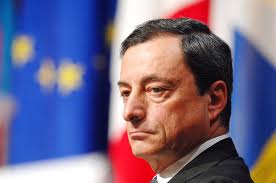
The man who claimed he would “do whatever it takes” to save the euro and stated with rhetorical flourish, “believe me, it will be enough,” is the single most important person right now in the Eurozone crisis. As the guardian of the ECB’s proverbial printing press, he’s the only person with a big enough “bazooka” to blast confidence back into the market.
The buoyancy in global equity and bond markets over the past two months is largely a bet that Draghi will deliver on his promise. You can bet that every sentence in his Thursday press conference will be picked apart with a fine-tooth comb for clues as to his plans.
The growing consensus, based on comments by Draghi and others, is that the ECB will buy virtually unlimited amounts of troubled-country bonds in the secondary markets once the countries in question formally request aid from the Eurozone bailout funds and submit to any conditions for reform or budget austerity (even if some of the conditions are symbolic).
#2. Jens Weidmann, President of the Bundesbank

But Mr. Draghi will not use a single euro to buy periphery country debt if Jens Wiedmann has anything to say about it.
Weidmann is president of the German Bundesbank, the single most powerful national bank within the Eurozone system, and a leading member of the ECB’s governing council. He’s also the most vocal high-profile critic of Draghi’s bond-buying plans, arguing that such operations are an illegal funding of member states’ budgets and a major overstepping of the ECB’s mandate.
Sure, Mario Draghi can act over Weidmann’s opposition. But given the Bundesbank’s influence within the system, it won’t be particularly fun or easy. Much of Draghi’s stalling in recent months has been due to his need to get the Bundesbank on board. His success or failure on this count remains to be seen.
#3. Angela Merkel, German Chancellor

Next on the list is Germany’s iron lady, Chancellor Angela Merkel. As the elected leader of the most powerful economy in the Eurozone—and the one country strong enough to backstop the assorted bailout schemes—Merkel is second only to Draghi in importance to the Eurozone right now.
Ms. Merkel has two very different voices whispering into her ear. From one side, she hears the pleas of her fellow European heads of government asking for assistance in the cause of the greater European good. But from the other side she has the stern voice of German Finance Minister Wolfgang Schäuble demanding austerity as both a means to an end and the end itself.
The result has been predictable: paralysis and indecision. Merkel’s heart tells her to support Draghi’s attempts to do “whatever it takes” while her conscience—and her angry voters—tells her that this only rewards bad behavior and that the only force that will incentivize Europe’s problem states to get their acts together is the constant threat of bond-market meltdown.
As an elected political leader (rather than an appointed technocrat like Draghi and Weidmann), Merkel has a responsibility to explain to her citizens what is at stake, and on this count she has most assuredly failed. The sooner the chancellor learns how to actually lead rather than follow the often contradictory whims of her voters, the sooner we will be to finding an end to this crisis.
#4. Mariano Rajoy, Spanish Prime Minister

After campaigning for the job for three election cycles, one might wonder if Mr. Rajoy regrets taking the job of prime minister. It has, no doubt, proven to be a thankless one. With roughly a quarter of the Spanish population out of work and forced government spending cuts starting to bite, Mariano Rajoy is not a popular man in his home country.
As the leader of the country currently at the center of the crisis, Rajoy is one of the key players. But unlike his German counterpart Angela Merkel, Rajoy is not in much of a position to actually act at the moment. He deserves credit for forcing through deeply unpopular austerity measures and negotiating quite favorable terms in the initial stages of the bank bailout talks. But in the end, his country’s fate lies in the hands of the ECB and Germany.
The key question for Rajoy will be if (or more likely when) he will formally request a state bailout. The delicate negotiations that follow will determine whether Spain and the Eurozone are stabilized or whether the entire system rips apart at the seams. We shall certainly see whether the mild-mannered Rajoy is up to the task.
#5. Andreas Voßkuhle, President of the German Federal Constitutional Court

Most readers will have never heard of Andreas Voßkuhle, and if there are no major complications on September 12, he may remain all but anonymous for the rest of his life, at least outside of Germany. But if his becomes a household name, you will know that something went terribly, terribly wrong.
September 12 is the date on which the German court will decide whether Germany’s participation in the Eurozone bailout facilities is legal under Germany’s constitution, known as the “Basic Law” (see “What Keeps Me Awake at Night”).
Most observers expect the court to more or less toe Angela Merkel’s line and acquiesce to the Eurozone bailout facilities, with perhaps a few conditions and caveats added in for good measure.
But if Mr. Voßkuhle and his fellow judges rule that German participation is unconstitutional, then two years’ worth of painful negotiations go out the window and we go back to square one. I would see a global meltdown on par with post-Lehman 2008 as being virtually guaranteed at that point, and I do not believe that the euro would survive in any form that we would recognize.
I doubt whether Mr. Voßkuhle wants that on his conscience, and I am betting that the court rules favorably. But you can bet that I’ll be sitting on the edge of my chair when the ruling is announced.
SUBSCRIBE to Sizemore Insights via e-mail today.
No related posts.
South Pacific Currencies Drop Amid Speculation of Global Economic Slowdown
By TraderVox.com

Tradervox.com (Dublin) – The Australian dollar dropped against the dollar to its weakest level in over six weeks before the Reserve Bank of Australia announced its decision yesterday. The Aussie and Kiwi dropped amid speculation of global economic slowdown, which is expected to be signaled by the data expected today from the euro region. Last week, the south pacific dollars declined against safe haven currencies like the yen after China released less-than-expected manufacturing data. Sign of global economic slowdown are boosting the demand for safety in the market which is not good for the south pacific dollars.
Despite the Reserve Bank of Australia refraining from cutting the interest rates, the Australian dollar decreased against most of its 16 major counterparts. A Retail Sales report from the euro zone is expected to show a decline while services in the region are expected to contract, adding more pressure on commodity related currencies. The New Zealand dollar depreciated to more than five-week low against the US dollar as Asian stocks declined. Hans Kunnen, the Chief Economist in Sydney at St. George Bank Ltd, said that the Aussie decline yesterday was as a result of speculation that the RBA was not going to make any unpredicted move in reference to rates. He also predicted that the RBA might make a rate cut before Christmas this year.
The Australian dollar also dropped as a report from Bureau of Statistics showed that the south pacific nation registered a narrower current account deficit from A$13billion in the first quarter to A$11billion in the second quarter. The Aussie has also dropped by 4.2 percent in August, making it the worst performer against the 10 most traded currencies. The New Zealand dollar posted the second worst performance, declining by 3.6 percent in the same month.
The Aussie touched its lowest since July 25 of $1.0224 yesterday, but gained against the yen by 0.2 percent to trade at 80.91 yen. It had earlier declined to 80.07 yen, the weakest since July 25. The New Zealand currency dropped to its July 26 low of 79.56 US cents before advancing a bit to 79.81. It traded at 62.53 against the yen from 62.42.
Disclaimer
Tradervox.com is not giving advice nor is qualified or licensed to provide financial advice. You must seek guidance from your personal advisors before acting on this information. While we try to ensure that all of the information provided on this website is kept up-to-date and accurate we accept no responsibility for any use made of the information provided. Opinions expressed at Tradervox.com are those of the individual authors and do not necessarily represent the opinion of Tradervox.com or its management.
Article provided by TraderVox.com
Tradervox.com is a Forex News Portal that provides real-time news and analysis relating to the Currency Markets.
News and analysis are produced throughout the day by our in-house staff.
Follow us on twitter: www.twitter.com/tradervox
Canada holds rate, repeats it may have to raise rates
By Central Bank News
The Bank of Canada (BOC) held its target for its overnight interest rate unchanged at 1.0 percent, as widely expected, and repeated that it may have to it tighten policy if economic expansion continues in order to keep inflation close to target.
“In Canada, while global headwinds continue to restrain economic activity, underlying momentum remains at a pace roughly in line with the economy’s production potential,” the BoC said in statement, adding that it expects growth to pick up through 2013 with consumption and business investment to remain the main drivers.
Canada’s GDP expanded by 2.50 percent in the second quarter from the same 2011 quarter, up from 1.8 percent in the first quarter. The BoC expects 2.1 percent growth in 2012 and 2.3 percent in 2013.
The bank noted that core inflation had been softer than expected in recent months but it, along with CPI inflation, is expected to return to 2 percent in the next year.
The BoC targets inflation of 1-3 percent, with a midpoint of 2.0 percent.
Consumer Price Inflation in Canada has been coming down rapidly in recent months, hitting 1.3 percent in July after peaking at 3.7 percent in May last year.
In July the BoC said it expected CPI inflation to remain noticeable below its target due to the fall in oil prices but in today’s statement it said that prices for oil and other commodities produced by Canada had increased since July, despite the slower economic momentum.
“To the extent that the economic expansion continues and the current excess supply in the economy is gradually absorbed, some modest withdrawal of the present considerable monetary policy stimulus may become appropriate, consistent with achieving the 2 per cent inflation target over the medium term,” the BoC said.
The BoC has used the same tightening language since April and on Aug. 22 Governor Mark Carney also used the same phrase.
The BoC has held its key interest rate at 1.0 percent since September, 2010.
www.CentralBankNews.info
Gold “Has Seen the Lows for the Year”, ECB Action Could Be “Supportive” for Gold
London Gold Market Report
from Ben Traynor
BullionVault
Wednesday 5 September 2012, 07:00 EDT
SPOT MARKET gold prices fell briefly below $1690 an ounce Wednesday morning in London trading, remaining close to six-month highs, while stocks and commodities were also broadly flat, ahead of tomorrow’s policy announcement from the European Central Bank.
Silver prices dipped below $32 per ounce before recovering, ending the morning over 1% up on the week so far.
“The next resistance is at $1700,” says the latest technical analysis from bullion bank Scotia Mocatta.
Spot gold prices briefly touched that level on Tuesday, following the release of the latest ISM purchasing managers index data.
The ISM data show US manufacturing activity contracted in August for the third month in a row, prompting further speculation about the possibility of a third round of quantitative easing from the Federal Reserve, whose policymakers meet next Tuesday and Wednesday.
“[The ISM report] gives the Fed another green light to launch QE3 next week,” reckons Paul Dales, senior US economist at consultancy Capital Economics.
“Will QE really come?” asks Dominic Schnider at UBS Wealth Management.
“It is a little too early to go full throttle…policymakers are heating things up, but will what eventually comes out to be as big as the market is looking for?”
The volume of gold held to back shares in the world’s biggest gold ETF, the SPDR Gold Trust (GLD), rose to its highest level since March 19 yesterday, hitting 1293.1 tonnes. Total gold ETF holdings meantime set an all-time record Tuesday, according to newswire Reuters.
On the New York Comex, open interest in gold futures rose to six month highs yesterday, although we will not know the balance of bullish and bearish positions until the weekly Commitment of Traders report comes out at the end of the week.
In Europe meantime, the ECB and Bank of England are due to make their latest policy announcements tomorrow. Earlier this week, ECB president Mario Draghi reportedly told a committee of European Parliament lawmakers that he favors buying sovereign bonds of up to three years in maturity on the open market.
“We expect the ECB action to be supportive of gold,” says today’s commodities note from Standard Bank.
“A stronger Euro and weaker Dollar could see gold move above $1700.”
Over in India, traditionally the world’s largest gold buying nation, there are fears of another rise in gold import duties.
“The government may look at increasing the duty to 7.5%,” says Prithviraj Kothari, president of the Bombay Bullion Association.
“Any such move will hit demand in a big way.”
“Any increase in duty will play havoc on the industry,” agrees Bachhraj Bamalwa, chairman of the All India Gems & Jewellery Trade Federation.
“The industry is grappling with high gold prices and demand is slow.”
Rupee gold prices set another all-time high on Wednesday, as the Rupee fell to a six-week low against the Dollar.
Indian gold jewelry demand however is set to rally in the second half of 2012, after falling to three-year lows in the six months to June, precious metals consultancy Thomson Reuters GFMS said Tuesday.
GFMS, which published its Gold Survey 2012 Update 1 yesterday, added that it expects gold prices to breach $1800 by the end of this year, with gold investment forecast to hit record levels and central banks expected to add a further 220 tonnes of gold to their reserves, following the 273 added in the first half of the year.
“I think we’re on pretty safe ground saying that we’ve already seen the lows for the year and that firmer prices, particularly towards year-end, are on the cards,” said GFMS global head of metals analytics Philip Klapwijk.
“But we’re also expecting a bumpy ride…any intensification of the Eurozone crisis or dashing of hopes for further easing by the Fed and you could easily see the rally derailed for a while.”
Gold value calculator | Buy gold online at live prices
Editor of Gold News, the analysis and investment research site from world-leading gold ownership service BullionVault, Ben Traynor was formerly editor of the Fleet Street Letter, the UK’s longest-running investment letter. A Cambridge economics graduate, he is a professional writer and editor with a specialist interest in monetary economics. Ben writes and presents BullionVault’s weekly gold market summary on YouTube and can be found on Google+
(c) BullionVault 2012
Please Note: This article is to inform your thinking, not lead it. Only you can decide the best place for your money, and any decision you make will put your money at risk. Information or data included here may have already been overtaken by events – and must be verified elsewhere – should you choose to act on it.
EUR/USD: ECB Meeting Could Upset the Markets
Article by AlgosysFx Forex Trading Solutions
In yesterday’s European trading session, the Euro lost against the US dollar on fears that the European Central Bank could disappoint at tomorrow’s meeting, and would not disclose much details about its possible intervention in the markets until the German Constitutional Court makes a judgement on September 12 over the legality of the European Stability Mechanism, the Euro Zone’s bailout fund. This led to the incline of the Greenback despite economic data showing a contraction of the US’ manufacturing activity in August. As the ECB meeting draws closer, the shared currency is projected to decline versus the Buck in today’s European trading exchanges.
In a closed-door session at the European Parliament in Brussels, ECB President Mario Draghi told lawmakers that the bank has lost control of borrowing costs in the Euro Zone. He also said that the central bank’s primary mandate requires it to intervene in bond markets to take back control of interest rates and make certain the Euro’s survival. Everyone seemed to have been fixated on the ECB’s bond-buying plan, but the risks of disappointment are seen to add pressure to the single currency.
Today, the Euro Zone’s Retail Sales figure in July is projected to drop by 0.2 percent, and activity in the services sector is likely to be confirmed at 47.5 points, which are expected to push the Euro lower than its peers. As tomorrow’s meeting would likely disappoint while the judgement of the German court is still pending, the EUR/USD pair is set to decline in today’s European exchanges, favoring a short position in today’s European exchanges.
For more news, analysis, technical charts and candlestick analysis, visit AlgosysFx
Poland keeps key interest rate steady at 4.75%
By Central Bank News
The National Bank of Poland (NBP) held its interest rates unchanged, as expected by most economists.
The Polish central bank said in a brief statement that it had kept interest rates unchanged and would explain its decision at a press conference.
The bank’s reference rate was kept at 4.75 percent, the lombard rate at 6.25 percent, the deposit rate at 3.25 percent and the rediscount rate at 5.00 percent.
Economists had expected the bank to keep rates unchanged but signal that it may cut rates later this year due to a slower economy.
The economy decelerated to a 2.4 percent annual growth rate in the second quarter from 3.5 percent in the first quarter and 4.4 percent in the fourth quarter. The economy grew 4.3 percent in 2011.
Inflation, as measured by the consumer price index, eased to 4.0 percent in July from 4.3 percent in June. The NBP targets inflation of 2.5 percent, plus/minus one percentage point.
Dollar Tumbles Following Poor US Data
Source: ForexYard
The US dollar fell against several of its main currency rivals yesterday, following a worse than expected American manufacturing indicator which led to increased speculations that the Fed will soon take action to boost the US economic recovery. Turning to today, analysts are warning that the dollar could extend its recent downward trend if investors remain convinced that both the ECB and Fed will soon take actions to boost the euro-zone and US economic recoveries. At the same time, any dollar losses could be limited ahead of Friday’s Non-Farm Payrolls figure, which is forecasted to show growth in the US employment sector.
Economic News
USD – Manufacturing PMI Leads to Dollar Losses
After steadily gaining on several of its main currency rivals during the first part of the day yesterday, the dollar began falling during afternoon trading after a worse than expected US manufacturing indicator signaled a further slowdown in the US economic recovery. The USD/JPY fell 15 pips after the indicator was released to trade as low as 78.27. Against the Swiss franc, the greenback advanced some 45 pips to reach as high as 0.9563 during morning trading, before falling to the 0.9535 level following the news release.
Turning to today, analysts are warning that given the increased speculations that the Fed could initiate a new round of quantitative easing in the coming weeks, the dollar could extend its recent bearish trend. That being said, traders will want to monitor announcements out of the euro-zone today. While it is widely expected that the ECB will soon unveil its own steps to lower borrowing costs in the region, it is not yet known exactly what those steps will be. Any signs that the new ECB initiatives will not be enough to combat the euro-zone debt crisis could lead to risk aversion and boost the dollar.
EUR – Euro Reverses Some of its Recent Gains
The euro spent much of yesterday’s trading session in a bearish trend, as uncertainties regarding the details of an ECB plan to lower borrowing costs in the euro-zone led to mild risk aversion in the marketplace. The EUR/JPY fell more than 50 pips during European trading, eventually reaching as low as 98.44 toward the end of the day. Against the US dollar, the common currency dropped more than 60 pips to trade as low as 1.2557. Disappointing US data later in the day resulted in the euro bouncing back to the 1.2575 level.
Today, a lack of significant news out of the euro-zone means that traders will want to continue monitoring announcements regarding the details of the ECB’s plans to lower borrowing costs in Spain and Italy. If the ECB fails to take any significant actions in the near future to combat the euro-zone debt crisis, risk aversion is likely to return to the marketplace which could negatively affect the euro. Later in the week, traders should not forget to pay attention to the US Non-Farm Payrolls figure. The figure is considered extremely important and could lead to heavy volatility for the euro.
Gold – Gold Range Trades Ahead of Euro-Zone News
The price of gold saw relatively little movement yesterday, as investors were hesitant to open new positions ahead of significant euro-zone news later in the week. Still, gold was able to briefly touch a five-month high at $1698.76, after a worse than expected US indicator led to an increase in demand for precious metals.
Today, analysts are predicting that gold could remain near its recent highs ahead of the euro-zone Minimum Bid Rate and ECB Press Conference on Thursday. Any indications today that the European Central Bank will finally unveil plans to lower borrowing costs in Spain and Italy could help gold maintain its bullish trend.
Crude Oil – Crude Oil Reverses Gains amid ECB Uncertainty
The price of crude oil fell by more than $1 a barrel during European trading yesterday, as uncertainty regarding potential new steps from the ECB to boost the euro-zone economic recovery led to mild risk aversion in the marketplace. The commodity traded as low as $95.78 during afternoon trading, down around $1.55 for the day.
Turning to today, oil traders will want to pay attention to announcements out of the euro-zone regarding what new initiatives the ECB could announce at a press conference on Thursday. Any indications that the steps will not be strong enough to effectively combat the euro-zone debt crisis, could lead to risk aversion and cause oil to extend yesterday’s losses.
Technical News
EUR/USD
The Bollinger Bands on the weekly chart are beginning to narrow, signaling a possible price shift in the coming days. Furthermore, the Williams Percent Range on the same chart is approaching the overbought zone, indicating that the price shift could be downward. Opening short positions may be the wise choice for this pair.
GBP/USD
Most technical indicators on the daily and weekly charts show this pair range trading, making it difficult to make a long-term prediction. Traders may want to take a wait and see approach, as a clearer trend is likely to present itself in the near future.
USD/JPY
The daily chart’s Slow Stochastic appears close to forming a bearish cross, indicating that an upward correction could occur in the near future. Furthermore, the Williams Percent Range on the weekly chart has dropped into oversold territory. Opening long positions may be the right move for this pair.
USD/CHF
Long-term technical indicators are providing mixed signals for this pair. On the one hand, the MACD/OsMA on the weekly chart has formed a bearish cross, meaning that downward movement could occur. On the other hand, the same chart’s Williams Percent Range has fallen into oversold territory. Taking a wait and see approach may be the best choice for this pair.
The Wild Card
EUR/SEK
The Williams Percent Range on the daily chart has crossed over into overbought territory, indicating that this pair could see a downward correction in the near future. Furthermore, the Slow Stochastic on the same chart appears close to forming a bearish cross. This may be a good time for forex traders to open short positions.
Forex Market Analysis provided by ForexYard.
© 2006 by FxYard Ltd
Disclaimer: Trading Foreign Exchange carries a high level of risk and may not be suitable for all investors. There is a possibility that you could sustain a loss of all of your investment and therefore you should not invest money that you cannot afford to lose. You should be aware of all the risks associated with Foreign Exchange trading.
Forex news – 05.09.2012 review
Forex Daily review brought to you by REAL FOREX | www.Real-forex.com
Date: 04.09.2012 Time: 22:15 Rate: 1.2566
Daily chart
Last Review
It is possible to see that the price has corrected all the last downtrend (blue broken line), by 38.2% by Fibonacci to the 1.2594 price level, while the red broken line is the upper lip of the descending price channel shown in the weekly chart and used as a dynamic resistance. In addition it is possible to see that the current ascending move which started on the 1.2067 price level is moving in a shrinking ascending tunnel with a target of breaking of the lower lip while performing a technical correction of the ascending move in it. All those are signs for a possibility of a stoppage of the current uptrend in case a descending price structure will build and a reverse of the direction of the price towards the last low on the 1.2067 price level. On the other hand, it is possible to see that at the moment the price is located under an ascending price structure and as long as is will continue this way its targets will be the 1.692, 1.2750, 1.2824 price levels.
Current review for today
At the moment the price is located under the 1.2594 price level, this is a 38.2% Fibonacci correction level of the downtrend marked in blue broken line, while the price went north to the crossing of the upper lip of the shrinking price channel (upper black broken line) with the descending trend line (red broken line) between the peaks (part of the descending trend line which can be seen in the weekly chart). In addition the price is moving in a shrinking ascending tunnel and its target is to lead the price downwards after breaking the lower lip of the tunnel. Breaking of the 1.2436 price level will probably lead the price towards the closest support on the 1.2290 price level. On the other hand, breaching of the crossing between the trend lines (black and red broken lines) and its establishment above them will lead the price towards the 1.2750 price level.
You can see the chart below:

EUR/USD forex news
Date: 04.09.2012 Time: 22:23 Rate: 1.2566
4 Hour chart
Last Review
The price is ranging now between the 1.2480 and the 1.2590 price levels, while breaking the upper lip of the range and the establishment of the price above it will probably lead the price to the target of the depth thrown upwards, meaning the 1.2690 price level. On the other hand, breaking the lower lip of the range on the 1.2480 will lead the price towards the 1.2367 support level.
Current review for today
The price has breached the 1.2590 price level but could not breach the last peak on the 1.2638 price level and at the moment it is again located inside the range. Breaching the upper ranging level and the establishment of the price above it will probably lead the price towards the depth of the range and it’s throwing upwards, meaning to the 1.2690 price level. On the other hand, breaking of the lower ranging level will probably lead the price towards the 1.2367 support level.
You can see the chart below:

Date: 04.09.2012 Time: 22:28 Rate: 1.5873
4 Hour chart
Last Review
It is possible to see that the price is moving in an ascending price channel (black broken lines), breaking of the 1.5900 price level is suppose to bring it in first stage to the 1.5942 price level (the “One in, one out” pattern target) followed by a move towards the upper lip of the tunnel. On the other hand, stoppage of the price at the current area (up to the last peak on the 1.5913 price level) and breaking the lower lip of the ascending price channel will probably lead the price towards the 1.5750 price level at first stage.
Current review for today
Indeed the price could not breach the last peak on the 1.5913 price level, retraced and went back to the middle of the range while it is still located above the Bollinger’s moving average which is used as a dynamic support. Breaching the 1.5900 price level should lead the price to the 1.5942 at first stage (the “One in, one out” pattern target) followed by a move towards the upper lip of the tunnel. On the other hand, stoppage of the price at the current area (up to the last peak on the 1.5913 price level) and breaking the lower lip of the ascending price channel will indicate that the price will descend to check the 1.5750 price level at first stage.

08.15 (GMT+1) CHF – CPI (Monthly)
14.00 (GMT+1) CAD – BOC Rate Statement
Moody’s Cut EU Outlook to Negative Due to Eurozone and UK Ratings
By TraderVox.com

Tradervox.com (Dublin) – The debt crisis in euro zone has worsened and it is now affecting the overall rating of the European Union. According to a report by Moody’s Investors Service rating company, outlook for the EU has been downgraded to negative from stable as a result of risks to France, Germany, UK and Netherlands, which are the biggest contributors of the Union’s budget. The rating company also downgraded the outlook on the Union’s provisional AAA rating to negative from stable for its medium term note program. These moves by Moody’s are hurting investor confidence in the region which is already down from the prolonged debt crisis.
According to the statement released on Monday, the change is reflective of the negative outlook on the AAA ratings of the member countries that contribute largely to the EU budget. The statement indicated that the member states’ creditworthiness is correlated as they are all exposed to euro region debt crisis. The move has come at a time when German Central Bank, Bundesbank, is opposing the move by the European Central Bank to rollout a bond buying program aimed at lowering borrowing costs for nations wallowing in debt crisis. However, German Chancellor Angela Merkel has reiterated her commitment to supporting ECB efforts to salvage the euro. Delivering the statement, Moody’s indicated that the weakening commitment of the member states to the changes proposed to the EU’s fiscal framework have resulted to conservative budget which is credit negative.
In a bid to salvage the debt crisis in euro region, Mario Draghi, the European Central Bank President, has indicated that he is committed to buying three-year government bonds as a measure to bring down high borrowing costs. This will probably save the EU ratings as Moody’s indicated that its outlook could be changed to stable of ratings on key countries was restored to AAA status.
Disclaimer
Tradervox.com is not giving advice nor is qualified or licensed to provide financial advice. You must seek guidance from your personal advisors before acting on this information. While we try to ensure that all of the information provided on this website is kept up-to-date and accurate we accept no responsibility for any use made of the information provided. Opinions expressed at Tradervox.com are those of the individual authors and do not necessarily represent the opinion of Tradervox.com or its management.
Article provided by TraderVox.com
Tradervox.com is a Forex News Portal that provides real-time news and analysis relating to the Currency Markets.
News and analysis are produced throughout the day by our in-house staff.
Follow us on twitter: www.twitter.com/tradervox