Top 7 Questions a Scalper Should Know The Answer, Part II

Article by Investazor.com

Scalping in trending market or in range?

top-7-questions-for-scalpersIn old technical analysis theories, like Dow Theory, there are recognized only the up trends and the down trends and the sideways moves were considered just lines, or a smaller move in a bigger trend. In the new theories there are considered to be 3 types of trends: Uptrend and Down Trend (they make the trending market) and the Sideways Trend (range, sideways move, etc).

For a scalper to find the answer for this question it is better to look in himself and in his trading system. As long as the market moves the scalper makes money on the very short term run. He depends on his emotions. If a trader is set to trade in trending markets then he will feel uncomfortable in a range and he will lose money, it goes also the other way around.

It is very important to understand in what kind of trend the price is and trade accordingly. It is pretty hard to find a system that will have the same probability of success in both trending market and range. So a scalper could have even two systems, but he should always know when to change between them.

Do Brokers hate Scalpers?

This is a tricky question because you will find a lot of answers on the internet like:

– Brokers hate scalpers because this kind of trading present low risk and they usually make money, so it is bad for business.

– Brokers do not hate scalpers because they do a lot of trades and pay the spread.

Actually the truth is somewhere in the middle. First of all a scalper should closely look for their broker (you can review our article on how to choose a correct broker). If the brokerage house is trustworthy then it will not have any problem with the clients that makes money. If a trader is unlucky and trade with a scammer (unfortunately there are a lot of these nowadays especially in the derivatives markets and CFDs) then he might have some problems if he makes money from scalping, because the broker could mess with the quotations or the data feed or even the trading software.

One real problem that could appear from scalper for a broker is actually overloading the servers. Because scalpers are making tens of trades per hour and hundreds per day it might occur an overloading of the server. If a broker knows that he has such a problem in his infrastructure then it might put the scalper on a blacklist and sometimes mess with his style of trading.

If you would like to scalp be sure that you will find a trustworthy broker that also has good servers to sustain your type of trading.

Getting rich or enriching the Broker?

This is a pretty good question. Nowadays the beauty of trading is also made by the systems that are fast and allows a trader to scalp, but mostly is made by the low costs. The spreads have dropped hard from several years ago. A trader could have now spreads under 1 pip (for the most traded pairs like EURUSD, GBPUSD, USDJPY).

For a scalper to succeed with his system he would need small spreads and commissions, this way the market can easily cover his costs and assure him a smooth way to profits. Even if he pays a small spread and/or small commissions because he makes a lot of trades he will pay a lot to the broker. In this case it is a win/win situation.

A scalper should thank the broker because he has small spreads and can apply his system while a broker should thank a scalper because he is trading more than other and pays him the fees.

Manual or Automatic scalping?

This question triggers other questions like: Do you know programming or know a friend that knows programming? Automatic scalping or signaling a trade is a very good tool that a scalper could use.

I am not quite a fan of automatic trading, but I accept the fact that it would be easier to program a system which gives you signals or administrates your trading positions. It all depends on your capacity to keep a good focus and respect your scalping system in time. Automatic trading could be a solution if you have a good system and the possibility to program it.

If you did that or want to do it you should know that it isn’t enough to program it and leave it to work. You will always need to tweak and fine tune it since the market is in a continuous change. A human will observe the changes and adjust his trading system while a robot cannot do this all by itself and needs interventions.

Conclusions

Let’s wrap up what it is written in this article. Scalping is just another trading system with some specific characteristics. It is unique because of the fact that scalpers are trading on very short time intervals and are making hundreds of trades per day. This way of trading can be done by novice and advanced traders as long as they understand the risk that it is implied while scalping.

For a scalper to survive and make money with his way of trading he will have to find a good trading system which implies not only a trading strategy (based on fundamental and/or technical analysis) but also on money management and emotions management (this way he will get rid of the emotional pressures). If he will manage to check this on his list he will have a high probability in becoming consistent in his winnings.

As for the question whether a scalper can make money in both trending and sideways markets, the answer is clearly yes, but he will just have to correctly determine in which kind of market is he in. Continuing with the position of the Broker in what concerns the scalper, you saw that there are some factors which influence whether a broker is with or against a scalper even though, in normal conditions they should find themselves in a win/win situation.

As for the last questions, I believe that it is pretty subjective. As I said before, I would prefer to just push myself the buttons to trade but I agree with the fact that Expert Advisors could ease the work of a trader.

The post Top 7 Questions a Scalper Should Know The Answer, Part II appeared first on investazor.com.

Why You Should Invest in the Future of Immersive Technology — Now

By MoneyMorning.com.au

The global media is abuzz with the headline technology permeating out of CES, formerly the Consumer Electronics Show, in Las Vegas this week.

And two buzz phrases are dominating everything from Bloomberg News to The Age.

‘Wearable Tech’ and ‘The Internet of Things’

Firstly, these two terms are horrible. Obviously a ‘marketing specialist’ has been paid big bucks somewhere to look at all these new technologies and say… ‘Hmmm looks like the internet is in a lot of things these days. I know let’s call it all ‘The Internet of Things’.’

It makes me shudder every time I hear the phrase.

Of course the trend itself, whatever you want to call it, is real. But it goes deeper than just ‘things’ being connected to the internet.

Not all things will need an internet connection. Some will operate within their own separate networks, isolated from the internet, and will ‘talk’ to other devices in the same proximity that share the necessary hardware.

So rather than the internet of things, this entire trend is better summarised as ‘immersive technology‘.

The immersive technology trend is all about communication between devices. It’s Machine to Machine communication (M2M). Devices talking to other devices automatically. When this happens it all comes together as relevant, useful information for us.

And this world of immersive technology has been in the making for years. In fact it goes as far back as 1988 when one company pioneered M2M, inadvertently launching world defining technology. This company is now also a leader in the immersive technology trend with the processors and sensors needed to reshape how we live.

We’re all Technophiles at Heart, You Just Haven’t Realised It Yet

The world is at the early stages of being able to appreciate the significant change immersive technology is going to have on everything.

You will look back ten years from now and wonder what life was like before immersive technology swept through the world. And at this point you’ll likely also realise it was a missed opportunity to make tremendous gains by investing in the companies that have driven this technology.

But that’s the future, and we sit here now in the present. There is tremendous opportunity available right now to take action on this world defining trend.

Let me go into a bit more detail to explain what I mean.

I use CES as an example because right now every second report from CES is about wearable tech. But why this is even a discussion point is the deeper reason. Look at it this way…

It’s human nature to want to create an environment that makes life better, easier and more enjoyable. The pursuit of a better living standard is what drives many people. That’s why we work hard, save, invest and try to build wealth. It’s for a reason, a purpose. It’s to make life better.

In this quest for a more fulfilling life we eventually come to rely on technology to make that happen. Now most people don’t go out and invent and create technology to do it themselves. They rely on others with the capabilities and resource to innovate and invent.

And when these new technologies come to market we get excited. It’s true. We all love new technologies that we can use to make our life better, more fun and more enjoyable. I’ve never heard anyone say, ‘Oh that telephone ruined my life,’ or, ‘Without this PC I’d be so much better at handwriting,’ or, ‘This microwave makes heating up my lasagne so inconvenient.’

Sometimes it takes a while for people to get excited, but eventually these new technologies become a way of life. Soon enough you struggle to remember what life was even like without them.

At heart we’re all technophiles; some people just don’t realise it yet.

Technology wriggles its way into your life whether you like it or not. This happened with the telephone, car, typewriter, personal computer, mobile phone and is now happening with immersive technologies.

Every one of these technologies was a solution to a problem. A solution to make life easier in some form or another.

This is the same trajectory immersive technology is taking. But sometimes it’s hard to see the real story through all the noise.

Right now there are at least three dozen new flashy smartwatches and lifestyle trackers to put on our wrists. The wrist seems to be the hot spot for tech right now. But in all reality this is just a way-point en route to the bigger picture. The real immersive technology trend is so huge it’s going to change your concept of what technology is capable of.

It’s No Longer on You…It’s in You

Smartwatches will come and go, as will lifestyle and fitness trackers. When you really look past the hype, the technology is brilliant but the form and execution, for now, isn’t all that life changing.

Where I’m heading with this is the sensors and processors located within current examples of wearable tech will impact your life more than the device itself.

And it’s going to take form in the shape of technology immersed not just in your environment but in your biological structure.

That’s right, I’m taking about immersive technology in the sense your biology, your physical world and your digital world immerse as one. Call it implanted technology if you will. This technology won’t exist on your head or your wrist. It will exist in your body, connected to your biology.

You won’t be wearing a watch that you can text with and you won’t be counting how many steps you take in a day. No, you’ll have tiny biosensors and processors that interact with a visual interface to let you know real-time how you’re really going in every sense of the word.

Through immense amounts of personal data you will have the hardware and software tools at your disposal to stay healthy and happy.

The thing is, you’ll never even notice these sensors are even working away. That’s what good technology does…it just happens.

Immersive Technology Is Here and so Is the Opportunity to Invest

The way this all works is actually pretty straight forward.

You have sensors and processors connected to you. These monitor everything from the air you breathe, to your circadian rhythm, temperature and heart rate. This data transmits to a miniature computer where it’s processed. And this useful information is instantaneously delivered to you to help you make better life choices.

So if you’re feeling a bit sad, tell-tale signs will indicate this. Subsequently your personal digital assistant will appear next to you as a holograph and chat with you for 15 minutes about happy things to turn your mood around.

This might sound ridiculous to many of you. I understand that. But this is the inevitable progression of technology. It’s the sum of an array of available and prototype technologies now coming together to create a more immersive world.

Consider this. At CES already in the last week Intel has put an entire PC into a case the size of an SD card. The MYO armband has sensors in it that detect the electrical impulses emanating from your muscles. Innovega are demonstrating working contact-lens-enabled, fully functional smartglasses. And Scanadu has finalised their hardware and are ready to release their tricorder in March.

Right now all these technologies are in separate pieces of hardware. It’s not terribly efficient, nor does it make life all that much easier.

But advance the technology a couple more years, reduce the size, increase the processing power and the capabilities…and you inevitably find this technology in your body, not on your body.

There will be kickback. People will initially struggle with the concept of having technology as a part of their biological self. But we will look back in ten years’ time and wonder how we ever managed without it all.

But as that point comes closer you can actually take steps to join this huge immersive technology trend now. There are some companies that are at the cutting edge of the immersive technology trend. They’re the ones that make the sensors and processors that will usher in this new era.

These companies are crucial to a world of immersive technology, and they stand at the very early stages of a worldwide shift in how we all live and exist in the world.

Call me a dreamer if you will but this is happening. It’s happening now. Don’t get caught up in what the mass media regurgitates. It’s already a past-trend when you hear it on the news. Look deeper, look further, have a vision about what it all really means.

That’s what we do at Revolutionary Tech Investor. We look beyond and conceptualise the great ideas that will reshape our world. And we pick the companies that will take us there and make huge gains along the way.

Regards,
Sam Volkering +
Technology Analyst

Publisher’s Note: Over the past few weeks we’ve let you know about plans to launch a daily technology eletter. As we recently announced, we’re going ahead with that plan. Today I can announce the eletter will be called Tech Insider. Each day tech guru Sam Volkering will give you his insights on the latest technologies hitting the market and the innovations he sees happening in the future. It will be like no other free eletter service we’ve ever produced. We’re just putting the final touches to the behind-the-scenes infrastructure. In the next few weeks we’ll give you details on how to easily subscribe to Sam’s new free daily service.


By MoneyMorning.com.au

2014 global central bank calendar – updates with Peru

By CentralBankNews.info
    Following is an updated version of the 2014 calendar for meetings by central bank committees that decide monetary policy.
    The table includes scheduled meetings for more than 25 of the world’s central banks. In the event that meetings by monetary policy committees take place over several days, the date listed below is for the final day when decisions are normally announced.
    Work is underway to expand the number of central banks covered. You may replicate the table in part or in full only if you link to this page. The calendar can always be accessed at this link.
    The calendar is updated regularly to reflect the latest information as some central banks only release tentative schedules at the beginning of the year and then finalize their calendar as the meeting nears.

               DATE  FX CODE COUNTRYCENTRAL BANK
        JANUARY 
3-Jan    UAHUgandaBank of Uganda
8-Jan    RONRomaniaNational Bank of Romania
8-Jan    PLNPolandNational Bank of Poland
9-Jan    IDRIndonesiaBank Indonesia
9-Jan    GBPUnited KingdomBank of England
9-Jan    EUREuro areaEuropean Central Bank
9-Jan    KRWKoreaBank of Korea
9-Jan    PENPeruCentral Reserve Bank of Peru
15-Jan    BRLBrazilCentral Bank of Brazil
16-Jan    RSDSerbiaNational Bank of Serbia
16-Jan    CLPChileCentral Bank of Chile
16-Jan    EGPEgyptCentral Bank of Egypt
21-Jan    TRYTurkeyCentral Bank of Republic of Turkey
21-Jan    HUFHungaryCentral Bank of Hungary
22-Jan    JPYJapanBank of Japan
22-Jan    CADCanadaBank of Canada
22-Jan    THBThailandBank of Thailand
27-Jan    ILSIsraelBank of Israel
28-Jan    INRIndia Reserve Bank of India 
29-Jan    USDUnited StatesFederal Reserve
29-Jan    MYRMalaysiaCentral Bank of Malaysia
29-Jan    ZARSouth AfricaSouth African Reserve Bank
30-Jan    NZDNew ZealandReserve Bank of New Zealand
30-Jan    FJDFijiReserve Bank of Fiji
31-Jan    MXNMexicoBank of Mexico
        FEBRUARY
4-Feb    AUDAustraliaReserve Bank of Australia
4-Feb    RONRomaniaNational Bank of Romania
5-Feb    PLNPolandNational Bank of Poland
6-Feb    PHPPhilippinesCentral Bank of Philippines
6-Feb    GBPUnited KingdomBank of England
6-Feb    EUREuro areaEuropean Central Bank
6-Feb    CZKCzech RepublicCzech National Bank
12-Feb    ISKIcelandCentral Bank of Iceland
12-Feb    GELGeorgiaNational Bank of Georgia
13-Feb    IDRIndonesiaBank Indonesia
13-Feb    SEKSwedenThe Riksbank
13-Feb    RSDSerbiaNational Bank of Serbia
13-Feb    KRWKoreaBank of Korea
13-Feb    PENPeruCentral Reserve Bank of Peru
18-Feb    JPYJapanBank of Japan
18-Feb    TRYTurkeyCentral Bank of Republic of Turkey
18-Feb    HUFHungaryCentral Bank of Hungary
18-Feb    CLPChileCentral Bank of Chile
24-Feb    ILSIsraelBank of Israel
26-Feb    BRLBrazilCentral Bank of Brazil
27-Feb    FJDFijiReserve Bank of Fiji
27-Feb    EGPEgyptCentral Bank of Egypt
        MARCH 
4-Mar    AUDAustraliaReserve Bank of Australia
4-Mar    UAHUgandaBank of Uganda
5-Mar    CADCanadaBank of Canada
5-Mar    PLNPolandNational Bank of Poland
6-Mar    RSDSerbiaNational Bank of Serbia
6-Mar    EUREuro areaEuropean Central Bank
6-Mar    GBPUnited KingdomBank of England
6-Mar    MYRMalaysiaCentral Bank of Malaysia
11-Mar    JPYJapanBank of Japan
12-Mar    THBThailandBank of Thailand
13-Mar    IDRIndonesiaBank Indonesia
12-Mar    THBThailandBank of Thailand
13-Mar    NZDNew ZealandReserve Bank of New Zealand
13-Mar    KRWKoreaBank of Korea
13-Mar    CLPChileCentral Bank of Chile
13-Mar    PENPeruCentral Reserve Bank of Peru
19-Mar    USDUnited StatesFederal Reserve
19-Mar    ISKIcelandCentral Bank of Iceland
20-Mar    CHFSwitzerlandSwiss National Bank
21-Mar    MXNMexicoBanco de Mexico
21-Mar    TRYTurkeyCentral Bank of Republic of Turkey
24-Mar    ILSIsraelBank of Israel
25-Mar    MADMoroccoBank of Morocco 
25-Mar    HUFHungaryCentral Bank of Hungary
27-Mar    NOKNorwayNorges Bank
26-Mar    GELGeorgiaNational Bank of Georgia
27-Mar    FJDFijiReserve Bank of Fiji
27-Mar    PHPPhilippinesCentral Bank of Philippines
27-Mar    ZARSouth AfricaSouth African Reserve Bank
27-Mar    CZKCzech RepublicCzech National Bank
        APRIL 
1-Apr    AUDAustraliaReserve Bank of Australia
2-Apr    BRLBrazilCentral Bank of Brazil
2-Apr    UAHUgandaBank of Uganda
2-Apr    RONRomaniaNational Bank of Romania
3-Apr    EUREuro areaEuropean Central Bank
8-Apr    JPYJapanBank of Japan
8-Apr    IDRIndonesiaBank Indonesia
9-Apr    SEKSwedenThe Riksbank
9-Apr    PLNPolandNational Bank of Poland
10-Apr    GBPUnited KingdomBank of England
10-Apr    KRWKoreaBank of Korea
10-Apr    PENPeruCentral Reserve Bank of Peru
16-Apr    CADCanadaBank of Canada
17-Apr    RSDSerbiaNational Bank of Serbia
17-Apr    CLPChileCentral Bank of Chile
23-Apr    THBThailandBank of Thailand
24-Apr    NZDNew ZealandReserve Bank of New Zealand
24-Apr    FJDFijiReserve Bank of Fiji
24-Apr    EGPEgyptCentral Bank of Egypt
24-Apr    TRYTurkeyCentral Bank of Republic of Turkey
25-Apr    MXNMexicoBanco de Mexico
28-Apr    ILSIsraelBank of Israel
29-Apr    HUFHungaryCentral Bank of Hungary
30-Apr    USDUnited StatesFederal Reserve
30-Apr    JPYJapanBank of Japan
        MAY  
5-May    UAHUgandaBank of Uganda
6-May    AUDAustraliaReserve Bank of Australia
7-May    PLNPolandNational Bank of Poland
7-May    CZKCzech RepublicCzech National Bank
7-May    GELGeorgiaNational Bank of Georgia
8-May    PHPPhilippinesCentral Bank of Philippines
8-May    EUREuro areaEuropean Central Bank 
8-May    NOKNorwayNorges Bank
8-May    GBPUnited KingdomBank of England
8-May    MYRMalaysiaCentral Bank of Malaysia
8-May    RSDSerbiaNational Bank of Serbia
8-May    IDRIndonesiaBank Indonesia
8-May    PENPeruCentral Reserve Bank of Peru
9-May    KRWKoreaBank of Korea
15-May    CLPChileCentral Bank of Chile
21-May    ISKIcelandCentral Bank of Iceland
21-May    JPYJapanBank of Japan
22-May    TRYTurkeyCentral Bank of Republic of Turkey
22-May    ZARSouth AfricaSouth African Reserve Bank
26-May    ILSIsraelBank of Israel
27-May    HUFHungaryMagyar Nemzeti Bank
28-May    BRLBrazilCentral Bank of Brazil
29-May    FJDFijiReserve Bank of Fiji
29-May    EGPEgyptCentral Bank of Egypt
        JUNE   
3-Jun    AUDAustraliaReserve Bank of Australia
4-Jun    UAHUgandaBank of Uganda
4-Jun    CADCanadaBank of Canada
4-Jun    PLNPolandNational Bank of Poland
5-Jun    GBPUnited KingdomBank of England
5-Jun    EUREuro areaEuropean Central Bank
6-Jun    MXNMexicoBanco de Mexico
11-Jun    ISKIcelandCentral Bank of Iceland
12-Jun    RSDSerbiaNational Bank of Serbia
12-Jun    NZDNew ZealandReserve Bank of New Zealand
12-Jun    IDRIndonesiaBank Indonesia
12-Jun    KRWKoreaBank of Korea
12-Jun    CLPChileCentral Bank of Chile
12-Jun    PENPeruCentral Reserve Bank of Peru
13-Jun    JPYJapanBank of Japan
17-Jun    MADMoroccoBank of Morocco 
18-Jun    THBThailandBank of Thailand
18-Jun    USDUnited StatesFederal Reserve
18-Jun    GELGeorgiaNational Bank of Georgia
19-Jun    PHPPhilippinesCentral Bank of Philippines
19-Jun    CHFSwitzerlandSwiss National Bank
19-Jun    NOKNorwayNorges Bank
23-Jun    ILSIsraelBank of Israel
24-Jun    TRYTurkeyCentral Bank of Republic of Turkey
24-Jun    HUFHungaryCentral Bank of Hungary
26-Jun    FJDFijiReserve Bank of Fiji
26-Jun    CZKCzech RepublicCzech National Bank
        JULY  
1-Jul    AUDAustraliaReserve Bank of Australia
2-Jul    UAHUgandaBank of Uganda
2-Jul    PLNPolandNational Bank of Poland
3-Jul    SEKSwedenSveriges Riksbank
3-Jul    EUREuro areaEuropean Central Bank
10-Jul    GBPUnited KingdomBank of England
10-Jul    IDRIndonesiaBank Indonesia
10-Jul    KRWKoreaBank of Korea
10-Jul    MYRMalaysiaCentral Bank of Malaysia
10-Jul    RSDSerbiaNational Bank of Serbia
10-Jul    PENPeruCentral Reserve Bank of Peru
11-Jul    MXNMexicoBanco de Mexico
15-Jul    JPYJapanBank of Japan
16-Jul    CADCanadaBank of Canada
16-Jul    BRLBrazilCentral Bank of Brazil
17-Jul    TRYTurkeyCentral Bank of Republic of Turkey
17-Jul    EGPEgyptCentral Bank of Egypt
17-Jul    ZARSouth AfricaSouth African Reserve Bank
22-Jul    HUFHungaryCentral Bank of Hungary
24-Jul    NZDNew ZealandReserve Bank of New Zealand
28-Jul    ILSIsraelBank of Israel
30-Jul    USDUnited StatesFederal Reserve
31-Jul    FJDFijiReserve Bank of Fiji
31-Jul    PHPPhilippinesCentral Bank of Philippines
31-Jul    CZKCzech RepublicCzech National Bank
        AUGUST  
4-Aug    UAHUgandaBank of Uganda
5-Aug    AUDAustraliaReserve Bank of Australia
6-Aug    THBThailandBank of Thailand
7-Aug    GBPUnited KingdomBank of England
7-Aug    EUREuro areaEuropean Central Bank
7-Aug    RSDSerbiaNational Bank of Serbia
7-Aug    PENPeruCentral Reserve Bank of Peru
8-Aug    JPYJapanBank of Japan
13-Aug    GELGeorgiaNational Bank of Georgia
14-Aug    KRWKoreaBank of Korea
14-Aug    IDRIndonesiaBank Indonesia
20-Aug    ISKIcelandCentral Bank of Iceland
25-Aug    ILSIsraelBank of Israel
26-Aug    HUFHungaryCentral Bank of Hungary
27-Aug    TRYTurkeyCentral Bank of Republic of Turkey
28-Aug    FJDFijiReserve Bank of Fiji
28-Aug    EGPEgyptCentral Bank of Egypt
        SEPTEMBER
2-Sep    UAHUgandaBank of Uganda
2-Sep    AUDAustraliaReserve Bank of Australia
3-Sep    BRLBrazilCentral Bank of Brazil
3-Sep    PLNPolandNational Bank of Poland
3-Sep    CADCanadaBank of Canada
4-Sep    SEKSwedenSveriges Riksbank
4-Sep    JPYJapanBank of Japan
4-Sep    EUREuro areaEuropean Central Bank
4-Sep    GBPUnited KingdomBank of England
5-Sep    MXNMexicoBanco de Mexico
11-Sep    NZDNew ZealandReserve Bank of New Zealand
11-Sep    PHPPhilippinesCentral Bank of Philippines
11-Sep    IDRIndonesiaBank Indonesia
11-Sep    RSDSerbiaNational Bank of Serbia
11-Sep    PENPeruCentral Reserve Bank of Peru
12-Sep    KRWKoreaBank of Korea
17-Sep    USDUnited StatesFederal Reserve
17-Sep    THBThailandBank of Thailand
18-Sep    MYRMalaysiaCentral Bank of Malaysia
18-Sep    NOKNorwayNorges Bank
18-Sep    CHFSwitzerlandSwiss National Bank
18-Sep    ZARSouth AfricaSouth African Reserve Bank
22-Sep    ILSIsraelBank of Israel
23-Sep    MADMoroccoBank of Morocco 
23-Sep    HUFHungaryCentral Bank of Hungary
24-Sep    GELGeorgiaNational Bank of Georgia
25-Sep    TRYTurkeyCentral Bank of Republic of Turkey
25-Sep    FJDFijiReserve Bank of Fiji
25-Sep    CZKCzech RepublicCzech National Bank
        OCTOBER
1-Oct    ISKIcelandCentral Bank of Iceland
2-Oct    UAHUgandaBank of Uganda
2-Oct    EUREuro area European Central Bank
7-Oct    AUDAustraliaReserve Bank of Australia
7-Oct    JPYJapanBank of Japan
7-Oct    IDRIndonesiaBank Indonesia
8-Oct    KRWKoreaBank of Korea
8-Oct    PLNPolandNational Bank of Poland
9-Oct    GBPUnited KingdomBank of England
9-Oct    PENPeruCentral Reserve Bank of Peru
16-Oct    RSDSerbiaNational Bank of Serbia
16-Oct    EGPEgyptCentral Bank of Egypt
22-Oct    CADCanadaBank of Canada
23-Oct    PHPPhilippinesCentral Bank of Philippines
23-Oct    TRYTurkeyCentral Bank of Republic of Turkey
23-Oct    NOKNorwayNorges Bank
27-Oct    ILSIsraelBank of Israel
28-Oct    SEKSwedenThe Riksbank
28-Oct    HUFHungaryCentral Bank of Hungary
29-Oct    BRLBrazilCentral Bank of Brazil
29-Oct    USDUnited StatesFederal Reserve
30-Oct    FJDFijiReserve Bank of Fiji
30-Oct    NZDNew ZealandReserve Bank of New Zealand
31-Oct    MXNMexicoBanco de Mexico
        NOVEMBER 
4-Nov    UAHUgandaBank of Uganda
4-Nov    AUDAustraliaReserve Bank of Australia
5-Nov    PLNPolandNational Bank of Poland
5-Nov    ISKIcelandCentral Bank of Iceland
5-Nov    THBThailandBank of Thailand
5-Nov    GELGeorgiaNational Bank of Georgia
6-Nov    CZKCzech RepublicCzech National Bank
6-Nov    GBPUnited KingdomBank of England
6-Nov    EUREuro areaEuropean Central Bank
6-Nov    MYRMalaysiaCentral Bank of Malaysia
13-Nov    RSDSerbiaNational Bank of Serbia
13-Nov    IDRIndonesiaBank Indonesia
13-Nov    KRWKoreaBank of Korea
13-Nov    PENPeruCentral Reserve Bank of Peru
19-Nov    JPYJapanBank of Japan
20-Nov    ZARSouth AfricaSouth African Reserve Bank
20-Nov    TRYTurkeyCentral Bank of Republic of Turkey
24-Nov    ILSIsraelBank of Israel
25-Nov    HUFHungaryCentral Bank of Hungary
27-Nov    FJDFijiReserve Bank of Fiji
27-Nov    EGPEgyptCentral Bank of Egypt
        DECEMBER 
2-Dec    AUDAustraliaReserve Bank of Australia
2-Dec    UAHUgandaBank of Uganda
3-Dec    BRLBrazilCentral Bank of Brazil
3-Dec    CADCanadaBank of Canada
3-Dec    PLNPolandNational Bank of Poland
4-Dec    GBPUnited KingdomBank of England
4-Dec    EUREuro areaEuropean Central Bank
5-Dec    MXNMexicoBanco de Mexico
10-Dec    ISKIcelandCentral Bank of Iceland
11-Dec    NOKNorwayNorges Bank
11-Dec    KRWKoreaBank of Korea
11-Dec    PHPPhilippinesCentral Bank of Philippines
11-Dec    NZDNew ZealandReserve Bank of New Zealand
11-Dec    RSDSerbiaNational Bank of Serbia
11-Dec    IDRIndonesiaBank Indonesia
11-Dec    CHFSwitzerlandSwiss National Bank
11-Dec    PENPeruCentral Reserve Bank of Peru
12-Dec    FJDFijiReserve Bank of Fiji
16-Dec    SEKSwedenThe Riksbank
16-Dec    MADMoroccoBank of Morocco 
17-Dec    CZKCzech RepublicCzech National Bank
17-Dec    THBThailandBank of Thailand
17-Dec    USDUnited StatesFederal Reserve
17-Dec    GELGeorgiaNational Bank of Georgia
18-Sep    HUFHungaryCentral Bank of Hungary
19-Dec    JPYJapanBank of Japan
24-Dec    TRYTurkeyCentral Bank of Republic of Turkey
29-Dec    ILSIsraelBank of Israel

Do Forex indicators work?

Guest Article By dontlettheforexdriveyouupthewall.com

Reasons for using indicators

As soon as you enter into the forex markets you will probably be bombarded with information about indicators all claiming to do lots of wonderful things to help a trader become profitable.

I understand the first response for many traders is to try and find the easiest way to analyse the forex charts but do these indicators really help or are they just a distraction?

Placing indicators on our charts may help some traders and I have no problem at all with traders that use indicators as long as they do actually help but if you are honest with yourself, how many times has an indicator got you into a bad trade or stopped you entering a valid trade?

Indicators on the surface are attractive to many new traders because there seems to be an indicator for every specific situation, some indicate the current trend or momentum, some tell us when price is over bought or oversold, etc…. and so they seem to provide additional guidance, to add strength to a traders toolbox.

It’s very common to over complicate forex trading and trying to get too smart by adding indicators to analyse the markets is what can cause confusion and information overload. The lack of rules imposed on the forex means it is hard to know what we should and what we shouldn’t use to help us trade.

I myself started off trading with 2 exponential moving averages on my charts, thinking they would help me analyse the forex charts. The problem is you become quite reliant and attached to the indicators after a while and removing them is a hard decision. Thankfully, I did and haven’t looked back since.

I personally feel indicators are mainly used to mask the fact that some traders are unable to read the charts properly. Why use an indicator to determine what is exactly going on in the markets or when to enter or exit a trade, it just seems crazy!!

Drawbacks to using indicators

There are two main types of indicators, the first are known as “lagging” indicators, like for example moving averages. These present signals after the market has turned, meaning the market has already made the big move before you get the signal to enter the trade. So you basically miss the boat. So they are useful for when the markets are trending strongly but terrible when the market is range bound.

The other type are “leading” indicators, like for example RSI. They try to predict when price may turn around and so are designed to help traders to pick tops and bottoms. The problem being they can be very dangerous and misleading because they produce lots of false signals before the markets actually turns. So in a strongly trending market they will tend to show over bought or oversold signals constantly. The leading indicators are more designed for range trading.

So what we have are two types of indicators which each work for differing market conditions. The next step many traders take is to then mix the two different types of indicators up, thinking it will help them to trade both trending markets and ranging markets. Sounds pretty complicated already, right?

So, here’s an example of a chart filled with indicators and one below it with no indicators. Which looks clearer and easier to analyse the current market to you?

chart with indicators

chart with no indicators

Therefore, indicators do have some merits but also have some pretty big drawbacks. I guess they are so popular because they seem to take the hard decision making away from the traders that are maybe not confident enough to trust their own analysis of the market.

The use of indicators can also instill a false safety net and allow traders to deflect blame if a trade fails. Granted there is no trading style that will produce 100% win rates but atleast with price action and clean charts we the traders are making the decisions to enter and exit trades and not the indicators.

What’s the alternative solution

So what’s the alternative, well I really believe using price action and simple horizontal support and resistance levels is all you really need. Learning how to read the charts using price action is not easy and takes a lot of time and studying to become competent.

If you do decide to make the leap and study how to learn how to become fluent in reading price action, indicators just fall to the side-lines and you’ll begin to see how indicators can actually be a distraction from what is really going on in the markets.

Keeping the charts free from indicators, produces charts that are clean, simple and much nicer to look at, plus they remove all the information that is just not needed. “Keep it simple” I say.

Why not try it yourself, strip back your charts to the bare basics. I know it will feel very strange and almost like you don’t know where to look for trades to begin with but in time the art of reading price action does make sense.

You’ll begin to see that the market copies what it has done in the past and price just moves from one level to the next.

The harsh reality is there is no quick fix to learning how to trade, adding indicators will never solve the old problem of trying to making money in the Forex. They may well help new traders at the beginning of their trading careers but in the long term I’ve found them not to be an essential tool required to trade the forex consistently.

I hope after reading this article it may encourage you to consider removing the indicators from your charts and try just using simple price action with support and resistance levels to trade from.

About the Author

If this article gets you wondering what price action is all about, check out the many free articles and videos and learn more about trading with price action at dontlettheforexdriveyouupthewall.com.


Generalites about Anyoption

The first thing that impresses in using Binary trading is its simplicity. This trading has become very popular among Forex traders, but at the same time it is not as simple as it seems. After you had chosen an asset, you have to evaluate if your asset is increasing or decreasing in the future. You are able to open the trade after you had made the decision, based only on your intuition or the trend. You can benefit from a large profit if the asset increses in value, but if it decreases, you lose all your money. The real advantage of the Anyoption is that if you do not predict an outcome correctly, you will receive 15% of the initial investment, but if you traded correctly you will retain between 65% and 71% of you investment. Anyoption is one of the oldest company that started offering binary options in 2008, on the internet and as the first real pioneer of Binary Options industry, it continues to lead the industry in terms of innovation. To start trading with Anyoption the trader needs only to deposit at least 200$.

You can log in to your account from anywhere because their platform si web-based. It is also very intuitive, extremely responsive and robust. There are four different expiry times from which you can choose and if you choose for example the hourly options you can use the “Profit Line” feature, which is anything less than a real time chart where you can see your profit and your investment. You are set after you had selected an asset and you had chosen the desired investment, even if it is a Call or a Put trade. After I read this review about Anyoption I understand that their platform has complete flexibility because you can choose what you want from the four expiry date, starting with the end of the hour and ending with the end of the month. You can`t see from the main screen if you are “In the Money” or “Out of the Money”, but you can see in which step you are by clicking on a picture of a chart. Their platform can be used by traders from all over the world, because Anyoption is available in 8 different languages including English, French, Turkish, Spanish, Italian, Arabic, German and Russian.

They have 98 assets and in this way they cover most of the part of the earth. Two of the most used strategies all over the world are “the reversal” and “the hedging strategies”. While the first one can bring high returns if the market conditions are right, the second one reduces the risk, but at the same time reduces the potencial return of an investment. In the first one, because the asset can increase or decrease in value, the traders buy a Call or a Put option because they think that the upward or the downward will return to normal. In the second one, being more conservative, the trader buys both a Call and a Put option to reduce the chances of losing and increasing the chances of having profit.

Binary Options is on the market since 2008 and because of this there is a great deal of reliability. Anyoption keeps their customer deposits in a separate trust account and at the same time they offer many payment options for deposits. They do not offer bonuses to all their customers, but they do this for the sales team. They have to negociate their bonuses according to the specific deal set with the client. Obviously the client should fulfill the agreed wager to receive the bonus.

The major advantage that makes Anyoption different from any brokers from the market is that they offer you 15% money back for those trades that weren`t successful. In this way the traders do not lose all the money they have invested before. They have a team very professional and experienced and there are available many tradable assets. They have a simple platform, easy to use because it is available in 8 different languages. One disadvantage would be that they are not regulated like many brokers from the market and they do not have promotions or bonuses.


Our Outlook for The First Non-Farm Payrolls in 2014

Article by Investazor.com

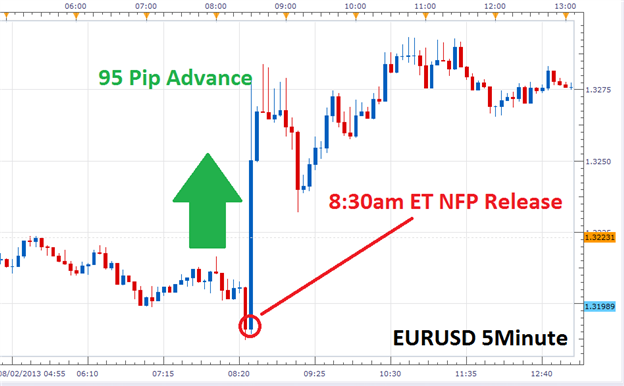
non-farm-payrolls-chart-10.01.2014On 18th December, FED dropped the T bomb, starting to taper its aggressive bond-buying program to $75 billion a month. What happened then? EURUSD and Gold fell like a rock. Three weeks after, the preliminary job market report, ADP, shows a number of 238K new created jobs and the forecast was 200K. Based solely on the ADP number, the FED was right to taper and the markets responded accordingly. The dollar strengthened and gold slipped no surprise whatsoever there.

Having these aspects in mind, which could be the scenario for today’s NFP and unemployment rate publication? There are two basic scenarios; they could come in divergence or in convergence. For the latter possibility, NFP will clearly have a bigger importance than the unemployment rate and the markets will be”NFP-driven”. If the NFP indicator comes as least as strong as the expectations (196K), EURUSD could drop under 1.3580 and Gold under the support line from $1230. For the former scenario, the NFP indicator will still have greater importance, but by the end of the day the markets would have digested better the info and reaching equilibrium.

As a brief conclusion, having a NFP in line with the expectations, or better, rhymes with a stronger dollar and a weakened gold whereas a disappointing number of the NFP would give gold and EURUSD a boost.

The post Our Outlook for The First Non-Farm Payrolls in 2014 appeared first on investazor.com.

Gold Advances Before Jobs Report Release

By HY Markets Forex Blog

Gold climbed on the last day of the trading week before the release of the US jobs data, while traders evaluate the outlook for the metal’s physical demand against speculation the Federal Reserve (Fed) may reduce stimulus further.

Gold Futures for February delivery rose 0.52% higher to $1,235.70 an ounce at the time of writing, while silver futures gained 0.41% standing at $19.765 an ounce at the same time. Platinum climbed 0.4% to $1,423.75 an ounce, trading towards a third weekly advance.

In China, the premium for the yellow metal advanced to $31.21 an ounce on January 7, the highest in two weeks.

Gold – Fed Minutes

Minutes from the Federal Reserve’s (Fed) December meeting showed that officials supported tapering its stimulus, however some of the officials suggested the move was premature. Most members recommended the central bank should reduce its asset buying program even further.

In the last Fed meeting, Fed Chairman Ben S Bernanke confirmed the central bank would begin to reduce its monthly asset purchases to $75 billion from $85 billion.

Members of the Federal Open Market Committee (FOMC) will meet up Jan 28-29 to consider the next move for the central bank’s asset purchases as the US economy strengthens.

Gold – Jobs Report

The Labour Department is expected to release the non-farm payrolls for December during the day. Analysts are forecasting 196,000 new jobs were created, lower than 203,000 added in the previous month.

A report from ADP Research Institute, the US private sector hired 238,000 new employees in December, compared to 200,000 forecasted by analysts and the biggest increase since November 2012.


Visit www.hymarkets.com   to find out more about our products and start trading today with only $50 using the latest trading technology today.

The post Gold Advances Before Jobs Report Release appeared first on | HY Markets Official blog.

Article provided by HY Markets Forex Blog

WTI Futures Picks up From Six-Month Low

By HY Markets Forex Blog

WTI futures bounced back from its six-month low on Friday as traders focus on the release of the US jobs data, which is expected to be released later in the day.

The West Texas Intermediate for February deliveries rose 1.00% higher to $92.58 a barrel on New York’s Nymex at the time of writing, while the European benchmark Brent crude gained 0.63% to $107.07 a barrel the London-based ICE Futures Europe exchange. The crude dropped to a six-month low of $91.24 on Thursday.

The US non-farm payrolls reports is expected to be released later in the day, analysts and investors are speculating over the report as the reports is forecasted to show positive reading for crude. The report could also persuade Fed officials to reduce the bank’s stimulus program further, which could have a hurt the commodity market.

WTI – US Crude Stockpiles

US crude inventories dropped 2.675 million barrels last week, compared to analysts forecast of a 1.9 million drop, reports from the US Energy Information Administration (EIA) confirmed.

Distillate inventories, including diesel and heating oil added 5.83 million barrels, rising above analyst forecast of an additional 1.9 million barrels.

A separate report released revealed that crude oil stockpiles in the US dropped by 7.3 million barrels in the week ending January 3, according to reports from the American Petroleum Institute (API).

The report from EIA also confirmed crude production in the US climbed 24,000 barrels per day to 8.15 million barrel per day in the past week.

WTI – China

Chinese trade data indicated the economy was moving at a slow pace. China’s crude imports climbed 13% higher from the previous year to 6.31 million barrels per day. However crude imports on an annual-basis gained 4% in 2013, dropping from the previous reading of a 7% rise in 2012.

The country’s trade data revealed exports slightly increased to 4.3%, way below analysts’ forecast of an 8.3% rise.


Win a luxurious trip to the Maldives & up to $30,000 cash for trading with us!

Visit for details http://alturl.com/2kysk 

The post WTI Futures Picks up From Six-Month Low appeared first on | HY Markets Official blog.

Article provided by HY Markets Forex Blog

Top 7 Questions a Scalper Should Know The Answer, Part I

Article by Investazor.com

top-7-questions-for-scalpersThis article is another part of our beginner to advanced forex scalping guide, in which we would like to point out the most frequent and important questions for a scalper to know the answers. In time a lot of myths were created which made scalping look scary and hard to do.

In fact you should look at scalping like it is just another way of trading but with some specific characteristics. In our opinion scalping is great for both experienced and novice traders. If mastered correctly such a system could help a trader become more disciplined and understand better the movement of the market, in both volatile and calm periods.

If you will continue reading our article you will see that the questions we mention here are pretty familiar to you. If you haven’t asked yourself at least one of them for sure you have read them on trading blogs and forums. There are a lot of answers throughout the internet, but the ones you will find by reading this are from our experience in trading and coaching other traders, from our experience in working with brokerage houses and in brokerage houses.

How do I know I have found the right Scalping system?

After reading about scalping on the internet, every trader will start looking for a trading system that will help him make money. In search for the Holy Grail each trader will have learned several trading strategies. These could be technical (you can test our trading strategies already posted on the website), fundamental or just hunch strategies but is it enough to find it.

A trader should test each scalping strategy he has found, on a demo account, in a series of trades. Do not forget that scalping is about making a profit from a series of trades and not only one trade. If this is the case then the strategy found should give you a good probability out of X trades to show you that the strategy is trustful to be put in live trading, with real money.

If a trader found a strategy that works and gives him good signals and overall a good probability of wining, he cannot say that he has found the right Scalping system. A system requires also a good money management strategy applied to the trading strategy (technical or fundamental) and also the trader should develop a mind setup which allows him to respect the path of his system. Only after he has checked these (Trading Strategy/Money Management/Mind Setup) he can say that he has found the right Scalping System.

What emotional pressures does a Scalper encounter?

As any other trader a scalper will go through each possible emotion that trading trigger in a human being. From fear to greed from patience to anxiety, the scalper will feel them all. But he should not fear them from the beginning, even if some are stronger than others, because in time all of them can be controlled and trading will become easy and pleasant.

If a trader has already found a good scalping system, he shouldn’t fear the market. Because he is betting on very short term moves he will not risk losing his account in only one blow. Of course this doesn’t mean that it is impossible, that is why he should always have a backup plan or a stop loss to protect him.

A trader that wants to scalp should know that this type of trading requires patience. Sometime it is pretty hard for a good mind setup to be maintained since there are a lot of factors that could turn the odds and emotions against the trader. A scalper should take many trades during an hour or a trading day, trying to speculate the market movement on short term intervals like 1 minute or even ticks. In time this could trigger impatience and the trader could think that the money he gets doesn’t meet the effort he put in. These thoughts might get him to lose money and not respect his scalping system.

A well done scalping system will also have a point from where the scalper would know that he has traded enough. It doesn’t matter if the stop point is at an x% profit or y% loss per day, but it must be respected. Even though a scalper should make tens or hundreds of trades daily so that at the end of the day to have a profit there is still the overtrading danger. If a trader doesn’t know when to stop trading then he will be tempted to make mistakes.

Another negative emotion for a scalper that usually appears at the beginners, but not only, is revenge trading. If a trader makes some losing trades he would try to get back. He will do overtrading just to show the market that he can still win, but in most of these cases the trader never wins the emotional battle with the market.

How can a Scalper become consistent?

Consistency should be the main objective for each trader. But for one to get to be consistent could be a long way. Most of the retail traders are entering this domain because they believe that they will get rich fast from trading. It is not impossible, but it is not quite true. If the risks are not understood correctly and trading is not looked at like a business then it would be pretty difficult for the trader to have consistency.

A scalper is also a trader so he will have to understand the risk of trading which includes other risks like the emotional risk and the risk of losing money. If he managed to understand this first part he will then be able to see it like a business and like an investment on long term and not a get rich fast scheme. Knowing this and adding a correct scalping system combined with handling emotions it will become consistent in his wins just like a full time employee.

The post Top 7 Questions a Scalper Should Know The Answer, Part I appeared first on investazor.com.

The Biggest Con of the Last 10 Years, Finally Busted!

By WallStreetDaily.com The Biggest Con of the Last 10 Years, Finally Busted!

It’s Friday in the Wall Street Daily Nation!

That means the longwinded analysis is out. (Hallelujah!) And some carefully selected charts are in.

So without further ado, check out these snapshots on the most shocking truth about the economic recovery, the difference between a recession and a depression, and why the laws of the market always get enforced.

Recovery? What You Talkin’ About, Willis?

Ready for a shocker?

A Washington Post-ABC poll from December 19, 2013 shows that – get this – a staggering 79% of people still believe we’re in a recession.

So either they didn’t get the memo from the NBER that the recession officially ended in June 2009, or they’re clueless, right?

Maybe not…

This chart of corporate profits versus median household incomes reveals two shockingly different economic realities.

While the average American corporation has enjoyed a massive rebound in net income, the average American has not.

Now, I’m not even remotely suggesting that corporations need to “share” the wealth a bit more. Don’t go there, people. I’m just making an observation and providing some perspective.

Speaking of perspective…

The Great Recession Wasn’t So Great After All

If I only had a dime for every person who swears that the Great Recession was nearly as bad as the Great Depression.

It wasn’t even close!

At least, not based on the analysis by Harvard professors, Carmen Reinhart and Kenneth Rogoff, in their paper, Recovery from Financial Crises: Evidence from 100 Episodes.


During the Great Recession, real GDP per capita fell only about 5% from its previous peak. During the Great Depression, it plummeted nearly 30%. (Yikes!)

Keep that in mind when your great-grandkids start asking you what it was like to live through the Great Recession. That is, if you can still remember anything at that age.

Forget Crack… Hype Kills

Boy, what a difference two months make!

You’ll recall, heading into Twitter’s (TWTR) IPO in November 2013, every single analyst who issued a pre-IPO report rated it a “Buy.”

Fast-forward to today, though, and they’re all scrambling to downgrade the stock. What gives?

I’ll tell you… The hype wore off, and they actually started crunching some numbers.

And whether we value the company based on its sales or profitability, overwhelming evidence indicates that the stock is ridiculously overpriced.

I vaguely remember someone warning about this before, don’t you?

In any event, Business Insider’s Jay Yarow does make a valid point: “This doesn’t necessarily mean Twitter’s stock is going to crash. Some companies can defy the laws of valuation. (See: Amazon.)”

But if you’re willing to make that bet on Twitter with your hard-earned capital, a sucker must truly be born every minute. Because, eventually, the laws of the market always get enforced.

So it’s only a matter of time before Twitter – and for that matter, Amazon (AMZN) – gets crushed.

Disagree? Then tell me why here. While you’re at it, feel free to share any other comments, questions, or biting criticisms you have about our work here at Wall Street Daily.

Ahead of the tape,

Louis Basenese

The post The Biggest Con of the Last 10 Years, Finally Busted! appeared first on Wall Street Daily.

Article By WallStreetDaily.com

Original Article: The Biggest Con of the Last 10 Years, Finally Busted!