U.S. Petroleum Firm Positioned to ‘Drive Growth and Value’

The Energy Report

Source: Streetwise Reports   01/31/2020

The company’s robust Q4/19 and outlook for this year are addressed in a Raymond James report.

In a Jan. 29 research note, Raymond James analyst Justin Jenkins reported that Marathon Petroleum Corp.’s (MPC:NYSE) Q4/19 was a beat and its current “risk/reward still remains positive.”

Jenkins reviewed the downstream energy company’s “very strong Q4/19 performance” in which it “easily beat” consensus and Raymond James’ earnings per share (EPS) estimates. Marathon’s adjusted EPS came in at $1.56, versus forecasts of $0.80 and $0.85 by Raymond James and the Street, respectively. EBITDA was $3.2 billion, also above Raymond James’ $2.2 billion projection.

With respect to Q4/19, the analyst explained that “the solid upside was driven by better all-in refining performance (margins/throughput/costs) coupled with some modest retail upside but partially offset by a slight miss in midstream and higher-than-modeled corporate costs.”

Another positive that Jenkins pointed out is management guided to 2020 capex of about $4.35 billion, which is lower than the roughly $5 billion estimate of both Raymond James and consensus. Plus, Marathon expects capex to drop even more in 2021, “enough so that it expects to generate solid excess free cash flow.”

Also of note, management continues to optimize high sulfur fuel oil between plants and import additional heavy sulfur fuel as feedstocks to fill its cokers, both in anticipation of the sulfur penalty it is likely to be hit with from IMO 2020. The company is benefiting, too, from exports of vacuum gas oil along the Gulf Coast, the analyst noted.

The energy firm intends to provide an update regarding its midstream strategic review and its CEO search by the end of Q1/20 and carry out the Speedway spinoff by early Q4/20.

Jenkins concluded, “We remain of the view that Marathon Petroleum can further optimize its industry-leading refining position while driving growth and value in the retail/midstream segments. While not without headwinds (e.g.,) macro volatility, Q1/20 maintenance, we believe the company is set to benefit from robust overall cash generation, while further optimization actions beget value creation.”

Thus, Raymond James has a Strong Buy rating and $75 per share target price on Marathon Petroleum, whose current share price is about $55.02.

Sign up for our FREE newsletter at: www.streetwisereports.com/get-news

Disclosure:
1) Doresa Banning compiled this article for Streetwise Reports LLC and provides services to Streetwise Reports as an independent contractor. She or members of her household own securities of the following companies mentioned in the article: None. She or members of her household are paid by the following companies mentioned in this article: None.
2) The following companies mentioned in this article are billboard sponsors of Streetwise Reports: None. Click here for important disclosures about sponsor fees.
3) Comments and opinions expressed are those of the specific experts and not of Streetwise Reports or its officers. The information provided above is for informational purposes only and is not a recommendation to buy or sell any security.
4) The article does not constitute investment advice. Each reader is encouraged to consult with his or her individual financial professional and any action a reader takes as a result of information presented here is his or her own responsibility. By opening this page, each reader accepts and agrees to Streetwise Reports’ terms of use and full legal disclaimer. This article is not a solicitation for investment. Streetwise Reports does not render general or specific investment advice and the information on Streetwise Reports should not be considered a recommendation to buy or sell any security. Streetwise Reports does not endorse or recommend the business, products, services or securities of any company mentioned on Streetwise Reports.
5) From time to time, Streetwise Reports LLC and its directors, officers, employees or members of their families, as well as persons interviewed for articles and interviews on the site, may have a long or short position in securities mentioned. Directors, officers, employees or members of their immediate families are prohibited from making purchases and/or sales of those securities in the open market or otherwise from the time of the interview or the decision to write an article until three business days after the publication of the interview or article. The foregoing prohibition does not apply to articles that in substance only restate previously published company releases.

Disclosures from Raymond James, Marathon Petroleum Corp., January 29, 2020

ANALYST INFORMATION

Analyst Holdings and Compensation: Equity analysts and their staffs at Raymond James are compensated based on a salary and bonus system. Several factors enter into the bonus determination including quality and performance of research product, the analyst’s success in rating stocks versus an industry index, and support effectiveness to trading and the retail and institutional sales forces. Other factors may include but are not limited to: overall ratings from internal (other than investment banking) or external parties and the general productivity and revenue generated in covered stocks.

The analyst Justin Jenkins, primarily responsible for the preparation of this research report, attest to the following: (1) that the views and opinions rendered in this research report reflect his or her personal views about the subject companies or issuers and that no part of the research analyst’s compensation was, is, or will be directly or indirectly related to the specific recommendations or views in this research report. In addition, said analyst(s) has not received compensation from any subject company in the last 12 months.

RAYMOND JAMES RELATIONSHIP DISCLOSURES
Certain affiliates of the RJ Group expect to receive or intend to seek compensation for investment banking services from all companies under research coverage within the next three months.

Raymond James & Associates received non-investment banking securities-related compensation from Marathon Petroleum Corporation within the past 12 months.v

Raymond James & Associates, Inc. makes a market in the shares of Marathon Petroleum Corporation and MPLX L.P.


Additional Risk and Disclosure information, as well as more information on the Raymond James rating system and suitability categories, is available here.

( Companies Mentioned: MPC:NYSE,
)

The Week Ahead: Fear Spreads Faster Than Virus

By Orbex

Trade of the week

EURUSD Recoups January Losses

The single currency bounced back after having erased all of December’s gains. Last week, the Fed reaffirmed its commitment to raise inflation to the elusive 2% and showed optimism in economic growth. More volatility is expected this week with the release of US jobs data. Traders will focus on the average earnings as a proxy of inflation. Its improvement would lift the dollar, whereas a miss could fuel the euro’s recovery. A breakout above 1.1110 may lead to 1.1160, and 1.0990 is a major daily support to monitor.

GBPCAD Continues to Recover

The pound sterling received strong support after the Bank of England chose to keep the interest rate untouched, despite speculations of a cut last week. Nevertheless, the central bank downgraded its long-term growth forecasts due to Brexit disruption. How sustainable is the current rally after the UK waved goodbye to the EU on Friday? We could expect technical buying as the pound goes higher until we get a clearer picture of the terms of the transition. As the 20 and 30-day moving averages make a bullish cross, the pair is aiming for 1.7700. In the meantime, 1.7120 is a key support to maintain optimism.

AUDUSD Dumped as Sentiment Worsens

The start of 2020 certainly has not been kind to the Land Down Under. Amid bushfires and economic challenges, the Australian dollar has the misfortune of being a proxy of Chinese growth. The spread of the coronavirus has been putting a strain on the second largest economy with businesses shut and cities locked down. Markets fear that Australia’s economy, with strong reliance on Chinese commodity demand, could near the brink of a recession. The Aussie is testing the October low of 0.6670. Should the pair rebound, 0.6760 would be the immediate target.

Gold Keeps High Ground

Markets have turned on the risk-off mode as the virus outbreak raised fears of a global slowdown. As countries rush to repatriate their citizens back from China, flight to safety is also the motto across markets. Sharp sell-offs in equity markets are mirrored by rallies in safe-haven assets like bullions. We would expect gold prices to stay high so as long that nervousness spreads faster than the disease. The previous high of 1610 is within reach after more trend followers joined in. On the downside, 1545 is bulls’ line of defense in case of a pullback.

By Orbex


USD Closes Weak Into Month End

By Orbex

The US dollar closed in the red on the last trading day of January. Economic data on the day saw the US core PCE rising 0.2% on the month.

On a yearly basis, core PCE held up at 1.6%, unchanged from the previous period.

Personal income rose less than expected at 0.2% on the month, while personal spending rose 0.3%, matching estimates.

Eurozone Inflation Steady, GDP Dips Lower than Forecast

The latest flash inflation estimates for the eurozone were more or less in line with estimates.

Headline inflation rose 1.4% but core inflation was up just 1.1%, down by a 0.1 percentage point. The advance GDP report for Q4 2019 was a tad weaker, rising just 0.1% compared to estimates of a 0.2% increase.

EURUSD Maintains the Bullish Upside

The common currency quickly reached past the initial resistance level of 1.1072 to close on Friday at 1.1095.

The gains come following a decline to the psychological support area of 1.1000. But the question is whether the EURUSD can maintain the upside. The next main resistance is at 1.1100 followed by 1.1131.

Sterling Closes in the Green as the UK Formally Leaves the EU

The pound sterling rose over 0.80% on Friday, the last day before the UK leaves the EU. This now means that lawmakers on both sides have the next 11-months to chalk out the various aspects covering trade and immigration.

The gains in the GBP were also partly attributed to the weakness in the USD.

GBPUSD Faces Resistance at 1.3226

The current gains in the GBPUSD will see price testing the resistance level of 1.3226. A breakout above this level is quite possible if the bullish momentum holds.

Alternately, a reversal near this resistance will signal a move back to the 1.3100 level where support could form. We expect price action to remain range-bound within these levels in the near term.

Gold Prices Rally into the Month-End

The precious metal caught a bid as it surged over one percent into Friday’s close. The gains came amid a mix of cautious fundamentals. Most importantly, the current themes affecting investor sentiment include the coronavirus, the US monetary policy course, and global economic growth.

XAUUSD Could Stall Near 1600 Resistance

The current gains in XAUUSD will see prices rising to test the 1600 level. This will mark a more firm test of this psychological level. Although prices tested this level previously, they were rejected sharply.

Thus, a close near 1600 will confirm the resistance level. This will now open the way for a possible correction. The breakout level of 1562 will be the prime candidate in case of a decline.

By Orbex


China’s Pioneering Effort to Contain Virus Outbreak

Economic and Human Costs of the New Coronavirus

By Dan Steinbock     

Chinese government has used strong measures to contain the spread of the coronavirus outbreak in Wuhan. The human costs and economic impact will depend on the eventual diffusion and infectiousness of the new virus.

As the number of the infected continues to accelerate and evidence of human-to-human transmission has been discovered in and outside China, the World Health Organization (WHO) declared global health emergency.

During the weekend, Philippines confirmed the first novel coronavirus death outside China.

The inconvenient truth is that the Wuhan outbreak is neither the first nor the last of its kind. However, China’s effort to reduce fatalities in megacities is a pioneering one.

Despite enhanced capabilities, new risks

After the outbreak of a new coronavirus – the 2019 novel coronavirus acute respiratory disease (2019-nCoV ARD) – and evidence of human-to-human transmission, China’s central government urged people to stay at home, restricted travel and cancelled major public events. That caused travel to plunge during the Lunar New Year, but likely saved countless lives. Moreover, China has extended the holiday period to keep people at home and reduce the risk of the spread, while extending several billions of dollars to help contain the virus.

While the full effect of the outbreak on the Chinese and the global economy is too early to assess, probable impact scenarios can be assessed.

Internationally, markets have usually responded to virus outbreaks with sharp but temporary early reactions until the spread has been halted. With the new coronavirus, analysts initially relied on the Severe Acute Respiratory Syndrome (SARS) in 2002-3, as a guideline to these projections. But that was premature.

In the early 2000s, China’s efforts to control SARS were criticized as the disease spread internationally before the global outbreak was subdued. A decade later, Chinese response to the Avian influenza (H7N9) was significantly faster, broadly praised and the disease did not spread widely.

In recent years, China has significantly strengthened its national and local surveillance systems to prevent and control diseases. Laboratory and hospital capacity have been significantly reinforced. The record in emergency management is varied at local level, however. In the case of the new coronavirus, Chinese authorities alerted relatively quickly outside bodies, including the WHO.

Despite improved Chinese capabilities, there are now new risks, due to greater global integration. In 2003, China’s air, rail and road travel was only a fraction of what it is now and most Chinese lived in the countryside. Today, China has the world’s largest logistical hubs and 60% of people reside in densely-populated cities. That’s the reason for the effort to insulate Wuhan and its 11 million people, Hubei province, and other proximate urban centers, altogether 56 million people – which is comparable to the population of South Korea or South Africa.

The timing also differs. Unlike SARS, the current outbreak took place right before the Chinese Lunar New Year, which is accompanied by the world’s largest human migration. That’s why the government took extraordinary measures to reduce the risk of accelerated spread, which may set a new norm for the struggle against epidemics in megacities.

Early human costs

During the SARS outbreak, 8,100 people worldwide were infected, while 774 died mainly in Chinese mainland and Hong Kong; 10% of the total. Transmissibility, which is measured by the basic reproduction number (the number of people a newly-infected person is likely to pass the virus to), was about 2-5.

With the new coronavirus, there are currently (12.00 Wuhan time, Feb 2) 14,551 confirmed cases around the world, while 304 have died; 2.1% of the total. Assuming present pace, the number of the cases will exceed 20,000 soon. According to early evidence, the reproduction number is 3.3-5.5. Despite similar transmissibility, mortality rate in coronavirus seems to be a fifth relative to SARS (11%) and far lower relative to the Middle East Respiratory Syndrome MERS (35%).

Importantly, the mortality rate is relatively highest in Wuhan (5.5%). When the province of Hubei with its 58 million people is removed from the Chinese data, the national mortality rate plunges dramatically to 0.3%. If Chinese data is excluded from the international mortality rate, it plunges to zero (0%). Interestingly, no deaths have been reported outside the country, for now. Wuhan is the outbreak’s storm center.

And since symptoms may not show during the 2 to 14-day incubation period, it would seem to undermine the traditional containment practices because asymptomatic people could be spreading the disease undetected. That’s why some observers under-estimated the crisis in the early phases. If the new virus can be detected only after collateral damage, there is worse ahead, as Chinese authorities suggest.

There could be room for some hope, however. Recently, Zhong Nanshan, a renowned scientist at China’s National Health Commission, said he thought the outbreak “should reach a peak in a week or around ten days”; after the first week of or mid-February. Mortality rate could continue to fall, thanks to life support technology and extraordinary efforts by researchers and medical workers.

What analysts are now monitoring is the milestone when the number of new infections begins to decelerate because it could signal the turning point for sentiment as well. But that may still be some way ahead.

Early economic costs

In the Chinese mainland, the new coronavirus outbreak has already hit transportation, tourism and travel, restaurants and retail, which will impair near-term consumption data, while harming stocks most exposed to consumer markets.

Globally, the early damage was first felt in commodities, which react fast to outbreaks when even small changes can cause a large plunge in prices penalizing the sales of jet fuel, diesel and gasoline. On January 3, crude oil was still trading at $64, but has since then plunged to $51.5; almost 20%. In light of the current data, the adverse impact is disproportionate, yet typical.

While all early impact scenarios are subject to great epidemiological uncertainty, economic damage in past outbreaks typically hits first household consumption and trade. It is likely to be compounded in huge regional hubs, such as Wuhan, “China’s Chicago.” Moreover, as the government response takes off, outbreak spending accelerates in emergency services. Yet, such measures, though critical for human lives, do not usually have a significant impact on the overall economy.

If outbreaks prove protracted, they may penalize companies’ capital expenditures, which are sensitive to demand expectations, and cause disruptions in supply chains as reduced mobility generates temporary outages. As Wuhan was positioned to record solid 7.8% growth in 2020, the outbreak damage in the city and broader region will have an impact on economic data.

Moreover, as the outbreak is still spreading across borders, global companies with broad presence in China, including US companies, have begun to suspend operations restricting travel. Meanwhile, the WHO has recommended against “measures that unnecessarily interfere with international trade or travel.”

Since stringent financial conditions in markets are likely to further amplify collateral damage and thereby risk aversion, such accelerated measures will soon begin to have an impact on global markets, as evidenced the 600-point plunge by Dow Jones last week.

Impact scenarios in China

Before the outbreak, China was moving toward a mild recovery. Despite US trade war, GDP growth amounted to 6.1% in 2019. Given progressive deceleration, which is normal after industrialization, China was expected to grow by 5.8%-6.2% in 2020.

Today, three scenarios prevail. In the “SARS-like impact scenario,” a sharp quarterly effect would be followed by a rebound in short order. The broader impact would be relatively low and regional. The impact on annualized growth would be relatively low.

In the “accelerated impact scenario,” the adverse impact would be steeper in terms of damage, while a rebound would follow only later. The impact on annual growth would prove more significant, along with the broader impact.

In the “disruptive impact scenario,” the adverse impact is harder to assess. Whether of natural or synthetic descent, the new coronavirus occurred in the worst time (before the largest human migration) in the worst place (huge regional hub).

Oddly enough, it is not the only recent anomaly. Last fall, African swine fever (ASF), which had never before seen in China but now mysteriously appeared with the onset of the US trade war, decimated half of China’s pigs, which doubled pork prices and contributed to inflation causing pricy US pork exports to double in China.

The odds for two such consequent anomalies, timing and location are exceedingly low. Yet both did occur in almost perfect sequence. The question is why and how.

For now, central government seeks to use maximum efforts to contain the outbreak of the novel coronavirus. Over time, it is likely to boost further national and local surveillance systems, and emergency management in megacities, while protecting China against potential external bio-threats that have destabilization potential.

 About the Author:

Dr. Dan Steinbock is an internationally recognized strategist of the multipolar world and the founder of Difference Group. He has served at the India, China and America Institute (USA), Shanghai Institutes for International Studies (China) and the EU Center (Singapore). For more, see https://www.differencegroup.net

This is the third updated/revised version of the original commentary, which was first published as an op-ed by China Daily on January 31, 2020.


Bitcoin price likely to rise until coronavirus peaks

By George Prior

Bitcoin’s price is likely to continue to rise until the coronavirus peaks, affirms the CEO of one of the world’s largest independent financial services and advisory organizations.

The comments from Nigel Green, chief executive and founder of deVere Group, comes as the price of the world’s most influential digital currency has gained more than 10 per cent in a week.

It is also up 30 per cent since the end of 2019, making 2020 the best start to the year for Bitcoin since 2012.

To date, there have been 17,335 confirmed cases of the potentially deadly Sars-like virus, including 362 deaths. Mainland China remains the epicentre of the outbreak, although cases have been reported in more than two-dozen countries including the UK, Japan, Thailand, the U.S., Spain, Australia and Germany.

Mr Green says: “The ongoing upward trajectory of the price of Bitcoin correlates to the spread of the coronavirus.

“The more individual cases that are identified, the more countries around the world that are affected, and the greater the impact on traditional financial markets, the higher the price of Bitcoin has jumped.

“In this regard, we can expect Bitcoin’s price is likely to continue to rise until the coronavirus peaks which, according to a prestigious research group in Hong Kong, is likely to be in late April or early May.”

He continues: “Why have investors been piling into Bitcoin recently?  Because it is increasingly regarded as a safe-haven asset in times of uncertainty.

“Bitcoin, known as ‘digital gold’, shares characteristics of the traditional yellow metal including being a store of value, scarce, being perceived as being resistant to inflation, and a hedge against turmoil in traditional markets – many of which have been pushed in a tailspin since the coronavirus outbreak.”

The deVere CEO says: “Whilst coronavirus and geopolitical tensions have certainly been underscoring the reputation of decentralised, non-sovereign, secure currencies, such as Bitcoin, as safe-havens, they are somewhat peripheral drivers for why cryptocurrencies are now regarded as the future of money.

“These key other factors include that they are digital, they are global, they solve real-life issues, big tech and institutional investors are coming off the sidelines, and worldwide demographics – the growth of the native digital generation – are on the side of crypto, meaning the future is, too.”

Mr Green concludes: “Whilst there will be minor peaks and troughs – as in all markets – I predict the overall trajectory of Bitcoin to remain upward until such time as coronavirus peaks.”

About:

deVere Group is one of the world’s largest independent advisors of specialist global financial solutions to international, local mass affluent, and high-net-worth clients.  It has a network of more than 70 offices across the world, over 80,000 clients and $12bn under advisement


Forex Technical Analysis & Forecast 03.02.2020 (EURUSD, GBPUSD, USDCHF, USDJPY, AUDUSD, USDRUB, USDCAD, GOLD, BRENT, BTCUSD)

Article By RoboForex.com

EURUSD, “Euro vs US Dollar”

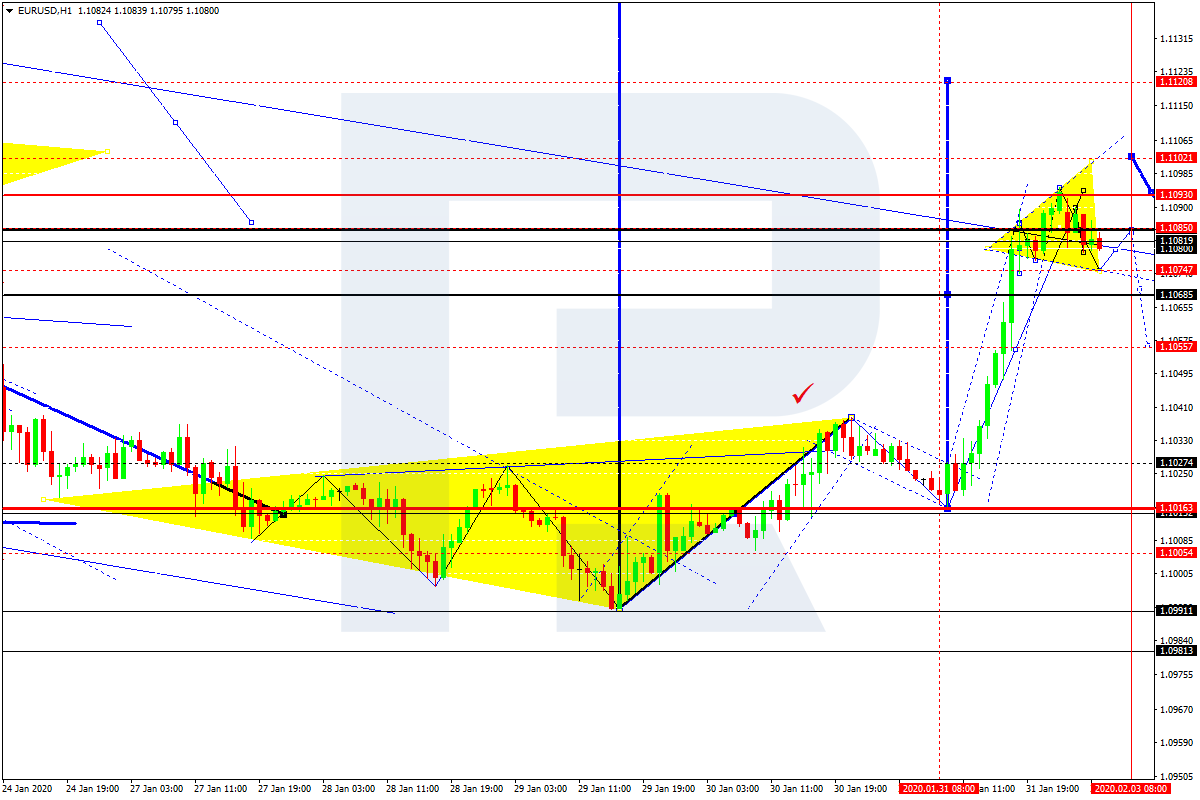
EURUSD has completed the ascending impulse towards 1.1090; right now, it is consolidating around 1.1085. Possibly, the pair may form a new descending structure towards 1.1075 and then start another growth to return to 1.1085, thus forming an upside continuation pattern. If later the price breaks 1.1095 to the upside, the market may continue growing towards 1.1120; if 1.1075 to the downside – start a new correction with the target at 1.1057.

EURUSD
Risk Warning: the result of previous trading operations do not guarantee the same results in the future

GBPUSD, “Great Britain Pound vs US Dollar”

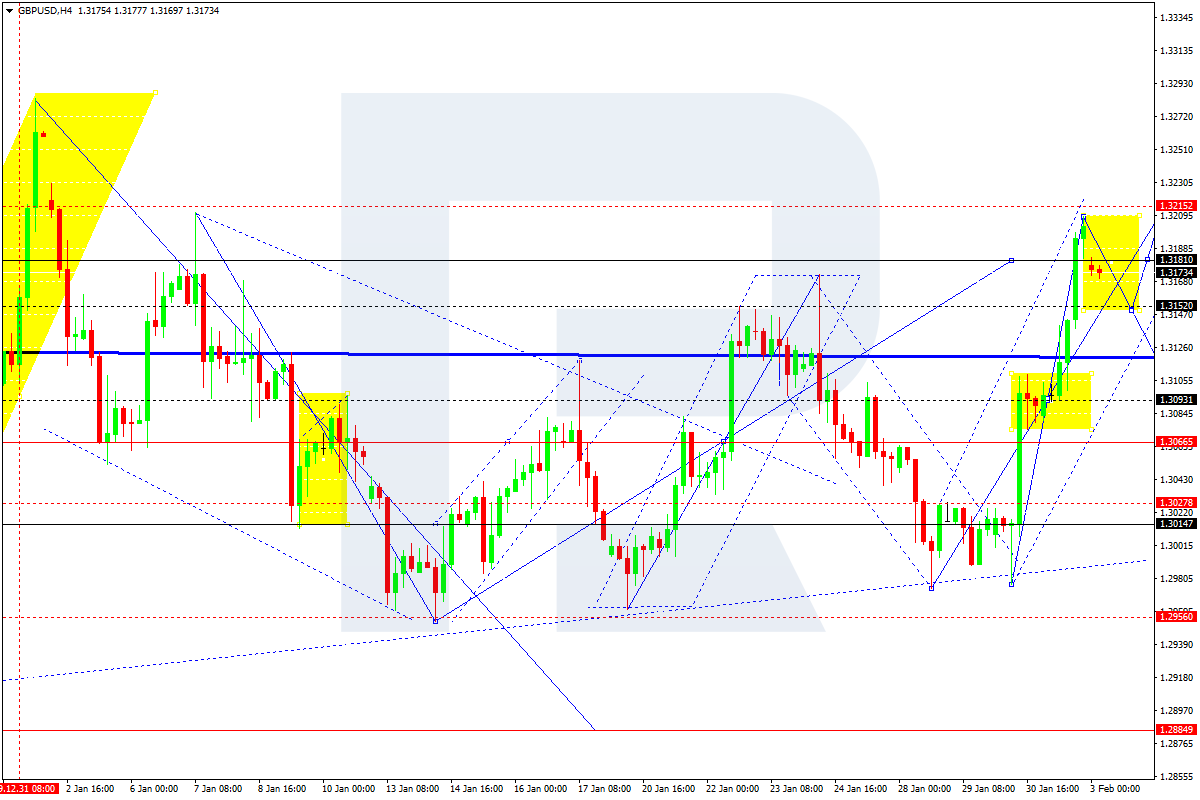
GBPUSD has returned to 1.3200; right now, it is consolidating above 1.3170. Possibly, the pair may form one more ascending structure towards 1.3215 and then start another correction with the target at 1.3100.

GBPUSD
Risk Warning: the result of previous trading operations do not guarantee the same results in the future

USDCHF, “US Dollar vs Swiss Franc”

After finishing the descending structure towards 0.9644, USDCHF is consolidating below this level. Possibly, today the pair may resume falling to break 0.9611 and then continue trading inside the downtrend with the target at 0.9592.

USDCHF
Risk Warning: the result of previous trading operations do not guarantee the same results in the future

USDJPY, “US Dollar vs Japanese Yen”

USDJPY has completed the descending structure at 108.56; right now, it is consolidating below this level. Today, the pair may expand the range down to 108.04. However, if the price breaks 108.57 to the upside, the market may start a new correction with the target at 108.91.

USDJPY
Risk Warning: the result of previous trading operations do not guarantee the same results in the future

AUDUSD, “Australian Dollar vs US Dollar”

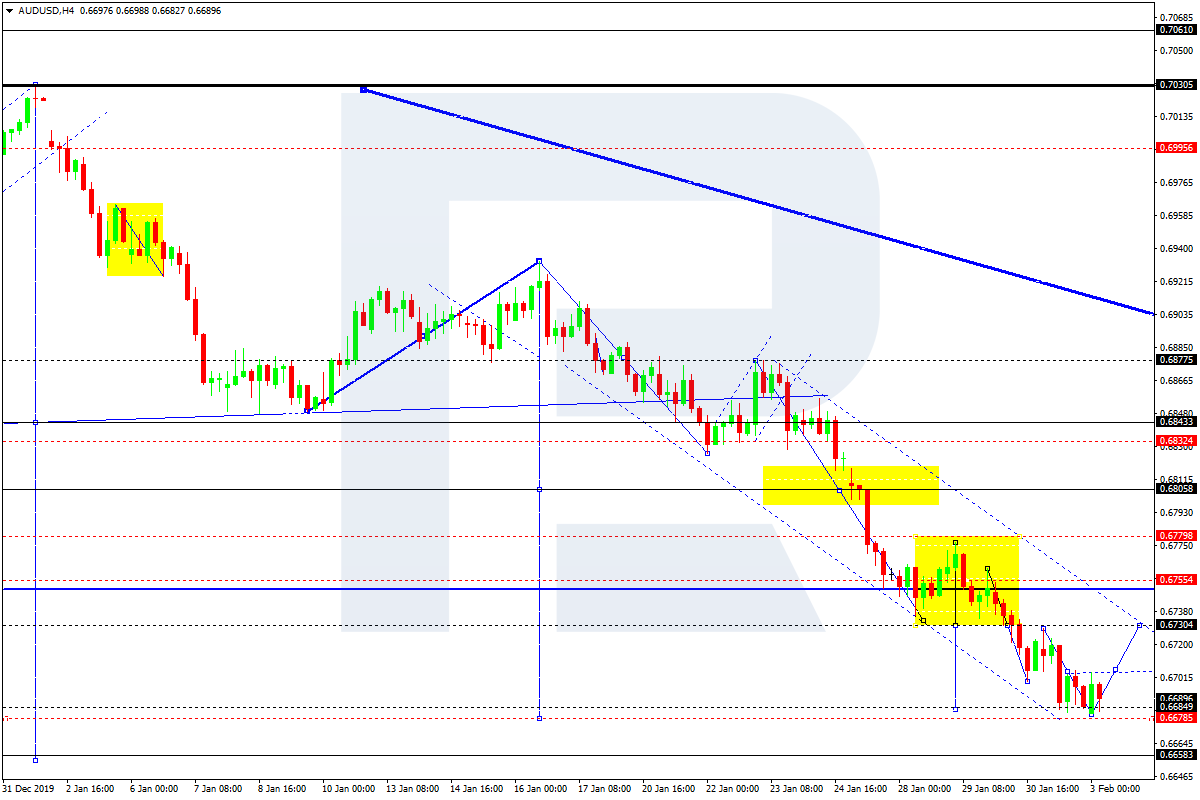
After completing the descending structure towards 0.6682, AUDUSD is consolidating above it. Possibly, the pair may break this range to the upside and resume trading upwards with the target at 0.6730.

AUDUSD
Risk Warning: the result of previous trading operations do not guarantee the same results in the future

USDRUB, “US Dollar vs Russian Ruble”

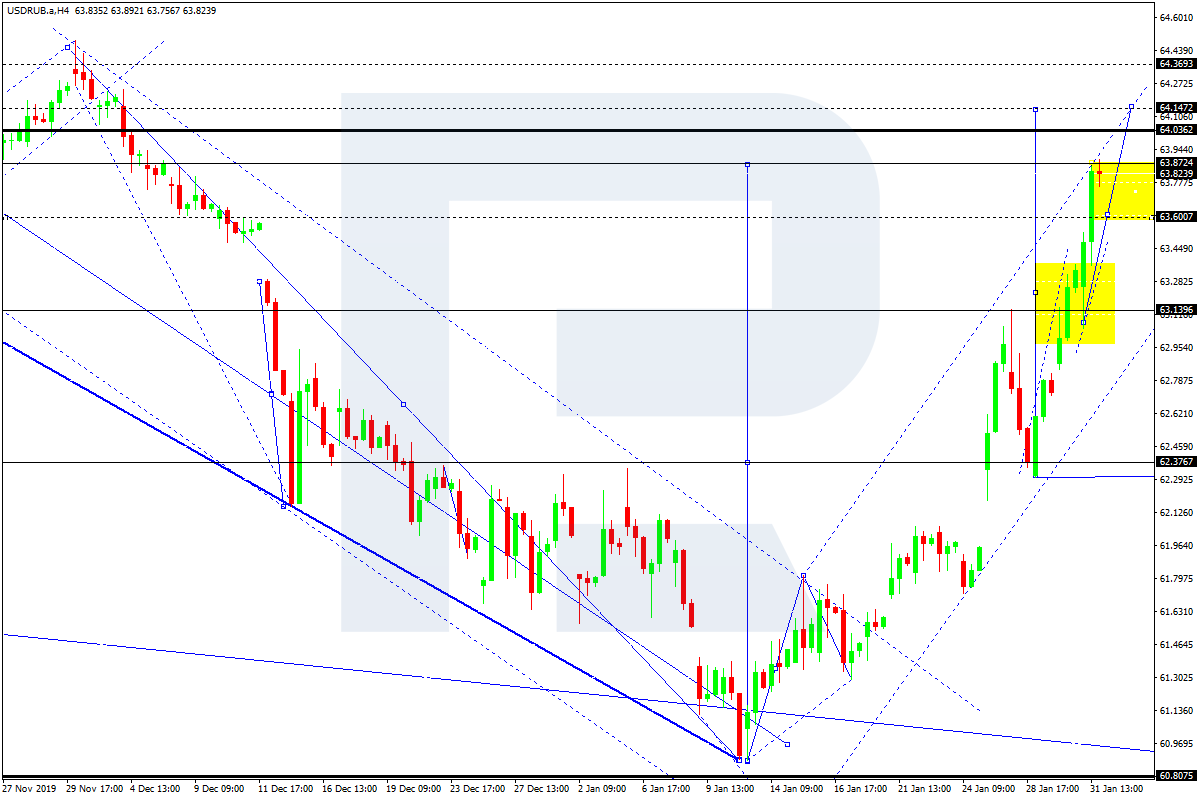
USDRUB is moving upwards. Possibly, the pair may reach 64.15 and then form a new descending structure to break 63.60. Later, the market may resume trading downwards with the first target at 63.15.

USDRUB
Risk Warning: the result of previous trading operations do not guarantee the same results in the future

USDCAD, “US Dollar vs Canadian Dollar”

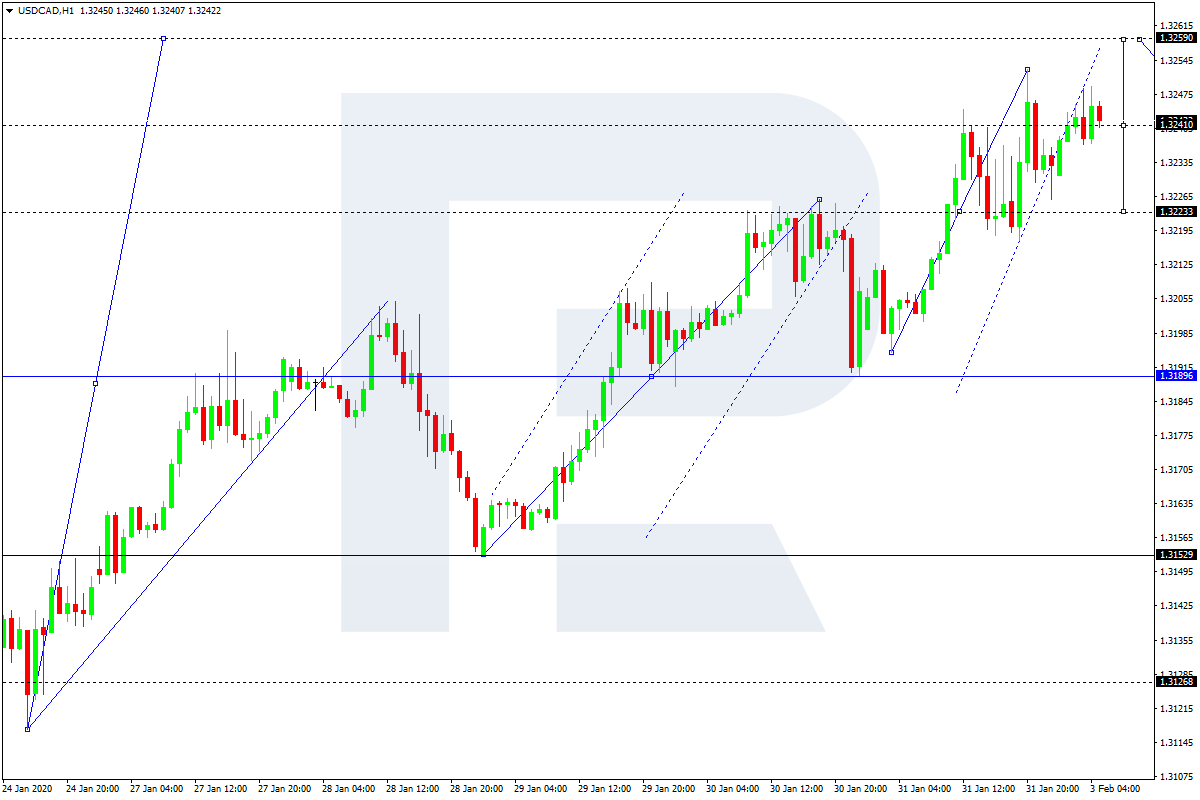
USDCAD is growing towards 1.3259. Possibly, today the pair may reach this level and then start a new decline towards 1.3222. If the price breaks this level to the downside, the market may continue the correction with the target at 1.3185.

USDCAD
Risk Warning: the result of previous trading operations do not guarantee the same results in the future

XAUUSD, “Gold vs US Dollar”

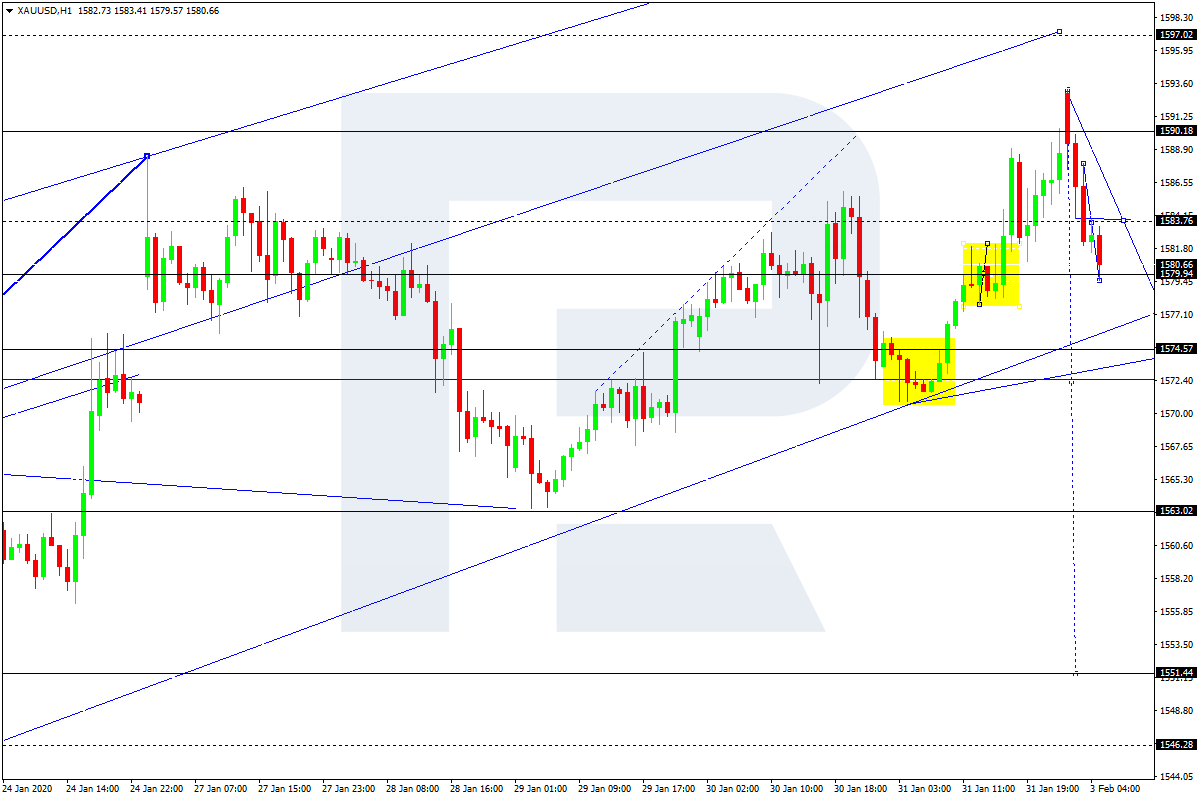
After finishing the impulse towards 1583.75 and forming another consolidation range around it, Gold has broken the range to the downside. Today, the pair may test 1583.75 from below and then resume trading downwards with the first target at 1574.57.

GOLD
Risk Warning: the result of previous trading operations do not guarantee the same results in the future

BRENT

After updating 55.83 and completing the ascending impulse towards 56.64, Brent has finished the correction at 56.05. Possibly, the pair may form one more ascending structure with the short-term target at 57.36.

BRENT
Risk Warning: the result of previous trading operations do not guarantee the same results in the future

BTCUSD, “Bitcoin vs US Dollar”

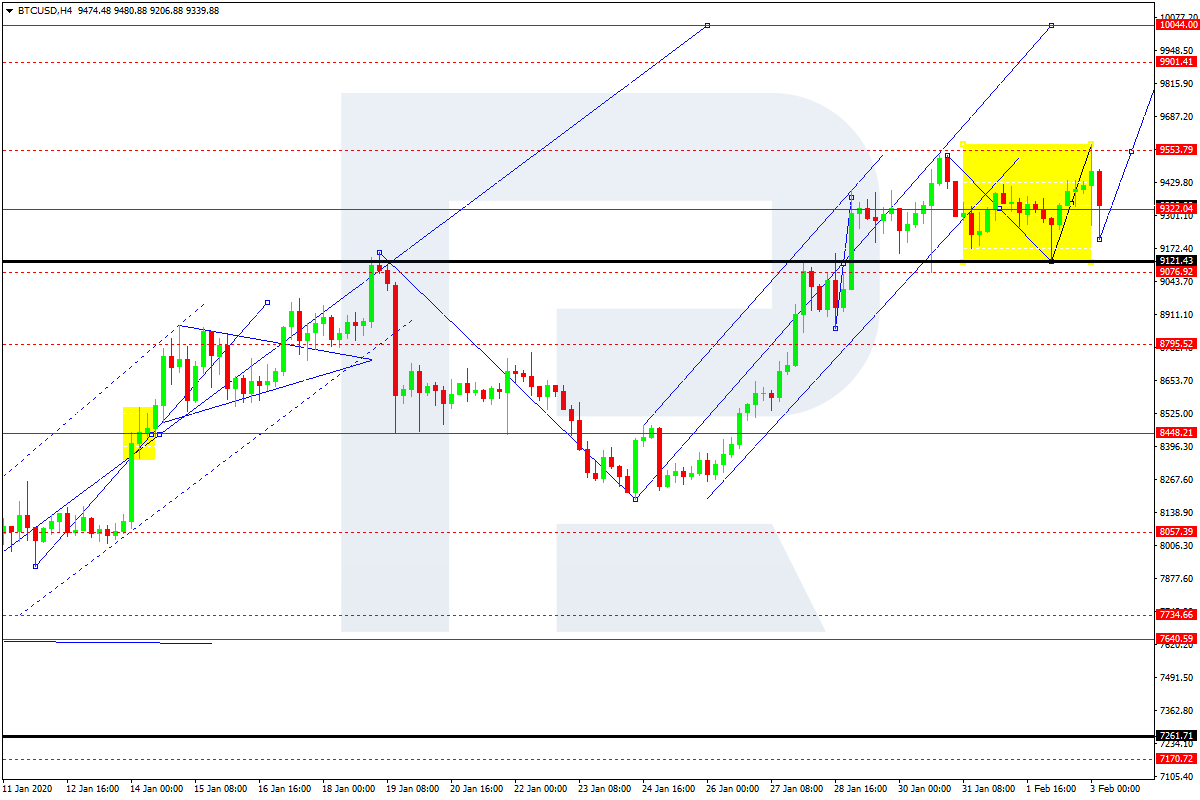
BTCUSD is consolidating around 9330.00. The main scenario implies that the pair may break the range to the upside and start a new growth with the short-term target at 10044.00. After that, the instrument may correct towards 8500.00.

BITCOIN

Article By RoboForex.com

Attention!
Forecasts presented in this section only reflect the author’s private opinion and should not be considered as guidance for trading. RoboForex LP bears no responsibility for trading results based on trading recommendations described in these analytical reviews.

Fibonacci Retracements Analysis 03.02.2020 (GOLD, USDCHF)

Article By RoboForex.com

XAUUSD, “Gold vs US Dollar”

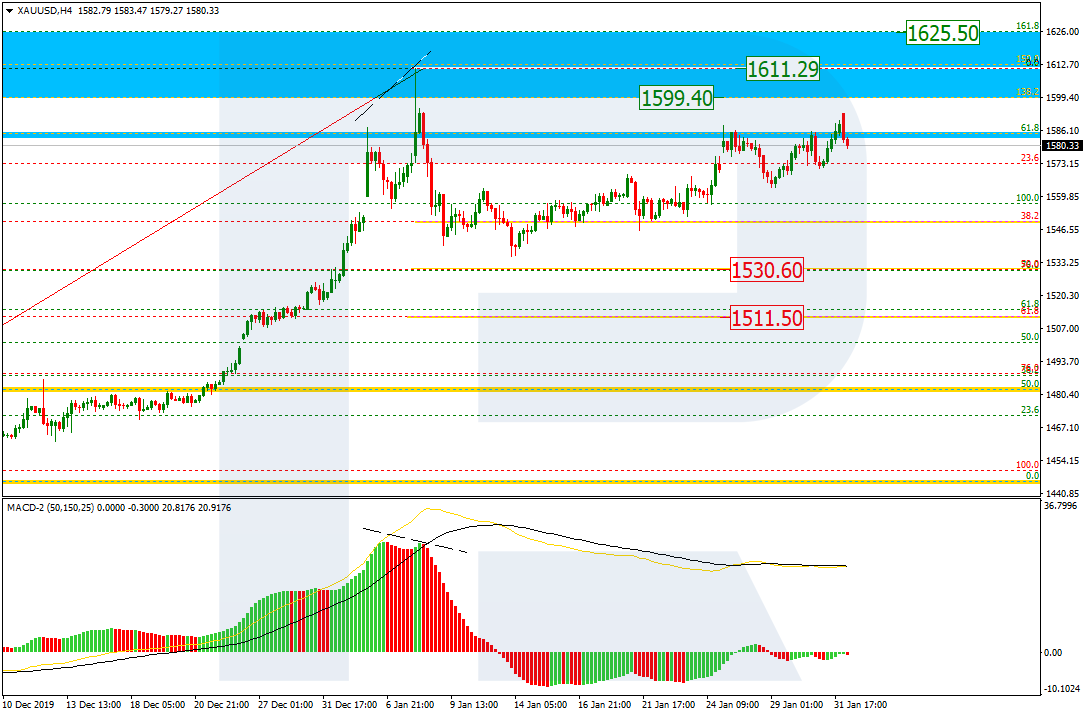
As we can see in the H4 chart, XAUUSD continues forming the rising wave towards the current high at 1611.29 and then the post-correctional extension area between 138.2 and 161.8% fibo at 1599.45 and 1625.70 respectively. However, after reaching the high, the price may rebound from it and start a new decline towards 50.0% and 61.8% fibo at 1530.60 and 1511.80 respectively.

GOLD_H4
Risk Warning: the result of previous trading operations do not guarantee the same results in the future

In the H1 chart, the pair has reached 76.0% fibo. At the same time, there is a divergence on MACD, which indicates a new pullback to the downside. The target is the local support at 38.2% fibo (1564.75).

GOLD_H1
Risk Warning: the result of previous trading operations do not guarantee the same results in the future

USDCHF, “US Dollar vs Swiss Franc”

As we can see in the H4 chart, the correctional uptrend has reached 38.2% fibo at 0.9770; right now, the price is forming a new descending impulse towards the low at 0.9613. Later, the market may break the low and continue falling towards the post-correctional extension area between 138.2 and 161.8% fibo at 0.9520 and 0.9343 respectively.

USDCHF_H4
Risk Warning: the result of previous trading operations do not guarantee the same results in the future

In the H1 chart, USDCHF may break the low and then continue trading downwards to reach its short-term targets, which are inside the post-correctional extension area between 138.2 and 161.8% fibo at 0.9555 and 0.9518 respectively.

USDCHF_H1

Article By RoboForex.com

Attention!
Forecasts presented in this section only reflect the author’s private opinion and should not be considered as guidance for trading. RoboForex LP bears no responsibility for trading results based on trading recommendations described in these analytical reviews.

Oil Suffering from a Hell of a Pressure

By Dmitriy Gurkovskiy, Chief Analyst at RoboForex

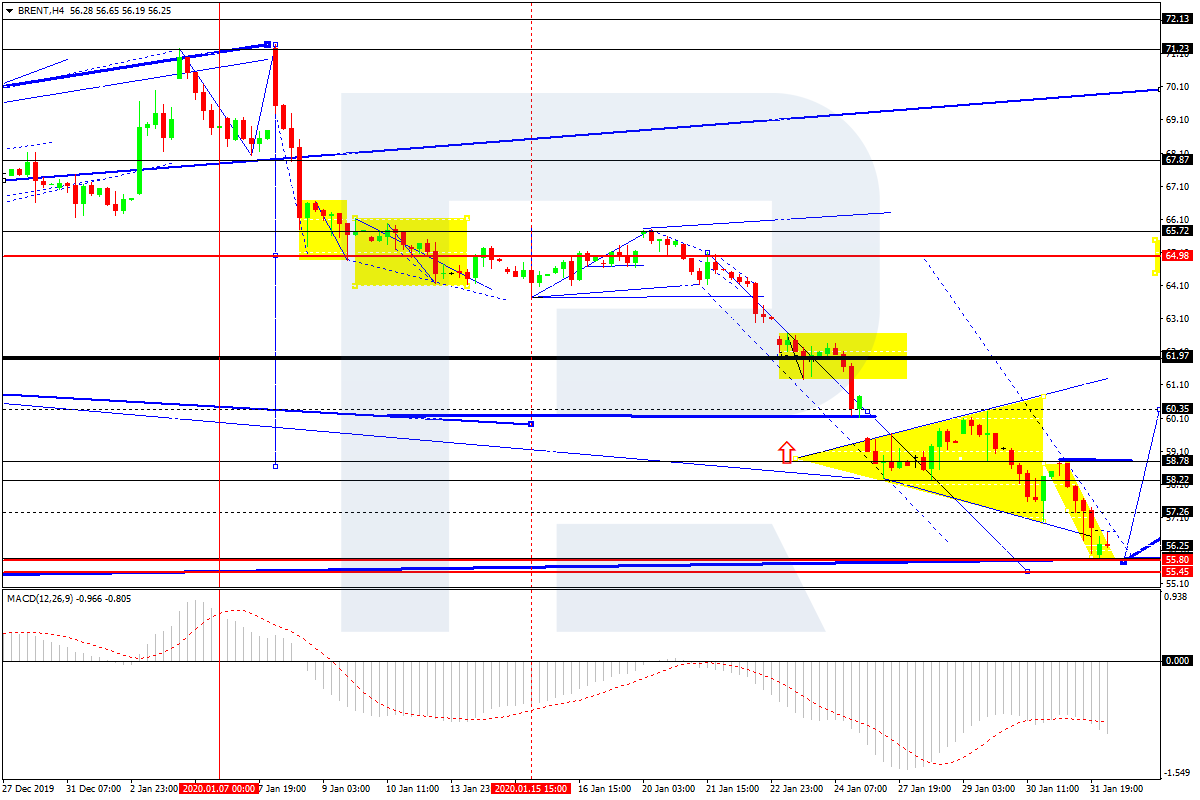
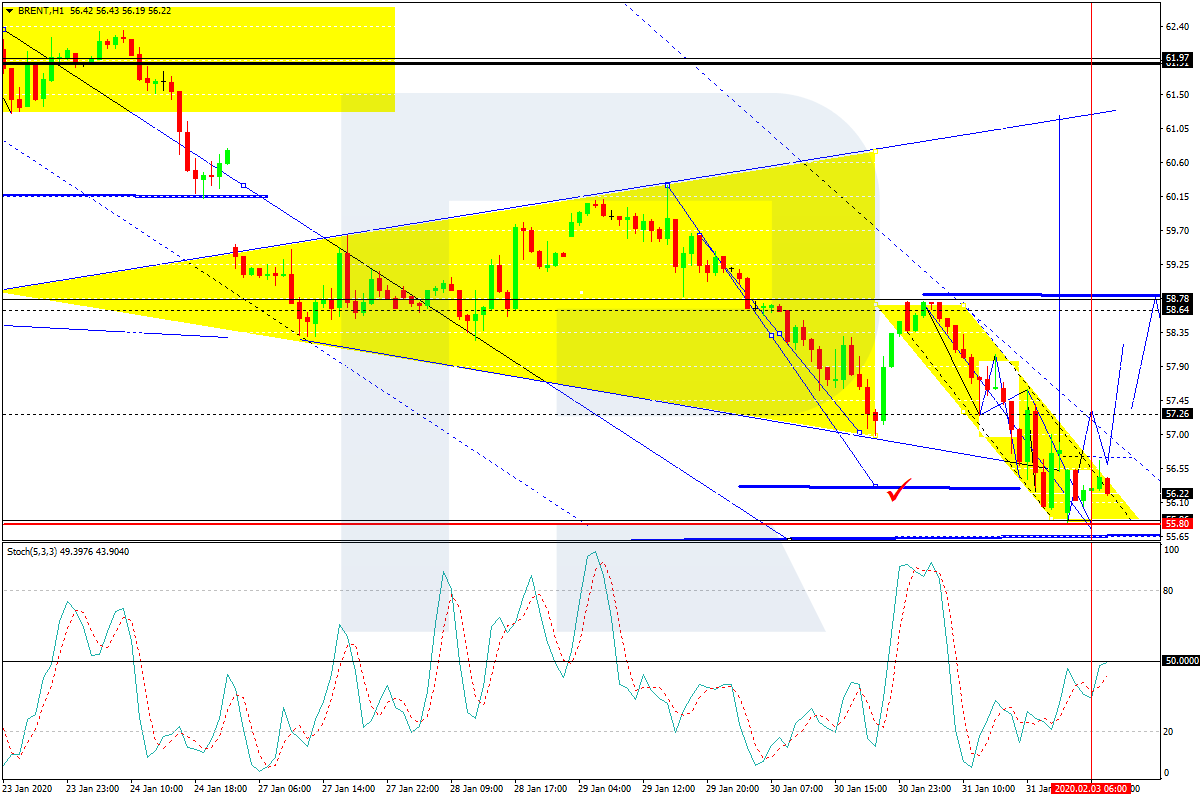
Early in February, “black gold” prices remain weak, although right now bears aren’t as active as a bit earlier. On Monday, February 3rd, Brent is trading at 56.22 USD, which is the lowest level since January 3rd, 2019.

According to the report from Baker Hughes, the Oil Rig Count reduced by 1 unit down to 675 over a week by January 31st. The total Rig Count showed -3 units and is now equal to 790. We remind you that over the year 2019, the number of rigs in the United States decreased by almost 25%. The highest reading was in October 2014, 1,609 units.

Right now, the Oil is suffering from the news that the Chinese coronavirus outbreak is spreading much faster than expected. At the same time, announcements from Chinese authorities that they are going to “pump” a lot of money into the country’s economy in order to neutralize the negative effect couldn’t calm the current situation on the market.

As we can see in the H4 chart, Brent has reached the predicted downside target; right now, it is still consolidating near the lows. Possibly, the pair may continue moving downwards and finish this descending wave: its previous structure has almost reached the target. As a result, the price may start a new rising impulse at any moment; the first target is at 60.35. If later the market breaks this level, the instrument may continue growing towards 64.94. From the technical point of view, this scenario is confirmed by MACD Oscillator: its signal line is about to leave the histogram area and start a new growth. After the line breaks 0, the price may boost its rising movement.

In the H1 chart, after completing the descending wave, Brent has left the channel. The main scenario implies that the pair may form another rising impulse to reach 57.30 and then start a new correction towards 56.70, thus forming another consolidation range at the current lows. If later the price breaks 57.30 to the upside, the instrument may continue growing to reach 58.75. An alternative scenario implies that the pair may update 55.50 and then reverse to resume moving upwards. From the technical point of view, this scenario is confirmed by Stochastic Oscillator: its signal line is moving to the upside and trying to break 50. If it succeeds, the price may boost its growth.

Disclaimer

Any predictions contained herein are based on the authors’ particular opinion. This analysis shall not be treated as trading advice. RoboForex shall not be held liable for the results of the trades arising from relying upon trading recommendations and reviews contained herein.


A failed 2019 turned successful in 2020 – XRP’s sudden growth

By ForexNewsNow

2019 was not necessarily predicted to have been so successful for cryptocurrencies. During the months of May, June, and July most cryptos finally started to gain serious momentum in the market and were showing signs of the late 2017 hype that brought us a $20,000 Bitcoin.

However, the hype was simply not enough, nor was the reason for the market to continue growing. Thus Bitcoin, alongside every other altcoin plummeted down to a more sustainable price range, but still in a much better position than 2018.

One cryptocurrency that was not necessarily a part of the major 2019 hype was XRP, and it continued to do so up until the end of the year itself. In fact, the worst-performing XRP within the last two years was identified in December at $0.173 per coin. Now though, the coin has reached a price of $0.253 and is growing as we speak.

Could this trend continue well into February and potential let us see a $0.5 XRP once again? Well, let’s take a look.

24 months of failure behind

According to InvestingHaven’s XRP overview, every lengthy slump is pretty much guaranteed to end with an upward trend. And in the case of this cryptocurrency, we can pretty much say that this prediction was correct.

The price is up almost 50% from December alone, thus giving XRP the title of “best performing crypto of 2020” so far. Sure there’s almost the whole year to go for now, but we can’t argue that XRP truly did recover by a major margin.

Experts say that as long as XRP can maintain the resistance level at $0.261 and not falter in anticipation of challenging it, it’s very likely that the coin will reach 2019’s top price of $0.479 within a couple of weeks.

However, warnings have also flared saying that the support level at $0.247 is extremely fragile, thus creating an environment where a single fluke can tank the whole progress the coin has experienced so far.

By ForexNewsNow


Dominican Rep. holds rate, inflation seen in target in 2020

By CentralBankNews.info
The Central Bank of the Dominican Republic (BCRD) kept its monetary policy interest rate steady at 4.50 percent and forecast inflation would remain around its target range in 2020.
BCRD, which cut its policy rate three times last year by a total of 100 basis points, said there is still uncertainty in the international environment, such as socio-political tensions and trade disputes that have slowed economic growth, and volatility in international financial markets has risen due to the potential impact of the coronavirus on the Chinese economic and global growth.
The annual inflation rate in the Dominican Republic rose to 3.66 percent in December, the highest since August 2019, from 3.23 percent in November, closer to the midpoint of the central bank’s target of 4.0 percent, plus/minus 1 percentage point.
Inflation expectations and BCRD’s forecast indicate inflation will remain around the central value of the target range this year.
The economy continues to react favorably to last year’s easing through higher consumption and investments in the second half, and showed “significant dynamism” in December,  BCRD added.
In addition to the rate cuts, BCRD last year also released more than 34 billion Dominican pesos of legal reserves to the productive sectors.
In its December policy statement, BCRD said the release of reserves helped boost private credit by more than 105 billion pesos, with private credit in the national currency expanding more than 12 percent year-on-year.
It estimated growth of around 5 percent by the end of 2019 and during 2020, close to the economy’s potential.
Gross domestic product grew an annual 4.8 percent in the third quarter of last year, up from 3.7 percent in the second quarter.

    www.CentralBankNews.info