Iceland cuts rate 7th time due to speed of virus spread

By CentralBankNews.info

Iceland’s central bank became the third central bank to cut its key interest rate at an unscheduled monetary policy meeting in two weeks, saying this easing of its policy stance came “in view of the worsening economic outlook following the accelerated spread of the COVID-19 virus.”

The Central Bank of Iceland (CBI) lowered the rate on its 7-day term deposits by 50 basis points to 2.25 percent, it’s 7th cut since May 2019 and its second cut this year.

Since May last year, when the outlook for the North Atlantic island darkened, CBI has cut its rate by a total of 2.25 percentage points.

In addition to the rate cut, the central bank also lowered banks’ average reserve requirement to 0.0 percent from 1.0 percent “to ease banks’ liquidity position and give them greater scope to respond to changed conditions in the domestic economy.”

The fixed reserve requirement will remain at 1.0 percent.

Today’s easing by the CBI cut comes a week before the regularly scheduled monetary policy meeting on March 18 but follows the Bank of England’s unscheduled 50-point rate cut earlier today and the U.S. Federal Reserve’s emergency rate cut on March 3, also by 50 points.

Iceland’s rate cut boosts the number of central banks that have cut rates since the outbreak of the coronavirus, or COVID-19, to 26.

When CBI last cut its rate on Feb. 5, it didn’t specifically refer to the impact of the virus but said the outlook for both this year and 2021 had worsened due to a slower-than-expected recovery of tourism, production in the aluminum industry and the second consecutive failure of the capelin catch.

It lowered its forecast for 2020 economic growth to 0.8 percent, down from November’s forecast of 1.6 percent, and the 2021 forecast to 2.4 percent, down from 2.9 percent.

Iceland’s inflation rate decelerated steadily last year but picked up speed in February to 2.4 percent, just below CBI’s 2.5 percent target.

In February CBI forecast 2020 inflation of 1.9 percent, down from the earlier forecast of 2.3 percent, and 2021 inflation of 2.1 percent, down from 2.2 percent.

The Central Bank of Iceland issued the following press release:

“The Monetary Policy Committee (MPC) of the Central Bank of Iceland has decided to lower the Bank’s interest rates by 0.50 percentage points. The Bank’s key interest rate – the rate on seven-day term deposits – will therefore be 2.25%.
Furthermore, the Committee has decided to lower deposit institutions’ average reserve requirement from 1% to 0%. The fixed reserve requirement will remain unchanged at 1%. The reduction in the average reserve requirement and changes in the treatment of the fixed reserve requirement in liquidity rules will ease the banks’ liquidity position and give them greater scope to respond to changed conditions in the domestic economy.
With these actions, the Bank is easing the monetary stance in view of the worsening economic outlook following the accelerated spread of the COVID-19 virus.
The MPC will continue to monitor economic developments and will use the tools at its disposal to support the domestic economy.”

    www.CentralBankNews.info
 

Regulators Stonewall on Government Intervention in Gold Market

By Money Metals News Service

Does the U.S. Commodity Futures Trading Commission have jurisdiction over manipulative futures trading by the U.S. government, other governments, or brokers acting for them?

Is the commission aware of futures trading by governments?

In a letter to U.S. Rep. Alex Mooney, R-West Virginia, dated January 28 and released to Money Metals and Gold Anti-Trust Action Committee (GATA) this week, the commission’s chairman, Heath P. Tarbert, refused to say.

GATA put those questions and others to the CFTC in 2018 but could get no response.

At our urging, Mooney put those questions and others to the CFTC a year ago in February.

He too got no response but kept pressing.

Tarbert’s January 28 letter to Mooney, contains an attachment prepared by commission staff that acknowledges the key questions but fails to answer them.

Question 5 in the attachment, asking whether the commission’s jurisdiction covers manipulative trading by the government itself, is a yes-or-no question.

But the reply says only: “The CFTC has exclusive jurisdiction over futures trading on trading facilities registered with the commission as designated contract markets.”

Question 6 in the attachment, asking if the commission is aware of trading by the U.S. government or other governments, is also a yes-or-no question.

Instead the commission’s reply says: “The commission may not publish ‘data and information that would separately disclose the business transactions or market positions of any person and trade secrets or names of customers.'”

But the commission’s admission of simple awareness of trading by governments would not disclose any transactions or market positions, and official filings and statements by CME Group, operator of the major U.S. futures exchanges, explicitly acknowledge that governments are secretly trading futures under CME Group’s Central Bank Incentive Program.

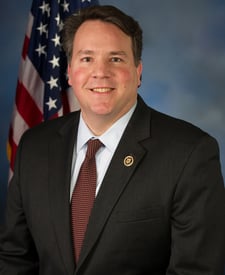
Alex Mooney (R-WV)

Rep. Alex Mooney (R-WV) is
a leader on Sound Money

Chairman Tarbert’s reply to Representative Mooney is also misleading in at least two other respects.

First, Mooney questioned how the commission’s years-long investigation of silver futures market manipulation found no actionable misconduct even though a subsequent investigation by the U.S. Justice Department, covering the same period investigated by the commission, managed to find such misconduct, prosecute it, and obtain confessions.

Instead of accounting for his commission’s inability to find misconduct on its own, Tarbert’s reply simply notes fines imposed by the commission following the Justice Department’s investigation.

And second, responding to Representative Mooney’s question about the huge increase in the emergency “exchange for physicals” mechanism of settling gold futures contracts on the New York Commodities Exchange, Tarbert dismisses the increase as a function of increased trading in gold futures generally.

But that doesn’t explain what the EFPs are doing and are meant to accomplish. That could be explained without revealing any particular trader’s positioning.

GATA long has maintained that the U.S. government construes the Gold Reserve Act of 1934, as amended, which establishes the Treasury Department’s Exchange Stabilization Fund, to authorize the government to intervene secretly in and manipulate any market in the world.


The Money Metals News Service provides market news and crisp commentary for investors following the precious metals markets.

OATS Analysis: The popularity of oat milk is increasing in the world

By IFCMarkets

The popularity of oat milk is increasing in the world

Starbucks, an international coffee shop chain, offers its visitors oat milk as part of a special program to reduce global carbon dioxide emissions. PepsiCo Corporation develops the production of oat milk through a subsidiary of Quaker Oats. A positive factor for quotes may be a reduction in the yield of oats in the United States in 2020 by 3 million bushels to 53 million compared to 2019. At the same time, domestic consumption of oats will increase by 4 million bushels. This forecast is contained in the reports of the US Department of Agriculture. The difference is supposed to be covered by increasing imports of oats.

IndicatorVALUESignal
RSIBuy
MACDSell
MA(200)Neutral
FractalsNeutral
Parabolic SARBuy
Bollinger BandsNeutral


Summary of technical analysis

OrderBuy
Buy stopAbove 279,5
Stop lossBelow 254,5

Market Analysis provided by IFCMarkets

GBPUSD Analysis: Interest rate cut by Bank of England bearish for GBPUSD

By IFCMarkets

Interest rate cut by Bank of England bearish for GBPUSD

Bank of England cut interest rates half a percentage point to 0.5% in an emergency statement. It mentioned in the decision business activity “is likely to weaken materially in the United Kingdom over the coming months.” This is bearish for GBPUSD.

IndicatorVALUESignal
RSINeutral
MACDSell
Donchian ChannelNeutral
MA(200)Neutral
FractalsSell
Parabolic SARBuy


Summary of technical analysis

OrderSell
Buy stopBelow 1.2829
Stop lossAbove 1.2975

Market Analysis provided by IFCMarkets

Trump Calls On Fed To Act, BoE Does

By Orbex

US Coronavirus Cases Take Their Toll

As the total number of COVID-19 cases in the United States continues to rise, the White House has started taking baby steps to tackle the serious effect the outbreak is going to have on the economy.

The Administration held an emergency meeting to discuss taking fiscal actions to help the private and public sectors weather the storm, Trump announced at a press conference in Capitol Hill yesterday.

Despite considering cutting tax rates to zero, the US President called on the Fed once again. Trump believes fiscal and monetary measures are essential in order to stimulate the economy.

True to form, the President went off against Fed Chair Powell on Twitter, stating:

Although a collective measure seems to be the only solution at the moment, how this is going to help the economy is a different story. We’ve already seen the Fed cutting way ahead of their next meeting and before the White House even made a statement on the matter. And they could cut further ahead of the next FOMC on March 18.

But will cutting rates help while liquidity injections continue, or will it lead to a blow? Rates must be closely watched because once the US goes negative, that could be a one-way ticket to despair, as the 1930s showed us.

BoE Cuts 50%, but Fiscal Measures Needed

On the other hand, just this morning, we saw the BoE cutting interest rates in a unanimous emergency move.

It seems that the Monetary Policy Committee’s decision to provide support on the back of the coronavirus crisis is going to boost lending. However, how this is likely to affect credit risk is still unknown.

With the central bank followed suit with a 50% basis point cut, the UK’s budget will now focus on short-term emergency needs. That said, there is market talk that the government might need to also step in to add extra liquidity.

Undoubtedly, fiscal policy is way more important at this stage than monetary policy is. This seems to suggest that whatever medium-term bounce is seen on the pound might be only temporary. If and when the government steps up its game, this should change the game-play.

Will the ECB Cut Next?

The need for financial stability in an extremely high volatile environment will likely force the ECB to cut rates too, tomorrow.

However, the European bank doesn’t have as much room to the downside as the Fed, BoE, RBA or BoC for that matter. A ½ percent cut could really hurt the euro.

BoJ Ready to Take Action

BoJ’s Kuroda is facing the same problem as Lagarde – how much and when rather than if.

The Japanese Governor warned that the banks “will not hesitate to take appropriate policy due to the spread of the coronavirus” only yesterday. The biggest concern at this moment lays with governments.

By Orbex


Market Volatility Continues, Stimulus Plans Underway

By Orbex

Euro Pulls Back at Support Ahead of ECB Meeting

EURUSD continues its retreat as price action slipped to the support area. There is also a confluence of the rising trend line, indicating that there is strong support at the 1.1300 region. If price action breaks below this level, then we expect the 1.1200 handle as the next downside target. To the upside, the 1.1500 level will be critical for price to continue further to the upside.

GBPUSD Gives Back Gains from Earlier in the Week

Price action in the cable saw the sterling falling sharply against the dollar. The declines came after price briefly tested the 1.3200 level. The break down below the initial support at 1.2960 has pushed prices lower below the trend line. If this continues, we expect GBPUSD to slip lower to 1.2858. But with the Stochastics oscillator moving from the oversold levels, we could see some upside minor correction back to 1.2960.

Oil Prices Rebound as Markets Digest Price Wars

Crude oil prices are recovering from the sell-off from Monday. Price action is up over 12% on the day after WTI crude oil fell to lows of 28.00. The resistance level at 41.00 will be the upside target for now. However, prices are consolidating into a bearish flag pattern. This raises the risk of a continuation to the downside, bringing the 28.00 level as a critical price level.

XAUUSD Holds Steady at Support

Gold prices are down over 1% on an intraday basis on Tuesday. The declines come amid heightened market volatility. Price action fell to the support area of 1650 as expected and is currently rebounding. We expect price action to hold above this level in the short term. A lower high off 1650 will probably suggest that the upside is coming to an end. However, for this to be confirmed, XAUUSD will need to then break past the 1650 handle.

By Orbex

Fibonacci Retracements Analysis 11.03.2020 (GBPUSD, EURJPY)

Article By RoboForex.com

GBPUSD, “Great Britain Pound vs US Dollar”

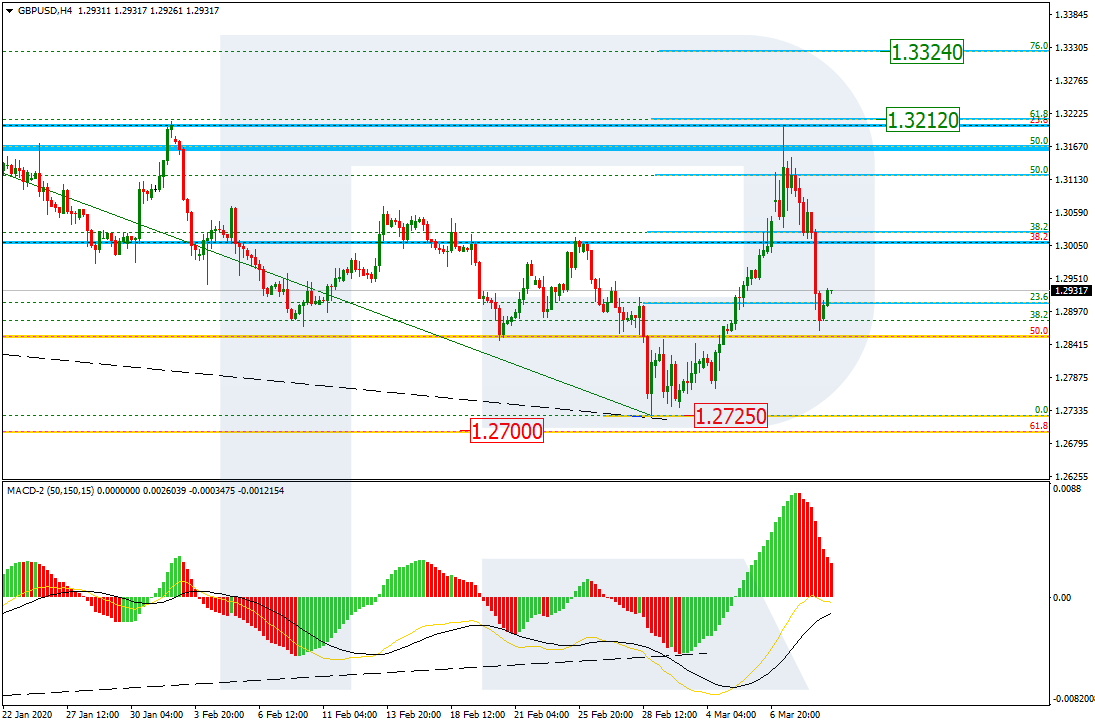
As we can see in the H4 chart, GBPUSD was quickly growing to correct the previous downtrend and almost reached 61.8% fibo at 1.3212 but then suddenly reversed and started a new pullback. Such market behavior doesn’t provide a clear understanding of what might happen later. One scenario implies that the pullback may transform into a descending wave and reach 1.2725 or even 61.8% fibo at 1.2700. Another scenario suggests that the instrument may stop falling and update its previous high. In this case, the next upside targets may be 61.8% and 76.0% fibo at 1.3212 and 1.3324 respectively.

GBPUSD_H4
Risk Warning: the result of previous trading operations do not guarantee the same results in the future

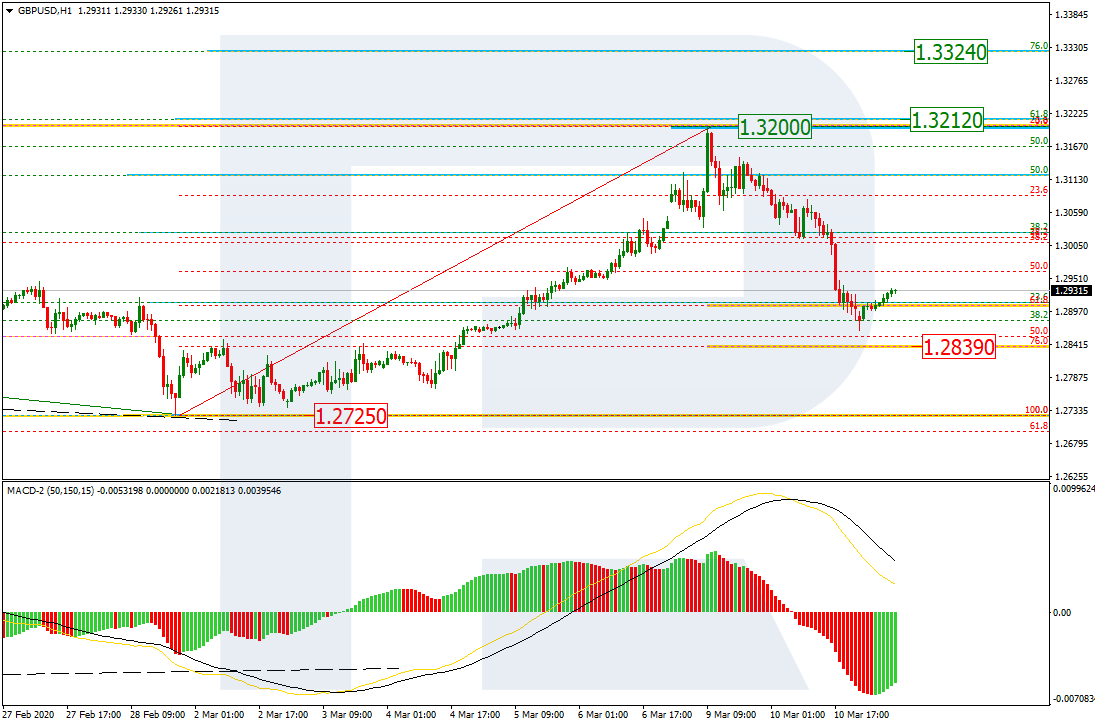
In the H1 chart, the descending wave has already reached 61.8% fibo. The next downside target is 76.0% fibo at 1.2839. If the price fixes below this level, it may continue falling towards the low at 1.2725.

GBPUSD_H1
Risk Warning: the result of previous trading operations do not guarantee the same results in the future

EURJPY, “Euro vs. Japanese Yen”

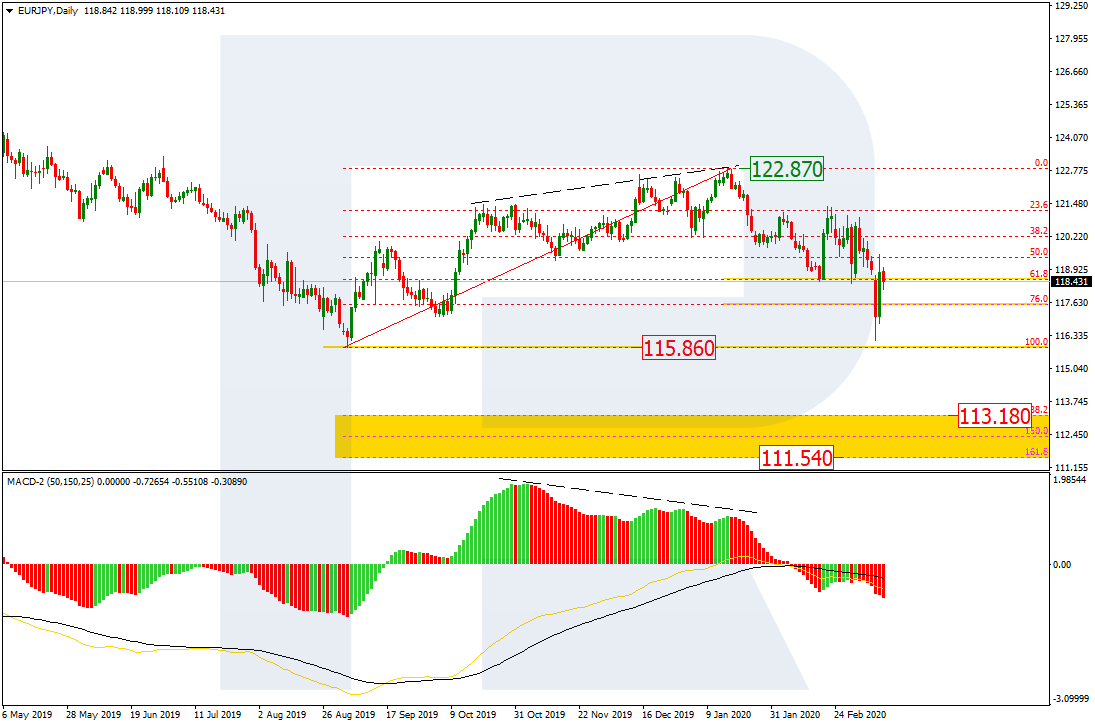
As we can see in the daily chart, the descending wave attempted to reach and test the long-term low at 115.86. If the price breaks the low and fixes below it, the pair may continue falling towards the post-correctional extension area between 138.2% and 161.8% fibo at 113.18 and 111.54 respectively. However, after reaching the low, the instrument rebounded from it, which may indicate a continuous sideways channel.

EURJPY_D1
Risk Warning: the result of previous trading operations do not guarantee the same results in the future

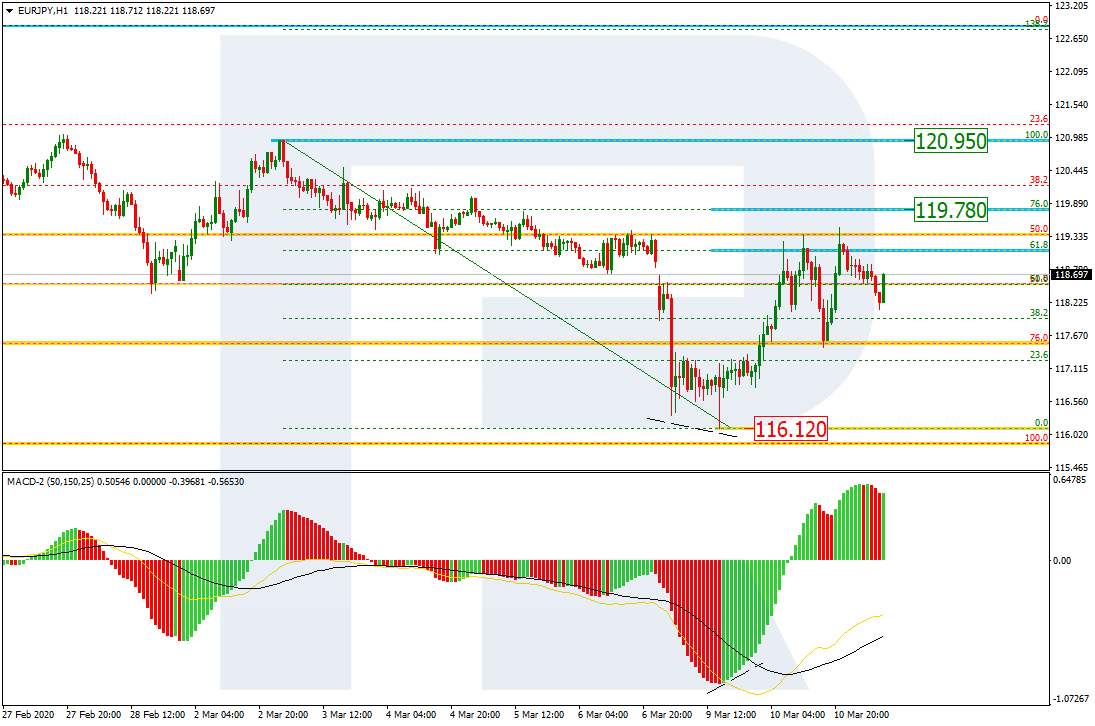
In the H1 chart, EURJPY is correcting to the upside, it has already reached 61.8% fibo and may yet grow towards 76.0% fibo at 119.78. If later the price reaches 120.95, the long-term tendency may reverse. The support is at 116.12.

EURJPY_H1

Article By RoboForex.com

Attention!
Forecasts presented in this section only reflect the author’s private opinion and should not be considered as guidance for trading. RoboForex LP bears no responsibility for trading results based on trading recommendations described in these analytical reviews.

Bank of England cuts rate 50 bps, launches loan scheme

By CentralBankNews.info

The Bank of England (BOE) launched a broad package of measures to help UK businesses and households manage through the economic shock from the outbreak of the coronavirus, which it said “could prove sharp and large, but temporary,” by cutting its benchmark bank rate by 50 basis points and launching a new funding scheme.

BOE cut its bank rate to 0.25 percent, its first rate cut since August 2016, and its first change in interest rates since August 2018.

The rate cut by the U.K. central bank was unscheduled, just as that of the U.S. Federal Reserve, on March 3, boosting the number of central banks that have cut rates in the wake of the outbreak of the coronavirus, or COVID-19, to 26.

“Although the magnitude of the economic shock from Covid-19 is highly uncertain, activity is likely to weaken materially in the United Kingdom over the coming months,” the BOE said, as supply chains are disrupted temporarily and weaker activity may challenge cash flows and increase demand for short-term credit from households and for working capital from companies.


The Bank of England (BOE) issued the following statements about its measures in response to the economic shock from the coronavirus, or COVID-19:

“The Bank’s three policy committees are today announcing a comprehensive and timely package of measures to help UK businesses and households bridge across the economic disruption that is likely to be associated with Covid-19

The front line of combatting the challenges of Covid-19 comprises the extraordinary efforts of NHS health professionals, carers, and volunteers across the country, as well as the exceptional support by the FCO to UK citizens abroad.
The Bank of England’s role is to help UK businesses and households manage through an economic shock that could prove sharp and large, but should be temporary. The Bank’s three policy committees are today announcing a comprehensive and timely package of measures to help UK businesses and households bridge across the economic disruption that is likely to be associated with Covid-19. These measures will help to keep firms in business and people in jobs and help prevent a temporary disruption from causing longer-lasting economic harm.
Following the spread of Covid-19, risky asset and commodity prices have fallen sharply, and government bond yields reached all-time lows, consistent with a marked deterioration in risk appetite and in the outlooks for global and UK growth. Indicators of financial market uncertainty have reached extreme levels.
Although the magnitude of the economic shock from Covid-19 is highly uncertain, activity is likely to weaken materially in the United Kingdom over the coming months. Temporary, but significant, disruptions to supply chains and weaker activity could challenge cash flows and increase demand for short-term credit from households and for working capital from companies. Such issues are likely to be most acute for smaller businesses. This economic shock will affect both demand and supply in the economy.

MPC reduces Bank Rate and launches new Term Funding Scheme with additional incentives for SMEs
At its special meeting ending on 10 March 2020, the Monetary Policy Committee (MPC) voted unanimously to reduce Bank Rate by 50 basis points to 0.25%. The MPC voted unanimously for the Bank of England to introduce a new Term Funding scheme with additional incentives for Small and Medium-sized Enterprises (TFSME), financed by the issuance of central bank reserves. The MPC voted unanimously to maintain the stock of sterling non-financial investment-grade corporate bond purchases, financed by the issuance of central bank reserves, at £10 billion. The Committee also voted unanimously to maintain the stock of UK government bond purchases, financed by the issuance of central bank reserves, at £435 billion.
The reduction in Bank Rate will help to support business and consumer confidence at a difficult time, to bolster the cash flows of businesses and households, and to reduce the cost, and to improve the availability, of finance.
When interest rates are low, it is likely to be difficult for some banks and building societies to reduce deposit rates much further, which in turn could limit their ability to cut their lending rates. In order to mitigate these pressures and maximise the effectiveness of monetary policy, the TFSME will, over the next 12 months, offer four-year funding of at least 5% of participants’ stock of real economy lending at interest rates at, or very close to, Bank Rate. Additional funding will be available for banks that increase lending, especially to small and medium-sized enterprises (SMEs). Experience from the Term Funding Scheme launched in 2016 suggests that the TFSME could provide in excess of £100 billion in term funding.
The TFSME will:
help reinforce the transmission of the reduction in Bank Rate to the real economy to ensure that businesses and households benefit from the MPC’s actions;
provide participants with a cost-effective source of funding to support additional lending to the real economy, providing insurance against adverse conditions in bank funding markets;
incentivise banks to provide credit to businesses and households to bridge through a period of economic disruption; and

provide additional incentives for banks to support lending to SMEs that typically bear the brunt of contractions in the supply of credit during periods of heightened risk aversion and economic downturns.

FPC releases the UK Countercyclical Capital Buffer
To support further the ability of banks to supply the credit needed to bridge a potentially challenging period, the Financial Policy Committee (FPC) has reduced the UK countercyclical capital buffer rate to 0% of banks’ exposures to UK borrowers with immediate effect. The rate had been 1% and had been due to reach 2% by December 2020.
The FPC expects to maintain the 0% rate for at least 12 months, so that any subsequent increase would not take effect until March 2022 at the earliest.
Although the disruption arising from Covid-19 could be sharp and large, it should be temporary. Such economic disruption should have less of an impact on the core banking system than recent stress tests run by the Bank have shown the system can withstand. Those stress tests demonstrated that banks would be able to continue to lend to businesses and households even while absorbing the effects of substantial, prolonged economic downturns in both the UK and the global economies, as well as falls in asset prices much larger than experienced in recent weeks.
Given the resilience of the core banking system, businesses and households should be able to rely on banks to meet their need for credit to bridge through a period of economic disruption.
The release of the countercyclical capital buffer will support up to £190 billion of bank lending to businesses. That is equivalent to 13 times banks’ net lending to businesses in 2019. Together with the TFSME, this means that banks should not face obstacles to supplying credit to the UK economy and to meeting the needs of businesses and households through temporary disruption.
The FPC and the Prudential Regulation Committee (PRC) will monitor closely the response of banks to these measures as well as the credit conditions faced by UK businesses and households more generally.

PRC issues Supervisory Guidance
The release of the countercyclical capital buffer reinforces the expectations of the FPC and the PRC that all elements of banks’ capital and liquidity buffers can be drawn down as necessary to support the economy through this temporary shock. In addition, the Prudential Regulation Authority (PRA) has today set out its supervisory expectation that banks should not increase dividends or other distributions, such as bonuses, in response to these policy actions.
Major UK banks are well able to withstand severe market disruption. They hold £1 trillion of high-quality liquid assets, enabling them to meet their maturing obligations for many months.
In response to the material fall in government bond yields in recent weeks, the PRC invites requests from insurance companies to use the flexibility in Solvency II regulations to recalculate the transitional measures that smooth the impact of market movements. This will support market functioning.
— — —
The Bank of England has operations in place to make loans to banks in all major currencies on a weekly basis. Banks have pre-positioned collateral with the Bank of England enabling them to borrow around £300 billion through these facilities.
The Bank is coordinating its actions with those of HM Treasury in order to ensure that our initiatives are complementary and that they will, collectively, have maximum impact, consistent with our independent responsibilities. The Bank continues to co-ordinate closely with international counterparts.

The actions announced today by the three policy committees of the Bank of England comprise a comprehensive and timely package to allow UK businesses and households to bridge a temporarily difficult period and thereby to mitigate any longer-lasting effects of Covid-19 on jobs, growth and the UK economy.
The Bank will take all further necessary steps to support the UK economy and financial system, consistent with its statutory responsibilities.
The minutes of the special MPC meeting ending on 10 March will be published at 12 noon on 13 March 2020. The next regularly scheduled MPC meeting will end on 25 March 2020, with the minutes of that meeting published on 26 March. The record of the FPC meeting ending on 9 March and the next regularly scheduled meeting on 19 March will be published together at 9.30 am on 24 March 2020.”

    www.CentralBankNews.info
 

Forex Technical Analysis & Forecast 11.03.2020

Article By RoboForex.com

EURUSD, “Euro vs US Dollar”

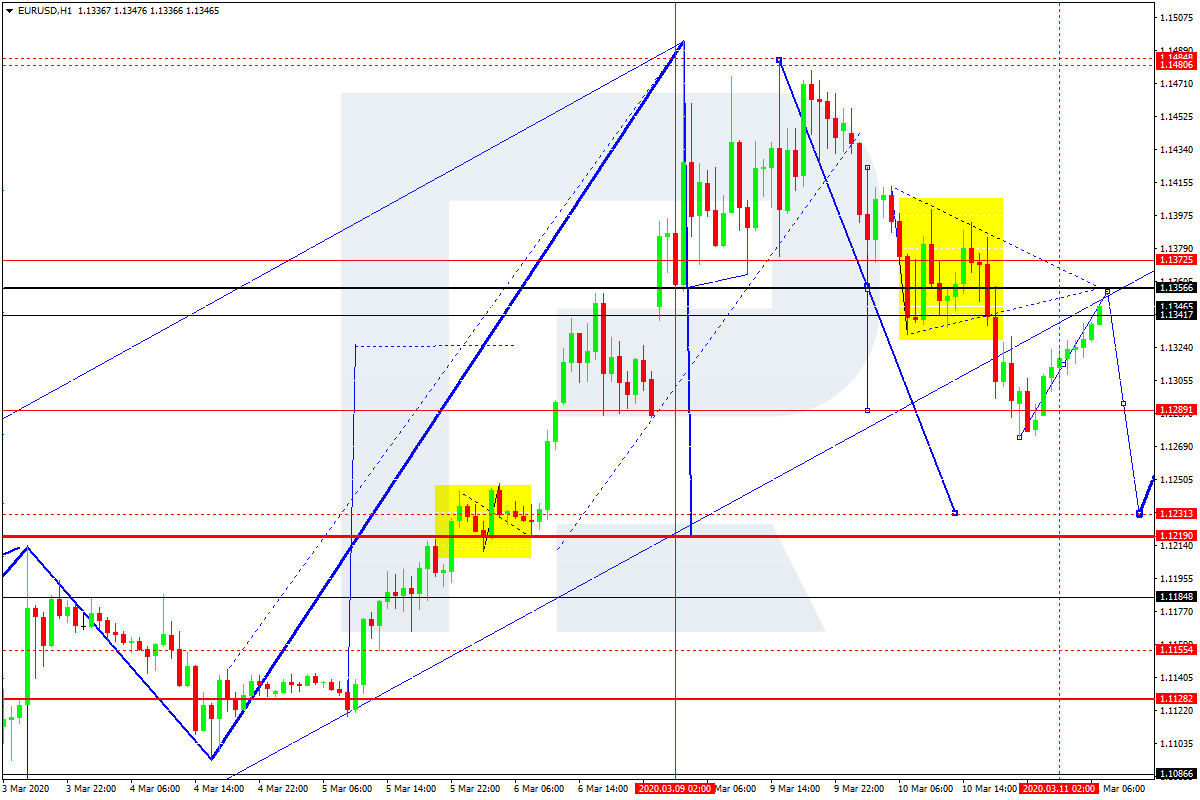
After breaking the low of the first descending impulse and reaching the target at 1.1279, EURUSD is correcting towards 1.1356. After that, the instrument may form a new descending structure with the target at 1.1231.

EURUSD
Risk Warning: the result of previous trading operations do not guarantee the same results in the future

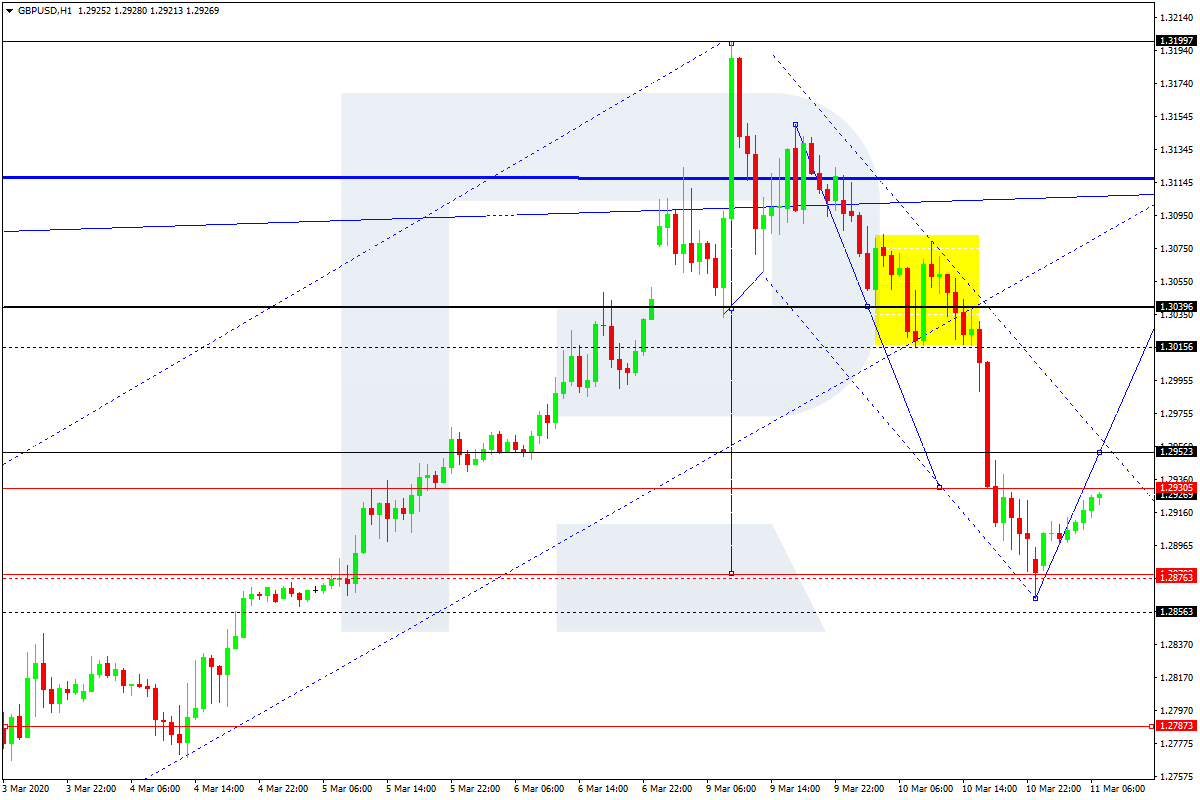
GBPUSD, “Great Britain Pound vs US Dollar”

After finishing the first descending wave at 1.2876, GBPUSD is moving upwards to reach 1.3040. Later, the market may resume falling with the target at 1.2787.

GBPUSD
Risk Warning: the result of previous trading operations do not guarantee the same results in the future

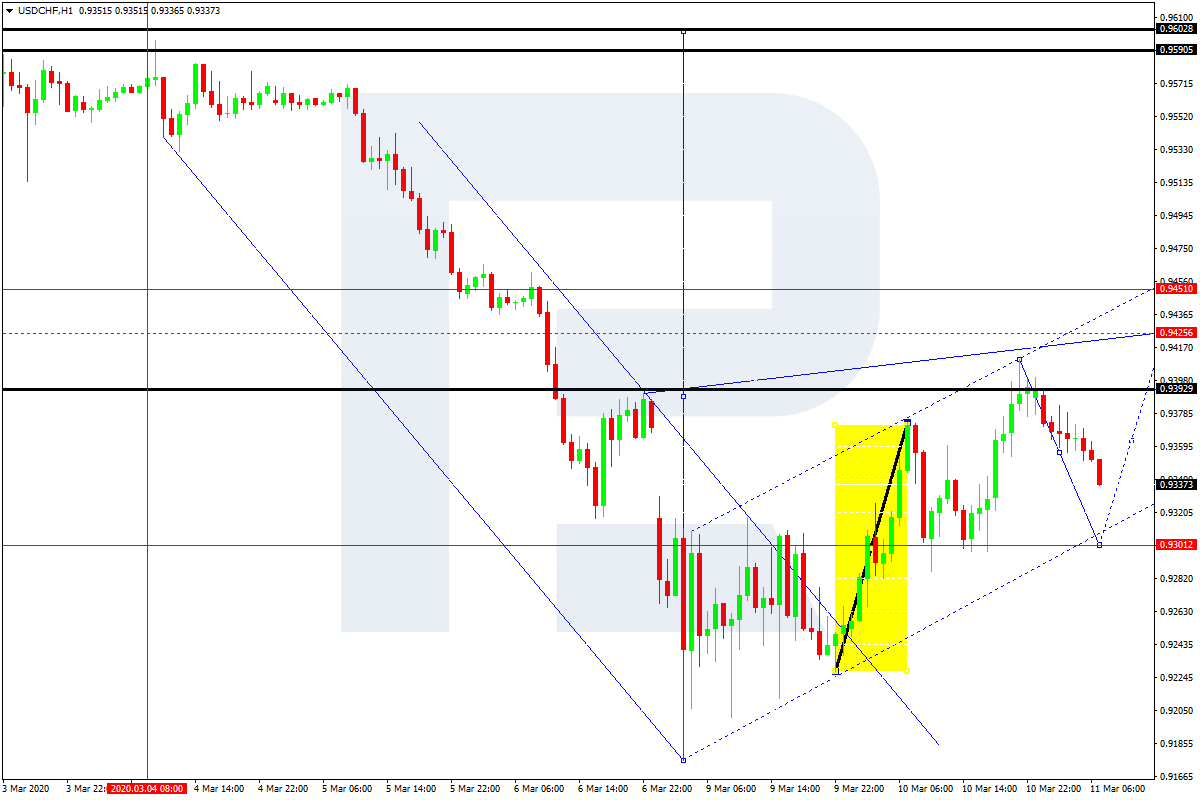
USDCHF, “US Dollar vs Swiss Franc”

After completing the ascending wave at 0.9400, USDCHF is correcting towards 0.9300. Later, the market may start a new growth with the target at 0.9425.

USDCHF
Risk Warning: the result of previous trading operations do not guarantee the same results in the future

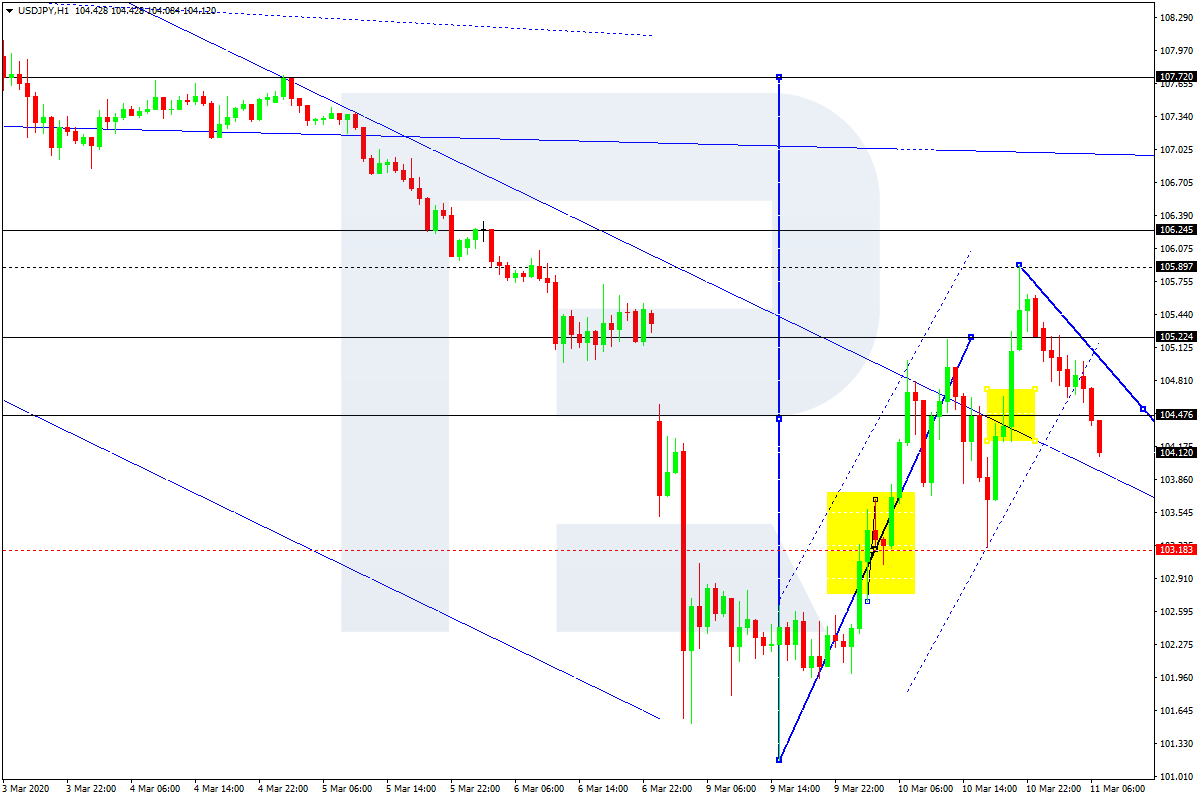
USDJPY, “US Dollar vs Japanese Yen”

USDJPY has finished the ascending wave at 105.89. Possibly, today the pair may move downwards with the target at 103.18 and then form one more ascending structure towards 106.00.

USDJPY
Risk Warning: the result of previous trading operations do not guarantee the same results in the future

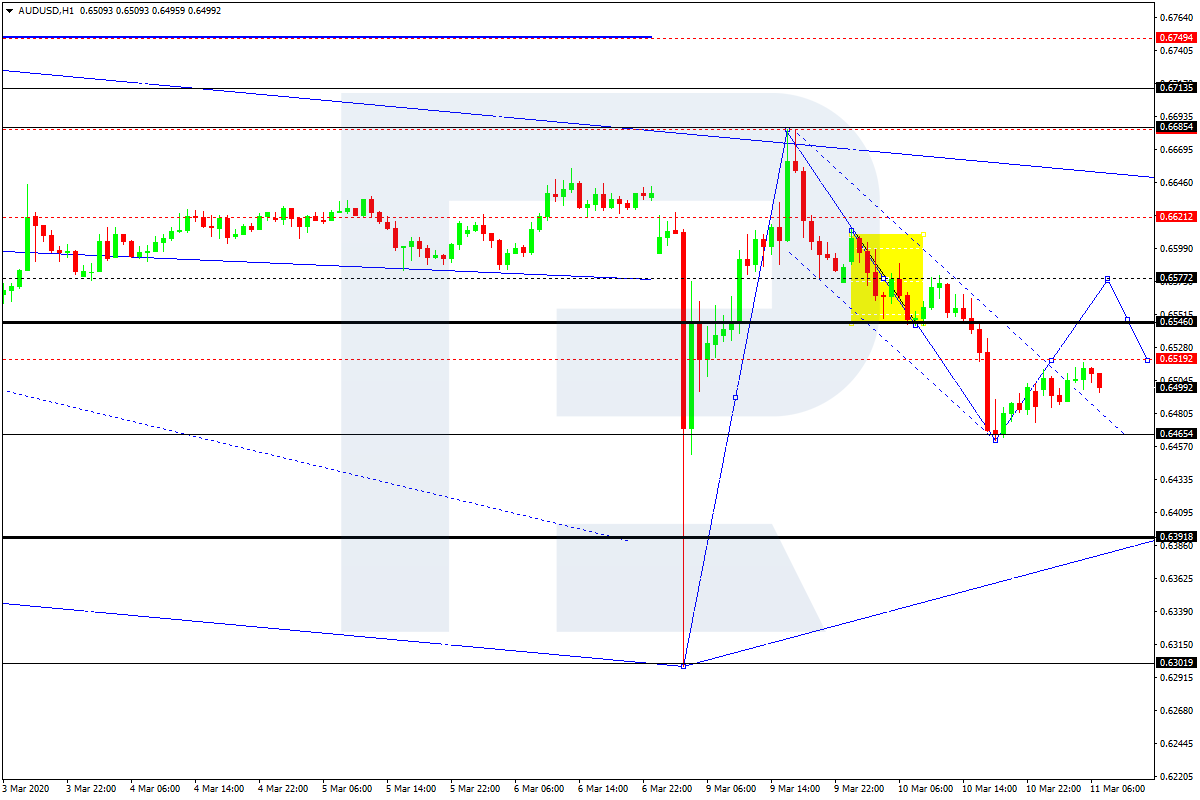
AUDUSD, “Australian Dollar vs US Dollar”

After finishing the descending wave at 0.6465, AUDUSD is expected to start a new growth towards 0.6577. Later, the market may break this level and then continue trading upwards with the target at 0.6686.

AUDUSD
Risk Warning: the result of previous trading operations do not guarantee the same results in the future

USDRUB, “US Dollar vs Russian Ruble”

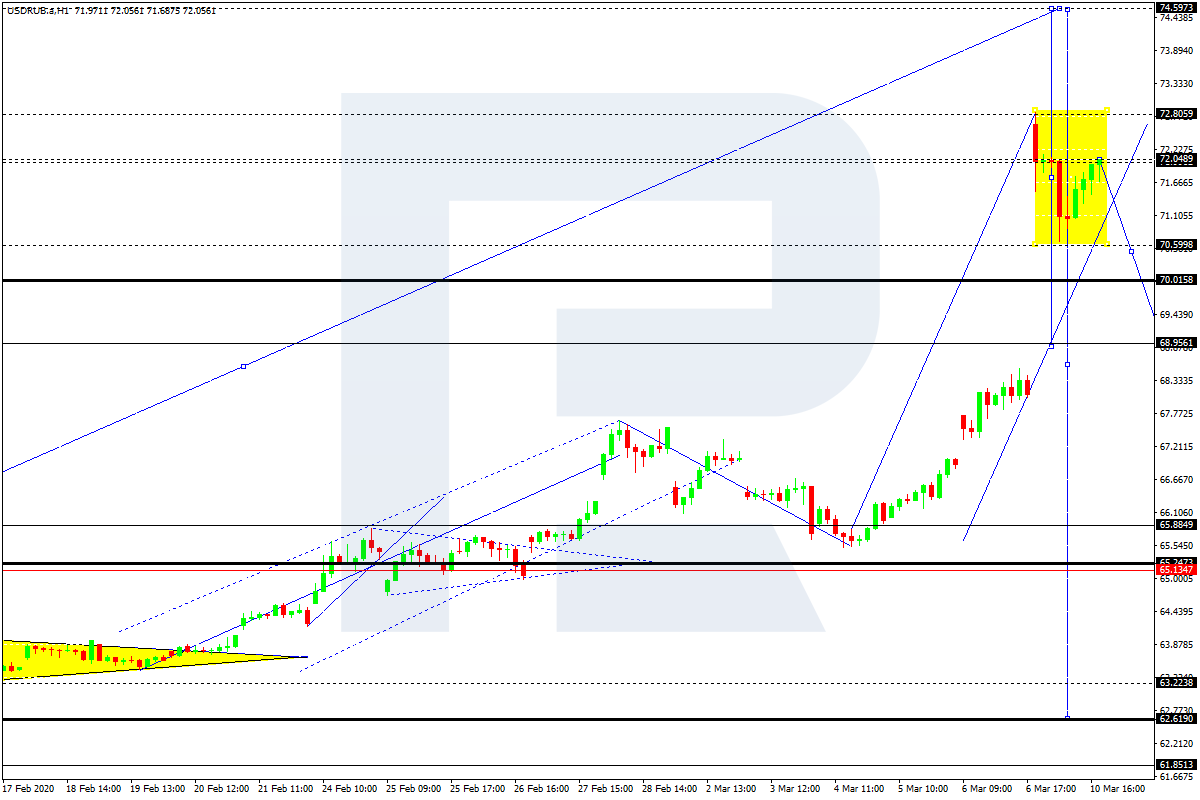
USDRUB has formed a new consolidation range around 72.04. Today, the pair may fall with the first target at 68.96 and then start a new correction to return to 72.04.

USDRUB
Risk Warning: the result of previous trading operations do not guarantee the same results in the future

USDCAD, “US Dollar vs Canadian Dollar”

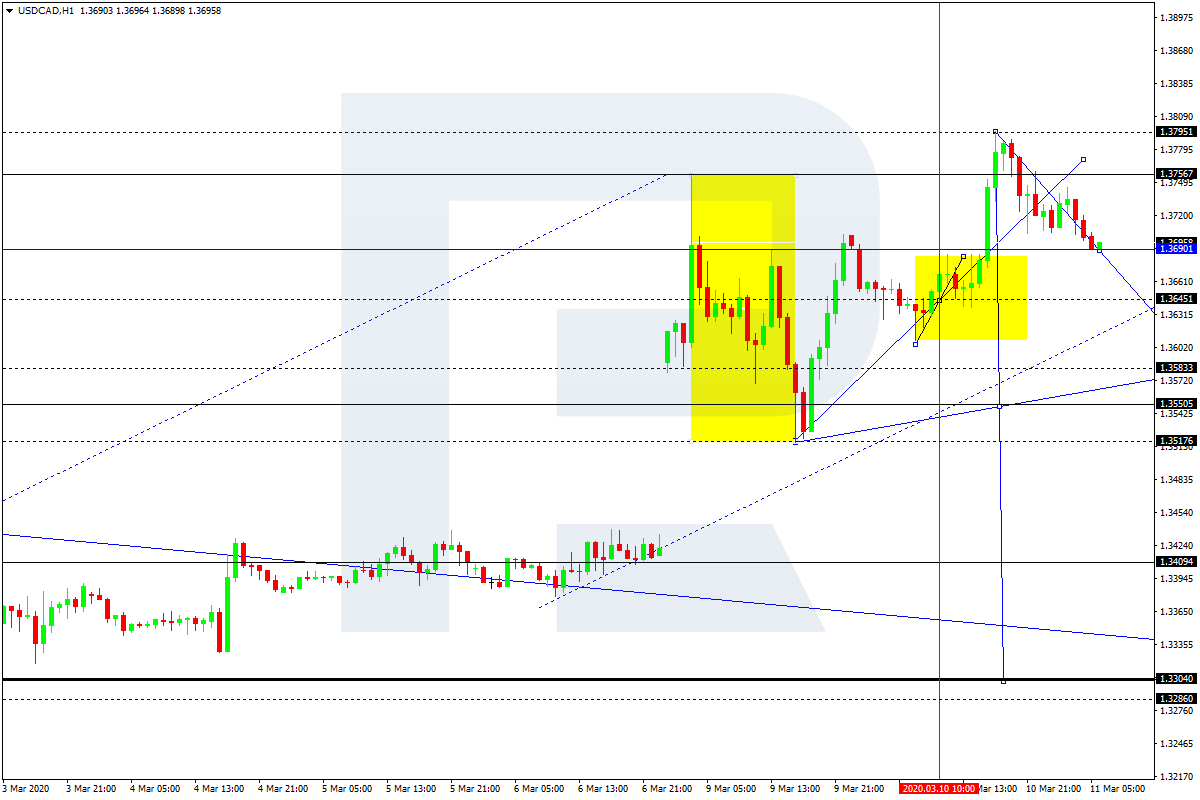
USDCAD is consolidating around 1.3645; it has expanded the range up to 1.3795. Possibly, today the pair may form a new descending structure to reach 1.3583 and then resume growing with the target at 1.3690.

USDCAD
Risk Warning: the result of previous trading operations do not guarantee the same results in the future

XAUUSD, “Gold vs US Dollar”

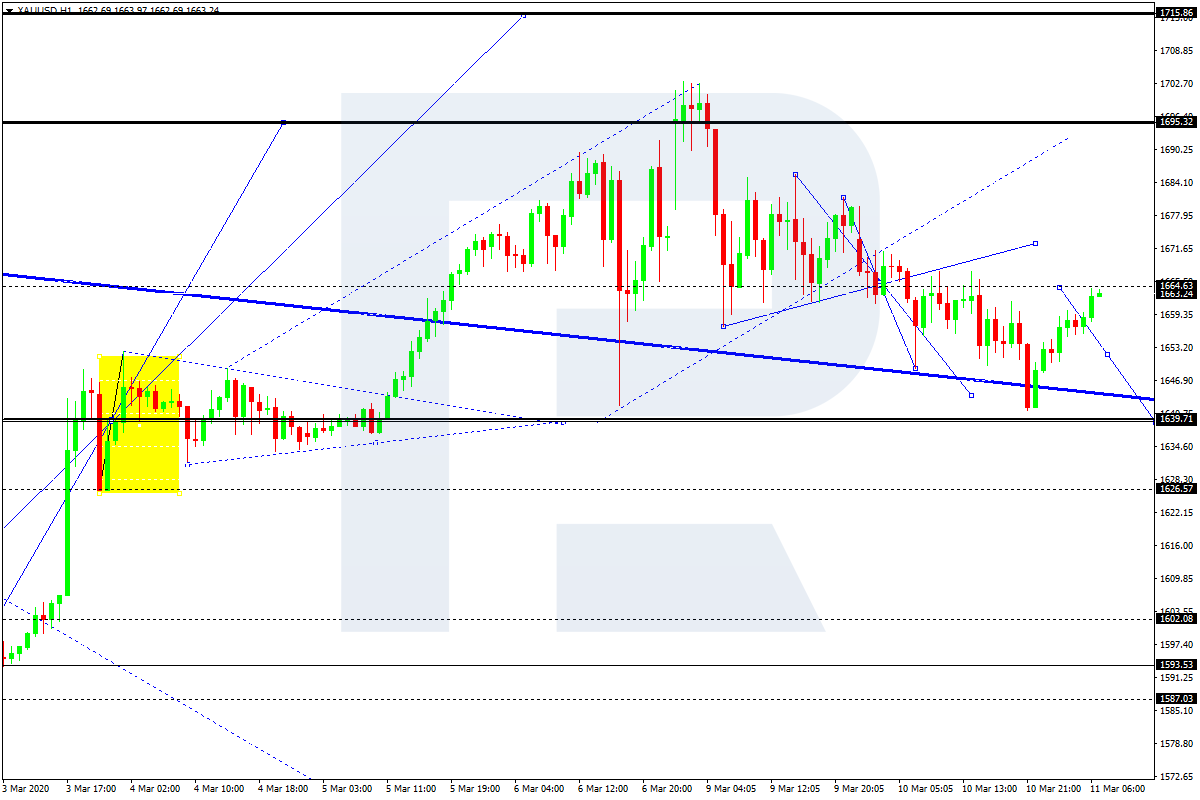
Gold is still consolidating around 1664.64. Possibly, the pair may expand the range down to 1639.71 and then form one more ascending structure to return to 1664.64.

GOLD
Risk Warning: the result of previous trading operations do not guarantee the same results in the future

BRENT

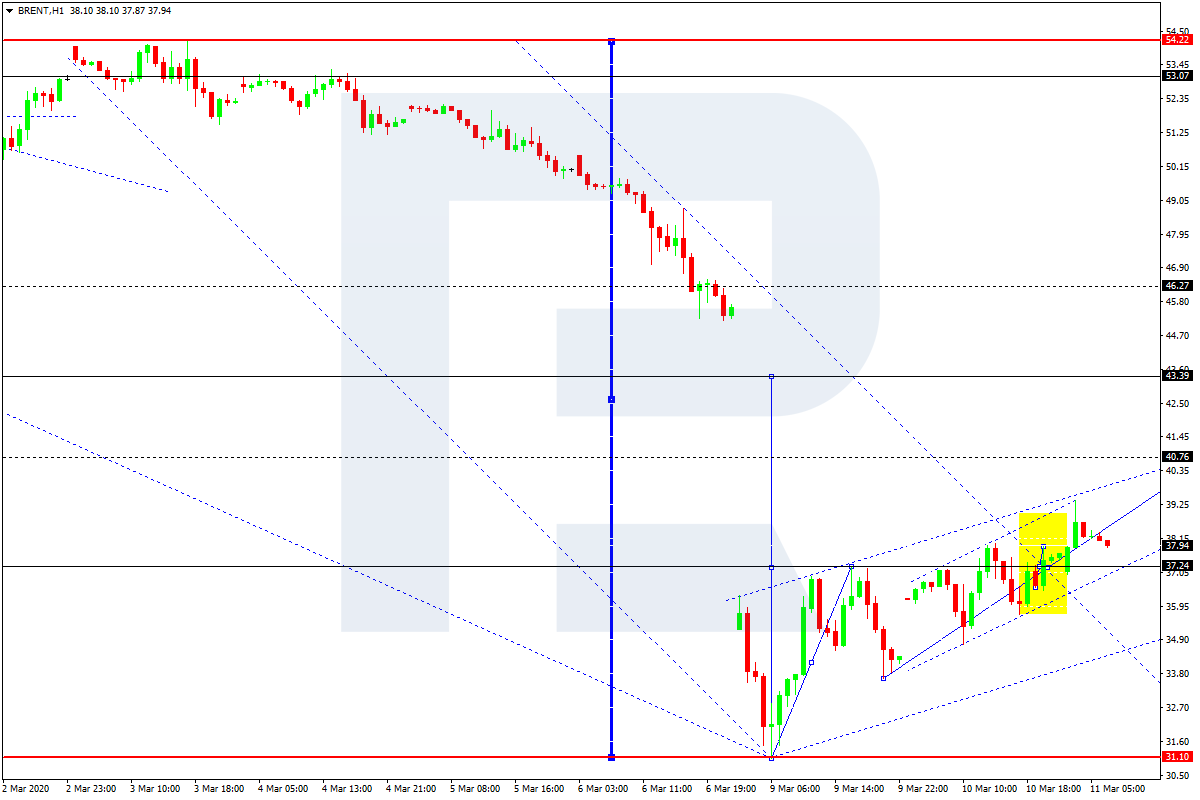
Brent has broken the descending channel to the upside. Today, the pair may grow towards 40.76. Later, the market may start a new decline to reach 37.25 and then resume trading upwards with the first target at 43.39.

BRENT
Risk Warning: the result of previous trading operations do not guarantee the same results in the future

BTCUSD, “Bitcoin vs US Dollar”

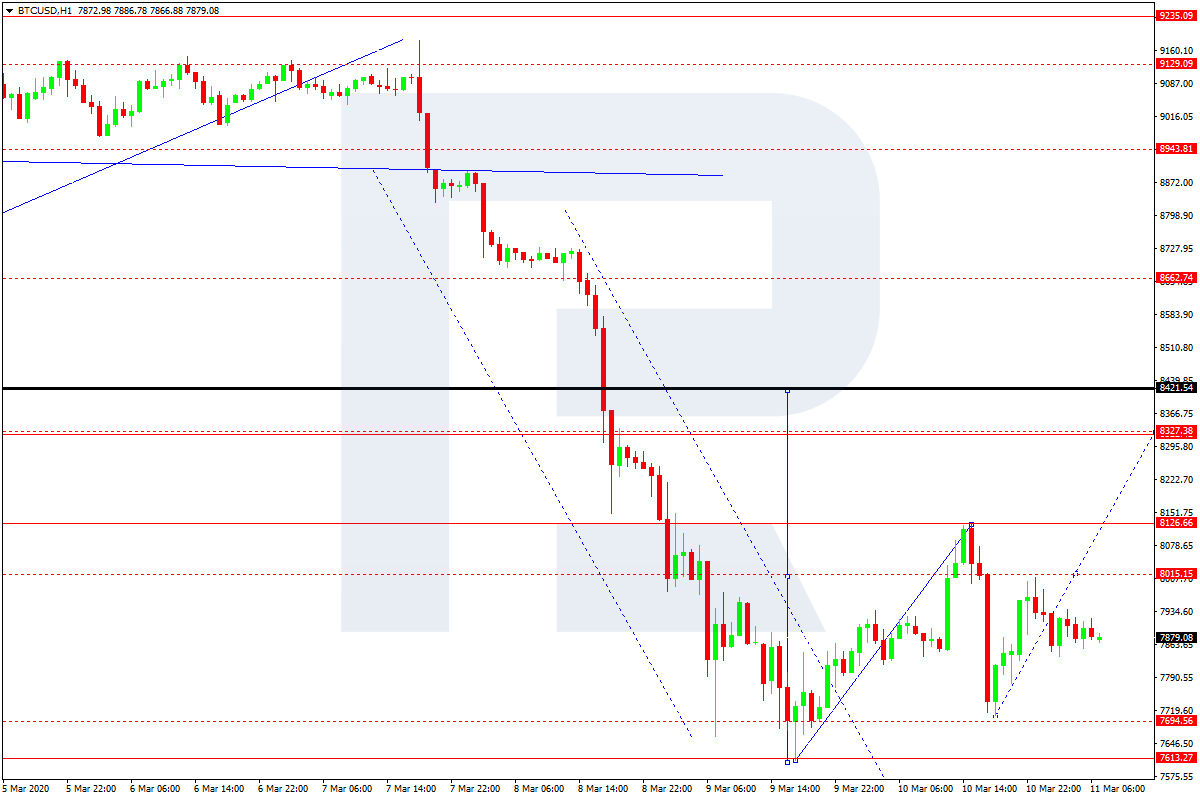
After completing the ascending impulse at 8125.00, BTCUSD is correcting towards 7777.00. The main scenario implies that the instrument may grow to return to 8125.00, break this level, and then continue trading upwards with the short-term target at 8400.00.

BITCOIN

Article By RoboForex.com

Attention!
Forecasts presented in this section only reflect the author’s private opinion and should not be considered as guidance for trading. RoboForex LP bears no responsibility for trading results based on trading recommendations described in these analytical reviews.

How Cryptocurrencies are reshaping the Oil Trade

By Michael Kuchar – Once touted as a bubble bound to burst, not only have cryptocurrencies managed to prove this notion wrong, but have also widened their horizon to several sectors of business. Cryptocurrencies and their underlying blockchain technology find application in Travel, Hospitality, Health, and the Energy sector, among other avenues of business.

That being said, cryptocurrencies have the potential to reshape oil trade altogether – How exactly though? Read on to find out, and learn much more.

How Cryptocurrencies are reshaping Oil Trade

Inventory management in today’s date, witnesses several outdated processes. While some organizations have moved to better, and more efficient inventory management techniques, several others persist with outdated techniques. Using blockchain technology in due course of inventory management, could help oil companies manage possible infiltration, process reporting and tracking, decentralization, and data accuracy, among other potential uses.

While inventory management is one of the ways oil companies are, and should be using blockchain technology, there are several other potential uses of cryptocurrencies, and their underlying technology. Smart contracts could be a fascinating proposition, when it comes to oil trade. Given the sheer size of the industry, drawing up, and following up with contracts has always been an issue with contractors. The use of smart contracts in oil trade could be a God-sent for all involved parties.

Smart contracts could be drawn up between all involved parties, and each involved party would receive their share of a deal, in due accordance to the conditions stated in the smart contract. None of the involved parties would have to bother about non-compliance, as the smart contract/contract would ensure that either all parties receive their due, as per the specified date, or neither party receives their due, if any party defaults, when it comes to providing their intended service.

According to bitcoin profit review 2020, the potential of an oil-backed cryptocurrency is enormous. While there are already some oil-backed cryptocurrencies in circulation, at the time of writing, like OilCoin, and Bilur Energy, among others, these cryptocurrencies lack state support. The launch of a widespread, and acceptable oil-backed cryptocurrency could, and should see stability of (its) price, given the relative stability and volume of the market at this point of time.

The use of smart contracts would eliminate the slowness of execution of some facets of trade, and eradicate the necessity to pay a broker as well. It would also lead to greater transparency, and compliance, as all parties will be affected, if any party taking part in a transaction defaults, when it comes to providing the service they are hired/sought after to offer. Crude oil is one of the most exported products in the world, and tokenizing barrels of oil, held in reserve, would only give credibility to a token, thereby enhancing its stability. While Russia was planning on launching an oil-backed cryptocurrency of their own in 2019, called Neft-Coin, there is no news of the same yet. We should see significant developments with respect to oil-backed cryptocurrencies in the near future.

Conclusion on How Cryptocurrencies are reshaping the Oil Trade

As is the case with all new forms of technologies, blockchain technology and cryptocurrencies cannot be expected to revolutionize the oil industry immediately. Acceptance, and widespread integration takes time, and effort, as people are used to the methods and processes they have been making use of, in due course of their oil trading career.

As has been mentioned in due course of this article, there are several applications of blockchain technology, and cryptocurrencies, when it comes to reshaping the present, and the future of oil trade. Widespread acceptance of cryptocurrencies as a whole, will only see this process speed up over time.

About the Author:

Michael is an experienced financial trader using Forex, Commodities and Cryptocurrencies. In addition to trading, he runs businesses, trains traders and develops trading technology products. His other passions are boxing and traveling.