Israel cuts rate 1st time in 5 years as economy to shrink

By CentralBankNews.info
Israel’s central bank cut its key interest rate for the first time in five years, launched a new monetary instrument to provide loans to banks for three years and expanded its repurchase transactions to include corporate bonds as security as it slashed its 2020 growth forecast and now expects a contraction of 5.3 percent, assuming the main restrictions to contain the spread of the coronavirus will be removed by the end of June.
“The coronavirus crises halted the trend of growth and the economy has shifted into contraction,” the Bank of Israel (BOI) said.
BOI cut its main interest rate by 15 basis points to 0.10 percent and it is now the same from March 2015 until November 2018.
BOI last cut its rate in March 2015 BOI and then held it at 0.10 percent until raising it in November 2018 on optimism over improving economic growth.
“More than one-third of the economy is shut down, private consumption is lower by about one-quarter relative to the pre-crises period, and approximately 1 million workers, 24 percent of the workforce, have claimed unemployment benefits,” BOI said.
BOI’s rate cut today underlines how fast the spread of the virus is hitting the global economy, forcing economists and central banks to ratchet down their expectations.
It was only in February BOI’s monetary policy committee confirmed it was expecting to maintain the rate at 0.25 percent for a prolonged period while it was intervening in foreign exchange markets to ensure its policy stance would remain accommodative despite the tightening from a rising shekel.
However, BOI also said it had a range of tools at its disposal to make its policy more accommodative if needed but was optimistic the spread of the virus would be halted in coming months and the overall impact on the global economy would be limited.
On March 4 BOI still didn’t see any “evidence of a significant” impact on the country’s economy from the spread of the virus and was still expecting a relatively quick recovery of the global economy.
But by mid-March the deterioration in financial markets was accelerating as COVID-19 spread.
On March 15 BOI began offering repo transactions to ensure bond markets would function smoothly, then on March 20 it cut the capital requirement for banks to ensure they could meet the rising demand for credit, and on March 23 it began purchasing government bonds in the secondary market to offset a lack of liquidity that was raising the cost of longer-term credit for firms.
“The Committee will expand the use of the existing tools, including the interest rate tool, and will be able to operate additional ones, to the extent that the crises lengthens and it is necessary to achieve the monetary policy goals and to moderate the negative economic impact created as a result of the crises,” BOI said.
Despite the uncertainty about the extent of the virus, BOI now expects the economic recovery to begin in the third quarter, boosting growth in 2021 to 8.7 percent though the unemployment rate is expected to only decline gradually from an estimated 6 percent average this year and reach pre-crises levels by the end of next year.
Inflation, which already was falling sharply in the second half of last year, is forecast by the bank’s staff to be negative this year, at minus 0.8 percent, before rising 0.9 percent in 2021.
BOI’s interest rate is seen in the range of 0.0 to 0.1 percent at the end of this year and then rise to between 0 and 0.25 percent by the end 2021.
BOI’s new monetary tool with provide the banking system with fixed-rate loans at 0.1 percent for 3 years, with a size of 5 billion shekels and through the month of May, to increase the supply of credit to small businesses.
It is also examining ways to effectively lower the interest rate on credit to small businesses even further as its move to buy government bonds in March may mainly affect credit to large companies.
Starting on April 7, BOI will expand its repurchase tool and for the first time include corporate bonds rated AA or higher, as collateral, in addition to government bonds.


     The Bank of Israel released the following press release:

“The Monetary Committee decides on April 6, 2020 to reduce the interest rate by 0.15 percentage points to 0.1 percent

In addition, the Committee decided on 2 additional steps:
  •       To put a new monetary instrument into operation: Provision of monetary loans to banks for a term of 3 years, with a fixed interest rate of 0.1 percent. The loans are contingent on extending credit to small and micro businesses.
  •       The expansion of the plan through which repo transactions are carried out vis-à-vis financial entities, so that the agreements can include corporate bonds (in addition to government bonds) as security. This step will strengthen the plan’s support of liquidity and the orderly functioning of the financial markets.
An expanded explanation of these two steps is published in a separate press release.
  •     The coronavirus crisis halted the trend of growth and the economy has shifted into contraction.  More than one-third of the economy is shut down, private consumption is lower by about one-quarter relative to the pre-crisis period, and approximately 1 million workers, 24 percent of the workforce, have claimed unemployment benefits.
  •      According to the Research Department’s assessment, GDP contracted by approximately 5 percent in the first quarter (quarterly terms). Based on the Department’s macroeconomic forecast, assuming that the main part of the coronavirus restrictions are removed gradually by the end of June, negative growth of approximately 5 percent is expected in 2020, with an unemployment rate of 6 percent (annual average). The beginning of a recovery in the third quarter will lead to growth of 9 percent in 2021, though the unemployment rate is expected to decline gradually and only toward the end of 2021 will it approach the low pre-crisis levels. The debt to GDP ratio is expected to reach about 75 percent in 2020. Note that there is considerable uncertainty regarding the forecast crisis, in view of the lack of clarity about the length and magnitude of the crisis.
  •      Global growth is expected to contract markedly in 2020, and the spread of the crisis has led to very strong policy responses by central banks and governments. Commodity prices collapsed by tens of percent. In China, a recovery in economic activity is starting to be observed.
  •       The crisis led to a shock in capital markets in Israel and worldwide, with steep declines in equity prices and an increase in volatility and risk. In Israel, the sharp increase in government bond yields and in corporate bond spreads was halted following measures taken by the Bank of Israel and the halt of mutual fund withdrawals.
  •       There was exceptional volatility in the exchange rate, against the background of dollar liquidity distress in Israel and worldwide. The swap transactions carried out by the Bank of Israel moderated the volatility, and at the end of the period, the shekel had weakened by 5.8 percent against the dollar and by 3.4 percent in terms of the effective exchange rate.
  • ​     ​The inflation environment that was low even prior to the crisis declined sharply. The 1-year inflation expectations decreased further, but expectations for longer terms remained stable. In the short term there could be difficulty in measuring the inflation rate.
In view of the magnitude of the crisis’s adverse impact on economic activity, the Committee is utilizing a range of tools in order to increase the extent of the monetary policy accommodation and to ensure the orderly functioning of the financial markets. The Committee will expand the use of the existing tools, including the interest rate tool, and will be able to operate additional ones, to the extent that the crisis lengthens and it is necessary to achieve the monetary policy goals and to moderate the negative economic impact created as a result of the crisis.
For the file of figures accompanying this notice, click here.
The coronavirus crisis halted the trend of growth, and in March, the economy started to contract. Approximately 1 million workers claimed unemployment benefits during March, 850,000 more than in February, with 90 percent of them on the basis of being placed on unpaid leave, and the number of people seeking work makes up about 24 percent of the labor force. An analysis of the negative impact on private consumption—in accordance with the magnitude of the Ministry of Health’s limitations on the various consumption items and the weight of each item in the household consumption basket—indicates that private consumption is about 27 percent lower than its pre-crisis level. An industry-by-industry analysis of the impact of the crisis on GDP and employment in the economy’s industries indicates that given the current guidance by the Ministry of Health, the total adverse impact on GDP is about 37 percent. The scope of the shutdown is particularly high in industries in which wages are low, so that the ability of workers in those industries to bear a long shutdown is relatively limited. The same analysis indicates that the negative impact on the labor input is about 45 percent, and in addition to employees who were laid off or were placed on unpaid leave, it reflects the scope of part time work among workers who remain employed or who were placed on paid leave. These estimates suggest that in the first quarter, the economy contracted by 5 percent compared with the previous quarter (in quarterly terms). The Bank of Israel’s Companies Survey points to a sharp decline in the net balance of the business sector, with most industries reporting a sharp negative impact on demand, while the negative impact on supply is focused on the hotels industry (against the background of financing constraints) and construction (a shortage of workers). Based on the Research Department’s macroeconomic forecast, assuming that there won’t be a further increase in the severity of the coronavirus restrictions in Israel beyond those already imposed, and that the main part of the limitations that are barriers to economic activity will be removed gradually by the end of June, the economy is expected to contract by 5.3 percent in 2020, and to grow by 8.7 percent in 2021, though the unemployment rate is expected to decline gradually and only return to the low pre-crisis levels toward the end of 2021. The government budget deficit is expected to increase to 11 percent of GDP in 2020, taking into account the budget plan announced by the government to deal with the crisis and the expected decline in revenues due to a slowdown in activity. The debt to GDP ratio is expected to increase to 75 percent. The Research Department emphasized that the crisis is unprecedented and it is therefore difficult to assess the extent and magnitude of its economic ramifications, and it assesses that a deferral of an additional month in removing the limitations and a further deterioration in world trade will lead to contraction of 8.8 percent in GDP in 2020, and will increase the average unemployment rate for 2020 by 2 additional percentage points.
In March, there were shocks in capital markets in Israel and abroad. Equity market indices in major economies declined by approximately 30 percent, and afterward most of them offset part of the decline against the background of steps by central banks and the governments. Yields in government and corporate bond markets were particularly volatile and there was a sharp rise in risk spreads. In Israel, the Tel Aviv 35 Index declined by approximately 25 percent, and the steep increase in government bond yields and in corporate bond spreads was halted after the announcement of the Bank of Israel’s program in the government bond market and the halt in the trend of mutual fund withdrawals, which at its height reached NIS 8 billion per day.
Before the outbreak of the coronavirus crisis, there was an additional decline in the inflation environment. The CPI declined by 0.4 percent in January and by 0.1 percent in February, so that the year over year inflation rate continued to fall, reaching 0.1 percent, with a moderate decrease in inflation expectations, from all sources, as well. With the outbreak of the crisis, 1-year inflation expectations declined further. While inflation expectations derived from the capital market are apparently impacted by trading conditions in the bond market, there was a decline in expectations from the other sources as well, partly as a result of the rapid decrease in global prices of oil and other commodities. Expectations for longer terms did not change markedly. Although the adverse impact in the supply chain of many goods may lead to price increases from the supply side, the effect of the decrease in demand is apparently more notable, and is expected to lead to a decline in inflation in the coming months. The depreciation will offset the forces for a decline in inflation. However, a methodological difficulty is expected in calculating the CPI and in analyzing the meaning of the inflation rate so long as the strict limitations on economic activity lead to numerous goods and services not being consumed, and their prices not being able to be measured (this difficulty is relevant to 20 percent of the weight of CPI components). There was a sharp change in the composition of households’ consumption basket.
There was anomalous volatility in the exchange rate during March, against the background of the dollar liquidity distress resulting from dollar margin calls after the sharp declines in global equity markets. From the previous interest rate decision through March 17th, the shekel weakened by 11 percent in effective exchange rate terms. However, after the Bank of Israel conducted the shekel/dollar swap transactions, the volatility declined and the shekel weakness moderated to about 5.8 percent against the dollar and 3.4 percent in terms of the effective exchange rate since the previous interest rate decision. The depreciation is expected to support the profitability of exports, particularly manufacturing exports.
Around the world, more than 1 million people have already contracted the coronavirus and tens of thousands have died, and it remains difficult to estimate the magnitude of the negative economic impact. According to assessments by the international institutions, global growth is expected to contract markedly in 2020 and a very sharp decline in world trade is expected, but the range of the forecasts is extremely wide. Sentiment indices also point to contraction in activity. In China, the slowdown in the spread of the virus enabled authorities there to reduce the restrictions on the population, and data indicate a gradual return of economic activity, so that moderate but positive growth is expected in 2020. The spread of the crisis led to a sharp policy response by central banks and governments. Most central banks reduced interest rates markedly and adopted a range of expansionary measures and supply of liquidity to the markets. Governments announced extensive plans to expand public expenditure, compensation for those adversely impacted by the crisis, and the extension of credit to the business sector. The slowdown in economic activity led to a sharp decline in commodity prices, and the price of oil dropped by tens of percent, against the background as well of a lack of agreement between the main oil producers to cut output.

The minutes of the monetary discussions prior to this interest rate decision will be published on April 20, 2020. The next decision regarding the interest rate will be published at 16:00 on Monday, May 25, 2020.​”

www.CentralBankNews.info
GBPUSD Analysis: Smaller housing equity decline in UK bullish for GBPUSD

By IFCMarkets

Smaller housing equity decline in UK bullish for GBPUSD

Housing equity withdrawals decline slowed in Britain in last quarter of 2019: withdrawals declined to 5.1 billion Pounds after 6.0 billion Pound withdrawals in previous three months, when a 6.2 billion drop was forecast. This is bullish for GBPUSD.

IndicatorVALUESignal
RSINeutral
MACDBuy
Donchian ChannelBuy
MA(200)Buy
FractalsBuy
Parabolic SARBuy


Summary of technical analysis

OrderBuy
Buy stopAbove 1.2329
Stop lossBelow 1.2218

Market Analysis provided by IFCMarkets

WTI Maintains Strong Gains For A Second Day

By Orbex

WTI crude oil prices are rising higher for a second day. Prices rose over 16% into Friday’s close, led by the optimism of an OPEC supply cut.

At the time of writing, WTI crude oil prices are trading near the resistance level of 28.00.

If this level cannot be cleared, we expect prices to drift back into range.

However, the floor at 22.00 looks to be solidly in place for the moment. This will mean that oil prices have likely formed a bottom.

By Orbex


Euro Rebounds Off Support, As Expected

By Orbex

The euro currency’s gradual declines pushed the currency down to the support area of 1.0787 into Friday’s close.

As widely expected, price quickly bounced off this support level to close on a bullish session in the final hours on Friday last week.

The Stochastics oscillator remains well in the oversold level. This could signal a turnaround in the near term.

EURUSD will likely remain caught within the range of 1.1030 and the current support of 1.0787 for the near term.

By Orbex

Two Leading Indicators for Crude Oil Point To Higher Prices

By TheTechnicalTraders 

– On Friday morning I created these charts on the price of crude oil, the energy sector stocks (XLU), and also the Canadian Dollar, which I think paint a clear picture of what to expect for the price of crude this coming week.

I always like to look at the leading indicators of the asset which I am interested in trading. For those trading the price of crude oil you should be watching what the energy stocks are doing or the sector as a whole. I use XLE ETF for this. I also will show you the Canadian dollar and what it is going later in this post.

Energy stocks are a way for traders to leverage the move in oil so the smart/big money tends to move into these stocks before the underlying commodity (oil) will start to change direction.

Price of Crude Oil – Daily Chart

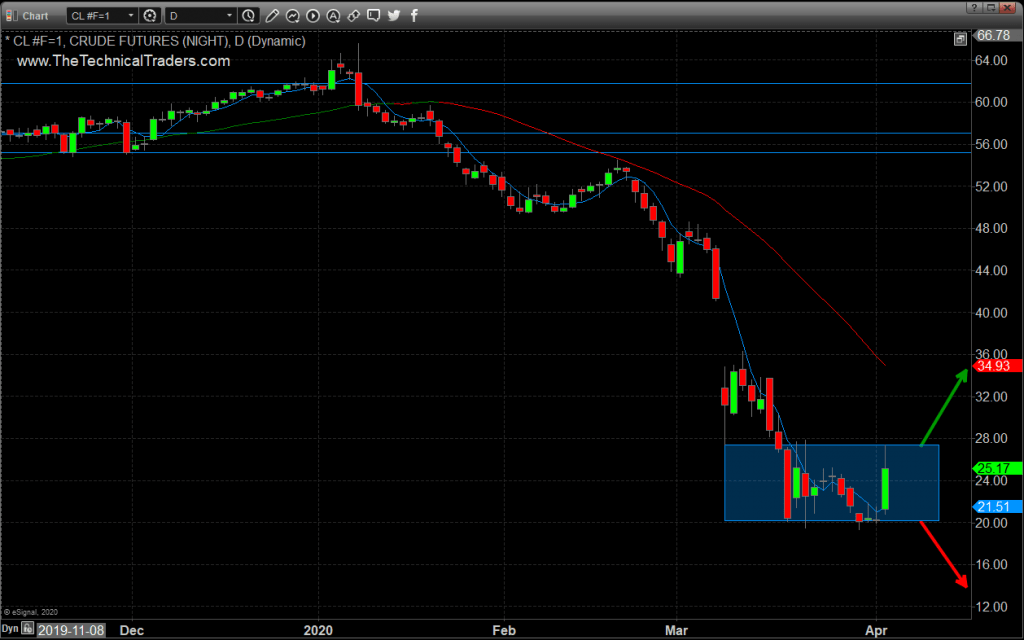
Oil has been trading sideways for a couple of weeks. The range may not look big but just note that it’s a roughly 25% range from the bottom to the top of the blue box. The key take-aways here is simple. Oil is still trading at the bottom of the chart and trading sideways. What we will be looking for is a breakout of this zone in either direction which should induce a strong rally or selloff to the expected price levels of $34, or $14. These moves are likely to happen quickly over a 2-3 day period to expect an explosive move.

Price of Energy Sector Stocks ETF (XLE) – Daily Chart

Energy stock generally leads to the price of oil by a few days. The important points on this chart are that price has rallied off the lows, and is forming a bull flag pattern which means higher prices are expected.

Much like crude, a break in either direction in XLE can be traded, but the pattern which has formed puts the odds in favor of an upside breakout and rally of roughly 12%.

Before we continue, be sure to opt-in to our free market trend signals 
before closing this page, so you don’t miss our next special report!

Price of Canadian Dollar – Daily Chart

The Canadian dollar is very tied to the energy sector, both the price of oil and energy stock because we are a resource-rich country, with oil being once of our top resources.

As you can see in the chart below the Canadian dollar it too has formed a bull flag pattern and looked primed and ready for another rally higher. The currency market, in general, is massive and when a large asset class is showing signs of reversing you better pay attention.

When I see a currency forming strong pattern to give us an expected price breakout direction, I like to look at what that is telling me. What companies or commodities will this move affect? In this case, money is moving into the Canadian dollar expecting oil to bottom and rally which should help increase the value even more.

I Talk Live On TV about These Trade Setups

If you want more details on this trade setup just watch this clip from TraderTV where I talked with Brendan Wickens in detail. Click Here To Watch Video

Concluding Thoughts:

In short, this coming week is most likely going to be much wilder than last week. While I didn’t cover on the other asset classes just know that precious metals, the major stock indexes, bonds, and oil have al built powerful patterns. Breakouts of these patterns will trigger big moves 10-25% in some cases, so get ready for fireworks this week!

As a technical analyst and trader since 1997, I have been through a few bull/bear market cycles. I believe I have a good pulse on the market and timing key turning points for short-term swing traders.

I hope you found this informative, and if you would like to get a pre-market video every day before the opening bell, along with my trade alerts visit my Active ETF Trading Newsletter.

We all have trading accounts, and while our trading accounts are important, what is even more important are our long-term investment and retirement accounts. Why? Because they are, in most cases, our largest store of wealth other than our homes, and if they are not protected during a time like this, you could lose 25-50% or more of your entire net worth. The good news is we can preserve and even grow our long term capital when things get ugly like they are now and ill show you how and one of the best trades is one your financial advisor will never let you do because they do not make money from the trade/position.

If you have any type of retirement account and are looking for signals when to own equities, bonds, or cash, be sure to become a member of my Long-Term Investing Signals which we issued a new signal for subscribers.

Ride my coattails as I navigate these financial markets and build wealth while others lose nearly everything they own during the next financial crisis.

Chris Vermeulen
Chief Market Strategies
TheTechnicalTraders.com

Fibonacci Retracements Analysis 06.04.2020 (GOLD, USDCHF)

Article By RoboForex.com

XAUUSD, “Gold vs US Dollar”

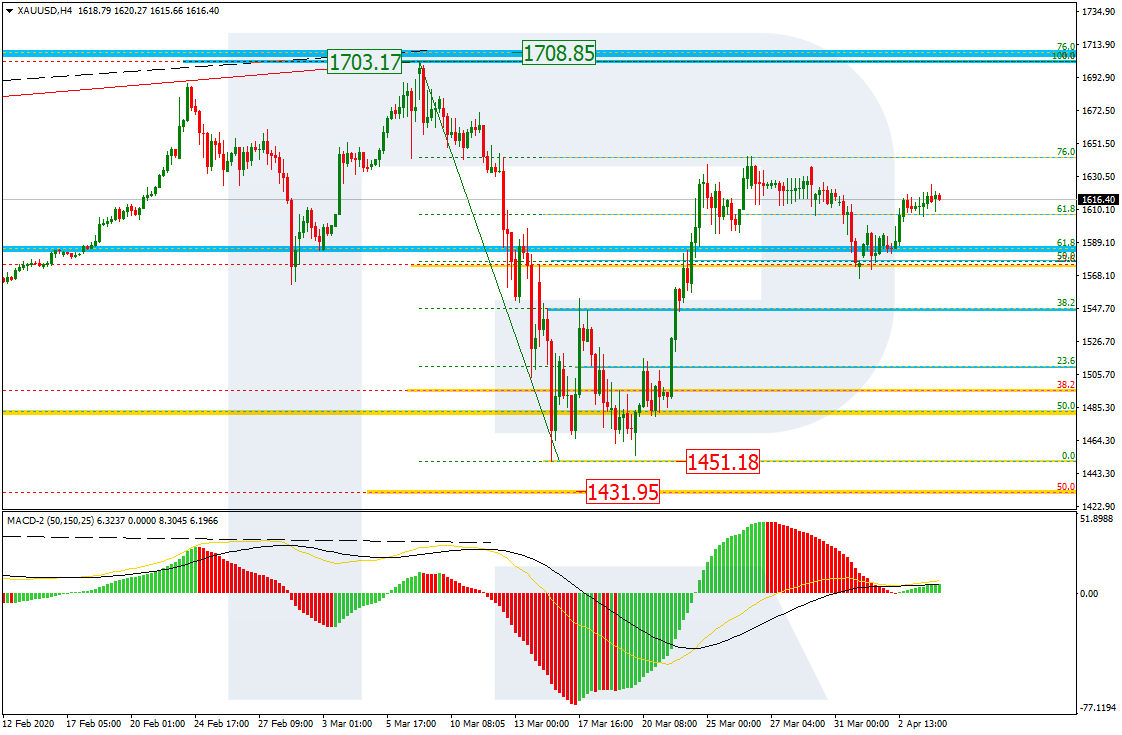
As we can see in the H4 chart, after completing a slight correction, XAUUSD is trying to start a new rising impulse towards 76.0% fibo, which was tested earlier. If the pair fixes above this level, the price may reach the high at 1703.17 and break it. In this case, the instrument may trade to attack the long-term 76.0% fibo at 1708.85. The support remains at 1451.18.

GOLD_H4
Risk Warning: the result of previous trading operations do not guarantee the same results in the future

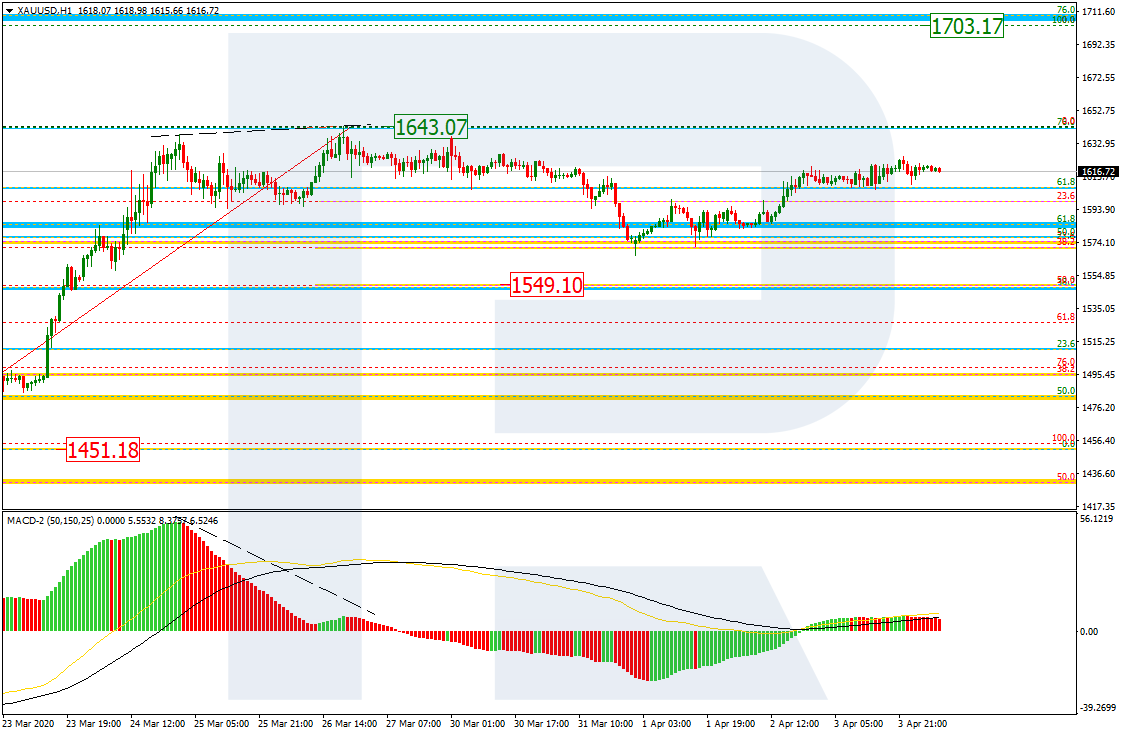
In the H1 chart, there was a local divergence, which made the pair start a new pullback, which has already reached 38.2% fibo. At the moment, the price is steadily trading towards the high at 1643.07. However, one shouldn’t exclude the possibility of a rebound. In this case, the instrument may start a new decline towards 50.0% fibo at 1549.10.

GOLD_H1
Risk Warning: the result of previous trading operations do not guarantee the same results in the future

USDCHF, “US Dollar vs Swiss Franc”

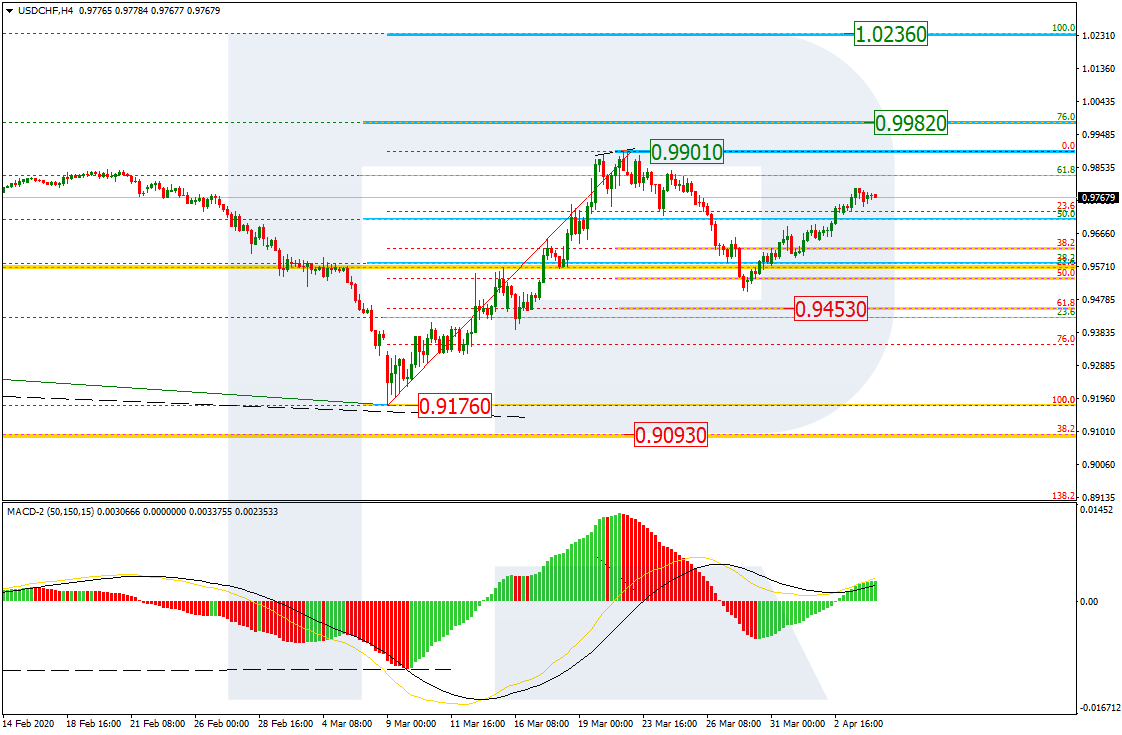
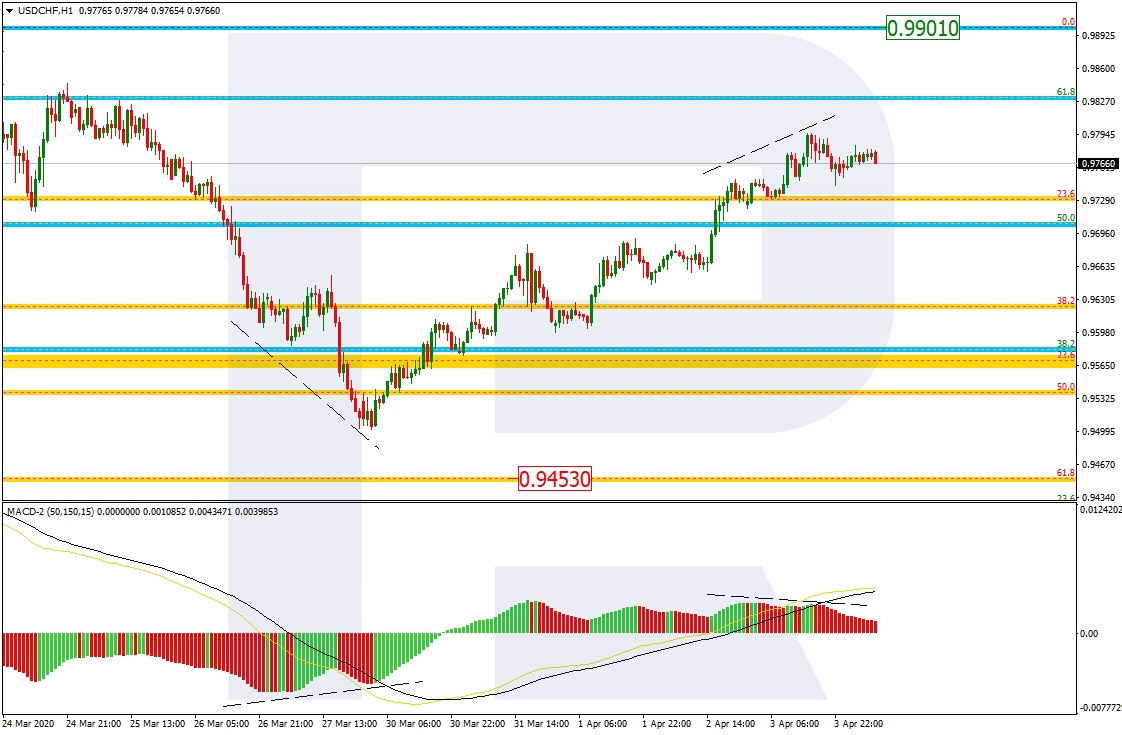
In the H4 chart, the descending wave has corrected the previous uptrend by 50.0%. Another ascending wave may be heading to break the high at 0.9901. If it succeeds, the instrument may continue growing towards 76.0% fibo at 0.9982 and then the high at 1.0236.

USDCHF_H4
Risk Warning: the result of previous trading operations do not guarantee the same results in the future

In the H1 chart, there is a local divergence within the uptrend, which indicates a slowdown in the price growth on its way towards 61.8% fibo. After reaching this level, the pair may start a new pullback.

USDCHF_H1

Article By RoboForex.com

Attention!
Forecasts presented in this section only reflect the author’s private opinion and should not be considered as guidance for trading. RoboForex LP bears no responsibility for trading results based on trading recommendations described in these analytical reviews.

Forex Technical Analysis & Forecast 06.04.2020

Article By RoboForex.com

EURUSD, “Euro vs US Dollar”

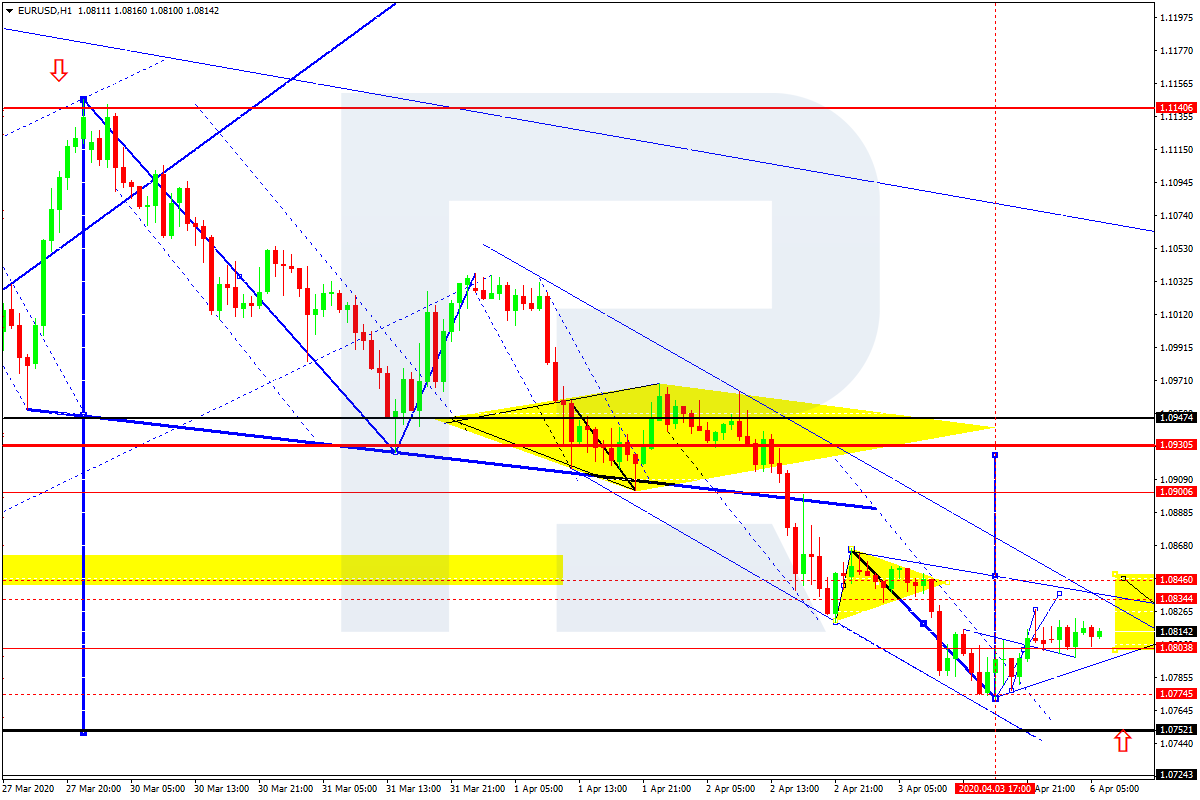
After completing another descending structure at 1.0773, EURUSD is expected to resume growing towards 1.0846 and the fall to reach 1.0830, thus forming a new consolidation range between these two levels. If later the price breaks this range to the upside, the market may continue forming the ascending wave towards 1.0930; if to the downside – resume moving inside the downtrend with the target at 1.0752.

EURUSD
Risk Warning: the result of previous trading operations do not guarantee the same results in the future

GBPUSD, “Great Britain Pound vs US Dollar”

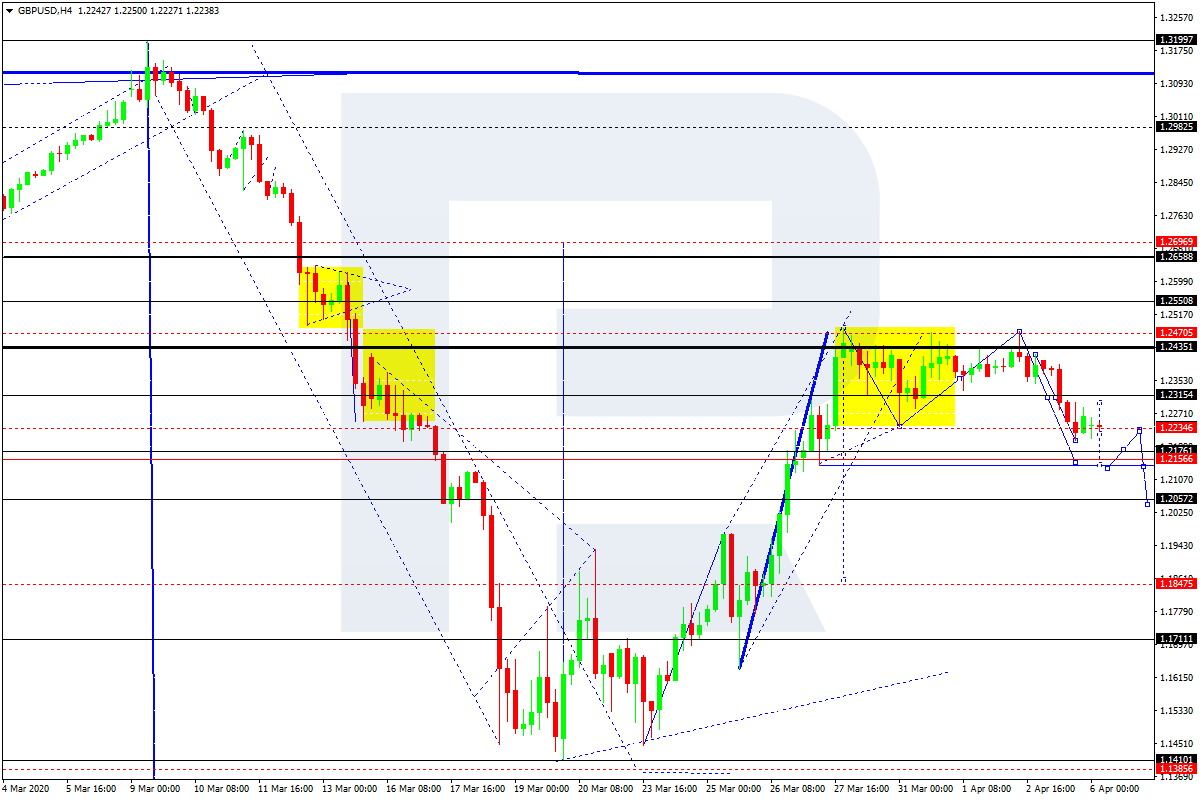
GBPUSD is forming the first descending wave with the target at 1.2160. After that, the instrument may form one more ascending structure towards 1.2315 and then resume moving inside the downtrend to reach the short-term target at 1.2050.

GBPUSD
Risk Warning: the result of previous trading operations do not guarantee the same results in the future

USDCHF, “US Dollar vs Swiss Franc”

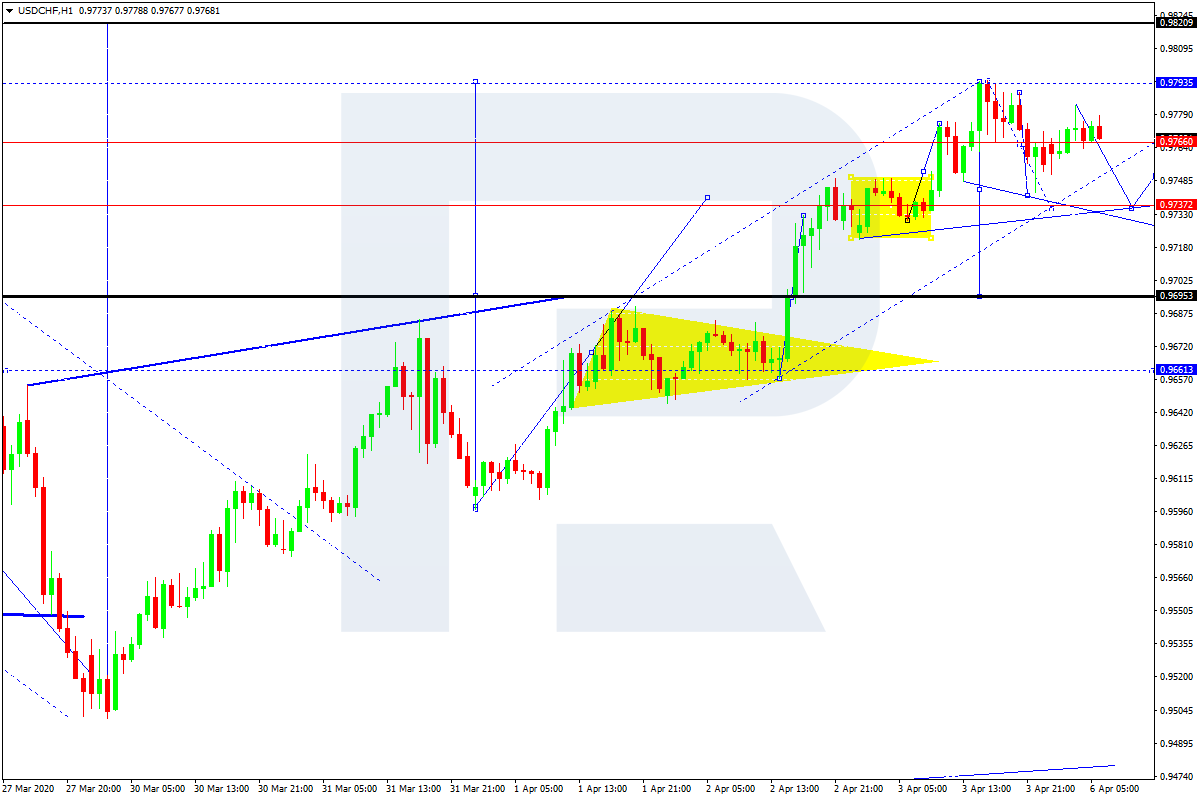
USDCHF is consolidating around 0.9766. Today, the pair may expand the range down to 0.9737. Later, the market may return to 0.9766 and then form a new descending structure with the target at 0.9696.

USDCHF
Risk Warning: the result of previous trading operations do not guarantee the same results in the future

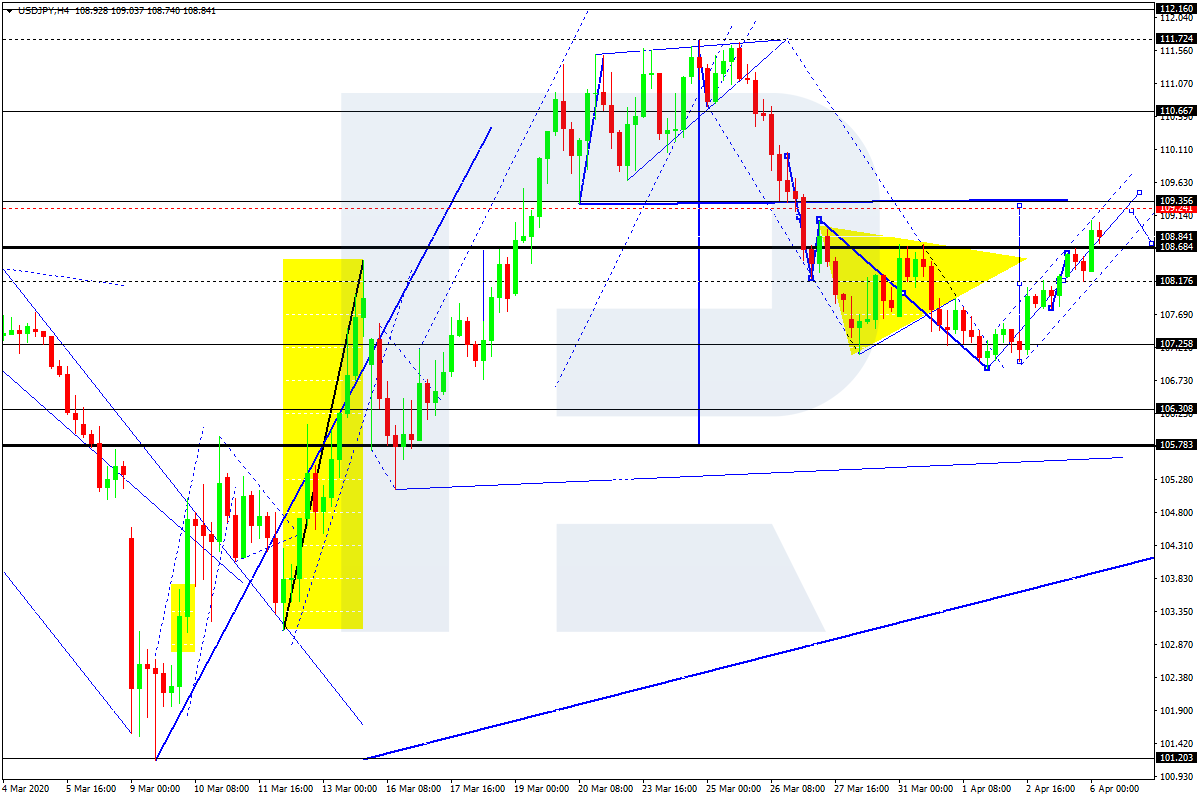
USDJPY, “US Dollar vs Japanese Yen”

USDJPY continues trading upwards. The main scenario implies that today the price may reach 109.24 and then form a new descending structure towards 108.20. Later, the market may start another growth to reach 109.40 and then resume moving downwards with the target at 105.80.

USDJPY
Risk Warning: the result of previous trading operations do not guarantee the same results in the future

AUDUSD, “Australian Dollar vs US Dollar”

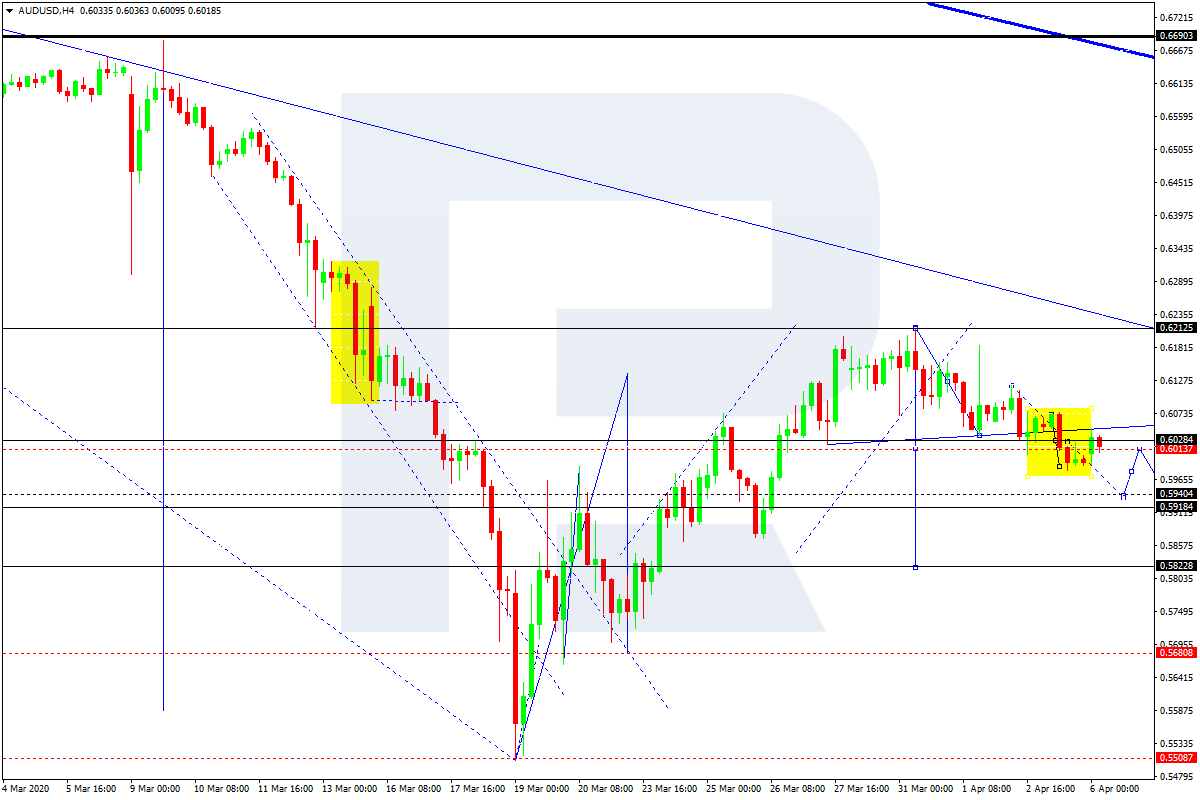
AUDUSD is forming a new descending structure with the short-term target at 0.5940. After that, the instrument may start another growth towards 0.6028 and then resume falling to reach 0.5822.

AUDUSD
Risk Warning: the result of previous trading operations do not guarantee the same results in the future

USDRUB, “US Dollar vs Russian Ruble”

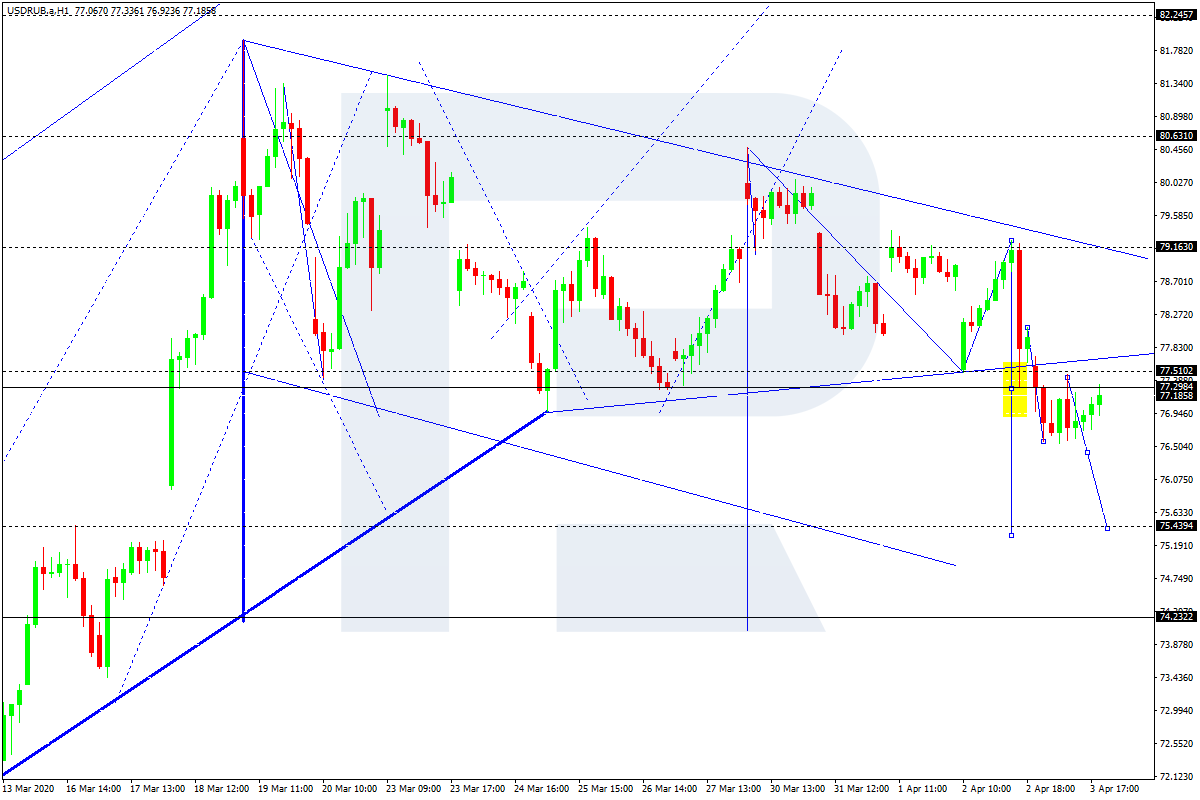
USDRUB is forming a new descending structure towards 74.90. According to the main scenario, the price is expected to reach this level and then resume growing towards 77.20. Later, the market may resume trading downwards with the first target at 74.22.

USDRUB
Risk Warning: the result of previous trading operations do not guarantee the same results in the future

USDCAD, “US Dollar vs Canadian Dollar”

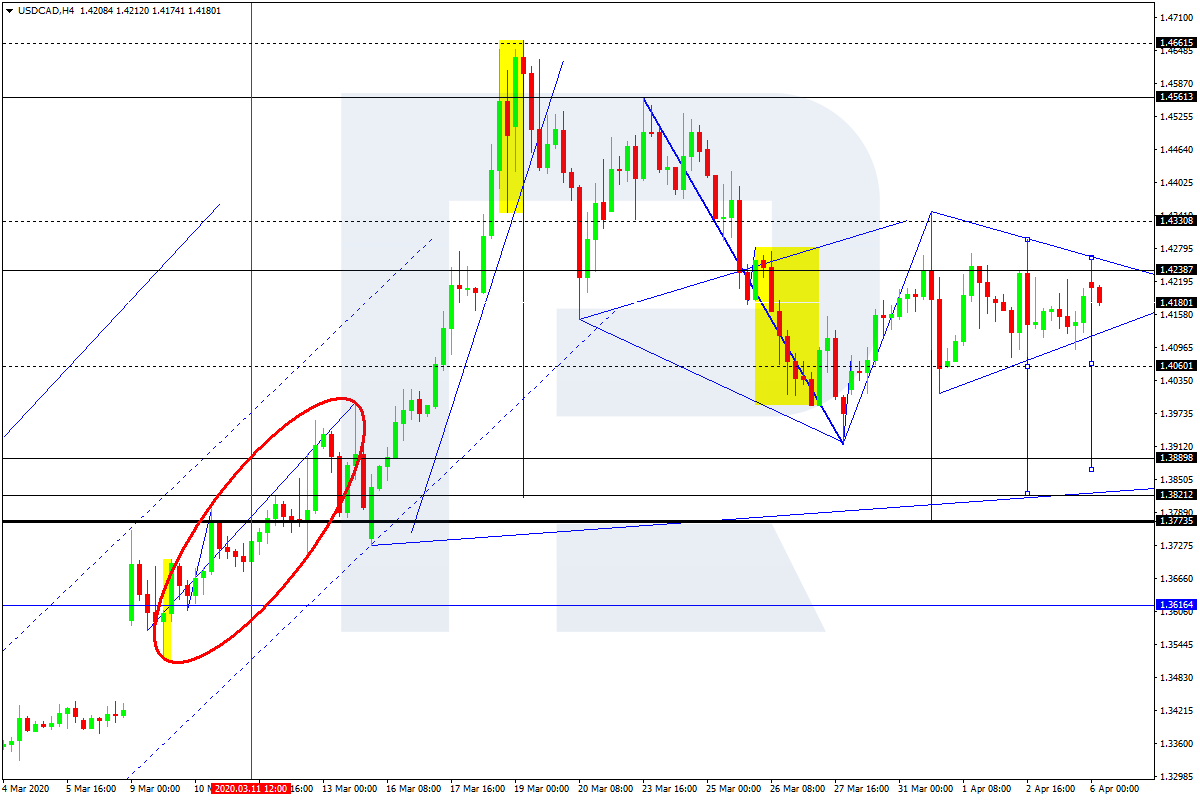
USDCAD is still consolidating below 1.4240. Today, the pair may trade downwards to break 1.4060 and then continue falling with the short-term target 1.3888.

USDCAD
Risk Warning: the result of previous trading operations do not guarantee the same results in the future

XAUUSD, “Gold vs US Dollar”

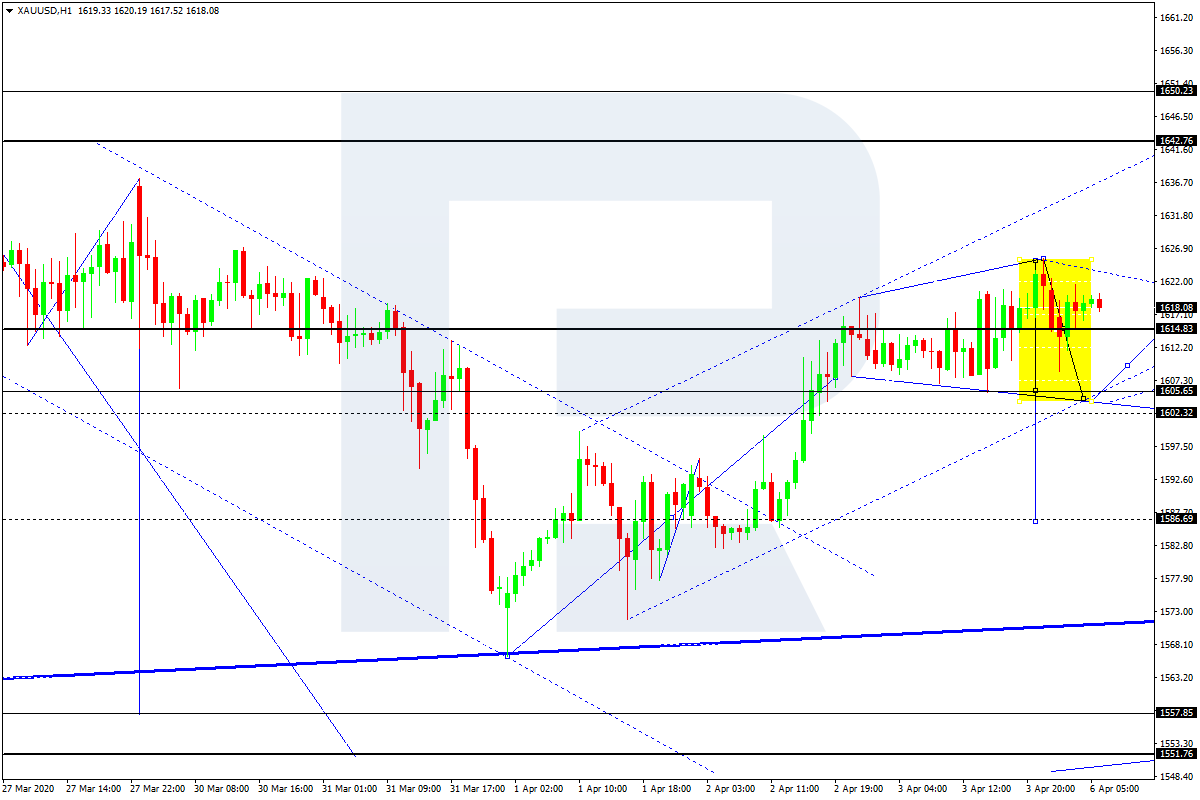
Gold is consolidating around 1614.80. Possibly, today the pair may fall to reach 1605.65 and then grow to return to 1614.80. If later the price breaks this range to the downside, the market may form a new descending structure towards 1586.59; if to the upside – trade upwards to extend the wave up to 1650.25 (an alternative scenario).

GOLD
Risk Warning: the result of previous trading operations do not guarantee the same results in the future

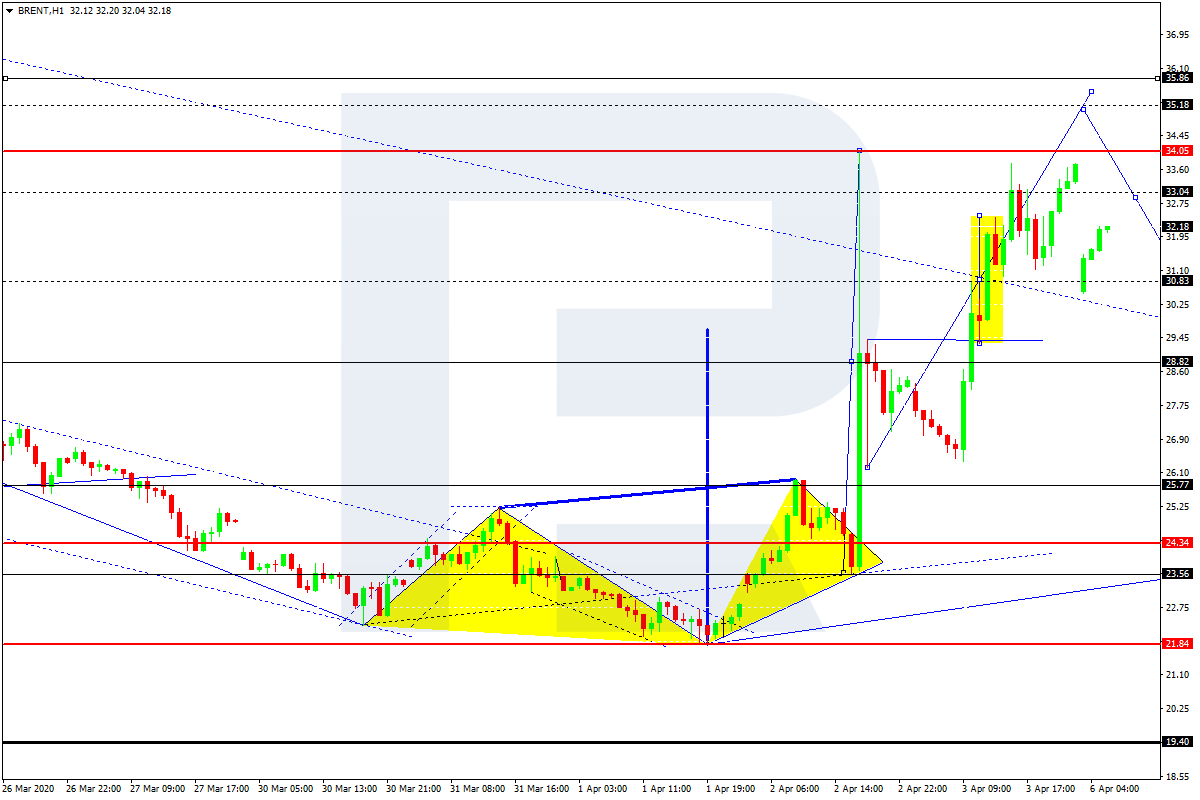
BRENT

Brent continues forming the ascending wave towards 35.86. After completing it, the instrument may correct to reach 30.80. If later the price breaks this level to the downside, the market may continue the correction towards 25.77.

BRENT
Risk Warning: the result of previous trading operations do not guarantee the same results in the future

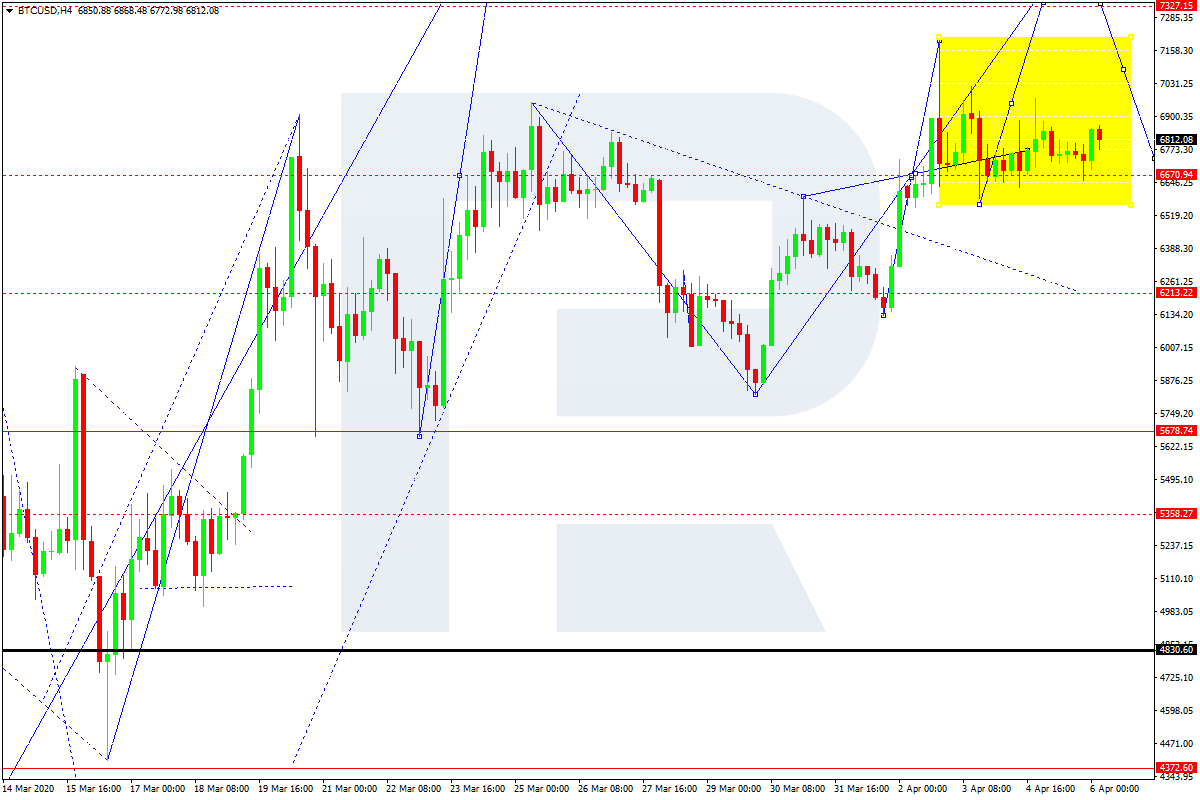
BTCUSD, “Bitcoin vs US Dollar”

BTCUSD is still forming the ascending structure towards 7330.00, which may later be followed by another decline to reach 6600.00. After that, the instrument may resume growing towards 7600.00 and then start a new correction with the target at 5600.00.

BITCOIN

Article By RoboForex.com

Attention!
Forecasts presented in this section only reflect the author’s private opinion and should not be considered as guidance for trading. RoboForex LP bears no responsibility for trading results based on trading recommendations described in these analytical reviews.

Greenback Is in the Positive Zone Despite Weak US Labor Market Report

by JustForex

On Friday, the US dollar strengthened again relative to a basket of currency majors despite weak labor market data for March. The dollar index (#DX) closed in the green zone (+0.40%). The stock market fell sharply, but the dollar continued to gain momentum amid declining demand for risk. However, investors are still concerned about the possible worsening of the pandemic around the world and its impact on the global economy. Also, according to Trump, US will probably face two most difficult weeks. The US President warned that Americans should prepare for a significant spike in deaths from coronavirus. White House medical experts forecast that between 100,000 and 240,000 Americans may die during a pandemic, even if they strictly adhere to the quarantine.

The British pound began to decline after it became known that British Prime Minister Boris Johnson was hospitalized for examination due to persistent symptoms of COVID-19. The British Prime Minister was hospitalized on Sunday because he still has symptoms of coronavirus ten days after testing positive for the virus. Downing Street says he continues to lead the government. However, the UK Constitution does not provide for measures regarding who will take the lead if Johnson cannot continue to rule the country.

The “black gold” prices have been declining again. Currently, futures for the WTI crude oil are testing the $27.60 mark per barrel.

Market indicators

On Friday, there was the bearish sentiment in the US stock market: #SPY (-1.45%), #DIA (-1.57%), #QQQ (-1.42%).

The 10-year US government bonds yield increased slightly. At the moment, the indicator is at the level of 0.66-0.67%.

The news feed on 2020.04.06:
  • Today, the publication of important news is not expected.

by JustForex

The Analytical Overview of the Main Currency Pairs on 2020.04.06

by JustForex

The EUR/USD currency pair

Technical indicators of the currency pair:
  • Prev Open: 1.08554
  • Open: 1.08105
  • % chg. over the last day: -0.45
  • Day’s range: 1.07986 – 1.08355
  • 52 wk range: 1.0777 – 1.1494

The bearish sentiment prevails on the EUR/USD currency pair. On Friday, the US published a weak labor market report for March. The number of people employed in the nonfarm sector of the country fell sharply (701K). The unemployment rate increased from 3.5% to 4.4%. The labor force participation rate decreased from 63.4% to 62.7%. At the same time, the growth in average hourly earnings accelerated from 0.3% to 0.4%. Nevertheless, the demand for greenback is still high. Currently, the EUR/USD quotes are consolidating in the range of 1.07750-1.08350. Positions should be opened from these marks.

Today the news feed is calm.

EUR/USD

Indicators do not give accurate signals: the price is testing 50 MA.

The MACD histogram has approached the 0 mark.

Stochastic Oscillator is in the neutral zone, the %K line is below the %D line, which indicates the bearish sentiment.

Trading recommendations
  • Support levels: 1.07750, 1.07200
  • Resistance levels: 1.08350, 1.09000, 1.09700

If the price fixes below the support level of 1.07750, a further fall in the EUR/USD currency pair is expected. The movement is tending to 1.07200-1.07000.

An alternative could be the growth of EUR/USD quotes to a round level of 1.09000.

The GBP/USD currency pair

Technical indicators of the currency pair:
  • Prev Open: 1.23997
  • Open: 1.22341
  • % chg. over the last day: -1.07
  • Day’s range: 1.22096 – 1.23093
  • 52 wk range: 1.1466 – 1.3516

The GBP/USD currency pair has been declining after a prolonged consolidation. The British pound has updated local lows. The pound is under pressure due to weak releases on economic activity in the UK. It also became known that British Prime Minister Boris Johnson, infected with the COVID-19 virus, was hospitalized on Sunday for an examination. At the moment, GBP/USD quotes are consolidating in the range of 1.22100-1.23000. A trading instrument has the potential to further decline. Positions should be opened from key levels.

At 11:30 (GMT+3:00), UK construction PMI will be published.

GBP/USD

Indicators do not give accurate signals: the price has crossed 50 MA and 100 MA.

The MACD histogram is in the negative zone, but above the signal line, which gives a weak signal to sell GBP/USD.

Stochastic Oscillator is in the neutral zone, the %K line is above the %D line, which indicates the bullish sentiment.

Trading recommendations
  • Support levels: 1.22100, 1.21450, 1.20150
  • Resistance levels: 1.23000, 1.24000, 1.24800

If the price fixes below 1.22100, a further drop in GBP/USD quotes is expected. The movement is tending to 1.21000-1.20500.

An alternative could be the growth of the GBP/USD currency pair to 1.24000-1.24500.

The USD/CAD currency pair

Technical indicators of the currency pair:
  • Prev Open: 1.41358
  • Open: 1.42242
  • % chg. over the last day: +0.49
  • Day’s range: 1.40805 – 1.42613
  • 52 wk range: 1.2949 – 1.4668

The USD/CAD currency pair is still being traded in a protracted flat. There is no defined trend. Investors expect additional drivers. At the moment, the local support and resistance levels are 1.40800 and 1.42000, respectively. The Canadian dollar is supported by the “black gold” price recovery. USD/CAD quotes are tending to decline. Positions should be opened from key levels.

The news feed on Canada’s economy is calm.

USD/CAD

Indicators do not give accurate signals: 50 MA has crossed 100 MA.

The MACD histogram is near the 0 mark.

Stochastic Oscillator is located near the oversold zone, the %K line has crossed the %D line. There are no signals at the moment.

Trading recommendations
  • Support levels: 1.40800, 1.40100, 1.39250
  • Resistance levels: 1.42000, 1.42700, 1.43350

If the price fixes below 1.40800, USD/CAD quotes are expected to fall. The movement is tending to 1.40100-1.39500.

An alternative could be the growth of the USD/CAD currency pair to 1.42500-1.43000.

The USD/JPY currency pair

Technical indicators of the currency pair:
  • Prev Open: 107.886
  • Open: 108.350
  • % chg. over the last day: +0.13
  • Day’s range: 108.337 – 109.382
  • 52 wk range: 101.19 – 112.41

USD/JPY quotes show positive dynamics. The trading instrument has updated local highs again. At the moment, the “safe haven” currency is testing the resistance level of 109.400. The 108.700 mark is already a “mirror” support. Financial market participants continue to assess the impact of the COVID-19 epidemic on the global economy. We recommend paying attention to the dynamics of US government bonds yield. Positions should be opened from key levels.

The news feed on Japan’s economy is calm.

USD/JPY

Indicators signal the power of buyers: the price has fixed above 100 MA.

The MACD histogram is in the positive zone, which indicates an increase in the USD/JPY quotes.

Stochastic Oscillator is in the neutral zone, the %K line has crossed the %D line. There are no signals at the moment.

Trading recommendations
  • Support levels: 108.700, 108.200, 107.600
  • Resistance levels: 109.400, 110.100

If the price fixes above 109.400, further growth of USD/JPY quotes is expected. The movement is tending to 110.000-110.300.

An alternative could be a decrease in the USD/JPY currency pair to 108.200-107.800.

by JustForex

EUR/USD Stopped Falling

By Dmitriy Gurkovskiy, Chief Analyst at RoboForex

After a continuous decline, the major currency pair is reaching stability early in the new April week; it is trading at 1.0810.

The statistics published by the USA last Friday showed exactly what it was expected to. The Unemployment Rate went from 3.5% in February to 4.4% in March, which is worse than expected, 3.8%. The Non-Farm Employment Change dropped to -701K over the same period of time after being 275K and against the expected reading of -100K. The Average Hourly Earnings added 0.4% m/m in March after expanding by 0.3% m/m the month before.

Most likely, the March readings don’t seem to reveal all stress that the labor market is exposed to, that’s why the April report is expected to be more insightful. For example, the Morgan Stanley report was more pessimistic about the future outlook: they assume that the unemployment in the USA may skyrocket up to 15.7% in the second quarter 2020 and the entire labor market may lose about 20-21M jobs. Probably, this is the gloomiest scenario right now.

In the H4 chart, EUR/USD is growing towards 1.0847. Possibly, the pair may reach this level and then start a new correction towards 1.0800. After that, the uptrend may resume to break 1.0850 and then continue with the short-term target at 1.0900. From the technical point of view, this scenario is confirmed by MACD Oscillator: its signal line is moving outside the histogram area but still below 0. There is a possibility of a new decline towards 1.0725. However, if the line breaks 0 to the upside, the pair may boost its growth on the price chart to reach 1.0940.

As we can see in the H1 chart, after reaching the short-term target of the first rising wave and then correcting towards 1.0807, EUR/USD is expected to grow to reach 1.0847 (at least). Later, the market may form a new descending correction with the target at 1.0800. From the technical point of view, this scenario is confirmed by Stochastic Oscillator: its signal line is moving above 50 and may grow to reach 80 to complete the rising wave. Later, the line may fall to return to 50, thus resulting in a new correction on the price chart.

Disclaimer

Any predictions contained herein are based on the authors’ particular opinion. This analysis shall not be treated as trading advice. RoboForex shall not be held liable for the results of the trades arising from relying upon trading recommendations and reviews contained herein.