U.S. Mint Shutters Production as Retail Gold & Silver Scarcity Rises

By Money Metals News Service

Hello, and welcome to another edition of the Money Metals Weekly Market Wrap Podcast, I’m Mike Gleason.

First, a quick update on product availability, premiums, and shipping times. Money Metals continues to keep popular items in stock better than most of our competitors — and our shipping delays are either minimal or non-existent. Our expanded fulfillment team here at Money Metals is getting boxes out the door at breakneck speed. Something we are incredibly proud to report on, all thanks to the tireless work of our loyal staff.

Among the key reasons for Money Metals’ high performance in an environment which has caused so many other dealers to stumble is because we also handle our fulfillment inside our own facility — where we also operate a major U.S. depository for precious metals. These capabilities are pretty rare in an industry where so many dealers, particularly online dealers, rely on third parties to handle core business needs.

Now in terms of premiums, they do remain elevated due to continued extreme levels of demand… coupled with major supply disruptions at mints and refiners that are known to struggle in high demand situations, even without the added challenges of a global pandemic.

Our take is that, until spot prices rise substantially from here, especially in silver, we don’t expect much reduction in the premiums currently seen in the retail bullion market. But higher spot prices could eventually result in more secondary market product coming back into the market.

So bottom line is, even with spot silver between $15 and $16 an ounce, don’t expect to be able to buy and take delivery of any physical retail silver bullion item for anywhere less than $20 for the foreseeable future.

But that’s where Vault Metals comes in. Through Money Metals special, storage-only Vault Metals program, you can obtain direct ownership of gold and silver ounces at much closer to the global spot price. Think of it as your own gold and silver savings account. For more information on this great, cost-efficient option, visit MoneyMetals.com or call 1-800-800-1865.

Well now, let’s get into this week’s market update.

Even as the death count from coronavirus continues to climb, investors are finding reasons to be optimistic. U.S. stock market futures jumped Thursday night after President Donald Trump released formal guidelines for opening the economy back up in phases. Investors were also encouraged by reports that Gilead Sciences has developed a drug that shows real promise in combating COVID-19.

But the state of the economy remains grim, with reports this week showing catastrophic drops in retail sales, industrial production, and homebuilder sentiment. Meanwhile, the ranks of people filing for unemployment has surged to a staggering 22 million.

The mining industry is also getting hit hard. Major copper, gold, silver, and platinum group metal mines have been ordered closed in several countries around the world. An estimated 40% of global silver production is now offline.

A collapse in supply combined with an unprecedented surge in fiscal and monetary stimulus aimed at averting a financial collapse is a potentially explosive setup for precious metals markets. And while jewelry and industrial demand remain depressed, bullion demand has been incredibly strong in recent weeks.

This week, gold and silver prices are flat to modestly down, with gold essentially unchanged at $1,705 an ounce as of this Friday recording. Gold had traded up to an 8-year high Tuesday, just shy of $1,800 an ounce, before succumbing to selling. Some more consolidation may be necessary before the yellow metal makes another run toward the $1,800 level and then ultimately new all-time highs above $1,900.

Silver currently checks in at $17.39 per ounce and is showing a weekly loss of 2.0%.

Turning to the PGMs, platinum is showing relative strength – something we don’t often see. Platinum is up 3.0% this week to trade at $783. And finally, palladium now sports a $2,222 per ounce price tag after falling a slight 0.4% for the week.

As I mentioned earlier, premiums on most bullion products remain elevated as inventories remain scarce. Investors who have been awaiting opportunities to buy coins with lower premiums attached to them were dealt another blow by Wednesday’s news of a U.S. Mint closure. The U.S. Mint announced it would shutter its West Point facility indefinitely due to COVID-19 risks. Rumors are that the closure may be somewhat short, but we’ll have to wait and see if it actually plays out that way.

The shutdown will directly impact supplies of gold, silver and platinum American Eagle coins as well as American Buffalo gold coins. A few other mint shutdowns around the world are forcing buyers to opt for alternatives, which in turn is exerting upward pressure on premiums for all bullion products.

Scarcity-driven premium spikes in the bullion market have occurred before and have quickly been resolved by an increase in supply and/or a softening of demand. We’ve seen that start to occur slowly. Unfortunately, this crisis is quite different from anything that has hit bullion dealers before – and market conditions are likely to remain abnormally tight for weeks and possibly months to come.

The good news is that investors who want to own physical bullion but don’t necessarily need to take delivery of coins, rounds, or bars can own bullion bars near spot prices via our Vault Metals program. Vault Silver and Vault Gold enable investors to obtain allocated fractional interest in exchange-sized bars stored in secure vaults with Money Metals Depository. For now, this is the best way to own precious metals without having to pay abnormally high premiums or wait for inventory to become available.

Perhaps next month America will start getting back to work, and mines and mints will begin reopening. But the economy will never be the same as before the shutdown. Neither will investors’ priorities and risk appetites.

Even assuming the worst is behind us and the virus doesn’t make a second round resurgence this fall and winter, we could be looking at a federal budget deficit of close to $4 trillion and a Federal Reserve that is still engaging in emergency operations to prop up the financial system.

Crisis conditions won’t end anytime soon. Even if a crisis in the stock market or the junk bond market is seemingly solved by a set of interventions, new crisis “hot spots” will continue to emerge – one week it might be mortgages, another it might be student loans, small business bankruptcies, municipal bonds, pensions, insurers, entitlement programs, the U.S. credit rating, and ultimately the currency itself.

What all this means is that as investors adjust their strategies to the new realities we face, precious metals are likely to play a larger role in safe-haven asset allocation. Times that call for more caution and better preparedness, for self-reliance and resilience, are times that call for ownership of gold and silver.

Well that will do it for this week, thanks for listening. Be sure to check back next Friday for our next Weekly Market Wrap Podcast. Until then, this have been Mike Gleason with Money Metals Exchange, thanks for listening and have a great weekend everybody.


The Money Metals News Service provides market news and crisp commentary for investors following the precious metals markets.

COVID Hits Mining Companies

By The Gold Report

Source: Adrian Day for Streetwise Reports   04/16/2020

Money manager Adrian Day provides updates on some of the resource companies in his portfolio and says he is buying little, but is ready to buy on pullbacks.

Franco-Nevada Corp. (FNV:TSX; FNV:NYSE, US$113.69), following most of its royalty peers, pulled its guidance for both GEOs (gold-equivalent ounces) and energy. Cobre Panama, which had been ramping up well and accounted for 15–20% of its previous 2020 guidance, has shut down because of a virus infection at the work site. The local health ministry said it would remain closed until they were satisfied with quarantine procedures at the mine, suggesting it could come back on stream reasonably soon.

The three largest revenue sources after Cobre all continue to operate; of a total of 56 cash-flowing assets, 11 of them now are shut down or operating at reduced production. Before Cobre Panama was shuttered, the company estimated its annual GEOs would be cut by only around 6–7% because of virus-induced mine suspensions. The energy revenue will be down as well, but with the added potential for write-downs of some assets. The benefit of royalty companies in not being responsible for higher and unusual costs will be very clear in this pandemic environment; they are not responsible for the care and maintenance costs of the shutdown, which will hurt many of the mining companies. Reduced revenue is only deferred.

A time for deals

Franco has around $200 million in cash and over $1 billion undrawn on credit facility. It is still expecting to pay a dividend. It is in a strong position to buy new royalties or streams at a time when some producers will be struggling with lost revenues and higher costs. It has a good pipeline of potential deals with some at $500 million or even $1 billion. At half a billion, Wheaton and Royal are their only competitors; at $1 billion, maybe only Wheaton. Franco was particularly closed-lipped about future deals on its latest quarterly results call, indicating perhaps that a major transaction could be close.

Over the last decade, Franco has a compound annual growth rate of 17% compared with 7.5% for the Dow. In addition to ramp up at Cobre, when it reopens, there is strong near-term growth potential from expansions at Stillwater, and Tastiast (the latter probably
being delayed), and further out, potential from any number of its almost 400-strong pipeline of royalty assets. They won’t all become mines, but some will.

Franco remains my favorite gold company; if I could hold only one, this would be it. But at the current price and valuation, and given the potential for its largest producer to be offline for longer than expected, we are holding, not buying.

Full steam ahead at Wheaton—so far

Wheaton Precious Metals Corp. (WPM:TSX; WPM:NYSE, US$31.98) reported good results, as its main operations continue in operation. It largest revenue source, Salobo in Brazil, is operating as usual and continues with its expansion, now 40% underway. This mine represents over 30% of Wheaton’s NAV and 37% of its projected 2020 GEOs.

Wheaton has continued to reduce its debt, down over 35% in the last year. It has cash of just over $100 million, but liquidity of $1.2 billion. It reiterated that it sees debt as more attractive than equity for financing new transactions. It said it was currently conducting due diligence of 10–12 streaming transactions, three of them over a half-billion dollars and one at $1 billion. As expected, most of the counter parties are base metals producers.

Why the discount?

Even after the Canadian tax dispute has been settled, Wheaton is trading at a discount to Franco, largely because of its greater asset concentration (two assets, Salobo and Penasquito, representing virtually 50% of GEOs), and its higher debt. Now, given relative stock performance, it is trading at a small premium over Royal. We think Wheaton has the potential to trade at higher multiples over time, but given the recent strong stock performance, we are holding not buying.

Results in Quebec but no activity in Mexico

Cartier Resources Inc. (ECR:TSX.V, 0.105) reported more drill results from its Chimo project in Quebec, which validate the concept and provide potential for resource expansion. In this environment, we favor larger and stronger companies, so are holding Cartier for now.

Azucar Minerals Ltd. (AMZ:TSX.V; AXDDF:OTXQX, CA$0.095) continues to see good drilling results on its large El Cobre copper/gold porphyry exploration property in Mexico, currently on shutdown. Fortuitously, the company has just completed its most recent drilling program before the government shutdown order was issued earlier this month. The last three of the drill holes will be assayed and released while the company is working with an outside consultant to evaluate the results and program going forward.

The company continues to be well financed, not yet having expended all the funds from the 2018 equity placement by Australia’s Newcrest, and a top-up last year. Given the slow pace of results and the lack of near-term news, as well as our preference for larger companies in this environment, we are holding.

Almadex Minerals Ltd. (DEX:TSX.V, 0.165) is the junior member of the Almaden/Azucar family, focusing on a range of early-stage exploration in Mexico and British Columbia. To us, it is arguably the most undervalued, and it has exposure to both of the others’ projects through royalties. It has a strong balance, though it lent its gold to Almaden, which is unlikely to be repaid until Ixtaca, Almaden’s property, is in production. All Mexican exploration activities are on hold during the virus shutdown. We would pick away at Almadex on weakness but there is no need to chase prices.

TOP BUYS NOW: Given the uncertainty and probability of a deep economic contraction, as well as the volatility in the stock market, we are being particularly disciplined about buy targets. Given recent stock rallies, we are not buying much right now. The Business Development Companies, for example, are up 20–25% from the prices in our March 22nd Bulletin, and we are standing back for now. Of the stocks on our list, best buys would be Altius Minerals Corp. (ALS:TSX.V, 7.89), Midland Exploration Inc. (MD:TSX.V, 0.56), Fortuna Silver Mines Inc. (FSM:NYSE; FVI:TSX; FVI:BVL; F4S:FSE, US$2.42), and Kingsmen Creatives Ltd. (KMEN:SI, 0.185).

Originally posted on April 12, 2020.

Adrian Day, London-born and a graduate of the London School of Economics, heads the money management firm Adrian Day Asset Management, where he manages discretionary accounts in both global and resource areas. Day is also sub-adviser to the EuroPacific Gold Fund (EPGFX). His latest book is “Investing in Resources: How to Profit from the Outsized Potential and Avoid the Risks.”

Sign up for our FREE newsletter at: www.streetwisereports.com/get-news

Disclosure:
1) Adrian Day: I, or members of my immediate household or family, own securities of the following companies mentioned in this article: Franco-Nevada, Altius Minerals, Midland Exploration. I personally am, or members of my immediate household or family are, paid by the following companies mentioned in this article: None. My company has a financial relationship with the following companies mentioned in this article: None. Funds controlled by Adrian Day Asset Management hold shares of the following companies mentioned in this article: All. I determined which companies would be included in this article based on my research and understanding of the sector.
2) The following companies mentioned in this article are billboard sponsors of Streetwise Reports: None. Click here for important disclosures about sponsor fees. The information provided above is for informational purposes only and is not a recommendation to buy or sell any security.
3) Statements and opinions expressed are the opinions of the author and not of Streetwise Reports or its officers. The author is wholly responsible for the validity of the statements. The author was not paid by Streetwise Reports for this article. Streetwise Reports was not paid by the author to publish or syndicate this article. Streetwise Reports requires contributing authors to disclose any shareholdings in, or economic relationships with, companies that they write about. Streetwise Reports relies upon the authors to accurately provide this information and Streetwise Reports has no means of verifying its accuracy.
4) This article does not constitute investment advice. Each reader is encouraged to consult with his or her individual financial professional and any action a reader takes as a result of information presented here is his or her own responsibility. By opening this page, each reader accepts and agrees to Streetwise Reports’ terms of use and full legal disclaimer. This article is not a solicitation for investment. Streetwise Reports does not render general or specific investment advice and the information on Streetwise Reports should not be considered a recommendation to buy or sell any security. Streetwise Reports does not endorse or recommend the business, products, services or securities of any company mentioned on Streetwise Reports.
5) From time to time, Streetwise Reports and its directors, officers, employees or members of their families, as well as persons interviewed for articles and interviews on the site, may have a long or short position in securities mentioned. Directors, officers, employees or members of their immediate families are prohibited from making purchases and/or sales of those securities in the open market or otherwise from the time of the interview or the decision to write an article until three business days after the publication of the interview or article. The foregoing prohibition does not apply to articles that in substance only restate previously published company releases. As of the date of this article, officers and/or employees of Streetwise Reports LLC (including members of their household) own securities of Franco-Nevada, Altius Minerals, Almadex and Midland Exploration, companies mentioned in this article.

Adrian Day’s Global Analyst disclosures: Staff may have positions in securities discussed herein. Adrian Day is also President of Global Strategic Management (GSM), a registered investment advisor, and a separate company from this service. In his capacity as GSM president, Adrian Day may be buying or selling for clients securities recommended herein concurrently, before or after recommendations herein, and may be acting for clients in a manner contrary to recommendations herein. This is not a solicitation for GSM. Views herein are the editor’s opinion and not fact. All information is believed to be correct, but its accuracy cannot be guaranteed. The owner and editor are not responsible for errors and omissions. © 2020.

Mauritius cuts rate another 100 bps in 2nd cut this year

By CentralBankNews.info
The central bank of the Indian Ocean island of Mauritius cut its benchmark interest rate for the second time in as many months following a review of what it described as “the disruptive effects of COVID-19 on the Mauritian economy and its ensuing implications.”
The Bank of Mauritius (BOM) cut is key repo rate (KRR) by a further 100 basis points to 1.85 percent and has now cut it by 150 basis points this year following a cut on March 10.
It is the second rate cut since a new governor of BOM took over in late February when the government appointed Harvesh Kumar Seegolam.
It is also the second unanimous policy decision by the new monetary policy committee.
Guiding its decision to cut the rate, BOM it had considered the latest economic forecast for Mauritius by the International Monetary Fund as well as projections by the bank.
In addition to cutting the KRR, BOM also lowered the rate on its Special Relief Amount by 100 basis points, with the interest rate cap on advances to businesses affected by the virus now at a fixed rate of 1.50 percent.
Following the rate cut in March BOM took a series of initiatives to help businesses on the island, including a 5 billion rupee Special Relief Amount through commercial banks to help firms meet cash flow and workig capital requirements. The program is available from March 23 to July 31.
On March 13 BOM also lowered its cash reserve ratio by 100 basis points to 8.0 percent, let commercial banks grant a moratorium of 6 months on repayments on existing loans for firms impacted by the virus, eased its credit impairment guidelines, and issued 5 billion rupees of a 2-year savings bond at 2.5 percent to residents of Mauritius.

www.CentralBankNews.info


GBPNZD Analysis: Rising food prices in New Zealand bearish for GBPNZD

By IFCMarkets

Rising food prices in New Zealand bearish for GBPNZD

Food prices rose in New Zealand in March: the food price index rose 0.7% after no change February. At the same time, retail sales fell in UK: same-store retail sales fell 3.5% in March after 0.4% decline in February. These developments are bearish for GBPNZD.

IndicatorVALUESignal
RSINeutral
MACDSell
Donchian ChannelNeutral
MA(200)Buy
FractalsSell
Parabolic SARSell


Summary of technical analysis

OrderSell
Buy stopBelow 2.0703
Stop lossAbove 2.0840

Market Analysis provided by IFCMarkets

Peru cuts rate 2nd time by 100 bps as inflation falls

By CentralBankNews.info
Peru’s central bank lowered its policy rate for the second month in a row, noting inflation is expected to approach the lower bound of its target range while economic activity is severely affected by the simultaneous temporary shock to supply and demand, and the risks to global economic activity have risen, which includes the possibility of a global recession in the first half of this year.
The Central Reserve Bank of Peru (BCRP) cut its reference rate by another 100 basis points to 0.25 percent and has now cut it by 200 basis points this year following an unscheduled cut on March 19, less than a week after it left the rate steady at its regular policy meeting on March 12.
BCRP said it was paying close attention to inflation in order to continue expanding monetary stimulus in different ways.
The central bank said headline inflation in March eased to 1.8 percent from 1.9 percent in February while inflation excluding food and energy fell to 1.7 percent from 2.3 percent.
On March 12 BCRP still expected inflation of around 2 percent over its forecast horizon but today it lowered this forecast for inflation to approach the lower bound of its target range.
BCRP targets inflation of 2.0 percent, plus/minus 1 percentage points.
The central bank, which has been injected liquidity into the banking system via repurchase agreements, added it would continue to support the payments system and had carried out liquidity operations in March and April.

The Central Reserve Bank of Peru issued the following statement:

  1. “The Board of Directors of the Central Reserve Bank of Peru (BCRP) decided to lower the reference interest rate by 100 basis points, from 1.25 to 0.25 percent, in light of the following developments:
    1. Annual inflation is expected to approach the lower bound of the target range over the forecast horizon due to a significant weaking in domestic demand.
    2. Monthly inflation was 0.65 percent in March; consequently, year-on-year inflation decreased from 1.9 percent in February to 1.8 percent in March. With monthly inflation excluding food and energy at 0.42 percent in Februrary, the year-on-year figure decreased from 2.3 percent in February to 1.7 percent in March.
    3. One-year ahead expected inflation as of March was 2.0 percent.
    4. Economic activity is being severely affected by simultaneous temporary supply and demand
      shocks.
    5. The risks to global economic activity have increased, including the possibility of a global
      recession in the first half of the year.
  2. The BCRP will continue to take the necessary steps to support the payments system and the credit chain. In this context, the BCRP has implemented liquidity easing operations such as security and currency repos in March and so far in April. The BCRP has several additional liquidity injection instruments.
  3. The Board pays close attention to new information on inflation and its determinants to continue expanding monetary stimulus under different modalities.
  4. In the same meeting the Board also decided to reduce the following interest rates on BCRP discount window operations in domestic currency:
    1. Overnight deposits: 0.15 percent per year.
    2. Direct security/currency repo and rediscount operations: 0.50 percent per year.
  5. The BCRP Board’s next monetary policy meeting will take place on May 7, 2020.”
     

         www.CentralBankNews.info


FR40 Analysis: FR40 is rising despite weak French data

By IFCMarkets

FR40 is rising despite weak French data

French economic data in the last couple of weeks after the report French economy contracted in fourth quarter of 2019 were weak. While retail sales growth increased in February, the deficits of budget, trade and current account came in bigger than feared. Thus, retail sales growth rose to 3.4% over year in February after 2.6% increase in previous month. However deficits of budget, trade and current account widened to bigger than expected 35.2, 5.2 and 3.8 billion euros respectively in February. At the same time, a smaller than expected slowing in industrial output growth over month in February was a positive development. Weak economic data are downside risk for FR40. Against the background of massive toll the shutdowns exacted on the country’s economy the French government undertook fiscal and monetary stimulus programs to prop flailing businesses. Thus the government announced on March 17 a $49 billion aid package that includes : social security tax cuts, unemployment benefits for people forced to work part time, and a fund to help shopkeepers and the self-employed. At the same a loan guarantee program of up to $327 billion to help businesses was announced. Stimulus programs by numerous developed economies, including the US and European Union, buoyed investors’ confidence, leading to recovery in equity markets.

IndicatorVALUESignal
RSINeutral
MACDBuy
Donchian ChannelNeutral
MA(200)Sell
FractalsBuy
Parabolic SARBuy


Summary of technical analysis

OrderBuy
Buy stopAbove 4572.84
Stop lossBelow 4106.45

Market Analysis provided by IFCMarkets

Dollar Index Has Updated Local Highs

by JustForex

Mixed economic statistics from the US were published yesterday. Thus, building permits issued in March counted to 1.353M, while investors expected 1.300M. However, the number of initial jobless claims increased and counted to 5.245K instead of the forecasted 5.105K. Philadelphia Fed manufacturing index fell in April and counted to -56.6 instead of -30.0. At the same time, the US dollar rose again relative to a basket of major currencies. The US dollar index (#DX) closed in the positive zone (+0.61).

US President Donald Trump’s optimistic mood has supported the US currency. So, the official believes that, despite the difficult situation, it is time to return to the usual economic activity. According to him, a long suspension of activity cannot be long-term. “To preserve the health of our citizens we must also preserve the health and functioning of our economy,” Trump said. “We are not opening all at once, but one careful step at a time. And some states will be able to open up sooner than others.”

Meanwhile, the ECB President, Christine Lagarde, told the International Monetary Fund that the European Central Bank was bracing for a “large contraction” in the Eurozone economy. Eurozone economic data show an unprecedented decline, indicating a significant reduction in GDP, as well as a deterioration in the situation on labor markets.

Today, weak economic data from China have been published during the Asian trading session. So, GDP (YoY) fell by 6.8% in the first quarter, while experts expected a decrease by 6.5%. At the same time, industrial production decreased by 1.1% instead of the forecasted decrease by 7.3%.

There are aggressive sales in the “black gold” market. Currently, futures for the WTI crude oil are testing the $18.20 mark per barrel. At 20:00 (GMT+3:00), Baker Hughes US rig count will be published.

Market indicators

Yesterday, there was the bullish sentiment in the US stock market: #SPY (+0.48%), #DIA (+0.11%), #QQQ (+1.82%).

The 10-year US government bonds yield increased slightly. At the moment, the indicator is at the level of 0.63-0.64%.

The news feed on 2020.04.17:
  • – Eurozone consumer price index at 12:00 (GMT+3:00).

by JustForex

Forex Technical Analysis & Forecast 17.04.2020

Article By RoboForex.com

EURUSD, “Euro vs US Dollar”

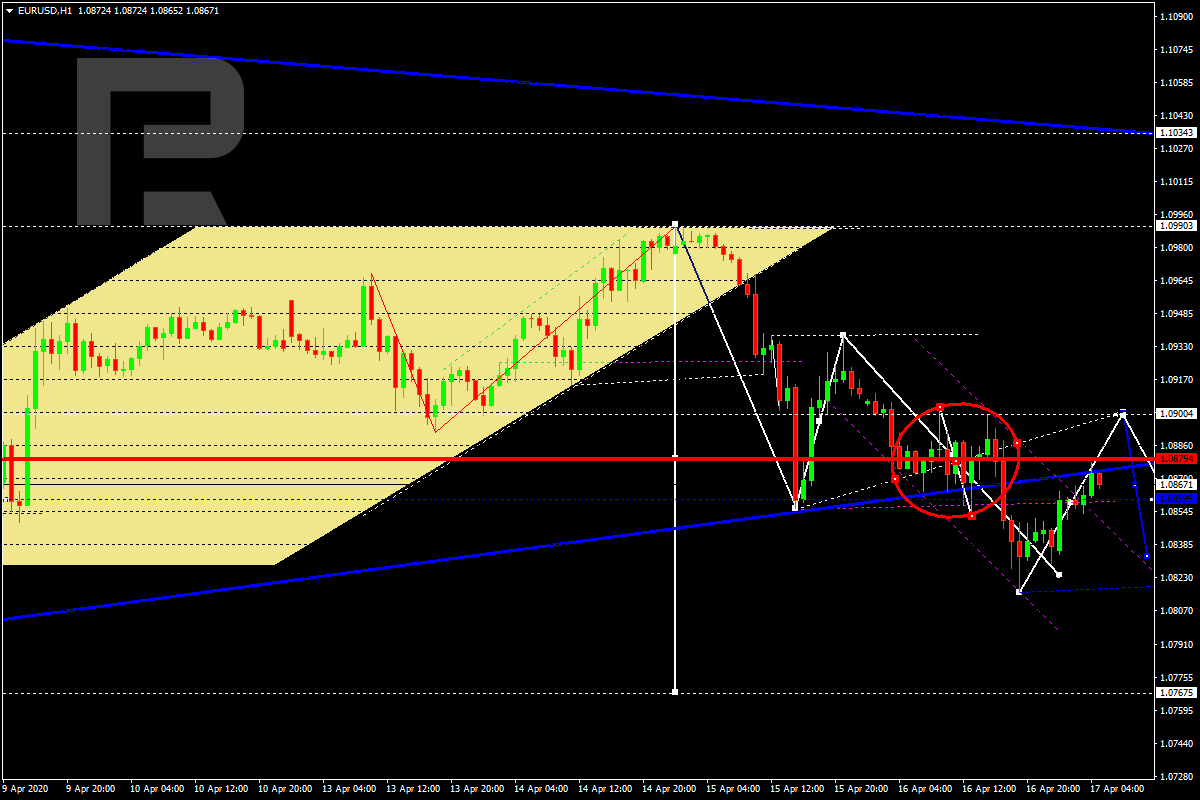
After finishing another descending impulse at 1.0816, EURUSD is correcting. Possibly, the pair may grow to reach 1.0900 and then move downwards to break 1.0840. Later, the market may continue moving inside the downtrend with the target at 1.0770.

EURUSD
Risk Warning: the result of previous trading operations do not guarantee the same results in the future

GBPUSD, “Great Britain Pound vs US Dollar”

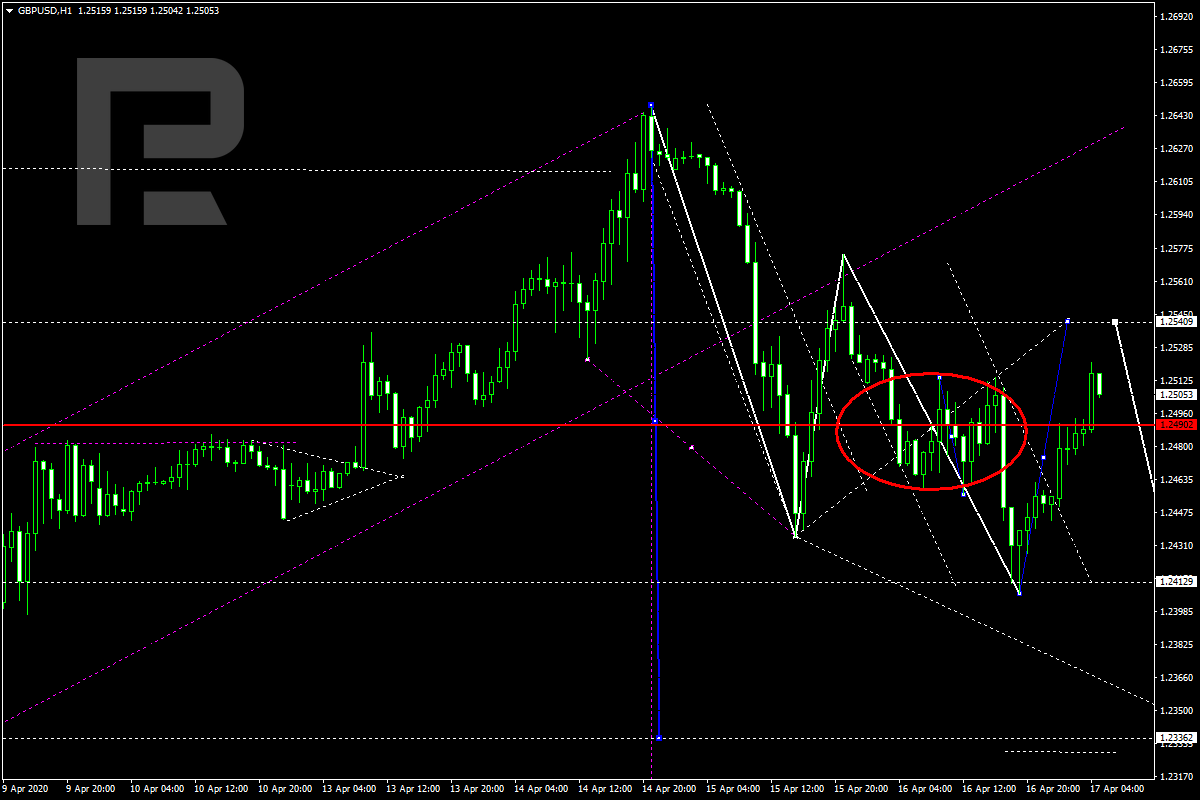
After completing one more descending impulse at 1.2408, GBPUSD is correcting to reach 1.2540. After that, the instrument may start a new decline to break 1.2440 and then continue trading downwards with the target at 1.2340.

GBPUSD
Risk Warning: the result of previous trading operations do not guarantee the same results in the future

USDRUB, “US Dollar vs Russian Ruble”

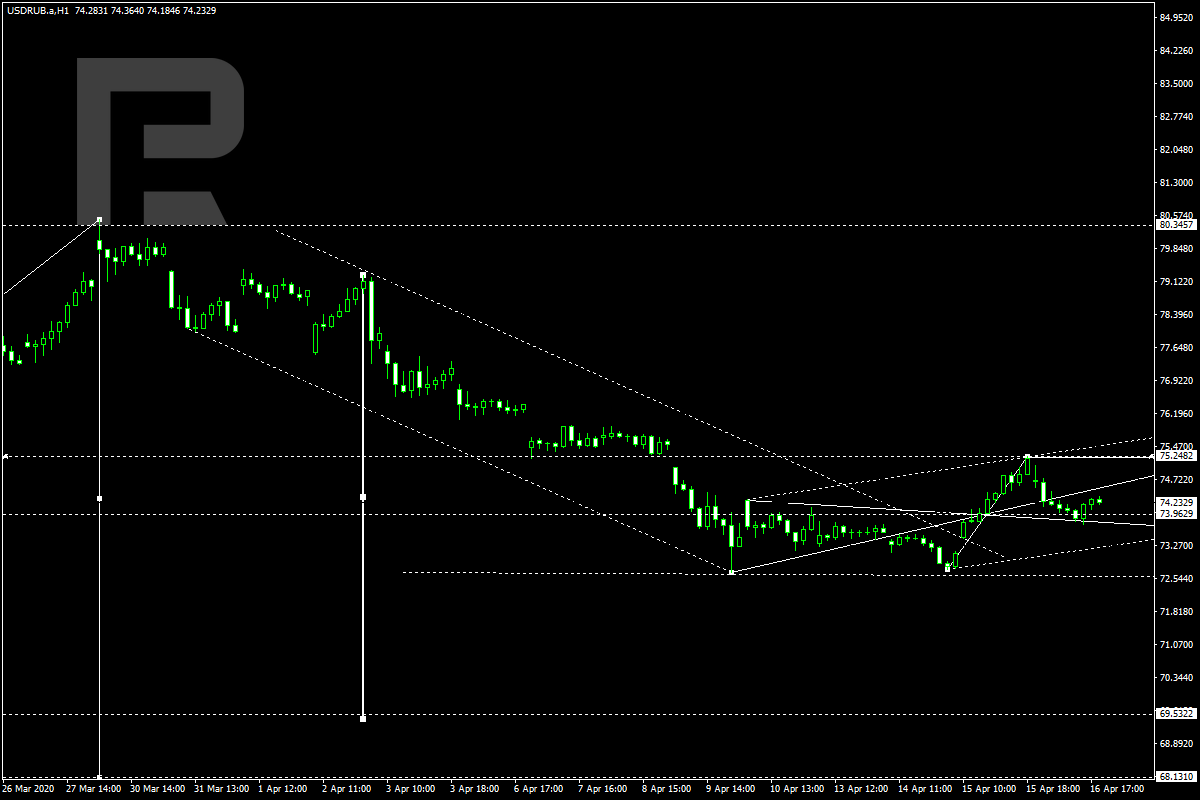
USDRUB is still consolidating around 73.90. According to the main scenario, the price is expected to grow towards 75.25 and then resume trading downwards to break 73.15. Later, the market may continue falling with the short-term target at 70.50.

USDRUB
Risk Warning: the result of previous trading operations do not guarantee the same results in the future

USDJPY, “US Dollar vs Japanese Yen”

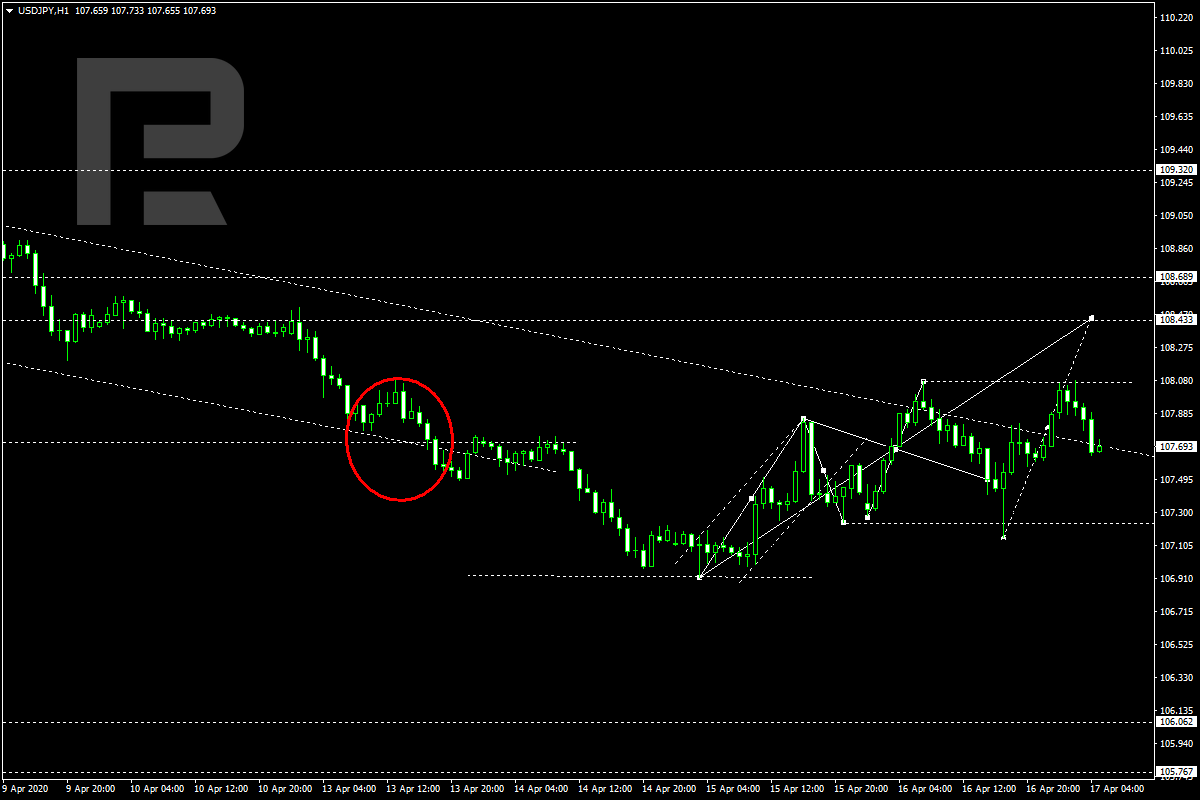
USDJPY is consolidating around 107.70. Possibly, the pair may fall to reach 107.20 and then form one more ascending structure with the target at 108.43. After that, the instrument may start another decline to return to 107.70.

USDJPY
Risk Warning: the result of previous trading operations do not guarantee the same results in the future

USDCHF, “US Dollar vs Swiss Franc”

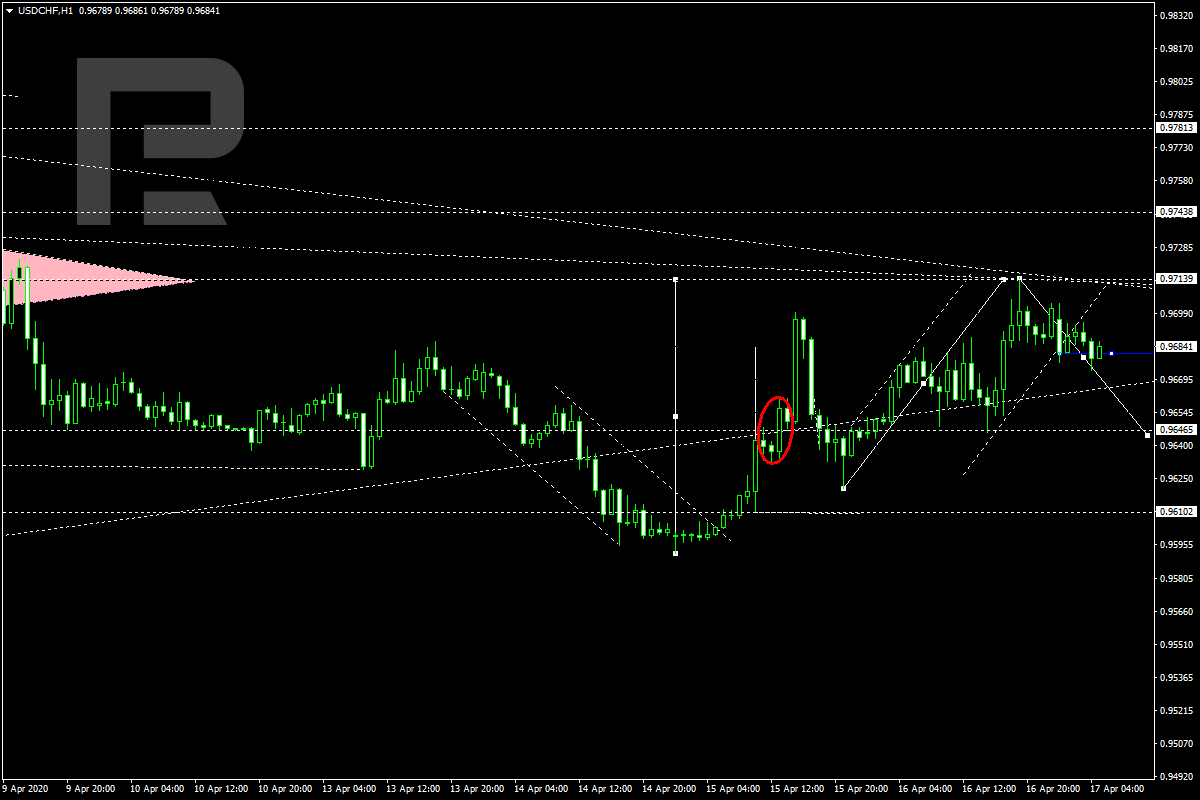
USDCHF has completed the ascending wave at 0.9714. Today, the pair may correct towards 0.9646 ad then grow to reach 0.9694. Later, the market may break this level to the upside and resume trading upwards with the target at 0.9740.

USDCHF
Risk Warning: the result of previous trading operations do not guarantee the same results in the future

AUDUSD, “Australian Dollar vs US Dollar”

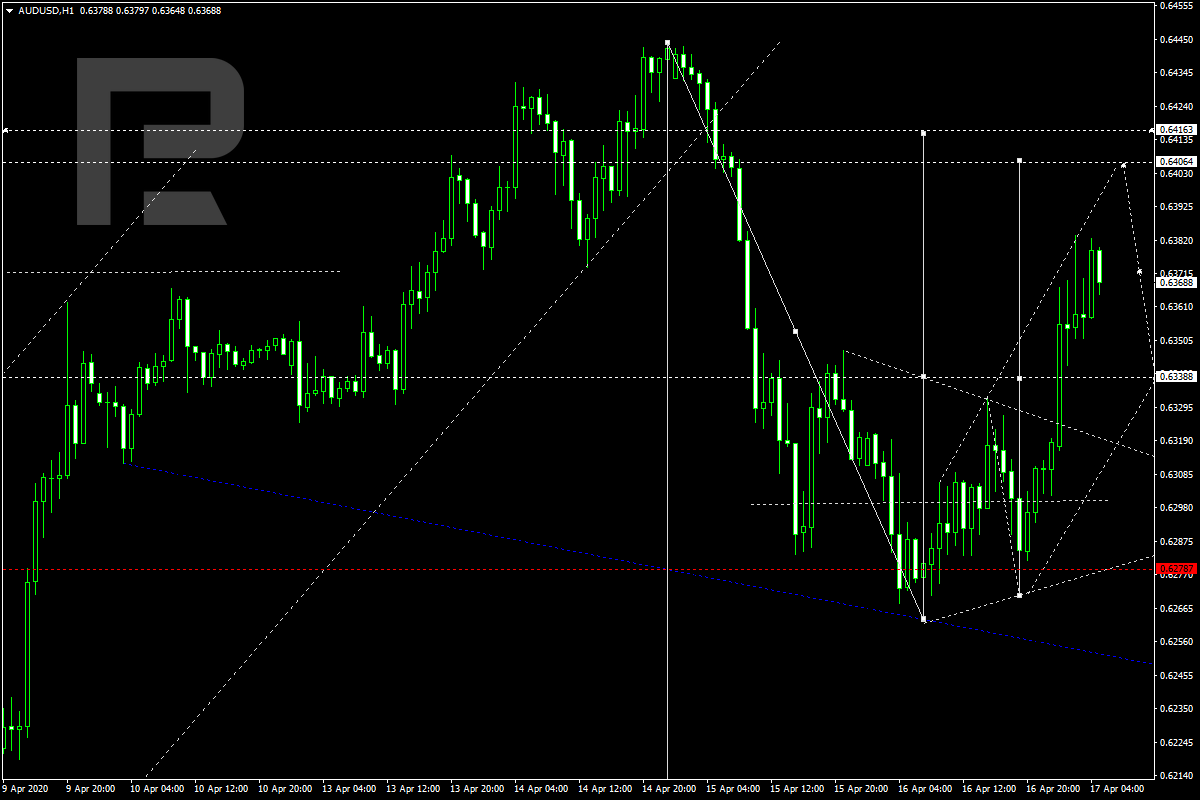
After forming the consolidation range below 0.6330 and breaking this level to the upside, AUDUSD is expected to form one more ascending structure towards 0.6400. After that, the instrument may resume falling to return to 0.6330 and then start another growth to reach 0.6416. Later, the market may resume trading downwards with the target at 0.6344.

AUDUSD
Risk Warning: the result of previous trading operations do not guarantee the same results in the future

BRENT

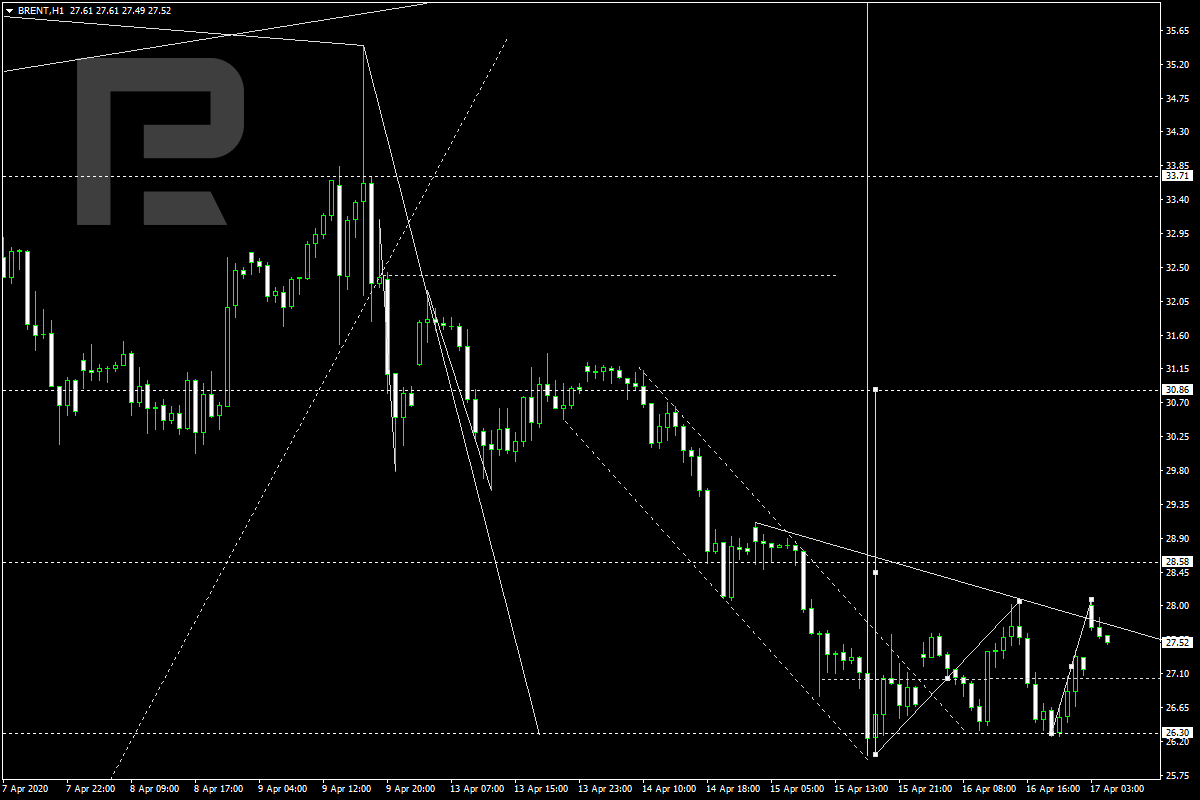
Brent is consolidating around 27.00; after attempting to break the upside border, it is expected to fall and test 27.00 from above. If the price forms one more ascending structure towards 38.10 and breaks it to the upside, the market may continue to grow with the first target at 30.86

BRENT
Risk Warning: the result of previous trading operations do not guarantee the same results in the future

XAUUSD, “Gold vs US Dollar”

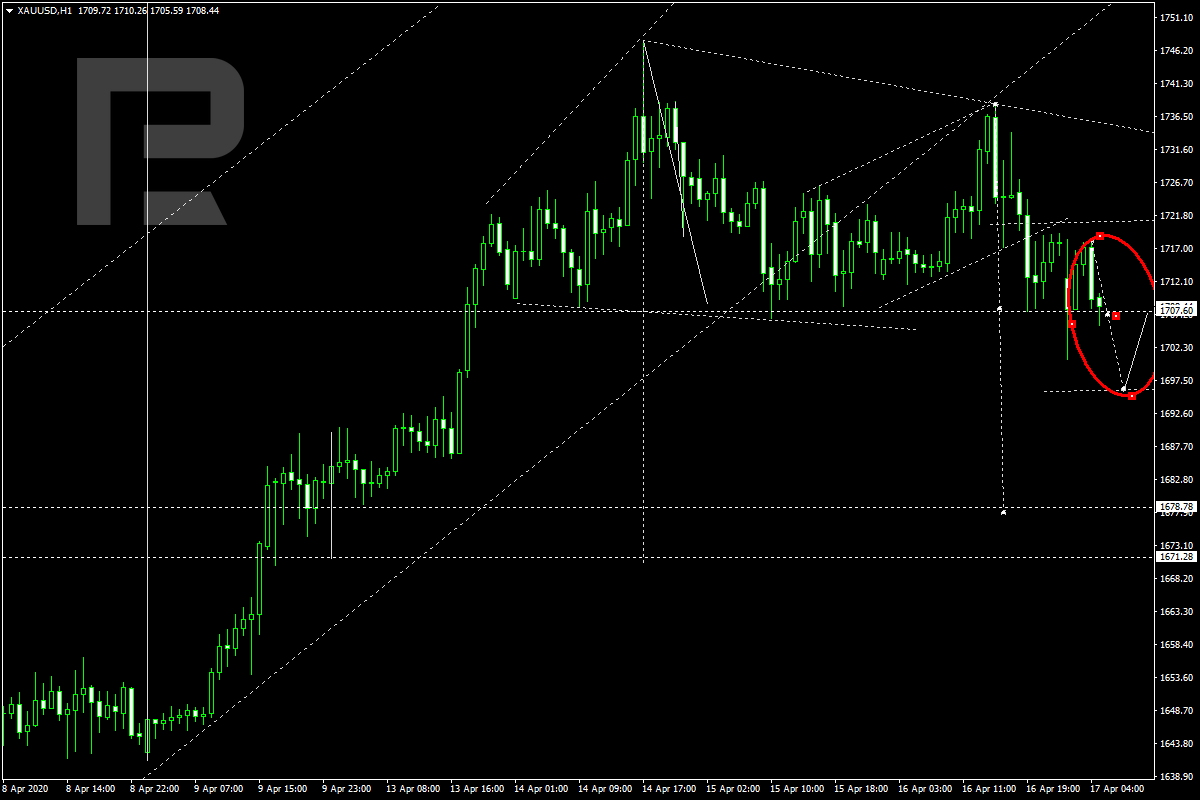
Gold has completed another descending wave at 1707.60; right now, it is consolidating below this level. Possibly, today the pair may break 1707.60 to the downside and resume falling towards 1678.78. After that, the instrument may resume trading inside the uptrend to test 1707.00 from below.

GOLD
Risk Warning: the result of previous trading operations do not guarantee the same results in the future

BTCUSD, “Bitcoin vs US Dollar”

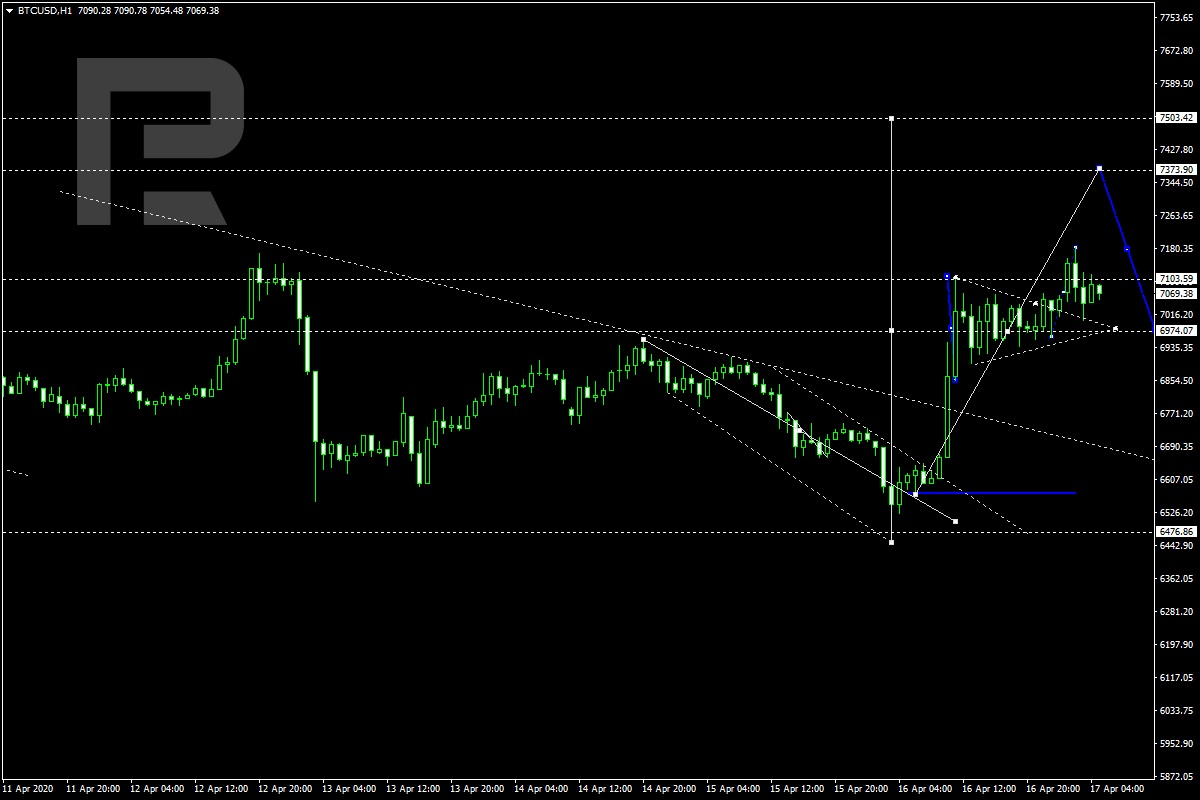
After completing the ascending impulse at 7000.00, BTCUSD is forming another consolidation range. Possibly, the pair may break the range to the upside and form one more ascending structure with the target at 7500.00. Later, the market may start a new correction to test 7000.00 from above.

BITCOIN
Risk Warning: the result of previous trading operations do not guarantee the same results in the future

S&P 500

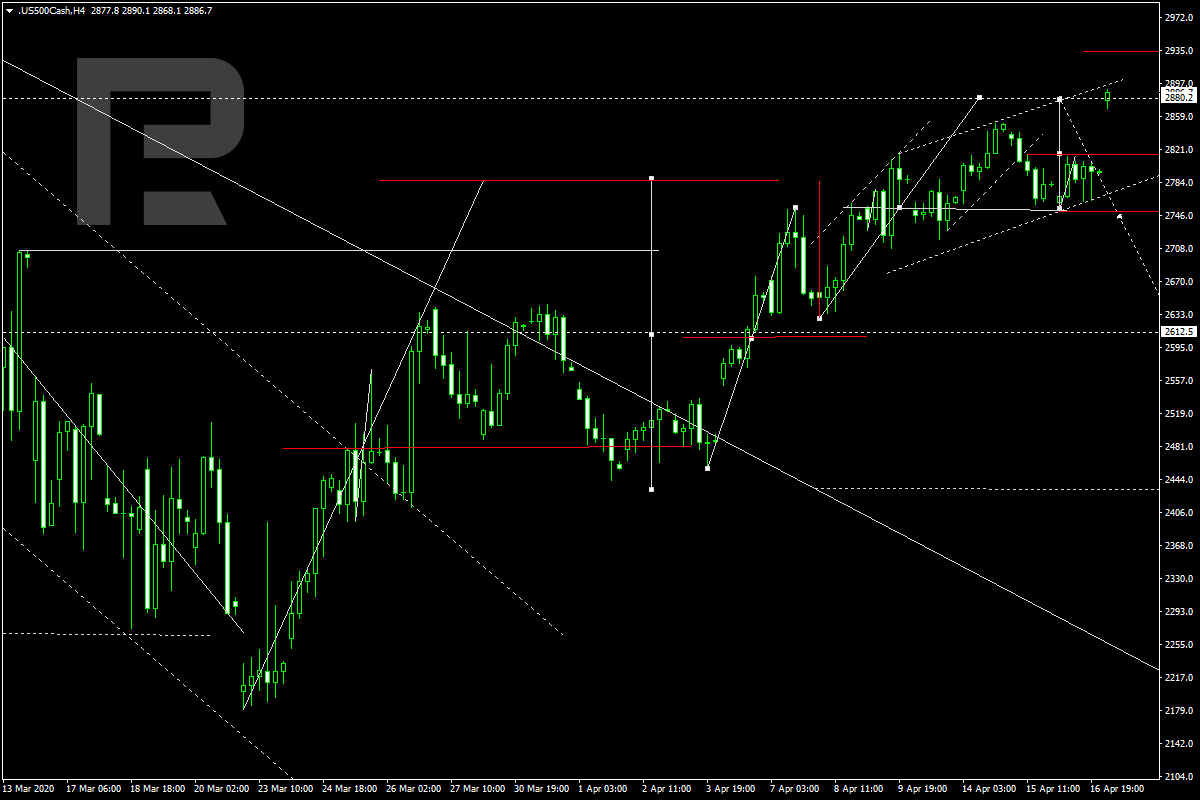
There was a gap to the upside this morning, which helped S&P 500 to reach 2901.0; right now, it is trying to keep the positive momentum. Possibly, the instrument may reach 2917.5 and then resume falling to break 2810.2. Later, the market may continue trading downwards to reach 2675.5. After that, we may evaluate this descending wave. There might be a possibility of a new wave to the upside towards 3160.5, which should be considered as an ascending correction.

S&P500

Article By RoboForex.com

Attention!
Forecasts presented in this section only reflect the author’s private opinion and should not be considered as guidance for trading. RoboForex LP bears no responsibility for trading results based on trading recommendations described in these analytical reviews.

Fibonacci Retracements Analysis 17.04.2020 (BITCOIN, ETHEREUM)

Article By RoboForex.com

BTCUSD, “Bitcoin vs US Dollar”

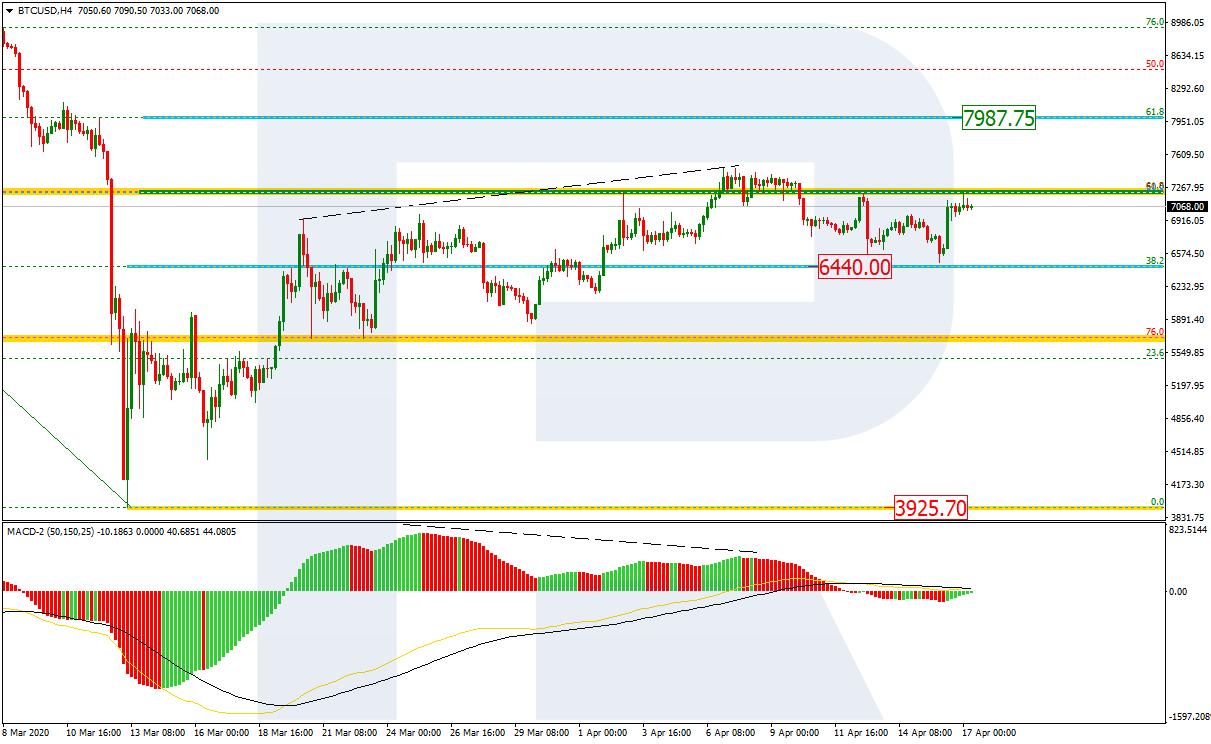
As we can see in the H4 chart, after correcting towards the support not far from 38.2% fibo at 6440.00, BTCUSD is forming a new rising impulse. The key upside target may be mid-term 61.8% fibo at 7987.75. The support remains the same, but after breaking it, the instrument may continue trading downwards to reach the current low at 3925.70

BTCUSD
Risk Warning: the result of previous trading operations do not guarantee the same results in the future

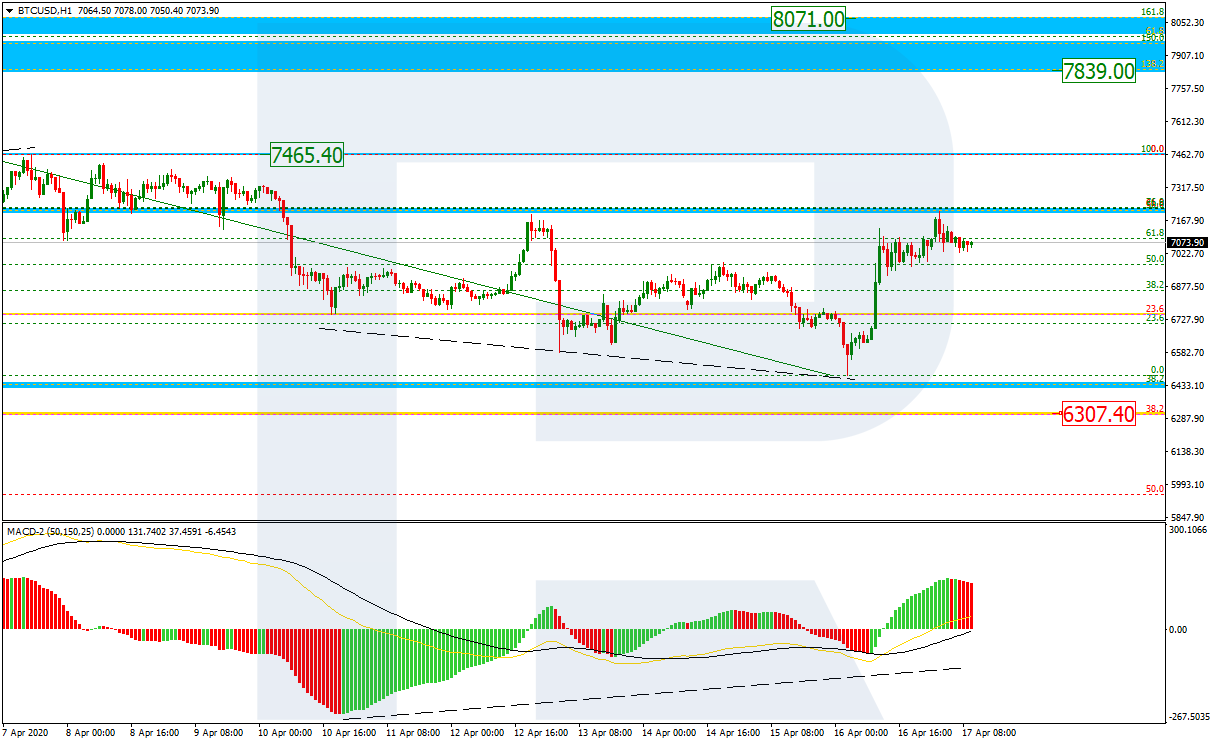
In the H1 chart, the convergence made the pair complete the descending correction at 23.6% fibo and start a new rising wave towards the high at 7465.40. If later the price breaks this level, the instrument may continue growing to reach the post-correctional extension area between 138.2% and 161.8% fibo at 7839.00 and 8071.00 respectively.

BITCOIN
Risk Warning: the result of previous trading operations do not guarantee the same results in the future

ETHUSD, “Ethereum vs. US Dollar”

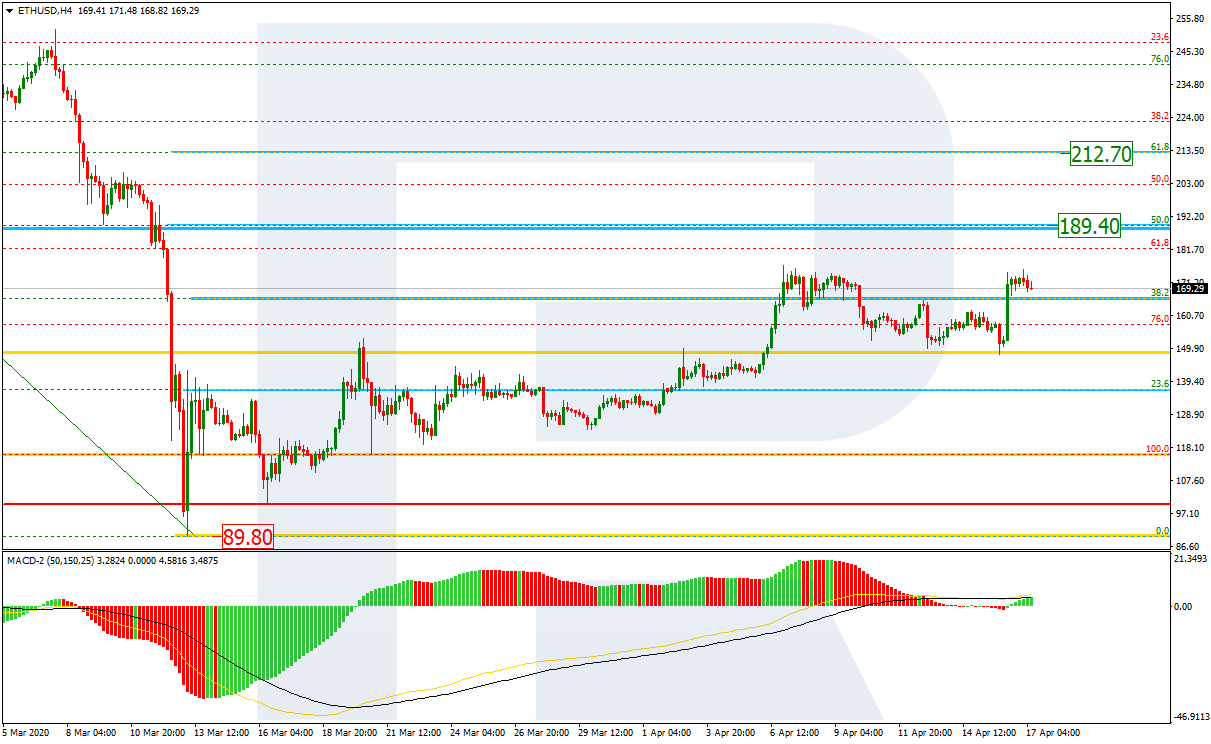
As we can see in the H4 chart, after finishing the pullback, ETHUSD is forming a new rising impulse to attack the previous high and has already retested 38.2% fibo. The next upside targets may be 50.0% and 61.8% fibo at 189.40 and 212.70 respectively.

ETHEREUM
Risk Warning: the result of previous trading operations do not guarantee the same results in the future

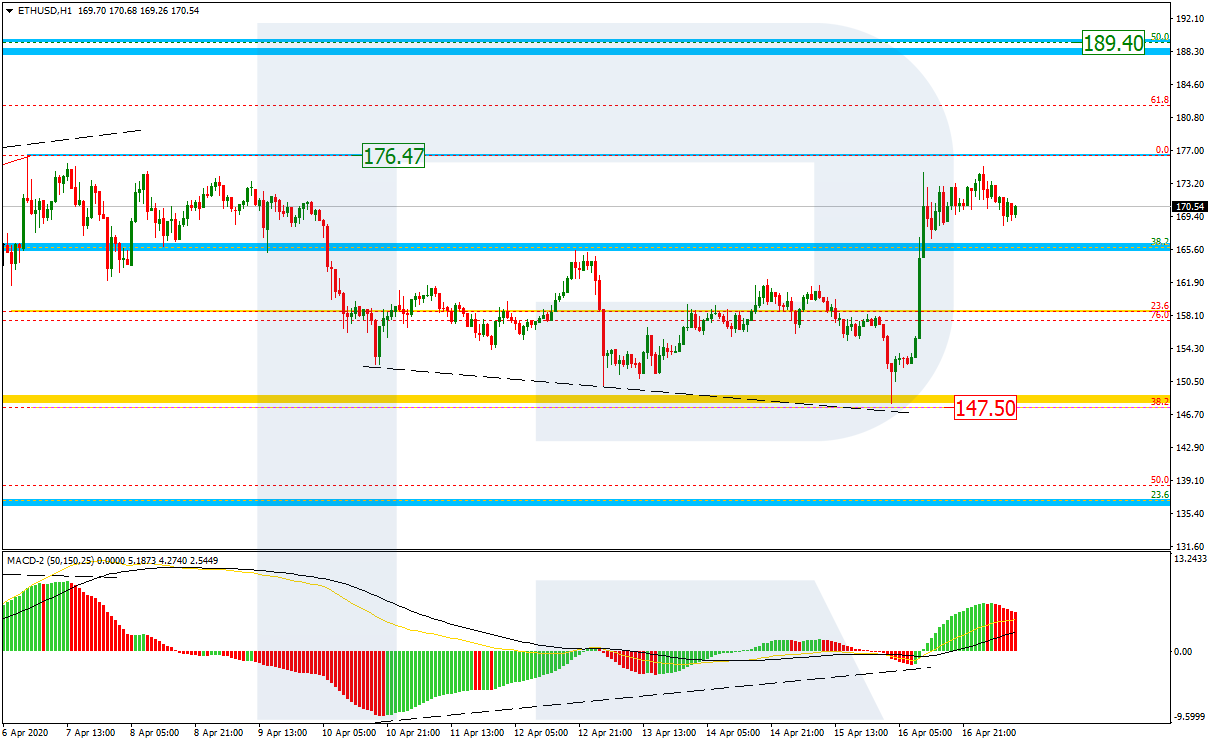
In the H1 chart, the decline almost reached 38.2% fibo at 147.40, but was stopped by the convergence on MACD. The current ascending impulse is approaching the high at 176.47. After breaking this level, the instrument may continue growing towards its mid-term targets.

ETHUSD

Article By RoboForex.com

Attention!
Forecasts presented in this section only reflect the author’s private opinion and should not be considered as guidance for trading. RoboForex LP bears no responsibility for trading results based on trading recommendations described in these analytical reviews.

Gilead Drug May Cure COVID-19 But Won’t Save the Markets

By TheTechnicalTraders 

– Big news out today on CNBC about Gilead drug cured all 125 people from serious COVID-19 conditions within 5 days, This is amazing to hear, stocks are popping today up 3-5% which is to be expected for this type of news but the damage to the financial markets has already been done.

But early data recently published suggests the Banking and Finance sector may continue to get crushed under a massive weight of real losses and exposure to risk in the Derivatives Markets.  As with the 2008-09 Credit Crisis, Derivatives losses extended compound risk factors by 10x to 20x or more for in some instances.  We believe the banking and finance sector may be setting up for a massive implosion if global derivatives implode as leveraged accounts collapse.

Two very interesting news articles that may assist readers in understanding the current Financial market contagion event are:

Bank Earnings Armageddon by TheInstitutionalRiskAnalyst.com

Xi fears Japan-led manufacturing exodus from China by Asia.Nikkei.com

The Chinese/Asian economy is built upon the premise that global demand will continue without interruption over the next many decades.  Additionally, China and Asia have leveraged capital systems and financial functions by deploying a very shadowy measure of lending and banking functions.  We’ve all heard the stories of how collateral-based loans were offered many times over as stock in Copper or other raw materials were simply moved from one location to another to secure loans on the same material.

As with any great Ponzi scheme – it all starts to collapse when investors decide they don’t want to play games any longer.

Federal Reserve – Retail & Food Services Sales

These recent St. Louis Federal Reserve charts paint a fairly clear picture that retail and food services sales have collapsed to below levels of 4+ years ago – and this is just getting started.

Federal Reserve – Borrower Delinquency Rate

This next chart shows that sub-prime borrower delinquency rates have already peaked above both the 2000 and 2008-09 peak levels.  The current virus event collapse is a completely different beast of destruction than what we’ve experienced before.

This is why we believe the Banking and Financial sectors are about to get hammered over the next 6+ months as a massive credit and debt deleveraging process continues to take place.  Consumers recently displaced from the workforce will suddenly find themselves without the ability to pay their bills and credit card balances.  This is not just happening in the US or select areas – this is happening throughout the world right now.  Banking and Finance are staring into a black hole in terms of just how big and destructive the displacement of consumer jobs/earnings capacity really is.

We believe the recent recovery in the US stock market was a reactionary event prompted by the US Fed stepping in to “stick their finger in the dike” as an effort to thwart the downside price collapse.  When the reality of the situation really begins to settle in about 60 days, banks and other financial institutions are going to have a difficult time explaining losses and exposure to derivatives risks that were clearly evident in March and April 2020.

Before we continue, be sure to opt-in to our free market trend signals 
before closing this page, so you don’t miss our next special report!

Weekly Chart – NASDAQ Regional Banking Index

This first Weekly chart of the NASDAQ Regional Banking Index shows just how destructive the initial downside price move has been.  Even though the US Fed stepped in with a massive $5+ trillion rescue plan, the recovery in this sector has been minor.  We believe that is because most investors understand the true risks in this sector are likely in the hundreds of trillions range with derivatives and leveraged positions.

UCC Weekly Chart – Consumer Services Sector

This UCC Weekly chart shows a bit more of a recovery after the US Fed stepped in to save the day.  Yet, we fully believe a deeper price low is likely to set up as the full extent of total newly unemployed put additional strains on expectations.  Consumers without income can suddenly collapse multiple trillions in credit/debt over a very short period of time.

XLF Financial Sector Weekly Chart

The XLF Financial Sector Weekly chart paints a very clear picture of the downside risks current in play.  After a massive initial collapse, a brief sideways recovery has taken place.  Yet the true risk for this sector takes place over the next 24+ months as these newly displaced workers attempt to manage with little or no income and attempt to satisfy debt levels that were acquired expecting pre-2020 income expectations.  New cars, new homes, new credit card debt, new everything purchased on credit has suddenly become the beast that destroys the financial/banking sector.

Concluding Thoughts:

Our researchers believe the true scope of this crisis won’t be known for at least another 30 to 60+ days.  The closer we get to the end of Q2, the more likely we are to see real data reflecting real risks in the Banking and Financial sectors.

Until we get a more accurate understanding of the risks, we feel it is much safer to assume the worst-case scenario going forward.  There is simply no way to paint a positive picture when people throughout the globe are losing their jobs, incomes, and all sense of normalcy.  The reality is that this disruption in the global banking and financial sector is certainly going to be a big one that could last many months or years and if you read this article or watch the video you will understand the magnitude of this market top that looks to be forming.

I have to toot my own horn here a little because subscribers and I had our trading accounts close at a new high watermark for our accounts. We not only exited the equities market as it started to roll over, but we profited from the sell-off in a very controlled way, and yesterday we locked in more profits with our SPY ETF trade on this bounce.

As a technical analyst and trader since 1997, I have been through a few bull/bear market cycles in stocks and commodities. I believe I have a good pulse on the market and timing key turning points for investing and short-term swing traders. 2020 is going to be an incredible year for skilled traders.  Don’t miss all the incredible moves and trade setups.

I hope you found this informative, and if you would like to get a pre-market video every day before the opening bell, along with my trade alerts. These simple to follow ETF swing trades have our trading accounts sitting at new high water marks yet again this week, not many traders can say that this year. Visit my Active ETF Trading Newsletter.

We all have trading accounts, and while our trading accounts are important, what is even more important are our long-term investment and retirement accounts. Why? Because they are, in most cases, our largest store of wealth other than our homes, and if they are not protected during a time like this, you could lose 25-50% or more of your entire net worth. The good news is we can preserve and even grow our long term capital when things get ugly like they are now and ill show you how and one of the best trades is one your financial advisor will never let you do because they do not make money from the trade/position.

If you have any type of retirement account and are looking for signals when to own equities, bonds, or cash, be sure to become a member of my Long-Term Investing Signals which we issued a new signal for subscribers.

Ride my coattails as I navigate these financial markets and build wealth while others lose nearly everything they own during the next financial crisis.

Chris Vermeulen
Chief Market Strategies
TheTechnicalTraders.com