Author Archive for InvestMacro – Page 420

Fibonacci and Elliot Wave Predict Breakout Highs

By TheTechnicalTraders.com

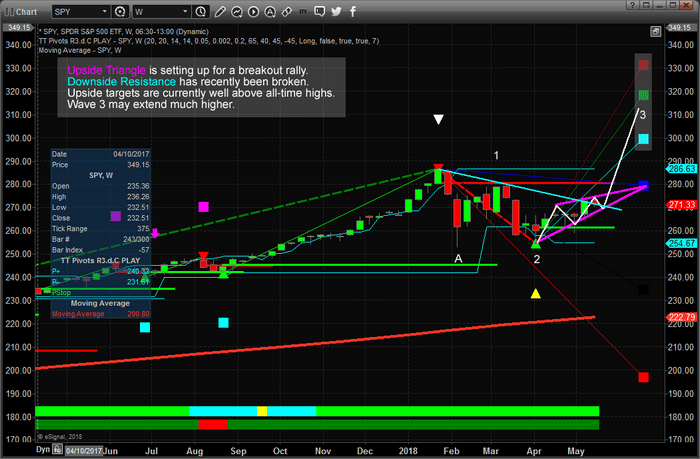
There is nothing more exciting to us than reading the price action of the charts to see what will happen in the future.  It becomes even more exciting when we find something that everyone else seems to have missed.  Right now, traders need to pay attention to our research because we believe we have correctly identified a breakout pattern that is setting up in the US majors – and everyone seems to have missed it.

Recently, our research team began a quest to properly identify the Elliot Wave structure of the US majors in relation to the recent price congestion after the February 2018 price collapse.  You can read our earlier research post to better understand our conclusions.

Our research shows that price could be setting up in a very unique extended Wave C pattern that would indicate the recent price correction in the markets could be a Wave D price rotation setting up a “Diagonal Price Breakout” pattern.

How is this analysis important to all traders and investors?  It is critical to understand that if the majority of market analysts believe this is a Wave 5 Top Setup, believing this is an ultimate top, when the reality is this is an extended Wave 3 (2.618 x Wave 1) and possibly the Wave 3-d formation, the long-term analysis is dramatically different. Instead of an “ultimate top” setup, this analysis now becomes a “price correction in a longer-term upside trend with much greater upside potential to go”.

Let’s get into the details of this analysis to better illustrate our thinking.

Without going into the details of how Elliot Wave theory works or the fractal price rotation balance that is essentially correlated to Fibonacci price theory, we want our readers to focus on this “Ending Diagonal” that is common near the end of wave 3 or “always in wave 5 of a motive wave sequence”.  The source for this information and image below is from World Cycles Institute.


BULL MARKET MOTIVE ENDING DIAGONAL PATTERN

The Bull Market Motive Ending Diagonal pattern is the one that caught our attention as we attempted to better understand the current market price structure in the SPY chart.  Pay very close attention to this pattern because we strongly believe most of the major analysts have completely missed the structure of price in relation to the upside potential within the US markets.  As you are likely aware, our advanced predictive modeling systems have been warning of a price bottom and much higher price predictions over the past 30+ days.  This prediction does not settle well with many traditional analysts because they seem fixated on the Wave 5 ultimate top analysis.  We believe they are wrong and we will show you why – keep reading.
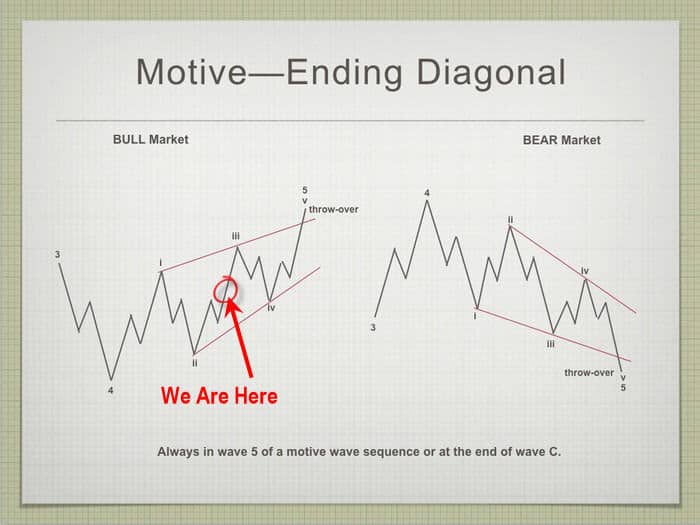
This type of Ending Diagonal is very common near the end point of a larger Wave 3 formation – often setting up a Wave 5.  This type of Ending Diagonal is rarely seen as a wave C. (source : http://elliottwavepredictions.com/wave-notes/).

Remember, we believe most of the best analysts on the planet have missed this setup and believe the early February price top is the “ultimate wave 5 peak” setting up a much broader downside price move.  Here is why we believe these analysis are wrong.


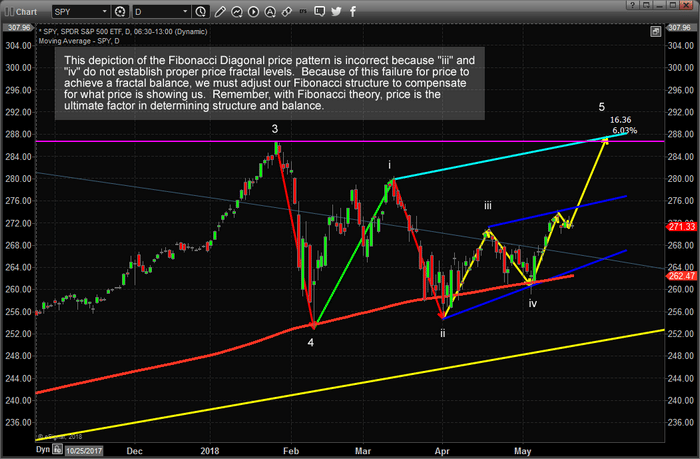
INCORRECT SPY DAILY CHART ANALYSIS EVERYONE IS USING

This SPY Daily chart shows what most analysts would identify as a proper Elliot Wave count if they understood the Ending Diagonal pattern that was setting up.  This is incorrect because the lower price rotation (iii and iv) are structurally invalid based on Fibonacci time/price structure.  We believe this is one reason why so many analysts have misinterpreted this current price pattern.
CORRECT SPY DAILY CHART ANALYSIS

The correct analysis of this pattern is shown below.  The difference, in our opinion, is that wave “iii” is still in the process of forming and will ultimately breakout to new highs before forming a short retracement and rocketing much higher to complete the ultimate wave 5.
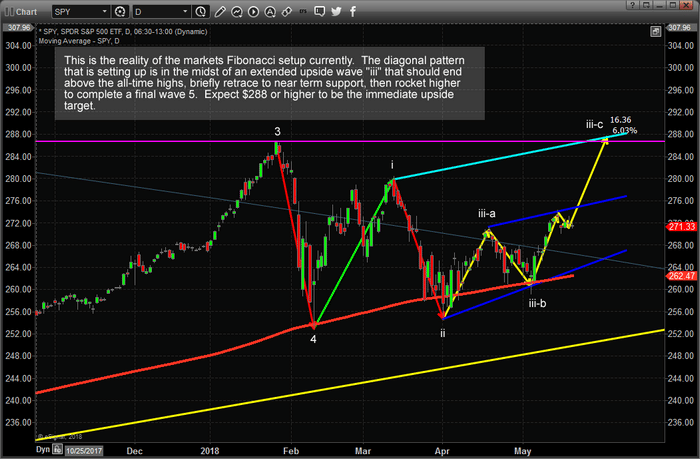
Please take notice of the CYAN price line drawn by our researchers.  Structurally, this price level must be reached in order to complete a wave “iii”.  We believe once this “new price high” level is reached and the market price retraces, the retracement level will likely be about 3% and stall near the upper BLUE wedge resistance line (near $278).  The current price consolidation, over the past 4+ days, is nothing more than temporary resistance before the upside breakout to complete the “iii-c” price peak.

Ultimately, as we suggested in our earlier research post Elliott Wave Prediction for US Stocks, the final Elliot wave analysis of this rotation may take many more months to conclude with any degree of accuracy.

The point of this article is that this Ending Diagonal pattern is common near the end of wave 3 and near the beginning of wave 5 – yes, we understand this point.  Yet, our question remains “is this the end of a 5-leg sub wave 3” or “the end of a major 5 leg (ultimate peak)” formation?  Our belief is that the answer is this is the end of an “extended wave C” that will likely result in much higher price activity over the next few months/years.

There is one key to understanding our analysis and our future expectations – recent price lows in the SPY must not be breached for our analysis to remain valid.  These recent low-price levels are $254.67 & $252.92.  If our analysis is incorrect, these low-price levels will be the first levels to be breached on a market price reversal.  If our analysis is correct, price will never come near these levels and will continue to accelerate higher as a new wave 5 is created.  If we are correct, there will be a lot of short sellers that get caught in this failed analysis and this move could be explosive and trigger that signature blow off/capitulation topping spike in price that ends most bull markets.

If you like our work, want our trade alerts, and want to support our efforts, please visit www.TheTechnicalTraders.com to learn how we can help you stay ahead of the markets.  We live for this type of work, research and helping our members find profits in the markets.  We believe our research is top-tier and we know we provide value to our loyal members.

By TheTechnicalTraders.com

Forex Technical Analysis & Forecast 21.05.2018 (EURUSD, GBPUSD, USDCHF, USDJPY, AUDUSD, USDRUB, GOLD, BRENT)

Article By RoboForex.com

EURUSD, “Euro vs US Dollar”

EURUSD is moving downwards; it has broken 1.1770 and may continue falling towards 1.1695. After that, the instrument may grow to return to 1.1770 and then resume falling inside the downtrend with the target at 1.1560.

EURUSD
Risk Warning: the result of previous trading operations do not guarantee the same results in the future


GBPUSD, “Great Britain Pound vs US Dollar”

GBPUSD is moving downwards. Today, the price may reach 1.3370 and then start another correction towards 1.3470, at least. Later, the market may resume falling with the target at 1.3260.

GBPUSD
Risk Warning: the result of previous trading operations do not guarantee the same results in the future


USDCHF, “US Dollar vs Swiss Franc”

USDCHF is still consolidating. If later the instrument breaks this range to the upside, the market may grow to reach 1.0110; if to the downside (an alternative scenario) – fall with the target at 0.9944 and then grow towards resume growing with the target at 1.0110.

USDCHF
Risk Warning: the result of previous trading operations do not guarantee the same results in the future


USDJPY, “US Dollar vs Japanese Yen”

USDJPY is moving upwards. Possibly, the price may reach 111.60. Later, the market may start another correction with the target at 110.60.

USDJPY
Risk Warning: the result of previous trading operations do not guarantee the same results in the future


AUDUSD, “Australian Dollar vs US Dollar”

AUDUSD continues consolidating below 0.7560. If later the instrument breaks this range to the upside, the market may start another growth to reach 0.7700; if to the downside – resume falling inside the downtrend with the target at 0.7310. The first target is at 0.7436.

AUDUSD
Risk Warning: the result of previous trading operations do not guarantee the same results in the future


USDRUB, “US Dollar vs Russian Ruble”

USDRUB is moving downwards. Today, the price may grow towards 62.82. After that, the instrument may fall to reach 61.50, break it, and then continue forming the third descending wave with the short-term target at 58.98.

USDRUB
Risk Warning: the result of previous trading operations do not guarantee the same results in the future


XAUUSD, “Gold vs US Dollar”

Gold is consolidating near the lows. If later the instrument breaks this range to the upside, the market may start another correction to reach 1302.00; if to the downside – resume falling with the target at 1280.00.

GOLD
Risk Warning: the result of previous trading operations do not guarantee the same results in the future


BRENT

Brent is still being corrected towards 77.70. Later, the market may start another growth with the target at 80.50, break it, and then continue moving upwards with the target at 82.50.

BRENT
Risk Warning: the result of previous trading operations do not guarantee the same results in the future


RoboForex Analytical Department

Article By RoboForex.com

Attention!
Forecasts presented in this section only reflect the author’s private opinion and should not be considered as guidance for trading. RoboForex LP bears no responsibility for trading results based on trading recommendations described in these analytical reviews.

EURUSD: the euro’s bearish trend remains strong

By Gabriel Ojimadu, Alpari

Previous:

Last week, all the major currencies expect for the Swiss franc declined against the US dollar. The single currency was the biggest loser, shedding -1.42%.

On Friday, the euro dropped to 1.1750 against the greenback after an unsuccessful attempt at exiting the triangle. The price reversed downwards after news from Italy that two parties (The League and The Five Star Movement) have pledged to roll back austerity measures and increase spending as part of their coalition agreement. Long-term Italian bond yields shot up on this news to reach a 7-month high.

These geopolitical developments caused the EURUSD pair and US10Y bond yields to move in the same direction. Usually, when US10Y bond yields decline, the US dollar is supposed to drop, while the euro should rise.

Day’s news (GMT+3):

  • 15:30 USA: Chicago Fed national activity index (Apr).
  • 19:15 USA: FOMC member Bostic speech.
  • 21:05 USA: FOMC member Harker speech.
  • OPEC meeting.

Fig 1. EURUSD hourly chart. Source: TradingView

My expectations of an upwards correction to 1.2859 proved correct. After a false breakout of the triangular formation, the rate dropped to the reversal zone of 1.1778 – 1.1796.

The euro has been declining against the dollar for 22 consecutive days, without any significant pullbacks. I haven’t bothered to make a prediction for today given that the situation in Italy is keeping the euro under pressure and the price has reached the key daily support level of 1.1740. In today’s Asian session, the euro has dropped to 1.1744.

The exchange rate has gained a foothold at the junction between the 180th and 67th degrees from different highs. The 90th degree is sitting at 1.1728, while the 112th degree is at 1.1701.

I’ve copied the upper line of the triangle and pasted it at the 1.1763 low to form the downwards A-A channel, which will help us determine the target for sellers along with the Gann lines. For now, the 112th degree is the target for sellers along the lower line of the A-A channel, while the 45th degree at 1.1777 is the target for buyers along the channel’s upper line.

I’ve also drawn another line, which runs through the lows of 1.1822 (9th of May) and 1.1763 (16th of May). This is here to help identify intermediate support levels. The intersection between this line and the 67thdegree is a potential reversal level. I’m not ready to short the euro yet, though. Today, I’m taking a wait-and-see attitude.

Elliott Wave Predictions for US Stock Market 2018 and Beyond

By TheTechnicalTraders.com

Recently, an interesting concept was discussed among our research team – a very interesting concept about the markets.  As many of you know, part of the process or research is to test conclusions that may lie outside common thinking.  While we were discussing the Fibonacci and Elliot Wave structures of the US market using longer-term charts, one item kept intriguing our research team.  This one item could change everything in terms of how we are thinking about the US markets and Global markets.

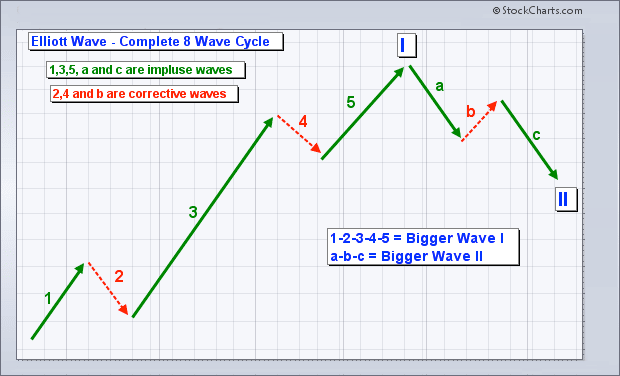
Almost everyone knows that Elliot Wave (EW) theory consists of Five Waves to complete a major EW Cycle.  The most common form of EW price cycles is A, C & E (or 1, 3 & 5) waves advancing and B & D (or 2 & 4) waves declining for an uptrend.

Chart courtesy of stockcharts.com

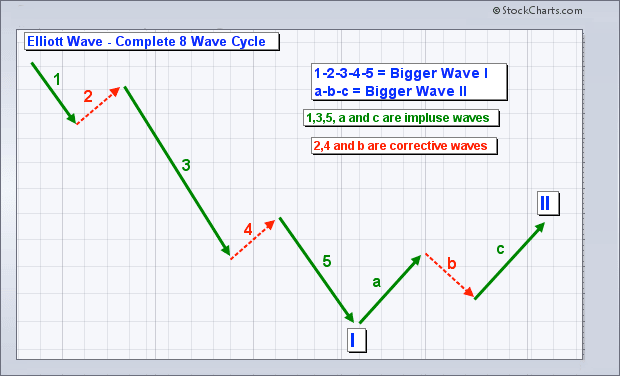
The opposite is true for a downtrend.  It is relatively common knowledge these types of price formations make up almost all of the markets price moves.

Chart courtesy of stockcharts.com

Yes, there are variations that can sometimes come into play, like Triangle formations, Zig-Zag formations, Regular, Expanded, Contracting and other rarities.  Yet, many people don’t understand the mathematics requirements that apply to EW and Fibonacci as a method of constructing proper EW structures.

The question proposed by one of our research team was “what if this recent move higher (from 2011 to current) is nothing more than an extended wave 3 and not a wave 3-4-5 formation.  What if this 166.94% rally in the SPY is nothing more than an extended Wave 3?  This question began a quest within our team of research to try to identify if this concept had any validity – and the results are surprising.


BASIC CONCEPTS OF MAJOR AND MINOR WAVE FORMATIONS

Before we continue, allow us to explain some of the basic concepts of major and minor wave formations as defined by Ralph Nelson Elliot and Robert Prechter.

  • The basic 8 wave form is fractal in nature. It is operating at all degrees (chart timeframes) simultaneously.
  • In most impulses, there is a 5-wave pattern which unfolds adhering to the following rules:
    • Subwave 2 does not overlap the start of wave 1
    • Subwave 4 does not overlap the extreme of wave 1. Also, as a strong guideline, it is not advisable to assign a wave 4 label if there is any overlap of the territory of wave 1 during the 4th
    • Subwave 3 is not the shortest of 1, 3, & 5.
  • Impulses are typically bound by parallel lines
  • In impulses, one of the waves 1, 3 or 5 will likely extend substantially in comparison to the other two. In the stock market, wave 3 is most likely to extend, whereas, in commodities, wave 5 is the more likely to extend.
  • Rarely, a wedge-shaped diagonal appears as wave 1, A, 5 or C. It is sometimes referred to as a diagonal triangle.  In a diagonal, both trendlines slope/tilt in the same direction (both up or both down).  Most often, the trendlines converge (get closer together) as they extend.  Sometimes they diverge (get further apart with time). Concepts courtesy of Elliott Wave Predictions


One aspect of the EW rules that intrigued us the most is that “Subwave 3 is not the shortest of 1, 3 & 5”.  This facet of EW in combination with the concept that retracement waves typically contract to 38.2% of the previous impulse wave provided our research team with an impetus to consider alternative wave counts.

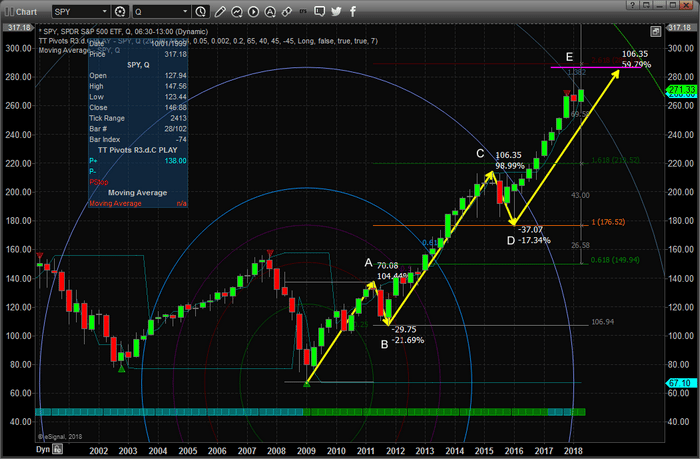
What if, this chart below, showing a completed EW 5 wave cycle where wave 3 & 5 are nearly identical in length is structurally incorrect.


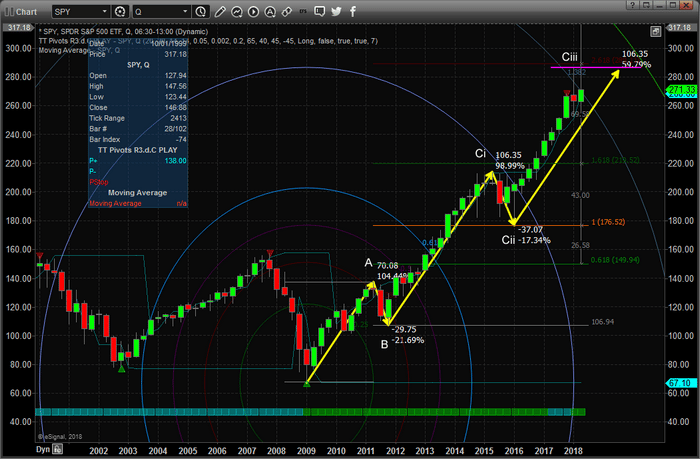
What if the real EW count is as we are showing in the next chart below – where the current upside wave (originating near the end of 2011) is nothing but an extended wave C setting up a push higher.  Remember, wave 3 (in this case wave Ciii) can’t be the same length as wave Ci.  In the chart, below, the yellow arrows drawn for Ci and Ciii are identical in length.  It could be concluded that, if our hypothesis is correct, wave Ciii is not completed yet and will extend further to the upside (if it develops into a complete 5 wave structure) or wave Ciii may be near an end because it is already 2.618 x wave A and has completed a structurally relevant ABC formation.  Traditionally, wave 3 is the longest wave of the ABCDE wave formation.

The one aspect of wave C in our research that confounds us is that neither of the corrective waves (wave Cii or the current pullback near wave Ciii) come close to the 0.382% pullback expected by corrective waves.  This one component of our research is leading us to believe the upside in the US majors may be dramatically underestimated by most market analysts.  If our research is correct, then this current market pullback, or corrective wave, may be a “combination sideways minor correction of wave C”.


Our predictive analysis is clearly indicating US majors should continue to push higher over the next few months.  This analysis is counter to a completed EW 5 wave cycle.  In other words, the US market should not attempt to target new highs if this recent high is the completion of a total EW 5 wave cycle.  Therefore, it is our opinion that we are looking at an extended (2.618x) EW wave 3 move that will result in a correction at some point in the future (forming wave 4).

We will follow up this research article with another, more detailed, one soon.  We believe we have accurately understood the EW pattern formations that are currently setting up in the market and we believe there is a strong potential for an upside breakout to attempt near all-time highs in the market before any start to a corrective wave.  We believe far too many people have failed to understand the structure of this major EW pattern and have concluded this is an EW wave 5 completion.  There are going to be a lot of short sellers getting caught in any upside move as the Upside Triangle breaks and prices push higher.

One condition for all of our analysis is that the low at corrective wave 2 (@ $254.67) must hold as price support.  Failure for the price to hold above this level means we have a failure in our proposed analysis and we would fall back to a potential that this corrective move could fall further to complete a 0.382% (or greater) wave pattern.  It all depends on price and our predictive modeling systems are showing us that price should advance over the next few weeks, thus we believe our analysis is correct.

As we close out this research post, think about what this means to us as traders.  A large portion of the globe may be setting up for a massive market top formations – setting up short positions and leveraging their positions for what they believe could be a massive downside move.  Yet, if our analysis is correct, this downside move may be over and we could be setting up for a broad upside move in the US markets to create a further extended wave C or a new wave E.  If we are correct, the pressure put on these short sellers is going to be tremendous and the markets could skyrocket higher.

We’ve been discussing “capital migration” recently to highlight how fragile certain foreign and Emerging Markets are and how capital will quickly move into more stable economies/markets that can generate solid returns.  It may be that we are setting up for a massive wave of capital migration into the US equities markets and the US Dollar that everyone is failing to understand or foresee.  Time will tell if we are correct.

If you want to know how we are helping our members and the specialized proprietary research we offer to keep them ahead of this market, please visit www.TheTechnicalTraders.com. Last weeks trade resulted in a +18% profit for our members.  Once you realize that we have been calling these market move perfectly over the past few months, you’ll understand that our membership costs are very nominal compared to the benefit and information we provide to you each day.

Our articles, Technical Trading Mastery book, and 3 Hour Trading Video Course are designed for both traders and investors to explore the tools and techniques that discretionary and algorithmic traders need to profit in today’s competitive markets. Created with the serious trader and investor in mind – whether beginner or professional – our approach will put you on the path to win. Understanding market structure, trend identification, cycle analysis, volatility, volume, when and when to trade, position management, and how to put it all together so that you have a winning edge.

Chris Vermeulen – TheTechnicalTraders.com


Currency Speculators continue to ease US Dollar bearish positions

By CountingPips.comGet our weekly COT Reports by Email

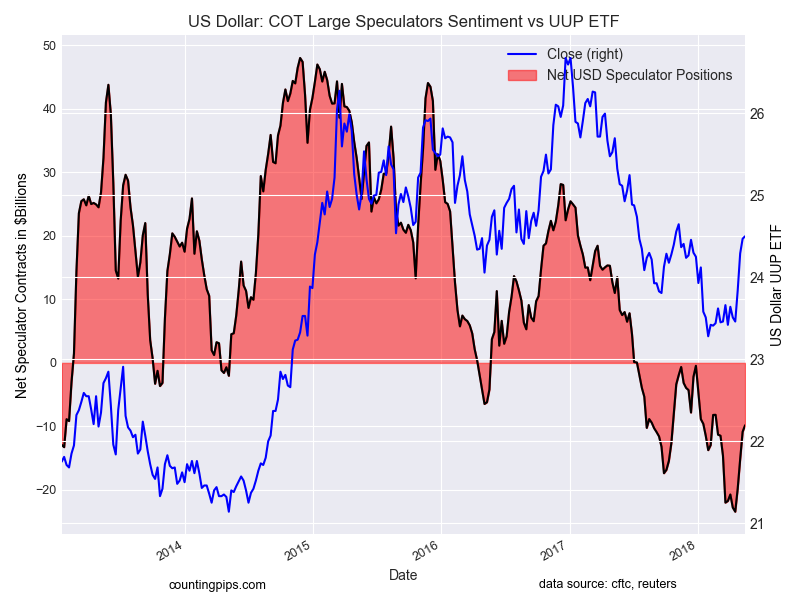
US Dollar net speculator positions leveled at $-9.82 billion this week

The latest data for the weekly Commitment of Traders (COT) report, released by the Commodity Futures Trading Commission (CFTC) on Friday, showed that large traders and currency speculators continued to trim their aggregate bearish bets of the US dollar this week and raised their positions for the dollar against most of the major currencies.

Non-commercial large futures traders, including hedge funds and large speculators, had an overall US dollar net position totaling $-9.82 billion as of Tuesday May 15th, according to the latest data from the CFTC and dollar amount calculations by Reuters. This was a weekly rise of $1.02 billion from the $-10.84 billion total position that was registered the previous week, according to the Reuters calculation (totals of the US dollar contracts against the combined contracts of the euro, British pound, Japanese yen, Australian dollar, Canadian dollar and the Swiss franc).

Speculators have now reduced their aggregate bearish position by a total of $13.6 billion over the past four weeks while the current overall aggregate position is at the lowest bearish level since February 20th when the standing was $-8.17 billion.


Weekly Speculator Contract Changes:

This week saw two substantial changes (+ or – 10,000 contracts) in the individual currency contracts for the speculators category.

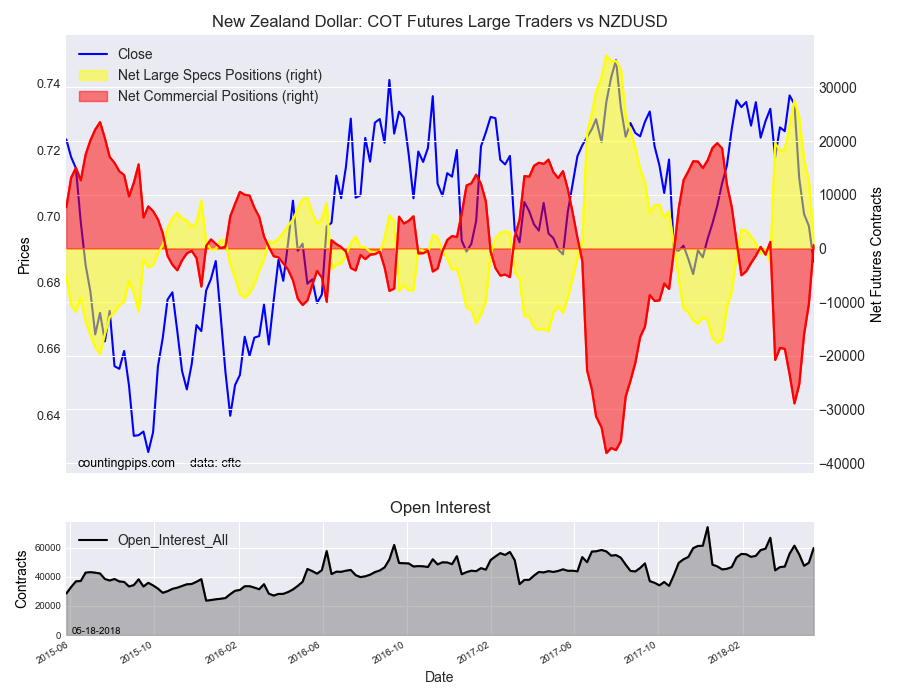
New Zealand dollar speculative bets dropped sharply by over -10,000 contracts and declined overall for a fourth consecutive week. The decline in NZD bullish positions over the past four weeks brings the speculative net positioning to the lowest level in nine weeks.

Mexican peso speculative bets fell by over -23,000 contracts this week as the MXN speculator bets have  decreased for five consecutive weeks. The overall MXN position has now declined to the lowest level since January 16th when net positions totaled 46,795 contracts.

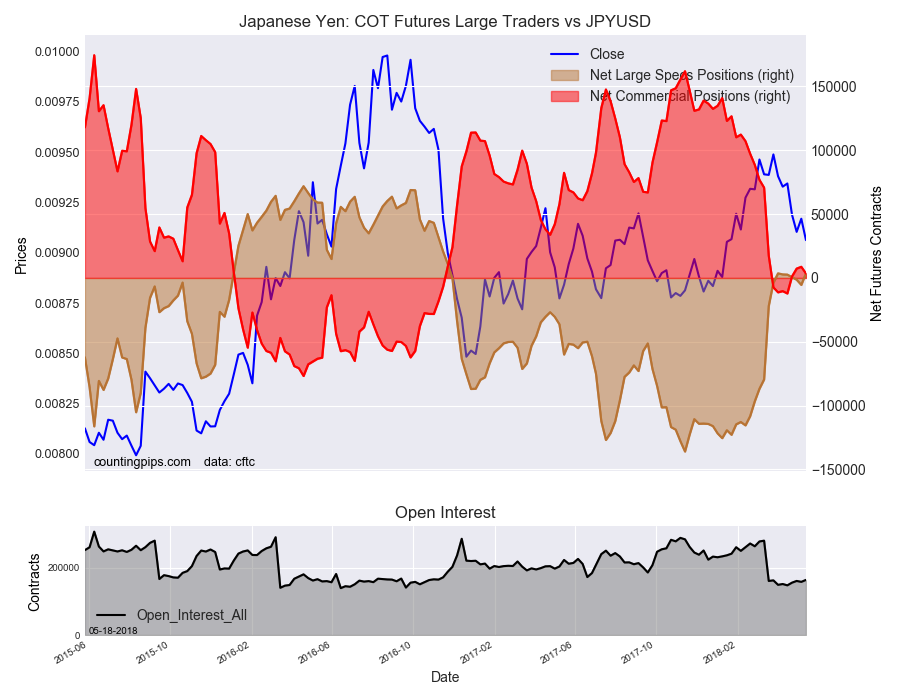
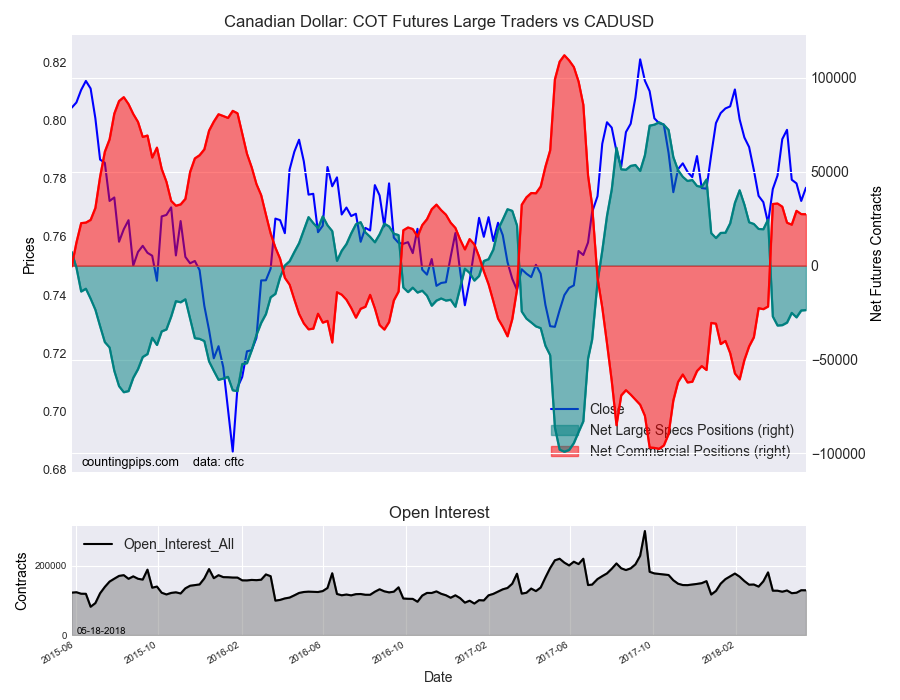
The major currencies that improved against the US dollar this week were the Japanese yen (9,142 weekly change in contracts) and the Canadian dollar (205 contracts).

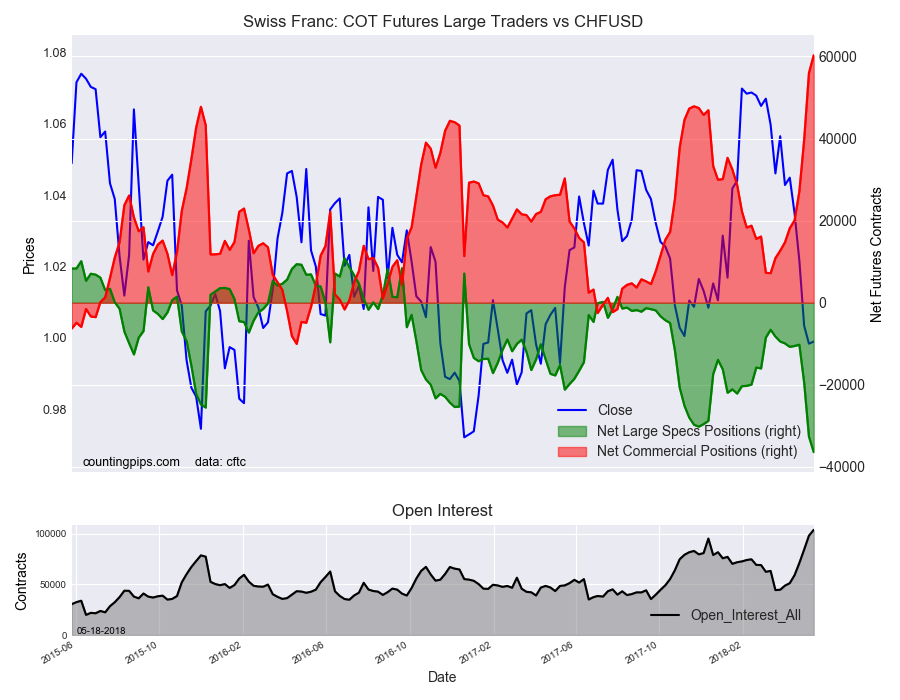
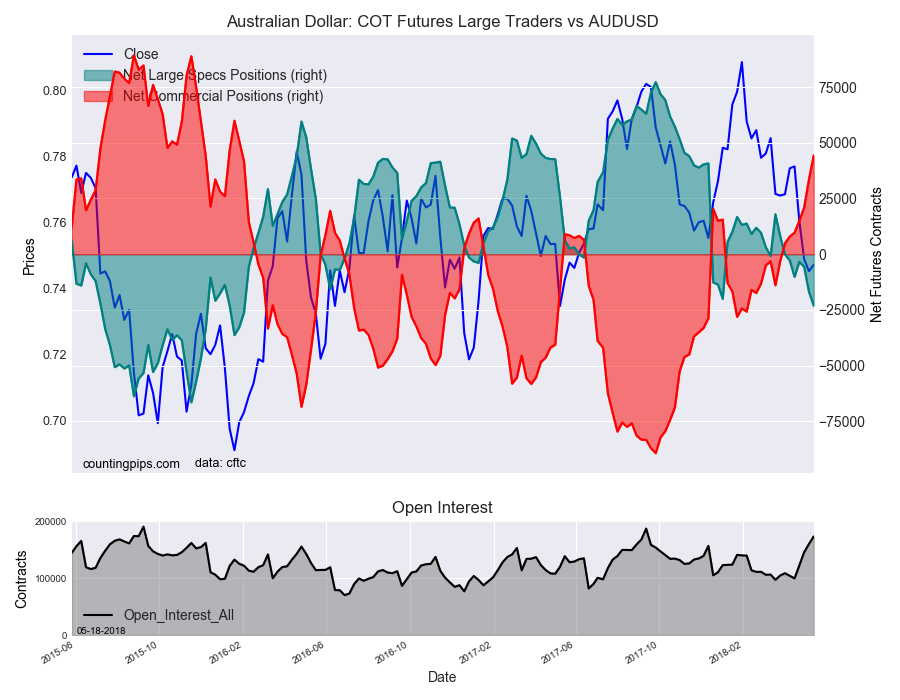
The currencies whose speculative bets declined this week versus the dollar were the euro (-5,391 weekly change in contracts), British pound sterling (-3,367 contracts), Swiss franc (-3,791 contracts),  Australian dollar (-6,340 contracts), New Zealand dollar (-10,593 contracts) and the Mexican peso (-23,410 contracts).


Table of Weekly Commercial Traders and Speculators Levels & Changes:

CurrencyNet CommercialsComms Weekly ChgNet SpeculatorsSpecs Weekly Chg
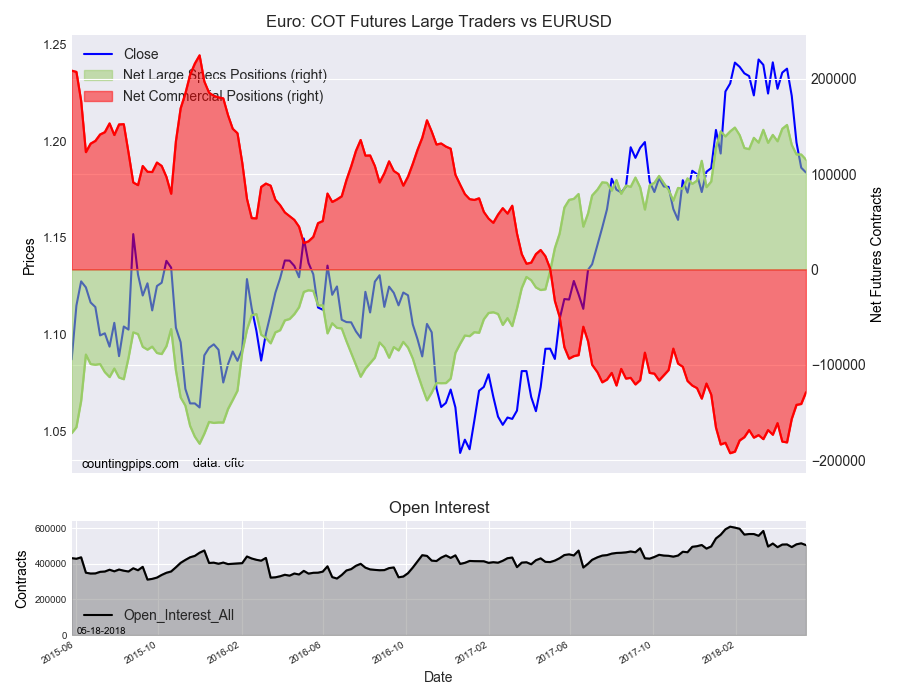
EuroFx-128,94312,226115,114-5,391
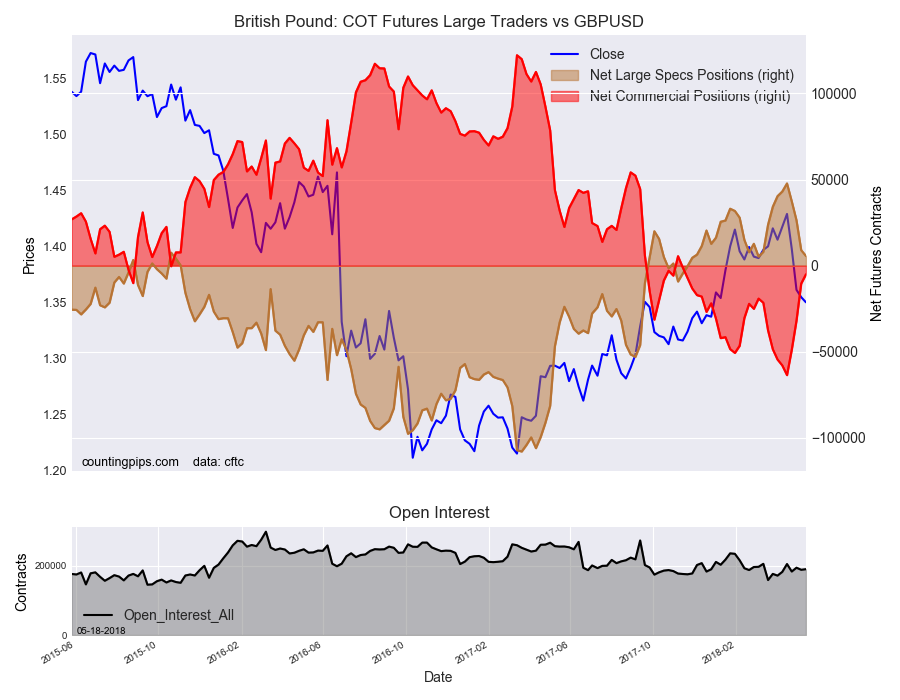
GBP-5,0445,3365,621-3,367
JPY3,475-5,2703,6809,142
CHF60,2994,327-36,393-3,791
CAD27,423-54-23,656205
AUD44,29610,788-23,106-6,340
NZD66410,9481,953-10,593
MXN-53,65826,36952,778-23,410


This latest COT data is through Tuesday and shows a quick view of how large speculators or non-commercials (for-profit traders) as well as the commercial traders (hedgers & traders for business purposes) were positioned in the futures markets. All currency positions are in direct relation to the US dollar where, for example, a bet for the euro is a bet that the euro will rise versus the dollar while a bet against the euro will be a bet that the dollar will gain versus the euro.


Weekly Charts: Large Trader Weekly Positions vs Price

EuroFX:


British Pound Sterling:


Japanese Yen:


Swiss Franc:


Canadian Dollar:


Australian Dollar:


New Zealand Dollar:


Mexican Peso:


*COT Report: The weekly commitment of traders report summarizes the total trader positions for open contracts in the futures trading markets. The CFTC categorizes trader positions according to commercial hedgers (traders who use futures contracts for hedging as part of the business), non-commercials (large traders who speculate to realize trading profits) and nonreportable traders (usually small traders/speculators). Find CFTC criteria here: (http://www.cftc.gov/MarketReports/CommitmentsofTraders/ExplanatoryNotes/index.htm).

The Commitment of Traders report is published every Friday by the Commodity Futures Trading Commission (CFTC) and shows futures positions data that was reported as of the previous Tuesday (3 days behind).

Each currency contract is a quote for that currency directly against the U.S. dollar, a net short amount of contracts means that more speculators are betting that currency to fall against the dollar and a net long position expect that currency to rise versus the dollar.

(The charts overlay the forex closing price of each Tuesday when COT trader positions are reported for each corresponding spot currency pair.) See more information and explanation on the weekly COT report from the CFTC website.

Article by CountingPips.com

WTI Crude Oil Speculators cut back on bullish net positions for 4th week

By CountingPips.comReceive our weekly COT Reports by Email

WTI Crude Oil Non-Commercial Speculator Positions:

Large energy speculators lowered their bullish net positions in the WTI Crude Oil futures markets this week, according to the latest Commitment of Traders (COT) data released by the Commodity Futures Trading Commission (CFTC) on Friday.

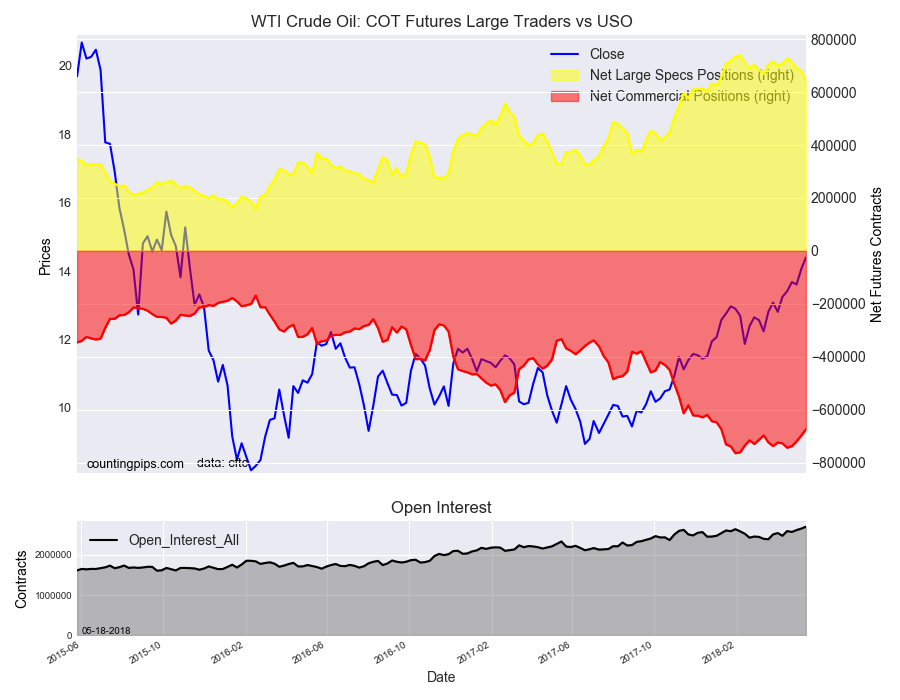
The non-commercial futures contracts of WTI Crude Oil futures, traded by large speculators and hedge funds, totaled a net position of 644,444 contracts in the data reported through Tuesday May 15th. This was a weekly reduction of -35,484 contracts from the previous week which had a total of 679,928 net contracts.

Speculative positions have declined for four straight weeks and by a total of -83,687 contracts over that time. The current net position level is now at the lowest standing since January 2nd when the net position totaled +624,213 contracts.

WTI Crude Oil Commercial Positions:

Meanwhile, the commercial traders position, hedgers or traders engaged in buying and selling for business purposes, totaled a net position of -674,375 contracts on the week. This was a weekly gain of 23,965 contracts from the total net of -698,340 contracts reported the previous week.

USO:

Over the same weekly reporting time-frame, from Tuesday to Tuesday, the USO Crude Oil ETF, which tracks the price of WTI crude oil, closed at approximately $14.4 which was a rise of $0.34 from the previous close of $14.06, according to unofficial market data.

*COT Report: The COT data, released weekly to the public each Friday, is updated through the most recent Tuesday (data is 3 days old) and shows a quick view of how large speculators or non-commercials (for-profit traders) as well as the commercial traders (hedgers & traders for business purposes) were positioned in the futures markets. The CFTC categorizes trader positions according to commercial hedgers (traders who use futures contracts for hedging as part of the business), non-commercials (large traders who speculate to realize trading profits) and nonreportable traders (usually small traders/speculators). Find CFTC criteria here: (http://www.cftc.gov/MarketReports/CommitmentsofTraders/ExplanatoryNotes/index.htm).

Article By CountingPips.comReceive our weekly COT Reports by Email

10-Year Note Speculators pulled back on bearish bets for 3rd week

By CountingPips.comReceive our weekly COT Reports by Email

10-Year Note Non-Commercial Speculator Positions:

Large treasury bond speculators reduced their bearish net positions in the 10-Year Note futures markets again this week, according to the latest Commitment of Traders (COT) data released by the Commodity Futures Trading Commission (CFTC) on Friday.

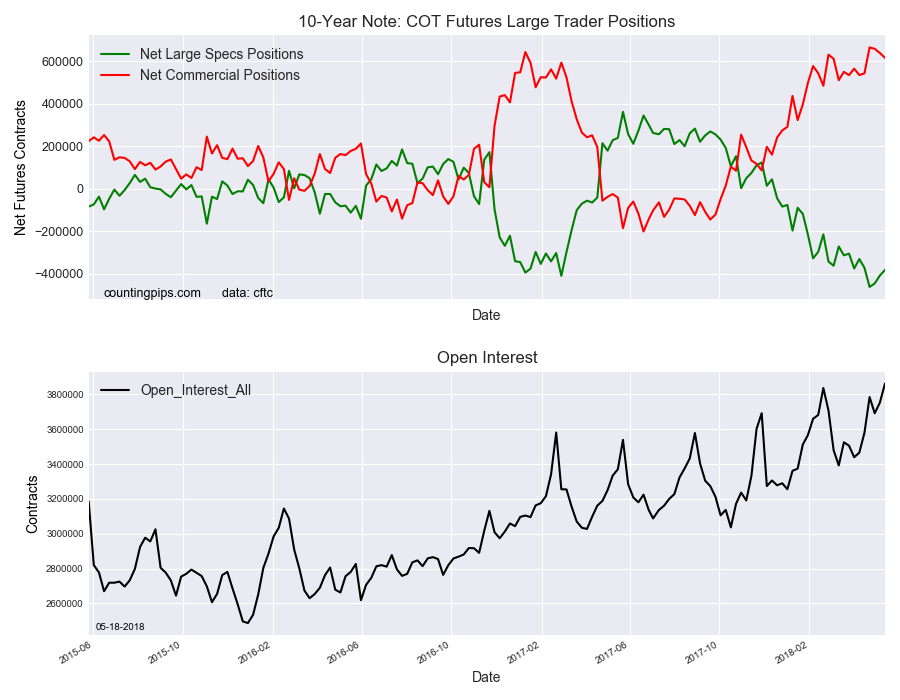
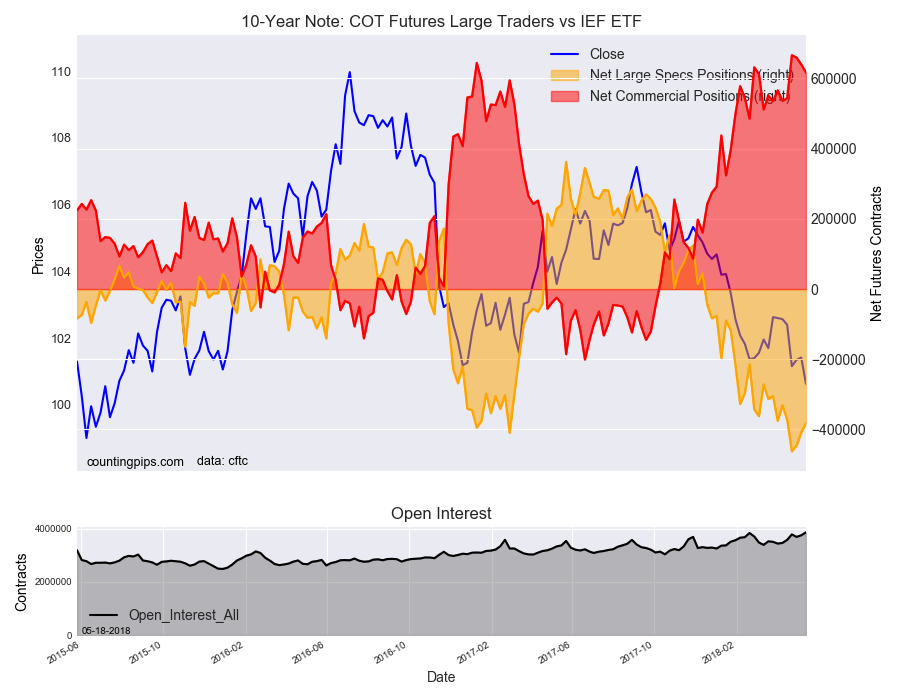
The non-commercial futures contracts of 10-Year Note futures, traded by large speculators and hedge funds, totaled a net position of -381,922 contracts in the data reported through Tuesday May 15th. This was a weekly rise of 26,707 contracts from the previous week which had a total of -408,629 net contracts.

Speculators have reduced their bearish bets by a total of 80,211 contracts over the past three weeks. The decline in bearish sentiment follows a run up to the record high bearish position that took place on April 24th with a total bearish standing of -462,133 contracts.

10-Year Note Commercial Positions:

The commercial traders position, hedgers or traders engaged in buying and selling for business purposes, totaled a net position of 616,983 contracts on the week. This was a weekly decline of -22,869 contracts from the total net of 639,852 contracts reported the previous week.

IEF ETF:

Over the same weekly reporting time-frame, from Tuesday to Tuesday, the 7-10 Year Treasury Bond ETF (IEF) closed at approximately $100.63 which was a decrease of $-0.79 from the previous close of $101.42, according to unofficial market data.

*COT Report: The COT data, released weekly to the public each Friday, is updated through the most recent Tuesday (data is 3 days old) and shows a quick view of how large speculators or non-commercials (for-profit traders) as well as the commercial traders (hedgers & traders for business purposes) were positioned in the futures markets. The CFTC categorizes trader positions according to commercial hedgers (traders who use futures contracts for hedging as part of the business), non-commercials (large traders who speculate to realize trading profits) and nonreportable traders (usually small traders/speculators). Find CFTC criteria here: (http://www.cftc.gov/MarketReports/CommitmentsofTraders/ExplanatoryNotes/index.htm).

Article By CountingPips.comReceive our weekly COT Reports by Email

10-Year Note Speculators pulled back on bearish bets for 3rd week

By CountingPips.comReceive our weekly COT Reports by Email

10-Year Note Non-Commercial Speculator Positions:

Large treasury bond speculators reduced their bearish net positions in the 10-Year Note futures markets again this week, according to the latest Commitment of Traders (COT) data released by the Commodity Futures Trading Commission (CFTC) on Friday.

The non-commercial futures contracts of 10-Year Note futures, traded by large speculators and hedge funds, totaled a net position of -381,922 contracts in the data reported through Tuesday May 15th. This was a weekly rise of 26,707 contracts from the previous week which had a total of -408,629 net contracts.

Speculators have reduced their bearish bets by a total of 80,211 contracts over the past three weeks. The decline in bearish sentiment follows a run up to the record high bearish position that took place on April 24th with a total bearish standing of -462,133 contracts.

10-Year Note Commercial Positions:

The commercial traders position, hedgers or traders engaged in buying and selling for business purposes, totaled a net position of 616,983 contracts on the week. This was a weekly decline of -22,869 contracts from the total net of 639,852 contracts reported the previous week.

IEF ETF:

Over the same weekly reporting time-frame, from Tuesday to Tuesday, the 7-10 Year Treasury Bond ETF (IEF) closed at approximately $100.63 which was a decrease of $-0.79 from the previous close of $101.42, according to unofficial market data.

*COT Report: The COT data, released weekly to the public each Friday, is updated through the most recent Tuesday (data is 3 days old) and shows a quick view of how large speculators or non-commercials (for-profit traders) as well as the commercial traders (hedgers & traders for business purposes) were positioned in the futures markets. The CFTC categorizes trader positions according to commercial hedgers (traders who use futures contracts for hedging as part of the business), non-commercials (large traders who speculate to realize trading profits) and nonreportable traders (usually small traders/speculators). Find CFTC criteria here: (http://www.cftc.gov/MarketReports/CommitmentsofTraders/ExplanatoryNotes/index.htm).

Article By CountingPips.comReceive our weekly COT Reports by Email

Eurodollar Speculators sharply reduced their bearish net positions this week

By CountingPips.comReceive our weekly COT Reports by Email

Eurodollar Non-Commercial Speculator Positions:

Large speculators decreased their bearish net positions in the Eurodollar futures markets this week, according to the latest Commitment of Traders (COT) data released by the Commodity Futures Trading Commission (CFTC) on Friday.

The non-commercial futures contracts of Eurodollar futures, traded by large speculators and hedge funds, totaled a net position of -3,803,128 contracts in the data reported through Tuesday May 15th. This was a weekly boost of 237,166 contracts from the previous week which had a total of -4,040,294 net contracts.

Speculative positions rose this week by the largest weekly gain since June 13th of 2017 after declining for the previous two weeks. Overall, the net position has seen bearish positions gaining stream with bearish bets rising for seven out of the past ten weeks.

Eurodollar Commercial Positions:

The commercial traders position, hedgers or traders engaged in buying and selling for business purposes, totaled a net position of 4,528,636 contracts on the week. This was a weekly decrease of -282,127 contracts from the total net of 4,810,763 contracts reported the previous week.

ED Futures:

Over the same weekly reporting time-frame, from Tuesday to Tuesday, the Eurodollar Futures closed at approximately $96.935 which was a drop of $-0.065 from the previous close of $97.0, according to unofficial market data.

*COT Report: The COT data, released weekly to the public each Friday, is updated through the most recent Tuesday (data is 3 days old) and shows a quick view of how large speculators or non-commercials (for-profit traders) as well as the commercial traders (hedgers & traders for business purposes) were positioned in the futures markets. The CFTC categorizes trader positions according to commercial hedgers (traders who use futures contracts for hedging as part of the business), non-commercials (large traders who speculate to realize trading profits) and nonreportable traders (usually small traders/speculators). Find CFTC criteria here: (http://www.cftc.gov/MarketReports/CommitmentsofTraders/ExplanatoryNotes/index.htm).

Article By CountingPips.comReceive our weekly COT Reports by Email

Eurodollar Speculators sharply reduced their bearish net positions this week

By CountingPips.comReceive our weekly COT Reports by Email

Eurodollar Non-Commercial Speculator Positions:

Large speculators decreased their bearish net positions in the Eurodollar futures markets this week, according to the latest Commitment of Traders (COT) data released by the Commodity Futures Trading Commission (CFTC) on Friday.

The non-commercial futures contracts of Eurodollar futures, traded by large speculators and hedge funds, totaled a net position of -3,803,128 contracts in the data reported through Tuesday May 15th. This was a weekly boost of 237,166 contracts from the previous week which had a total of -4,040,294 net contracts.

Speculative positions rose this week by the largest weekly gain since June 13th of 2017 after declining for the previous two weeks. Overall, the net position has seen bearish positions gaining stream with bearish bets rising for seven out of the past ten weeks.

Eurodollar Commercial Positions:

The commercial traders position, hedgers or traders engaged in buying and selling for business purposes, totaled a net position of 4,528,636 contracts on the week. This was a weekly decrease of -282,127 contracts from the total net of 4,810,763 contracts reported the previous week.

ED Futures:

Over the same weekly reporting time-frame, from Tuesday to Tuesday, the Eurodollar Futures closed at approximately $96.935 which was a drop of $-0.065 from the previous close of $97.0, according to unofficial market data.

*COT Report: The COT data, released weekly to the public each Friday, is updated through the most recent Tuesday (data is 3 days old) and shows a quick view of how large speculators or non-commercials (for-profit traders) as well as the commercial traders (hedgers & traders for business purposes) were positioned in the futures markets. The CFTC categorizes trader positions according to commercial hedgers (traders who use futures contracts for hedging as part of the business), non-commercials (large traders who speculate to realize trading profits) and nonreportable traders (usually small traders/speculators). Find CFTC criteria here: (http://www.cftc.gov/MarketReports/CommitmentsofTraders/ExplanatoryNotes/index.htm).

Article By CountingPips.comReceive our weekly COT Reports by Email