Author Archive for InvestMacro – Page 316

Will We See the Cryptocurrency Industry Boost Any Time Soon?

By Mary Ann Callahan

The price charts at crypto websites have reflected a strong downwards trajectory for most of 2018. Is cryptocurrency dead? Is the market just taking a breather? Let’s look at what is going on in terms of fundamentals and sentimentals.

Market needs to let off steam

After a meteoric 2017, it was only natural that the crypto market would need to cool down a little. Nothing goes straight up indefinitely!

Much of the price appreciation experienced at the end of last year was caused by a media-fueled, retail-investor speculative frenzy. Think about it. At the start of last November, the price of a single Bitcoin was around $7,300. Just a month and a half later, the price was over $19,000. Meanwhile, altcoins such as Ether and countless others experienced even larger percentage gains. These are not the hallmarks of a rational market.

Of course, there were fundamental factors that drove the formation of the end-of-year bubble. The successful activation of SegWit – a network upgrade intended to help Bitcoin scale – and the subsequent Bitcoin Cash hard fork seemingly providing a resolution to the ongoing scaling debate drove much of the early market optimism in the summer of 2017.

Meanwhile, the initial coin offering phenomena encouraged a hugely speculative environment around the whole space. With early examples such as Ethereum itself proving massively profitable for pioneer investors, a slew of companies with many dubious ideas (and some good ones) promised to sell literally anyone company tokens for established cryptocurrencies in entirely unregulated sales. Companies raised hundreds of millions of dollars and some traders undoubtedly made a bundle on the wildly volatile markets.

These two factors came to a head around this time last year. Driven by mainstream media coverage of the massive gains of early Bitcoin, altcoin, and ICO investors, an influx of largely uninformed retail investors piled into the market. Many had little idea of what they were buying, and a massive case of “FOMO” (fear of missing out) occurred.

Fundamentals are strong

Recently, the volatility of Bitcoin and other cryptocurrencies has dropped immensely. Many commentators believe that the market has found its bottom. Although it is impossible to say for sure when it will reverse, there are certainly plenty of developments on the horizon that are bullish for the industry and, by extension, the prices of the leading crypto assets.

Bakkt

One of the biggest news events of this year is undoubtedly the Bakkt platform. Due for launch in mid-December, the announcement of trading venue, custodial solution, and payments facilitator is particularly exciting because it is being launched by the owner of the New York Stock Exchange, the Intercontinental Exchange (ICE). Other big names associated with the venture are Microsoft, Starbucks, and the Boston Consulting Group. Such large prestigious names are exactly the kind that the planet’s largest investment firms trust enough to take a new asset class seriously.

Fidelity Investments

In a similar ilk to the Bakkt launch is a cryptocurrency endeavour from another of the planet’s biggest names in investments. Fidelity Investments manages more than $2.1 trillion in assets. It’s also more than a little interested in digital currencies. This October, the company announced the launch of Fidelity Digital Assets – a custody, trading, and general 24-hour, white-glove service for the planet’s wealthiest investors to get into the crypto market.

Not only has Fidelity Investments been working towards launching their own cryptocurrency infrastructure services for the most sophisticated class of investor, but the multinational money management firm has also mined digital assets for over three years now.

Bitcoin ETF

Much of the cryptocurrency narrative of 2018 has been about a Bitcoin Exchange-Traded Fund in the US. The green-lighting of the highly-lauded ETF is thought to be useful in providing an additional nod from one of the most powerful financial regulators on the planet. The SEC has been taking their time in approving the first venue for the potential crypto derivative. However, many in the space believe that the ETF is coming early next year when the deadline for the most anticipated fund proposal draws near.

Other custody and trading desk solutions

If all that wasn’t enough, there have been many other firms also offering their own institutional-level packages to the market all year. These range from trading desks for massive money managers to take up positions in the space to custody solutions so that they can be assured of the safest storage possible for their funds. The likes of Coinbase, Circle, Blockchain, and Goldman Sachs are all in the process of releasing, or have just released, such services to the market.

The sheer number of tailored institutional buying and storing options coming highlights a massive demand for cryptocurrency from established money managers.

Lightning

Of course, it’s not all about institutional interest in leading cryptocurrencies. The biggest digital asset of all is currently undergoing something of an upgrade. The Lightning Network has already been launched for Bitcoin and some of the world’s most accomplished developers are currently putting the software through its paces for bugs and exploring what is possible with the innovation. Eventually, the plan is to allow a cheap, fast, and confidential payment rail on top of the Bitcoin base network. This will further increase the functionality of the original crypto and will allow a host of new use cases involving micropayments.

Dapps gaining traction

After a shaky start for most decentralized applications built on the Ethereum blockchain and other smart contract platforms, it seems that some projects are finally starting to take off. Take the decentralized prediction market that is Augur. There was almost a $1 million bet on the US mid-term election result!

If more applications can prove their utility, it will show that platforms such as Ethereum can see a massive adoption across industries.

To conclude

Ultimately, it is impossible to say when the cryptocurrency market will turn around. That said, the fundamentals of the space are good, but the retail market is still licking its wounds from the mania last year. Meanwhile, institutions will likely take up positions using the many tailored services coming to the market. Once a couple more big names get linked to Bitcoin and others, the industry might shift gears.

About the Author: Mary Ann Callahan

As an expert on Bitcoin-related topics, I’ve found myself as a Journalist at Cex.io – cryptocurrency exchange. I’m working on articles related to blockchain security, bitcoin purchase guides or bitcoin regulations in different countries.



US Labour Market Report Is in the Spotlight

by JustForex

Yesterday USD weakened against the basket of major currencies. The USD index (#DX) closed in the red (-0.25%). The investors are waiting for the release of the US Labour Market reports for November. The preliminary data by ADP are remarkably weak. The number of the new industrial workers lowered to 179K vs. the expected 196K, while the previous data was corrected from 227K to 225K. At the same time, the Non-Industrial PMI by ISM grew to 60.7 instead of 59.2.

CAD keeps losing positions against the USD due to weak economic reports. The trading balance is -1.17B instead of the expected -0.7B. The PMI by Ivey lowered to 57.2 instead of 60.3. Canada will publish its Labour Market reports today.

Prices on oil keep decreasing. The WTI futures are close to 51 USD/barrel. At 20:00 (GMT+2) Baker Hughes will publish the reports on the oil rigs in the US.

Market Indicators

Yesterday the US stock market showed a variety of trends: #SPY (-0,15%), #DIA (-0,40%), #QQQ (+0,71%).

The 10-year US government bonds yield keeps lowering. Right now it is at 2.87-2.88%.

The Economic News Feed for 07.12.2018:
  • – GDP Report (EU) – 12:00 (GMT+2:00);
  • – Labour Markets Reports (US) – 15:30 (GMT+2:00);
  • – Labour Markets (Canada) – 15:30 (GMT+2:00).

by JustForex

Will cryptocurrencies offer safe haven if global economy slows?

By George Prior

Cryptocurrencies like Bitcoin and Ethereum will increasingly be seen as investors’ ‘safe havens’ in 2019, affirms an influential tech expert.

The comments from Ian McLeod of Thomas Crown Art, the world’s leading tech-art agency, follow growing concerns that the global economy is likely to experience a significant slowdown before the end of 2019.

Leading economic indicators tracked by the OECD have weakened since the start of the year and suggest slower expansion over the next six to nine months.

Similarly, the wider global expansion that began roughly two years ago has plateaued and become less balanced, according to the International Monetary Fund.

Mr McLeod observes: “There’s a growing list of investment tailwinds to consider for 2019. These include significant trade tensions, rising interest rates, political uncertainties, including Brexit, and complacent financial markets.

“The U.S., the world’s largest economy, has, of course, considerable influence on Asian and European economies. As such, should the U.S. stock market plunge – as it did recently scrapping all of its 2018 gains during a major sell-off – global markets are vulnerable too.”

He continues: “Against this backdrop, we can expect cryptocurrencies will increasingly be seen as investors’ ‘safe havens’ in 2019 and beyond.

“When the downside of the economy hits, digital assets cryptocurrencies like Bitcoin and Ethereum are likely to be viewed by investors as a robust means of storing wealth, in the same way they do with gold.”

Mr McLeod adds: “There are several keys reasons why the likes of Bitcoin and Ethereum will be safe havens.  These include scarcity, because there’s a limited supply; permanence, they don’t face any decay or deterioration that erode their value; and future demand certainty as mass adoption of cryptocurrencies and blockchain, the technology that underpins them, takes hold globally.”

Of this latter point, he comments: “As mainstream adoption is going to dramatically gain momentum in 2019 as the world, especially business, realise ever-more uses for and value of crypto and blockchain.

“Ethereum’s blockchain, for instance, is used in our art business.  It has allowed us to create a system to use artworks as a literal store of value; it becomes a cryptocurrency wallet.

“It also solves authenticity and provenance issues – essential in the world of art.  All our works of art are logged on the Ethereum’s blockchain with a unique ‘smART’ contract.”

The tech expert concludes: “We are some way off from cryptocurrencies replacing the Swiss Franc, the Japanese Yen or gold as the preferred safe haven assets.

“However, as the world moves from fiat money to digital, and as adoption of crypto picks up, there can be no doubt that cryptocurrencies will be firmly in the pantheon of safe haven assets within in the next decade.”


deVere CEO: The pound is shackled by Brexit

By George Prior

The pound is shackled by Brexit drama, is locked in a holding pattern, and nothing is currently priced in, warns the CEO of one of the world’s largest independent financial advisory organizations.

The warning from Nigel Green, founder and chief executive of deVere Group, comes as sterling remains vulnerable to every twist and turn to the political saga over the UK’s exit of the European Union.

Mr Green comments: “The pound has been and remains the primary market bellwether since the UK voted to leave the EU in 2016. It has responded to each drama being played out on the political stage.

“But as the pressure ramps up, with tensions increasing ahead of the crucial vote on 11 December, in which parliament is likely to reject the Prime Minister’s withdrawal agreement, sterling has become less, not more, turbulent.

“It has been shackled by the Brexit uncertainty. It is locked in holding pattern, hovering for the last few weeks at about $1.27.”

He continues: ““Nothing is currently priced in because of the enormous question marks hanging over the many different outcomes.

“First, should Theresa May’s deal goes through, sterling will initially rally. But if the DUP hold firm on their refusal to back the government on future legislation, the government will be paralysed and an election must be held and Sterling’s rally would cease.

“Second, should the PM’s plan be voted down, there are several options, including a second referendum. This would, arguably, get Mrs May ‘off the hook’, but she would be regarded as a traitor by Brexiteers if she announced one. Sterling can be expected to rally in this scenario.

“An alternative is that the PM goes back to the E.U and asks for a new deal, based on EFTA membership, which is accepted and is then passed by the UK Parliament.  This would also trigger a sterling rally.

“And third, a ‘No Deal’ scenario would happen if Parliament fails to vote through any deal by end of March 2019, and the UK is unable to extend Article 50, and there is no formal abandonment of Brexit. This would cause a sharp fall in the pound.”

Speaking to investors recently, Mr Green noted: “In terms of investment strategy, if investors are already invested broadly across asset classes, sectors and regions, for instance by having a global multi-asset portfolio, they should sit tight. There is too much uncertainty to be able to take strong bets on a region, asset class or even a currency.

“However, if they do not have such a portfolio, then they should consider taking action.”

About:

deVere Group is one of the world’s largest independent advisors of specialist global financial solutions to international, local mass affluent, and high-net-worth clients.  It has a network of more than 70 offices across the world, over 80,000 clients and $12bn under advisement.


Ichimoku Cloud Analysis 06.12.2018 (AUDUSD, NZDUSD, USDCAD)

Article By RoboForex.com

AUDUSD, “Australian Dollar vs US Dollar”

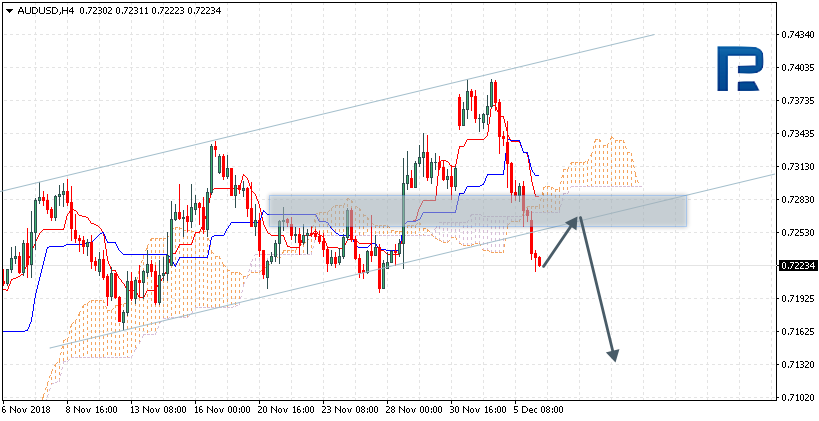
AUDUSD is trading at 0.7223; the instrument is moving below Ichimoku Cloud, thus indicating a descending tendency. The markets could indicate that the price may test the downside border of the cloud at 0.7255 and then resume moving downwards to reach 0.7130. Another signal to confirm further descending movement is the price’s rebounding from the channel’s downside border. However, the scenario that Implies further decline may be cancelled if the price breaks the upside border of the cloud and fixes above 0.7320. In this case, the pair may continue growing towards 0.7435.

AUDUSD
Risk Warning: the result of previous trading operations do not guarantee the same results in the future

NZDUSD, “New Zealand Dollar vs US Dollar”

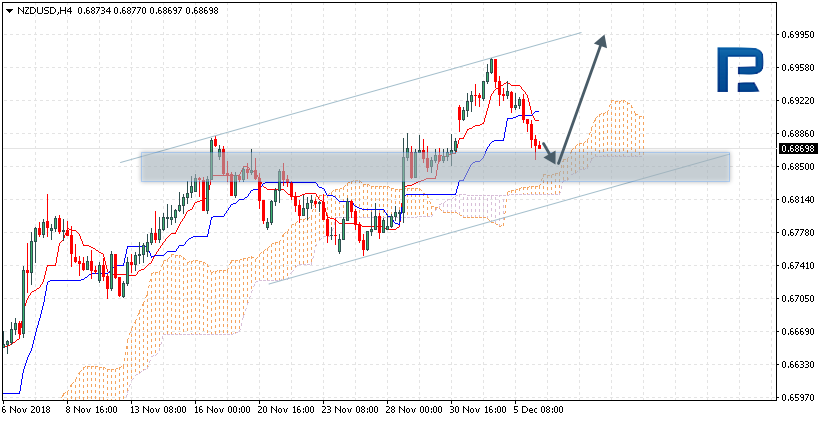
NZDUSD is trading at 0.6869; the instrument is moving above Ichimoku Cloud, thus indicating an ascending tendency. The markets could indicate that the price may test the upside border of the cloud at 0.6850 and then resume moving upwards to reach 0.6995. Another signal to confirm further ascending movement is the price’s rebounding from the support level. However, the scenario that Implies further growth may be cancelled if the price breaks the downside border of the cloud and fixes below 0.6810. In this case, the pair may continue falling towards 0.6725.

NZDUSD
Risk Warning: the result of previous trading operations do not guarantee the same results in the future

USDCAD, “US Dollar vs Canadian Dollar”

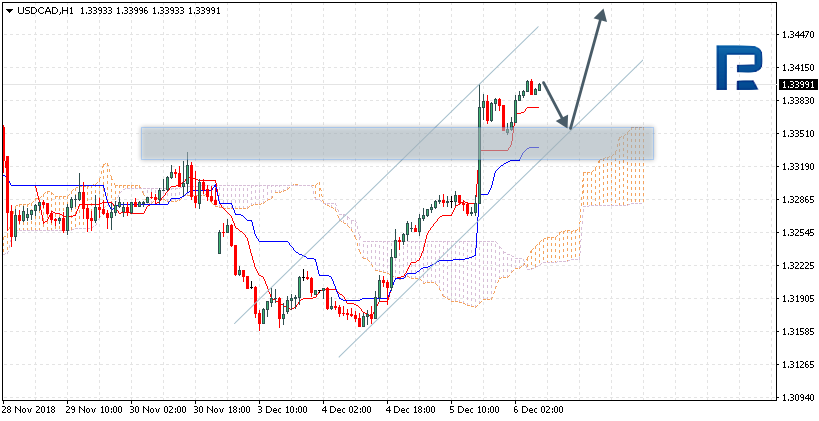
USDCAD is trading at 1.3399; the instrument is moving above Ichimoku Cloud, thus indicating an ascending tendency. The markets could indicate that the price may test Tenkan-Sen and Kijun-Sen at 1.3355 and then resume moving upwards to reach 1.3465. Another signal to confirm further ascending movement is the price’s rebounding from the support level. However, the scenario that implies further growth may be cancelled if the price breaks the downside border of the cloud and fixes below 1.3265. In this case, the pair may continue falling towards 1.3150.

USDCAD
Risk Warning: the result of previous trading operations do not guarantee the same results in the future

Article By RoboForex.com

Attention!
Forecasts presented in this section only reflect the author’s private opinion and should not be considered as guidance for trading. RoboForex LP bears no responsibility for trading results based on trading recommendations described in these analytical reviews.

The Australian Dollar is falling way too fast. Overview for 06.12.2018

Article By RoboForex.com

AUDUSD has been trading downwards for the third day in a row despite the neutral statistics.

The Australian Dollar is falling against the USD for the third consecutive trading session. The current quote for the instrument is 0.7227.

The statistics published today showed that the Retail Sales in Australia added 0.3% m/m in October, thus matching market expectations. In September, the indicator expanded by only 0.1% m/m.

The statistics might have supported the Aussie, but investors are really nervous due to some mixed news relating to the pause in “trade wards” between the USA and China. Everything that is China-related is very important for Australia and the Aussie, because China is the key trade and economic partner of the Green continent.

It became known today that a top Huawei Technologies executive (a Chinese company) was arrested in Canada for extradition to the USA. This information might as well be a reason to break the truce. The Company says it holds information about possible accusations, but investors’ response was simple: they started avoiding risks and switching to “safe haven” assets. The arrest was the main reason for sell out at stock exchanges; decline of the futures on American indices was also very massive. In this light, it’s quite logical that the Aussie got under significant pressure.

Most likely, the case details may appear in the nearest future, as well as the official response from China.

Article By RoboForex.com

Attention!
Forecasts presented in this section only reflect the author’s private opinion and should not be considered as guidance for trading. RoboForex LP bears no responsibility for trading results based on trading recommendations described in these analytical reviews.

The Analytical Overview of the Main Currency Pairs on 2018.12.06

Analytics by JustForex

The EUR/USD currency pair

Technical indicators of the currency pair:
  • Prev Open: 1.13413
  • Open: 1.13473
  • % chg. over the last day: +0.04
  • Day’s range: 1.13209 – 1.13324
  • 52 wk range: 1.1299 – 1.2557

The currency pair is showing an ambyhous technical picture. The quotes are trading in flat. Yesterday the stock markets were closed in honor of George H.W. Bush. The local support and resistance levels are 1.13200 and 1.13450. Positions should be opened from these levels. The investors are waiting for the reports from the US.

The Economic News Feed for 06.12.2018:

  • – ADP Nonfarm Employment Change (US) – 15:15 (GMT+2)
  • – ISM Non-Manufacturing PMI (US) – 17:00 (GMT+2)
EUR/USD

Indicators do not send accurate signals: 50 MA has crossed 200 MA.

The MACD histogram started to descend, indicating the development of the bearish sentiment.

Stochastic Oscillator is close to the oversold zone, the %K line is below the %D line, which gives a signal to sell EUR/USD.

Trading recommendations
  • Support levels: 1.13200, 1.12800
  • Resistance levels: 1.13450, 1.13700, 1.14000

If the price fixes below the support level of 1.13200, it is necessary to consider selling EUR/USD. The movement is tending to 1.12800-1.12600.

An alternative could be the recovery of the EUR/USD quotes to the level of 1.13700-1.14000.

The GBP/USD currency pair

Technical indicators of the currency pair:
  • Prev Open: 1.27080
  • Open: 1.27321
  • % chg. over the last day: -0.04
  • Day’s range: 1.26994 – 1.27328
  • 52 wk range: 1.2662 – 1.4378

The technical pattern on the GBP/USD currency pair is still ambiguous. Yesterday the Service Sector PMI was published in the UK, which reached 50.4 instead of the expected 52.5. The quotes are testing the key support and resistance levels: 1.27000 and 1.27400. Investors keep evaluating the recent developments regarding Brexit. You should open positions from the key levels.

The Economic News Field for 06.12.2018 is calm.

GBP/USD

Indicator signals are ambiguous. The price has approached 50 MA, which is a strong dynamic resistance.

The MACD histogram is in the negative zone, which indicates a bearish sentiment.

Stochastic Oscillator is in the neutral zone, the %K line is crossing the %D line. There are no signals at the moment.

Trading recommendations
  • Support levels: 1.27000, 1.26700
  • Resistance levels: 1.27400, 1.27800, 1.28200

If the price fixes above the resistance level of 1.27400, the GBP/USD quotes are expected to grow. The movement is tending to 1.27800-1.28200.

An alternative could be a decrease in the GBP/USD currency pair to 1.26700-1.26500.

The USD/CAD currency pair

Technical indicators of the currency pair:
  • Prev Open: 1.32578
  • Open: 1.33528
  • % chg. over the last day: +0.77
  • Day’s range: 1.34123 – 1.32187
  • 52 wk range: 1.2248 – 1.3387

The USD/CAD is showing aggressive purchases. During yesterday’s and today`s trading, the quotes gre by more than 150 points. The Bank of Canada left the key interest rate at 1.75% and worsened the inflation expectations forecast, which caused an aggressive sell-off of the CAD. The key support and resistance levels are 1.33900 and 1.34350. Positions should be opened from these levels. The quotes have a tendency to grow futher.

At 17:00 (GMT+2:00), Ivey will publish the PMI report.

USD/CAD

The price has fixed above 50 MA and 200 MA, which indicates the power of buyers.

The MACD histogram is in the positive zone and above the signal line, which gives a strong signal to buy USD/CAD.

The Stochastic Oscillator is in the neutral zone, the %K line is above the %D line, which indicates a drop in the USD/CAD quotes.

Trading recommendations
  • Support levels: 1.33900, 1.33500, 1.33100
  • Resistance levels: 1.34350, 1.34600

If the price fixes above the local resistance of 1.34350, further growth of the USD/CAD quotes is expected. The movement is tending to 1.34600-1.34800.

Alternative option. If the price fixes below 1.33900, we recommend looking for market entry points to open short positions. The movement is tending to 1.33600-1.33400.

The USD/JPY currency pair

Technical indicators of the currency pair:
  • Prev Open: 112.753
  • Open: 113.183
  • % chg. over the last day: +0.24
  • Day’s range: 112.687 – 112.844
  • 52 wk range: 104.56 – 114.74

The USD/JPY is showing a variety of trends. The technical picture is ambigous. The local support and resistance levels are 112.600 and 112.850. Positions should be opened from these levels. You should keep an eye on the yield of the US Treasury bonds. The USD/JPY quotes have a downward tendency.

The news feed on the Japanese economy is calm.

USD/JPY

The price has fixed below 50 MA and 200 MA, which indicates the power of sellers.

The MACD histogram is in the negative zone, which indicates a bearish sentiment.

The Stochastic Oscillator is in the neutral zone, the %K line crosses the %D line. There are no signals.

Trading recommendations
  • Support levels: 112.600, 112.300
  • Resistance levels: 112.850, 113.100, 113.400

If the price fixes below the support level of 112.600, it is necessary to consider selling USD/JPY. The movement is tending to 112.300-112.000.

An alternative could be the growth of the USD/JPY quotes to 113.100-113.300.

Analytics by JustForex

The USD Index Holds Current Levels

by JustForex

The USD didn’t change its position against the basket of major currencies. The USD index (#DX) closed in the green (+0.08%). The demand on the haven currencies has grown due to the news on the arrest of Huawei Technologies CFO Sabrina Meng Wanzhou. She was arrested in Canada on December 1, on demand from the US. She is suspected in breaking the US/Iran trading embargo. Investors worry that her arrest will restore the US/China trade war and worsen the relationships between the countries.

Investors keep evaluating the Brexit situation. Recently, it became known that the UK might not leave the US after all. Theresa May was heavily criticized by the Parliament due to her proposed agreement on the Brexit conditions. Analytics think that the UK might refuse to leave the EU outright due to these disagreements.

Some economic reports from the UK and Canada were published yesterday. The service PMI for the UK reached 50.4 in November while the experts expected 52.5. The Bank of Canada left the key interest rate at 1.75%. The regulator suddenly worsened the inflation expectations forecast which lead to massive sell-off of CAD. During the Asian trading session today, a report on the retail sales in Australia was published, which matched the predictions perfectly at 0.3%. We expect essential reports from Canada and the US today.

The oil market is still bearish. At the moment the WTI futures are at 52.85 USD/barrel. At 18:00 (GMT+2) a crude oil report will be published in the US.

Market Indicators

The US stock market was closed yesterday due to the farewell to George Bush-senior.

The 10-year US government bonds yield is at 2,91-2,92%.

The Economic News Feed for 06.12.2018:
  • – ADP Nonfarm Employment Change (US) – 15:15 (GMT+2:00);
  • – Non-Manufacturing PMI by ISM (US) – 17:00 (GMT+2:00);
  • – PMI by Ivey (CAD) – 17:00 (GMT+2:00).

by JustForex

EURUSD: pair expected to rise to 1.1391 in the first half of the day’s trading

By Matthew Anthony, Alpari

Previous:

On Wednesday EURUSD traded sideways within a 50-pip range. As the US session was closed, volumes were low and volatility was high. In the first half of the day’s trading in Europe, the euro rose to 1.1361. Good news came from the strengthening of the pound and news on the progress in the negotiations between Rome and Brussels. Sellers used a thin market and followed in buyers’ footsteps. With growth above 1.1320, buyers began to reenter long positions.

Day’s news (GMT+3):

  • 10:00 Germany: factory orders (Oct).
  • 16:15 US: ADP employment change (Dec).
  • 16:30 US: trade balance (Oct).
  • 16:30 Canada: exports (Oct).
  • 18:00 US: factory orders (Oct), ISM non-manufacturing index s.a. (Nov).
  • 19:00 US: EIA crude oil stocks change.

Fig 1. EURUSD hourly chart.

Current situation:

My expectations proved correct concerning the return of the price back to the lb, as for the price model, not so much. I believe the euro’s drop to 1.1311 was due to the manipulative actions of the sellers in the thin market. It was easy to cause the pair to drop, since all major currencies at that time were trading in the minus against the dollar.

So what can we expect from the market after the price returns to the lb balance line?

The truce between the US and China is receding to the background. The yet and franc are now trading up against the dollar. Defensive stocks are in the black, the rest are in the red. Are sellers preparing once more for an offensive?

According to the forecast, today I’m expecting the pair to rise to 1.1391. The path to the 67th degree is now open to buyers. If the hourly candle closes below 1.1330, then you can forget about any growth. In this case, you need to prepare for the breakout of the channel (1.1300) and for the euro to weaken to 1.1285.

Source: EURUSD: pair expected to rise to 1.1391 in the first half of the day’s trading


Price Action: Forex Analysis Without Indicators

By JustForex.com

Each technical trader applies different trading methods. But still, thousands of strategies can be divided into several main categories. Some traders who trade under Price action, there are those who trade with indicators, and there are traders who use Price Action and indicators at the same time.

Price action is one of the easiest to learn and one of the most effective ways of price direction predicting. If you are just starting to trade, then Price action trading can be an excellent starting point.

What is Price Action

Price Action is a trading system, following which all trading decisions are made by analyzing the net price chart. It means the complete absence of any lagging indicators, except for moving averages that help to identify the trend and dynamic support/resistance levels.

The Price Action trader believes that the only correct source of information is the price itself. If an asset goes up, such a trader sees that other market participants buy it. After that, he, depending on the aggressiveness of these purchases, tries to understand whether the movement will continue.

Price Action pros and cons

Since decisions while trading are made by analyzing the Forex price chart, the system gives you the freedom to choose. That is, you do not depend on any external factors, such as indicators, news, or anything else. After you have studied some Price Action strategy, further analysis will not take much time. You find an asset with certain pricing conditions that you need or you are waiting for these conditions to form.

Another advantage is that such a trader can get more favourable entry and exit points compared to strategies based on indicators. The fact is that the indicators are calculated on the basis of price, but have a delay in relation to it. By focusing simply on price, you get information in real time and do not wait until it is provided by an indicator that is late.

The disadvantage is that Price Action strategies are usually difficult to automate. It means that you have to sit and wait for the formation of graphical models, and then trade them manually. For most people, this is not a problem.

How to read candlesticks

Candlesticks are a type of price chart, along with Lines and Bars. Reading the candlestick chart is a necessary skill for every trader because this is the most popular analysis method.

Candlesticks mean the following: each candle is essentially a distance that the price has covered over a certain period of time, which is called a timeframe. So, on an hour timeframe, each candle will display the distance that the price has gone for 1 hour, on the minute one – per minute and so on.

How to read candles:

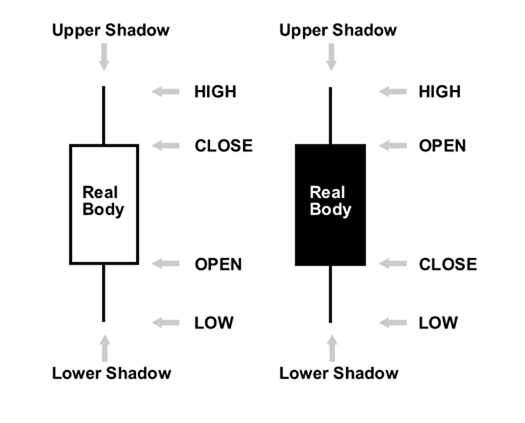
  • If the closing price is higher than the opening price, then a green/white candle is displayed. It is also called a bullish candle.
  • When the closing price is below the opening price, a filled/red candle is shown. It is called a bearish candle.
  • The empty or filled part of the candle is called a real body. The body represents the price range of the trading session between the opening and closing prices.
  • The thin lines of the junction, above and below the body, show a higher and a lower price range and are called shadows. Shadows indicate the extreme prices of the trading session.
  • The highest point of the upper shadow gives the value of the maximum price of the session (high).
  • The lowest point of the lower shadow is the value of the minimum price for this session (low).

What is a trend and how to determine it

When the market moves in one direction from left to right on the chart up or down, this is a market trend. And what is the trend in general? It is a market consensus, the sentiment of market participants. There are three types of trends.

Types of trends

  1. An upward or “bullish” trend when the market moves up. And the subsequent lows and highs are always higher than the previous ones.2. A downward or “bearish” trend when the market moves down. Consequently, the minima and maxima of the positions will be lower than the previous ones.3. A flat trend – a certain direction of price movement up or down is not observed. It also has support and resistance levels, but there is no pronounced movement of the price up or down.

How to determine a trend with a trend line

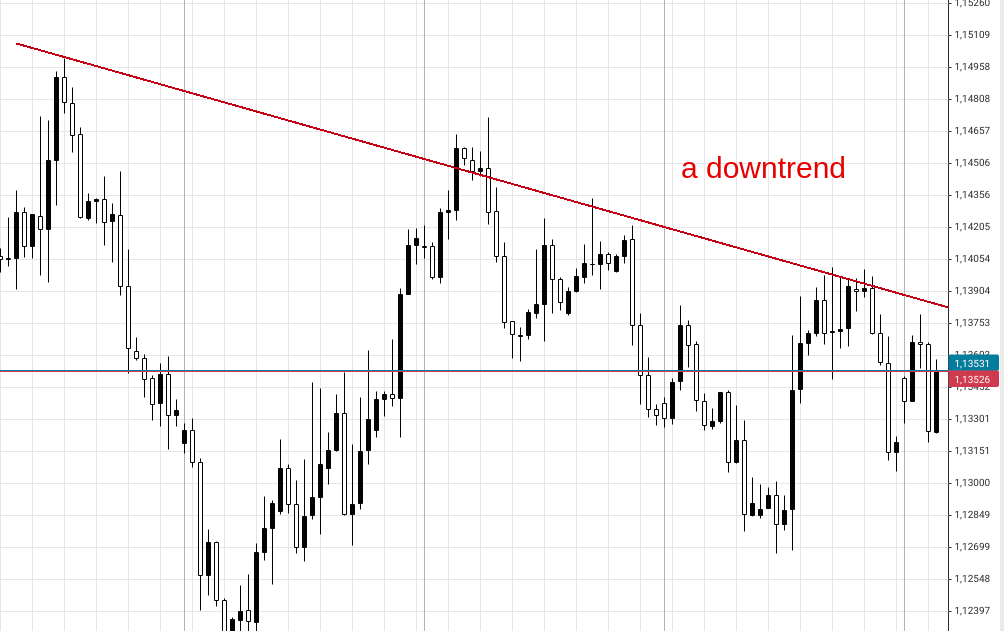
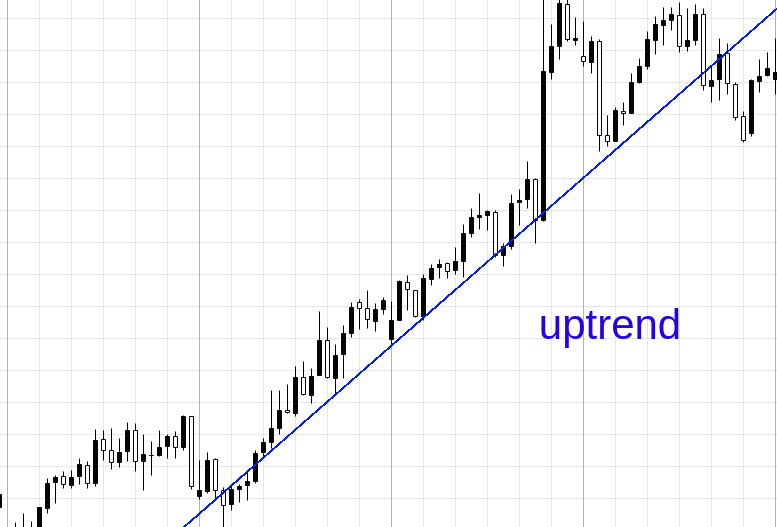
Trend lines are lines drawn at an angle above or below the price. They serve to designate the trend that is currently developing, as well as to determine the moment of its reversal. Besides, they can be used as support and resistance levels, thereby determining the points of opening and closing positions.

On a downtrend, trend lines are drawn above the price. On an uptrend, trend lines are drawn below the price. On the downtrend, they are held on the highs, and on the uptrend – on the lows.

To draw a trend line, there should be at least two highs at different levels or two different lows on the chart. However, the trend line will be reliable if there are at least three highs or lows on the chart.

How to determine a trend with moving averages

Moving averages is a trend indicator that helps to find a trend, its beginning and end. It works perfectly when there is a certain trend in the market and not so much when the market is in a flat or has no unidirectional movement.

Due to the fact that it makes a calculation based on past data, points for entry and exit usually arise with a delay, but you can choose the optimal settings and minimize the number of false signals and solve the problem of delay.

To change the reaction rate of a moving average to the price change, a smoothed period is used. It takes into account the number of bars for which the average value is calculated.

For example, on the H1 timeframe each bar corresponds to one hour, therefore, MA with a period of 24 will display the average equalized value of prices per 24 hours, that is, per day. For the trading week period will be 120 (24×5).On higher timeframes, as a rule, false signals occur less frequently. They will be delayed, but more reliable.

What are the support and resistance levels

Zigzag movements of quotes periodically rest against certain highs and lows, from which the curve of the chart turns back and begins to move in the opposite direction. The price at some points seems to resist further growth or receives support during a fall. From here is the name.

These levels are considered to be the most important elements of technical analysis in Forex. Here three main axioms are clearly visible:

  • At any moment resistance is above the current price, and support is below.
  • Their breakthrough means the beginning of the movement to the next level.
  • False breakout leads to a reversal of movement from resistance to support or vice versa.

To determine the levels of support and resistance, you should find the points at which the price movement constantly stops. It is at these points that either buyers or sellers enter the market.

False breakout

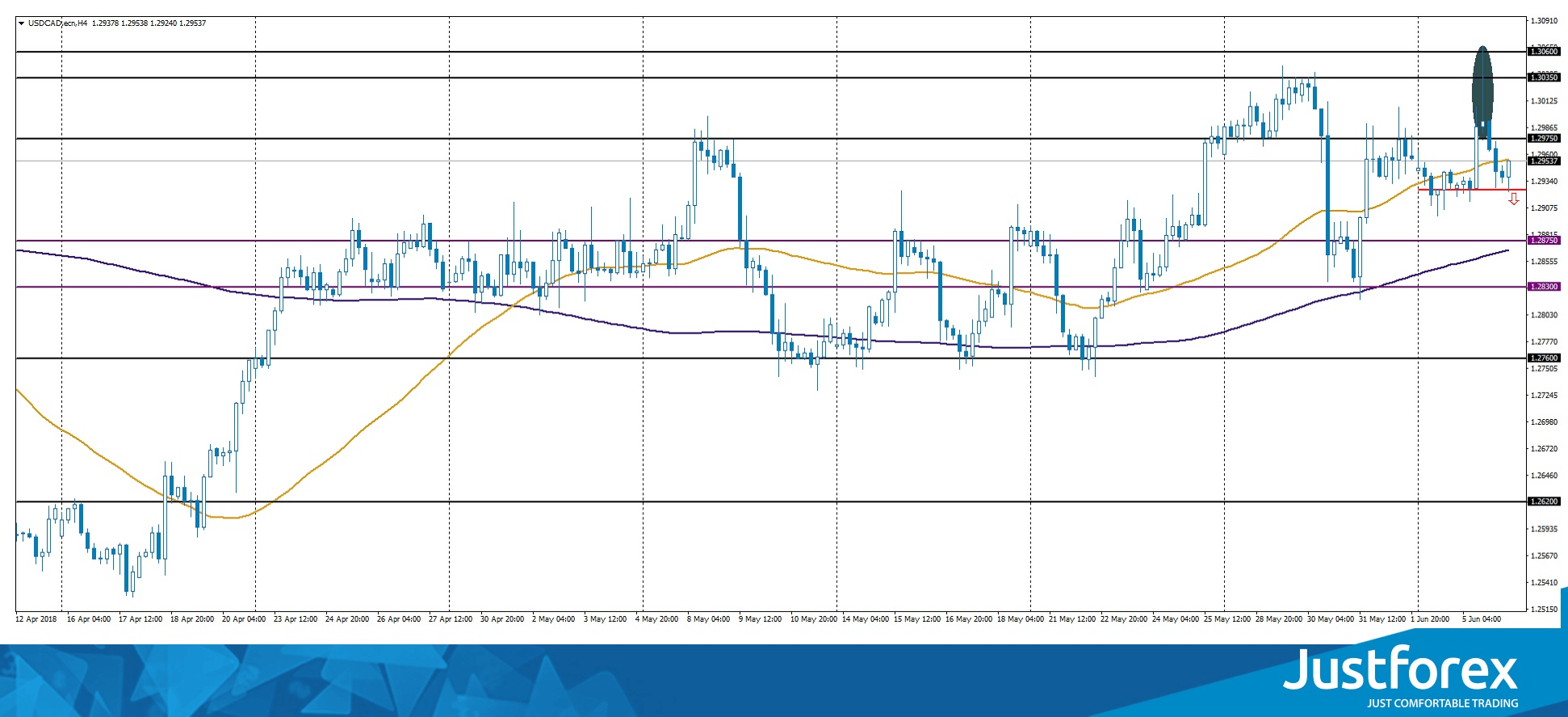
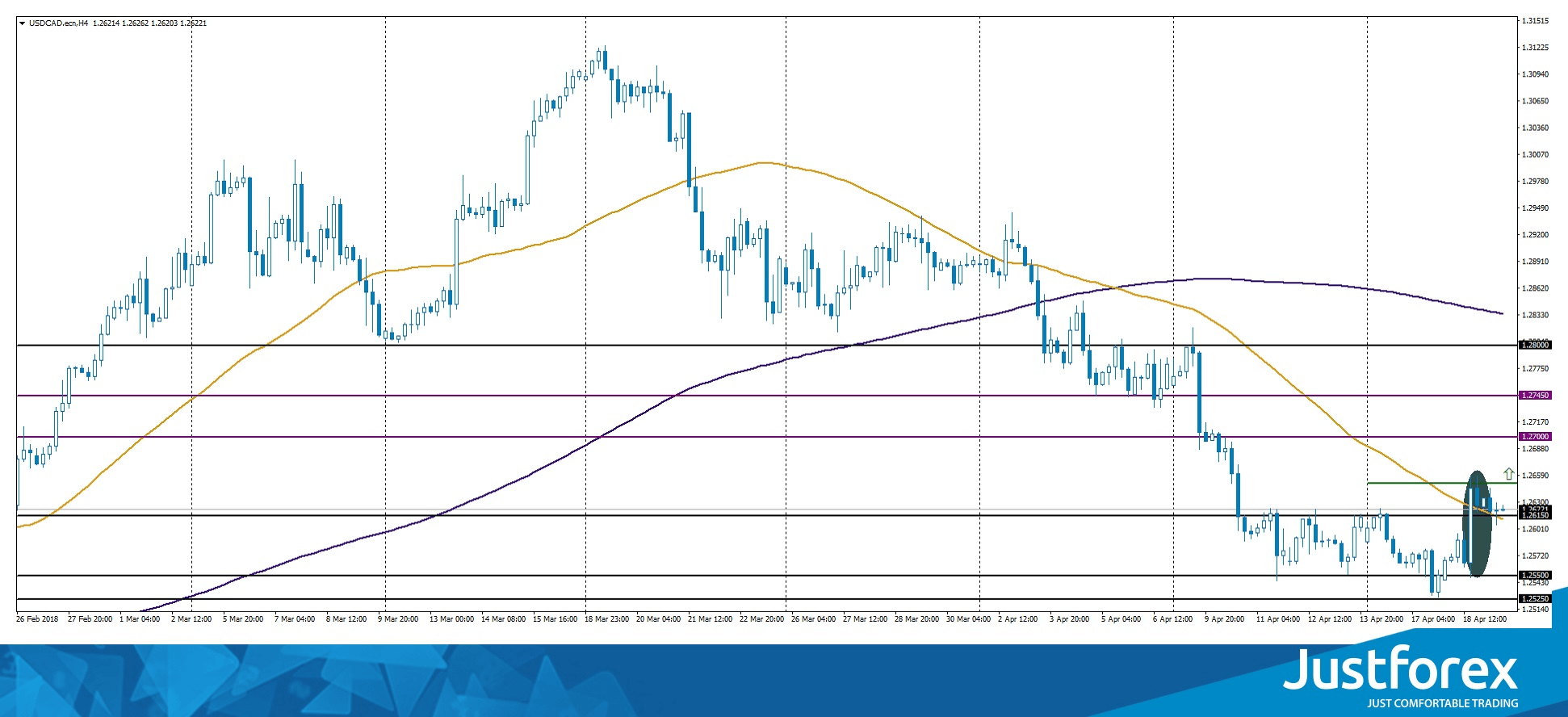
When the price first breaks through the resistance level but then rolls back, this situation is called a false breakout.

If you want to enter the market with a long position, when the price breaks through the resistance level, then in order to avoid a false breakout, it is recommended to wait until the resistance level becomes the support level. Similarly, if you want to enter the market with a short position when the price breaks through the support level, then to avoid a false breakout, it is recommended to wait until the support level becomes the resistance level.

Note! Support and resistance are subjective. Every trader sees support and resistance levels in his own way. It is easy to identify a lot of support and resistance levels at which price reversals can occur. However, the choice of the most optimal level comes with practice.

What are the Fibonacci levels

In trading, the term “Fibonacci” means a tool that measures the price movement and on the basis of this exposes horizontal support and resistance levels on the price chart. Fibonacci levels are used to determine price pullbacks. That is if we see a price impulse, but do not want to join it right now, but we want to do it “at a good price”, that is, to start moving during a price pullback.

The basic idea of trading with Fibonacci levels is to open a long position at pullback from the Fibonacci support line, and a short position should be opened at downward pullback from the Fibonacci resistance level when the market falls.

If you want to apply Fibonacci levels on the chart, then click in the terminal on the “Draw Fibonacci retracement” button in the upper left corner. To determine the levels of the Fibonacci system, you need to find the recent significant highs and lows of the last price oscillation. Then, for a downtrend, click on the high and drag the Fibonacci lines to the low. For the uptrend, you need to do the opposite. Click on the minimum price fluctuation and drag the cursor to the maximum.

Price Action Patterns

Speaking of Price Action, it is impossible not to mention the patterns of this technique. Let’s look at just a few of the most popular patterns that will allow you to get a general idea of the Price Action methods.

Pin Bar

Pin bar is a reversal setup used in the Price Action trading system without indicators. That is, the occurrence of pin bars most often means that the trend will turn back soon. At the same time, it does not matter whether this trend will be bullish or bearish.

Pin bar is one single bar or candle, signalling a change in the current trend. Here are the necessary conditions for the appearance of the pin bar figure:

  • the formation of a bar at the end of a trend – at the high of the uptrend or at the low of the downtrend;
  • very long nose of the bar (candle wick), necessarily directed towards the current trend;
  • the absence of the body of the candle (the opening price should coincide with the closing price of the bar) or, at least, the body should not be more than 20% of the length of the nose;
  • the absence of a reverse candle wick or at least the shadow should be proportionate to the body of the candle.

It should be noted that the color of the candle or bar does not matter. It can be either a bullish bar or a bearish bar.

Inside Bar

Inside Bar is formed on the chart of two or more candles (bars), the first of which is decisive (or formative), and the others are directly internal. At the same time, internal candles should be located completely within the framework of the forming candle, without going beyond it.

The appearance on the chart of such a candlestick pattern is a signal of price uncertainty, after which both a continuation of the current trend and its change can follow. However, it is possible and necessary to trade with such a figure, but the entry into the transaction is carried out after confirming of the price movement in a certain direction.

Outside Bar

Unlike the Inside Bar that signals uncertainty, the Outside Bar is a reversal pattern. It consists of two bars, which are located on the extremes of the chart.

A pattern can be identified when the color of the first bar corresponds to the direction of the previous price movement (if the price rises, it will be bullish, if it falls, it will be bearish).

The second bar corresponds to the opposite trend (if there was growth before the pattern formation,  then the second bar will be bearish if the fall – bullish) and is larger than the previous one.

It is important that the bearish bar is formed at the top of the upward movement, and the bullish – at the downward one. However, it should be noted that in case of a sideways trend, the appearance of a similar model is not a trading signal and it shouldn’t be considered.

Conclusions

Price Action is considered to be one of the most popular trading systems on Forex. Price Action trading is usually carried out on a daily timeframe, that almost eliminates the occurrence of false signals, and also reduces the time for technical analysis. This strategy is based on the behaviour of prices and does not require the use of additional indicators. Finally, Price Action is a really working trading system with which you can start making good money.

Of course, in this article, we have touched upon not all the issues that could be told about the Price Action methodology. It is worth exploring this technique more deeply for success in the Forex market.

This article was brought to you by JustForex. Our traders enjoy spreads from 0 pips, exclusive daily analytics, and relevant strategy guides. If you like what you read and would like to start trading with a reliable broker and get 100% bonus — check out JustForex.com.