Author Archive for InvestMacro – Page 296

The Analytical Overview of the Main Currency Pairs on 2019.01.23

Analytics by JustForex

The EUR/USD currency pair

Technical indicators of the currency pair:
  • Prev Open: 1.13644
  • Open: 1.13597
  • % chg. over the last day: -0.02
  • Day’s range: 1.13616 – 1.13647
  • 52 wk range: 1.1214 – 1.2557

EUR/USD is showing an ambiguous technical picture. The quotes are moving sideways. Yesterday the US published a weak report on the secondary real estate market, where the sales lowered to 4.99M instead of 5.25M. You should open positions from the key range of 1.13500-1.13750.

The Economic News Feed for 23.01.2019 is calm.

EUR/USD

The indicators do not provide precise signals, the price is testing 50 MA.

The MACD histogram is close to 0.

The Stochastic Oscillator is in the neutral zone, the %K line is below the %d line which points to the bearish mood.

Trading recommendations
  • Support levels: 1.13500, 1.13150
  • Resistance levels: 1.13750, 1.14100, 1.14500

If the price fixes below 1.13500 consider selling EUR/USD. The movement will tend toward 1.13150-1.29990.

Alternatively the quotes can grow toward 1.14100-1.14300.

The GBP/USD currency pair

Technical indicators of the currency pair:
  • Prev Open: 1.28911
  • Open: 1.29565
  • % chg. over the last day: +0.49
  • Day’s range: 1.29764 – 1.29847
  • 52 wk range: 1.2438 – 1.4378

Yesterday GBP/USD showed an aggressive sell-off. The quotes grew by 100 points. The GBP is strengthening despite the weak reports from the UK labour market. The average wage including bonuses in November grew by 3.4% while the experts expected 3.3%. However, the number of applications for the unemployment benefits in December grew by 20.8K instead of 20K. You should open positions from the key levels of 1.29500 and 1.30000. A technical correction is possible soon.

The Economic News Feed for 23.01.2019 is calm.

GBP/USD

The indicators point to the power of the buyers, the price fixed above 50 MA and 200 MA.

The MACD histogram is in the positive zone and above the signal line, which gives a strong signal to buy GBP/USD.

The Stochastic Oscillator is close to the overbought zone, the %K line is above the %D line which points to a bullish mood.

Trading recommendations
  • Support levels: 1.29500, 1.29000, 1.28500
  • Resistance levels: 1.30000, 1.30400

If the price fxes above the round 1.30000, expect further growth toward 1.30400-1.30600.

Alternatively, the quotes can correct toward 1.29000-1.28800.

The USD/CAD currency pair

Technical indicators of the currency pair:
  • Prev Open: 1.32903
  • Open: 1.32903
  • % chg. over the last day: +0.49
  • Day’s range: 1.33267 – 1.33356
  • 52 wk range: 1.2248 – 1.3664

Yesterday USD/CAD had an aggressive buy-out. The quotes grew by 70 points. CAD is weakened after the oil price fell by 2% due to the slow-down in the economic growth. You should open positions from the key levels of 1.33150 and 1.33400. The quotes have prospects for future growth.

At 15:30 (GMT +2:00) Canada will publish the basis index of retail sales.

USD/CAD

The price fixed above 50 MA and 200 MA which points to the power of the buyers.

The MACD histogram is close to 0.

The Stochastic Oscillator is leaving the oversold zone, the %K line is above the %D line, which gives a weak signal to buy USD/CAD.

Trading recommendations
  • Support levels: 1.33150, 1.32900, 1.32650
  • Resistance levels: 1.33400, 1.33650

If the price fixes above 1.33400, expect further growth toward 1.33650-1.34000.

Alternatively, the quotes can fall toward 1.32900-1.32650.

The USD/JPY currency pair

Technical indicators of the currency pair:
  • Prev Open: 109.651
  • Open: 109.651
  • % chg. over the last day: -0.28
  • Day’s range: 109.417 – 109.478
  • 52 wk range: 104.56 – 114.56

USD/JPY is going through a variety of trends, the investors are waiting for additional drivers. The key resistance and support are 109.650 and 109.400. Open positions from these levels and keep an eye on the US Treasury bonds 10-year yield.

During the Asian trading session Japan published mixed economic reports.

USD/JPY

The price fixed above 50 MA and 200 MA which points to the power of the buyers.

The MACD histogram moved to the positive zone which gives a strong signal to buy USD/JPY.

The Stochastic Oscillator is in the neutral zone, the %K line is crossing the %D line. There are no signals at the moment.

Trading recommendations
  • Support levels: 109.400, 109.100, 108.750
  • Resistance levels: 109.650, 109.900

If the price fixes above the key resistance of 109.650 consider selling USD/JPY. The movement will tend toward 109.000-110.100

Alternatively the quotes can fall toward 109.100-108.900.

Analytics by JustForex

The US Dollar Index Closed in the Red

by JustForex

The US dollar weakened slightly against a basket of major currencies. Yesterday, a weak report on existing home sales was published in the US, according to which sales fell to 4.99M instead of 5.25M. The US dollar index (#DX) closed in the negative zone (-0.04). The US currency is still under pressure due to the US government shutdown, which has not already worked for 33 days.

The British pound strengthened against the US dollar despite unresolved issues concerning Brexit. Yesterday, ambiguous data on the UK labor market were published. Thus, the average earnings, including bonuses, increased by 3.4% in November, while experts expected growth of 3.3%. However, the number of jobless claims rose to 20.8K in December instead of 20.0K. Optimistic data were also published in the Eurozone: German ZEW economic sentiment index counted to -15.0 in January and turned out to be better than the forecasted value of -18.4. The New Zealand dollar strengthened against the US dollar after the publication of the consumer price index, which increased by 0.1% in Q4 instead of 0.0%.

Today, during the Asian trading session, the Japanese yen has been decreased against the US dollar. The Bank of Japan, as expected, left the interest rate unchanged at -0.10%. Also, weak economic data from Japan were published. Trade balance counted to -55B in December, while experts forecasted -30B. Exports decreased by 3.8% instead of 1.9%. The demand for safe assets has weakened.

The “black gold” prices are recovering after a strong decline the day before. At the moment, futures for the WTI crude oil are testing the mark of $53.20 per barrel. At 23:30 (GMT+2:00), the API weekly crude oil stock will be published.

Market Indicators

Yesterday, aggressive sales were observed in the US stock market: #SPY (-1.35%), #DIA (-1.23%), #QQQ (-2.00%).

The 10-year US government bonds yield is at the level of 2.73-2.74%.

The Economic Calendar for 23.01.2019:

– Core retail sales in Canada at 15:30 (GMT+2:00).

by JustForex

EURUSD: breakout of the trend line

By Matthew Anthony, Alpari

Previous:

On Tuesday the 22nd of January, trading on the EURUSD pair closed slightly down. During the US session, the bulls managed to recover all their losses and hit a new intraday session high. The euro rose from 1.1336 to 1.1374 before closing at 1.1352.

The greenback pared all its gains against the majors after the release of disappointing housing data, which showed a decline in home sales in December to their lowest level in 3 years, as well as slowed growth in house prices.

Day’s news (GMT+3):

  • 12:30 UK: MPC member Broadbent speech.
  • 14:00 UK: CBI industrial trend survey – orders (Jan).
  • 16:30 Canada: retail sales (Nov).
  • 17:00 US: house price index (Nov).
  • 18:00 US: Richmond Fed manufacturing index (Jan).
  • 18:00 Eurozone: consumer confidence (Jan).

Hình 1: Tỷ giá EURUSD, khung thời gian 1H. Nguồn: TradingView

Current situation:

My target from yesterday’s prediction was reached. However, I don’t feel that my prediction was correct on the whole given that the rate dropped to 1.1336.

Yesterday’s movements created a V-shaped model. This is a reversal formation, so after 7 lower lows and a breakout of the trend line, we can expect to see a correction to 1.1384. This correction could gather pace as traders close their short positions ahead of the ECB meeting. My second target level is 1.21425. Before the rate begins its recovery, the 1.1358 mark is likely to be tested. If the hourly candlestick closes below 1.1350, then this recovery will not happen. In any case, we must wait for the ECB meeting to conclude and for Mario Draghi to speak.

What to do When Phished

I just wanted to follow up my presentation on “The Anatomy of a Phish” at last week’s Data Connector event in Dallas with this blog. If you were there, thanks for the lively participation.

Now, we often hear: “DON’T CLICK THE LINK!!” in all caps and several exclamation points. But, come on. We are only human. Everyone makes a mistake and can fall for a phish, smish, or vish. So, what do we do when we’ve clicked the link? Close out everything and shut down, or not shut down? Unplug the computer, or just pretend it didn’t happen? Here are some tips to rely on when you fall for the bait.

Isolate yourself

Disconnect the Internet cable and turn off wi-fi. How? Simply reach for the ethernet cable that links you to your modem or router and unplug it. It usually has a clear plastic squarish casing with a little clip. Turn off your Wi-Fi by clicking on the Wi-Fi icon in your desk tray. Or open your Wi-Fi settings by typing it in your desktop search bar. If you are on a mobile device, go to your Wi-Fi settings or Wi-Fi shortcut and turn it off.

By isolating yourself, you prevent whatever payload—the malicious code—sitting inside the link from spreading to others in the network. It’s like opening Pandora’s box, but shutting all windows and doors so that whatever was unleashed remains in that room.

Do NOT shut down your computer or device

Foremost, follow your organization’s protocol. If one is not in place, my advice is do NOT shut down your computer or device. I’ll let you in on a little secret…Skilled “hackers” can access your computer even when it’s powered down. Most devices and computers these days, just go into sleep mode and never fully shut down. Unless you unplug it and/or take out the battery, it doesn’t stop someone from accessing your computer or device. Computer Forensics people often preach: “Don’t shut down your computer,” because it will erase the temporal memory (cache). This cache usually holds the date and time stamps and other useful information that at least gives clues on where to start looking.

One of the cyber security professionals in attendance did point out that if the baited link you clicked unleashes a series of irritating popups ran by java scripts, then your only option is to fully shut down and reboot. There is no other way to disable those annoying popups. I’ve seen especially prevalent ones claim that they are antivirus scanners or PC cleaners with promises to boost your operating or processor speed. Don’t fall for it.

Notify your Information Security Officer (ISO)

Using your landline or a neighbor’s computer if you are in the office, notify your ISO or IT person who handles potential phishing emails. Be honest and forthright. I clicked a link that may have been a bad move. They will instruct you on the next steps.

Do NOT forward the email, sms text or voice message. And, as another professional pointed out during the presentation, screenshots of the phish are quite useless as well since they do not contain necessary forensic data for your IT professionals to identify the true nature of the phishing lure.

If your organization utilizes an Anti-Phishing Simulation tool, such as PhishProof, then you may have a “phishing reporting” button on your email client which automatically captures the header information and the body of the message and sends it to your ISO. For example, PhishHook is a button that conveniently sits on MsOutlook’s Home ribbon so end users can report phishing attempts in real time.

Run a full system scan using your anti-malware/anti-virus software

If you do not have an ISO, or if this is your personal device, then definitely run a full anti-malware/anti-virus scan. Windows Defender is already built in if you are using Windows 10. Some free and available options are Avast and Malwarebytes. They also offer mobile versions for your devices through the Play Store or App store.

At the end of the presentation, we all agreed that while following your organization’s policy on phishing emails in important, we must keep in mind to first and foremost ISOLATE ourselves, then immediately REPORT it to our IT departments. To take it a step further, we can even notify the

FCC’s Consumer Complaint Center to help make others aware of these particular phishing lures.

So, let me close with this shameless plug: Begin your anti-phishing campaign today! Reach out to one of our representatives to test drive our simulation tool—first in its market to offer Phishing, SMiShing, Vishing, and USB baiting campaigns that will lower your end user click rates.

Article by: Mison Riggins – Cybersecurity Expert, Tech writer by day, slayer of cyber security ignorance by night.

Original Article Source: What to do when Phished


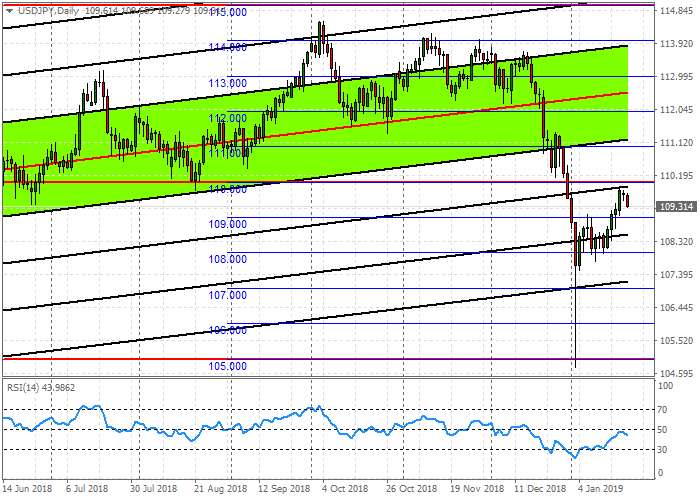
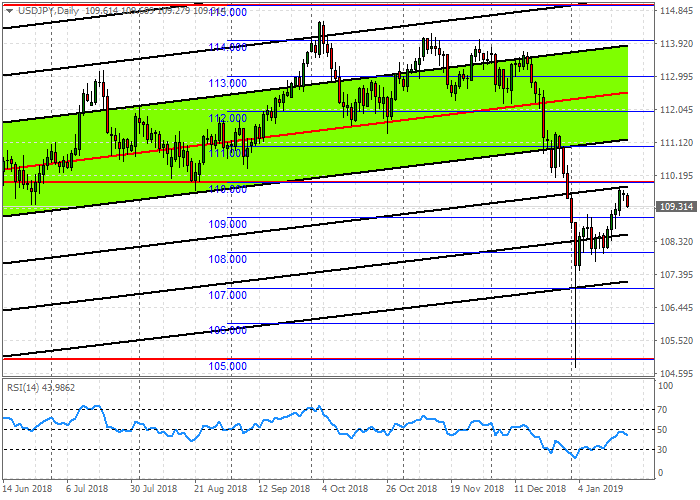
USDJPY could test 109.00 again after run-up post-flash crash

The US dollar is on the defensive against the Japanese yen today in forex trading after finding resistance below the 110 level over the past few trading days. The pair remains more than 2 standard deviations below the 200-day linear regression mean following the flash crash that happened on January 3rd and brought the pair sharply lower. #countingpips #forex #usdjpy #usd #investing #forextrading

From ASEAN Economic Development to Militarization

By Dan Steinbock

In Africa, the Trump administration is setting a precedent by replacing economic development with militarization. In Asia, it seeks to couple “rebalancing” in trade with a rearmament drive.

In a recent editorial, The Manila Times expressed concern that relatively benign economic conditions may lead to a false sense of security as “the United States-China trade war may be starting to inflict collateral damage on the economy.”

In the short-term, it is a valid concern for the Philippines and other ASEAN economies that currently benefit relatively benign economic conditions.

But even if the worst excesses of the trade war could be deterred, there are darker clouds in the longer-term horizon. The Trump administration’s new trade protectionism is accompanied by increasingly military stance. The new US Africa strategy heralds changes in other regions as well, particularly Asia.

Setting a precedent in Africa

In 2017, the United States had a $39.0 billion in total goods trade with Sub-Saharan African countries and a trade deficit of $10.8 billion. US investment in Africa grew in the Bush years. But in the Obama 2010s, it collapsed.

In the past, US Africa strategy focused mainly on economic cooperation and aid, and secondarily on military cooperation. In the new strategy, the focus is reversed. It downplays economic efforts to boost African prosperity. Second, it sees Africa mainly as a base of Islamic terrorism, which must be defused in the continent. Third, it will no longer support UN peacekeeping missions.

Meanwhile, China’s economic engagement with Africa has soared. In 2016, the value of China-Africa trade was $128 billion, almost three times more than US trade with the continent. Also, China’s Africa investment significantly exceeds that of the US. And China is a large source of aid and the largest source of construction financing, which supports Africa’s ambitious infrastructure development.

Perhaps that’s why US Africa strategy misrepresents China’s One Road and Belt (OBOR) initiative as a plan of “Chinese global dominance.” Since economic facts do not support the White House’s narrative, it relies on ideological trashing.

Unfortunately, similar developments loom ahead in Southeast Asia – a region that is far more important economically and strategically.

ASEAN economic development or trade wars

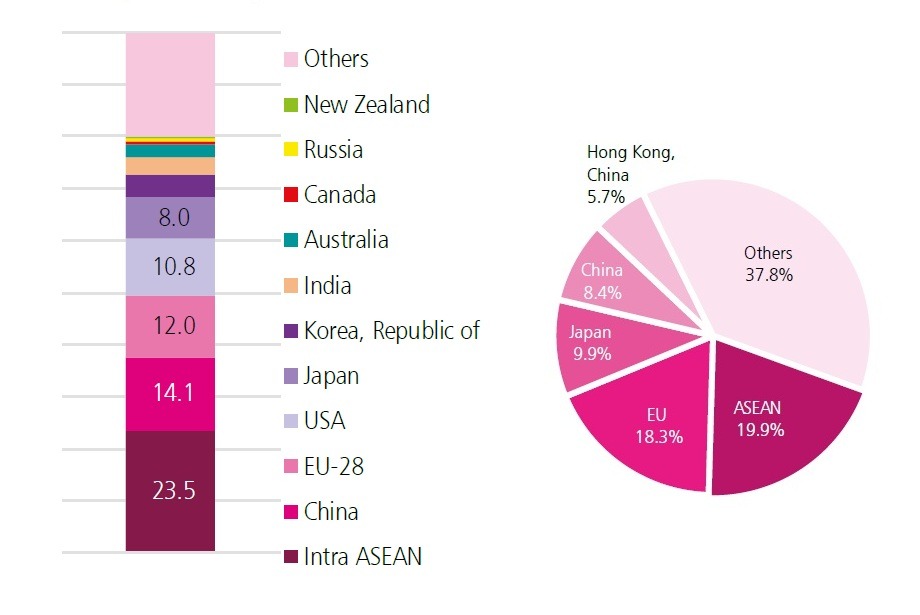
In the past decade or so, US economic engagement in ASEAN has fallen, while that of China has soared. According to US Trade Representative, US trade with ASEAN amounted to $234 billion in 2016; that’s six times more than with Africa. Yet, China trades with ASEAN soared to $515 billion in 2017.

Indeed, China trades with ASEAN (20%) almost as much as ASEAN economies trade with each other (22%). It is the same story with foreign direct investment (FDI). In 2017, China and Hong Kong accounted for some 15% of all FDI to ASEAN. US figure has plunged to less than 5% (Figure).

Figure    ASEAN’s Major Export and FDI Partners (Share, %), 2017

Merchandise Exports Values                        Foreign Direct Investment

Sources: ASEAN Database

Some observers argue that the US trade war will hurt China but may benefit ASEAN, thanks to redirected trade and investment. That’s a short-sighted view.  While some ASEAN countries may benefit in some sectors for some time, continued US-Sino tensions would overshadow the entire region for years to come.

Moreover, US trade with ASEAN is now subject to the ‘America First’ stance. As the Trump administration puts it, “we need ASEAN to do more for us.” The White House seeks “rebalancing” in ASEAN trade ties. It wants to negotiate deals bilaterally with each ASEAN economy – to maximize its leverage.

The US has a combined trade deficit of $92 billion with ASEAN countries; that is higher than its deficit with Mexico ($71bn), Japan ($69bn) or Germany ($65bn) – all of which have already been hit by the Trump administration’s new protectionism.

In ASEAN, the first targets will be those countries with which US has major trade deficit; i.e., Vietnam ($34 billion), Malaysia ($24 billion), Thailand ($20 billion) and Indonesia ($13 billion), followed by the Philippines and Cambodia. Some will seek exemptions, but they require strategic favors that may prove even costlier over time.

The drive to militarize ASEAN

U.S. overall stance toward the ASEAN is changing. Ever since Obama’s security pivot to Asia, Pentagon has been aiming to move 60% it’s warships into the region. The White House has revised its stance accordingly. In the new 2017 National Security Strategy, China is portrayed as America’s “adversary” rather than a partner.

An enemy – real or perceived – is vital for arms sales.

In 2017, military expenditure in Africa was $43 billion (SIPRI). In Asia and Oceania, it amounted to $477 billion, which is almost 11 times more. Southeast Asia alone spends on arms almost as much as Africa.

Pentagon already dominates sales to Australia, Japan, South Korea and Taiwan. Among the greatest arms importers in Southeast Asia, Indonesia buys a third of its military imports from the UK and US; Singapore more than two thirds from the US.

Pentagon wants more deals with Vietnam (which favors Russia), Thailand (which relies on Ukraine and China), and Myanmar (which prefers China and Russia). Outside ASEAN, US wants to sell more to India (which relies mainly on Russia).

As US economic engagement has fallen in the region, rearmament would offset the losses – but that can only happen at the expense of ASEAN’s economic future.

The way out

Ultimately, the White House’s changing stances toward Africa and Asia stem from the neoconservative Wolfowitz Doctrine, which in the early ‘90s deemed that the US goal must be “to prevent the re-emergence of a new rival, either on the territory of the former Soviet Union or elsewhere that poses a threat.”

That’s why, like US Africa strategy; American ASEAN strategy is likely to seek to militarize Asia Pacific, which has potential to divide the region. In both regions, the White House seeks to drive rearmament, mainly at the expense of economic development that China promotes. And in both regions, the White House shuns peace-keeping activities in which China is the world’s leading actor today.

Yet, what ASEAN needs is economic development. Destabilization and rearmament are the best way to undermine the quest for Asian Century. Catch-up growth and rising prosperity are not viable without peace and stability.

ASEAN does not need to choose between the US and China. Good diplomacy will choose both. Dishonest diplomacy will choose only one and trash the other.

About the Author:

Dr. Dan Steinbock is the founder of Difference Group and has served at the India, China and America Institute (US), Shanghai Institute for International Studies (China) and the EU Center (Singapore). For more, see http://www.differencegroup.net/


Japanese Candlesticks Analysis 22.01.2019 (EURUSD, USDJPY)

Article By RoboForex.com

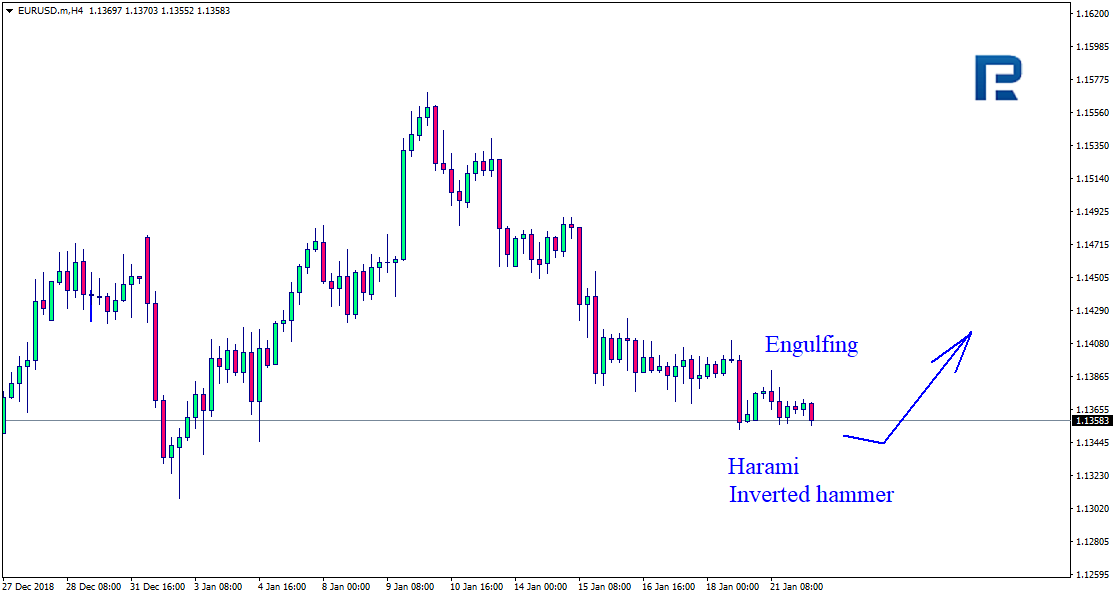
EURUSD, “Euro vs. US Dollar”

As we can see in the H4 chart, EURUSD is testing the support level and forming Harami, Engulfing, and Inverted Hammer reversal patterns. Judging by the previous movements, at the moment it may be assumed that after finishing the pullback the instrument may continue moving to the upside.

EURUSD
Risk Warning: the result of previous trading operations do not guarantee the same results in the future

USDJPY, “US Dollar vs. Japanese Yen”

As we can see in the H4 chart, USDJPY is still trading close to the resistance level and forming Shooting Star, Doji, and Hanging Man reversal patterns. Judging by the previous movements, at the moment it may be assumed that after completing the correction the instrument may continue its descending tendency.

USDJPY
Risk Warning: the result of previous trading operations do not guarantee the same results in the future

Article By RoboForex.com

Attention!
Forecasts presented in this section only reflect the author’s private opinion and should not be considered as guidance for trading. RoboForex LP bears no responsibility for trading results based on trading recommendations described in these analytical reviews.

Huge Backlog Could Trigger New Wave Of Shale Oil

By OilPrice.com

The number of drilled but uncompleted wells (DUCs) in the U.S. shale patch has skyrocketed by roughly 60 percent over the past two years. That leaves a rather large backlog that could add a wave of new supply, even if the pace of drilling begins to slow.

The backlog of DUCs has continued to swell, essentially uninterrupted, for more than two years. The total number of DUCs hit 8,723 in November 2018, up 287 from a month earlier. That figure is also up sharply from the 5,271 from the same month in 2016, a 60 percent increase. The EIA will release new monthly DUC data on January 22, which will detail figures for December.

Some level of DUCs is normal, but the ballooning number of uncompleted wells has repeatedly fueled speculation that a sudden rush of new supply might come if companies shift those wells into production. The latest crash in oil prices once again raises this prospect.

The calculus on completing wells can cut two ways. On the one hand, lower oil prices – despite the recent rebound, prices are still down sharply from a few months ago – can cause some E&Ps to want to hold off on drilling new wells. That may lead them to decide to complete wells they already drilled as a way of keeping production aloft while husbanding scarce resources. Companies that are posting losses may be desperate for revenues, so they may accelerate the rate of completions from their DUC backlog.

On the flip side, producers don’t exactly want to bring production online in a market that is subdued. “The lower oil price raises some questions about whether you go ahead with completing these wells,” Tom Petrie, head of oil and gas investment bank Petrie Partners, told S&P Global Platts. “Some companies want to get them in a producing mode; others say they won’t get an adequate return right now, so they’ll wait.”

Rob Thummel, managing director at Tortoise Capital Advisors, told S&P Global Platts that companies may have already started to work through some of their DUC inventory late last year. He suggests that the explosive production figures in 2018 seem higher than last year’s rig count justified. A higher rate of completions from already-drilled wells may explain the higher output levels.

However, the pipeline bottleneck in the Permian – which, to be sure, has eased a bit as some additional capacity has come online in recent months – could prevent a sudden rush of DUC completions. After all, the soaring number of DUCs was itself at least in part the result of the pipeline bottleneck.

A handful of new pipelines will add significant new pipeline capacity in the second half of 2019, after which more DUCs could be completed. Last summer, Pioneer Natural Resources’ CEO Timothy Dove warned in a conference call that oilfield services costs could increase when those pipelines come online because producers may rush to complete DUCs all at once.

“[T]hat could be another period of inflationary activity to the point where everyone is trying to get their DUC count reduced,” Dove said last August. “And so I would say the bigger risk inflation-wise is really past 2019. It’s really 2020 and 2021.”

The prospect of higher completion rates has ramifications for U.S. production levels. DUCs may keep U.S. oil production aloft at a time when low prices are starting to curtail drilling activity. The rig count has been flat for a few months, production growth has slowed, and growing number of companies are detailing slimmer spending plans this year.

That may ultimately translate into disappointing production figures. “As a result of the slide in oil prices over the past three months, operators have already started to guide down activity for 2019 compared to their initial plans to ramp up activity,” Rystad Energy wrote in a recent commentary. “Consequentially, we have lowered our expectations for oil production growth by about 500,000 bpd for 2020 and 2021, implying less need for takeaway capacity.”

But completing DUCs is low-hanging fruit. The cost of drilling a well accounts for 30 to 40 percent of the total cost, according to S&P Global Platts. As a result, companies deciding on whether to bring a DUC online has already incurred the drilling costs. A shale company may decide to scale back on new drilling this year because of low prices, but the rush of fresh supply from DUCs may allow output to continue to grow. Of course, any decline in new drilling will eventually be felt in the production data, but that may not show up until somewhere down the line. More completions from the DUC backlog could keep near-term production figures on the rise.

How this shakes out is anybody’s guess, but at a minimum, the explosion in DUCs over the past two years complicates oil production forecasts for this year.

Link to article: https://oilprice.com/Energy/Crude-Oil/Huge-Backlog-Could-Trigger-New-Wave-Of-Shale-Oil.html

By Nick Cunningham of Oilprice.com


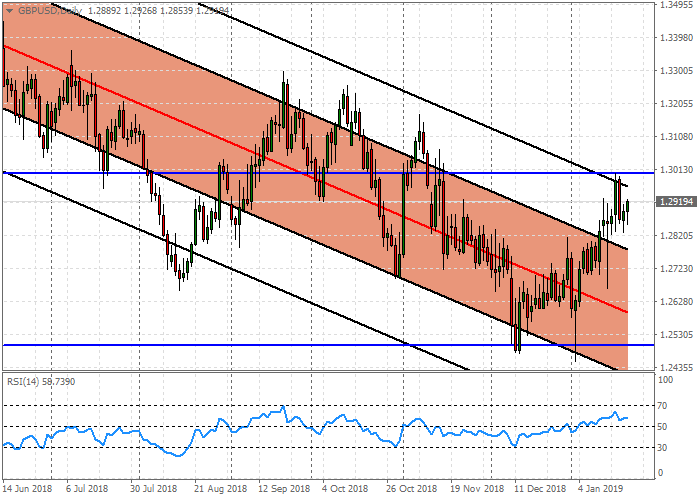
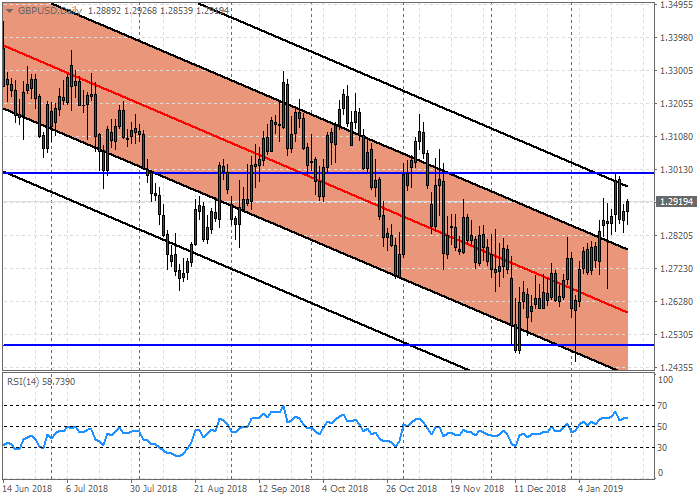
GBPUSD trends toward 1.30 despite Brexit Chaos

The British pound continues a run towards the 1.30 level despite the chaos surrounding the Brexit from the European Union. The currency pair is also approaching 2 standard deviations above the 200-day linear regression line (red) which can suggest the GBP is approaching an overbought level. The RSI indicator, however, is currently bullish but not confirming overbought levels meaning that trend may have some more room to test the 1.30 level. #forex #gbpusd #countingpips #usd #investing

Ichimoku Cloud Analysis 22.01.2019 (AUDUSD, NZDUSD, USDCAD)

Article By RoboForex.com

AUDUSD, “Australian Dollar vs US Dollar”

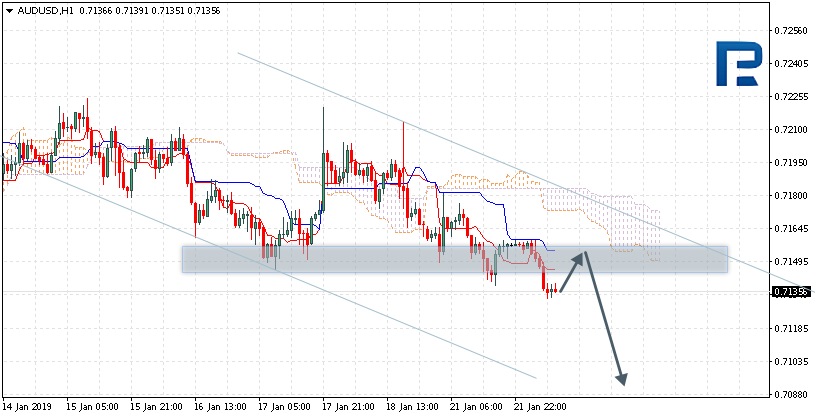
AUDUSD is trading at 0.7135; the instrument is moving below Ichimoku Cloud, thus indicating a descending tendency. The markets could indicate that the price may test Tenkan-Sen and Kijun-Sen at 0.7155 and then resume moving downwards to reach 0.7090. Another signal to confirm further descending movement is the price’s rebounding from the resistance level. However, the scenario that Implies further decline may be cancelled if the price breaks the upside border of the cloud and fixes above 0.7190. In this case, the pair may continue growing towards 0.7295.

AUDUSD
Risk Warning: the result of previous trading operations do not guarantee the same results in the future

NZDUSD, “New Zealand Dollar vs US Dollar”

NZDUSD is trading at 0.6717; the instrument is moving below Ichimoku Cloud, thus indicating a descending tendency. The markets could indicate that the price may test the downside border of the cloud at 0.6740 and then resume moving downwards to reach 0.6645. Another signal to confirm further descending movement is the price’s rebounding from the channel’s upside border. However, the scenario that Implies further decline may be cancelled if the price breaks the upside border of the cloud and fixes above 0.6765. In this case, the pair may continue growing towards 0.6905.

NZDUSD
Risk Warning: the result of previous trading operations do not guarantee the same results in the future

USDCAD, “US Dollar vs Canadian Dollar”

USDCAD is trading at 1.3321; the instrument is moving above Ichimoku Cloud, thus indicating an ascending tendency. The markets could indicate that the price may test the upside border of the cloud at 1.3290 and then resume moving upwards to reach 1.3405. Another signal to confirm further ascending movement is the price’s rebounding from the support level. However, the scenario that implies further growth may be cancelled if the price breaks the downside border of the cloud and fixes below 1.3265. In this case, the pair may continue falling towards 1.3175.

USDCAD
Risk Warning: the result of previous trading operations do not guarantee the same results in the future

Article By RoboForex.com

Attention!
Forecasts presented in this section only reflect the author’s private opinion and should not be considered as guidance for trading. RoboForex LP bears no responsibility for trading results based on trading recommendations described in these analytical reviews.