Russia, CIS to check banks for impact of euro crises-FSB

By www.CentralBankNews.info     Russia and other former Soviet republics will check the impact of the euro area debt crises on banks and consider possible policy responses along with peer reviews of the progress the countries are making in implementing financial reform, Financial Stability Board (FSB) said.
    Finance officials from the Commonwealth of Independent States (CIS) met earlier today in Moscow as part of the FSB’s regional consultative group for CIS and discussed policy priorities under Russia’s upcoming Group of 20 presidency, according to a statement from the FSB, the global body that monitors and coordinates financial regulation on behalf of G20 world leaders.
    Discussions also focused on the policy framework for domestic systemically important banks (D-SIBs) and the potential impact of financial reforms on emerging markets and developing economies.
    “Members agreed to conduct an analysis of the potential impact of the financial situation in some European countries on the region and possible policy responses,” the statement said.
     Members of FSB’s regional consultative group for the CIS include Russia, Ukraine, Armenia, Belarus, Kazakhstan, the Kyrgyz Republic and Tajikistan.

    www.CentralBankNews.info

Nearly all major nations to implement Basel III in 2013

By www.CentralBankNews.info     Nearly all major countries will be implementing new, stricter global banking rules by the end of 2013 even if some countries will not meet the deadline of January 1, the Basel Committee on Banking Supervision (BCBS) said.
    Following a two-day meeting of global banking supervisors in Basel, Switzerland, it’s chairman Stefan Ingves said 11 jurisdictions had now published final Basel III banking regulations that take effect on January 1, 2013 and seven other jurisdictions had issued draft regulations and indicated they are working towards issuing final versions as quickly as possible. Turkey will issue draft regulations early next year.
    “While some jurisdictions have not been able to meet the planned start date, a large number will be ready to begin introducing the new capital requirements as planned on 1 January 2013,” Ingves said in a statement.
    During 2013 the remaining jurisdictions will incorporate all remaining deadlines in their regulations in line with the original agreement, even if they didn’t meet the January 1 deadline, he said, adding:
    “Hence, by the end of 2013, almost all Basel Committee jurisdictions will be implementing Basel III in accordance with the agreed timetable. This is an absolutely critical step towards strengthening the resilience of the global banking system,” he added.


MLPs: The Ultimate Asset Class for 2013

By The Sizemore Letter

I saw a headline this week that really caught my eye: “Saudis Cut Oil Output to Lowest in a Year.”

Generally, Saudi Arabia cuts its oil output for one and only reason: demand has slackened due to a weak economy, causing the price to fall.  But then, that was before “fracking.”

The Saudi move to cut supplies has little to do with demand, as growth has been lackluster for most of 2012.  This time, it has everything to do with supply.  U.S. domestic oil production rose by 760,000 barrels per day this year—the biggest increase since records began being kept in 1859. And this is just oil; I’ve said nothing at all about natural gas, of which the United States now produces far more than it can use.

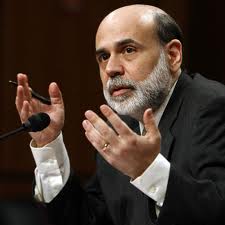
And in an unrelated story, Fed Chairman Ben Bernanke gave the markets a jolt this week by announcing that “QE Infinity” will be even larger than originally planned.  Rather than “only” buying $40 billion in mortgage securities per month, the Fed would also be buying $45 billion in Treasuries.  That’s $85 billion per month in new cash being dumped into the system.

Oh, and Bernanke also plans to keep short-term rates at zero until he sees the unemployment rate dip below 6.5%.

I bring up these two seemingly unrelated points for a reason.  The combination of higher volumes of domestic oil and gas being pumped and the loosest monetary policy in history should make mid-stream master limited partnerships one of the safest bets for 2013.  The fundamentals for domestic energy haven’t been this good in decades.  And as yield-sensitive investments, MLPs are a no-brainer in a world of zero interest rates.

Even better, we have a chance to buy them on the cheap.  The whole sector has taken a beating after the election due to fears of higher taxes coming.  Investors who have owned MLPs for years—and who had large unrealized capital gains—have decided to take their medicine today rather than wait for the inevitable.

Well, the end of the year is approaching fast, and the tax-loss selling should have mostly run its course.

Action to take: Buy the JPMorgan Alerian MLP Index ETN (NYSE: $AMJ).  Alternatively, if you are buying with the intention of holding for a while, assemble a portfolio of individual MLPs.

As with dividend paying stocks, there is often a trade-off between high current yield and prospects for growth.  Higher yielding MLPs often times have low expected distribution growth.  So keep that in mind when researching the sector.  And if you would prefer a “one stop shop,” then AMJ is a decent option that also happens to be IRA friendly.

Though this is website dedicated mostly to shorter-term trading, my recommended time horizon on these is longer-term.  I recommend holding MLPs for the duration of Bernanke’s “QE Infinity.”  That means holding until either the unemployment rate shows meaningful improvement or until inflation starts to creep up.   For risk management, consider something along the lines of a 15-20% trailing stop.

Disclosures: Sizemore Capital is long AMJ in its Strategic Growth Allocation.  This article first appeared on TraderPlanet.

SUBSCRIBE to Sizemore Insights via e-mail today.

The post MLPs: The Ultimate Asset Class for 2013 appeared first on Sizemore Insights.

Serbia raises policy rate 6th time this year to 11.25%

By www.CentralBankNews.info     Serbia’s central bank raised its policy rate by another 30 basis points to 11.25 percent and said its open market operations would be aimed at withdrawing excess dinar liquidity to restrain demand, which could impact the inflation and exchange rate.
    The National Bank of Serbia, which has raised its policy rate six times this year by a total of 1.75 percentage points since June, said food and administered prices will be the main factor driving the inflation rate in the foreseeable future and it expects the inflation rate to return to the bank’s tolerance band by end-2013.
    Serbia’s inflation rate eased to 11.9 percent in November from October’s 12.9 percent, but the bank said this was a temporary slowdown, noting the inflation rate remains above the bank’s target of 4.0 percent, plus/minus 1.5 percentage points.

    “In this regard, fiscal consolidation measures, which have already yielded initial effects, are yet to give their full contribution to the reduction in year-on-year inflation over the next year,” Serbia’s central bank said in a statement.

   The central bank has been raising rates to hold down inflation despite a slumping economy. 
    Serbia’s third quarter Gross Domestic Product contracted by an annual 2.2 percent, faster than the 0.8 percent shrinkage in the second quarter, and the central bank expects a 2.0 percent drop in GDP for the year. For 2013 the bank forecasts growth of 2.5 percent.

   Serbia’s central bank started the year by cutting its policy rate by 25 basis points as inflation was declining, but since May inflation has been rising rapidly and the bank started raising rates in June.
   

Euro Climbs against the Yen on EU Leaders Decision

Tradervox.com (Dubliln) – The 17-nation currency strengthened against the Japanese currency to 8-month high after the European Union leaders promised to seek joint strategy for dealing with failing banks. The move boosted the demand for the euro assets in the market. The single currency is headed for a weekly gain against the dollar as reports have indicated that EU leaders have agreed to commence work on a single resolve mechanism for the euro-region banks to help the European Central Bank supervisory role approved in their meeting yesterday. The yen was at its lowest level against the dollar since March after reports showed that business confidence in Japan slid to the lowest in three years. This has increased pressure on the Bank of Japan, to embark on more easing.

According to Audrey Childe-Freeman, who is a currency strategist in London at Bank of Montreal, the euro has advanced amidst positive news from the region’s leaders. He added that the yen has continued to weaken as we head closer to the election which is set to change the monetary policy in the coming year. Speculation and the not-so-good reports from Japan have also added to the currency’s decline this month. According to reports from the EU leaders meeting, they have urged the region’s banks to underwrite financial stability by repaying governments as required. Angela Merkel, the German Chancellor indicated that the resolution will not cost taxpayers, insisting that those responsible for the failures will shoulder the burden.

The 17-nation currency increased by 0.2 percent against the yen to trade at 109.58 at the start of trading in London, after climbing as high as 109.98, which is the highest it has been since April 2. The yen dropped by 0.2 percent against the greenback to trade at 83.78 yen per dollar. It had earlier dropped to 83.96, the lowest level since March 21.

Disclaimer
Tradervox.com is not giving advice nor is qualified or licensed to provide financial advice. You must seek guidance from your personal advisors before acting on this information. While we try to ensure that all of the information provided on this website is kept up-to-date and accurate we accept no responsibility for any use made of the information provided. Opinions expressed at Tradervox.com are those of the individual authors and do not necessarily represent the opinion of Tradervox.com or its management. 

Article provided by TraderVox.com Tradervox.com is a Forex News Portal that provides real-time news and analysis relating to the Currency Markets. News and analysis are produced throughout the day by our in-house staff. Follow us on twitter: www.twitter.com/tradervox

Pakistan cuts rate 50 bps to 9.5% as inflation falls fast

By www.CentralBankNews.info    Pakistan’s central bank cut its policy rate by 50 basis points to 9.5 percent as inflation is falling faster than expected and should end the fiscal year below the bank’s 9.5 percent target.
  The State Bank of Pakistan (SBP), which has now cut its policy rate by 250 basis points this year, said the economy’s output gap was almost negligible while food supplies were better this year than in the previous two years, resulting in a “sharply decelerating CPI inflation.”
    Pakistan’t inflation rate fell to 6.9 percent in November, a low for the year, from 7.7 percent in October, with food inflation dropping to 5.3 percent and non-food inflation at 8.1 percent.
    “This broad based deceleration in inflation is now expected to keep the average inflation for FY13 below the 9.5 percent target for the year,” the bank said in a statement after a meeting of its board of directors.
    Credit extended to private businesses remains muted and is “not encouraging despite a cumulative 400 basis point reduction in the policy rate over the last 16 months,” the bank said, adding the credit outlook for the year was not encouraging despite a seasonal pick up since mid-October.

    “The consistently low level of credit availed by the private sector together with declining foreign investments are the main factors responsible for a stagnant economy,” the SBP said.
    SBP’s foreign exchange reserves fell to $8.6 billion on Dec. 14 from $10.8 billion end-June and despite an external account surplus, the rupee has depreciated by 3.3 percent since the start of the fiscal 2013 year, the bank said.
   The International Monetary Fund forecasts a 3.7 percent growth in Pakistan’s economy this year, up from 3.0 percent in 2011.

    www.CentralBankNews.info

Market’s Fed Reaction “Could Be Worrying Sign for Gold” as “Bear Stance Supported by Price Move”

London Gold Market Report
from Ben Traynor
BullionVault
Friday 14 December 2012, 07:45 EST

SPOT MARKET gold prices looked to be headed for a third weekly loss in a row Friday lunchtime in London, after failing to break above $1700 an ounce, while stocks and US Treasuries were little changed on the day, with no signs of progress from Washington on the so-called fiscal cliff.

Silver was also headed for a third losing week in a row, trading around $32.60 an ounce for most of this morning, as other commodity prices gained slightly.

“A lack of activity has kept precious metals largely unchanged this morning,” says today’s commodities note from Standard Bank.

A day earlier, gold dropped back below $1700 an ounce Thursday, despite the US Federal Reserve committing to $45 billion a month in Treasury purchases the day before.

“The bulls were making the argument that the central bank would remain easy, at least until 2015, helping provide an element of support for gold,” says a note from Ed Meir, analyst at brokerage INTL FCStone.

“The bears countered that there would not be any additional easing in the pipeline between now and 2015, and also pointed out that the Fed did, after all, outline specific targets at which point it would start shrinking its bloated balance sheet…Thursday’s action seems to have supported the bearish stance.”

“It is perhaps a worrying sign that the latest installment of QE has had no positive impact on gold prices at all,” says a note from investment bank Natixis.

“No matter which side of the Fed argument one is on,” says INTL FCStone’s Meir, “we suspect that much of Thursday’s selling was also triggered by the fact that investors are becoming increasingly nervous about the lack of progress emanating from the fiscal cliff talks.”

President Obama and Republican House of Representatives speaker John Boehner had what statements from both parties called a “frank” meeting about the so-called fiscal cliff Thursday, adding that “lines of communication remain open” between the two.

No agreement has been reached on deficit reduction measures. Unless Congress passes new legislation, tax cut expiries and spending cuts worth an estimated $600 billion are due to kick in starting at the end of this month.

Barclays Capital meantime has cut its gold price forecast for 2013. BarCap forecasts gold will average $1815 an ounce next year, 2.4% down on the previous projection, while the investment bank’s forecast for silver is unchanged at $32.50 an ounce.

“We retain a positive view on the gold market,” a note from BarCap says, “but given gold’s outperformance during risk on intervals and our [foreign exchange] strategists’ expectation for the Dollar to strengthen beyond three months, we are revising down our forecast for 2013 modestly.”
Over in Europe, discussions on a common Eurozone budget and coordination of economic reforms among Euro members were put back until June next year Friday.

European Council president Herman van Rompuy issued a statement from the European Union summit in Brussels saying he will “present possible measures and a time-bound road map” at a summit in June next year.

Eurozone inflation meantime fell to 2.2% last month, down from 2.5% in October, according to official figures published this morning. US consumer inflation data are due to be published at 08.30 EST.

Demand to buy gold in physical bullion form has seen a resurgence in recent weeks, according to Standard Bank’s proprietary Gold Physical Flows Index.

Gold importers in the world’s biggest gold buying nation India continued to stock up Friday, newswire Reuters reports, to ensure adequate supplies for the wedding season.

“People feel this is a good buying opportunity as prices could jump another 1000 Rupees [per 10 grams],” says Harshad Ajmera at JJ Gold House.

Activity in China’s manufacturing sector meantime looks set to expand at a stronger pace this month compared to November, according to the provisional ‘flash’ purchasing managers index published by HSBC Friday.

China’s silver market meantime is “expected to achieve even further growth in coming years” on both the demand and supply side following a decade of rapid expansion, according to a report produced by precious metals consultancy Thomson Reuters GFMS and published by the Silver Institute Thursday.

“China is now the world’s second largest silver fabricator and is likely to become the second largest producer, with its share of global demand and supply standing at 17% and 14% respectively,” the report says.

Ben Traynor
BullionVault

Gold value calculator   |   Buy gold online at live prices

Editor of Gold News, the analysis and investment research site from world-leading gold ownership service BullionVault, Ben Traynor was formerly editor of the Fleet Street Letter, the UK’s longest-running investment letter. A Cambridge economics graduate, he is a professional writer and editor with a specialist interest in monetary economics. Ben writes and presents BullionVault’s weekly gold market summary on YouTube and can be found on Google+

(c) BullionVault 2012

Please Note: This article is to inform your thinking, not lead it. Only you can decide the best place for your money, and any decision you make will put your money at risk. Information or data included here may have already been overtaken by events – and must be verified elsewhere – should you choose to act on it.


German Data Set to Generate Euro Volatility Today

Source: ForexYard

After taking moderate losses during overnight and early morning trading yesterday, the euro was able to resume its upward trend later in the day. The common-currency’s bullish movement came largely as a result of risk taking due to recent monetary easing actions taken by the US Federal Reserve. As markets get ready to close for the weekend, traders will want to pay attention to the German Flash Manufacturing PMI, set to be released at 08:30 GMT, with a better than expected result likely to help the euro further.

Economic News

USD – US Core CPI May Impact Dollar Pairs Today

The US dollar was able to resume its recent bullish trend against the Japanese yen yesterday, amid speculations that the Bank of Japan will initiate a new round of monetary easing following elections this Sunday. The USD/JPY gained close to 20 pips during the European session to trade as high as 83.52. After losing some 30 pips against the British pound during the first part of the day, the greenback was able to stage a modest recovery following a better than expected US Unemployment Claims figure. The GBP/USD fell some 15 pips after the unemployment report was released, eventually reaching as low as 1.6128.

Today, dollar traders will want to keep an eye on the US Core CPI figure, scheduled to be released at 13:30 GMT. Should the figure come in above the forecasted 0.2%, the dollar could see additional gains vs. currencies like the GBP and JPY before markets close for the weekend. Conversely, a worse than expected CPI result may result in dollar losses. Additionally, attention should be given to a batch of euro-zone news. Risk taking could weigh down on the greenback if any of the indicators come in above their predicted levels.

EUR – German Indicators Poised to Give Euro Additional Boost

The euro resumed its upward trend during mid-day trading yesterday, as investor risk taking combined with the announcement of a new round of quantitative easing in the US boosted higher-yielding assets. The EUR/USD gained more than 40 pips toward the end of European trading, eventually reaching 1.3085, just below a one-week high. Against the British pound, the common-currency also came within reach of a one-week high after gaining some 20 pips to trade as high as 0.8110.

Today, euro traders will want to pay attention to several German indicators, specifically the Flash Manufacturing PMI and Flash Services PMI. Earlier in the week, the euro saw significant gains following a better than expected German ZEW Economic Sentiment figure. If either of the German indicators shows growth in the euro-zone’s biggest economy today, the euro could see additional gains before markets close for the weekend.

Gold – Gold Reverses Earlier Losses

After tumbling more than $30 an ounce earlier in the week, gold prices were able to stage a modest recovery during afternoon trading yesterday. Analysts attributed the bullish movement to the euro’s gains vs. the USD, which made gold cheaper for international buyers. By the end of European trading, the precious metal was trading just below the $1700 level.

Today, gold traders will want to pay attention to a batch of German news, set to be released at 08:30 GMT. Should the news result in further gains for the EUR/USD, gold could see additional gains during mid-day trading.

Crude Oil – Crude Oil Gains amid Risk Taking

The price of crude oil was able to gain more than $0.60 a barrel during mid-day trading yesterday, following the release of a better than expected US Unemployment Claims figure, which signaled further improvements in the US labor sector. By the end of European trading, the commodity was trading at the $86.70 level.

As markets get ready to close for the weekend, oil traders will want to pay attention to the US Core CPI figure, set to be released at 13:30 GMT. If the indicator comes in above the forecasted 0.2%, oil prices could see advance further during the afternoon session.

Technical News

EUR/USD

The Bollinger Bands on the weekly chart are narrowing, indicating that this pair could see a price shift in the coming days. Furthermore, the Williams Percent Range on the same chart is approaching the overbought zone, signaling that the shift could be downward. Traders may want to open short positions for this pair.

GBP/USD

While the Relative Strength Index on the daily chart is approaching the overbought zone, most other long-term technical indicators show this pair range trading. Taking a wait and see approach may be the best choice at this time, as a clearer picture is likely to present itself in the near future.

USD/JPY

Both the Williams Percent Range and Relative Strength Index on the weekly chart are currently in overbought territory, signaling that this pair could see a downward correction in near future. Furthermore, the Slow Stochastic on the same chart is close to forming a bearish cross. Opening short positions may be the best choice for this pair.

USD/CHF

The daily chart’s Bollinger Bands are narrowing, indicating that a price shift could occur in the near future. Furthermore, the Williams Percent Range on both the daily and weekly charts is approaching the oversold zone, signaling that the shift could be bullish. Opening long positions may be the smart choice for this pair.

The Wild Card

USD/MXN

The Williams Percent Range on the daily chart has dropped into oversold territory, indicating that an upward correction could occur in the near future. Furthermore, a bullish cross has formed on the same chart’s Slow Stochastic. This may be a good time for forex traders to open long positions ahead of possible upward movement.

Forex Market Analysis provided by ForexYard.

© 2006 by FxYard Ltd

Disclaimer: Trading Foreign Exchange carries a high level of risk and may not be suitable for all investors. There is a possibility that you could sustain a loss of all of your investment and therefore you should not invest money that you cannot afford to lose. You should be aware of all the risks associated with Foreign Exchange trading.


EUR/USD: Greek Bailout Approval and Banking Supervision Deal Buoying the Euro

Article by AlgosysFx

Optimism that the Euro Zone is making headway in resolving the debt crisis is believed to continue buoying the Euro opposite the US dollar today. Yesterday, EU officials struck an accord to create a single policeman to oversee important banks in the bloc and finally gave their nod to the immediate release of bailout loans to Greece. Meanwhile, vital gauges of the Euro Zone economy on tap for release today are likely to suggest that the region’s economy is steadily recovering from its slump.

European Union finance ministers achieved a landmark deal early yesterday that would bring many of the continent’s banks under a single supervisor, a move governments hope will be a major step toward solving the three-year-old debt crisis. The ministers said the ECB would begin supervising the most important and vulnerable banks in the Euro Zone come March 2014. As soon as it takes over, the ECB will be able to compel banks to increase their capital buffers and even close down unsafe lenders. Analysts say that with the deal in place, the Euro Zone has passed the first step to a banking union which is designed to cut the link between struggling banks and their governments.

In another dose of positive developments, Euro Zone ministers finally agreed to the immediate release of 34.4 Billion Euros of aid to Greece, with another 14.8 Billion Euros following by the end of March. The approval followed a successful bond buyback this week, which has halved the amount of bonds outstanding. The Eurogroup expressed confidence that a continuation of fiscal and structural reforms undertaken by the government will allow the Greek economy to return to a sustainable growth path. The development has managed to significantly cool down talks of a “Grexit” or Greek exit from the Euro. Instead, Prime Minister Antonis Samaras says the country now holds a major chance to exit from the crisis.

Today, market attention will likely be on key updates on the Euro Zone economy in the form of manufacturing and services activity gauges. Continuing the optimism, slight improvements in the figures for December are estimated. The French Flash Manufacturing PMI is set to rise from 44.5 points to 44.9 points to suggest a slower contraction while the French Services PMI is predicted to remain unchanged at 45.8 points. In Germany, its Manufacturing PMI is deemed to rise from 46.8 points to 47.1 points while its services sector is foreseen to have returned to an expansion with its PMI believed to improve from 49.7 points to 50.0 points in December. For the whole currency bloc, the Flash Manufacturing PMI looks set to increased from 46.2 points to 46.6, while the Flash Services PMI is projected to edge up by 0.3 points to 47.0. Amid such positive developments, a long position is advised for the EUR/USD today.

For more news, analysis, technical charts and candlestick analysis, visit AlgosysFx Forex Trading Solutions

Market Trends 14.12.12

Source: ForexYard

printprofile

Hey Everyone,

Below are some market trends for today.

Good luck!

-Dan

Gold- May see downward movement today
Support- 1686.21
Resistance- 1714.31

Silver- May see downward movement today
Support- 32.15
Resistance- 32.99

Crude Oil- May see downward movement today
Support- 86.01
Resistance-87.32

Dax 30- May see upward movement today
Support- 7534.29
Resistance- 7630.56

EUR/USD May see upward movement today
Support- 1.2989
Resistance- 1.3147

Read more forex news on our forex blog

Forex Market Analysis provided by ForexYard.

© 2006 by FxYard Ltd

Disclaimer: Trading Foreign Exchange carries a high level of risk and may not be suitable for all investors. There is a possibility that you could sustain a loss of all of your investment and therefore you should not invest money that you cannot afford to lose. You should be aware of all the risks associated with Foreign Exchange trading.