Why Smartwatch Technology is This Decade’s Minidisc

By MoneyMorning.com.au

I read this in an article on The Age website the other day:

Smartwatches, which connect to your smartphone, are going to create an entirely new category of computing in the coming year," said Sarah Rotman Epps, a former Forrester analyst who specializes in wearable computing. She noted that the long-awaited Apple smartwatch, which is expected to be announced in 2014, could change the way we engage with our wrist in the same way Apple changed the cellphone industry in 2007.

The bit that had me in tears was ‘…could change the way we engage with our wrist in the same way Apple changed the cellphone industry in 2007.

The way in which we engage with our wrist? Are you kidding me? That’s just utterly ridiculous.

Every analyst, forecaster and predictor has his or her view on technology. And that’s okay. But I’m pretty sure the only time humanity has ever engaged with their wrist is through slap bands and telling the time.

Of course the argument will be, ‘Well you didn’t realise how much you needed this until it was invented.’ That was pretty much the reasoning behind every Steve Jobs product release.

But let me clear one thing up. It’s a part of human nature to make life easier for ourselves. That’s why we invented things like the toaster, the car, the PC and doors. They all make life easier.

The smartphone too makes life easier. It’s a mini supercomputer in your pocket. Now the smartwatch comes along and purports to do what a smartphone does…on your wrist. Remember, humans want to make life easier, not more difficult, right?

So here’s my challenge. Take a watch, any watch. If you already have a smartwatch, put that on. But a boring old analogue watch will do. Now put it on. Now imagine typing a text message on the face of that watch. Hmmmm…

How about an email? Or even better try and take an imaginary photo with the face of that watch. If you’re a professional contortionist the last problem doesn’t apply to you.

Let me make this simple for you if you haven’t done any of the above. A smartwatch does one thing really well. Tell the time. It also does a lot of other things rather poorly, or average…maybe satisfactory at best.

But typing an email, sending a text message, taking a picture…snapchatting, tweeting, vineing, and instagramming? These things would be next to impossible. (Note: most smartwatches can’t do any of those things anyway).

‘But Sam, a smartwatch will have voice recognition technology. So that solves the email, texting issue.’

Does it?

Ever been on a packed tram, train or bus? Think about broadcasting to the world your personal text messages in a crowd of 100. Maybe at pub with some mates and your girlfriend/boyfriend is texting you. Feel like telling everyone how much you miss ‘Snookum’ or ‘Lovey Love’?

You get the picture.

For what it’s worth I have a smartwatch. It’s the Sony SmartWatch 2. It’s a handy bit of kit for telling me the time and checking part emails and part text messages without getting my phone out of my pocket. But that’s it!

No smartwatch will ever replace the mini supercomputer in my pocket. Smartwatches from Apple, Samsung, Microsoft and whoever else might get a lot of headlines this year. But so did Minidisc when it came out. Revolutionise music it will, put an end to big record labels it must…nope. It didn’t.

MP3′s and the RIO, Zune and iPod came along to end that little blip on the radar.

Or then there’s the wonderfully promising yet ultimately pointless technology, the QR code. Great idea…pointless execution. When you think about it, how does it make your life any easier at all? Open an app to line up a square barcode that takes you to a website.

How about open up your web browser and go to the website? See what I mean? Technology is supposed to make life easier, better, more efficient. QR codes don’t do that. The Minidisc didn’t either.

Smartwatches will have the same fate. The common claim is it will replace your smartphone. Nope, same situation. Technology will move faster than it takes smartwatches to get interesting.

Google Glass, Vuzix, and Recon Jet are some visual devices that will streak past the Smartwatch within the next year or so. And there will be others that come to market that currently don’t even exist. The future is one of ‘Immersive Technology’ that will reshape the way day-to-day life happens for everyone.

In fact, you can already buy Vuzix and Recon Jet. Then of course there are implantable chips, electronic tattoos and bendable, printed plastic electronics. These are technologies that, although they might seem scary and even a little crazy, are the ones that will add more benefit to day-to-day life than a fancy watch.

Technology rarely stands still. Sometimes the timing just doesn’t fit for some technologies. Smartwatches are one where you’ll look back in a couple years and think, ‘That was good kit but ultimately pointless.’

It’s technology for technology’s sake. And that never works.

Regards,
Sam Volkering+
Technology Analyst

Publisher’s Note: Before the Christmas holiday we mentioned that we were exploring the idea of launching a free daily technology eletter edited by Sam Volkering. In order to gauge the demand for such a service we asked readers to complete a short survey. The results are in and the response is unequivocal — 94.9% of respondents said they would read the letter if we launched it.

Clearly there’s a strong demand for information and analysis on what’s happening in the tech world today and what could happen in the future. And so, to meet that demand we’ve decided to give the project a green light. We’ll give you more details over the next two weeks, including the name of the new eletter, the topics Sam will cover, and how you can subscribe to it.

Stay tuned for more details…

Special Report: 574 Years in the Making

Join Money Morning on Google+


By MoneyMorning.com.au

Three Hot Small-Cap Sectors for 2014

By MoneyMorning.com.au

In my career recommending investments, I’ve worked with some of the sharpest minds in the business.

I’ve drilled hyper-educated Wall Street analysts about their financial models.

I’ve dealt with some of the most ferocious floor traders in London’s Square Mile.

I’ve sat at the table with CEOs of companies from Beijing to Boston.

And I’ve advised smart self-funded retirees on how to manage their portfolios through volatile markets.

I’ve chosen to work in the global financial markets because I’m passionate and curious about what drives them. And now I’m bringing this experience to the Australian Small-Cap Investigator team.

Why?

Because this market is full of brilliant small-cap opportunities. I couldn’t have picked a better time to join.

So today by way of introduction, I’d like to share with you the three sectors of the Australian market I’m most excited about for 2014.

But before I do that, let me run you through the points of my background that qualify me to steer readers of Australian Small-Cap Investigator to the best small companies trading on the ASX.

I hold a Bachelor of Commerce and a Bachelor of Science from the University of Melbourne, with majors completed in Finance and Physics.

People often tell me that Science and Commerce is a funny combination. I disagree. The analytical skills you need to measure subatomic particles in a lab are surprisingly similar to the skills you need to size up markets and forecast cashflows.

I’ve also completed Level 1 of the Chartered Financial Analyst (CFA) program. The CFA is the gold standard for investment specialists worldwide.

After my studies I took a role in the London office of a global investment bank. It was my job to analyse every sector of the global economy and scour the US markets for investment prospects. I learned how fund managers operate, and what’s more, I learned the ways that individual investors can stay one step ahead. I’m looking forward to sharing these lessons with readers in the coming weeks and months.

Before I joined Kris’s team as the small-cap analyst, I was an investment adviser with an Australian stockbroking firm. During this time I worked with one of Australia’s most highly regarded small-cap advisory teams. Together we unearthed and analysed emerging companies, generated quality trading ideas and delivered these ideas to private investors just like you.

The key lesson I’ve learned during my time in the markets is that the small-cap space is the only place you’ll find turbo-charged stock returns. In the context of a global economy that’s ‘just going’, there’s only one way to grow your portfolio in leaps and bounds. I’m talking about carefully selecting shares in businesses that are busy penetrating, innovating and consolidating.

Those are the opportunities I love to find, and that’s why I’m so excited to join Kris and his team. Now for my top three small-cap sectors for 2014…

Technology

Innovation never stops.

Barely a month goes by without news of that fact.

Another industry disrupted. Another middleman cut out of the game. Another piece of high technology entering the hearts, minds and households of ordinary Australians.

We’ve known for a while that Australia boasts a wealth of creative know-how in technology. Wise investors are now cottoning onto the opportunities this creates.

In 2013, the money and backing available to early-stage start-ups took a great leap forward. Groups like Rampersand, Square Peg Capital and Tank Stream Ventures are queuing up to support small companies with good ideas.

Even Telstra and Optus are seeking a slice, with both recently unveiling new technology start-up incubators.

In my view this flow will continue in 2014, and the prospects for select Tech stocks should improve accordingly.

If you’ve acted on Kris’s stock tips in the Tech sector, such as AdSlot and BigAir, you should have seen strong growth in 2013. I’m looking forward to crunching the numbers and leading you to some more exciting Tech stocks that should become household names in 2014 and beyond.

Small Financials

I’m sure you’ve followed the fortunes of the big four banks with great interest in 2013.

Revenues, earnings and dividends all going from strength to strength.

Stock prices surging on the back of low interest rates and an insatiable thirst for dividend yield.

If you’ve been along for the ride, you’ve done well. So well, in fact that valuations have blown out to a massive premium versus the global banking peers.

I believe the major banks will struggle to deliver the level of earnings in the future that’s implied by share prices today.

I like smaller firms that are flexible enough to embrace alternative lines of business. I’m talking about anything from purchasing non-performing debt, to short-term lending, to coming up with innovative structured transactions. In other words: places where the big banks fear to tread.

These are the spaces where nimble, aggressive firms can rack up amazing growth in a matter of months.

Agriculture

Food security has been gaining momentum as an Australian investment theme for some time now.

It’s not hard to see why. The megatrends are well-documented.

Emerging economy diets are becoming more intensive. This means fewer cereals and more meat, dairy, sugar and oils. These economies are leading the growth in global demand for food.

According to the United Nations Food & Agriculture Organisation, between 2010 and 2040, the world will consume as much protein as it has throughout history until now. That’s an astonishing statistic. It demands attention in an agricultural exporting nation like ours.

Who can guarantee supply for this enormous unmet demand?

Will it be companies like Australia’s fourth-largest milk processor, Warrnambool Cheese & Butter, where patient investors have made a mint as the battle for control has reached fever pitch?

Or will it be other, smaller companies who understand the challenges of disease, quality and food security?

The companies best-placed to benefit from the rise of Asian consumption are largely unknown today. Watch this space as I investigate innovative little companies with guts, foresight and first-mover advantage. Their stock trades at just cents in the dollar today, but these are the companies that could crack the Asian export enigma and generate massive returns for your portfolio.

These are the corners of the market that are getting me energised right now. There are so many opportunities in this market that I don’t believe any investor has an excuse for being on the sidelines.

Here’s to a happy, successful and prosperous 2014.

Tim Dohrmann,
Small-Cap Analyst, Australian Small-Cap Investigator

Ed Note: The above article is an edited extract from an update published on 6 December to readers of Australian Small-Cap Investigator.

Join Money Morning on Google+


By MoneyMorning.com.au

New Trend Guarantees Higher Gold Prices

By Jeff Clark, Senior Precious Metals Analyst, Casey Research – New Trend Guarantees Higher Gold Prices

If you’re like me, you’ve bought gold due to the money printing policies of most developed countries and the effect those policies will have on the future purchasing power of our paper money. Probably also because there’s no viable way for governments to escape the consequences of all the debt they’ve piled up. And maybe because politicians can’t be trusted to formulate a realistic strategy to avoid any number of monetary, fiscal, or economic crises going forward.

These are valid, core reasons to hold gold in a portfolio at this point in time. But a new trend is under way, and someday soon it will be just as much a driving force for gold prices as anything else: a good old-fashioned supply crunch.

A few metals analysts have mentioned it, but it escapes many and certainly is off the radar of the mainstream financial media. But unless several critical factors reverse course, a supply shortage is on the way with clear implications for the price of gold.

The following four factors are combining to diminish gold supply. While we’ve touched on some of them before, put together they’re creating a perfect storm that will, sooner or later, impact the gold market in several powerful ways. As these forces gather steam, you’ll want to make sure you’ve already built a substantial position in physical bullion.

Factor #1: Production Pullbacks, Development Delays, Exploration Cancelations

Gold producers don’t operate in a vacuum. If the price of their product falls by 30% over a two-year period, they’ve got to make some adjustments. And those adjustments, more often than not, result in lower production, delayed mine development plans, and cuts in exploration budgets. The response is industrywide, and even low-cost producers are not immune.

The drop in metals prices means some mines can’t operate profitably, and if the losses exceed the cost of closure (and possibly, restart in the future), these mines will be shut down. As operations come offline, global output falls.

While lower metals prices are not what any of us want, they’re long-term bullish because, as they say, the cure for low prices is low prices. If prices drop further, a greater number of projects will be unable to maintain production levels. For example, we know of several operating mines that, in spite of large reserves, will be forced offline if the gold price falls to the $1,100 level.

The impact on development and exploration projects is even greater—it’s easy to postpone construction on tomorrow’s new mine when you’re worried about cash flow today. As a result, many companies have cut drilling projects and laid off geologists.

The chart below shows the precipitous decline in the number of drilling projects around the world.

Through the first nine months of 2013, 52% fewer drills have been turning compared to the same period last year. And it’s not just fewer holes being poked in the ground—ore grades are declining too.

As of last year, ore grades of the ten largest gold operations are less than a third of what they were just five years ago, and less than a quarter of what they were 14 years ago.

Here’s the troubling aspect: This trend cannot be easily reversed.

It takes about a decade to bring new projects on line, and even shuttered, recently producing mines held on “care and maintenance” take time and money to get going again.

In other words, even when gold prices start rising again, new mine supply will take years to rebuild. Many companies will find themselves with a lack of readily available ore, and the market with fewer ounces.

Lower metals prices obviously have an impact on how much metal gets dug up. This alone is bad enough for supply, but unfortunately it’s not the only factor…

Factor #2: Now You See ‘Em, Now You Don’t

Many mining projects have both low-grade and high-grade zones. When prices fall, a company can mine the richer ore and still make money. It may sound shortsighted, but it can be the right thing to do to stay profitable and be able to survive in a temporarily weak price environment.

But high-grading, as it’s called, can make low-grade ore part of a disappearing act. Here’s how:

When metals prices are low and companies focus on high-grade ore, the low-grade material is temporarily bypassed. It’s still physically there, so one might assume the company will come back at a later time to mine it. But not only is it not economic at lower metals prices, it may never get mined at all.

That’s because some low-grade ore only “works” when it’s mixed with high-grade ore. Even when gold moves back up, it doesn’t matter, because the high-grade ore is gone. So it’s not just gone legally, as per regulatory definitions of mining reserves—it may be economically gone for good.

Miners could return to some of these zones in a very high gold price environment (something well north of $2,000), but that’s a concern for another day. The point for now is that many of today’s low-grade zones would be written off if the high-grade they need to work is gone.

Critical point: You may read reports early next year that global production is rising. However, to the degree that’s due to high-grading, it virtually guarantees lower production is around the corner.

Factor #3: Greed Is Good—Says the Politician

It’s become increasingly difficult for mining companies to navigate the political minefield. Many governments have become so rapacious that supply is already suffering.

We’ve mentioned this issue before, but take a look at how governments and NGOs (nongovernment organizations) put an effective halt to some of the biggest precious metals discoveries seen this cycle…

Pebble Project in Alaska. Anglo American (AAUKY) spent $540 million on one of the biggest copper/gold discoveries ever, but recently announced that it will walk away from it. The company said it wants to focus on lower-risk projects and is undoubtedly tired of putting up with ongoing environmental scares and regulatory delays.

Fruta del Norte in Ecuador. Kinross Gold (KGC) bought Aurelian shortly after what many called the discovery of the decade, but the politicos demanded such a big slice of the pie that Kinross stopped developing the project.

New Prosperity Mine in British Columbia. Taseko Mines (TGB) has been relentlessly challenged by environmental activists at the world’s tenth-largest undeveloped gold/copper deposit and pushed politicians to continually delay permitting.

Pascua-Lama in Argentina & Chile. This giant deposit has been postponed for several years, largely due to environmental issues and unmet regulatory requirements. Some analysts think it may never enter production.

Navidad in Argentina. Pan American Silver (PAAS) was forced to admit that the Navidad silver deposit—one of the world’s biggest silver-primary deposits—was “uneconomic at any reasonable estimate of long-term silver prices” when the local governor announced he wanted “greater state ownership” and increased royalties from 3% to 8%.

Minas Conga in Peru. Newmont’s (NEM) multibillion-dollar project was put on the back burner last year when the government gave the company two years to develop a way to guarantee water supplies for residents of the Cajamarca region.

Certainly bigger projects attract greater attention and scrutiny, but as it stands now, none of the above projects are in operation.

This list is by no means exhaustive; large numbers of smaller projects all around the world face similar challenges.

The bottom line is that finding economic gold deposits in pro-mining jurisdictions is getting increasingly difficult. The result? The metal stays in the ground.

Factor #4: Implosion Explosion

As you’ve likely read, the gold mining industry in South Africa is imploding.

  • Labor strife: Strikes are common, and layoffs have numbered in the thousands this year.
  • Rising costs: Labor and power costs have doubled since 2009. Some projects have been taken off line due to the one-two punch of higher costs and lower metals prices.
  • Maturing assets: Many mines in South Africa are past their heyday and have forced companies to dig deeper. The deepest mine is now 2.4 miles below surface and takes workers a full hour to reach the bottom.
  • Power inefficiencies: Electricity shortages are at their worst in five years. Poor power supply has led to blackouts and mining stoppages, and has made expansion difficult.
  • Political interference: The industry has faced frequent calls for nationalization. Miners were told earlier this year they can stay private, though in exchange they were forced to pay higher taxes. How gracious of the politicians.

The breakdown in South Africa is important because as recently as 2006, it was the world’s top producing country; it’s now #5. Unfortunately, there’s every reason to expect this trend to continue, in many countries around the world.

The result is—you guessed it—fewer ounces come to market.

These four factors are already affecting gold supply. Gold production in the US was already 8% lower in the first half of 2013 vs. the first half of 2012. Through June of each year, output dropped from 655,875 ounces last year to 623,724 in 2013.

The net result of this perfect storm is that we should expect gold supply to decline until prices are much higher. Even when prices do rise, management teams will be reluctant to expand operations, reopen mines, or buy new projects until they feel the new price level is sustainable. As a result, this trend will almost certainly last several years.

Based on the research we’ve done, it is my opinion that after a bump in output early in 2014, the shortfall will become increasingly evident by the end of the year and reach fractious levels by 2015.

If demand remains at current levels, or even if it falls by less than the decrease in supply, gold and silver prices will be forced up. And in an environment of currency depreciation, we should see more demand, not less. We have the makings of a classic supply squeeze.

Higher metals prices are not the only ramification, however: Investors will be required to pay higher premiums on bullion. Further, we can expect a lack of available product, most likely resulting in delivery delays or even rationing.

That’s why it’s so important to buy bullion now, before the storm. Even if you need to sell a little to maintain your standard of living, the effects on you will be all positive. The product you sell will…

  • Fetch much higher prices
  • Return the premium you paid—perhaps more than you paid
  • Have a steady stream of ready customers

All it takes to capitalize on this opportunity is to recognize the supply shortage that’s on the way and act accordingly.

Critical point: Buy the physical gold and silver you think you’ll need for the future NOW.

One of the best places I know has among the lowest premiums available in the industry, and also offers several international storage locations in case things get bad in your home country. This breakthrough program is as liquid as GLD and offers greater safety than storing bullion at home. Click here to find out more.


Uganda holds rate steady, to ensure inflation around target

By CentralBankNews.info
    Uganda’s central bank held its Central Bank Rate (CBR) steady at 11.5 percent but said it “shall take appropriate action to ensure that annual core inflation remains around the policy target of 5 percent in the medium term.”
    The Bank of Uganda, which cut its rate by 50 basis points in December, said it still assesses the risk to the inflation outlook to the upside despite better-than-expected inflation in the last few months.
    “Monetary policy therefore has to balance current modest inflation outturn against the likelihood that inflationary pressures will rise over the medium term,” the bank said.
    Uganda’s inflation rate eased to 6.8 percent in November from 8.1 percent and the bank said headline inflation eased further to 6.7 percent in December, reflecting mainly the decrease in transport and communication, beverages and tobacco prices.
    Annual core inflation fell to 5.7 percent in December from 7.0 percent in November.
    The bank forecasts inflation will edge further down in the near term, but rise to 6.5-7.5 percent in the latter part of 2014, with the rise depending on the exchange rate, changes in commodity prices and the degree to which economic activity spills over into cost and price pressures.

    www.CentralBankNews.info


Murray Math Lines 03.01.2014 (AUD/USD, EUR/JPY, SILVER)

Article By RoboForex.com

Analysis for January 3rd, 2014

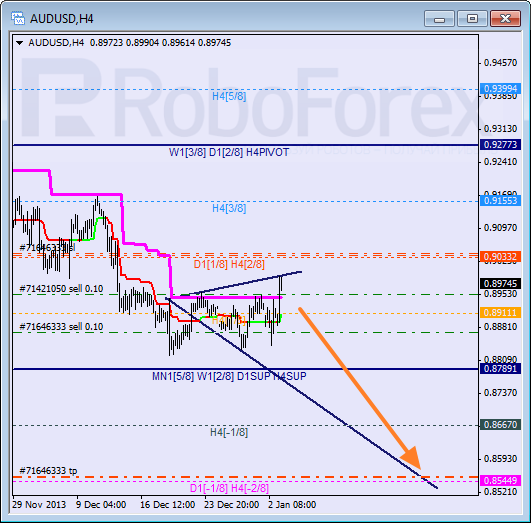
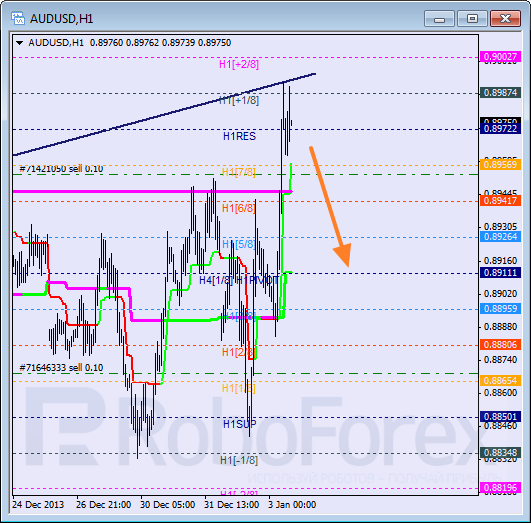
AUD/USD

Australian Dollar is still being corrected; price broke daily Super Trend and may not start new descending movement. However, if price isn’t able to stay above daily Super trend for a long time, pair may start falling down again. Bears are also supported by Wolfe wave.

At H1 chart, price is moving inside “overbought zone”; Super Trends have already formed “bullish cross”. If pair breaks Super Trend downwards, I’ll increase my long positions with target at new minimums.

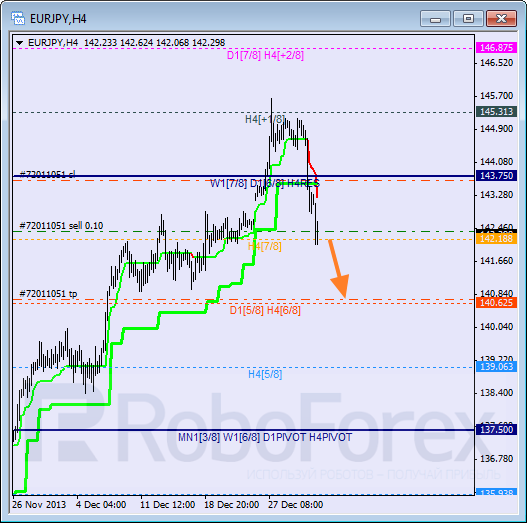
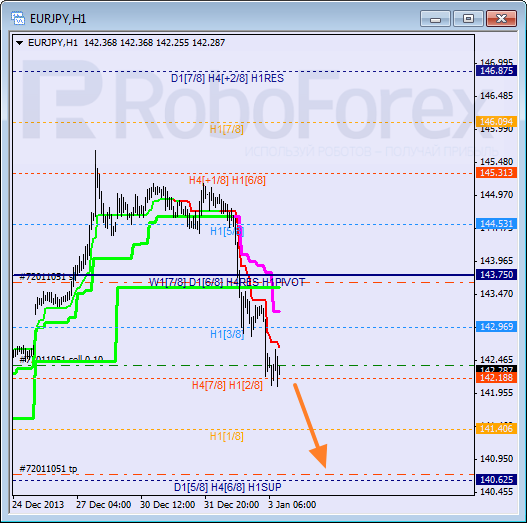
EUR/JPY

EUR/JPY us starting new correction. Price broke the 8/8 level, and Super Trends formed “bearish cross”. Most likely, in the nearest future pair will continue falling down towards the 6/8 level.

At H1 chart, price is already moving above the 3/8 level and may continue falling down towards the 0/8 one. Right now, market is being corrected and I’ve decided to open short-term sell order. If price rebounds from H1 Super Trend, market will continue falling down.

SILVER

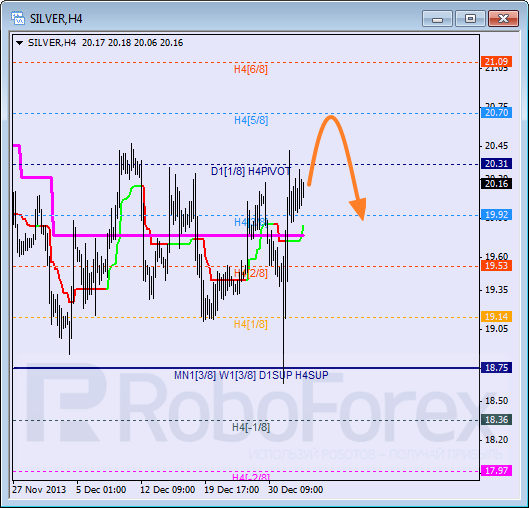
Silver rebounded from the 0/8 level and right now is already moving near the 4/8 level. Possibly, price may try to test the 5/8 level during the day. If price rebounds from it and stays below Super Trends, instrument may start new descending movement.

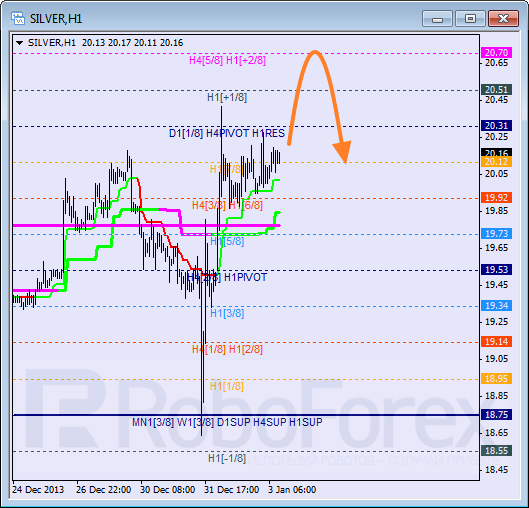
At H1 chart, price rebounded from the 8/8 level several times. Possibly, Silver may enter “overbought zone” during the day, but if price isn’t able to stay inside it, bears may return to the market.

RoboForex Analytical Department

Article By RoboForex.com

Attention!
Forecasts presented in this section only reflect the author’s private opinion and should not be considered as guidance for trading. RoboForex LP bears no responsibility for trading results based on trading recommendations described in these analytical reviews.


WTI Crude Trades Close to Lowest Level on Fed-Taper Fears

By HY Markets Forex Blog

WTI crude traded close to its lowest level in a month, as market participants continue to speculate that the Federal Reserve (Fed) will begin to scale-back its monthly bond purchases this year, after signs of improvement in the world largest economy.

Futures were flat after yesterday’s 3% drop, the biggest fall since Nov, 2012. Investors are focused on how quick the Federal Reserve would begin to scale-back on its bond purchases after a string of data released yesterday revealed the US jobless claims declined, while the manufacturing climbed. According to analysts, US crude stockpiles dropped for the fourth time in a row in five weeks.

“It’s a reaction by the market to the surge in the U.S. dollar due to the tapering expectation that really caused WTI to plunge” yesterday, said Victor Shum, IHS Energy Insight’s Vice President.“Weaker currencies for consuming countries make oil look expensive, that’s why there is an inverse relationship between the move in the U.S. dollar and moves in oil futures,” he added.

West Texas Intermediate for February delivery came in at $95.31 per barrel on the New York Mercantile Exchange at the time of writing. It declined $2.98 to 95.44% a barrel yesterday, the lowest since December 2.

While the European benchmark Brent crude climbed by 0.1% to $107.93 a barrel on the ICE Futures Europe exchange, the crude was at a premium of $12.62 to WTI.

WTI Crude – US Economy

The Labour Department posted the US jobless claims which showed a drop by 2,000 to 339,000 last week. The US Manufacturing expanded in December; the Institute for Supply Management’s factory index came in at 57.

The Federal Reserve’s Chairman Ben S. Bernanke confirmed the Fed would begin to scale-back its bond purchases this year because of the progress and improved outlook in the job market. The Fed will reduce its monthly bond purchases from $85 billion to $75 billion, starting this month.


Win a luxurious trip to the Maldives & up to $30,000 cash for trading with us!

Visit for details http://alturl.com/2kysk 

The post WTI Crude Trades Close to Lowest Level on Fed-Taper Fears appeared first on | HY Markets Official blog.

Article provided by HY Markets Forex Blog

USD/JPY: Yen Climbs From Five-Year Low

By HY Markets Forex Blog

The yen rose against the greenback on the last day of the trading week, as the US dollar dropped from its five-year high in spite of the string of positive data released from the world’s largest economy.

The Japanese yen edged 0.46% higher at 104.31 yen at the time of writing. The yen was poised ending the first week of the year, rising as much as 0.9% against the US dollar at the time of writing.

The EUR/JPY currency pair was seen lower, as the Japanese yen rose 0.58% higher to ¥142.38 against the euro. The session opened at around ¥143.30, the yen dropped to ¥142.07 later during the day.

Last year the Japanese yen dropped by 24.6% against the US dollar, marking its largest annual drop since 1979 and worst annual performer among its peers.

Japan’s Prime Minister Shinzo Abe started to follow the ‘three arrows policy’ targeted at reviving and sustaining the economic growth of the country.

Japan is expected to increase its sales tax from 5% to 8% by April and to 10% by next year. The central bank are predicted to ease its monetary policy further, as market analysts forecast the nation’s yen will decline throughout 2014.

USD/JPY – US Dollar

A string of data’s were released from the world’s largest economy, from the US jobless claims which revealed a better-than-expected results and the Manufacturing Purchasing Mangers’ Index (PMI), which expanded in December for the seventh consecutive month in a row.

The data’s was driven by the outlook that the Federal Reserve (Fed) would begin to taper its $75 billion monthly bond purchases this year.


Visit www.hymarkets.com   to find out more about our products and start trading today with only $50 using the latest trading technology today.

The post USD/JPY: Yen Climbs From Five-Year Low appeared first on | HY Markets Official blog.

Article provided by HY Markets Forex Blog

Friday Charts: Rebalancing Acts, Billionaires in the Prairies and the Toughest Question for 2014

By WallStreetDaily.com Rebalancing Acts, Billionaires in the Prairies and the Toughest Question for 2014

Why use lots of words when a handful of pictures will suffice?

That’s the philosophy I embrace each Friday when I share a few graphics to put important economic and investing news into perspective for you.

So, like a wrecking ball (sans Miley Cyrus), here comes the first edition of 2014′s Friday Charts

The Bull Gets Gored… or Not

Remember when everyone feared that a Fed taper would abruptly end the bull market?

Well, the Fed announced a taper in December… and stocks kept hitting new highs.

And remember when everyone feared that interest rates rising above 3% again would put a stop to runaway stock prices?

Not so much…

In the final week of 2013, 10-Year Treasury yields hit a two-and-a-half-year high at 3.02%. Yet stocks maintained their upward momentum…

“The market loves to prove people wrong,” says Bespoke Investment Group. Indeed!

So, loyal readers, let’s conduct a little experiment, shall we?

I present to you the toughest question for 2014: What do you think will finally gore this bull market?

Submit your best guess to us here. (I just hope you’re ready to be proven wrong.)

Billionaires Flocking to the Prairie

Who needs Swiss bank accounts when we have South Dakotan dynasty trusts?

You see, according to Bloomberg, in the past four years, the amount of money sheltered from the long arm of the IRS in the state tripled to $121 billion.


“We have a tax haven in our midst,” says Edward McCaffery, a professor at the University of Southern California’s Gould School of Law.

You think?

If borrowing costs for the federal government keep rising, which they will, it’s only a matter of time before Sioux Falls becomes the hot topic in Washington, D.C.

Enough with the observations, though. It’s time for an opportunity…

No College Degree Required

We all know that betting on dropouts pays off. Think Bill Gates with Microsoft (MSFT) and the late Steve Jobs with Apple (AAPL).

Now, here’s a new twist on the phenomenon, courtesy of Ryan Detrick at Schaeffer’s Investment Research.


In 2013, the 11 stocks that were dropped from the all-tech index, the Nasdaq, ended up schooling the new entrants. More specifically, they rallied an average of 56.8% – a full 22 percentage points more than the companies added to the index.

What’s more impressive is that only one of the dropouts, BlackBerry Limited (BBRY), fell in price for the year.

If this trend rings true in 2014, too, the latest stocks to get the boot from the Nasdaq – Fossil Group (FOSL), Microchip Technology (MCHP), Nuance Communications (NUAN), Sears Holdings (SHLD) and DENTSPLY International (XRAY) – could be big winners this year.

Fundamentally speaking, I think Sears is a sucker’s bet. However, I think Nuance could easily double (hint, hint).

If you’re reluctant to follow my lead, follow a billionaire’s, instead. Carl Icahn recently upped his stake in Nuance by almost $725,000.

Tech & Innovation Daily’s Chief Technology Analyst, Marty Biancuzzo, loves the company, too. As he pointed out last month, “Nuance possesses one of the most robust intellectual property portfolios around, with nearly 1,500 U.S. patents and another 348 patent applications.”

That’s it for today. Before you go, though, don’t forget to tell us when you think this bull market will finally end by going here.

Ahead of the tape,

Louis Basenese

P.S. In case you didn’t get the memo, we’re on Twitter. Follow me @LouBasenese.

The post Friday Charts: Rebalancing Acts, Billionaires in the Prairies and the Toughest Question for 2014 appeared first on Wall Street Daily.

Article By WallStreetDaily.com

Original Article: Friday Charts: Rebalancing Acts, Billionaires in the Prairies and the Toughest Question for 2014

Follow the M&A Money to Small- and Mid-Cap Cardiovascular Medtechs: Jason Mills

Source: George S. Mack of The Life Sciences Report (1/2/14)

http://www.thelifesciencesreport.com/pub/na/follow-the-m-a-money-to-small-and-mid-cap-cardiovascular-medtechs-jason-mills

Some investors’ eyes glaze over at the mention of medical devices. But it’s time to wake up and focus on the stunning growth opportunities in small- and mid-cap cardiovascular medtech. Canaccord Genuity Managing Director Jason Mills covers companies on the front lines of innovation and in sectors where the trifecta of revenue, margins and reimbursement is achieving biotechlike levels. In this interview with The Life Sciences Report, Mills opens the new year with a discussion of the cardiovascular medtech industry and mentions companies that are probable acquisition candidates.

The Life Sciences Report: As the very first person interviewed in 2014 for The Life Sciences Report, your coverage looks to be very timely.

Jason Mills: It’s an honor to be first in 2014. I’m hopeful that it’s going to be a great year.

TLSR: You focus on the cardiovascular industry. What distinguishes cardiovascular from other industries inside medtech?

JM: In cardiovascular medtech, you are primarily dealing with the gold standard of randomized, controlled clinical studies, which offer the best clinical evidence that a medical device company can attain. Cardiovascular devices are also reimbursed at a higher rate because of the cost of the chronic conditions that they target. In addition, the U.S. Food and Drug Administration (FDA), by and large, requires premarket approval (PMA) applications because the products are often unique. In other areas of medtech, devices may be approved under a 510(k) premarket notification pathway or a supplementary approval pathway, which require less time and less clinical study. I should say that not every cardiovascular device requires a PMA, but the biggest market opportunities do, in most cases.

TLSR: Can you elaborate on the approval process in your coverage universe? If a company has, for example, a left ventricular assist device (LVAD) that it is marketing for infants, and it is miniaturizing that device, would that require a PMA, or could it go through a shorter 510(k) pathway?

JM: If a company is miniaturizing an LVAD, it is essentially changing that device. That’s happened quite a bit in this industry, where innovation has been fast and furious over the last seven to 10 years. BothThoratec Corp. (THOR:NASDAQ) and HeartWare Inc. (HTWR:NASDAQ) are coming out with some fantastic medical technology in mechanical circulatory support. These companies are looking to make their pumps smaller, less invasive to implant and more durable over time, with fewer adverse events.

Whether in infants or adults, miniaturization of pumps is a trend. Miniaturization is not only moving forward in the cardiovascular sector—it’s the trend throughout medtech in general, because the surgery required to implant smaller devices is less invasive. Minimally invasive surgery is a major trend as well, and will continue to be. Both trends are certainly apropos to LVADs.

On the other hand, if a company is seeking approval for a device that’s already on the market and is being used in a specific patient population, the FDA may not require a full-blown investigational device exemption (IDE) clinical trial and PMA for a different patient population. But the agency may require some sort of clinical data.

Pathways to approval for miniature devices are similar to those for any medical device designed to be implanted in the body. If an LVAD is significantly or materially different in the way that it is configured, or the way it moves blood, it will probably require an IDE and randomized clinical studies.

TLSR: Small-cap cardiovascular medtechs have significantly outperformed large-cap cardiovascular medtechs over the past year. Can the risks of the smaller caps be justified to attain these higher returns?

JM: Yes. I believe the risk—if we call it risk—in the small-cap cardiovascular medtech group is justified. I have a greater affinity for growth companies, and the group I focus on is composed of small- and mid-cap medical device stocks. Growth, by and large, resides within the small- and mid-cap sector. That’s true across the board, in cardiovascular medtech as well as in diabetic or orthopedic medtech, which my Canaccord partner, Bill Plovanic, covers very well. I believe the risk is justified, and that appreciation is going to continue.

TLSR: How do growth rates compare between the small- and mid-caps and the large caps?

JM: The median topline growth rate among large-cap companies—those that have a $7 billion ($7B) market cap or more—is at 4%. The median growth rate in mid-cap companies, those at $1–7B in market cap, is about 7%. The median growth rate in all the small caps—those under $1.5B—is more than 10%. When you look at a sample of the best in small-cap medtech, you’re looking at 40% growth—and there are only about 10 companies in medtech in general, including in diagnostics, growing the topline more than 20%. Revenue growth and gross margin expansion are key factors to consider when valuing a medical device company and, especially, a small- to mid-cap medical device company.

TLSR: Why do you believe that growth and share-price appreciation are going to continue in the small- and mid-cap space?

JM: Money goes where growth is in medical devices. The primary reason large-cap medtech companies don’t have small-cap-type growth is that, over the last 20 years, the larger caps have acquired or developed devices in sectors that have been penetrated at significantly higher rates than newer sectors. The newer growth sectors include transcatheter aortic valves, mechanical circulatory support, renal denervation and transcatheter mitral valves, which are coming down the pike. Other growth sectors include abdominal aortic aneurysm (AAA), fluorescent imaging and atrial fibrillation (AF). Innovation in these areas is in small-cap companies. What you have is a dichotomy between large players that need growth and small companies that have it.

TLSR: With such low growth in the large-cap medtechs, they surely must be thinking about acquiring growth. Is that where you’re going with your theme?

JM: The overriding theme in medtech over the next five years will be merger and acquisition (M&A). Medtechs will consolidate. The large-cap guys need growth, and I don’t think they will develop it quickly enough internally. Large caps are going to look more and more to external sources, acquiring the growth that they need to drive share price appreciation over time via acquisition.

TLSR: You and I last spoke in April 2012. You said there was deep value in medtech for investors. You were right, and congratulations on that. Have we already seen the bulk of that move in small- and mid-cap cardiovascular medtech in 2013, or is more left?

JM: There are still good stocks to buy, which will appreciate over time, but it’s going to be less of a group move. That said, investors should look at companies with the best growth profiles, coupled with the best gross margin profiles. If you’re seeing consistently strong or accelerating topline growth, and consistently strong or expanding gross margins, those stocks have the best chance of appreciating from today’s levels, which are up quite nicely over the last two to three years. We’re still not at the peak medtech valuations we saw prior to the financial crisis. I’m not suggesting we’ll get back there, but it’s entirely possible that multiple expansion in medtech will continue. And if we do see consolidation in this space, valuable assets will become fewer and farther between.

TLSR: Cardiovascular medicine has been very successful, both on the drug side and the medtech side, and it has been an excellent model of how to employ preventive medicine, including diet, exercise and the use of statins and antihypertensives. Interventional therapies and the new advancements in electrophysiology have helped patients greatly, and they are living longer. What should investors be looking at in this growing market?

JM: Heart patients and older patients are living in an age of significant transformation and advancement in medical devices. Many will use these devices and technologies over the course of the next 10–20 years. A case in point is transcatheter aortic valves. As patients age, their aortic valves calcify and don’t work very well. That is a leading indicator on the heart failure continuum: If the heart valves aren’t working and the heart is not pumping blood efficiently, that’s essentially the definition of heart failure. The advent of transcatheter aortic valves, used when patients are either too frail, too sick or too old to have a full-blown sternotomy and open-heart surgery, means these patients can now derive benefit from a new aortic valve via a minimally invasive catheter-based technology.

TLSR: Jason, would you address minimally invasive, transcatheter mitral valve technology?

JM: That’s coming down the pike. Edwards Lifesciences Corp. (EW:NYSE) and Medtronic Inc. (MDT:NYSE) are spending millions of dollars over the next five years on development of a transcatheter mitral valve. I believe it will be developed—and it will be a dramatic paradigm change in the treatment of mitral valve disease, which is one of the most frequently diagnosed heart problems in the world and more prevalent than aortic valve disease.

Transcatheter device technology has gotten more durable, and the devices are less invasive to implant. You must have both of those features to accommodate older patient populations. I believe that, going forward, we shall see transformational, paradigm-changing medical devices achieve good success in big markets.

TLSR: Jason, talk to me about further innovation and where we are seeing it. What about mechanical circulatory support, for instance?

JM: We shall continue to see improvements in circulatory support, as well as penetration into the end-stage heart-failure patient market for mechanical circulatory support. In my estimation, less than 10% of the patient population can benefit from those devices. On the heart-failure continuum, there is more development and innovation in treatment of class III heart failure using pumps or medical devices.

One example is the non-blood contacting device called the C-Pulse Heart Assist System, from Sunshine Heart Inc. (SSH:NASDAQ). HeartWare just acquired a company, CircuLite Inc., which has a miniaturized pump for class III heart failure patients. Many class III patients have aortic valve and mitral valve disease, with transcatheter valve technologies available or in development for both of those conditions.

TLSR: Sunshine Heart’s C-Pulse is approved in Europe, but is in pivotal clinical trials in the U.S. You obviously like the company, because you have a $14.75 price target on it. What’s the value proposition?

JM: At the end of the day, if C-Pulse proves to be an efficacious therapy for class III heart failure patients, the value proposition would be tremendous. The company’s risk profile is higher than that of other medical device companies because we haven’t seen as much data for this device, as we have for other potentially paradigm-changing medical devices. But the risk-reward, in my view, is favorable. If this device, in the clinical trial that Sunshine Heart is running here in the U.S., meets its endpoint, the market opportunity for the C-Pulse will be three or four times bigger than the market opportunity for class IV-targeted LVAD technology.

One of the reasons HeartWare bought CircuLite is that CircuLite essentially targeted the same patient population as Sunshine Heart. That acquisition validated the Sunshine Heart’s market opportunity. Sunshine Heart has a long way to go, and must prove that its device has a definitive impact on cardiac output. Early feasibility data suggests that it might, but the data isn’t definitive. However, if the device proves efficacious, the opportunity for this company, with only a $167 million ($167M) market cap, is tremendous.

TLSR: Another area?

JM: I think there will be more innovation on the atrial fibrillation (AF) side. Atrial fibrillation—both persistent and paroxysmal AF—is one of the most undertreated chronic conditions in the world. I cover a company, AtriCure Inc. (ATRC:NASDAQ), that’s doing a lot of training, education and product development in AF, which is a huge market.

TLSR: AtriCure reached your target price of $16 in a hurry. Could you address the value proposition there?

JM: The AF market is significantly underpenetrated. AtriCure is the only medical device company with an FDA approval to treat AF surgically, which has been proven to be the best treatment for chronic AF, otherwise known as longstanding persistent atrial fibrillation.

The market is a multibillion-dollar opportunity. With the only FDA approval in that indication, AtriCure has been able to go out and train physicians to do this procedure the same way across the board, which is resulting in better clinical outcomes. The company also has a product to treat concomitant left atrial appendage (LAA) condition, which dovetails nicely with its surgical ablation platform for AF. LAA is a culprit in stroke, and there are a lot of links between AF and stroke.

AtriCure is also spending money on clinical trials to address other patient populations. I think the company has a significantly strong value proposition. If I had to rank companies that have the highest probability of being acquired, AtriCure would be at the top of the list.

TLSR: Is there another area you’d like to mention?

JM: Investors should pay attention to developments in the treatment of peripheral artery disease (PAD). We are seeing a number of interventions to treat blockages in the legs, growing at or just below 10%. PAD is a chronic problem that affects patients’ quality of life, and is related to amputations. For patients who have an amputation, the five-year survival rate is very poor. I cover Spectranetics (SPNC:NASDAQ), which is developing innovative technologies there.

TLSR: Can you address developments in the aneurysm sector?

JM: There is a lot of room for device improvement and continued expansion of devices to treat both thoracic and abdominal aortic aneurysms. That market is growing and should benefit from demographics, as aneurysms are more prevalent in older age groups. Endologix Inc. (ELGX:NASDAQ)and some private companies are doing great work in that field. It could be interesting for investors.

TLSR: Endologix has a $1.1B market cap. Could you address the value proposition there?

JM: The company’s growth profile is among the best in medtech. Given aging demographics, AAA will continue to see growth, on the order of at least 5% a year in our estimation. Endologix has two potential paradigm-changing devices, and its gross margin profile is also among the best in medtech. Its management team is very strong as well. I think that Endologix has a bright future, whether as an independent company or as part of a larger organization.

TLSR: Back on Dec. 3, the company announced it was going to offer $75M in convertible senior notes plus an $11.25M greenshoe. It didn’t want to leave any money on the table. There seemed to be no specific reason for raising the money. Can you comment on that?

JM: Capital is very important in sustaining the growth of small-cap companies. Endologix has some very expensive clinical trials upcoming, so I don’t think the financing was a bad move. It doesn’t need the money right now, but I can’t say that the environment for raising capital is going to get significantly better. If the company believes it’s going to be independent for the next five years, we may look back two years from now and say it was a brilliant move.

TLSR: Can you discuss innovation in imaging?

JM: Interesting developments are occurring in the imaging market, whether it be cardiovascular imaging or general surgery imaging—giving the physician a better perspective prior to surgery, intraoperatively (during surgery), and postoperatively.

Advances in intraoperative imaging are changing the way surgeries are done, allowing them to be minimally invasive and completed more quickly. I cover a company called Novadaq Technologies Inc. (NVDQ:NASDAQ), which has technology in fluorescent imaging that demonstrates not only the ability to drive better clinical outcomes, but is also saving costs for hospitals because there are fewer complications after surgeries. The number of repeat operations is down where Novadaq’s fluorescent technology is being utilized.

TLSR: I’m noting a company called Vascular Solutions Inc. (VASC:NASDAQ) in your coverage.

JM: Vascular Solutions is doing fantastic work, participating in niche markets in cardiovascular and radiological medical devices to help interventional cardiologists and radiologists do better interventional procedures.

TLSR: You made a note in a report on Vascular Solutions back on Dec. 9 indicating that the company had gotten an early Christmas present in an injunction to prohibit Boston Scientific Corp. (BSX:NYSE)from using its technology. Protecting intellectual property (IP) is a persistent problem in medtech. What is going to be the upshot of this?

JM: This IP issue is subject to a trial that is set to commence sometime in H1/15. But this injunction is very important and positive for Vascular Solutions—and, frankly, for the whole industry. When you have a patent on an innovation that has clearly augmented the ability of a physician to deliver care to a patient, and it’s unique, it deserves patent protection. That’s one of the critical pillars on which our country is built.

It is gratifying to see a court of law uphold IP that has traveled the appropriate pathway to patents. I say this because a lot of innovation in medtech happens at small, entrepreneurial companies. This injunction is an indication that the large players aren’t going to be allowed to copy technologies developed by smaller companies, which happens all the time. If we continue to see this trend, it will dovetail nicely with my theme, which is that over the next five years you’ll see massive M&A in medtech, to the extent we haven’t seen in 30 years. If, in fact, large companies can’t copy the innovation of smaller companies, their only option is to buy the smaller companies. That’s the way our country and our sector should work.

TLSR: Jason, it’s such a pleasure speaking with you. I wish you a happy new year.

JM: You too George, and thanks for spending time with me.

Jason Mills is managing director at Canaccord Genuity. He joined Canaccord from First Albany Capital, where he was managing director and senior analyst covering the medical devices sector, with a specific focus on the areas of cardiovascular disease, ophthalmology and sleep disorders. Mills previously served as a vice president and senior research analyst with Thomas Weisel Partners, where he covered companies in the ophthalmology and sports medicine/arthroscopy sectors. Mills holds a master’s degree in sports administration from Ohio University and a bachelor’s degree in economics from Yale University.

Want to read more Life Sciences Report interviews like this? Sign up for our free e-newsletter, and you’ll learn when new articles have been published. To see a list of recent interviews with industry analysts and commentators, visit our Streetwise Interviews page.

DISCLOSURE:

1) George S. Mack conducted this interview for The Life Sciences Report and provides services to The Life Sciences Report as an independent contractor. He or his family own shares of the following companies mentioned in this interview: None.

2) The following companies mentioned in the interview are sponsors of Streetwise Reports: None. Streetwise Reports does not accept stock in exchange for its services.

3) Jason Mills: I own, or my family owns, shares of the following companies mentioned in this interview: None. I personally am, or my family is, paid by the following companies mentioned in this interview: None. My company has a financial relationship with the following companies mentioned in this interview: Spectranetics, Sunshine Heart Inc., Vascular Solutions Inc. To view full disclosures, click here. I was not paid by Streetwise Reports for participating in this interview. Comments and opinions expressed are my own comments and opinions. I had the opportunity to review the interview for accuracy as of the date of the interview and am responsible for the content of the interview.

4) Interviews are edited for clarity. Streetwise Reports does not make editorial comments or change experts’ statements without their consent.

5) The interview does not constitute investment advice. Each reader is encouraged to consult with his or her individual financial professional and any action a reader takes as a result of information presented here is his or her own responsibility. By opening this page, each reader accepts and agrees to Streetwise Reports’ terms of use and full legal disclaimer.

6) From time to time, Streetwise Reports LLC and its directors, officers, employees or members of their families, as well as persons interviewed for articles and interviews on the site, may have a long or short position in securities mentioned and may make purchases and/or sales of those securities in the open market or otherwise.

Streetwise – The Life Sciences Report is Copyright © 2013 by Streetwise Reports LLC. All rights are reserved. Streetwise Reports LLC hereby grants an unrestricted license to use or disseminate this copyrighted material (i) only in whole (and always including this disclaimer), but (ii) never in part..

Streetwise Reports LLC does not guarantee the accuracy or thoroughness of the information reported.

Streetwise Reports LLC receives a fee from companies that are listed on the home page in the In This Issue section. Their sponsor pages may be considered advertising for the purposes of 18 U.S.C. 1734.

Participating companies provide the logos used in The Life Sciences Report. These logos are trademarks and are the property of the individual companies.

101 Second St., Suite 110

Petaluma, CA 94952

Tel.: (707) 981-8204

Fax: (707) 981-8998

Email: [email protected]


Japanese Candlesticks Analysis 03.01.2014 (EUR/USD, USD/JPY)

Article By RoboForex.com

Analysis for January 3rd, 2014

EUR/USD

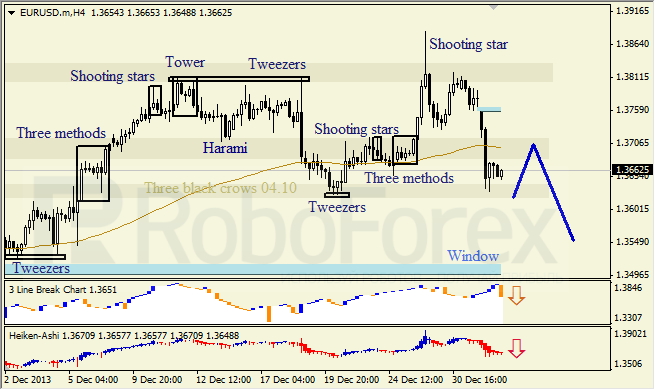
H4 chart of EUR/USD shows descending movement, which is indicated by Shooting Star pattern. Three Line Break chart and Heiken Ashi candlesticks confirm bearish tendency.

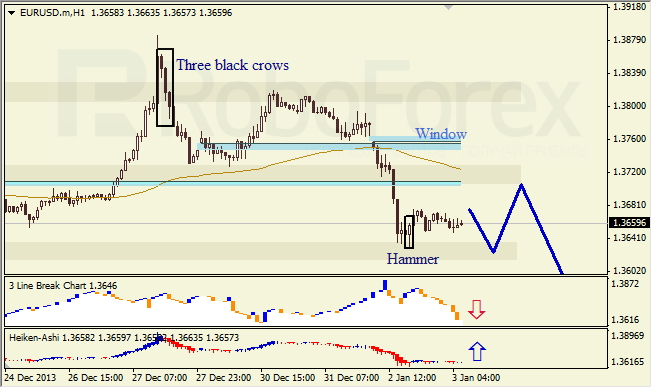
H1 chart of EUR/USD shows bullish pullback, which is confirmed by Hammer pattern and Heiken Ashi candlesticks. Three Line Break chart indicates descending movement.

USD/JPY

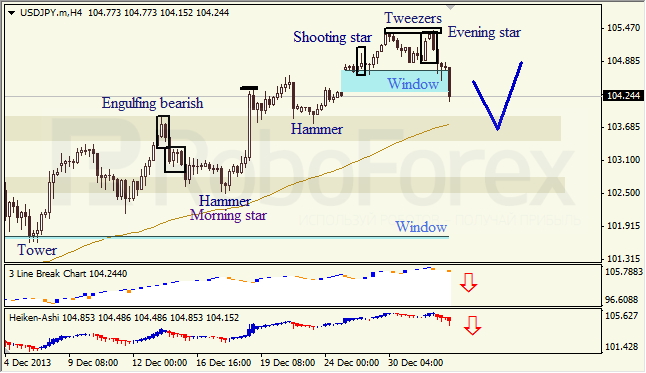
H4 chart of USD/JPY shows descending correction, which is indicated by Tweezers and Evening Star patterns. New upper Window is closed by the price. Three Line Break chart and Heiken Ashi candlesticks confirm that correction continues.

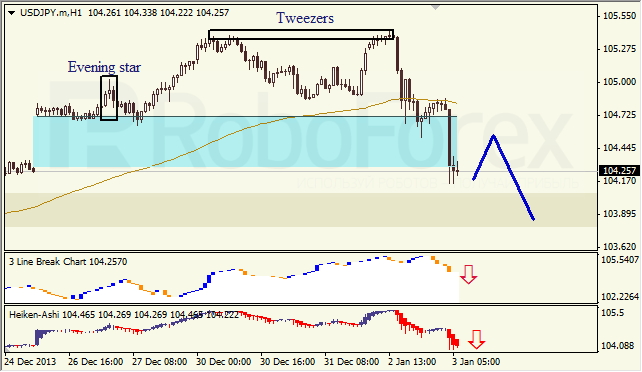
H1 chart of USD/JPY shows resistance from closest Window, which was closed by the price after Tweezers pattern. Three Line Break chart and Heiken Ashi candlesticks confirm descending movement.

RoboForex Analytical Department

Article By RoboForex.com

Attention!
Forecasts presented in this section only reflect the author’s private opinion and should not be considered as guidance for trading. RoboForex LP bears no responsibility for trading results based on trading recommendations described in these analytical reviews.