EURUSD: Bullish, Eyes Further Upside Pressure.

EURUSD: With EUR maintaining its bullish bias, further gain is envisaged in the new week. Resistance resides at the 1.3800 level where a violation will turn attention to the 1.3850 level and then the 1.3900 level, its psycho level. Its weekly RSI is bullish and pointing higher supporting this view. Conversely, to annul its past week gains it will have to return above the 1.3685 level. Further down, support is seen at the 1.3600 level and then the 1.3561 level where a break will turn focus to the 1.3476 level. A cut through will pave the way for a run at the 1.3400 level, representing its psycho level. All in all, EUR remains biased to the upside on further recovery.

Article by www.fxtechstrategy.com


Outside the Box: World Money Analyst Update on Russia

By John Mauldin

In last week’s special Thursday edition of Outside the Box, World Money Analyst Managing Editor Kevin Brekke interviewed WMA contributor Ankur Shah on emerging markets, but they didn’t touch on one very important emerging market: Russia. So this week I have brought Kevin back to sound out the views of Alexei Medved, WMA’s Russia and CIS contributing editor.

And right off the top, Alexei tells us two significant and surprising things about the Russian market:

One should look at investing in Russia from at least two time perspectives: long term, meaning 10-plus years, and a medium time horizon of 1-3 years.

Long term, Russia is still the best-performing major stock market in the world for the period 2000–2013, when measured in US dollars against the major market indexes. It is well ahead of not only all developed markets, but also the markets in China, Brazil, and several other emerging markets that were and are much more a centre of attention by Western media and investors. This long-term outperformance was achieved despite the fact that 2013 was not a good year for Russian equities, with the RTS Index down 5% in 2013.

Medium term, the Russian market remains the most undervalued. The average P/E is about 4.5, significantly below other emerging markets and way below the multiple on shares in the developed markets.

Needless to say, there are challenges with investing in Russia, too; and Alexei and Kevin cover them thoroughly. If you have wondered about Russia – or for that matter the markets of emerging and developed countries anywhere else in the world – you really should tune in to World Money Analyst.

John Mauldin, Editor
Outside the Box
[email protected]

Stay Ahead of the Latest Tech News and Investing Trends…

Click here to sign up for Patrick Cox’s free daily tech news digest.

Each day, you get the three tech news stories with the biggest potential impact.


World Money Analyst Update on Russia

World Money Analyst: I am very pleased to speak with Alexei Medved. Alexei is the Russia and CIS contributing editor at World Money Analyst, and I caught him at his office in London. Thank you for joining us today.

Alexei Medved: My pleasure, thank you for inviting me.

WMA: As you and I have discussed before, Russia remains a little-understood market for many Western investors. Can you talk a little about the investment backdrop for Russia?

Alexei: One should look at investing in Russia from at least two time perspectives: long term, meaning 10-plus years, and a medium time horizon of 1-3 years.

Long term, Russia is still the best-performing major stock market in the world for the period 2000–2013, when measured in US dollars against the major market indexes. It is well ahead of not only all developed markets, but also the markets in China, Brazil, and several other emerging markets that were and are much more a centre of attention by Western media and investors. This long-term outperformance was achieved despite the fact that 2013 was not a good year for Russian equities, with the RTS Index down 5% in 2013.

Medium term, the Russian market remains the most undervalued. The average P/E is about 4.5, significantly below other emerging markets and way below the multiple on shares in the developed markets.

WMA: How has the Russian market held up so far this year, with emerging markets under pressure?

Alexei: Since the start of this year, the Russian market has underperformed other markets, down 8% in US dollar terms. This, to a large extent, could be explained by a noticeable decline of the ruble against the US dollar (-5.5%).

As you know, so far this year many emerging markets and emerging market currencies have been punished significantly, as Western institutional investors became worried about macroeconomic pressures in some of the emerging economies, like Turkey and Argentina. These countries have problems that are real and serious: too much external debt, a trade deficit, a budget deficit, declining foreign currency reserves, etc. So, it is understandable why foreign investors withdrew a lot of money from these markets recently.

What is hard to understand is why they also withdrew significant amounts of money from the Russian market. In my view, it is primarily because most investors continue to view emerging markets as a single class of investments. So, when they withdraw money they do it across the board, in all emerging markets. This is generally not the best approach. In contrast, investors do not approach developed markets as a single class, but differentiate between the countries.

WMA: Using your examples of Turkey and Argentina, how does Russia compare in terms of the macro picture?

Alexei: The macroeconomic position of Russia is vastly different from that of Argentina or Turkey. For starters, Russia has a positive trade balance and a balanced budget, unlike these and many other emerging and developed countries. Russia also has a very low debt load, with the ratio of external government debt-to-GDP around 10%, much lower then the roughly 95% in the US and even higher in some European countries. Further, the unemployment rate in Russia is around 5.5%, meaning the country is essentially running at full employment.

The unrefined “sell everything that’s emerging” approach apparently in play by Western institutional investors has led to the Russian market being unjustifiably punished. The good news is that the punishment has created even better investment opportunities for investors who can avoid “heard mentality.” There are solid, profitable Russian companies that are trading today at very low valuations.

WMA: One of your areas of expertise is the use of short-dated, US-dollar-denominated Eurobonds to capture higher yield and manage risk. Can you explain this strategy a little for our readers?

Alexei: Of course. I think Russia and the CIS also present a good opportunity for fixed income investors. Given my serious worries about a possibility of rising inflation and yields in developed markets, we recommend investing only in relatively short-term bonds (under 4 years). Our [Alexei’s independent business] weighted portfolio maturity is now under 2 years. One can either invest in Russian sovereign debt or the safest corporate bonds and receive somewhat higher yields than in comparable developed-economy bonds. Investing in bonds that do not have an investment grade rating from one of the major rating agencies is another option.

Based on our local knowledge, we particularly like some high-yield bonds where we have a decent understanding of the company and believe that the bonds will be repaid, despite fairly low ratings from the credit agencies. This way, we invest in bonds that offer 10%-12% yields.

WMA: Switching to issues of politics and governance, many observers are concerned about issues of corruption in Russia, making it difficult for an investor to navigate the market. Has the current government embraced reforms on this?

Alexei: Obviously, one has to be very careful when considering investing in Russian equities or bonds. For investors that lack knowledge about the country, I do not recommend they attempt a do-it-yourself approach to selecting Russian shares. A better approach is to either invest through an index fund or to seek share selection advice from people who specialize in the Russian market on a day-to-day basis. This is in spite of the fact that over the last decade, Russia to some extent became much more investable.

Back to your question, corporate governance has generally improved, although perhaps not as much as some investors would like. The government is taking steps in this direction, yet a lot remains to be done. As Russia recently became a full member of the World Trade Organization (WTO), and its market is opening up to external competition, Russian companies will have to become more efficient to compete, and thus more profitable for investors.

Many investors have yet to wake up to the reality that Russia is a serious global player that’s here to stay. This opens up even more opportunities for investors.

WMA: The January issue of World Money Analyst highlighted the importance of taking a longer view on markets and investments, something that you and I agree on. You’ve made some great recommendations at WMA, and recently advised to take profits on two stocks that were held for a year or longer. Can you briefly go over these trades?

Alexei: Yes, as I said earlier, one has to look at these opportunities on a medium- to long-term investment timeline and not attempt to trade these markets, as one’s investments can get unjustifiably punished, as is happening now. We have been active in the Russian market for over 20 years and certainly maintain such an approach when we look at investments to recommend to our clients. Once the investment is made, we monitor it on a constant basis, as one cannot just “salt it away.” Once the shares reach our target price, we sell them and move on to the next opportunity.

In the January 2014 issue of WMA, I recommended taking profits on two positions. The first was the shares of Russian airline Aeroflot, recommended in the January 2013 issue. By January 2014, its shares had moved up nicely on the back of stellar company operating results. We advised to sell the shares and realized an 84% gain, including the dividend, in 12 months.

The second was the shares of AFK Sistema, a large-cap (US$18 billion) company that restructured itself from a conglomerate into essentially a private equity fund. I recommended its GDRs in the July 2012 issue. By January 2014 the shares had moved up significantly, and I advised to sell in that month’s issue of WMA. We pocketed a total return of 63% in 18 months.

These returns are particularly remarkable against a negative 5.6% return of the

Russian RTS Index in 2013. While we still like both of these shares, their significant appreciation had reached our price targets, so it was time to cash in some chips. And seeing that these shares are now trading lower, we got out at the right time and preserved the investors’ profits.

WMA: We can’t talk about Russia and not mention the ruble. Investing in certain currencies – like the Canadian dollar and Norwegian krone – has been in vogue for several years on the premise that these are “resource currencies” supported by the natural resource wealth of the issuing country. With Russia’s vast mineral and commodity wealth, should we consider the ruble a commodity currency?

Alexei: Given that Russia is a large producer of oil, gas, and some other commodities, to some extent the ruble should be seen as a commodity currency, perhaps even a petrocurrency. So, if one believes that the oil price is likely to decline significantly and stay low for years to come, one should not buy Russia. However, if one believes that the oil price trend is flat to up in the medium and long term, Russia will do well macroeconomically.

WMA: Next to the emerging markets, another big issue is developments in Ukraine. You have covered Ukraine for World Money Analyst subscribers. The country seems to be caught in a conflict about alliances: to enter into a closer economic alignment with Moscow, or shift to stronger ties with the EU. What are your thoughts on this and the investment implications for Ukraine?

Alexei: It is very sad that the situation in Ukraine has deteriorated as far as it has. Some lives have been lost. Ukraine is torn between the current government that is leaning towards the Customs Union with Russia, and a large proportion of the population, perhaps a majority, which would support a closer cooperation with the EU.

Ukrainians are also fed up with perceived government corruption and diminishing civil liberties in the country. In December, Russia provided a US$15 billion rescue package to Ukraine and immediately disbursed US$3 billion. It remains to be seen which way the current situation will be resolved.

However, there are some corporate bonds in Ukraine that should be relatively immune to this political turmoil. One of the companies we like in Ukraine is MHP, the largest chicken meat producer in Europe. The company is fairly insulated against possible further depreciation of the local currency, as it sells 37% of its products abroad. After the recent sell-off in Ukrainian bonds, one can buy the Eurobond of MHP priced in US$ with a maturity in April 2015 and a yield-to-maturity of 10.6%. Such a high yield on short-dated paper is very hard to find elsewhere.

WMA: Any final thoughts for investors about the opportunities in Russia?

Alexei: The latest sell-off of Russian shares represents an opportunity to buy quality companies at discount prices. Today, we can see compelling value in world-class companies with assets not just in Russia but globally (including the USA), good corporate governance, and nice dividends. In short, I agree with Warren Buffet: “Buy when others are fearful.”

WMA: Alexei, thank you for sharing your valuable insights into the dynamic Russian market.

Alexei: You are welcome. My pleasure.

Learn more about World Money Analyst here.

Understanding The Forex Market

Over the past decade there has been a great deal of growth in the “Forex Market”. Every day new traders are discovering the excitement and challenges of trading the Forex market.

What is the Forex market?

There has been a great deal of misunderstanding with regards to this question. Let’s start out with what the Forex market is not. The Forex market is not some centralized exchange like people are familiar with the New York Stock Exchange.

Forex transactions are done through what is referred to as the Inter-bank Market. The inter-bank market is a collection of major banks that offer pricing on various currency pairs.

In the past, these banks within the inter-bank market would conduct transactions with each other on behalf of clients like very large corporations. These large corporations would need currency transactions to facilitate commerce.  Banks within the inter-bank market would stream prices on the currencies they offered.

The Forex market has evolved in that now this streaming price is made available to the trading public. Until recently banks would not accept trade sizes that were within the range of a retail trader. Times have changed in that banks are now welcoming trade with the retail public. This can be done through an STP Forex Broker or straight through processing Forex broker or a DMA direct market access Forex broker.

It is important to find a Forex broker that aggregates from multiple banks so that the spread is narrow. The spread refers to the difference between the bid and the ask or the buy point and the Sell point.

Hopefully this can provide a little bit of insight and understanding on what the Forex market really is.


To learn more please visit www.clmforex.com

Disclaimer: Trading of foreign exchange contracts, contracts for difference, derivatives and other investment products which are leveraged, can carry a high level of risk. These products may not be suitable for all investors. It is possible to lose more than your initial investment. All funds committed should be risk capital. Past performance is not necessarily indicative of future results. A Product Disclosure Statement (PDS) is available from the company website. Please read and consider the PDS before making any decision to trade Core Liquidity Markets’ products. The risks must be understood prior to trading. Core Liquidity Markets refers to Core Liquidity Markets Pty Ltd. Core Liquidity Markets is an Australian company which is registered with ASIC, ACN 164 994 049. Core Liquidity Markets is an authorized representative of Direct FX Trading Pty Ltd (AFSL) Number 305539, which is the authorizing Licensee and Principal.

The Week Ahead On USDCHF

USDCHF: Weakens, Extends Bearishness.

USDCHF: With a third-week of decline as occurring the past week, further weakness is likely towards the 0.8798 level, its Dec 27 2013 low. Further down, support lies at the 0.8750 level with a cut through here paving the way for a run at the 0.8700 level, its big psycho level. Below here if seen will set the stage for more weakness towards the 0.8650 level. Its weekly RSI is bearish and pointing lower supporting this view. Conversely, to resume its short term uptrend now on hold, it will have to overcome its resistance residing at the 0.9037 level. This if seen could force further upside towards 0.9081 levels followed by the 0.9156 level, its Jan 21 2014 high. Further out, resistance resides at the 0.9200 level, its psycho. All in all, the pair remains biased to the downside medium term.

Article By www.fxtechstrategy.com


Australia Doesn’t Need Car Manufacturers, It Need Innovators

By MoneyMorning.com.au

Some people may still be moaning about the loss of Australia’s car making industry, but let’s get one thing clear.

Hardly any Australians bought locally made cars. Out of the 1.13 million cars that were sold in 2013, just over 100,000 bought were locally made. That means, less than 10% of Aussies bought an Aussie made car.

Looked at another way, 90% of Aussies didn’t want an Aussie made car or couldn’t care less about where their car was made.

Throw in the closure of an Alcoa smelting plant in Geelong and it’s easy to get caught up in the hype about the failing manufacturing industry.

And while the headlines can be dramatic, the actual data isn’t pretty either. Last year, 8.7% of Australians were employed in the manufacturing sector. But if you go all the way back to 1987, 13.1% of Aussies held manufacturing jobs.

In thirty years, manufacturing went from being Australia’s largest employment sector to our fourth.

And just so you fully understand how little manufacturing there is in Australia, the industry contributed 6.8% to the 2013 gross domestic product figure. It was fourth on the list of contributing sectors.

The thing is, traditional manufacturing as we know it is over. Ignore the headlines; Australia has to find a way to move forward. Perhaps, this could open up new opportunities…

Let me give you an example.

When personal computing in offices started becoming common place, many feared that it would be the end of administrative workers. One computer processor could do the work of four or five typists. And thanks to word processing software, editing your own work was far easier. Oh the tragedy! We’ll all be out of work!

But instead, many workers became more productive. They did their own editing and own typing. And personal computing didn’t create mass joblessness…it actually shaped entirely new industries.

Simply put, it revolutionised how people worked, what they could produce and how everyone connected.

What I’m saying is that even though traditional manufacturing jobs are on the decline, over time, it will create other employment opportunities.

Right now, I’m not sure what these new opportunities will be. But there are some technology driven companies that are still manufacturing in Australia, in spite of high labour costs. They’ve found a way to make it work.

And while I doubt manufacturing will ever be Australia’s dominant employment sector again, the industry has the chance to reform itself.

And it will start with the high technology businesses. For instance biotechnology, telecommunications or aerospace companies. Basically, forward thinking companies that require highly skilled employees to make their products.

Let’s be clear. Aussie companies will always struggle to be competitive internationally. Especially when firms are up against countries with lower taxes, lower running costs and especially lower wages.

However, the Aussie manufacturing sector can still survive if it makes niche products that buyers are willing to pay a premium for. And as Australian companies spend about 10% of GDP on research and development, high tech companies could create a new era of manufacturing in Australia.

Both Cochlear [COH:ASX] and ResMed [RMD:ASX] are good examples. Both firms have found a way to produce goods locally and still make a profit.

They’re’ not the only ones. In fact last year, small-cap analyst Tim Dohrmann tipped a stock that’s building an innovative product locally. That wasn’t the reason he recommended the company. What it does prove though, is that there are innovative firms investing and keeping their manufacturing close to home.

However the biggest boost to local manufacturing may actually come from the government.

Many biotechnology companies are pushing the Aussie government for something called ‘patent box’ tax breaks.

Already, the Australian government offers a 45% tax deduction on research and development. That gives companies an incentive to further invest in their R&D departments. But there’s no motivation for businesses to produce locally once they reach the manufacturing stage.

The patent box concept is simple. Rather than paying the standard company tax rate, the tax office would apply a ‘patent box’ tax of as low as 10% on profits of intellectual property produced in Australia.

The UK is a great example of this.

Last year in the UK, the government introduced a patent box tax rate of 10% on all intellectual property manufactured in the country. When that came into effect, pharmaceutical company GlaxoSmithKline [LON:GSK] confirmed it would build its first manufacturing plant in the UK in 40 years. It will transfer 150 of its overseas research projects to the UK because of the patent box.

This lower tax could offset the higher labour costs and the distance from global markets faced by Aussie companies.

Dr Anna Lavelle of Ausbiotech put it bluntly when explaining how unbalanced government interest was for the manufacturing sector.

In the last two decades, Australia has been steadily losing its manufacturing sector to Asia, while governments continue to prop up unsustainable traditional manufacturing with millions of public dollars. Meanwhile innovative manufacturers with the jobs and economic support of the future, like biotechnology, are being left to “sink or swim”.

A patent box tax would go a long way to encouraging business to manufacture their goods locally.

We doubt it will ever happen.

Shae Smith+
Editor, Money Weekend

Join Money Morning on Google+


By MoneyMorning.com.au

Master Limited Partnerships Generate Safe Income for Seniors and Savers

By Dennis Miller

It’s time to answer the “who, what, when, where, and why” of investing in master limited partnerships (MLPs)…

Andrey Dashkov, senior research analyst at Miller’s Money Forever, is the rare person who, when you asked for a hammer comes back with a hammer, nails, staples, and glue. In short, he often comes up with better solutions to tricky problems than I ever thought possible.

Since Andrey and I are on a nonstop mission to unearth the best opportunities for generating safe income, we have looked to MLPs more than once. Many Business Development Companies (BDCs) and Real Estate Investment Trusts (REITs) also fit the bill. Today, however, we are focusing exclusively on how MLPs can produce a healthy and steady income without exposing your nest egg to unwelcome risks.

The Nuts and Bolts of MLPs

By Andrey Dashkov

An MLP is an entity structured as a limited partnership instead of the traditional C-corporation. This allows the company to avoid corporate-level taxes. The limited partners pay most of the taxes, which means that MLPs are essentially pass-through entities.

In the United States, the net effective rate of corporate income tax is 40%. That means a corporation calculates its profit, pays the appropriate income tax to the government, and then pays dividends from what remains. With an MLP all the profits are passed through to the unit holders.

While a traditional corporation can choose to pay a dividend, an MLP does not have that option. In order to maintain their status, MLPs are required to generate at least 90% of their income from qualifying sources and distribute the major portion of that income. In most cases these sources include activities related to the production, processing, and distribution of energy commodities, including gas, oil, and coal.

The government gives a special treatment to these activities to encourage investment into the United States’ energy infrastructure.

Limited partners (LPs) own the company together with a general partner (GP). The GP takes care of the day-to-day operations, typically holds a 2% stake, and can usually receive incentive distribution rights (IDRs). LPs, called unit holders, (which we can become by buying shares of publicly traded MLPs) receive dividend-like cash distributions. LPs, unlike traditional shareholders, do not have voting rights.

There are many advantages to MLPs, including:

  • Attractive yields;
  • Inflation protection;
  • Portfolio diversification;
  • Tax advantages; and
  • Resilient business model.

Attractive Yields

MLPs pay various yields that average 5-10%. Data for the Alerian Index, which tracks the top 50 MLPs, show that in Q2 2013 MLP yields varied from 3-12%, with an average of 6.5%.Besides the actual yield, MLP investors can count on distribution growth. Dividends per share of Alerian Index constituents grew at a compounded rate of 4.1% over the past five years.

Inflation Protection

Several factors hedge against inflation:

  • Inflation-adjusted contracts renewed periodically;
  • Distribution growth has historically outpaced the growth in CPI; and
  • MLP unit (share) prices are weakly correlated with movements in inflation and interest rates.

Portfolio Diversification

MLPs have a low correlation to other asset classes, including equity, debt, and commodities. However, for a short time they may correlate with any asset class or the market in general.

MLPs are less volatile than the broad market. Currently at 0.5, the average beta of Alerian Index, is quite conservative. This suggests that if the broad market goes down by 10%, we should expect the Alerian Index to drop by 5%. An individual company’s volatility may stray from the average, but in general MLPs should be much less volatile than the market as a whole.

Generally, the vast majority of MLPs operate in the energy sector, but usually do not own the underlying commodities; this is part of the reason for the decreased volatility. Their income generally consists of transportation fees. However, some MLPs can be exposed to commodity risk (coal, propane, and oil exploration and production MLPs, among others). Economy-wide consequences of a severe recession may impact the demand for energy commodities and, in turn, the profitability of transportation companies.

Tax Advantages

An MLP investor typically receives a tax shield of 80-90% of one’s annual cash distributions, which is a very nice feature. This defers tax payments until the unit (your share) is sold.

The tax payment schedule for an MLP is illustrated below. Assume you bought one unit of an MLP for $20 and sold it after five years for $22, having received $2 annually in years 1-5. Assuming your ordinary income tax is 35%, and the long-term (LT) capital gains are taxed at 15%, you can see the breakdown.

Year 0Year 1Year 2Year 3Year 4Year 5
Purchase price$20.00
Distribution per unit$2.00$2.00$2.00$2.00$2.00
Income per unit$2.00$2.00$2.00$2.00$2.00
Depeciation expense$1.60$1.60$1.60$1.60$1.60
Cost basis$20.00$18.40$16.80$15.20$13.60$12.00
Sale price$22.00
Taxes:
Earnings per unit
$0.40$0.40$0.40$0.40$0.40
Depreciation recapture
$8.00
Amount subject to ordinary tax rates$0.40$0.40$0.40$0.40$8.40
Ordinary tax rates
35%35%35%35%35%
Taxes owed at ordinary rates0.140.140.140.142.94
Amount subject to LT capital gains$2.00
LT capital gains rate
15%
Taxes owed at ordinary rates$0.30
Total taxes owed$0.14$0.14$0.14$0.14$3.24
Source: Credit Suisse


Resilient Business Model


During periods of economic uncertainty, MLPs remain a solid source of income. In 2008-2009, 78% of all energy MLPs either maintained or increased their distributions. In comparison, 85% of real estate investment trusts (REITs) either cut or suspended dividend payments.

Now, a note of caution is in order. Despite the excellent income track record, MLP share prices stumbled as they became more correlated to the general market. However, the investors who held them through the difficult times saw the share price rise again. MLPs returned to January 2008 levels in early 2010; the S&P 500 did not do the same until 2013.

The same plunge could happen again if a severe economic crisis hits. As we said, MLPs may move with a falling market. The fact that more investors are aware of MLPs now than a decade or two ago adds to this risk. As investors have searched for yield, MLPs have become more mainstream; however, they are by no means your average S&P 500 stock.

Also, there are two immediately positive outcomes to the higher investor awareness of MLPs: higher liquidity and access to more capital. In the Money Forever portfolio we look for the best and safest available and then protect our downside with protective stop losses.

Principal Risk Areas

With any investment offering a reward, there is a corresponding risk. Here are the key risks of MLPs.

Risk #1: Economic downturns. If the US economy is hit by a severe economic crisis that drives the demand for energy products down, MLPs will take a blow. Like a trucking business that transports products for which the demand is going down, if less product is shipped through a pipeline owned by an MLP, their revenue may decrease.

This, however, is where some investors may get confused. If a pipeline MLP has a contract with an energy company, the price of the transported product may increase or decrease, but at the same time, the MLP may have a fixed-fee arrangement with the energy company. So, if the volume flowing through the pipeline remains steady, its revenue should not fluctuate.

Risk #2: Access to capital and interest rates. As a general rule, MLPs return 100% of their distributable cash flow (DCF), less a reserve determined by the general partner, to the unit holders. Unlike real estate investment trusts that must give away a certain share of their cash flow every quarter, MLP distributions are governed by individual partnership agreements, so the terms vary.

However, the majority of cash an MLP earns will be distributed, so it’s only natural that they turn to issuing debt or equity to finance growth projects. When their interest costs rise MLPs that need capital right away will be at a disadvantage. We prefer companies with enough internally generated capital to finance growth, and no major ongoing projects that require billion-dollar loans and thereby run the risk of being underfunded or funded at an unfavorable interest rate. We also prefer companies with fixed-rate debt to floating rate.

Risk #3: Management and execution. Management should have a track record of successful investment in new assets and cash generation to finance distributions.

We also look for companies that have 5- to 10-year capital plans as part of the write-up, and a history of following those plans. They tend to fare better when it comes to keeping capital costs under control.

Risk #4: Sustainability of cash distributions. The above three risks boil down to whether or not an MLP will be able to churn out cash for its unit holders. The distributions should be sustainable, and should grow year after year. The primary reason for buying an MLP is income. We need to make sure the cash keeps coming in.

A company’s track record of cash payments is a good, but not perfect, indicator of how it will perform in the future. Variable-rate distributions tend to, well, vary more significantly than those of traditional MLPs. Distributions in the midstream sector tend to be more predictable; natural gas pipelines and storage generate the most stable cash flows while refining/upstream MLPs do so to a lesser extent. We carefully consider these factors when evaluating our investment options.

The “Taper” Factor

When Ben Bernanke uttered the word “taper” on June 19, the markets jittered. Even the traditionally defensive sectors such as utilities took a hit.

MLPs were not immune to the potential implications of the Fed easing up on its bond-purchase program which many believe is helping the US economy. The market panicked, and MLPs dropped in price. Readers will note the index dropped in the middle of 2013. The drop was less steep than those in either the broad market or the utilities sector and MLPs rebounded—in less than a week, while it took approximately three weeks for both the S&P 500 and XLU to get back to their June 18 levels.

When evaluating a potential candidate, a prudent investor will see how they have performed during times of market volatility. Sometimes trading a bit of yield for much less volatility is a smart move.

The IRA Caveat

We do not recommend putting MLPs in an IRA account. By placing an MLP in a tax-deferred account, you may lose part of the tax advantage the MLP structure provides. In an IRA account, unrelated business taxable income (UBTI) of over $1,000 is subject to federal income tax. If you earn more than $1,000 annually from an MLP’s cash distributions and other sources of UBTI, the excess will be taxable. This becomes more likely over time, since most MLPs increase their cash distributions.

A Peek Behind the Curtain

In summary, an MLP gives us a couple of advantages from a tax perspective. There is more money to pay out in dividends. Unlike a traditional corporate dividend, which is paid after a corporation pays income taxes, MLPs do not pay corporate income taxes. An MLP’s income is taxed only once, when the dividends are received.

Initially, when you buy an MLP, only 10 to 20 percent of the MLP distribution is considered taxable income. The rest of the distribution is considered return of capital and isn’t subject to tax when you receive the dividend. Basically you put off paying some taxes for the short term. When you eventually sell your MLP, the tax is adjusted so the net amount of taxes is the same. The formula is technical, but the information you receive from your broker can be given to a competent CPA and you should be fine.

You can see why MLPs have become so popular in a yield-starved environment. While they have attracted a lot of investors, there are still some great opportunities for those willing to do their homework.

Dennis and I added our favorite MLP to the Money Forever portfolio in October, and we are chomping at the bit to share it with you… But, because of the special relationship we share with our paid subscribers, you’ll need to sign up to for a premium subscription at no-risk to your pocketbook to find out what it is. Subscribe to our regular monthly newsletter and take a peek at the MLP we recommended, along with our entire portfolio. If, after 90 days, you decide it’s not right for you, we’ll return 100% of your money without a fuss. Click here to get started.


Chen Lin’s Perfect Biotech Market Prescription: Buy Low, Sell High!

Source: Peter Byrne of The Life Sciences Report  (2/20/14)

http://www.thelifesciencesreport.com/pub/na/chen-lins-perfect-biotech-market-prescription-buy-low-sell-high

Charming and smart, Chen Lin makes a lot of money by jumping in and out of the highly volatile biotech market while obeying a set of simple rules, which he reveals in this interview with The Life Sciences Report. Applying his strong science background, Lin zeros in on biotech firms with solid products. The trick is in having the guts to buy low and sell high, against the market tide, says the editor of the widely respected newsletter, What is Chen Buying? What is Chen Selling? Lin also brings us up to date on his favorite picks.

The Life Sciences Report: In our last interview in June, you talked about some “red hot” biotechs. Can you give us an update on those firms?

Chen Lin: Sarepta Therapeutics Inc. (SRPT:NASDAQ) remains my top pick in biotech. Now, I must point out that Sarepta is one of the most heavily shorted stocks in the biotech arena. I have followed the company for many years, and I know exactly what the shorts are thinking. They believe that the U.S. Food and Drug Administration (FDA) will give the company a hard time on its phase 3 trial for eteplirsen, designed to treat Duchenne muscular dystrophy (DMD). The shorts surmise that Sarepta will need to raise a lot of money to complete the approval process for this RNA-based product.

But there is another side to this story.

A federal law passed in 2012 specifically instructs the FDA to accelerate the approval process for drugs that treat deadly diseases, such as DMD, which has no known cure. The company’s data from the last 120 weeks are very strong. The FDA has no excuse to delay the accelerated approval process. After almost two and a half years of treatment, all the children in the eteplirsen trials are behaving extremely well, just like normal kids.

But the market does not feel that accelerated approval is a possibility. The beauty of working on the Street is being able to spot things that the market fails to see. If Sarepta gets accelerated approval for eteplirsen, its stock will explode. And even if the FDA does not go for the accelerated approval, but only clears the path going forward—the stock should catch fire. The company has been seeing more than $8/share in cash and persistent insider purchases, but this has been as high as $37/share in the past few months. That’s about 50% higher than today’s price and shows insiders’ strong belief in the company. Worries about Sarepta are overblown.

TLSR: When will the FDA make a decision on the accelerated approval process?

CL: The FDA could give its final decision in February. It is a very urgent matter, because kids are dying. Further delay is unconscionable.

TLSR: Once the FDA approves eteplirsen, how long will it take for the drug to get to the market?

CL: The company has already ramped up the manufacturing process. If the FDA approves it this year, the drug could be on the market next year.

TLSR: Let’s move on to another company you spoke about six months ago— Neptune Technologies & Bioressources (NTB:TSX; NEPT:NASDAQ).

CL: Neptune is the pioneer in the krill oil business, and has a patent to protect its product, Neptune Krill Oil (NKO). Recently, its competitors agreed to pay Neptune a nice royalty and down payment for the rights to produce krill oil based upon its patent. Neptune has built a new plant to replace the one that was destroyed in a tragic fire more than a year ago. The new factory will be up and running in H1/14. We should see a very profitable company going forward. Neptune’s subsidiary, Acasti Pharma Inc. (ACST:NASDAQ; APO:TSX), will also have an important phase 2 readout in H1/14 for its krill oil-based drug candidate. This year looks really good for Neptune’s fortunes.

TLSR: What does krill oil treat?

CL: It reduces cholesterol levels. It is the only such product that can decrease triglycerides, decrease low-density lipoprotein and increase high-density lipoprotein. My mom took it with very good results. I am also taking it—so far so good, but still monitoring.

TLSR: You can get this product at your local drugstore?

CL: I got it from an online retailer. It is also in local drugstores. I have received many thankful letters from my subscribers who use it. Remarkably, the stock is far under the radar.

TLSR: Neptune’s stock went down after the fire, which occurred in November 2012. Has it come back up or do you still see Neptune as a real bargain?

CL: After the fire, the stock fell to $1.70–1.60/share. Today, it’s about $3/share—almost double. And the upside remains huge.

TLSR: What kind of target price would you put on Neptune?

CL: That depends upon how fast awareness of the benefits of krill oil grows. Neptune did not disclose the amount of the royalty payments, which are part of a confidential agreement, but it will release an income statement next quarter that reflects the royalties. Because Neptune dominates the krill oil business and all the other manufacturers have to pay it a royalty, the stock is probably worth a multiple of its present value.

TLSR: How is AcelRx Pharmaceuticals Inc. (ACRX:NASDAQ) doing?

CL: AcelRx produces a product to replace morphine after operations. I do not know if you have ever gone through an operation. I, unfortunately, have gone through a few. Walking around with a needle in your arm attached to a morphine bottle is a drag. AcelRx has a revolutionary painkiller, Zalviso (sufentanil sublingual microtablet system), which can be put under your tongue. Patients can self-control the amount released to reduce pain. The drug is set for approval in July of this year.

TLSR: Does the painkiller have any side effects? Is it addictive?

CL: The painkiller is a controlled substance. It is released in increments by a secure, self-controlled device. It is only for use after an operation and only by prescription. AcelRx has a related product, ARX-04 (sufentanil acute pain nanotab), that is in development for the Army to use on the battlefield. That is further back in the pipeline—in phase 2—but it looks to be a very positive product.

TSLR: How is the AcelRx stock performing?

CL: The stock has been very volatile—which is a good thing! As I tell my subscribers, my investment strategy is very simple. I buy when a stock is in the single digits; I sell when it reaches double digits. I originally bought AcelRx at a few dollars per share. I sold a portion of it when it reached $13/share. Then it dropped to $8/share, and I bought again. I sold it again when the price hit $11–12/share. Now, it is around $12/share. We shall see if it drops to a single digit again. Then I shall buy more! I hold a strong position in AcelRx and use it to trade in and out. It is still a very good buy, with lots of upside, because the FDA approval is probably worth $30–40/share. Buy low, sell high!

TLSR: What is the story with Vanda Pharmaceuticals Inc. (VNDA:NASDAQ)?

CL: Vanda Pharmaceuticals is a very interesting company. It has created a drug, Hetlioz (tasimelteon), that helps blind people with sleep disorders caused by light deprivation. When sighted people wake up, the light sets the rhythm of their 24-hour circadian cycles, but completely blind people can’t set the circadian clock. They are living in a different cycle from sighted people. Vanda’s revolutionary drug helps the blind adjust to light cycles in tandem with the sighted world. The drug received an overwhelming recommendation for approval from the FDA advisory committee, and secured FDA approval on Jan. 31. And it has no competition.

TSLR: How is the stock doing?

CL: It is volatile! I already sold all my Vanda stock, by the way. My trading strategy is very clear. In single digits, I buy. In double digits, I sell. I have done this three times with Vanda so far. When it reaches single digits—$5, $6, $7/share—I buy. When it’s in the double digits—$12, $13, $14/share—I sell. This is not rocket science.

TLSR: Do you have a hedging strategy?

CL: No, I do not. I just pick solid stocks in companies that I can understand, and that I believe have very strong value. Then I wait and buy on market weakness. Then I wait again, for a good price to lock in profits. Biotech is extremely volatile, so when it has a pop and everybody goes crazy, I sell. Buying and selling both stock and call options in Vanda three times turned out to be extremely profitable for me in 2013.

TSLR: You make it sound easy.

CL: The trick is to pick a device or drug that is truly revolutionary and has little or no competition. I ride up and down with the market, taking profits in between waves. That’s my general strategy, and so far it has been very successful.

TLSR: Are you a quant?

CL: Not necessarily. I use many different methods to analyze a stock. But mostly, I follow the fundamentals. I look at what the company is really worth. Biotech is so volatile that it is very hard to make money by buying and holding. I buy when everybody sells. And when everybody is happy and rushing in, I sell. This is so simple, is it not? Do you get it yet?

TLSR: You certainly stay ahead of the curve. Let’s finish up with your last pick from six months ago, which was Apricus Biosciences (APRI:NASDAQ).

CL: Apricus is the only stock in my red-hot picks basket that did not move. Apricus remains viable, however. It has created an erectile dysfunction drug like Viagra, called Vitaros (alprostadil cream). The difference is that the product is applied topically, instead of by ingesting a pill or suffering through an injection. A lot of people with heart conditions and other medical conditions cannot take the blue pill. Vitaros has been approved in many European countries, as well as in Canada. This year, it should hit the consumer market.

Investors are holding back because Viagra may go off patent. But that should not affect Vitaros, because it is applied to the penis. And Apricus is experimenting with a drug called Femprox, for the female sexual disorder, using exactly the same ingredient. Femprox has emerged from a successful phase 3 trial. It is going into another phase 3 trial, and FDA approval is expected in a couple of years.

TLSR: In terms of the biotech sector as a whole, is volatility just built into it? Or will biotech become less volatile over time?

CL: Biotech is volatile by nature. And computer trading makes the biotech market even more volatile, especially the small stocks. Once the nature of the beast is recognized, however, it is possible to tame it.

TLSR: Chen, it’s been a pleasure talking to you.

CL: Likewise, Peter.

Chen Lin writes the popular stock newsletter What Is Chen Buying? What Is Chen Selling?, published and distributed by Taylor Hard Money Advisors, Inc. While a doctoral candidate in aeronautical engineering at Princeton, Lin found his investment strategies were so profitable that he put his Ph.D. on the back burner. He employs a value-oriented approach and often demonstrates excellent market timing due to his exceptional technical analysis.

Want to read more Life Sciences Report interviews like this? Sign up for our free e-newsletter, and you’ll learn when new articles have been published. To see a list of recent interviews with industry analysts and commentators, visit our Streetwise Interviews page.


DISCLOSURE:
1) Peter Byrne conducted this interview for The Life Sciences Report and provides services to The Life Sciences Report as an independent contractor. He or his family own shares of the following companies mentioned in this interview: none.
2) The following companies mentioned in the interview are sponsors of The Life Sciences Report:AcelRx Pharmaceuticals Inc. Streetwise Reports does not accept stock in exchange for its services or as sponsorship payment.
3) Chen Lin: I own or my family owns shares of the following companies mentioned in this interview: Sarepta Therapeutics Inc. and call options, AcelRx Pharmaceuticals Inc., Apricus Biosciences Inc., Neptune Technologies and Bioressources Inc. and Acasti Pharma Inc. I personally am or my family is paid by the following companies mentioned in this interview: None. My company has a financial relationship with the following companies mentioned in this interview: None. I was not paid by Streetwise Reports for participating in this interview. Comments and opinions expressed are my own comments and opinions. I had the opportunity to review the interview for accuracy as of the date of the interview and am responsible for the content of the interview.
4) Interviews are edited for clarity. Streetwise Reports does not make editorial comments or change experts’ statements without their consent.
5) The interview does not constitute investment advice. Each reader is encouraged to consult with his or her individual financial professional and any action a reader takes as a result of information presented here is his or her own responsibility. By opening this page, each reader accepts and agrees to Streetwise Reports’ terms of use and full legal disclaimer.
6) From time to time, Streetwise Reports LLC and its directors, officers, employees or members of their families, as well as persons interviewed for articles and interviews on the site, may have a long or short position in securities mentioned and may make purchases and/or sales of those securities in the open market or otherwise.


Streetwise – The Life Sciences Report is Copyright © 2014 by Streetwise Reports LLC. All rights are reserved. Streetwise Reports LLC hereby grants an unrestricted license to use or disseminate this copyrighted material (i) only in whole (and always including this disclaimer), but (ii) never in part..


Streetwise Reports LLC does not guarantee the accuracy or thoroughness of the information reported.


Streetwise Reports LLC receives a fee from companies that are listed on the home page in the In This Issue section. Their sponsor pages may be considered advertising for the purposes of 18 U.S.C. 1734.


Participating companies provide the logos used in The Life Sciences Report. These logos are trademarks and are the property of the individual companies.


101 Second St., Suite 110
Petaluma, CA 94952

Tel.: (707) 981-8204
Fax: (707) 981-8998
Email: [email protected]


Catalysts Drive These Stocks: Mara Goldstein

Source: George S. Mack of The Life Sciences Report  (2/20/14)

http://www.thelifesciencesreport.com/pub/na/catalysts-drive-these-stocks-mara-goldstein

Whether biotech stocks keep up the scorching pace of 2013 remains to be seen, but we can count on one thing going forward, says Cantor Fitzgerald Senior Analyst Mara Goldstein. We are still in a catalyst-driven market. In this interview with The Life Sciences Report, Goldstein discusses four names with approaching milestones that she believes are important growth drivers. Her fifth pick is a binary event story, meaning it could skyrocket on good data or plummet on bad.

The Life Sciences Report: With stock prices up, I know companies want to raise money through secondary offerings. Do you feel this trend is strong right now, or is it showing fatigue?

Mary Goldstein: Let me take the second part of your question first. The question of fatigue is important because, with so much interest in financing in the past year, there has been a lot of discussion around whether the pent-up demand from previous years is gone and whether there is as much opportunity as there was in 2013 for financings to continue.

We have seen a fair number of companies raise capital thus far in Q1/14. In fact, this past January was the second strongest January on record since 1994 in terms of total money raised. The desire to secure financing is well know among biotech investors, and there does seem to be a strong dynamic to ride any potential wave of enthusiasm that gets generated at the beginning of the year because of conferences, such as the JPMorgan Healthcare Conference. That conference typically kicks off the year, and many companies try to extend cash runways by financing early in the year. Three and four years ago, companies had to finance because they were running out of cash, and funding was needed to get to that next data point. Now, companies are financing around data points, and that is a very different value proposition.

TLSR: Are you saying that companies are extending their cash runways even though they may not need the money today?

MG: I think that if you’re a biotech executive, cash and cash runway are always a concern given the long road from discovery to commercialization. My point was that financings are not happening solely to extend cash runways, although that is an important consideration. They’re also occurring around data releases, which have an impact on valuations.

TLSR: We’ve seen a lot of initial public offerings (IPOs) in the last year. Does the IPO market still look strong to you? If it does, does it look frothy?

MG: As an analyst, I watch financings as a surrogate for demand in the sector. Despite more than $20 billion ($20B) of equity capital coming into the biotech industry in 2013, the beginning of 2014 has shown some legs, with the appetite for biotech financings still in evidence. While one could argue that backlog and pent-up demand drove financings last year, one could also argue that investors have had a greater appetite for riskier and higher return stocks. I think the combination of those factors helped to fuel a robust IPO market. The question, in my mind, is whether conditions exist that facilitate demand for financings. Already in 2014, we’ve seen $5.5B in capital raised in the biotech sector, with more than $1B in IPOs and roughly $2B in follow-on offerings.

TLSR: Mara, what about the maturity of the IPO companies?

MG: If we are speaking to stage of development, I think it is mixed. Of the class of 2013, close to 50% of the IPOs were in phase 2, another 35% or so were in phase 3, and the remainder were earlier stage. I believe that breakdown is consistent with IPOs that have been priced thus far in 2014. But I think you’ve touched on an important point about the ability of companies to continue to advance drug candidates in capital raising-constrained environments. Of the 40 or so IPOs in 2013, a considerable number came to market having already advanced lead candidates into mid-phase testing.

TLSR: Are companies themselves mature enough when they go public, or are you seeing lower-quality companies that perhaps don’t have clear pathways to pharma partnerships or product commercialization?

MG: I wouldn’t confuse quality with development stage, because some very high quality companies are going public at earlier stages of development. Clearly the market has an appetite for stocks where investors believe that a high value return can be accelerated, such as for companies developing drugs for orphan disease.

TLSR: You mentioned the excitement and enthusiasm coming out of the JPMorgan Healthcare Conference. Were companies talking about any new regulatory or other trends that you can detect from their presentations?

MG: From company presentations in general, and from the dialogue that I broadly observed, it seems as if companies are engaging the U.S. Food and Drug Administration (FDA) earlier in the process than they have in the past. That is, of course, a good thing because the more that can be ironed out early on, the less regulatory risk later.

TLSR: Mara, do you have a current theme for growth-oriented investors?

MG: I continue to think that this is very much a catalyst/milestone-driven market for biotech stocks. We definitely saw that last year, and I think we’ll see a continuation of that. In the lead-up to 2013, when capital markets were constrained and the biotech sector was struggling with a host of different issues, clinical trials still advanced, with some companies making progress, albeit quietly. But even as clinical programs were advancing—let’s say, in 2009–2011—there was not necessarily commensurate interest in the stocks as investment vehicles. Now, a fair number of companies with midstage and later-stage pipeline products are hitting milestones that are, in essence, driving value creation. I don’t think that trend has played out yet.

TLSR: Could we talk about some companies, please? Which name would you like to start with?

MG: NewLink Genetics Corp. (NLNK:NASDAQ.GM) is working in the field of immunotherapy, and is a stock we like a lot. The company has a platform technology to develop therapeutic vaccines, taking advantage of the concept of innate immunity to stimulate an immune response to cancer without the need to personalize treatment for each patient. NewLink has a phase 3 trial underway, testing its HyperAcute platform in pancreatic cancer. This program is known to investors as HyperAcute Pancreas, or algenpantucel-L. The company has built interim checkpoints into the program, and the initial one is pending, but final data readout, if the trial doesn’t stop early, could be sometime in 2015. This is the company’s most advanced program, and is being tested in lung cancer and melanoma, as well as a few other indications.

What’s generating a fair amount of interest today is a second platform technology, which has been under the radar screen for quite some time, inhibition of indoleamine 2,3-dioxygenase (IDO) as a way to block tumor immune escape. The IDO pathway is a checkpoint pathway, and there is much interest in checkpoint inhibitors in oncology right now. Cancers suppress the immune system so that tumor cells are not recognized by a person’s innate immunity. The idea behind the IDO and other checkpoint inhibitors is that cancer cells may use the IDO pathway to facilitate survival, growth, invasion and tumor recurrence.

NewLink has two IDO pathway inhibitors—two distinctly different molecules. One is indoximod, which is in phase 2 for metastatic prostate cancer and metastatic breast cancer. Another, NLG919, is in phase 1 for recurrent advanced solid tumors. The interest in NewLink’s IDO inhibitors is driving a lot of the interest in this stock, in addition to the HyperAcute vaccine platform.

TLSR: Would you tell me what other checkpoints, aside from IDO, are interesting in oncology today?

MG: Checkpoint inhibition, broadly speaking, refers to immune checkpoints that facilitate tumor immune escape. The two most well known to the investment community are CTLA-4, or cytotoxic T-lymphocyte antigen-4, and programmed death protein 1 (PD-1).

TLSR: NewLink’s IDO inhibitors are still in early and midstage development—NLG919 in phase 1 and indoximod in phase 2. Do we have any indication of efficacy at this point?

MG: We’ve seen some phase 1 data on the indoximod compound. The data essentially suggest that there is a response, that the drug’s profile looks reasonable in the field of oncology and that this candidate should be explored further.

TLSR: NewLink shares are up 27% in the past four weeks. Even though the IDO inhibitors are not the lead programs, do you think this platform may be what’s moving this stock so dramatically?

MG: I definitely think IDO is a piece of that. Two things have occurred. One, the visibility of the IDO platform is improving. The company recently held a key opinion leader meeting, to which it invited the investment community. The meeting was very well attended and generated a lot of interest. The second component has been the HyperAcute platform and the pancreatic cancer trial (IMPRESS), now in phase 3. We have been waiting for an interim look into the IMPRESS trial, which is event-based. As the trigger number of events has not been reached yet, the interim has not occurred. There had been expectation that the interim would occur in mid or late 2013, and it still hasn’t happened.

When a time trial takes longer than expected, investors will typically believe that either the active arm is working very well, and that’s why the trigger point has not been reached, or that perhaps the company has miscalculated, and both arms are doing better than expected. We won’t know until the final data are released, but I think the fact that it has taken a while to get to an interim point in this trial is creating a calming effect, at least so far.

TLSR: This IMPRESS trial is being conducted under a special protocol agreement (SPA). Does that carry any special meaning for you as an analyst?

MG: An SPA allows a company to work out trial details with the FDA ahead of time, so that there are fewer questions about how the trial was conducted after it is finished. An SPA also allows, theoretically, for a more rapid review. As an analyst, it says not so much that the trial is derisked, but that there is less regulatory risk because the company has worked out issues up front.

Then again, the risk in doing a trial under an SPA is that if the standard of care changes while you’re in your trial, and you’re committed to completing it one way, some nuance of data could make the trial less relevant. In general, however, I think the benefits certainly outweigh the detriments.

TLSR: What other companies are competing in the IDO inhibitor pathway space?

MG: The only company that I know has a molecule in a similar stage of development is Incyte Corp. (INCY:NASDAQ). I do not cover this company.

TLSR: Another company, please?

MG: I continue to like Celldex Therapeutics (CLDX:NASDAQ) a lot. Celldex was one of the best performers in the biotech market last year. I liked it because I thought there was huge opportunity stemming from the multiple data points the company would reach throughout the year, and in particular, in the second half of 2013. I think that continues to be the case for 2014.

Celldex has a phase 3 program for rindopepimut (a peptide-based vaccine) for a particular form of glioblastoma multiforme, or brain cancer. Another phase 3 program, METRIC, is evaluating CDX-011, also known as glembatumumab vedotin, in triple-negative breast cancer. The drug is a monoclonal antibody-drug conjugate targeting glycoprotein (transmembrane) nmb (GPNMB) over-expression in breast cancer. Screening for this trial is currently underway. The company should see data for CDX-1135, for a rare orphan drug indication called dense deposit disease, in 2014. And there will be more data on the CDX-1127 program, which is a monoclonal antibody targeting CD27, which is involved in the activation of lymphocytes.

I think there is still opportunity in the stock, based on visibility of the pipeline. I think that to some degree, as with last year, data points are skewed toward H2/14 rather than H1/14. Nonetheless, Celldex is a name that we continue to like, particularly because the stock really sold off in Q4/13, most likely profit taking after such a strong year. I think investors can pick up some lost ground in the coming year.

TLSR: You’re also following one company in the cancer stem cell space. Tell me about that, please.

MG: I like Verastem Inc. (VSTM:NASDAQ). The cancer stem cell space is very interesting, building on the work of Dr. Robert Shapiro, a founding member of the Whitehead Institute for Biomedical Research and a professor at Massachusetts Institute of Technology. Dr. Shapiro’s work led to the discovery of a phenomenon called the epithelial-mesenchymal transition, or EMT, which is central to the idea that certain cancer cells are able to travel in the body and seed new tumors, but are able to evade traditional chemotherapy. Verastem has licensed certain “know-how” from Dr. Shapiro’s lab, and uses this to develop drugs that target cancer stem cell pathways. The drug that is furthest in development is defactinib, an inhibitor of focal adhesion kinase, or FAK, which is a pathway that promotes growth and survival of cancer stem cells. The initial clinical program is in mesothelioma (malignant pleural mesothelioma, specifically), as well as KRAS-mutated non-small cell lung cancer. The company believes it has identified a biomarker allowing for an enriched patient population for the clinical trial. We could see some data emerge this year. The company is also conducting a small bridging study looking at defactinib in a Japanese population, and hopes to use this data as a segue into a broader registration study for the Japanese market by incorporating Japanese sites into the phase 2 COMMAND study. I believe there may be information on this in H1/14.

We think that Verastem’s shares will benefit from advancing clinical programs, and that forms the basis of our thesis on the shares.

TLSR: That bridging study in Japan has only 18 patients, right?

MG: It is a small study—a dose escalation study—looking at safety, pharmacokinetics and pharmacodynamics in a Japanese population. For drugs to be approved in Japan, it is typical for regulators to require data in Japanese patients, as variations among patient populations do exist and can have an effect on safety as well as efficacy. Because the study is a fairly classic dose escalation trial, it’s not a large population. If the data for this population is consistent with other data sets, Verastem will request that Japanese sites be allowed to roll into the COMMAND study, which could be considered a registration trial.

TLSR: The upcoming catalysts with Verastem are what?

MG: Number one is the bridging study, and, second, more data on defactinib. The company also has two other candidates, VS-5584 and VS-4718, both of which are in phase I. We expect data presentations throughout the year. But the greatest focus will be on defactinib, the outcome of the bridging study in Japan and the results of a phase 1b trial exploring a combination with paclitaxel in ovarian cancer.

TLSR: Another name?

MG: We haven’t talked that much about the large-cap names, but I continue to like Celgene Corp. (CELG:NASDAQ). It’s a name that we liked last year because we saw a lot of opportunity for share price expansion based on the accelerating sales and earnings numbers. I think we’ll continue to see that in 2014—the numbers will continue to go up and the company will continue to raise guidance through the year.

Celgene has a very large phase 2 pipeline that should gain visibility through this year, and this is in addition to its suite of drugs in the process of rollout and launch. Apremilast, a drug that will compete in the psoriasis and psoriatic arthritis space, will launch later this year. We think expectations for that drug might be low, and we see that as an opportunity.

TLSR: Another name?

MG: I have one more name I’ll talk about today. Sunesis Pharmaceuticals Inc. (SNSS:NASDAQ) is conducting a study that has the potential to be transformative. The company is set to deliver the most pivotal of all pivotal data points, the readout of the phase 3 VALOR study looking at vosaroxin in acute myeloid leukemia (AML). This is a binary endpoint, looking at overall survival in the setting of first relapse/refractory AML. Either the trial will demonstrate efficacy, and the shares will increase in valuation, or the results will show the opposite and the shares will contract. That has been a big overhang on the shares, particularly because other development programs have yet to enter human trials.


What we really like about Sunesis is the trial design of the VALOR study. We think the trial is very derisked because of the use of an adaptive design that allowed additional patients to be added into the study to ensure appropriate statistical powering over a range of possible outcomes. AML, however, is a very risky category to develop a drug in, since the success rate of trials in this indication is about as close to zero as one can get. The company has set a very high bar in terms of seeking success in this indication.


At the same time, we like the unique attributes of the vosaroxin molecule and how it fits into the current treatment frame. We think Sunesis shares represent a value creation opportunity, though we understand the risk/reward axis.


TLSR: Thank you so much. Always a pleasure.


MG: Thank you.


Mara Goldstein joined Cantor Fitzgerald & Co. from Thomson Reuters, where she served as director of research for Reuters Insight. Goldstein was initially responsible for the firm’s healthcare research practice, and later assumed responsibility for all research activities and sectors. Prior to that, Goldstein was an executive director and senior pharmaceutical analyst at CIBC World Markets. At Cantor, Goldstein covers the biotechnology sector. Goldstein also worked at Alex Brown & Sons and CS First Boston. She holds a bachelor’s degree in economics from Purdue University.


Want to read more Life Sciences Report interviews like this? Sign up for our free e-newsletter, and you’ll learn when new articles have been published. To see a list of recent interviews with industry analysts and commentators, visit our Streetwise Interviews page.


DISCLOSURE:
1) George S. Mack conducted this interview for The Life Sciences Report and provides services to The Life Sciences Report as an independent contractor. He or his family own shares of the following companies mentioned in this interview: None.
2) The following companies mentioned in the interview are sponsors of The Life Sciences Report: None. Streetwise Reports does not accept stock in exchange for its services or as sponsorship payment.
3) Mara Goldstein: I own or my family owns shares of the following companies mentioned in this interview: None. I personally am or my family is paid by the following companies mentioned in this interview: None. My company has a financial relationship with the following companies mentioned in this interview: For important disclosures on companies mentioned, please go to cantor2.bluematrix.com/sellside/Disclosures.action. I was not paid by Streetwise Reports for participating in this interview. Comments and opinions expressed are my own comments and opinions. I had the opportunity to review the interview for accuracy as of the date of the interview and am responsible for the content of the interview.
4) Interviews are edited for clarity. Streetwise Reports does not make editorial comments or change experts’ statements without their consent.
5) The interview does not constitute investment advice. Each reader is encouraged to consult with his or her individual financial professional and any action a reader takes as a result of information presented here is his or her own responsibility. By opening this page, each reader accepts and agrees to Streetwise Reports’ terms of use and full legal disclaimer.
6) From time to time, Streetwise Reports LLC and its directors, officers, employees or members of their families, as well as persons interviewed for articles and interviews on the site, may have a long or short position in securities mentioned and may make purchases and/or sales of those securities in the open market or otherwise.


Streetwise – The Life Sciences Report is Copyright © 2014 by Streetwise Reports LLC. All rights are reserved. Streetwise Reports LLC hereby grants an unrestricted license to use or disseminate this copyrighted material (i) only in whole (and always including this disclaimer), but (ii) never in part..


Streetwise Reports LLC does not guarantee the accuracy or thoroughness of the information reported.


Streetwise Reports LLC receives a fee from companies that are listed on the home page in the In This Issue section. Their sponsor pages may be considered advertising for the purposes of 18 U.S.C. 1734.


Participating companies provide the logos used in The Life Sciences Report. These logos are trademarks and are the property of the individual companies.


101 Second St., Suite 110
Petaluma, CA 94952

Tel.: (707) 981-8204
Fax: (707) 981-8998
Email: [email protected]


EURGBP – Loses Corrective Recovery Steam.

EURGBP- Unless EURGBP resumes its corrective recovery triggered off the 0.8157 level, the risk is for it to return to the 0.8190 level. Below here if seen will open the door for a return to the 0.8157 level, its Feb 17 2014 low. Further down, support is seen at the 0.8100 level with a turn below here will aim at the 0.8050 level and possibly lower towards the 0.8000 level. Immediate resistance comes in at the 0.8265 level where a break if it occurs will target the 0.8300 level. Further out, resistance stands at the 0.8349 level. Followed by the 0.8385 level, its Jan 15 2014 high where a violation will trigger further upside towards the 0.8400 level, its psycho level and next the 0.8450 level, its psycho level. All in all, the cross remains biased to the downside on further weakness.

Article by www.fxtechstrategy.com


Forex Technical Analysis 21.02.2014 (EUR/USD, GBP/USD, USD/CHF, USD/JPY, AUD/USD, GOLD)

Article By RoboForex.com

Analysis for February 21st, 2014

EUR USD, “Euro vs US Dollar”

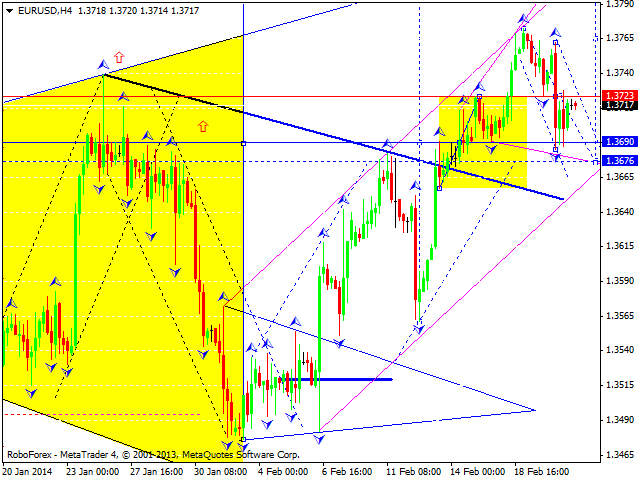
Euro is still being corrected. We think, today price may form another ascending structure and then fall down towards level of 1.3676. Later, in our opinion, instrument may continue moving upwards to reach level of 1.3900.

GBP USD, “Great Britain Pound vs US Dollar”

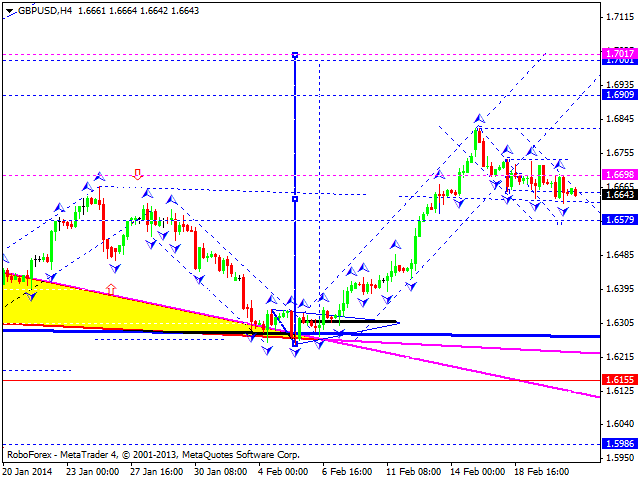
Pound is under pressure and still moving downwards to reach level of 1.6580. Later, in our opinion, instrument may form reversal structure and continue growing up towards level of 1.7000.

USD CHF, “US Dollar vs Swiss Franc”

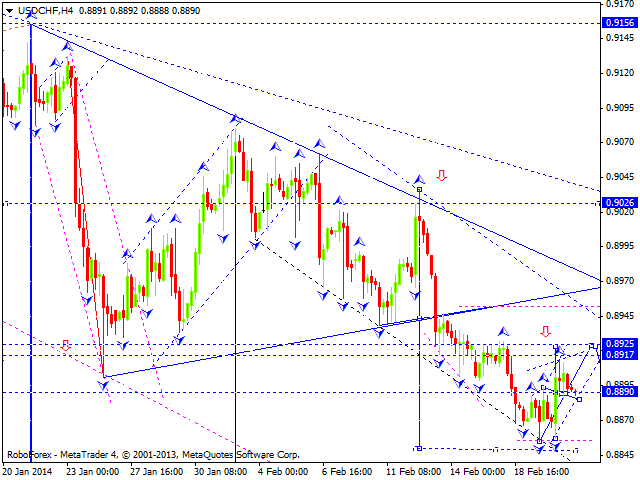
Franc is returning towards level of 0.8920. Later, in our opinion, instrument may form descending structure towards target at level of 0.8730.

USD JPY, “US Dollar vs Japanese Yen”

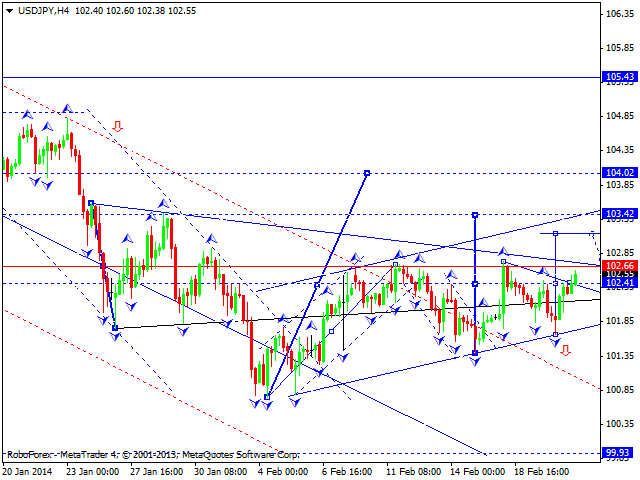
Yen is still moving according to main scenario and forming ascending structure of current correction with target at level of 104.00. Target of the third wave is at 103.40. Later, in our opinion, instrument may form the fourth wave at level of 102.40 and then complete this correction by forming the fifth wave at level of 104.00.

AUD USD, “Australian Dollar vs US Dollar”

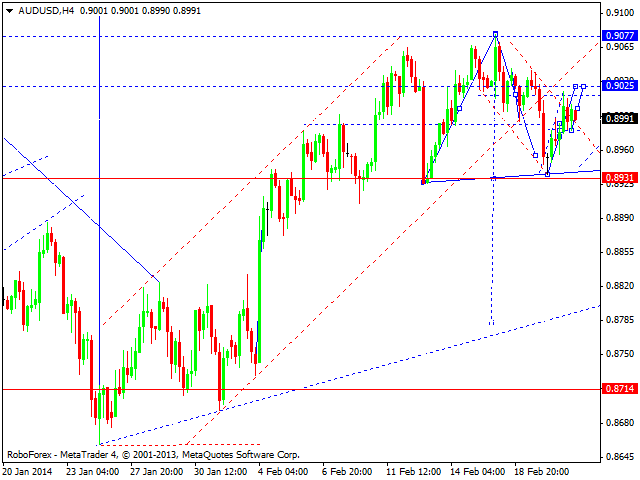
Australian Dollar returned to level of 0.9015. We think, today price may form another ascending structure towards level of 0.9025 and then continue moving inside descending trend to reach level of 0.8700.

XAU USD, “Gold vs US Dollar”

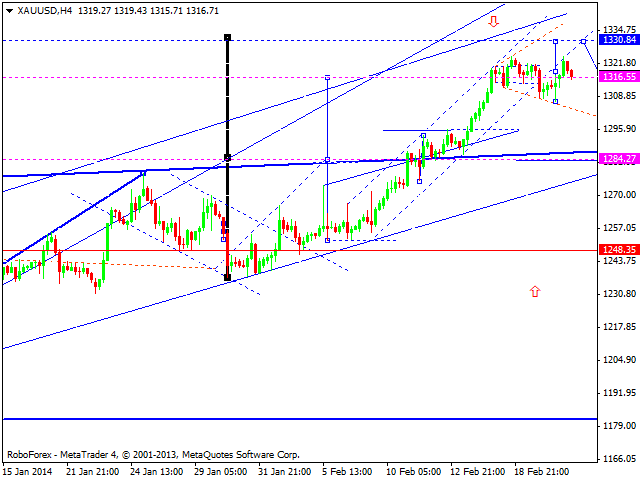
Gold is still forming consolidation channel near level of 1316. We think, today price may grow up and reach level of 1330. Later, in our opinion, instrument may form new correction towards level of 1285 and then form the fifth ascending wave to reach level of 1360.

RoboForex Analytical Department

Article By RoboForex.com

Attention!
Forecasts presented in this section only reflect the author’s private opinion and should not be considered as guidance for trading. RoboForex LP bears no responsibility for trading results based on trading recommendations described in these analytical reviews.