Article by Rayner Teo
Price action trading is one of the most popular trading strategies around due to it’s simplicity and fabulous internet marketing.
From my early days of trading I have been trading this approach religiously, and I can say that price action trading built the foundation of trading in me.
However despite trading it for 4 years, I wasn’t consistently profitable with this approach.
After much reflection, I realized there are 4 problems with price action trading that was holding me back. If you are a struggling price action trader, then I would like to share with you what these 4 problems are and how you can fix it.
Price action trading requires patience due to it’s low trading frequency. This is because it requires the trader to wait for confirmation at support & resistance. The confirmation could be in a form of Pinbar or Engulfing pattern.
Free Reports:
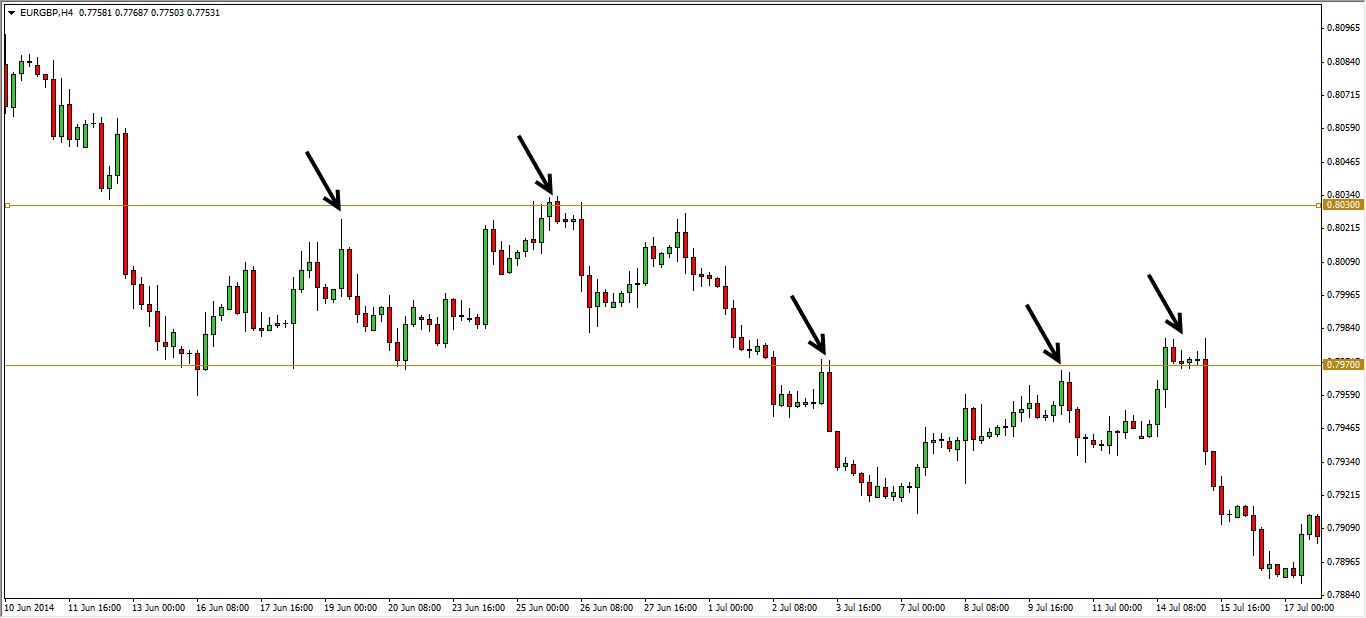
However by waiting for confirmation, traders tend to miss trading opportunities when price simply ‘touch and go’ at support & resistance levels.
I know it is heart wrenching to watch price bounce off your levels without being in the trade. So what can you do?
One way you can go about overcome this problem is to not wait for confirmation. That’s right,don’t wait for confirmation.
What you can do is identify your levels as per normal and trade without price confirming at your levels. You can try this on a demo.
After which compare it with your own trading account and see if there’s any difference in frequency of trades and profitability. You may be surprised at the results.
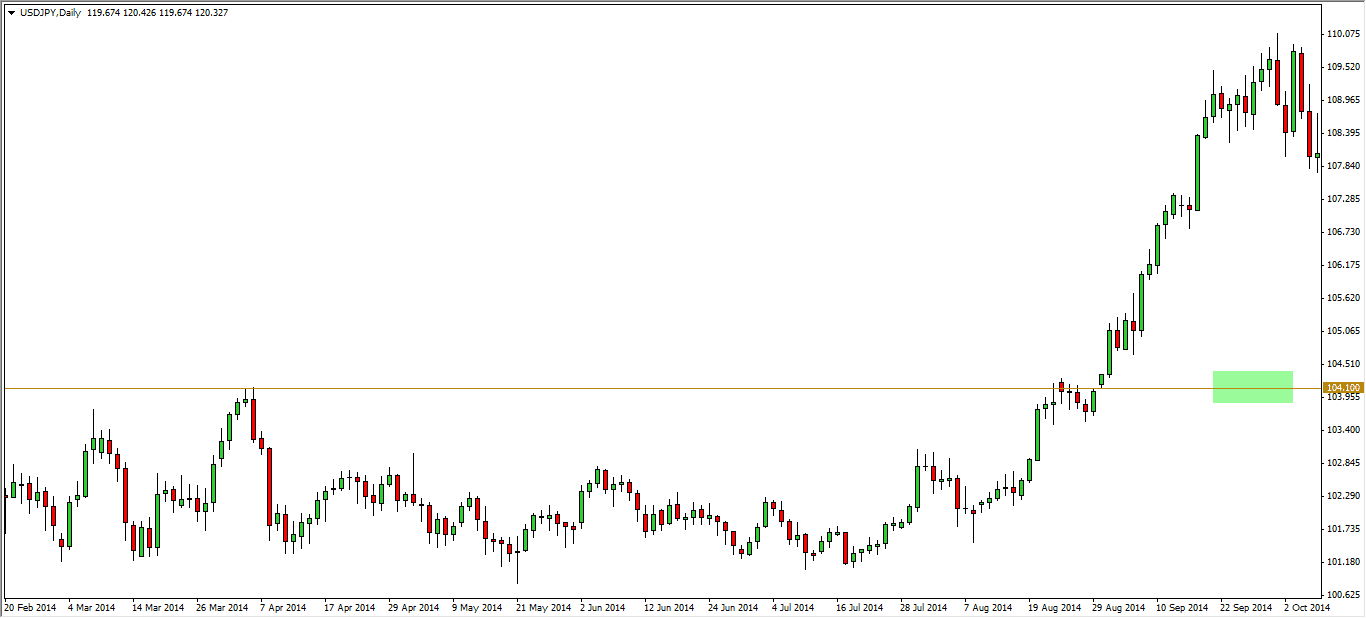
Price action traders would always wait for price to come to their levels as they don’t chase the market. Some of these levels could be support & resistance, or previous resistance turned support etc.
But in a trending market, often price does not come back to retest these levels due to the strong underlying momentum. This cause price action traders to be on the side line while the market is making a directional move. How?
An example below
One way to overcome this problem is to go down into the lower time frame and look for trading setups.
If price is making a parabolic move the daily timeframe, drill down to the 1 hour timeframe to find trading opportunities.
On the lower time frame you will notice that it has it’s own set of support & resistance, you can then look to trade these levels with the bias from the higher time frame.
Below you can see 3 possible trading opportunities that are not apparent on the daily timeframe.
If you read most trading books or attend trading courses, you will be taught to place your stops just beyond the highs/lows of the candle.
Thus it is no surprise that traders tend to place their stops at obvious levels. E.g. a few pips beyond the wicks of the candle, just above resistance, just below support or at round numbers.
Do know that the dealers are not stupid and they can have an educated guess where your stops are without looking at the order book. Yes those juicy support & resistance levels.
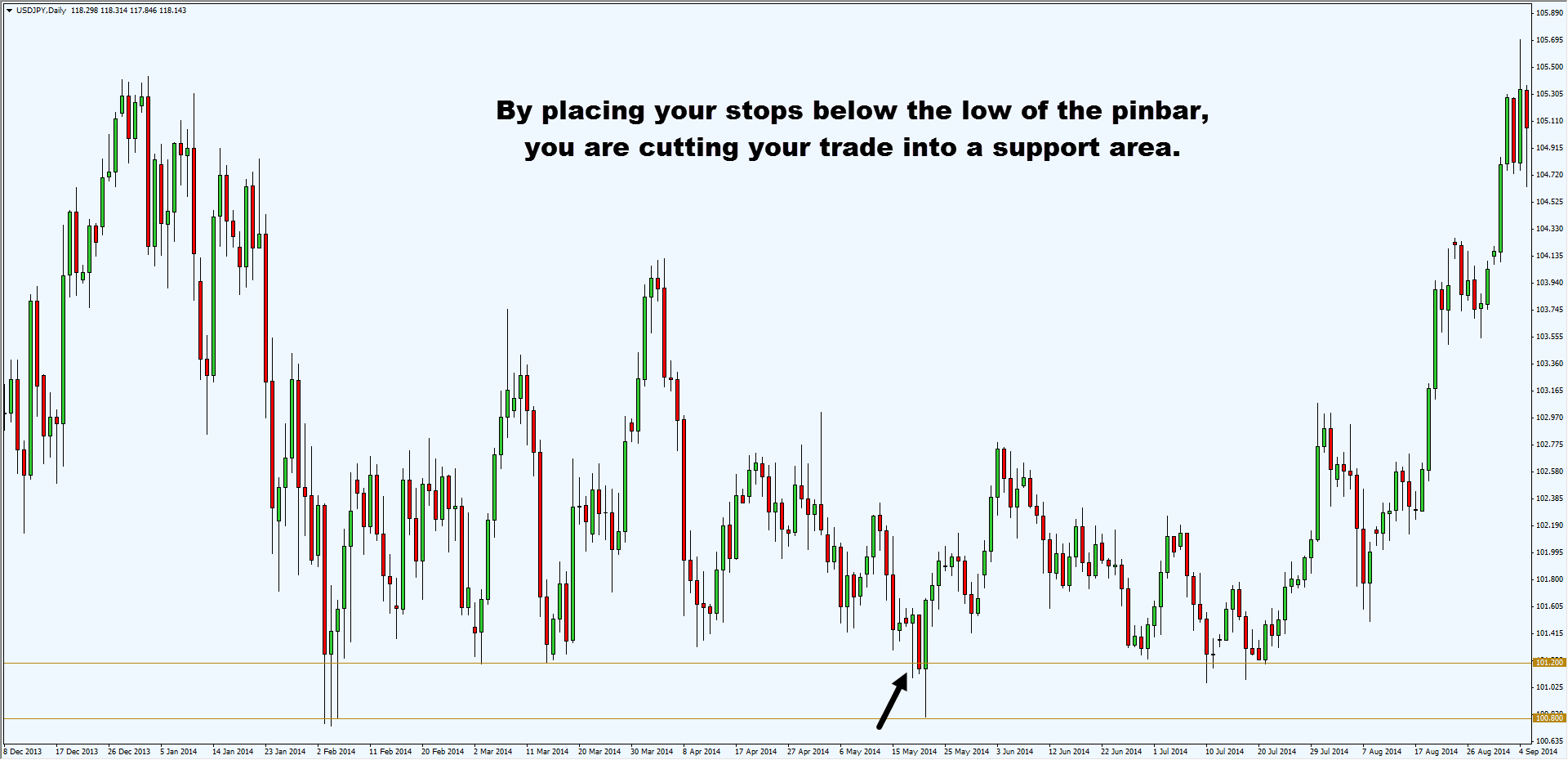
Because of this you will find yourself being stopped out of trades unnecessarily only to watch price go back in your favor. Rings a bell?
An example below
A solution to this problem would be to place your stops away from support & resistance, to prevent dealers trying to trigger your stops.
An approach you can consider is to use the ATR indicator to gauge how far away your stops should be.
This way if you do get stopped out, it’s a good indication that your support & resistance has failed to hold up.
From a price action trader’s point of view, candlestick patterns serve as confirmation to whether a level is holding up.
Candlesticks like the Pinbar and Engulfing pattern comes in all shape and sizes. But are they created equal? No. Because the larger the Pinbar or Engulfing pattern, the stronger the price rejection.
But what if I get a small looking Pinbar that lacks conviction, would I still trade it? How do I quantify the size of the Pinbar to trade?
One way to overcome this issue is to use the ATR indicator to gauge the volatility of the market I’m trading and compare it with the range of the Pinbar.
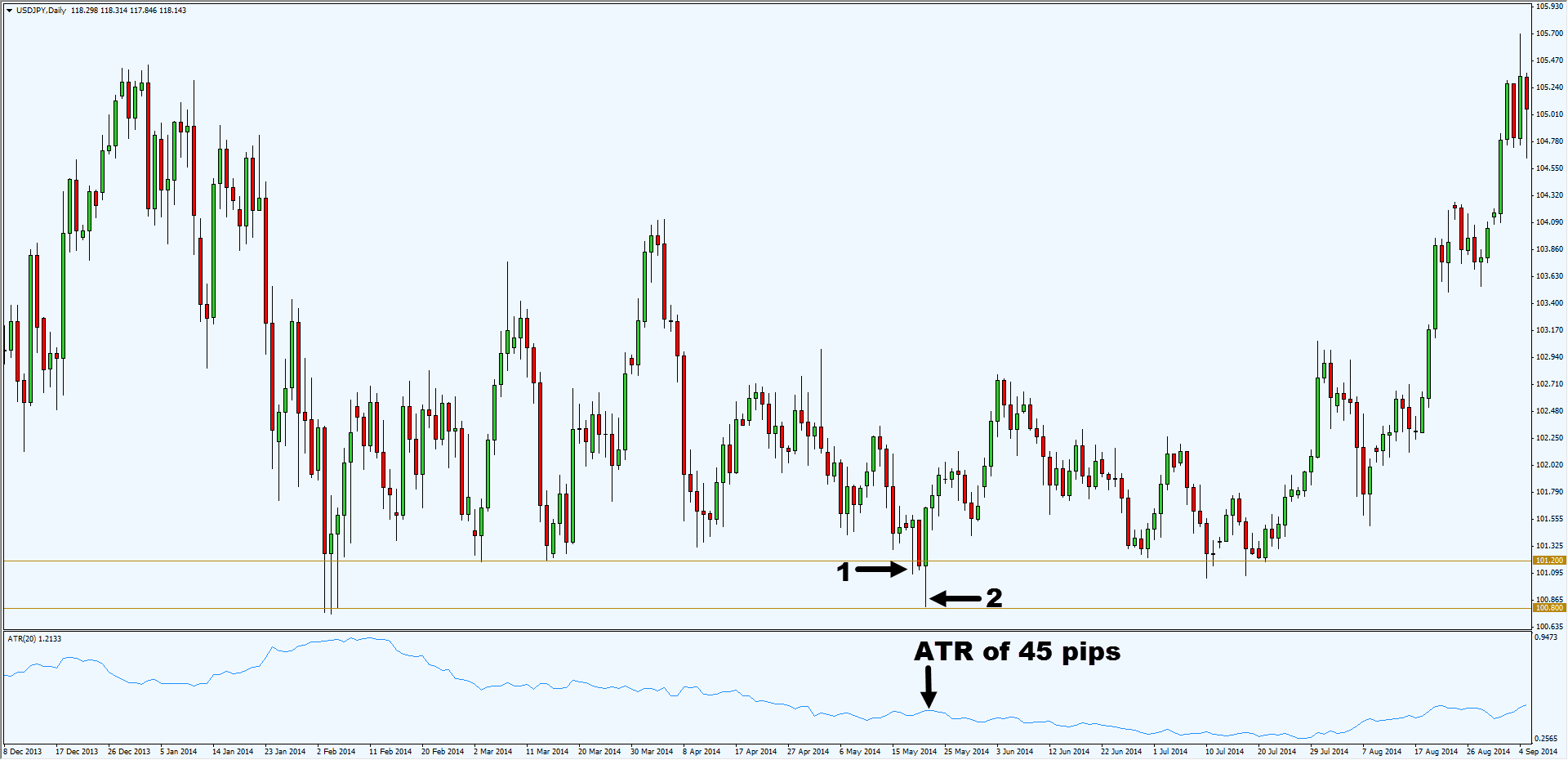
Technically speaking I will look for the Pinbar to have a range of at least 1.5 times the ATR.The larger the range compared to the ATR, the more conviction of the underlying move.
Looking at the chart below, the given ATR for that period is 45 pips. Then notice the range of Pinbar 1 is 45 pips, I would skip this pinbar as it is not 1.5 times the ATR.
Next, Pinbar 2 has a range of 85 pips! It is more than 2 times the ATR and tells me that there is conviction behind the move. I would choose this Pinbar to trade instead.
This method would allow you to identify Pinbar or Engulfing patterns which signifies stronger rejection at price levels.
There are many mentors out there teaching price action trading, but seldom do they discuss the issues that come with it.
I hope this post will give you heads up to the problems you may face and how you can overcome them.
To sum it up
If you have low number of trades and want to increase it, consider trading without confirmation.
If price doesn’t come to your level in a trending market, consider trading on a lower time frame.
If you find yourself being stopped out repeatedly, consider placing your stops away from support & resistance.
If you do not know if the candlestick pattern is large enough, consider using the ATR indicator to quantify it.
So, did you face any problems with price action trading?
Article by Rayner Teo, tradingwithrayner.com