“ECB Bazooka Needed” as Pressure on Spain “Set to Intensify”, Central Bank Action “Good for Gold”

London Gold Market Report
from Ben Traynor
BullionVault
Monday 3 September 2012, 06:30 EDT

SPOT MARKET gold prices hovered close to $1690 an ounce during Monday morning’s London trading, close to five month highs hit after Friday’s speech by US Federal Reserve chairman Ben Bernanke, in which he noted the US economic situation is “far from satisfactory”.

“Central banks are still hurtling towards more cash-printing,” one Hong Kong dealer told newswire Reuters Monday.

“They are under pressure to be doing something actively, which is good for gold.”

“Gold has broken through the topside of a large triangle pattern which had resistance at $1655,” adds the latest technical analysis from bullion bank Scotia Mocatta.

“The next resistance is the $1790 high from March.”

On the gold futures and options market, the so-called speculative net long – defined as the difference between bullish and bearish contracts held by non-bullion industry traders – rose to its highest level since early March last Tuesday, according to weekly figures published each Friday by the Commodity Futures Trading Commission.

Monday morning’s AM gold fix in London – which acts as a reference and clearing price for the professional bullion market – put the Euro price of gold at €1341.72 per ounce, the highest Euro fix price since 12 September 2011.

Euro gold prices breached €1340 per ounce on four trading days in September last year, which also saw record-high prices for US Dollar and UK Sterling investors.

Silver meantime hit $31.94 per ounce this morning – its highest level since April – while stock markets edged higher, with the exception of Spain’s Ibex.

European Central Bank chief Mario Draghi is due to appear before the European Parliament’s Committee on Economic and Monetary Affairs Monday to discuss the creation of a so-called banking union among Eurozone members.

The European Commission last week said it will recommend giving the ECB supervisory powers over all Eurozone banks, of which there are approximately 6000. German finance minister Wolfgang Schaeuble has argued that only the largest banks should be subject to a supranational regulator.

“If the German position prevails,” writes Wolfgang Munchau in the Financial Times, “the project of a banking union will have irrevocably failed…the Eurozone will remain a monetary union with nationally supervised and crisis-prone banks for the foreseeable future.”

The ECB should give a “credible signal” to markets that it will do what is necessary to contain sovereign borrowing costs when it makes its latest policy announcement this Thursday, the head of the Organisation for Economic Cooperation and Development Angel Gurria said Sunday.

“The ECB is the bazooka, the firepower, the muscle, the one that has the capacity to impress upon the markets and say: yes we will,” said Gurria.

The ECB has faced opposition to the idea of bond market intervention from some German policymakers, while it was reported last week that Bundesbank chief Jens Weidmann has considered resigning.

Draghi responded last week by insisting that “exceptional measures” may be required to fulfill the ECB’s mandate.

“Draghi’s announcement of intervention shows the robust will of the ECB to solve the problem,” said Spanish prime minister Mariano Rajoy in a press interview published over the weekend.

Benchmark yields on Spanish 10-Year bonds fell as low as 6.2% last month, having hit a Euro-era high of 7.7% in July, although they have crept higher since, hitting 6.9% this morning.

“The market is expecting a lot from the ECB,” says Bank of America Merrill Lynch economist Gustavo Reis.

“However, we [expect] little clarification on the bond-buying program. The likely market disappointment should intensify the pressure on Spain.”

Spain’s manufacturing sector, continued to contract last month, though at a slower rate than in July, according to purchasing managers index data published Monday.

PMI data for German manufacturing also suggest the sector shrank at a slower rate last month. The opposite was true for the Eurozone as a whole however, with manufacturing activity falling at a faster rate in August than a month earlier, according to PMI data.

Over in China, one of the world’s top two gold buying nations, official August PMI data published Saturday indicate reduced manufacturing activity for the first time since last November. HSBC’s alternative PMI measure, which focuses on smaller firms, also suggested manufacturing contracted last month.

Sales of gold coins by the US Mint meantime recorded their worst August since 2007, US Mint data show.

In South Africa, around 12,000 miners have been on strike since Wednesday at the KDC Gold Mine, operated by South African-listed Gold Fields.

“It appears that the strike is the result of an internal dispute between the local branch leadership of the National Union of Mineworkers and certain employee groupings within the NUM membership, who are demanding the resignation and replacement of local NUM branch office bearers,” says a statement from Gold Fields.

Ben Traynor
BullionVault

Gold value calculator   |   Buy gold online at live prices

Editor of Gold News, the analysis and investment research site from world-leading gold ownership service BullionVault, Ben Traynor was formerly editor of the Fleet Street Letter, the UK’s longest-running investment letter. A Cambridge economics graduate, he is a professional writer and editor with a specialist interest in monetary economics. Ben writes and presents BullionVault’s weekly gold market summary on YouTube and can be found on Google+

(c) BullionVault 2012

Please Note: This article is to inform your thinking, not lead it. Only you can decide the best place for your money, and any decision you make will put your money at risk. Information or data included here may have already been overtaken by events – and must be verified elsewhere – should you choose to act on it.


EUR/USD Hits 8-Week High Ahead of US Jobs Report

Source: ForexYard

The euro shot up to an eight-week high against the US dollar on Friday, following a speech from Fed Chairman Bernanke in which he hinted that new steps will soon be taken to boost the US economic recovery. This week, market volatility is almost guaranteed, as a batch of significant news is set to be released out of the US and euro-zone. Particular attention should be given to Thursday’s ECB Press Conference, followed by the US Non-Farm Payrolls on Friday. In addition, a speech from ECB President Draghi today and the US ISM Manufacturing PMI on Tuesday both have the potential to generate activity in the marketplace.

Economic News

USD – Bernanke Speech Results in Dollar Tumbling

The US dollar fell against most of its main currency rivals on Friday, following a speech from Fed Chairman Bernanke in which he restated that the Fed may soon take steps to boost the US economic recovery. The news resulted in risk taking among investors, which led to the safe-haven dollar turning bearish. Against the CAD, the greenback fell more than 70 pips for the day to reach as low as 0.9850 before staging a slight upward correction to finish the week at 0.9861. The USD/JPY hit a two-week low at 78.18 before bouncing back to 78.36 when markets closed for the weekend.

Turning to this week, the main piece of news is likely to be the US Non-Farm Payrolls figure, set to be released on Friday. The employment statistic is long considered the most important event on the forex calendar, and consistently leads to market volatility. This week, the indicator may take on added significance due to questions about whether the Fed will initiate a new round of quantitative easing this month. If Friday’s news comes in above the expected level, it may make the Fed less likely to take steps to boost the US economic recovery, which could lead to dollar gains.

EUR – ECB Press Conference Set to Generate Euro Volatility

Risk taking in the marketplace following a speech from US Fed Chairman Bernanke on Friday, resulted in major gains for the euro. Against the US dollar, the common-currency shot up more than 130 pips to reach an eight-week high at 1.2636. A slight downward correction brought the euro to 1.2573 when markets closed for the weekend. The EUR/JPY was up close to 100 pips in the first half of the day, reaching as high as 99.01, before correcting itself during afternoon trading. The pair closed the week out at 98.52.

This week, investors will be paying close attention to the euro-zone Minimum Bid Rate and ECB Press Conference, set to take place on Thursday. Speculations that the ECB will unveil new steps to lower Spanish and Italian borrowing costs on Thursday have boosted the euro in recent weeks. If a plan to combat the euro-zone debt crisis is finally revealed this week, the euro could see significant gains as a result. That being said, if investors are disappointed with the ECB’s plan, the common-currency could see bearish movement.

Gold – Gold Hits 5-Month High

Gold shot up to its highest level since April on Friday, as risk taking returned to the marketplace amid hopes that the Fed is getting ready to initiate a new round of quantitative easing. The precious metal advanced more than $34 an ounce following a speech from Fed Chairman Bernanke, to reach $1691.42 before markets closed for the weekend.

This week, whether or not gold continues its upward trend is likely to be dependent on Thursday’s ECB Press Conference. If a plan to combat the euro-zone debt crisis is finally announced, risk taking in the marketplace could send the precious metal higher.

Crude Oil – Crude Oil Rallies Following Bernanke Speech

The price of crude oil shot up close to $2 a barrel on Friday, as hopes that Fed will soon take steps to boost the US economic recovery were boosted following a speech from Fed Chairman Bernanke. Typically, any talk of plans to strengthen the US economy turns the price of oil bullish. The commodity closed out the week at $96.50, up from $94.48 at the beginning of the day.

This week, oil traders will want to continue monitoring announcements out of the US for clues as to what any steps the Fed may take will contain. In addition, the US Non-Farm Payrolls on Friday is guaranteed to generate volatility for oil Any better than expected news could signal to investors that demand in the US will go up, which may lead to additional gains for crude.

Technical News

EUR/USD

The Bollinger Bands on the weekly chart are beginning to narrow, signaling a possible price shift in the coming days. Furthermore, the Williams Percent Range on the same chart is approaching the overbought zone, indicating that the price shift could be downward. Opening short positions may be the wise choice for this pair.

GBP/USD

Most technical indicators on the daily and weekly charts show this pair range trading, making it difficult to make a long-term prediction. Traders may want to take a wait and see approach, as a clearer trend is likely to present itself in the near future.

USD/JPY

The daily chart’s Slow Stochastic appears close to forming a bearish cross, indicating that an upward correction could occur in the near future. Furthermore, the Williams Percent Range on the weekly chart has dropped into oversold territory. Opening long positions may be the right move for this pair.

USD/CHF

Long-term technical indicators are providing mixed signals for this pair. On the one hand, the MACD/OsMA on the weekly chart has formed a bearish cross, meaning that downward movement could occur. On the other hand, the same chart’s Williams Percent Range has fallen into oversold territory. Taking a wait and see approach may be the best choice for this pair.

The Wild Card

AUD/CHF

The daily chart’s Relative Strength Index has fallen into oversold territory, indicating that an upward correction could occur in the near future. Additionally, a bullish cross on the same chart’s Slow Stochastic is providing another signal that upward movement could occur. Forex traders may want to open long positions for this pair.

Forex Market Analysis provided by ForexYard.

© 2006 by FxYard Ltd

Disclaimer: Trading Foreign Exchange carries a high level of risk and may not be suitable for all investors. There is a possibility that you could sustain a loss of all of your investment and therefore you should not invest money that you cannot afford to lose. You should be aware of all the risks associated with Foreign Exchange trading.


USD/CHF: QE3 Views Weigh on the Greenback

Article by AlgosysFx Forex Trading Solutions

The US dollar is believed to continue losing ground alongside its fellow safe haven the Swiss franc today after Federal Reserve Chairman Ben Bernanke ignited hopes for further stimuli amid a deteriorating global economic backdrop. Manufacturing reports from China, the world’s second largest economy, underscore the challenges facing the global economy as demand continues to cool.

Two complementary reports have shown that weakening new orders have taken their toll on China’s vast factory sector, an ominous sign that the Chinese economy could weaken further in the third quarter. The HSBC China Manufacturing PMI fell to 47.6 points in August, its lowest reading since March 2009, down from 49.3 points in July. Over the weekend, the National Bureau of Statistics reported that China’s official PMI dropped to 49.2 points in August, the first time the reading fell below 50 since November 2011. The HSBC new orders sub-index dipped to its weakest reading since March 2009 as demand, particularly from the embattled Euro Zone, continues to fade.

Meanwhile, in a highly-awaited speech last Friday, Fed Chairman Ben Bernanke made the case for additional measures to spur the US economy as unemployment remains above 8 percent. Bernanke noted that the unemployment rate has seen no net improvement since January, forcing him to forecast that unless the economy begins to grow more quickly, the rate is likely to remain far above levels consistent with maximum employment for some time. As such, he said that “nontraditional policies” like a new round of bond purchases remains an option, repeating the Federal Open Market Committee’s statement that the central bank stands ready to provide additional policy accommodation as needed to stimulate growth. In its latest meeting last August 1, the Fed was seemingly moving toward additional action with many members saying more stimulus will be needed soon unless the recovery shows signs of sustainable strengthening. Bernanke’s reiteration of such intentions then raises the stakes for the Fed’s meeting next week, which could provide a venue for the central bank to launch a third round of quantitative easing, debilitating the Greenback in turn. With further Fed action seemingly in the cards, the US dollar is seen to weaken against the Swiss franc today, warranting a short position.

For more news, analysis, technical charts and candlestick analysis, visit AlgosysFx


The Art of Predicting Takeover Targets

Article by Investment U

I think we’ve all heard about the Best Buy (NYSE: BBY) takeover attempt by now.

The story goes that Founder Richard Schulze offered to buy the company somewhere in the range of $24 to $26 per share. When the announcement was made a few weeks ago, Best Buy shares shot up around 13%. That’s because if the proposed deal was to go through, a Best Buy shareholder stood to earn a premium of around 47% from the previous week’s close.

That’s a nice little return in such a short period of time.

And it got me wondering… “Wouldn’t it be nice to get in on an acquisitioned stock before the takeover bid was ever announced?”

Obviously, you could gamble and possibly get stuck with a dog of a company. That’s risky business.

Just because a company seems to be the right price for a takeover doesn’t mean you should automatically dabble. There are a lot of companies out there that are cheap for a reason – it’s because they have problems that no one wants to take on. So the important question is: Which companies are worth the risk?

So, how do you go about this?

Is there a market crystal ball or some special formula known only to market insiders? Not necessarily…

But what I did find is that Morningstar will make the decision for you, and then show you how they came up with their decision.

Morningstar’s Merger and Acquisition Insights Report for 2012

In 2011, Morningstar began to release their predictions on takeover targets. Potential targets were placed in categories like size, leverage, cash flow and by other industry specific quantitative and qualitative factors. More importantly, they went through their list and refined it to highlight the companies that appear undervalued so that everyday investors could get in on the action.

The merger and acquisition insights report for 2012, titled Economic Headwinds Shift Catalysts for Takeover Activity, is an in-depth look at investment ideas among a possible list of potential takeover candidates. It also gives merger and acquisition analysis by sector, credit implications of M&A activity and presents investing prospects for options investors.

According to Morningstar, this is how they came up with their list of potential targets:

  • Morningstar equity analysts identified 87 possible takeover targets spanning nine sectors: basic materials, consumer, energy, financial services, healthcare, industrials, technology/communication services and utilities.
  • The potential takeover targets for each of these sectors were determined by what Morningstar calls a “unique and proprietary scoring system” for each sector.
  • The system is based on industry-specific drivers of merger and acquisition activity, as well as factors such as free cash flow, management and capital structure.
  • Morningstar then examined its list of potential takeover candidates across all nine sectors and found 20 that stick out the most.
  • In their own words, Morningstar selected companies that are “the most attractively priced based on their price/fair value ratio and ranking in their respective, sector-specific potential takeover candidate list.”

A Strong Track Record So Far…

A good number of companies that Morningstar labeled as targets in 2011 accepted acquisition offers.

Some of those identified in the 2011 list of likely targets like BJ’s Wholesale (NYSE: BJ), Constellation Energy (NYSE: CEP), Massey Energy (NYSE: MEE), Petrohawk Energy (NYSE: HK), Pride International (NYSE: PDE) and Temple-Inland (NYSE: TIN) had all announced deals by year’s end. Each company experienced an increase in share price of at least 17% from the time Morningstar put them on the list to the time they accepted their offers.

If we look a little deeper, there were some really big winners. Constellation Energy was bought at a premium of 22% while Petrohawk Energy was taken over at a 96% premium.

From 2012’s initial crop of potentials, Amerigroup (NYSE: AGP) and Collective Brands (NYSE: PSS) were already purchased with premiums of 31% and 49% respectively.

This Year’s Updated List

So, here’s the deal. As investors, we want value stocks that other companies actually find attractive, and it seems like Morningstar is doing a pretty good job of picking them. Last month they took another look at the 2012 list and highlighted the following 16 companies:

  • Charles River Laboratories (NYSE: CRL)
  • Chico’s (NYSE: CHS)
  • Guess? (NYSE: GES)
  • ICON plc (Nasdaq: ICLR)
  • iRobot (Nasdaq: IRBT)
  • Leap Wireless (Nasdaq: LEAP)
  • Mosaic (NYSE: MOS)
  • Myriad Genetics (Nasdaq: MYGN)
  • Nasdaq OMX Group (Nasdaq: NDAQ)
  • NII Holdings (Nasdaq: NIHD)
  • Range Resources (NYSE: RRC)
  • Riverbed Technology (Nasdaq: RVBD)
  • Rockwell Automation (NYSE: ROK)
  • SandRidge Energy (NYSE: SD)
  • Stoneridge (NYSE: SRI)
  • Ultra Petroleum (NYSE: UPL)

What Else to Look For

I know some of you out there are “do-it-yourselfers.” You don’t have time to set up your own unique scoring system. But here’s something that might be helpful.

A popular ratio used by merger analysts to value deals is called the “Enterprise Multiple”- also referred to as EV/EBITDA. Let’s break it down…

The “EV” part of the equation is the enterprise value. It’s how much you would pay for all of a company’s shares and pay off its debt holders. Then you apply the company’s cash to the deal. “EBITDA” is an acronym for the company’s earnings before interest, taxes, depreciation and amortization. It’s mostly useful for making comparisons among companies. Luckily for those who aren’t so gifted with numbers, you can access the EV/EBITDA for most companies on their Yahoo! Finance page under “Key Statistics.”

The reason the enterprise multiple is so useful for this application is that it takes into account debt that other popular valuation ratios do not. And debt is certainly something a company taking over another company factors in…

Low EV/EBITDA ratios, say below eight, may signal an undervalued company. But be mindful that enterprise multiples can be different across industries so high growth industries will have larger multiples and expect lower multiples in industries with slow growth.

Good Investing,

Jason

Article by Investment U

When the Safest Investments Turn Risky

Article by Investment U

Many investors lump money market funds in with Treasury bills and certificates of deposit. Don’t be one of them.

Treasury bills and CDs are backed by the full faith and credit of the United States government. Money market funds are not.

Yes, the federal government had its credit rating taken down a notch last year. But a U.S. government guarantee still means something powerful and important in a risky and uncertain world.

Read your history and you’ll find that the money market industry has a few blemishes. In 1994, for instance, Community Bankers U.S. Government Money Market Fund “broke the buck.” The fund’s net asset value dropped to 96 cents on the dollar, a shock to shareholders who believed their money was “completely safe.”

In 2008, thanks to the collapse of Lehman Brothers, the Reserve Primary Fund broke the buck again. This time investors fared a little better, receiving 99.04% of their funds. But it also sparked a panic.

Investors rushed to liquidate their money market funds and move them into guaranteed bank accounts. Their actions destabilized an already fragile financial system. The federal government took the unprecedented step of backstopping money market funds to avert a meltdown.

“Losses Are Entirely Possible Again”

Of course, the financial crisis is behind us now and money markets are safe again, right?

Hold on. For starters, the federal guarantee on money market funds ended nearly three years ago, on September 18, 2009. Losses are entirely possible again. And money market fund assets have grown from roughly $4 billion in the mid-1970s to approximately $2.5 trillion today. As economist Art Laffer points out, this is the size of the Federal Reserve’s entire balance sheet.

Also, the SEC recently turned down a couple of sensible proposed regulations. And investors are the worse off for it.

Don’t get me wrong. I’m an unrepentant capitalist and sharp critic of senseless or burdensome regulations. But the primary proposal here was to establish reserve requirements and require that money market fund share values be marked to market, rather than held at the fixed one-dollar level that has been the industry practice since money markets were created in 1971.

If you were the shareholder of an uninsured, unguaranteed fund whose assets were falling in value, wouldn’t you want to know about it as soon as possible rather than hold on to an illusion? Me too. But the interests of the mutual fund industry – not to mention all the corporations and municipalities who use money markets as a vehicle for short-term funding – won out over the interests of fund shareholders.

“An Uninsured Mutual Fund”

What should you do? First, understand that a money market is an uninsured mutual fund. And while the government may step up again in a full-blown financial crisis, there is no guarantee of this.

Most money funds, commonly called “prime” funds, invest in commercial paper and repurchase agreements, as well as Treasuries. But if you are highly risk-averse or have large cash balances, you should hold money market funds that invest solely in U.S. Treasury securities. Yes, the income is taxable and the yields are pathetically low, but we’re talking about safety here. You will almost certainly lose ground to inflation but your principal is secure.

Some will say this is only necessary for the truly paranoid. But I disagree. True, the chances of losing money in a regular money market fund are small. But since all money markets pay next to nothing at the moment, the cost of this insurance is low.

In the event of another financial crisis, you’ll have peace of mind. And you won’t find yourself using technical jargon like shoulda, woulda, or coulda.

Good Investing,

Alex

Editor’s Note: Alex has written in the past about his disdain for bonds in this zero-rate environment. But there is a type of bond that Alex does see an opportunity in – as long as you follow a strict disciplined strategy, such as Steve McDonald’s.

Steve calls these particular bonds “liberty certificates,” and he was kind enough to share one of the recent recommendations from his Oxford Bond Advantage service with Investment U Plus subscribers for today’s issue on money market funds.

For more information on how to access Steve’s pick and upgrade your account to Investment U Plus for just $5, click here.

Article by Investment U

Why It’s Time to Buy the Cheapest Market in the World

Article by Investment U

To put it mildly, there is not much I like about Russia.

A couple of weeks ago, I highlighted to you Russia’s abysmal record on economic freedom. It ranks a pathetic #144 ranking in the 2012 Index of Economic Freedom.

Political freedom? What can you say about a government that puts a renegade band in jail for two years just because it doesn’t like their lyrics?

Still, I had to smile when I checked my Pacific Rim country portfolio this week and saw that the Market Vectors Russia ETF (NYSE: RSX) was the top recent performer – up around 18% since being added to the portfolio just a few months ago.

Given my antipathy towards the country, why on earth I did I add it in the first place?

It was, and remains, a dirt-cheap stock market.

According to the Financial Times, the Russian market is now trading at just 5.7 times earnings compared to 16.9 times for India, 15.1 times for the S&P 500 index, 19.4 times for the Philippines and 18.4 times for Mexico.

Is Siberia the Next Canada?

Why is it so cheap? Well in addition to the reasons I have already highlighted, Russia is one giant commodities play – an area out of favor with investors at the moment.

Roughly 70% of the Russian stock market is made up of resource stocks. The country is the world’s largest oil producer and the second largest oil exporter. On top of this, Russia is the world’s second largest natural gas producer and exports twice as much as its nearest competitor, Norway.

So when energy resource stocks are moving – so is the Russian market. Though, I have noticed that it always seems to trade at lower valuations than its peers. It’s also interesting to note that Russia has outperformed China over the last decade with a compounded return measured in US dollars of 325% versus China’s 247%.

Russia Finally Joining the WTO

There are also some developments that have recently made me watch Russia even more carefully…

First, just last week, after 19 years of painful negotiations, Russia finally joined the World Trade Organization (WTO). According to the World Bank, WTO membership will drive medium-term GDP up by 11% and could boost its growth rate by up to 3% per year. Under the terms, Russia must commit to a series of regulations that promise to energize domestic growth and encourage foreign investment.

In addition, maybe up to now protected industries will get moving through a dose of badly needed international competition.

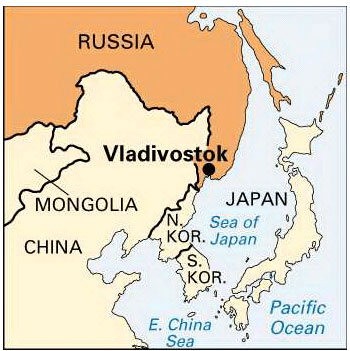
Second, Russia is steadily shifting its attention and resources to its Pacific Rim frontier. Anchored by the city of Vladivostok, Russia is stepping up its trade and investment outreach to countries such as China, South Korea and Japan.

Why It’s Time to Buy the Cheapest Market in the World

(Source: Encyclopedia Brittanica)

In fact, over the past five years, bilateral trade with Japan has already doubled and trade with South Korea has tripled. This is just the beginning as the Pacific century unfolds.

In addition to ample supply of energy resources, Russia has geography in its corner. It takes only 2-4 days to get raw materials from Russia’s Asian frontier to China compared to weeks for many of its competitors.

Finally, despite the bad headlines, the Russian economy is chugging along pretty well with about a 4% growth rate. One of the largest food retailers and BMW sales are both growing at a 30% annual clip.

Pundits are always warning investors about “falling in love” with their stocks. I say be careful not to hate them too much – you will miss opportunities.

Good Investing,

Carl

Article by Investment U

Three Warnings Signs for Gold Bugs

Article by Investment U

Many investors today are still fearful about the economy and that another global recession could be just around the corner.

For example, the other day an elderly gentleman told me he’s worried that hyperinflation of the U.S. dollar is likely imminent. He also said he’s afraid that stocks are set up for a massive correction any day now.

As a result, he confidently stated he wouldn’t touch equities and he’s piling his money into gold instead.

I like gold. But it seemed odd this man would make such a drastic move with his money because he really doesn’t know what’s going to happen in the future any more than I do.

In fact, I have heard this doomsday story about the economy for well over two years now and have yet to see things fall apart.

Yes, we did experience a major recession in 2008 and it did ruin people’s lives.

There are also a number of major concerns, such as our government’s soaring debt, the unemployment rate, and Europe, which must still be addressed before we’re out of the woods completely.

But investors completely ignoring the stock market and buying gold in droves today could really be the ones setting themselves up for disaster.

Because while it’s a good thing to own some gold in your portfolio, going all-in on any investment is really just as risky as putting all your money in one stock.

It’s an investment based on emotion, not strategy.

In fact, when comparing gold prices to other commodities, the world’s most popular precious metal actually seems overpriced at current levels.

And you may be surprised just how detached gold prices when compared to other commodities according to one indicator.

By As Much As 74%

The Thomson Reuters Equal Weight Continuous Commodity Index (CCI) is often considered a key indicator of how commodity prices stack up against each other.

It’s an index on the ICE Futures Exchange that consists of 17 commodity futures, which are continuously rebalanced.

According to InsiderMonkey.com, historically, the price ratio of gold to the CCI has averaged 1.66. Today that ratio is about 2.89.

In other words, when measuring gold to other commodities, it’s overvalued by as much as 74%.

Now, I wouldn’t expect gold prices to plummet that much anytime soon.

But these days, gold bugs do have a couple of red flags to be aware of.

  1. Global demand for gold has fallen consistently for the past four quarters straight. And the drop can mainly be pinned on India and China, which account for about 44% of global gold demand. According to MetalMiner, India’s gold demand is down 13% from the first quarter, and 38% year over year. Meanwhile, China cut its demand back by an incredible 43% from the first quarter. If demand for gold continues to fall, supply will increase, bringing gold prices down further as a result.
  2. The U.S. housing market is making a comeback. The Los Angeles Times just reported, for the first time in about two years, all 20 major metro areas tracked by the S&P/Case Shiller Index are up. This signals housing prices have likely found a bottom, which many economists said would be the turning point for the U.S. economy. Plus, it gives the Fed incentive not to provide anymore stimulus to the economy, which also would drag gold prices down.
  3. Rising Interest Rates. Although the Fed has vowed to keep rates low through 2014, that doesn’t mean they have to. And typically the price of gold is negatively correlated with interest rates. When rates finally do rise you may see something similar to what happened in the early 1980’s when the price of gold collapsed. Think about it, who would want to be earning next to nothing holding a hunk of metal once bank accounts begin paying decent interest again?

It’s not all bad news for gold though. As Matthew Carr has written about in the past, we’re about to enter the bullish season for gold prices.

The end of fall is known for being a time gold prices typically head higher. Coincidentally, it’s also right around the Diwali wedding season in India which should provide gold with a slight boost on its own. Chinese holidays also boost demand during this time of the year.

But before you go piling all of your cash into gold like the man I spoke with last week, just realize the future of gold prices may not be as shiny as the metal appears.

Good Investing,

Mike

P.S. Earlier this year, Alexander Green provided seven reasons why he felt holding more than 5% of your assets in gold was a gamble. He also predicted gold was unlikely to go much higher. Even with its recent rally, gold is still only about 2% higher than when Alex wrote his article.

To see Alex’s full essay on why gold is far from a sure thing, click here.

Article by Investment U

Monetary Policy Week in Review – Sept 1, 2012: Brazil nears end to easing cycle

By Central Bank News

   The past week in monetary policy saw interest rate decisions by six central banks around the world, with two (Brazil and Hungary) cutting rates, three banks (Israel, Norway and Georgia) keeping rates unchanged while Tunisia cut its rates.
    Of special note was Brazil’s latest cut in interest rates and the bank’s message that the end to its year-long rate cutting campaign is drawing near.
   LAST WEEK’S MONETARY POLICY DECISIONS:

COUNTRYNEW RATECURRENT RATERATE 1 YR AGO
ISRAEL2.25%2.25%3.25%
HUNGARY6.75%7.00%6.00%
NORWAY1.50%1.50%2.25%
BRAZIL7.50%8.00%12.00%
TUNISIA3.75%3.50%4.00%
GEORGIA5.75%5.75%7.50%

NEXT WEEK:
      The central bank calendar for next week gets busy, with the main focus on the European Central Bank that is expected to reveal further details about its plan to limit the yield on sovereign bonds, at this point mainly in southern Europe.

COUNTRYMEETINGCURRENT RATERATE 1 YEAR AGO
AUSTRALIA4-Sep3.50%4.75%
CANADA5-Sep1.00%1.00%
POLAND5-Sep4.75%4.75%
THAILAND5-Sep3.00%3.50%
EURO ZONE6-Sep0.75%1.50%
SWEDEN6-Sep1.50%2.00%
UNITED KINGDOM6-Sep0.50%0.50%
MALAYSIA6-Sep3.00%3.00%
PERU6-Sep4.25%4.25%
SERBIA6-Sep10.50%11.25%
MEXICO7-Sep4.50%4.50%
   www.CentralBankNews.info


US unemployment due to cyclical, not structural reasons – Jackson Hole paper

By Central Bank News

    The high number of unemployed, a politically charged issue in the U.S. presidential campaign, is mainly due to the depth of the economic slump following the financial crises rather than structural factors, according to a paper presented to the Jackson Hole Symposium.
    And even the large number of long-term unemployed, which exceeds that of previous recessions, is caused by the severity of the recession not by structural factors that are beyond the reach of central banks, according to the paper by Edward Lazear of Stanford University and James Spletzer of the U.S. Census Bureau.
    Their finding has implications for monetary policy because “cyclical declines in employment are the explicit target of the US Federal Reserve bank and at least implicitly are the concern of the central banks of other countries as well,” Lazear and Spletzer wrote.
    Their paper was presented to central bankers, finance ministry officials and other financial market participants during a morning session on the last day of the conference.


   The high rates of unemployment that followed the global economic crises and recession from 2007-2009 lead many observers to conclude that structural changes have occurred in the labor market and the days of low unemployment will never return.
    But Lazear and Spletzer cannot find any support for this thesis.
    “An analysis of labor market data suggests that there are no structural changes that can explain movements in unemployment rates over recent years, they wrote in  “The United States Labor Market: Staus Quo or A New Normal.” 
    “The current recession does not appear fundamentally different from prior ones, except that it is worse,” they said, adding:
    “One exception is that the ratio of long-term unemployed to total unemployed is higher than it was in prior recessions including recessions with comparable unemployment rates. However, this is not due to any observed structural change, but rather to the depth of the current recession.”
    www.CentralBankNews.info