Market Trends 04.01.2013

Source: ForexYard

printprofile

Hey Everyone,

Below are some market trends for today.

Good luck!

-Dan

Gold- May see downward movement today
Support- 1625.74
Resistance- 1658.79

Silver- May see downward movement today
Support- 28.23
Resistance- 30.45

Crude Oil- May see upward movement today
Support- 91.27
Resistance-93.17

Dax 30- May see upward movement today
Support- 7681.47
Resistance- 7850.00

EUR/USD May see upward movement today
Support- 1.2933
Resistance- 1.3110

Read more forex news on our forex blog

Forex Market Analysis provided by ForexYard.

© 2006 by FxYard Ltd

Disclaimer: Trading Foreign Exchange carries a high level of risk and may not be suitable for all investors. There is a possibility that you could sustain a loss of all of your investment and therefore you should not invest money that you cannot afford to lose. You should be aware of all the risks associated with Foreign Exchange trading.

Can This Month’s NFP Report Send Oil Prices Higher?

Source: ForexYard

printprofile

Can This Month’s NFP Report Send Oil Prices Higher?

At FOREXYARD, we believe in keeping our clients prepared for potentially significant news events. As such, traders will want to pay careful attention to the US Non-Farm Payrolls (NFP) report, set to be released today, January 4th, at 13:30 GMT. As can be seen in the chart below, following a better than expected NFP report last month, speculations that demand for oil in the US would go up resulted in crude prices spiking.

NFP 4.1.2012

Don’t miss out on another opportunity to capitalize on market volatility!

Analysts widely agree that the Non-Farms report is the most significant news event on the forex calendar. With today’s figure forecasted to come in at 135K, slightly below last month’s 146K, the US dollar could see losses before markets close for the weekend. That being said, a better than expected NFP report could lead to investor risk taking, which would boost oil prices. This is an excellent opportunity for forex traders to take advantage of potentially significant news, so don’t miss out!

Read more forex news on our forex blog

Forex Market Analysis provided by ForexYard.

© 2006 by FxYard Ltd

Disclaimer: Trading Foreign Exchange carries a high level of risk and may not be suitable for all investors. There is a possibility that you could sustain a loss of all of your investment and therefore you should not invest money that you cannot afford to lose. You should be aware of all the risks associated with Foreign Exchange trading.

Market Review 04.01.13

Source: ForexYard

printprofile

The US dollar hit a fresh 2 ½ month high against the JPY during overnight trading, as speculations that the Bank of Japan will soon initiate aggressive monetary easing policies continued to weigh down on the Japanese currency.

Fears that US lawmakers will fail to reach a deal to raise the nation’s borrowing limit before the government runs out of money in the next two-months, led to risk aversion in the marketplace and caused the euro to extend its bearish trend against the USD.

Gold took fairly significant losses during early morning trading today, while crude oil prices have remained relatively steady at $92.20 a barrel since last night.

Main News for Today

US Non-Farm Employment Change- 13:30 GMT
• The employment figure, widely considered the most significant event on the forex calendar, is forecasted to come in at 150K, slightly higher than last month’s 146K
• A better than expected result may lead to risk taking in the marketplace, which would boost higher-yielding assets like the euro, crude oil and AUD

US Crude Oil Inventories- 16:00 GMT
• Forecasted to come in at -0.7M, which if true, would signal an increase in oil consumption in the US which may cause oil prices to turn bullish during afternoon trading

Read more forex news on our forex blog

Forex Market Analysis provided by ForexYard.

© 2006 by FxYard Ltd

Disclaimer: Trading Foreign Exchange carries a high level of risk and may not be suitable for all investors. There is a possibility that you could sustain a loss of all of your investment and therefore you should not invest money that you cannot afford to lose. You should be aware of all the risks associated with Foreign Exchange trading.

Friday Charts: Spendaholics, Sovereign Debt and Proof That Emerging Markets Matter

, Chief Investment Strategist, wallstreetdaily.com

It’s Friday in the Wall Street Daily Nation. And longtime readers know what that means…

I’m selecting a handful of graphics to put important economic and investing news into perspective for you.

This week, I’m dishing on non-stop government spending, the importance of emerging markets and the next sovereign debt crisis.

So say “goodbye” to long-winded commentary. Instead, say “hello” to easy-to-understand pictures and some quick-hit observations.

Certainties: Death, Taxes… and More Government Spending

Finally! Congress reached a compromise to avert the dreaded Fiscal Cliff.

Don’t worry about all the details contained in the 154-page bill, though. This graphic tells us all we need to know.

What Spending Problem? (Part 1)

As you can see, all the new taxes don’t go very far towards covering up Washington’s spending problem for the coming year.

Lest you think I’m manipulating statistics to try to hide a delayed benefit, here’s another chart from the non-partisan CBO. It shows the impact of the compromise over the next decade.

What Spending Problem? (Part 2)

I still see a (spending) problem somewhere – do you?

Definitive Proof That Emerging Markets Matter

Do you doubt the significance of emerging markets? Here’s proof that they’re a really, really big deal.

And yet, according to BlackRock, investors only allocate 5% of their capital on average to emerging markets.

Call me crazy, but I bet that allocation goes up in the future – and rightfully so.

If you want to get a head start, a little birdy mentioned something about South Korea. (Details are here.)

Cry for Argentina!

The United States narrowly averted a fiscal crisis. For now, at least. But not all countries promise to be so lucky. Particularly Argentina.

Argentina is the only country that witnessed an increase in the cost to insure against a default last year, as represented by credit default swap (CDS) prices.

That’s not the only troubling statistic, either.

Since 1800, Argentina has reneged on its debt seven times. (Fun fact: That’s one more time than Greece over the same period.)

So that makes Argentina a serial defaulter and debt restructurer.

Misery loves company, Argentina. Greece is waiting.

That’s it for today. But before you sign off, do us a favor. Let us know what you think about this weekly column – or any of our recent work at Wall Street Daily – by sending an email to [email protected], leaving a comment on our website, or catching us on Facebook or Google+.

Ahead of the tape,

Louis Basenese

wallstreetdaily.com


view article: http://www.wallstreetdaily.com/2013/01/04/friday-charts-fiscal-cliff/

Central Bank News Link List – Jan. 4, 2013: End of stimulus? Why it isn’t all bad news

By www.CentralBankNews.info

Here’s today’s Central Bank News link list, click through if you missed the previous link list. The list comprises news about central banks that is not covered by Central Bank News. The list is updated during the day with the latest developments so readers don’t miss any important newsg)

Gold Falls 3.3% in a Day as FOMC Minutes Suggest QE Could End This Year

London Gold Market Report
from Ben Traynor
BullionVault
Friday 4 January 2013, 07:00 EST

WHOLESALE Gold Prices fell below $1630 per ounce Friday morning in London, their lowest level since last August and 3.3% below where they were 24 hours earlier, while stocks and commodities also fell and the Dollar gained after Federal Reserve minutes appeared to suggest some policymakers see a case for ending quantitative easing this year.

At its policy meeting last month, the Federal Open Market Committee voted to buy $45 billion of US Treasury bonds per month to support the economy, adding to the $40 billion a month of agency mortgage backed security purchases announced in September.

The minutes from that meeting published Thursday however show that some FOMC members “thought that it would probably be appropriate to slow or to stop purchases well before the end of 2013”.

“The news that some policymakers suggested that the Fed could withdraw QE before the end of year, that put a dent on one of the underpinnings on gold, which is expansionary monetary policy,” says Mark Luschini, chief investment strategist at US broker-dealer Janney Montgomery Scott, which managed $15 billion in assets.

“The Fed stimulus program has been a key driver behind gold,” agrees Ed Meir, metals analyst at brokerage INTL FCStone.

“Removing such an instrumental prop could impact the precious metal dramatically, especially if it was done in rather heavy doses. However, the market that will reel most is the US Treasury market, although commodity in general should feel a blow-back as well through a stronger dollar and/or weaker equity prices.”

Like gold, silver also fell after the FOMC minutes were published, hitting a low of $29.26 an ounce this morning – a daily drop of 5.8% and also its lowest level since August.

Heading into the weekend, gold looked set for a 1.9% weekly drop by Friday lunchtime in London, while silver was down 2.7% on the week.

Broad commodity prices also fell Friday, with oil down more than $1 a barrel on the day, while the US Dollar Index, which measures the strength of the Dollar against other major currencies, touched a six-week high.

Elsewhere in the Fed minutes, the Summary of Economic Projections shows most FOMC members do not expect the Fed will need to raise interest rates until 2015 at the earliest, at which time they forecast the unemployment rate will have fallen to the 6.5% target announced last month.

Later today, the latest US nonfarm payrolls report is due out at 08.30 EST, with the market expecting it to say 150,000 jobs were added to the US economy last month, according to the consensus forecast among analysts. The unemployment rate is expected to hold steady at 7.7%.

Over in Europe, stock markets extended yesterday’s losses this morning, giving up more of the gains that followed Tuesday’s US fiscal cliff deal.

Service sector growth in France and Germany slowed last month, according to purchasing managers index data published Friday, while UK services activity shrank.

HSBC meantime has cut is gold price forecast for 2013. HSBC analysts now say they expect gold to average $1760 an ounce this year, down from the previous forecast of $1850, although they expect to see prices gain from current levels.

“We believe that gold prices will recover this year and retain a pronounced bullish posture,” a note from the bank says.

“[Fed interest rates]are likely to remain at current low levels until sometime in 2015 [and] other major central banks have also adopted conventional or unconventional easing of monetary policy.”

HSBC’s silver price forecast was left unchanged at $32 an ounce average price this year.

Ben Traynor
BullionVault

Gold value calculator   |   Buy gold online at live prices

Editor of Gold News, the analysis and investment research site from world-leading gold ownership service BullionVault, Ben Traynor was formerly editor of the Fleet Street Letter, the UK’s longest-running investment letter. A Cambridge economics graduate, he is a professional writer and editor with a specialist interest in monetary economics. Ben writes and presents BullionVault’s weekly gold market summary on YouTube and can be found on Google+

(c) BullionVault 2012

Please Note: This article is to inform your thinking, not lead it. Only you can decide the best place for your money, and any decision you make will put your money at risk. Information or data included here may have already been overtaken by events – and must be verified elsewhere – should you choose to act on it.


US Non-Farm Payrolls Set to Create Significant Market Volatility Today

Source: ForexYard

Speculations that US lawmakers will be unable to reach an agreement to boost the nation’s borrowing limit before the government runs out of money in the next two-months, boosted safe-haven assets yesterday. Both the US dollar and Japanese yen saw upward movement as a result against their higher-yielding currency rivals. Today, the main piece of economic news is likely to be the US Non-Farm Payrolls (NFP) report, set to be released at 13:30 GMT. Widely considered the most important indicator on the forex calendar, the NFP report is certain to generate significant market volatility.

Economic News

USD – All Eyes on US Employment Data Today

The US dollar saw gains against most of its main currency rivals yesterday, as attention shifted away from the recent “fiscal cliff” agreement, to the US debt ceiling. Lawmakers now have two month’s to reach an agreement to raise the nation’s borrowing limit before the government runs out of money. Concerns that an agreement will not be reached in time led to risk aversion, which boosted the safe-haven greenback.

The USD/CHF gained close to 50 pips during the European session to eventually trade as high as 0.9241, before a minor downward correction brought the pair to 0.9229. The GBP/USD fell more than 90 pips during the same time period to trade as low as 1.6143 before bouncing back to the 1.6170 level.

Today, all eyes will be on the US Non-Farm Payrolls (NFP) figure, set to be released at 13:30 GMT. Analysts are predicting that US employers added 135K jobs in December, slightly less than November’s final result of 146K. If the indicator comes in below the expected level, safe-haven currencies like the USD and JPY could see bullish movement before markets close for the weekend. Conversely, a better than expected NFP report will likely boost riskier assets, including crude oil, the euro and the AUD.

EUR – Euro Extends Losses amid Risk Aversion

The euro took losses against several of its currency rivals yesterday, as new fears that the US government will soon reach its limit to borrow funds led to risk aversion in the marketplace. The EUR/USD fell close to 80 pips during the European session, eventually reaching as low as 1.3082, before bouncing back to the 1.3100 level. Against the Japanese yen, the euro lost more than 100 pips to trade as low as 113.62, before bouncing back to 113.90 during the afternoon session.

As markets get ready to close for the weekend, euro traders will want to pay close attention to today’s US Non-Farm payrolls report. A better than expected result is expected to generate risk taking in the marketplace, which could help the euro recoup some of its recent losses. In addition, Italian and Spanish service data, set to be released during the morning session, could benefit the common-currency if they come in above their expected levels.

Gold – Gold Takes Losses amid Dollar Gains

The price of gold saw downward movement yesterday, as risk aversion in the marketplace boosted the safe-haven dollar, which made the precious metal more expensive for international buyers. Gold fell close to $12 an ounce during European trading, to trade as low as $1675, before bouncing back to $1681 during the afternoon session.

Turning to today, gold traders will want to focus on the US Non-Farm Payrolls figure and its impact on the USD. A better than expected figure is expected to weaken the safe-haven greenback, which could boost gold prices before markets close for the weekend.

Crude Oil – US Inventories Data Set to Impact Oil Prices Today

After reaching a three-month high earlier in the week, the price of crude oil saw relatively little movement yesterday as investors hesitated to open large positions ahead of US inventories data today. The commodity fell some $0.45 during early morning trading, to trade as low as $92.50, before bouncing back to $92.90 during afternoon trading.

Today, in addition to key US employment data which is expected to generate volatility in oil prices, traders will want to pay attention to the US Crude Oil Inventories figure at 16:00 GMT. Analysts are predicting that the figure will come in at -1.9M, which if true, would signal an increase in US demand and boost oil prices before markets close for the weekend.

Technical News

EUR/USD

The Bollinger Bands on the weekly chart are narrowing, indicating that a price shift could occur in the near future. Furthermore, the Williams Percent Range on the same chart has crossed over into overbought territory, signaling that the price shift could be downward. Opening short positions may be the wise choice for traders today.

GBP/USD

While the Williams Percent Range on the weekly chart is in overbought territory, most other long-term technical indicators are currently in neutral territory, making a definitive trend difficult to predict at this time. Taking a wait and see approach may be the best choice for traders, as a clearer picture is likely to present itself in the near future.

USD/JPY

The Relative Strength Index on the weekly chart has crossed into overbought territory, indicating that a downward correction could occur in the near future. This theory is supported by the daily chart’s Williams Percent Range, which is currently at -10. Opening short positions may be the wise choice for this pair.

USD/CHF

A bullish cross on the weekly chart’s Slow Stochastic is signaling that this pair could see an upward correction in the coming days. Additionally, the Williams Percent Range on the same chart has dropped into oversold territory. Traders may want to open long positions today, ahead of possible upward movement.

The Wild Card

Crude Oil

The Relative Strength Index on the daily chart has crossed into overbought territory, indicating that a downward correction could occur in the near future. Furthermore, the Slow Stochastic on the same chart has formed a bearish cross. This may be a good time for forex traders to open short positions, ahead of possible downward movement.

Speculations that US lawmakers will be unable to reach an agreement to boost the nation’s borrowing limit before the government runs out of money in the next two-months, boosted safe-haven assets yesterday. Both the US dollar and Japanese yen saw upward movement as a result against their higher-yielding currency rivals. Today, the main piece of economic news is likely to be the US Non-Farm Payrolls (NFP) report, set to be released at 13:30 GMT. Widely considered the most important indicator on the forex calendar, the NFP report is certain to generate significant market volatility.

Forex Market Analysis provided by ForexYard.

© 2006 by FxYard Ltd

Disclaimer: Trading Foreign Exchange carries a high level of risk and may not be suitable for all investors. There is a possibility that you could sustain a loss of all of your investment and therefore you should not invest money that you cannot afford to lose. You should be aware of all the risks associated with Foreign Exchange trading.


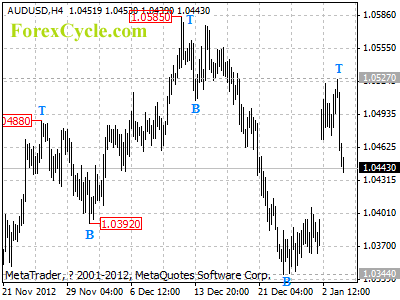
AUDUSD has formed a cycle top at 1.0527

AUDUSD has formed a cycle top at 1.0527 on 4-hour chart. Pullback to 1.0420 area would likely be seen. Key support is at 1.0344, as long as this level holds, the fall could be treated as correction of the uptrend from 1.0344, another rise to test 1.0585 resistance is still possible. On the downside, a breakdown below 1.0344 will signal resumption of the downtrend from 1.0585, then further decline to 1.0200 area to complete the downward movement could be expected.

audusd

Daily Forex Forecast

The Talisman of Fear: Why Gold Remains the Foundation of Wealth

By MoneyMorning.com.au
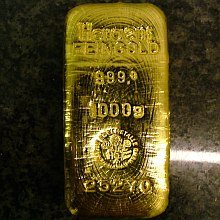
gold is the foundation of wealth and your best wealth insurance policy

‘The other and by far the major defect is that it is the talisman of fear. Fear, Mr Bond, takes gold out of circulation and hoards it against the evil day. In a period of history when every tomorrow may be the evil day, it is fair enough to say that a fat proportion of the gold that is dug out of one corner of the earth is at once buried again in another corner.’ – Auric Goldfinger to James Bond in Ian Fleming’s Goldfinger


We can honestly say we’ve never been a fan of James Bond films. There is a zero percent chance of your editor watching Skyfall…ever.

We’re not sure why. We think it’s because we associate the James Bond series with dull and sleepy Christmas Day and Boxing Day afternoons as a youngster.

But when late last year we got hold of the entire back catalogue of the James Bond books on our Kindle, we started reading them (at the beginning with Casino Royale)…and they had us hooked.

As it happens, on New Year’s Day we finished the seventh book in the series, Goldfinger. It’s where we grabbed the quote you see at the top of this letter.

If you’re not familiar with the book, in short, Auric Goldfinger is a gold smuggler for the Soviets. His ultimate plan is to rob Fort Knox of its gold. Needless to say, James Bond foils the plan. But we won’t give away the full storyline.

As Mr Goldfinger says, gold ‘is the talisman of fear.’ That was true a thousand years ago. It was true in 1959 when Ian Fleming first published Goldfinger. And it is true today…

We’ve got two messages for you. First, ditch the James Bond movies and grab the books instead. We guarantee you’ll never watch another Bond movie again.

Second, yesterday the Dow Jones Industrial Average added 308 points. The day before the blue-chip Aussie index gained 52 points, and yesterday it added 34 points.

But look at what the talisman of fear tells you today?

Despite the surging stock markets and the avoidance of the so-called (yawn) Fiscal Cliff, the talisman of fear is at USD$1,679.

That’s just 12% below the record peak reached in 2011, when the gold price went on a tear leading up to the US debt ceiling crisis and the expected US credit rating cut.

So we ask a simple question: if everything is so great, and if the US is so close to solving its debt and budget problems, why is the talisman of fear barely 12% below its all-time high?

It doesn’t make sense. That’s why, as we wrote yesterday, we love it that the stock market has soared. We’ll take those gains…we’ll take them straight to the bank.

As we’ve always said about gold, we consider it an insurance policy. Just because we didn’t have a car accident yesterday, doesn’t mean we’ll cancel our car insurance policy today.

But there’s another reason why the gold price has held up, and why it will soon hotfoot it higher again. The reason is in Exter’s Prophecy…

Gold is the Foundation of Wealth

Our old pal Dan Denning has told his readers about Exter’s Prophecy in the Daily Reckoning and in his monthly investment advisory, the Denning Report.

The secret to Exter’s Prophecy is in an inverse pyramid. Much like the one below:

Exeter's Pyramid

The text is difficult to read on this diagram, so we’ll let Dan explain the meaning of the inverse pyramid:


‘The pyramid is made up of all the assets in the financial system. At the bottom is gold, an asset that cannot default.

‘Gold is the foundation of the pyramid. It’s real money and bedrock wealth. As you work your way up, the assets slowly change. You go from real money (gold), to paper money (cash), to government bonds.

‘In Exter’s time, the top of the pyramid was risky debt. For example, loans made by the big banks to Latin American countries occupied the top of the pyramid. Today we call it “emerging market debt”. But the point is, anything at the top of the pyramid is actually someone else’s promise to pay you. It’s usually debt, not real, tangible wealth.’

Who was Exter? We’ll leave Dan to explain that in this report. Plus he includes why it’s important for you to understand the significance of Exter’s pyramid.

But put simply, gold is still where it is because everything that’s above gold in Exter’s pyramid still exists.

Will You Live Long Enough to Retire?

There is still paper money in use in every economy on earth.

There is still trillions of dollars-worth of government debt on issue around the world. Even a so-called safe country like Australia has $261.8 billion (more than a quarter of a trillion) in outstanding debt.

And there is still corporate debt, securitised debt, private businesses, real estate…and at the top of the pile, derivatives and unfunded government liabilities.

None of those things – not one – are going away anytime soon.

And as long as they exist, and the more they grow (as they inevitably will), gold becomes more valuable.

Auric Goldfinger says that a ‘fat proportion’ of the world’s mined gold will end up buried in a corner somewhere. Darn right it will. Because there’s another important message in Exter’s pyramid. It’s this…

The pyramid shows more than just the order of safe to risky assets. The pyramid shows the order, or the progression, of the economic collapse. First the derivatives, then the unfunded government liabilities…

(Make no mistake, you won’t get from the government what they’ve promised you, they just haven’t admitted it yet…wait for the government to raise the retirement age to 80 and then 85 within the next five to ten years.)

And so on, until the only asset standing is gold. When will that happen, and how long will it take? The ‘when’ is now. It’s been going on since 2007…if not before.

The ‘how long’ is unknown. It could be this year, the next, or in 10 or 20 years. No one knows. That’s why we recommend holding gold as an insurance policy. But there’s more to it than that. And that’s why we also suggest you take a few minutes to read Dan’s recent report into the secrets of Exter’s Prophecy.

Cheers,
Kris.

From the Port Phillip Publishing Library

Special Report: The Fuse is Lit

Daily Reckoning:
The Great Monetary Devolution Away from the Gold Standard

Money Morning:
Australian Stocks: Still the Best Wealth Builder in Town

Pursuit of Happiness:
Gun Control: Did Obama Shed Tears for These Kids?

Diggers and Drillers:
Five Reasons Why Gold Stocks Are Set to Rebound

Why Inflation is the Economy’s Hidden Iceberg in 2013

By MoneyMorning.com.au

inflation the hidden iceberg

Even though Ben Bernanke’s Fed has kept interest rates close to zero, inflation hasn’t been a big problem since the 2008 financial crisis.

Despite what many observers have expected inflation has remained quite tame.

However in 2013, that may be about to change. One factor that might cause a surge in inflation is the fiscal cliff.

That’s because Bernanke is already buying $1 trillion of Treasury and housing agency bonds each year ($85 billion per month) against a budget deficit that is about the same level.

That means the inflow of funds to the economy from the Fed and the outflow of money to fund the government’s spending are about balanced.

However, if we go over the fiscal cliff the Federal deficit immediately falls to about $300 billion per annum. At that point, Bernanke would be injecting an extra $700 billion a year into the US economy – which would have a corresponding inflationary effect.

The Case for Higher Inflation

But that’s only part of the inflationary story.

Central banks around the world are also expanding their money supply. China has become more expansive, the European Central Bank is buying bonds of the continent’s dodgier governments and Britain like the United States is monetizing nearly all the debt it creates to fund its budget deficit.

The big change in 2013 is now in Japan, where the new Abe government has told the Bank of Japan it wants much more buying of government bonds, to push the inflation rate up to 2%.

And just as Bernanke’s money creation increases inflation internationally, Japan’s new monetary push creation will likely increase inflation here in the United States.

In this case, the excess money creation will get transmitted to inflation mostly through commodity prices.

The Thomson Reuters/Jeffries CRB Continuous Commodity Index closed recently at just over 300, about double its value ten years ago. And after a period of weakness in 2011-12, the index has recently showed renewed strength.

Now I admit, doubling in ten years may not sound very impressive, but that’s a rate of increase of 7% per annum. It only follows that if the basic elements of everything we consume are increasing in price at 7% per annum, then it’s impossible to believe prices overall will rise by only 2% in the future.

In one respect, we’ve been lucky when it comes to natural gas prices. Thanks to new ‘fracking’ techniques the US natural gas prices have been cut in half over in the last four years.

This has given both consumers and producers a boost, and kept inflation down. But the bad news is that natural gas prices appear to have bottomed out around April 2012, and are now well above their low. Going into 2013, higher natural gas prices may well be inflationary as well on the commodities side.

Why You Can’t Trust the Inflation Figures

An additional factor tending to increase inflation is the tendency of official statistics to under-report it. This has not gone as far as in Argentina, where real inflation runs around 30% while official figures report inflation of 10%. Still, the official U.S. price indexes have since 1996 been distorted by ‘hedonic’ prices, which adjusts prices downwards for the supposed ‘hedonic’ advantage of chip capacity and speed enhancements in the tech sector. The effect of this appears to be about 1% a year, and it can be adjusted for.

However, a second fudge is about to be introduced. It’s the ‘chain weighted’ price indexes that both political sides have agreed to use to calculate social security and other payments.

The problem with chain weighting is that it assumes that consumers change their consumption patterns optimally according to price movements. In practice, actual human consumers cannot do this because they do not know in advance what relative price movements are coming. If they did it would be the equivalent of a ballplayer batting 1.000.

Here’s why…

Consider an economy with two substitutable products – call them widgets and grommets. Initially both have the same price, but everyone buys widgets, which are slightly superior.

Then let’s assume the price of widgets doubles in year 1. Everyone may switch to grommets, but these have not increased in price, and so the chain-weighted price index remains static.

Then in year 2, let’s say the price of grommets doubles while that of widgets remains at the new higher level – so everyone switches back to widgets. But since these have not risen in price in year 2, the chain-weighted price index again remains constant.

So after 2 years, the prices of widgets and grommets have both doubled, but the price index hasn’t moved at all. As I said, chain-weighting is a nothing more than a government fiddle.

The bottom line is that there’s a substantial chance of a sudden upsurge in inflation in 2013, though the government statistics may reflect it only very grudgingly.

That will increase the costs of everything we buy, whatever the official statistics say.

Martin Hutchinson
Contributing Editor, Money Morning

Publisher’s Note: This is an edited version of an article that originally appeared in Money Morning (USA)

From the Archives…

Why Small-Cap Stocks Could Be Your Best Investment in 2013
14-12-2012 – Kris Sayce

How the Global Oil Grab Affects You…
13-12-2012 – Byron King

The Price of Risk in the Stock Market
12-12-2012 – Murray Dawes

Why Silver Could Be the Best Investment in 2013
11-12-2012 – Dr. Alex Cowie

The Long, Drawn Out Retreat in Australian House Prices
10-12-2012 – Dr. Alex Cowie

Read more articles about inflation.