Gold “Needs to Break Above $1620 for Momentum”, European Leaders “Bullying” Cyprus

London Gold Market Report
from Ben Traynor
BullionVault
Friday 22 March 2013, 08:30 EST

U.S. DOLLAR gold prices continued to hover around $1610 per ounce Friday morning, dipping back below that level after making gains in Asian trading, while stocks and commodities were flat on the day ahead of a vote by Cyprus’s parliament on measures aimed at raising money and securing a bailout.

“[Gold’s] $1620 high from Feb 26 will be a key level,” says the latest technical analysis from bullion bank Scotia Mocatta.

“If we can close above there, it will open up a test of the top of the bearish trend channel, currently at $1643.”

“The slow movement in prices has really drained the interest in the market,” one Hong Kong trader told newswire Reuters this morning.

“If we can break through $1620, more people will take a look at it and think maybe there will be some momentum.”

Heading into the weekend, gold looked set to record its biggest weekly gain since November by Friday lunchtime in London, up around 1% from last week’s close.

By contrast, the world’s biggest gold exchange traded fund, the SPDR Gold Trust (ticker GLD), was on course for its 12th week of outflows, having lost 11.7 tonnes between last Friday and yesterday.

Since the start of 2013 the GLD has seen the volume of gold held to back its shares drop by nearly 10%.

GLD investors “are exiting at more than twice the rate of sales at the nearest US competitor [the iShares Gold Trust, IAU] as a rebounding economy dims the appeal of bullion,” reports news agency Bloomberg.

Gold in Euros meantime looks set to record its fourth straight weekly gain later today, despite dropping back below €1250 an ounce as the Euro ticked higher against the Dollar.

“[Gold’s gains this week are] due to substantial short-covering by speculative funds,” says a note from VTB Capital, “as the Cyprus crisis has reminded markets that significant potential pitfalls remain in Europe… However, gold remains in a strong downtrend since the failed attempt to break above $1800 in October.”

Silver meantime drifted back towards $29 an ounce this morning, having broken above that level during Thursday’s trading.

Lawmakers in Cyprus are due to vote today on plans for a national solidarity fund aimed at raising the €5.8 billion needed to secure a €10 billion bailout, after talks with Russia failed to secure financial support.

Options to be discussed include using state assets as collateral for selling bonds and the imposition of capital controls to reduce deposit withdrawals when banks reopen, as they are scheduled to do next Tuesday.

Politicians are also expected to discuss restructuring the banking sector, with the European Central Bank saying it will cut off emergency liquidity provision on Monday for any banks it considers insolvent.

A plan to split Cyprus’s second-biggest lender Laiki into “good” and “bad” banks has been rejected by European leaders, the Financial Times reports today, with German chancellor Angela Merkel objecting to the idea of nationalizing Cypriot pension funds.

“There was some discussion of going back to the original plan of a bank levy,” the FT quotes an unnamed source, “but there are objections from the [Cypriot] central bank.”

Cypriot lawmakers rejected plans earlier this week that would have imposed a levy of 6.75% on deposits below €100,000 and 9.9% on those above that level.

“The European project is crashing to earth,” former Cyprus central bank governor Athanasios Orphanides says in an FT interview, adding that conditions attached to a potential bailout have made “a mockery” of European Union treaties.

“We have seen a cavalier attitude towards the expropriation of property and the bullying of a people,” Orphanides says.

Elsewhere in Europe, German businesses have become more pessimistic this month about current and future economic conditions than they were in February, according to IFO survey data published this morning.


Ben Traynor

BullionVault

Gold value calculator   |   Buy gold online at live prices

Editor of Gold News, the analysis and investment research site from world-leading gold ownership service BullionVault, Ben Traynor was formerly editor of the Fleet Street Letter, the UK’s longest-running investment letter. A Cambridge economics graduate, he is a professional writer and editor with a specialist interest in monetary economics. Ben can be found on Google+

(c) BullionVault 2013

Please Note: This article is to inform your thinking, not lead it. Only you can decide the best place for your money, and any decision you make will put your money at risk. Information or data included here may have already been overtaken by events – and must be verified elsewhere – should you choose to act on it.

 

If Silvio Berlusconi Couldn’t Blow Up Europe, Then Neither Will Cyprus

By The Sizemore Letter

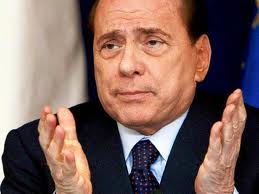
Berlusconi

So I hung parliament. Sue me.

If Silvio Berlusconi couldn’t set off a Eurozone crisis, then there is little chance that Cyprus will.

Is this reasoning a little on the simplistic side?  Yes.  But that doesn’t mean it isn’t completely true.

For anyone not up to speed on the matter, Cyprus is days away from national bankruptcy and systematic bank failure unless they come to an agreement with the “Troika” of the European Commission, the European Central Bank and the IMF.  How did they get into this mess?  Essentially, Cyprus’ massive banking sector borrowed heavily and used the proceeds to buy Greek government bonds, among other questionable investments.  Cyprus also happens to be a convenient place for wealthy Russians to dodge taxes and launder money; about 25% of the deposits in Cypriot banks belong to Russian nationals.

Germany and the rest of the EU has a hard time asking their taxpayers to guarantee the deposits of shady Russian billionaires, which is essentially what they would be doing if they bailed out Cyprus.  This is why they demanded that Cyprus fund part of the bailout with a levy on uninsured bank deposits (i.e. deposits not covered by Cyprus’ equivalent of the FDIC).

The Cypriot parliament vetoed the deal…which brings us to today.  The ECB gave Cyprus an ultimatum to reach a deal with its lenders by Monday…or the emergency liquidity funds being provided to its banks would be cut off.

Suffice it to say, it’s going to be a long weekend in the Eastern Mediterranean.

And this brings me back to the opening lines of this post.  The indecisive Italian election last month, in which a resurgent Silvio Berlusconi prevented the market’s preferred center-left coalition from getting a majority, caused a few days of market volatility.  But it most certainly did not cause the Eurozone to collapse into crisis again.  And likewise, the Cyprus standoff—which may well result in Cyprus ditching the euro—has caused a few days of volatility but little else.

Call it the “Draghi put” or call it crisis fatigue, but the message is clear.  A year ago, this would have caused a massive market crash and fevered speculation that the Eurozone was coming unwound. But today, the market has stopped reacting to bad news.  And that is unambiguously bullish.

I wouldn’t touch Cyprus with a ten-foot pole right now.  The country’s banking system will probably be wiped out before all is said and done, and it’s far too early to try your luck at bargain hunting.  But I would take the recent volatility as an opportunity to accumulate shares of blue chips in Spain and Italy.

One stock in particular that I like is Spanish banking giant Banco Santander (NYSE:$SAN).  Santander is a solid bank with an international deposit and lending base.  If you believe, as I do, that the Eurozone is stable for now, then Santander is a steal.

Action to take: Buy shares of Banco Santander.  Plan to hold for 12-18 months or for total returns of 100% or more.  Set an initial stop loss near the November lows just below $7.00.

This article first appeared on TraderPlanet.

SUBSCRIBE to Sizemore Insights via e-mail today.


The post If Silvio Berlusconi Couldn’t Blow Up Europe, Then Neither Will Cyprus appeared first on Sizemore Insights.

Is This the Mila Kunis Top?

By Investment U

In case you haven’t noticed, the market has been on a tear. Since mid-November, the S&P 500 is up 16%. It has gone practically straight up since February 26. It’s gone up 10 of the last 13 trading sessions.

So it’s no surprise that bears and skeptics are looking for reasons for the market to turn south.

And last week they got a good one. Actress Mila Kunis told CNBC she’s started investing in stocks.

That got wannabe contrarians in a lather, calling a market top. It must be, they suggest, when a 29-year-old who is better known for playing opposite Ashton Kutcher in That 70′s Show rather than for her financial acumen starts spouting off about the stock market.

I’m guessing, however, that most of those calling a top didn’t watch the interview. Kunis was asked what she does with her money. She mentioned she’s very conservative and likes to keep it in the bank, but is being “pushed” to invest in stocks. So it sounds like she’s getting some good guidance from her financial adviser.

There is no reason why someone with decades before retirement should be in all cash. It’s not like Kunis is pretending to be a financial expert, because she’s made a few good trades.

Which brings us to Rachel Fox. The 16-year-old actress has been making the rounds on financial television, advocating the benefits of day trading. The Desperate Housewives star is apparently a successful day trader and blogs about her thoughts on the market and individual stocks.

Fox doesn’t use fundamental or technical analysis, she just claims to have a feel for stocks and can tell when they’re overbought or oversold.

That got the contrarians going. When a 16-year-old actress trades stocks based on feel and then goes on TV to talk about it, the bull market must surely be near its end.

Or when a wrong-way Corrigan ex-Fed chairman, Allan Greenspan, says stocks are not overvalued, surely they must be. Right?

Signs of a top?

Just because a beautiful woman who doesn’t know much about the markets, a kid who thinks she does, or an octogenarian with a lousy track record, say that stocks are a good investment, doesn’t mean they aren’t.

Not There Yet…

For sentiment to be at extremes, we need everyone talking about stocks, not just a few people who make us snicker. Remember during the dot-com boom when taxi drivers were giving stock tips? When doctors and lawyers were day trading from their offices, or even giving up their practices entirely?

Or how about during the housing boom when instead of trading eBay (Nasdaq: EBAY), those same doctors and lawyers were flipping houses? When everyone was seemingly investing in real estate because “it’s the only way to make money.” That’s when sentiment is at an extreme.

We’re not there yet.

And valuation is certainly not at an extreme level.

The S&P 500 is currently trading at 15.3 times earnings. Over the past six years, the average has been 15.4. Since 1871, the average has been 15.5. So stocks are hardly overvalued.

But let’s give the naysayers the benefit of the doubt for a moment. Let’s call this the Kunis top. (I prefer the image of a Kunis top rather than a Greenspan top.)

The market has always come back to hit new highs after a bear market. If you’re invested for the long term, you should have nothing to worry about. For those of you with a short time horizon, go ahead and sell your stocks to Mila Kunis. Maybe it is the top. Or maybe we have another 100% to go before this bull has run its course. I don’t try to time the market, so I’m not too worried about it.
Rather, what I do is invest in great companies that pay rising dividends.

Those stocks tend to outperform no matter what the broad market is doing. And if the market goes against me, I get paid 4% to 6% to wait it out – reinvesting those dividends at lower prices if we do in fact experience a bear market.

So let people mock Kunis, Fox and Greenspan. Maybe those who are looking at this trio as a contrarian indicator will get lucky and will time this thing right – although few people ever do. You should just stick to your plan and not worry about what others are saying about the market – or even worse, what others are saying about what others are saying about the market. Even if those others are A-list Hollywood starlets.

Good Investing,

Marc

Editor’s Note: Marc outlined his 10-11-12 System for building significant wealth with dividends in his best-selling book, Get Rich With Dividends. And now he’s launching a special monthly newsletter – along with three exclusive portfolios – based on his system and how to generate superior income in any market.

It’s called The Oxford Income Letter, and the timing couldn’t be any better. Marc has spotted what he thinks will be a make-or-break event for our retirement goals. And it could hit as soon as April 4. In his brand new report – over $100,000 and 17 months in the making – Marc lays the groundwork for his current investment thesis. To learn more, click here.

Article By Investment U

Original Article: Is This the Mila Kunis Top?

Central Bank News Link List – Mar 22, 2013: Cyprus risks euro exit after EU bailout ultimatum

By www.CentralBankNews.info Here’s today’s Central Bank News link list, click through if you missed the previous link list. The list comprises news about central banks that is not covered by Central Bank News. The list is updated during the day with the latest developments so readers don’t miss any important news.

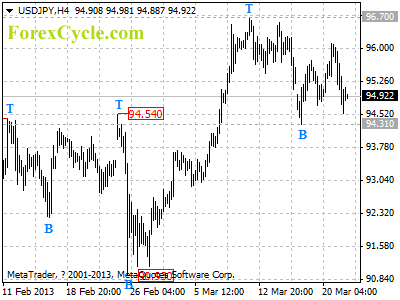
USDJPY moves sideways between 94.31 and 96.70

USDJPY moves sideways in a trading range between 94.31 and 96.70. The price action in the range is likely consolidation of the uptrend from 90.93. As long as 94.31 support holds, another rise towards 100.00 is still possible after consolidation, and a break above 96.70 resistance could signal resumption of the uptrend. On the downside, a breakdown below 94.31 support will suggest that the uptrend from 90.93 had completed at 96.70 already, then the following downward movement could bring price back to 92.00-93.00 area.

usdjpy

Forex Signals

Why You Should Buy This Falling Stock Market

By MoneyMorning.com.au

Market up. Market down. Market sideways.

As Murray Dawes has been keen to warn you, the Australian stock market is at a key level.

Call it an inflection point if you like.

Based on Murray’s technical analysis, the stock market could either collapse or soar. Although he says the biggest risk is for a collapse.

It’s why he has positioned his traders to profit by short-selling a number of stocks.
But there’s more than one opportunity to profit from a falling market

In Monday’s Money Morning we explained that a new game was on in the Australian stock market.

The balance had shifted from dividend stocks to growth stocks.

That’s not to say you shouldn’t buy dividend stocks, because you should. In fact, with the market now trading at the low point of what we believe will be a year-long sideways trend, topping up on dividend stocks makes sense.

We just don’t want you to think you’ll get the 20% or 30% gains that dividend stocks gave you over the past six months.

Here’s a chart of the S&P/ASX 200 that shows what we mean about a sideways trend:

Source: CMC Markets Stockbroking


We’re convinced this trend will tie down the Australian market for most of this year. Record low Australian interest rates will keep forcing investors to buy shares for income.

A Small Change Can Make a Big Difference to the Stock Market

But it’s not just Australian interest rates. This outcome also relies on US, European, UK and Japanese interest rates staying low too. Low interest rates in their domestic economies will keep up demand for high yielding Australian stocks.

And so over the next year you’ll see buyers step in and buy specific stocks if share dividend yields rise too high. Here’s an example using a popular Australian stock, AMP Ltd [ASX: AMP]:

Source: CMC Markets Stockbroking


It may not seem like it, but there’s a big difference between a 4.47% yield and a 4.93% yield. On a $500,000 portfolio, it’s a difference of $2,300 in income each year.

But you don’t want to overpay. After all, you can get close to 4% on a bank or term deposit, with supposedly no risk. Contrast that to the risk of capital loss with shares.

This is exactly why, providing central banks don’t raise interest rates (which doesn’t seem likely at the moment), you’ll see a yield-driven market for most of this year.

Of course, the stock market isn’t all about yield. In fact, of the 2,000 ASX-listed stocks, only a quarter of them pay a dividend. And about half of those are more growth stocks than income stocks.

We see falling stocks as an opportunity rather than a threat. Most investors don’t just want income, they want growth too. And if we’re right about the next 12 months, you won’t get much growth from dividend stocks.

Put These Unloved Assets Back on Your Buy List

That’s why we’re betting on growth stocks to make a comeback. Note that we’re not saying growth stocks will find favour straight away or within the next few weeks.

We are saying that over the next 12 months value and growth investors will start searching for beaten-down and undervalued stocks. Most of these will be the growth stocks that most investors have ignored for nearly two years.

As you may know, for most of the past two years we’ve suggested you stay away from blue-chip growth stocks. They weren’t the safe-as-houses stocks they used to be.

But with many growth stocks taking a beating in recent months and our forecast that investors will switch from dividend to growth, it now makes sense to put blue-chip and small-cap growth stocks back on your radar.

How much should you invest? That’s your choice. You should invest whatever amount is comfortable to you.

But know this: it’s still a risky strategy. Anytime you try to take a contrarian position on the market you’re always at risk of getting the timing wrong.

That’s why we don’t suggest you pile into growth stocks with every penny you’ve got. Instead, because it could take many months for this set-up to play out, we suggest buying into growth stocks gradually over the next few months.

In short, it’s wrong to always view a falling market as an opportunity to sell. You should think about why the market is falling and try to find the opportunities to buy.

Cheers,
Kris

Join me on Google+

Special Report: Australia’s Energy Stock BLOWOUT

Daily Reckoning: As the Bank Run Hits Cyprus, Dr Cowie Hits Hong Kong

Money Morning: Stock Market Warning: Part II

Pursuit of Happiness: The Bright Side of the Cypriot Banking Crisis

Australian Small-Cap Investigator:
How to Make Money From Small-Cap Stocks

Resources Update: Direct From the Hong Kong Mines & Money Conference

By MoneyMorning.com.au

That’s the second day all done and dusted.

I’m just about done.

Everyone was flagging today and the crowd in the conference hall visibly thinned out.

I spent the afternoon at a separate resources conference that was taking place nearby. It involved fund managers and some of the mining companies from the Mines & Money conference.

I managed to get a lot of one-on-one time with management in one sitting. It was like speed-dating with resource stocks.

That was kind of the focus for me today, chatting to management…I hit up about 25 companies. I can’t talk about them here, but I’ve got a stack of new ideas for Diggers & Drillers.

I made sure not to miss the unmissable Robert Friedland talk this morning. He promoted his Ivanplats Ltd [TSX: IVP] company. I need to take a closer look at this, but if I got the right end of the stick he has some monumentally big projects, or ‘disruptive’ projects as he called them.

The main one is a platinum, palladium, rhodium, gold, copper, and nickel mine in South Africa that he described as being bigger than the world’s two gold companies – Barrick Gold [NYSE: ABX] and Newmont [NYSE: NEM] – put together. He’s not one to talk things down! Whereas the width of the average platinum seam is a metre, he described this as being 20 metres thick.

He goes on to say it’s the largest precious metals asset globally for a hundred years.

The other two mines in the group are a copper project and a zinc project in the Democratic Republic of Congo. Both sound immense. I don’t know how he does this – find all these ridiculously big assets all the time.

He’s the one that got the Oyu Tolgoi mine up and running (with some help from Rio Tinto) in Mongolia.

He’s also bullish on Sub-Saharan African growth in the next decade. He says it could resemble the China story in terms of urbanisation and industrialisation – leading it to being a source of demand, not just a source of commodities. Ethiopia, Mozambique, Tanzania, Congo, Ghana, Zambia, and Nigeria should all be in the top ten countries for the first half of this decade.

Source: The Economist

Interesting stuff.

Ethiopia – who’d have guessed that was the third-fastest growing economy in the world? It’s also where China built the new African Union building, and has seen a great deal of foreign direct investment from China. Maybe connected?

And when asked about South Africa or Democratic Republic of Congo as risky places to do business, Friedland said he’d rather be there than Australia. He said, ‘do you trust that redhead?’

On that note, goodbye from Hong Kong.

Dr Alex Cowie
Editor, Diggers & Drillers

Join me on Google+

From the Archives…

Can This Indicator Predict The Dow Jones Next Move?
16-03-2013 – Kris Sayce

Seven Situations to Watch in the Pacific Currency War
15-03-2013 – Dan Denning

Stock Market Warning: Next Week Could be a Blood Bath
14-03-2013 – Murray Dawes

REVEALED: One Opportunity to Escape Your Mortgage
13-03-2013 – Nick Hubble

UK Property: How You Can Buy a House For Less Than 250 Grand
12-03-2013 – Dr. Alex Cowie

China’s Currency Game and A Bold Prediction For Gold

By MoneyMorning.com.au

China’s new aspirations have the power to radically change not only the relationship between the US and China, but also between America and rest of the world.

The fact that the dollar is the nominal world reserve currency today is really quite a pretty advantage for the US.

On a recent trip to South Africa they didn’t talk about how many rand an ounce of gold was selling for, they were talking dollars; same for oil. And it goes beyond pricing.

If we need more oil and we don’t have currency to spare, that’s okay. We just print our own money, use it to buy the oil, and the Saudis take it because the dollar’s the reserve currency.

But on the day that the dollar becomes a less useful reserve currency, we have a problem.

For example, we could approach the Saudis and say, ‘we need a tanker full of oil’, and they could say, ‘Well, okay, you can pay us in Chinese yuan.’ But we don’t have any Chinese yuan, so they say, ‘Then we don’t have any oil for you.’

That’s not a problem that the US has dealt with in modern history.

It is, however, a problem other countries deal with now. When Mexico needs to import natural gas and the seller says, ‘that’ll be so many dollars,’ if Mexico says, ‘Oh, we’re all out of foreign exchange,’ they can’t import the gas. It’s that simple, they can’t print US dollars so they’re out of luck.

So anyhow, having your currency be the world’s reserve currency is an enviable position. That’s especially so, when it comes to raw materials like energy, minerals, food, and paying for whatever you import.

The Chinese likely think we have abused the position. Like I said, think like China. We’ve abused the position of our strong dollar to dominate the world, to dominate world trade, to dominate world politics.

They’d like to see the US come down off the hill, and the same thing with the Europeans. But they’re cautious and patient.

China’s Slow Currency Play

So if you’re China right now, you’re trying to break the stranglehold the dollar has over your economy, but you’re sanguine enough to understand that at this point you’re not going to knock the US completely off its pedestal.

And remember, the Chinese don’t want to be No. 1 now, because if you’re No. 1, what’s everybody else in the world trying to do? They’re trying to knock you off. They’re trying to knock you down.

So if you’re China, why do you want to put yourself in that position? No, if you’re China you simply want to compete. Although it sounds strange for a Communist country, domination can wait.

In the short-term then, what I would see happening after 2015 is China using their Treasury holdings (and their gold hoard) as leverage to turn the SDR basket more favourable to China’s economic interest.

Maybe China gets a seat at the table and the yuan is added to the SDR basket? Maybe there’s a component of gold in the basket? Either outcome benefits China’s position. On top of that we could see China try to convert its US Treasury holdings into more of the freshly-balanced SDRs.

Indeed, the Chinese would be stupid not to understand that every year of inflation reduces the overall purchasing power of the $1.2 trillion they hold in US Bonds.

Yeah, it’s a great big monetary shell game. We have these SDRs, and China walks to the table and says, ‘Okay, we have these American Treasuries, so we’re going to post our Treasuries against the IMF, and we will take an equivalent SDR in return.’

And getting back to what I said earlier, it’s very likely that the SDRs are going to have a gold-backed component; whereas right now US Treasury bonds have zero gold-backed component.

And if I’m China, some gold is better than no gold. I’d rather have 100 percent gold-backed currency, but if I can’t get currency backed at 100 percent I’ll take 50 percent, I’ll take 20 percent. I’ll take whatever’s better than zero, which is where China’s current holdings of US Treasuries stand.

This is a dynamic situation, but that’s what I think is going on. And that’s what I think we can look forward to over the next two years – a sea-change in the global monetary system.

The Takeaway

So that’s my big, huge, arm-waving macroeconomic argument for why the next couple of years are going to be very, very good for gold investors and why 2015 is going be spectacularly good for gold investors.

Up until now there has been a slow, more or less steady rise in the price of gold – you know, $1,000, $1,200, $1,500 – and the next couple of years could bring prices of $2,000, $2,500, $3,000 an ounce.

But by 2015 when the SDR revision kicks in and everybody realizes what’s going on, I think we could see gold rally substantially from its current price to north of $2,500. On the high end we could see an order of magnitude change in the price of gold from $2,500 to say $25,000 an ounce!

Right now only few sort of far-out thinkers are talking about this. Hopefully you’re one of them.

Byron King
Contributing Editor, Money Morning

Join Money Morning on Google+

From the Archives…

Can This Indicator Predict The Dow Jones Next Move?
16-03-2013 – Kris Sayce

Seven Situations to Watch in the Pacific Currency War
15-03-2013 – Dan Denning

Stock Market Warning: Next Week Could be a Blood Bath
14-03-2013 – Murray Dawes

REVEALED: One Opportunity to Escape Your Mortgage
13-03-2013 – Nick Hubble

UK Property: How You Can Buy a House For Less Than 250 Grand
12-03-2013 – Dr. Alex Cowie

Egypt raises rate as high inflation is harmful to economy

By www.CentralBankNews.info     Egypt’s central bank raised its key interest rates by 50 basis points, saying inflationary expectations are more harmful to the economy over the medium term despite the risks to the outlook for growth.
    The Central Bank of Egypt (CBE), which last raised rates in November 2011, said it was closely monitoring all economic developments and would not “hesitate to adjust the key CBE rates to ensure price stability over the medium‐term.”
     Egypt’s headline consumer price inflation rose by a monthly 2.5 percent in February – the highest monthly rise since August 2010 – to an annual rate of 8.21 percent due to broad increases in food and non-food prices on the back of changes in the exchange rate and dielsel distribution bottlenecks across the country, the central bank said.
   “While the probability of a rebound in international food prices is less likely in light of recent global developments, the re‐emergence of local supply bottlenecks and distortions in the distribution channels pose upside risks to the inflation outlook,” the CBE said, adding:
    Despite the downside risks to the GDP outlook, the MPC judges that disanchored inflation expectations are more detrimental to the economy over the medium term. Hence, a rate hike is warranted.”
    The CBE raised its overnight deposit rate by 50 basis points to 9.75 percent, the overnight lending rate to 10.75 percent and the main operation rate to 10.25 percent. The discount rate was raised by 75 basis points to 10.25 percent.

    Egypt’s Gross Domestic Product expanded by 2.2 percent in the fourth quarter from the third quarter for annual growth of 2.2 percent, down from 2.5 percent in the third quarter.
    The central bank said economic growth was suppressed by continuing weakness in the manufacturing sector and investment is low given heightened uncertainty.
    “While the slowdown in economic growth has been limiting upside risks to the inflation outlook, there is a possible build‐up of upward pressures on inflation going forward for the previously mentioned reasons,” the CBE said.

    www.CentralBankNews.info