“Investors on the Sidelines” as Gold, Silver End “Week of Nothingness” Flat

London Gold Market Report
from Ben Traynor
BullionVault
Friday 14 June 2013, 08:15 EDT

WHOLESALE gold bullion prices continued to hover near $1380 an ounce Friday, while silver traded either side of $21.80 an ounce and stocks and commodities ticked higher, regaining some of the ground lost this week.

Heading into the weekend, gold was trading almost exactly where it started the week by Friday lunchtime in London, with silver also little changed.

“It has been a week of nothingness and I doubt today will be a lot different,” says this morning’s bullion note from brokerage Marex Spectron.

“Continue to watch the Dollar for direction and with a few [economic] figures, albeit not particularly big ones, out this afternoon, that should be good for a few silly Friday afternoon moves.”

A survey of 36 gold market analysts by news agency Bloomberg found half of them expect gold prices to fall next week, with 14 saying they expect gold to go up and four saying they were neutral.

“Sentiment is very bleak,” says VTB Capital commodity strategist Andrey Kryuchenkov.

“Investors are basically on the sidelines. They don’t want to do anything and are still spooked.”

“The downtrend that we see in the gold price is likely to continue,” adds Dominic Schnider, head of commodity research at UBS Wealth Management Research.

The world’s biggest gold exchange traded fund SPDR Gold Trust (ticker: GLD) meantime saw outflows of 6.3 tonnes yesterday, taking total bullion holdings to back its shares to its lowest level since February 2009.

US Federal Reserve policymakers meeting next week will seek to convince investors that they will move slowly in unwinding the Fed’s stimulus measures such as its quantitative easing bond-buying program and record low interest rates, according to the Wall Street Journal’s Jon Hilsenrath, dubbed ‘Fedwire’ by some fellow journalists owing to his perceived closeness to sources at the central bank.

“The chatter about pulling back the bond program has pushed up a wide range of interest rates and appears to have investors second-guessing the Fed’s broader commitment to keeping rates low,” Hilsenrath writes.

“This is exactly what the Fed doesn’t want.”

Hilsenrath predicts that Fed chair Ben Bernanke will reiterate his message that there will be a “considerable” lag between the end of QE and the raising of benchmark interest rates.

“We are not sure if the two stances are mutually exclusive,” says INTL FCStone metals analyst Ed Meir.

“Even if the Fed pares its buying program on the long[er term] end, there will be pressure on short-term rates to rise as well, meaning that the Fed could easily get sucked into intervening once again.”

Over in China, the world’s second-biggest gold buying nation, the government failed to sell all its bonds at an auction Friday, the first time this has happened in nearly two years.

“Tight liquidity is the main cause for the ministry’s failure to complete the bond sale today,” a senior trader at China Gunagfa Bank tells the Wall Street Journal.

“The high funding cost in the interbank market has made such investments even less popular.”

“If liquidity is so tight that it is even difficult for government to raise funds, it’ll be even more difficult for local governments and highly leveraged companies,” adds Nomura economist Zhang Zhiwei.

China’s central bank, the People’s Bank of China, has refrained from large-scale injections of cash into the markets in recent weeks, a move that it has used at times of market stress in the past in order to ease liquidity constraints.

“Now the market believes the PBOC is unlikely to change its recent hardline stance,” one senior trader at a Chinese state-owned bank tells newswire Reuters, “at least for the third quarter.”

The United States meantime has said it will give military aid to rebels in Syria and is considering enforcing a no-fly zone, after US intelligence confirmed to the Obama administration that Syrian government forces have used chemical weapons

Ben Traynor

BullionVault

Gold value calculator   |   Buy gold online at live prices


Editor of Gold News, the analysis and investment research site from world-leading gold ownership service BullionVault, Ben Traynor was formerly editor of the Fleet Street Letter, the UK’s longest-running investment letter. A Cambridge economics graduate, he is a professional writer and editor with a specialist interest in monetary economics. Ben can be found on Google+


(c) BullionVault 2013

Please Note: This article is to inform your thinking, not lead it. Only you can decide the best place for your money, and any decision you make will put your money at risk. Information or data included here may have already been overtaken by events – and must be verified elsewhere – should you choose to act on it.


For Love and Money: Three Growth Stocks from Casey’s Alex Daley

Source: George S. Mack of The Life Sciences Report (6/13/13)http://www.thelifesciencesreport.com/pub/na/15362

Alex Daley, senior editor of Casey Extraordinary Technology, seeks out undiscovered names because that’s where he finds the big upside. In this interview with The Life Sciences Report, Daley brings his best ideas to investors who won’t shy away from unloved biotech and medtech names. Sharpen your pencils, steel your nerves and take note of these three growth stories.
The Life Sciences Report: As I look at your coverage list, the first thing that pops into my mind is that you are following a lot of sophisticated technology, biotechnology, specialty pharma, enabling technologies and more. Do you have a theme, or are you just looking for growth wherever you can find it?

Alex Daley: Our coverage is ultimately about underaddressed or completely unaddressed markets. A lot of great technology is out there—far more than any one person or team of people can cover across the entire biotech spectrum, let alone when you add in specialty pharma, enabling technologies and diagnostics. The industry is absolutely massive.

We look for a very large patient population that is significantly underserved or a major technological breakthrough that will change the standard of care in a market. It all starts with the questions: Is there a market there? Will the technology sufficiently address it? Will it get approval? Will it make it to the market in a way that’s profitable?

TLSR: You just iterated many important factors. But what about predicting what the payers will do? Developing a drug can take 10–15 years. How do you mitigate the risk of what the payer landscape will look like that many years out?

AD: We try not to predict what the payer landscape will look like because it’s going to change dramatically with Obamacare, with changes in the European Union (EU) and with the differences in quality of care between the rich and poor populations in Asia. We try to concentrate on therapies that are either sole therapies—things like orphan drug categories—or therapies that so significantly change the economic picture of treating a particular disease that payers will have almost no choice but to cover it once approved.

For instance, we’re big fans of the diagnostic market because we can focus on tests that will reduce the costs of caring for the average patient. Payers, be they private or public, will be behind the diagnostics if companies can prove that the tests are effective and that they save time, money and patients’ lives. At the end of the day, predicting what payers are going to do can be relatively simple, if you stick to those areas where the algebra is simple.

TLSR: Is there a single most important characteristic that you look for in a company?

AD: We look at many different characteristics, from the science to the market need. But, I will note that one of the most overlooked characteristics is the management team. For instance, have the people involved with a product successfully brought other products to market in previous careers?

One of the problems we often see in biotechnology is people coming out of academia who have been studying a particular science for a long time. They understand how to progress the technology, but many times they don’t understand how to move through the political process—that is, the complex approval processes of the drug agencies of the EU and U.S. They have got to have good relationships with the U.S. Food and Drug Administration (FDA) and the European Medicines Agency (EMA).

Most important in that process, companies have to design clinical trials well. We got burned by that recently when we were investors in Aveo Pharmaceuticals Inc. (AVEO:NASDAQ). We recognize our failures just as we celebrate our successes, since we cannot learn without doing so.

The company’s renal cell carcinoma (RCC) candidate, tivozanib, partnered with Astellas Pharma Inc. (ALPMF:OTCPK), has proven itself to be very effective on the measure of progression-free survival (PFS), which for a long time was the predominant FDA decision point for cancer treatments. Unfortunately, Aveo was trying to launch into an increasingly crowded field, and two things changed between the start and finish of its trial as a result.

First, the standard of care for RCC has changed over the last four years. The drug that Aveo went up against, sorafenib (Nexavar; Bayer [BAYN:XETRA] and Onyx Pharmaceuticals Inc. [ONXX:NASDAQ]), has taken a back seat in recent years to Sutent (sunitinib malate;Pfizer Inc. [PFE:NYSE]), and despite being approved in 2005, is widely seen as a second-line treatment. Aveo was unable to adapt its trials to compare to that newer standard of care. Despite strong PFS data, the company’s prospect failed to stack up on the measure of overall survival (OS), which has become the FDA’s primary measuring stick, especially in crowded spaces on the oncological spectrum. We’ve seen multiple cases of moves to favor OS over PFS lately. Thus, when Aveo came up short on the newly preferred metric and against a second-line treatment, its PFS data was moot. The FDA decided there was not enough benefit for approval.

A reality of clinical trials in serious life-threatening disease today is that patients are only going to stay so long in experimental treatments. If they don’t see progress, they switch treatments or their doctors decide to try other things. Aveo’s management team failed to adapt to the market, and the company was punished with a 13–1 vote against the drug by the FDA’s Oncologic Drugs Advisory Committee (ODAC). Aveo’s stock price dropped significantly.

TLSR: Alex, when you speak to subscribers of Casey Extraordinary Technology, what do you find to be the single biggest mistake that retail investors are making? You just addressed what management mistakes can look like. What about individual investor mistakes?

AD: Without a doubt, the biggest mistake investors make is not understanding the time and cost of bringing a drug to market, or the likelihood of success in bringing a therapy from a molecule that’s preclinical to clinical trials. I’ve seen many compounds that were effective against AIDS, hepatitis C (HCV), et cetera in vitro, but then, in vivo, the science doesn’t add up. We are incredibly complex beings, and lab tests only account for tiny fraction of the scenarios a drug will face.

Our drugs also go through an incredibly complex regulatory regime. The regulatory process, frankly, may have swung a little too far toward the side of complexity, to the point where it’s now estimated to cost $750 billion ($750B) to $1 trillion per year in total economic output to push development pipelines forward. It’s an absolutely amazing machine of clinical trials and regulatory hurdles, and it now costs nearly $1B to bring any one particular drug to market.

Investors may hear a great pitch from a scientist who says his or her drug is the future of therapeutics, and they may fall in love with that technology. Many people fell in love with a technology called RNA interference (RNAi) in the late 1990s, for instance. It’s only today, a decade and a half later, that RNAi has its very first drug on the market—and that drug, Kynamro, has tons of labeled restrictions and is used to treat a very, very narrow genetic disorder called homozygous familial hypercholesterolemia, which is an extreme form of high cholesterol caused by family genetics.

TLSR: You just addressed the drug mipomersen sodium (Kynamro), developed by Isis Pharmaceuticals Inc. (ISIS:NASDAQ) for homozygous familial hypercholesterolemia. It took 25 years to get this antisense/RNAi platform to bear fruit. Do you see a brand new platform as an unreasonable risk for most investors?

AD: That fear is actually something repeated outside of biotechnology and pharmaceuticals as well. In general, any truly novel technology will take significantly more time to make it to market than most people expect.

We think of technology as something that bursts onto the scene suddenly and out of nowhere. But, as I always point out, the first plasma TV was invented in the mid-1930s, before World War II, and it took a significant amount of time for that technology to be proven, to develop and to come down enough in cost to address a mass market. A similar type of adoption curve has to occur with any new technology, biotechnology or not. In general we find that it takes 20–30 years, depending on the complexity and the novelty of the particular technology, to take a Nobel Prize-winning idea like RNAi/antisense—or something as seemingly simple as the touch screen on our phones—to market.

TLSR: Let me hear an idea for today. A favorite name?

AD: One of our favorite companies is ImmunoCellular Therapeutics Ltd. (IMUC:OTCBB), which is targeting cancer stem cells. Our understanding of how cancer is formed is still nascent, despite decades of research. What we’re finding is that cancer stem cells seem to resist radiation and chemotherapy very well; they play a big part in cancers’ resistance to these therapies and they seem to be at the root of disease recurrence. ImmunoCellular has a vaccine candidate called ICT-107, a dendritic cell therapy in phase 2 trials for glioblastoma multiforme (GBM), the most common form of brain cancer. It is one of the deadliest and most malignant cancers and one of the most difficult to treat. It can be very hard, if not impossible, to remove all the timorous tissue from the brain. ICT-107 has huge potential to treat one of the most awful kinds of cancer.

TLSR: This is a very advanced dendritic cell therapy versus the one that we think of first in the cancer vaccine category, which was developed by Dendreon Corp. (DNDN:NASDAQ). ICT-107 targets several antigens—six actually—versus Dendreon’s prostate cancer vaccine Provenge (sipuleucel-T), which targets only one, the prostate-specific antigen (PSA). ImmunoCellular could have three different candidates in clinical trials by the end of this year. I wonder how the company has maintained such a low valuation, at less than $125 million ($125M), and why investors are so afraid of investing here?

AD: ImmunoCellular is in early stages. It doesn’t have the public relations (PR) machine that Dendreon has, and Dendreon’s product is, of course, already on the market. It’s a crowded field, as well. As you point out, Dendreon is the leader in this area, but it has a much simpler technology. We see ImmunoCellular as an undiscovered story, something that will eventually catch on among investors. It just hasn’t yet. To your question, I don’t think that anything fundamental has held ImmunoCellular back, other than competition for attention and the Dendreon hangover.

TLSR: Not to belabor this topic, but some significant differences exist between the two companies’ technologies. ImmunoCellular can make multiple doses of ICT-107 from a single harvest of cells, and these can be cryopreserved as well. Do you imagine that ImmunoCellular has been hurt by Dendreon?

AD: I agree with you completely. At the end of the day the market is not an efficient thing. In science and in investing, investors fall for popular, favorite companies, only to ultimately get their shirts handed to them because these companies are no more likely to be successful than other companies.

TLSR: Let’s move on to another name that you like.

AD: The biggest, most prominent and fastest-growing major health condition in the world is diabetes. We’re big fans of MannKind Corp. (MNKD:NASDAQ), which is the brainchild of Alfred Mann, a longtime entrepreneurial pioneer. Al has started and sold numerous companies, and has decided to tackle insulin. He founded insulin pump company MiniMed and sold it to Medtronic Inc. (MDT:NYSE) for $3.7B in 2001. At the end of the day, whether a person is a type 1 diabetic and can’t produce insulin because his or her body destroys hormone-producing cells, or is a type 2 diabetic, so his or her body’s cells are resistant to insulin, the treatment for most diabetics is to take insulin.

MannKind’s inhalable insulin product, Afrezza (human insulin of recombinant DNA [rDNA]) is an ultra fast-acting insulin that peaks 12–14 minutes from the time the patient inhales, versus an hour and a half for injectable insulin. Also, it lasts only 2.5 to 3 hours versus injectable insulin, which lasts five to seven hours, so blood sugar levels are still low many hours later. Afrezza is an excellent tool for managing blood sugar.

TLSR: When do we get the readouts for the two trials, Affinity 1 for type 1 diabetes and Affinity 2 for type 2 diabetes?

AD: We’re expecting the readouts on both in August. That’s going to be the big catalyst for MannKind. If the stock is going to move, that’s going to be the time.

TLSR: MannKind is up about 263% over the past 52 weeks and up about 71% in the past four weeks. Could you envision a selloff in good news?

AD: I don’t see a selloff on good news. Yes, the stock is up significantly, but it’s up from a ludicrous valuation for a market of this size. When we bought into the company it barely had a $600M market cap—and this is a company that has a multibillion-dollar annual opportunity on its hands if successful. Even if Afrezza is only moderately successful, or needs to have some sort of extra health safety label, its annual sales could be as high as that market cap. Since then the stock has increased significantly, even passing our price target. I don’t see a lot more upside left in the stock in the short term, but if the news on Afrezza is good, it will be categorically good.

TLSR: What is your next idea?

AD: I’d like to talk about a very different kind of company. It’s actually a company with a unique opportunity in healthcare: cosmetic surgery. Cosmetic surgeries have always been extreme procedures and have not caught on in the mainstream. Liposuction, facelifts and even tattoo removal are invasive, painful and difficult procedures, such that the market had an upper limit of those willing to take on all that, and the cost, for the visual benefit.

With that background, we’re big fans of a company called Cynosure Inc. (CYNO:NASDAQ), a leader in laser cosmetics. It makes machines for laser hair removal, laser-assisted liposuction and laser fat removal. These are minimally invasive or completely noninvasive. The company has a tattoo removal machine that is significantly cheaper than traditional tattoo removal devices, and that works in far fewer sessions and with far less discomfort for the patient. It’s a win-win-win—a cheaper machine, a cheaper and faster procedure.

Cynosure is revolutionizing cosmetic medical procedures by turning what was termed “going under the knife” into “going under the laser.” If I told you that you could spend $100 a month, go three days a week for 30 minutes each visit and lose 20 pounds, you’d probably think I told you to sign up for Bally Fitness—but I’m actually telling you to go down the street to the laser clinic and have the fat zapped off. Cynosure’s new cellulite treatment, for instance—which is just coming to market—promises exactly that.

TLSR: This stock has an interesting valuation of about $400M, so it still has a lot of room to grow if investors want to buy the shares. This stock is up 27% from a year ago, but I’m sure it really hasn’t performed to your expectations, correct?

AD: The stock certainly hasn’t, but the company has. I’m always willing to be patient and let the market discover what I already know. Investors have got to be patient here. What you’re seeing is a company that’s growing revenue at 20% year-over-year every quarter, and very consistently. The company is trading at about 2.5 times its sales for the trailing 12 months, and it is growing earnings. Unlike so many of the biotechs that we talk about, which are pre-revenue, let alone pre-profit, this company is cash flow positive and making a profit.

TLSR: Do you feel that investors could be afraid of this stock, thinking it could be cyclical because it’s a cash business?

AD: It could be somewhat cyclical—though the company has increasingly large revenue per procedure. It’s not the razor-and-blades model you see with an Intuitive Surgical Inc. (ISRG:NASDAQ) or MAKO Surgical Corp. (MAKO:NAS), but consumables are a growing part of the revenue stream and should combat some of that fear.

Part of the reason that investors are afraid, too, is that they’re still afraid of the economy. But consumer confidence is now reading out as high as it has in five years. The economy in the U.S. has stabilized for now, and that spells a wealth of demand for the services of this company. We continue to see strong growth in income in most places in South America, in Asia—though Europe is still a little weak. There’s a big international market for Cynosure, and as awareness grows in the U.S., a lot of potential demand.

TLSR: I’ve enjoyed this very much, Alex. Thank you.

AD: Thanks to you, too.

Alex Daley is the senior editor of Casey Extraordinary Technology. In his varied career, he has worked as a senior research executive, software developer, project manager, senior IT executive and technology marketer. He’s an industry insider of the highest order, having been involved in numerous startups as an advisor to venture capital companies. Daley is a trusted advisor to the CEOs and strategic planners of some of the world’s largest tech companies. And he is a successful angel investor in his own right, with a long history of spectacular investment successes.

Want to read more Life Sciences Report interviews like this? Sign up for our free e-newsletter, and you’ll learn when new articles have been published. To see a list of recent interviews with industry analysts and commentators, visit our Streetwise Interviews page.

DISCLOSURE:

1) George S. Mack conducted this interview for The Life Sciences Report and provides services to The Life Sciences Report as an independent contractor. He or his family own shares of the following companies mentioned in this interview: None.

2) The following companies mentioned in the interview are sponsors of The Life Sciences Report: None. Streetwise Reports does not accept stock in exchange for its services or as sponsorship payment.

3) Alex Daley: I or my family own shares of the following companies mentioned in this interview: Aveo Pharmaceuticals Inc., MannKind Corp., ImmunoCellular Therapeutics Ltd., Cynosure Inc. I personally am or my family is paid by the following companies mentioned in this interview: None. My company has a financial relationship with the following companies mentioned in this interview: None. I was not paid by Streetwise Reports for participating in this interview. Comments and opinions expressed are my own comments and opinions. I had the opportunity to review the interview for accuracy as of the date of the interview and am responsible for the content of the interview.

4) Interviews are edited for clarity. Streetwise Reports does not make editorial comments or change experts’ statements without their consent.

5) The interview does not constitute investment advice. Each reader is encouraged to consult with his or her individual financial professional and any action a reader takes as a result of information presented here is his or her own responsibility. By opening this page, each reader accepts and agrees to Streetwise Reports’ terms of use and full legal disclaimer.

6) From time to time, Streetwise Reports LLC and its directors, officers, employees or members of their families, as well as persons interviewed for articles and interviews on the site, may have a long or short position in securities mentioned and may make purchases and/or sales of those securities in the open market or otherwise.

Streetwise – The Life Sciences Report is Copyright © 2013 by Streetwise Reports LLC. All rights are reserved. Streetwise Reports LLC hereby grants an unrestricted license to use or disseminate this copyrighted material (i) only in whole (and always including this disclaimer), but (ii) never in part..

Streetwise Reports LLC does not guarantee the accuracy or thoroughness of the information reported.

Streetwise Reports LLC receives a fee from companies that are listed on the home page in the In This Issue section. Their sponsor pages may be considered advertising for the purposes of 18 U.S.C. 1734.

Participating companies provide the logos used in The Life Sciences Report. These logos are trademarks and are the property of the individual companies.

101 Second St., Suite 110

Petaluma, CA 94952

Tel.: (707) 981-8204

Fax: (707) 981-8998

Email: [email protected]


Asian Stocks climbs on strong US data

By HY Markets Forex Blog

The Asian stock market recovered on Friday, as shares climbed from the previous losses .While the U.S economic and retail sales data beat estimates and concerns were raised regarding whether the Federal Reserve would reduce record stimulus. Unemployment figures raised the market sentiment. The unemployment rate fell by 12,000, the smallest number in jobless claims.

Japan’s Nikkei 225 rose 1.90% to 12,686.52, while Hang Seng jumped 0.80% to 21,054.24. The Chinese Shanghai Composite increased 0.38% to 2,156.86, while the Topix closed at 1.2% to 1,056.45.

According to the reports released from the US department of commerce (DoC)  , the reports shows that the retail sales jumped by 0.6% in the month of May, growing at its fastest pace in the past three months , exceeding analysts’ predictions of 0.4%.

Total value of goods in stock reached $1,657.2 billion, according to DoC the good sales would take 1.31 months to clear.

The Japanese equities profits boosted just after minutes were released from the Bank of Japan’s last meeting. Additional information and insights about the bank’s stimulus program was disclosed in the minutes released.

The figures of exporters to the U.S increased. Carmakers Mazda Motor Corp added 3.2% to 357 yen after falling by 6.2 % in the previous session, while Toyota Motor Corp added by 1.4 percent to 5,680 yen.

Machinery makers JTEKT jumped 7.24% as Yokogawa Electric rose 6.95% .Real Estate Company Mistui Fudosan rose 6.10%, while Mitsubishi Estate slid by 6.23%.

Japan’s Property Company Hang Lung was among the notable movers with shares increasing 4.09%, while China Shenhua fell 1.05%.

The post Asian Stocks climbs on strong US data appeared first on | HY Markets Official blog.

Article provided by HY Markets Forex Blog

Gold recovers as ETP Rout lengthen to 17th week

By HY Markets Forex Blog

Gold recovered from previous losses in the day, as the yellow bar was trading higher on Friday. The US unexpected and improved labor and consumer data assisted to improve with impacts of the import duty implemented in India gained stronger profits for gold.

Gold futures were trading at a high 0.51% to $1,348.80 an ounce, while the silver metal was trading at 0.42% to $21.680 an ounce, both as of 6:14am GMT. The US dollar index went to a high 0.04% to 80.73 at the same time.

Investor reduced in holdings in exchange-traded products for the 17th week, as assets went down to 11.2 tons this year.

According to reports from India’s Finance Ministry, the reports shows that Gold imports in India, the world’s largest consumer, dropped by an average $36 million a day in the 14 business days, compared to previous records of $135 million a day through 13 days until May 20.

Analysts claim that the main reason of the loss was the increase in tax and restrictions on financing shipments.

The World Bank predicts a slower growth in the global economy, as the growth risks in developed countries are receding with the structural transformation being needed in less advanced countries to regain rapid growth.

The global gross domestic product (GDP) is predicted to increase by approximately 2.2% this year.

The post Gold recovers as ETP Rout lengthen to 17th week appeared first on | HY Markets Official blog.

Article provided by HY Markets Forex Blog

The Scariest Real Estate Chart in All the Land

By WallStreetDaily.com

If you’re tired of living in a chronic state of “information overload,” we feel you!

It seems that the deluge of investment news and commentary never ceases.

The good news? We’re here to help.

Following the adage that “a picture is worth a thousand words,” each Friday I select a handful of charts to put some key economic and investment insights into perspective for you.

So say “goodbye” to long-winded commentary, and “hello” to easy-to-understand pictures.

If You Can’t Beat ‘Em… Quit?

Poor, poor hedge fund managers…

I’ve chronicled their inability to outperform the S&P 500 Index and lowly mutual fund managers twice before (see here and here).

But instead of staying in the battle to the bitter end, it looks like they’re waving the white flag of surrender.


The latest report from Bank of America’s (BAC) Equity Strategist, Savita Subramanian, reveals that hedge fund clients were the biggest sellers last week.

Now, don’t freak out and think this indicates that the “smart money” smells a correction on the horizon. It’s only one week’s worth of money flows. And we’re only talking about Bank of America’s hedge fund clients. Not all hedge funds.

If a mass exodus were truly underway, we’d notice an uptick in short interest. After all, hedge fund managers don’t get paid to sit in cash. But that’s not happening.

At all.


In the second half of May, short interest as a percentage of float in the S&P 1500 Index dropped to 5.5%. That’s the lowest level in over five years. So stay calm and stay long. Speaking of staying calm…

Is the Real Estate Recovery Doomed?

Sound the alarm bells! The real estate recovery is doomed.

Why? Because 30-year mortgage rates just went vertical.

Four weeks ago, the average interest rate stood at 3.71%. Now it’s up to 4.14%, according to the latest national survey by Bankrate.com.

If this torrid climb continues, demand is going to dry up in a New York second, right?

Wrong!

Mortgage applications actually rose 4.7% last week, according to the Mortgage Bankers Association. So the higher rates aren’t derailing demand one bit. Not yet, at least.

And that “yet” probably won’t come any time soon, either.

Remember, back in the real estate heydays of 2006, interest rates stood at about 6.5%. And that didn’t curb buyers’ enthusiasm one bit.

This time won’t be any different, especially since affordability remains near historic lows – and inventories remain depressed, too.

So stay calm and stay long the real estate recovery.

That’s it for this week. Before you go, though, let us know what you think of this weekly column – or any of our recent work at Wall Street Daily – by sending an email to [email protected] or leaving a comment on our website.

Ahead of the tape,

Louis Basenese

The post The Scariest Real Estate Chart in All the Land appeared first on  | Wall Street Daily.

Article By WallStreetDaily.com

Original Article: The Scariest Real Estate Chart in All the Land

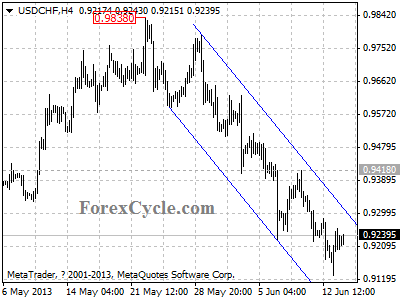
USDCHF continues its downward movement from 0.9838

USDCHF continues its downward movement from 0.9838, and the fall extends to as low as 0.9130. Resistance is located at the upper line of the downward price channel on 4-hour chart, as long as the channel resistance holds, the downtrend could be expected to resume, and another fall towards 0.9000 is still possible. On the upside, a clear break above the channel resistance will suggest that consolidation of the downtrend is underway, then further rise 0.9400 – 0.9500 area could be seen.

usdchf

Forex Signals

Don’t Make Investing a Chore… Invest in an Innovative Business

By MoneyMorning.com.au

Remember to check your inbox this afternoon.

That’s when I’ll send you part one of a three part video series where I interview our new technology analyst, Sam Volkering.

In part one of this three-part series, Sam and I discuss some of the key revolutionary (and profitable) trends of the next 20 years.

These trends will change the way we live, work and communicate. And it’s within these trends that you’ll find the most innovative businesses!

I can’t adequately explain how excited we are about this project. It could be the greatest opportunity of my almost 20-year investment career.

Most importantly, it’s something I’m convinced will radically change where you invest and the kind of returns you make in the years to come. In short, despite all the negative news, it’s a great time to be an investor.

Look out for the email this afternoon. Until then, on with today’s Money Morning

In the middle of last year we compiled a list of five beaten-down Aussie blue-chip stocks.

We said it was ridiculous that these firms – market leaders in their field – were trading at a huge discount to their peak levels.

They were (and still are) sustainable businesses with strong cash flows that should weather the current financial storm.

One of those companies is Qantas Airways Ltd [ASX: QAN].

This is a company we put on the junk pile a couple of years previously. But like one of the other stocks (Harvey Norman Ltd [ASX: HVN]), when the stock price fell so low, we took it out of the junk pile to give it a second chance.

The price gained 60% from that point until the market peaked in May.

But now with the stock market shedding 10% since May and Qantas shares down even further (-25%) we see the same kind of value in Qantas and other stocks as we did 12 months ago…

Remember Why You Invest – To Grow Your Wealth

We know what you’re thinking. Didn’t we say to buy stocks two weeks ago when the S&P/ASX 200 index was at 5,000 points?

Yes, that’s right.

We said it was a great time to average in. We said you shouldn’t buy a full position because there was a chance the market could fall…but that there was also a chance the market could rise.

As it turns out the market has fallen. So now you should put the next part of your ‘averaging in’ strategy to work. That means adding to your position.

Of course, if you think there’s a chance the market could fall further, then you could hold off a while longer. If you do, that’s OK. If the market bounces and you missed the low point, at least you’ve already got some exposure.

Here’s our point – and we’ll keep making it until we’re blue in the face – you can’t afford to sit out this market completely.

Share prices always rise and fall. Sometimes they rise or fall for extended periods of time. What’s important is that you remember why you invest in the first place – to build wealth.

As we’ve said before, you can’t do that by keeping all your money in cash or gold. The best place to invest is in businesses, and especially innovative businesses

No More Rushing to the Airport – Fly from Melbourne

to Sydney from Your Local Train Station

That’s why we mentioned Qantas. Not because Qantas is especially innovative, but because of the innovations happening in the aviation industry.

Two completely different aviation concepts caught our eye yesterday.

The first is the ‘Clip-Air’ project by the EPFL technical university in Lausanne. The simple idea is that cargo or passenger ‘pods’ could clip to a single wing structure, as in the diagram below:

These cargo or passenger ‘pods’ could be multi-use. For instance, let’s say you want to get from Melbourne to Sydney. You board a ‘pod’ train in South Yarra, it collects passengers on the way as it stops at Richmond, the CBD and Flemington. The ‘pod’ train continues to Melbourne Airport, where it goes straight to the runway and slips under the ‘Clip-Air’ wing.

Almost immediately (after receiving clearance by the automated air traffic control) the ‘Clip-Air’ plane takes off and lands at Sydney Airport an hour later.

Once there, the pod detaches from the wing straight on to rail tracks and takes passengers to their final destination.

Sound crazy? Maybe. But is it really any crazier than current modes of getting to and from an airport and flying between cities? This certainly strikes us as much more convenient and almost seamless.

The next concept is just as intriguing…

From Concept to Reality

This one is developed by Airbus Industries:


Source: BBC

Admittedly, the ability to see everything around you as you fly feels a little uncomfortable…especially if they take it one step further by having glass floors!

As the BBC technology website explains:

Inside the aircraft, Airbus engineers envisage new “zones” to replace the traditional seating, with “morphing” seats that are able to harvest energy from those sitting in them as well as change shape to fit the size of passengers.

At the front of the plane, the team suggested seating with integrated sensors that would be able to monitor health. And there could even be a gaming zone, where passengers could play virtual sports.

It was also suggested that instead of having small doors into the jet, as is currently the case, the planes of the future would have much wider entrances where people could leave their hand luggage.

But rather than us just telling you about it, you can check it out yourself by downloading for free ‘The Future by Airbus’ app from the iTunes Store.

Look, concepts are just that. They are a concept of what could happen in the future. But that isn’t always how things pan out. There’s a big distance between conceptual design and manufacturing reality.

Ideas dreamt up by a designer fiddling around with a software program may not be possible in the workshop. But that’s how innovations happen.

The innovators and entrepreneurs create the ideas, the engineers then create the reality.

But this is all part of the fun of forecasting future trends. You scour the market, study innovators and entrepreneurs, and then figure out which ideas and companies have the best chance of making it to the big time.

Like any investment, it comes with risks. Arguably the risks are the biggest when you’re trying to pick a trend and a company to profit from that trend.

But that’s why the returns can be so immense. The company that provides the market with the right product at the right time can make investors extraordinary returns.

It’s an exciting time to be in this market, and the technology sector in particular. That’s why we’re pouring so many resources into it. You’ll find out more in the first of the special three-part video series later this afternoon.

Cheers,
Kris

Join me on Google+

From the Port Phillip Publishing Library

Special Report: Buy These Four Yen Dive Stocks Now

Daily Reckoning: Are You One of the Market Elites?

Money Morning: The NSA May Know Your Hat Size, but They Can’t Take Your 3D Printer

Pursuit of Happiness: Government Spies: I Warned of This Trend More Than a Year Ago…

Australian Small-Cap Investigator: How to Make Big Money from Small-Cap Stocks

Why Global Citizens Should Be Global Investors in Technology

By MoneyMorning.com.au

I was at a function on Wednesday night. The keynote speaker was talking about what it means to be a citizen of Australia. And during his speech he made a very interesting point.

He mentioned four names. Dr Victor Chang, Sir Gustav Nossal, Fred Hollows and Professor Elizabeth Blackburn.

Victor Chang was a pioneer of the modern heart transplant. He was one of the most influential people in modern medicine. He was an Australian, born in Shanghai, China.

Sir Gustav Nossal is a research biologist knighted in 1977 for his groundbreaking work in immunology. He too is an Australian, born in Bad Ischal, Austria.

Fred Hollows was a pioneering ophthalmologist who worked tirelessly in restoring sight to the blind. Because of his work, over one million people can see who would have otherwise been blind. Fred was an Australian, born in Dunedin, New Zealand.

Professor Elizabeth Blackburn is a research biologist. She co-discovered telomerase, a vital function of chromosomes. In 2009 she won the Nobel Prize in Physiology or Medicine. Professor Blackburn is an American/Australia born in Hobart, Australia.

The basis of the keynote speaker’s point was every one of those four is Australian and has made a significant contribution to the world of medicine and health. They each advanced their field through research, innovation and breakthrough technology

But only one of them was actually born in Australia.

This however was almost typical of what it meant to be an Australian. One way of looking at it is that to be an Australian is to be a global citizen.

There are examples of other Australian’s doing great things in various industries. And it’s a credit to this country that no matter what your point of origin, a typical Aussie usually has heritage from other parts of the globe.

And being a global citizen is particularly relevant in today’s age. The world is advancing at an amazing speed and it’s one of the most exciting times to be alive.

Technology and the connectedness of our world mean that borders are slowly fading away. Companies look globally for growth, because they can and because that’s where opportunity is.

However when it comes to investing, Australians tend to be very narrow with where they look for investment opportunity. It’s quite rare to see an Aussie investing in overseas companies.

Technology is Global, Meaning It’s Happening Outside of Australia

A fact that you might have heard a thousand times is the Australian market only accounts for about 2% of the world’s stock markets. That obviously means 98% of the world’s markets are still investable.

If you look at Dr. Chang, Sir Gustav Nossal, Fred Hollows and Professor Blackburn, between them all they span the globe from China, to Austria, New Zealand and America. Their families just chose to live in Australia. The impact they’ve had has also been global.

And when it comes to technology, it’s a global game too. As we push on through the 21st century we will only become more connected and the world will only (figuratively) get smaller.

When money is ready to invest into tech companies often the best place to look isn’t on the ASX. To find the best of the best when it comes to investable tech companies, more often than not you need to look abroad. That’s not to say there aren’t opportunities here, but they’re thin on the ground.

Look at some of the trends that are impacting the world today. Personalised Medicine, Regenerative Medicine, the Neurone Revolution, the Sensor Revolution, Energy Independence and the Commercialisation of Space.

None of these are exclusively Australian. There are many companies involved in each of these trends. Each one with a great technology or innovative approach that’s ready to change the world. But it’s New York, Tokyo, Shanghai or London where most of them list their stocks.

It’s Time to Capitalise on the Opportunities

The difficulty lies in separating the good tech from the not so good tech. And that’s where the new Revolutionary Tech Investor service comes into play.

See we’ve been working tirelessly on expanding our horizon in the world of Revolutionary Tech breakthroughs. This has opened us up to companies located all over the globe with breakthrough technologies.

The technology advances happening in robotics, biotechnology, consumer technology, space, manufacturing and finance are world changing. And it’s the most exciting time to be an investor as these companies are poised to take off.

Yes there will be some Aussie based opportunities. But like Chang, Nossal, Hollows and Blackburn, we’re all citizens of the world. And that means we should also be investors of the globe when it comes to investing in technology.

Sam Volkering
Technology Analyst

Join me on Google+

From the Archives…

Bernankenstein’s Financial Monster
7-06-2013 – Vern Gowdie

Six Revolutionary Technology Trends for the Next 20 Years
6-06-2013 – Sam Volkering

The Incredible World of Graphene
5-06-2013 – Dr Alex Cowie

After the Correction: Gold Stocks Set for the Biggest Gains
4-06-2013 – Dr Alex Cowie

The Single Best Way to Build Wealth: Invest in Business…
3-06-2013 – Kris Sayce

Peru holds rate steady, inflation still within target

By www.CentralBankNews.info
    Peru’s central bank held its policy rate steady at 4.25 percent, as expected, reflecting “the fact that inflation remains within  the target range in a context of economic growth close to potential.”
    The Central Bank of Peru (BCRP), which has maintained rates since April 2011, said inflation was projected to converge to the midpoint of the bank’s target over the next months due to better food supply, production that is close to potential and inflationary expectations that are anchored to the target range, repeating its statement from last month.
    Peru’s inflation rate rose slightly to 2.47 percent in May from 2.31 percent the previous month. The BCRP targets inflation of 1.0 to 3.0 percent.
    Peru’s export sector is still weak, with volume and prices affected by the external market, the bank said. Lower global commodity prices are affecting countries like Peru.
    In the first quarter of this year, Peru’s Gross Domestic Product rose by 2.1 percent from the fourth for annual growth of 4.8 percent, down from 5.9 percent in the fourth quarter.
    Last month the central bank’s president, Julio Velarde, said he expected growth of 6.1 percent this year, down from an earlier forecast of 6.3 percent. In 2012 Peru’s economy grew by 6.3 percent.

    www.CentralBankNews.info

Chile keeps rate steady, future moves depend on inflation

By www.CentralBankNews.info      Chile’s central bank held its benchmark overnight lending rate steady at 5.0 percent, as expected, and said future changes to its policy rate would depend on the “implications of domestic and external macroeconomic conditions on the prospects for inflation.”
    The Central Bank of Chile, which has held rates steady since a 25 basis point cut in January 2012, said the economy was slowing down but this was mainly affecting investments while private consumption remained dynamic and the labor market was tight.
    Headline and underlying inflation were close to 1.0 percent and inflation expectations were around the central bank’s 2-4 percent target, the central bank added.
    In May Chile’s consumer prices were unchanged from April for an annual inflation rate of 0.9 percent, down from 1.0 percent, the lowest rate since January 2011 when a new method was introduced, while core inflation was 0.1 percent.
    The central bank said global financial conditions had become more restrictive, especially for emerging economies, “in part due to the expectation of an early withdrawal of monetary stimulus in the United States.”
    In addition, growth prospects for China were lower and recession continues in the euro zone.
    The central bank did not make any specific reference to the Chilean peso, but said “the dollar appreciated in the international markets, particularly regarding the currencies of emerging economies.”

    At its previous meeting on May 16, the central bank had made a specific reference to the depreciation of the peso. But in the two previous statement from April and February, the central bank had mentioned the appreciation of the peso.
    In the central bank’s background paper to the policy meeting, it noted that the peso had declined by 5.6 percent from the May policy meeting to 504 per U.S. dollar.
    Like other emerging markets, Chile’s currency has been hit by the prospect of a wind-down of asset purchases by the Federal Reserve, with the global flow of money moving back toward the U.S.
    Chile’s economy has been slowing in recent months and minutes from the central bank’s  May meeting in May showed that the policy committee for the first time since June 2012 had considering cutting its lending rate, locally known as TPM.
    Chile’s Gross Domestic Product was rose 0.5 percent in the first quarter from the fourth, the slowest quarterly growth rate since the third quarter of 2011, for annual growth of 4.1 percent.
    The central bank has forecast that the economy will expand between 4.5 and 5.5 percent this year, down from 5.6 percent in 2012.
     The central bank’s own survey showed that analysts expect a rate cut in July with rates falling to 4.5 percent by December.

    www.CentralBankNews.info