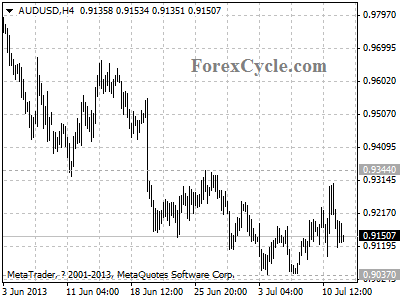
AUDUSD failed to break above 0.9344 key resistance

AUDUSD failed to break above 0.9344 key resistance and stays in a trading range between 0.9037 and 0.9344. As long as 0.9344 resistance holds, the price action in the range could be treated as consolidation of the downtrend from 1.0582 (Apr 11 high), another fall towards 0.8500 could be expected after consolidation. On the upside, a break above 0.9344 resistance will indicate that the downtrend had completed at 0.9037 already, then the following upward movement could bring price to 0.9800 zone.

audusd

Provided by ForexCycle.com

The Growing Appetite for Biotech: Pooya Hemami

Source: Peter Byrne of The Life Sciences Report (7/11/13)

http://www.thelifesciencesreport.com/pub/na/15433

When should investors jump on a junior biotech stock with a promising product in the pipeline? That’s a tricky question, one that analyst Pooya Hemami of Edison Investment Research considers carefully as he tracks astonishing epigenetic-based and orphan drugs with novel applications. In this interview with The Life Sciences Report, Hemami describes how he assesses the viability of a junior firm and gives the nod to several well-positioned names in Planet Biotech.
The Life Sciences Report: Given the ups and downs in the stock markets, what is the best capital-seeking strategy for a life science company?

Pooya Hemami: It all comes down to smart risk management and the practicalities of internal fund allocation. Biotechs should focus research and development spending on the most advanced assets in their product pipelines, the items that can more quickly reach value-enhancing milestones and attract partnerships.

Some firms make the mistake of spending resources on multiple projects and, consequently, they find themselves with a sudden need to raise cash—without having sufficiently advanced a single key program. Smart developers look to raise money when they are solvent, not when they are strapped for cash.

TLSR: What impact will rising interest rates have on biotech?

PH: Biotech companies tend to raise equity as opposed to taking on interest-bearing debt, so changing interest rates will not have a drastic effect. But if the rates rise too quickly, and the overall market slows, raising cash for research could become a bit more difficult. As long as we stay clear of a recession, though, the appetite for biotech will grow.

TLSR: What is the importance of epigenetics to pharmaceutical research? Do you have any names in that space?

PH: Epigenetics is a promising new field in which gene activity can be regulated without altering nucleic acid or DNA sequences. Methods include modifying histones (the primary proteins found in chromatin) or methylating DNA (adding methyl groups to DNA bases). It’s interesting to note that last year there were two key deals in the epigenetics space. Epizyme Inc. (EPZM:NASDAQ) received $90 million ($90M) from Celgene Corp. (CELG:NASDAQ) for an option on ex-U.S. rights to its histone methyltransferase inhibitor program. In addition, Constellation Pharmaceuticals Inc. (private) received $95M up front from Genentech/Roche Holding AG (RHHBY:OTCQX) as both parties entered into a collaboration to develop therapies using Constellation’s epigenetics platform.

One of the really interesting opportunities in this field concerns bromodomain and extra terminal domain inhibition, whereby a protein domain product can be designed to upregulate or downregulate specific genes. In some cases, the product can be dosed orally, without injection or approaches that one normally sees with antisense or RNA interference (RNAi) treatments for genetic disorders. GlaxoSmithKline (GSK:NYSE) has an intriguing phase 1 product in NUT midline carcinoma; Oncoethix SA (private) has started a study in hematological malignancies, and Constellation Pharmaceuticals Inc. and Tensha Therapeutics Inc. (private) are also playing in the space.

TLSR: Generally speaking, what are the regulatory obstacles for epigenetic applications?

PH: There is always potential for regulatory scrutiny of a product candidate with a novel mechanism of action. Reviewers at the regulatory agencies often ask for more in-depth work on long-term toxicology studies. Studying the safety of a drug with a mode of action that has never been used in or marketed for humans before can delay approval. Of course, a company with large funding resources will be able to engage in the more in-depth studies and multicenter trials, and move things forward faster than a firm with fewer resources.

Investors looking at drug candidates need to keep track of the regulatory timelines associated with the individual candidate. They should also look at the size of the population under treatment. If a drug has an antibacterial indication, for example, the regulatory timeline could be significantly shorter than for a drug with an oncological indication. If the drug addresses an orphan indication, it is harder to recruit patients. Vaccines can be approved after very short study periods, depending on the target.

TLSR: What is the worldwide market situation for orphan drugs—drugs that treat very rare diseases affecting relatively small populations of people?

PH: There are a lot of positive incentives for orphan drug developers in the U.S., where the Orphan Drug Act allows for seven years of market exclusivity. And there are, of course, lower marketing costs involved in targeting small populations of patients. In fact, the compound annual growth rate for orphan drug designations over the past decade is about 10%. New molecular entities that are not orphan drugs have experienced a flat growth rate. An increasing proportion of the new drugs now being approved are orphan drugs.

TLSR: Are you following any junior firms that are developing orphan drugs?

PH: BELLUS Health Inc. (BLU:TSX; BLUSF:OTCPK) is currently developing Kiacta for AA amyloidosis, a chronic inflammatory disease affecting up to 50,000 (50K) patients worldwide. The disease affects the kidneys, and patients often require dialysis. There is no approved treatment for the condition. BELLUS has completed a phase 2/3 study and achieved a p-value of 0.06 separation between the drug and placebo arms. It has set up a special protocol assessment (SPA) for its ongoing pivotal phase 3 study. The regulators have basically indicated that if the SPA is met with a p-value below 0.05, then the drug would meet the conditions necessary for approval. The chance of this study meeting the U.S. Food and Drug Administration (FDA)-mandated endpoint of 0.05 is good, particularly because the sample size has been largely increased in this second study. The first Kiacta study had a p-value of 0.06 on 62 events, and the second study will have 120 events, which will increase the likelihood of meeting the statistical SPA specification. We predict a 60% probability of success in meeting this goal.

TLSR: What is a p-value?

PH: A p-value is a probability assessment of a drug’s efficacy. For example, a p-value of 0.05 refers to a 95% probability that the results shown in the study are due to the treatment, and are not random. The lower the p-value, the higher the statistical probability that a studied drug has had a stronger effect than a placebo. For approval, most drugs need a p-value of less than 0.05.

TLSR: How are orphan drugs priced for profitability?

PH: The variables affecting price include assessing the current pricing regimes for other orphan indications with similar prevalence rates, and the cost savings afforded by the therapy if it is successful. There is a range of economic benefits. We believe that Kiacta, for instance, could prolong the time period during which a patient would not need dialysis by two to three years, and dialysis costs up to $80K/year.

TLSR: Do you have any names that are breaking ground on the vaccine front?

PH: Medicago Inc. (MDG:TSX; MDCGF:OTCPK) is an emerging play in the avian flu space. It has a novel, plant-based protein manufacturing platform that can produce seasonal or pandemic flu vaccine candidates in as little as four weeks following the identification of the particular strain causing the flu. This compares to 4–6 months for conventional egg or cell culture vaccine development methods. Medicago’s quicker response timeline would be very beneficial in a pandemic scenario.

In May, Medicago announced that it was the first company to develop a vaccine candidate against H7N9 avian flu, which is responsible for the recent influenza outbreak in China. In June, it announced positive clinical data and responses with high antibody titers after only one dose in a mouse model, which we think is a very promising early result. Vaccine companies need to pass a number of trials for regulatory approval. But Medicago’s data looks promising.

TLSR: As an expert investor, how do you decide when to invest and when to wait until the clinical trial period for a vaccine is more advanced?

PH: Seasonal flu vaccines require large-scale phase 3 studies that potentially involve thousands of patients, which can take two years or longer to complete. In most Western countries large segments of the population, such as the elderly, receive a seasonal flu vaccine to protect against the upcoming seasonal flu strain. Recruiting patients from this large population is not difficult or time-consuming. Testing for an urgent vaccine scenario, such as for a pandemic, does not require recruiting as many patients, so a phase 3 study can be completed in less than a year.

In certain scenarios, the U.S. government may even agree to purchase a stockpile of a pandemic vaccine as a preventative measure ahead of a phase 3 study result. A few years ago, the U.S. bought its initial order of H5N1 flu stockpile from Sanofi SA (SNY:NYSE) when only phase 2 data was available. Hence, it is possible for a non-phase 3 pandemic flu vaccine to land a stockpile order. That is a bit of upside to consider.

TLSR: Do you have any other names in the vaccine space?

PH: We like Novavax Inc. (NVAX:NASDAQ). It turns out that both Medicago and Novavax are working with viruslike particle platforms. Novavax uses an insect cell culture; Medicago’s form is plant-based. Medicago’s technology is scalable, inexpensive and can be applied to manufacturing other types of proteins. Companies like Novavax and Medicago tend to attract licensing partnerships, which can generate reasonable upfront payments.

TLSR: Let’s look at the realm of psychopharmaceutical drugs. Do you have anything new to report in treatments for schizophrenia, depression or bipolar disease?

PH: We are looking at Alexza Pharmaceuticals Inc. (ALXA:NASDAQ). It has a new product called Adasuve, a newly developed formulation of loxapine. This drug has the potential to be a real breakthrough for reducing agitation in schizophrenic and bipolar patients—making it very useful in the psychiatric and hospital markets.

Many schizophrenic and bipolar patients experience up to 10 agitation episodes per year, and half of those episodes may require hospital stays. With some agitated patients, orally administered drugs do not act quickly enough, and the patients require injections to get the required treatment effect. Naturally, many of these patients are uncomfortable with injections. The time-to-effect of Adasuve, which is an inhaled powder, is very competitive with injectables, so it can provide more friendly, effective treatment for an agitated patient.

TLSR: When will Adasuve be available?

PH: The drug was FDA-approved last December. In May, Alexza landed a U.S. licensing deal with Teva Pharmaceutical Industries Ltd. (TEVA:NASDAQ). We believe that Teva will launch Adasuve in the U.S. before the end of the year. The company also has a licensing partner in Europe, and it is signed with Ferrer Internacional SA (private) in Latin America. We view the U.S. and Europe as the largest market opportunities for this product, but certainly there are growth opportunities in the developing markets as well.

TLSR: Do you have any other companies in your scope?

PH: Paladin Labs Inc. (PLB:TSX) is a Canadian company with a good track record of licensing drugs and bringing them to fruition in the Canadian market; it is now entering Latin America. The company is profitable and generating strong returns for shareholders.

One of the more speculative names that investors should consider is Tekmira Pharmaceuticals Inc. (TKMR:NASDAQ; TKM:TSX). Headquartered near Vancouver, Canada, it has an RNAi platform and a cancer drug, TKM-PLK1. Importantly, it also has a lipid nanoparticle (LNP) drug delivery platform, which is currently the most advanced method for administering RNAi drugs. Alnylam Pharmaceuticals Inc. (ALNY:NASDAQ) has licensed Tekmira’s delivery technology for many of its RNAi candidates. Recently, ALN-TTR02, which is a drug for transthyretin (TTR)-mediated amyloidosis (a buildup of amyloid proteins leading to organ damage) and uses Tekmira’s technology, generated positive phase 2 results, and the drug is going into phase 3. With its strong, underlying intellectual property in the LNP space, Tekmira is poised to benefit from the advancements of other products that use the LNP platform.

TLSR: When you’re looking at junior firms, do you tend to value them as acquisition targets?

PH: We look at investments on a firm-by-firm basis. We look at the quality of management, the company’s targets, and its capital balance—how much money it has on hand. We are interested in the proven professionalism of a company’s research and development teams, and the level of experience of its employees company-wide. Most important, we want to know if the company’s prime assets are close to the market, or whether these assets need additional investment. How much further does the product need to be developed before it can be commercialized? Will the asset require a large pharma partner to ensure optimal sales reach?

Some companies do not need partners. If they have a niche and are reasonably advanced in their pipelines, they are able to reach sales targets on their own. On the other hand, a company going after a target with a long clinical pipeline or broad global market—such as in cardiovascular disease or in oncology—may need a very strong marketing partner to ensure proper reach of its drug.

When I value a company, I do not assume a takeout. But I do assess present value in terms of whether or not the firm gets a royalty or transfer price arrangement on the assets. Obviously, an acquisition is an ideal scenario for investors if there is a reasonable premium, but it is very difficult to predict the timing of an acquisition. Investors should not get into a story just because of that potential. They should invest in companies that have attractive pipelines and solid management teams. An acquisition is, obviously, a bonus, but it cannot be timed.

Smart investors make sure that a company’s underlying fundamentals are solid. It is important to weigh the financing scenarios, to look at whether or not the company needs to raise cash soon. Investors must pay attention to that, because dilutions can occur suddenly in the biotech space.

TLSR: I was looking at your bio, and I noticed that you are a licensed optometrist. How did an eye doctor end up as an investment specialist?

PH: I trained as an optometrist, and I maintain my license, but I really enjoy working in the capital markets and maintaining good relationships with the life science players. In particular, I have a keen eye for some life sciences firms involved in the vision space. Namely, NovaBay Pharmaceuticals Inc. (NBY:NYSE) has a phase 2 asset in adenoviral conjunctivitis, which is one of the leading causes of pink eye. There is no approved therapy, and while pink eye resolves on its own in most cases, without lasting complications, an approved and effective therapeutic could meaningfully reduce patient discomfort and lower the need for patients to take time away from work.

iCo Therapeutics (ICO:CVE) is advancing an antisense-based therapeutic for diabetic macular edema, a significant cause of central vision loss in patients with diabetes, and recently completed enrollment for a phase 2 study. Some privately held clinical-stage companies with interesting candidates in macular degeneration and/or neovascular-related eye diseases include Gene Signal, Acucela Inc., and MacuCLEAR Inc.

TLSR: Sounds good, Pooya.

PH: Until next time, Peter.

Pooya Hemami is a licensed optometrist with more than five years of experience in life sciences equity research. Prior to joining Edison Investment Research, he covered the Canadian healthcare sector as a research analyst at Desjardins Capital Markets. He holds a doctor of optometry degree from the University of Montreal, and a master’s degree in business administration (finance concentration) from McGill University. He received his CFA charter in 2011.

Want to read more Life Sciences Report interviews like this? Sign up for our free e-newsletter, and you’ll learn when new articles have been published. To see a list of recent interviews with industry analysts and commentators, visit our Streetwise Interviews page.

DISCLOSURE:

1) Peter Byrne conducted this interview for The Life Sciences Report and provides services to The Life Sciences Report as an independent contractor. He or his family own shares of the following companies mentioned in this interview: None.

2) The following companies mentioned in the interview are sponsors of The Life Sciences Report: None. Streetwise Reports does not accept stock in exchange for its services or as sponsorship payment.

3) Pooya Hemami: I or my family own shares of the following companies mentioned in this interview: Paladin Labs Inc. I personally am or my family is paid by the following companies mentioned in this interview: None. My company has a financial relationship with the following companies mentioned in this interview: BELLUS Health Inc. I was not paid by Streetwise Reports for participating in this interview. Comments and opinions expressed are my own comments and opinions. I had the opportunity to review the interview for accuracy as of the date of the interview and am responsible for the content of the interview.

4) Interviews are edited for clarity. Streetwise Reports does not make editorial comments or change experts’ statements without their consent.

5) The interview does not constitute investment advice. Each reader is encouraged to consult with his or her individual financial professional and any action a reader takes as a result of information presented here is his or her own responsibility. By opening this page, each reader accepts and agrees to Streetwise Reports’ terms of use and full legal disclaimer.

6) From time to time, Streetwise Reports LLC and its directors, officers, employees or members of their families, as well as persons interviewed for articles and interviews on the site, may have a long or short position in securities mentioned and may make purchases and/or sales of those securities in the open market or otherwise.

Streetwise – The Life Sciences Report is Copyright © 2013 by Streetwise Reports LLC. All rights are reserved. Streetwise Reports LLC hereby grants an unrestricted license to use or disseminate this copyrighted material (i) only in whole (and always including this disclaimer), but (ii) never in part..

Streetwise Reports LLC does not guarantee the accuracy or thoroughness of the information reported.

Streetwise Reports LLC receives a fee from companies that are listed on the home page in the In This Issue section. Their sponsor pages may be considered advertising for the purposes of 18 U.S.C. 1734.

Participating companies provide the logos used in The Life Sciences Report. These logos are trademarks and are the property of the individual companies.

101 Second St., Suite 110

Petaluma, CA 94952

Tel.: (707) 981-8204

Fax: (707) 981-8998

Email: [email protected]
 

Chris Mayer’s Four-Point Formula for Returns

Source: Tom Armistead of The Energy Report (7/11/13)

http://www.theenergyreport.com/pub/na/15432

It’s time to tear your eyes away from those stock price charts. Chris Mayer, Agora Financial managing editor and author of “World Right Side Up” and “Invest Like a Dealmaker,” walks us through his four-point company evaluation strategy, “CODE,” identifying crucial, less publicized metrics that give real insight into a company’s value. In this interview with The Energy Report, learn how to pick your stocks like a seasoned financial analyst. As Mayer explains, with global finance shifting back to emerging economies, it’s an exciting time to be an investor.

The Energy Report: Chris, your new book is called “The World Right Side Up.” Can you explain that title?

Chris Mayer: It came to me when I considered how other people were looking at the changes that were going on around the world. The consensus seemed to be that it was a new thing that China and India joining the world market, for example, and that this was creating something very different. The point I wanted to make in the book is that what is happening is more normal when you look at the broader sweep of markets. The anomaly has been the dominance of the West, which we’ve seen in the last 100 years or so.

One of the statistics I love to talk about and mention in the book comes from another book called, “Power and Plenty: Trade, War, and the World Economy” written by professors Ronald Findlay and Kevin H. O’Rourke. They show how in 1953, the Western world represented 90% of the world’s manufacturing output. Think about that. That is a remarkable dominance by a relatively small part of the world’s population. Since that time, of course, it’s gone more in reverse. As I write in my book, 2008 was the first year when global gross domestic product was roughly 50% from developed markets and 50% from developing markets. The book’s title is meant to imply how we’re returning to a much more normal situation when you look at it from the longer, historical point of view.

TER: Where is the opportunity for investors in the “World Right Side Up” scenario?

CM: There are a lot of opportunities, but I would say they come from these other markets catching up to the Western world. For example, in the book, one of the excerpts I use is from a guy named Robert Chaplain, who was a foreign correspondent for many years. He talked about how when Japan had its post-war boom, sales of washing machines went up something like fourfold from 1953 to 1955 and then doubled again in 1956. You could see a similar pattern happen with things like refrigerators and televisions. That kind of pattern we see happening now in a lot of other markets around the world. The opportunities come from consumers looking more like Western consumers. You’ll see convergence of a lot of prices within all kinds of industries. The book goes country by country, looking at different opportunities from energy to agriculture and all across the spectrum.

TER: The developed economies are beginning to show some weakness. Do they have the depth to remain stable while the economic center of gravity shifts to the global East and South?

CM: No, I don’t think so. I expect things in both developed economies and developing economies will be very unstable. There will be a lot of confusion and false trends, a lot of fits and starts. But I wouldn’t write off the developed economies. They still have the primary advantage of lots of capital, and they tend to be more transparent. This thesis is not a negative development for the West. There will still be plenty of opportunities in the West, and some of them will only emerge because of what’s happening abroad.

TER: Are you saying that the investment opportunities arise in the instability of the relationships?

CM: Yes, some of the opportunities will be a direct result of instabilities in those relationships. Some new opportunities will come about only because of things that are going on overseas. For example, you could argue that the energy boom we’re having in North America was only brought about because the growth in China, India and these other markets started to drive up the cost of energy, which then drove the need for innovation and new sources of supply. The world economy is a web; things that happen in what seem like faraway places affect us here, and they are tied together in complicated ways.

TER: In your book, “Invest Like a Dealmaker,” you highlight the advantages of investing with inside knowledge of market operations. What counts as inside knowledge? How can retail investors gain the insider’s perspective?

CM: I use the phrase broadly in the book, and I don’t mean insider knowledge in the illegal sense. What I mean by insider knowledge is watching what insiders do and appreciating the dynamics that go on behind the scenes: how companies are put together, how they’re financed, how they’re controlled. These are things that don’t show up on a stock screen when you’re looking for price/earnings ratios or some other easily observed metric.

There are plenty of examples. I love investing in spinoffs. There is a long history of spinoffs outperforming the market because they have their own dynamic as to why pricing tends to be good there. One of the companies I recommended last year is called Rouse Properties Inc. (RSE:NYSE), which was spun out of General Growth Properties Inc. (GGP:NYSE). This was a company where one of the large insiders, Brookfield Asset Management, essentially had an agreement in place where it was offering to buy a bunch of stock at $15/share, even though the stock was trading then at $10/share. That’s something that wouldn’t show up on the screen if somebody was looking for a low price/earnings stock, a low price/book stock or yield. But it spoke to the value that was in that business. Ultimately, Rouse Properties wound up being $17–18/share a year later.

Another example would be insider buying. That’s another great signal I’m often watching for. When you see an insider or group of insiders buy a significant amount of stock, that’s a signal you should probably take a look. This gets to one of the things I talk about most: I encourage investors to look at the control groups behind the business. By control groups, I mean look at who is calling the shots. Sometimes it’s the CEO. Sometimes it’s the chairman. Sometimes it might be an investor group that owns a lot of stock. And understand what their goals are for the business. There is plenty of research that backs up the idea that owner-operated firms, where the insiders own a lot of stock, outperform their peers. They tend to make better decisions about how they allocate their capital, and they tend to do value-unlocking activities. They tend to engage in things like spinoffs. They buy back stock when it’s cheap. These are the kinds of things I’m looking for.

TER: To identify the insiders and the other indicators that lead you to good investments, you have to follow a particular company pretty closely. How do you identify the companies that you want to follow?

CM: It comes from being in the business for a while. You don’t start off, of course, with a big list. You start off with a short list, and you build it over time. I would say you can start by focusing on those firms where insiders own a good percentage of the stock. Draw a line, say, 10%, 15% or 20%. Start with industries you know and are more comfortable with. Then pay attention, again, to those insider buys. Those at least will give you some timely names to look at. You have to enjoy studying businesses, I think. I like to follow these businesses. I like to follow their stories and see how they change and grow over time. I always tell my readers there’s no rush to invest; be patient. It sometimes takes months and months to find a company you like, but part of the fun is the hunt.

TER: You identify dealmakers as “people who think about stocks as whole companies, as things with real assets and cash flows that exist in the real world.” How would an investor who is used to focusing more narrowly on stock prices, quarterly reports and financial leading indicators learn to adopt a dealmaker’s perspective?

CM: You have to start with the idea that the market price you see is just one price. That price is not necessarily the best price. When you look up a quote on Yahoo! Finance or E*TRADE or whatever, it reflects all kinds of things that don’t have anything to do with the value of the business over the long haul. If you adopt that mindset, then you don’t panic when prices go down and you don’t get overly excited when prices go up. You have to develop a separate benchmark to value a business.

I look at two things. Think about replacement cost. For example, Covanta Holding Corp. (CVA:NYSE; CVGYQ:OTCBB) is a company that turns waste into energy. It has a certain amount of output. You can figure out how much it costs to build so many tons of capacity. Then you come up with a number. Right now, I think $300,000 per ton of capacity is a pretty good number. When you figure all that out, Covanta is worth at least $30/share if you were to trying to rebuild those assets from scratch. That’s replacement cost. That has nothing to do with what is going on in the stock market. Whether the stock is $20/share one day or $25 the next month or whatever, you have this anchor. You have this deeper understanding of what those assets are, what the value of them is and what it costs to reproduce them. That’s one good metric.

Another strategy I like to use is to think about private market value. Think about what it would cost a strategic buyer to buy the whole company. This isn’t easy to figure out either, but that’s why these things are valuable. For example, with bank stocks, there are plenty of transactions in banks. You look and you can see these banks stocks are being bought at 1.2 times book value, 1.4 times book value, and let’s say you find a pretty good bank at 80% of book value. Then that’s an example of a business that’s significantly cheaper in the market than it is to a private acquirer.

What I do is try to find as many of these disparities as I can in whatever industry they may happen to be in. But it’s not for people who want to look at stock charts and who want to trade a lot. This is more for people who want to buy a stock and a business, they want to understand it and they want to hold on to it for a few years and earn a very good, long-term return.

TER: You cover an interesting mix of industries, including seismic data, oilfield services and agriculture. How do your investment principles help you find the investment value in these diverse companies?

CM: The industries change, but the elements that make for a great investment never change. I look at four essential elements, and I have an acronym for them: CODE.

‘C’ stands for cheap. I want to buy undervalued securities. I measure that primarily by replacement cost and private market value.

The ‘O’ is for owner-operators. I want to invest in companies in which the insiders own a significant percentage of the stock. I want them to have skin in the game.

The ‘D’ is for disclosures. I want to invest in businesses that are transparent, businesses that I can understand.

‘E’ is for excellent finances. I want to invest in companies with very strong financial conditions, companies that don’t have a lot of debt and do have a lot of cash.

I find these four elements combined make a good, winning formula. I simply apply these to a wide variety of fields. I’ve always been a generalist, and have gone wherever the opportunities are versus someone who is very focused on one specific industry. I’d rather trade off a little of that depth for perspective.

TER: Can you give me some examples of companies that you are actually covering that you are applying these principles to?

CM: I like Pulse Seismic Inc. (PSD:TSX; PLSDF:OTCQX). The company is headquartered in Calgary. It owns a seismic library that covers key areas of western Canada, mainly in Alberta. Oil and gas companies have to decide where to drill. How they decide is by shooting seismic, which gives them an idea of what is below. Pulse Seismic leases out the use of its seismic maps to oil and gas companies. What’s great about this company is that once you shoot a seismic library, you can use it again and again. It’s a profitable business that generates a tremendous amount of cash. Another thing I like about Pulse is the owners. Here, the owners own about 17% of the stock, and they have been good allocators of capital. Last year, they bought back about $10 million of stock. The company pays an $0.08 annual dividend. It has used some of its cash to reduce debt.

C-O-D-E

1. Cheap

2.

o replacement costs indicate undervalued securities

o

3. Owner Operators

4.

o insiders have skin in the game

o

5. Disclosures

6.

o business is transparent

o

7. Excellent Finances

8.

o cash rich, debt free

o

Pulse Seismic has grown nicely. I recommended it when it was $1.89/share. It’s about $4.25/share today, and I still think it’s a very good buy. I think it could easily be worth $5/share. It has the ownership group. It’s a transparent business. When you look at the cash flow of the business, it’s simple. It has a great balance sheet, and the stock is cheap. Last year it probably did about $0.80/share in free cash flow. For a stock that’s $3.60 today, you’re paying a very low multiple for the cash flow. It’s also leveraged to natural gas. Natural gas is cheap right now, and if eventually natural gas prices go up, drilling activity will increase, and Pulse Seismic is in a good position for that. There are a lot of different ways to win with this company.

Another example I like from the energy space would beCanElson Drilling Inc. (CDI:TSX.V). The strength of CanElson is the ownership group, which started a couple other drilling companies with a lot of success. Elson McDougald is the current chairman. He founded a company called Tetonka Drilling Inc. in 1997, which was bought out in 2000. During his three-year run, investors had an annual return of 30%. He also founded, along with CanElson President/CEO Randy Hawkings and Director Donald Seaman, a firm called Western Lakota Energy Services Inc., which was bought out in 2006. In a six-year run there, investors earned a return of over 80%.

CanElson Drilling is the group’s third gig. They wanted to build a company that has a very flexible rig fleet, something that crews could maintain and repair on site. They run a very low-cost operation. They call themselves the Southwest Airlines of the oil and gas drilling industry. That manifests itself in a number of different ways. You can see it in the cost per rig for the company to build, which could be anywhere from 15–50% cheaper than its competitors can build. You can see it in its higher return on invested capital. And you can see it in the higher utilization of its rig fleet. It’s very well managed. The insiders here own around 10% of the stock. The company has a good balance sheet. It’s trading fairly cheaply. The earnings last year were about $0.58/share. That was up 29% from 2011. It pays a $0.05/quarter dividend, which it boosted to $0.06/share. At $5.40/share, the yield is almost 5%. CanElson is a pretty good deal.

TER: Back to Pulse Seismic for a minute. It had high front-end costs connected with gathering geologic data long before it could sell maps. What was the point at which you realized it was time to invest in Pulse?

CM: When I recommended Pulse, it was trading for around 5 times cash flow. When you collect a portfolio of companies trading at that ratio, I would suggest that you’re not going to lose very often.

With Pulse, you pointed out something important: the earnings power of the business is a little obscured because of the accounting treatment of its seismic surveys. The company pretty clearly explains it in its presentations and does a good job of walking shareholders through how it all works. If you focus on the cash flow/share at Pulse, you’ll see that it is very high. For me, Pulse came on my radar because it was very cheap on a cash-flow basis. Then as I went through these other hurdles, it cemented that. Pulse Seismic is probably one of the best businesses I’ve ever encountered as an analyst. Think about owning an asset that you pay for one time. You mentioned its up-front costs of gathering the seismic data. But once you have it, you can use it again and again and again. The company still has surveys going back to the 1980s that it is earning good cash on. It has surveys that it acquired in 2000 and 2002 that it has gotten five times its money back on. It’s a very good business.

TER: You also cover Alliance Grain Traders Inc. (AGT:TSX), which is agricultural. How does the fertilizer market play into your “World Right Side Up” strategy?

CM: The basic thesis is that the population is going to increase by a certain percentage, and one of the first things that changes when countries get richer is their diet: People start eating a richer, more complex diet. We know that that diet is much more grain-intensive. That’s what led me to fertilizers early on. I started recommending fertilizer stocks in 2005. I’ve tried to find other ways to take advantage of some of the trends in agriculture because I think agriculture is going to be an important trend for a long time, especially in the context of this “World Right Side Up” idea.

Alliance Grain Traders is interesting because it processes pulses, which include crops like lentils, chickpeas and beans. These are high-protein foods that are more nutrient-rich than a lot of grains. They use a lot less water to grow. They are just starting to catch on more as a food ingredient. You’re starting to see companies like pasta makers and cereal makers mix lentil or chickpea flour in with their regular wheat flour to create a more nutrient-rich food. I expect demand for pulse crops is going to continue to grow over time.

Alliance Grain Traders has spent the last decade building out a world-class network of assets. It has facilities in Turkey, which I visited earlier this year, Canada, South Africa and Australia, and it is building facilities in China and India. The company brings in a crop from a farm, washes it, cleans it, polishes it, sorts it, splits it, bags it and does all the other services in between that get the product to your table ready to use. As the demand for these crops increases, Alliance Grain Traders will get a cut of that business. It’s had an up-and-down ride, but the stock, again, is pretty cheap. It trades right around book value. There is a big yield to it, close to 5%. I think about 25% of the stock is in the hands of the CEO, Murad Al-Katib. It has all the different elements that I look for: It’s cheap, it has an owner-operator, it’s a transparent business we can understand and it has a good balance sheet. I think Alliance Grain Traders is a great long-term holding.

TER: What do you hope that the attendees at the Agora Financial Investment Symposium later this month will take away from your speech?

CM: I hope, first of all, they come away with a few good ideas that make them some money and that they otherwise would never have found. That’s one of the things I’ve become known for, digging up these lesser-known opportunities like a Pulse Seismic or a CanElson. Second, I hope that they learn a little something about the world they didn’t know before. I travel a lot, and I’ve built up a great network of contacts around the world that have managed to shake out some great opportunities. I often find perspectives that you won’t find in the mainstream from people who are writing about a place from very far away. I haven’t prepared my presentation yet, but the theme of the conference, “A Tale of Two Americas,” ties into what we’re talking about here, which is that there are two Americas. There is one that will thrive in this new world, and there’s another that will struggle. I have some ideas about what will do well.

TER: Can you elaborate on the two Americas?

CM: We talked about how a “right side up” world will bring a lot of changes and it’s not going to be a stable or smooth process. Let’s say you’re a lean American manufacturer who can compete globally. You’re going to have a lot of opportunities versus one that is involved in an older legacy business like steel, for example, where it’s hard to compete with some of the overseas manufacturers. In my mind, there is always going to be a split. There are going to be companies and industries that succeed in this new world. I think American energy is going to be a big winner, for example. American agriculture is in a great position. There are others that are going to have to adjust or they are going to wither away. We’ve seen some of that already with some of the more traditional American manufacturers that struggled, although there is a revival of certain American manufacturers that’s interesting. That’s what I mean by two Americas. There is going to be a part of it that thrives. I wouldn’t let doom-and-gloom perspectives about the U.S. government’s fiscal situation and the like blind you from some of the compelling opportunities that are emerging here in the U.S. and in Canada.

TER: Do you have any parting thoughts to share?

CM: Sometimes these strategies are not focused on an industry, but on an idea. I tend to like the opportunistic firms where you have a big owner-operator who’s entrepreneurial about how to run the business. A number of the companies that we follow in the Capital and Crisis newsletter tend to be companies that are focused on picking up opportunities in whatever sector. There have been times where you could buy companies that acquire hotels cheaply or companies that buy bank debt cheaply. These are areas that I’m focusing on, too. There are always interesting opportunities out there.

TER: Chris, this has been a fascinating interview. I appreciate your time.

Chris Mayer is managing editor of the Capital and Crisis and Mayer’s Special Situations newsletters. He began his business career as a corporate banker. Mayer left the banking industry in 2004 after a 10-year career and signed on with Agora Financial. His book, “Invest Like a Dealmaker: Secrets from a Former Banking Insider,” outlines his value investing approach. In April 2012, Chris released his newest book, “World Right Side Up: Investing Across Six Continents,” which covers his extensive global travels and investment research.

Want to read more Energy Report interviews like this? Sign up for our free e-newsletter, and you’ll learn when new articles have been published. To see a list of recent interviews with industry analysts and commentators, visit our Interviews page.

DISCLOSURE:

1) Tom Armistead conducted this interview for The Energy Report and provides services to The Energy Report as an independent contractor. He or his family own shares of the following companies mentioned in this interview: None.

2) The following companies mentioned in the interview are sponsors of The Energy Report: None. Streetwise Reports does not accept stock in exchange for its services or as sponsorship payment.

3) Chris Mayer: I or my family own shares of the following companies mentioned in this interview: None. I personally am or my family is paid by the following companies mentioned in this interview: None. My company has a financial relationship with the following companies mentioned in this interview: None. I was not paid by Streetwise Reports for participating in this interview. Comments and opinions expressed are my own comments and opinions. I had the opportunity to review the interview for accuracy as of the date of the interview and am responsible for the content of the interview.

4) Interviews are edited for clarity. Streetwise Reports does not make editorial comments or change experts’ statements without their consent.

5) The interview does not constitute investment advice. Each reader is encouraged to consult with his or her individual financial professional and any action a reader takes as a result of information presented here is his or her own responsibility. By opening this page, each reader accepts and agrees to Streetwise Reports’ terms of use and full legal disclaimer.

6) From time to time, Streetwise Reports LLC and its directors, officers, employees or members of their families, as well as persons interviewed for articles and interviews on the site, may have a long or short position in securities mentioned and may make purchases and/or sales of those securities in the open market or otherwise.

Streetwise – The Energy Report is Copyright © 2013 by Streetwise Reports LLC. All rights are reserved. Streetwise Reports LLC hereby grants an unrestricted license to use or disseminate this copyrighted material (i) only in whole (and always including this disclaimer), but (ii) never in part.

Streetwise Reports LLC does not guarantee the accuracy or thoroughness of the information reported.

Streetwise Reports LLC receives a fee from companies that are listed on the home page in the In This Issue section. Their sponsor pages may be considered advertising for the purposes of 18 U.S.C. 1734.

Participating companies provide the logos used in The Energy Report. These logos are trademarks and are the property of the individual companies.

101 Second St., Suite 110

Petaluma, CA 94952

Tel.: (707) 981-8204

Fax: (707) 981-8998

Email: [email protected]


The 3 Essential Parts of an Elliott Wave Trade [Book Excerpt Part 2 of 3]

Learn from trading lessons taken from the new book -Visual Guide to Elliott Wave Trading

By Elliott Wave International

Three steps may sound simple enough. Yet if you have any experience trading, you know that nothing about trading is easy. Education is imperative. So is preparation.

Senior Analyst Jeffrey Kennedy knows that it takes skill, discipline and courage to execute a successful trade. His new book, Visual Guide to Elliott Wave Trading (coauthored with Wayne Gorman), picks up where Frost and Prechter’s classic textbook Elliott Wave Principle leaves off: It gives you the perfect blend of traditional textbook analysis and real-world application.

According to Kennedy, there are three key components of a successful trade:

  • Analyze the price charts.
  • Formulate a trading plan.
  • Manage the trade.

In this excerpt (Part 2 of 3), Kennedy shows you how to make a trading plan based on an opportunity in Caterpillar (CAT). You can read part 1 Analyze the Price Charts here >>

Part Two: Formulate a Trading Plan


In Figure 2.2, I chose to trade this setup using options, specifically, by purchasing 110 puts on May 10, 2011, at 86 cents apiece. These options were scheduled to expire on May 20, 2011, so there were only eight trading days left on these puts. Considering that these options were to expire in just a matter of days, this kind of trade is extremely risky, and only the most seasoned and risk-aware trader should consider doing it.

Since the initial sell-off in CAT from 116.55 to 108.39 transpired in four days, here was my thinking at the time: If the next wave down proved to be wave (3), then I would see prices fall farther in a shorter period of time; if the upcoming decline proved to be a (C) wave, then the upcoming sell-off would most likely be shallower and take more time. Even if CAT were to unfold in wave (C) and take twice as long as the initial decline, it would still trade roughly at $104.81, the level at which waves (C) and (A) would be equal by options expiration.

Again, it is important to understand that due to waning premium, an options trade should not be taken with the idea of holding the trade over a long period of time for a sizable move down. The idea was simply to catch a short-term move below the May 2011 low of 108.39 over three to five trading days.

Be sure to come back for part 3: Manage the Trade


The Ultimate Wave Trading Crash Course Put yourself on the fast track to applying the Elliott Wave Principle successfully with a FREE one-week primer: The Ultimate Wave Trading Crash Course. Learn the basics with 5 FREE trading lessons from EWI Trading Instructor and Senior Analyst Jeffrey Kennedy — including insightful excerpts from his Amazon No. 1 Bestseller, Visual Guide to Elliott Wave Trading.Learn more and start your crash course now >>

This article was syndicated by Elliott Wave International and was originally published under the headline The 3 Essential Parts of an Elliott Wave Trade [Book Excerpt Part 2 of 3]. EWI is the world’s largest market forecasting firm. Its staff of full-time analysts led by Chartered Market Technician Robert Prechter provides 24-hour-a-day market analysis to institutional and private investors around the world.


All Signs Point to a Sudden Change in Gold Prices

By Profit Confidential

Gold PricesWhile the gold bullion naysayers keep their bearish view, the fundamentals for the precious metal continue to gain strength.

We have seen a significant amount of selling in the gold bullion market. But consider this: according to data compiled by Bloomberg, gold bullion holdings in global exchange-traded products (ETPs) have plummeted 589.4 metric tons this year to 2,042.5 tons—the lowest since May of 2010.

And if that trend continues, it would be the first drop in gold bullion holdings of ETPs since they were brought onto the market in 2003. (Source: Financial Post, July 4, 2013.)

On top of all this, hedge funds are also predicting lower gold bullion and precious metal prices. And some of the biggest banks around the world have also cut their forecasts.

In the second quarter of this year (April to June), gold bullion prices plummeted 23%—the most since 1920. The primary reason for that is that investors were suddenly convinced that the precious metal wasn’t as precious as its price indicated once the Federal Reserve announced that it will soon be starting to apply the brakes on its runaway money printing.

But that move, when it comes, will only make physical precious metals more valuable. Gold is simply becoming scarce, and buyers will soon be scrambling to buy.

Remember—and I have said this before—it was only in the paper market that we witnessed increased selling. The demand for the physical market remains strong.

The cost of borrowing gold bullion has increased sharply. The one-month gold bullion lease rate rose to 0.3% on July 9, up from 0.12% a week ago. (Source: Financial Times, July 9, 2013.)

Dear reader, you must remember: gold bullion trades globally. We are witnessing staggering demand out of Asia—the usual gold bullion buyers—and refineries there are operating at full capacity. UBS, a global bank, points out that the price of gold bullion in China remains $40.00 above the benchmark London spot prices.

Here’s what my colleague and resident gold bug, Robert Appel, BA, BBL, LLB—the smartest guy I know when it comes to understanding and explaining what’s happening with precious metals—had to say:

“Regression analysis of the gold market back to the 1970s suggests that the time to repair the damage is often about equal to the time to make the damage. In fact, top analyst Louise Yamada, who advises corporations and large funds, and commands large fees for her advice, has said the very same thing in many of her CNBC interviews. Assuming the base builds this fall, this suggests that the total damage was spread over 2 years. Therefore, according to ‘traditional’ analysis, gold should be back in favor by 2015. Now, note we used the words ‘traditional analysis.’ If you factor in the unusual dynamic of this specific market—all world markets joined at the hip electronically; the gold whack that was artificial and not organic; Western nations on the edge of another 2008-style event; false unemployment data; the Fed trying to walk and chew gum at the same time; Japan on a kamikaze mission; and unknown weather patterns—this could happen sooner than expected.

I remain bullish on gold bullion prices in the future because the fundamentals are aligning perfectly. Right now, there’s a significant amount of negativity towards it and other precious metals but I have to go by the old adage: ‘In the times of most uncertainty, the greatest buying opportunity arises.’”

Michael’s Personal Notes:

I am watching the Chinese economy very closely, because any economic slowdown there could have an adverse effect on the already struggling U.S. economy.

And here’s what I’ve seen: the stock advisors are not mentioning how critical the Chinese economy really is, how companies based here in the U.S. can face hard times if it slows, and how that could ultimately lead to lower key stock indices.

Dear reader, the most important thing you need to know about the Chinese economy is that it’s an indicator of global economic health and demand. Currently, it looks as though its health is deteriorating. Exports from the Chinese economy to the global economy plunged 3.1% in June, a month in which they were expected to increase by four percent. (Source: Reuters, July 10, 2013.)

What that means is that demand in the global economy is declining—and that strengthens my belief that the global economy is headed toward an economic slowdown. In June, exports from the Chinese economy to the U.S. economy fell 5.4% and those to the eurozone fell 8.3%.

Customs spokesman in the Chinese economy, Zheng Yuesheng, said, “China faces relatively stern challenges in trade currently… Exports in the third quarter look grim.” (Source: “China warns of ‘grim’ trade outlook after weak exports surprise,” Reuters, July 10, 2013.)

The Chinese economy is now expected to slow to 7.5% this year. But not only exports are declining; the factory output and investment growth in China, the second-biggest economic hub, are also headed downhill.

I think these numbers might even be too optimistic considering the economic slowdown in the Chinese economy could become severe, as the credit market problems are starting to unfold. Businesses not being able to borrow money to run their daily operations can hurt demand in the country. Consequently, high unemployment will probably become an important issue going forward.

Economic slowdown in China means U.S.-based companies operating in the country will also see their profitability decline. We’ve heard from companies like Caterpillar Inc. (NYSE/CAT) that are showing concerns with their operations in the Chinese economy; meanwhile, other companies—like Wal-Mart Stores, Inc. (NYSE/WMT), which has significant operations in China—are facing troubled times as well.

And you can add to this list the exporters to China—any economic slowdown in China’s economy means they will be selling less to the country. As I said before, the strength of the Chinese economy is an indicator of overall global health.

As I continue to point out in these pages, the key stock indices are not reflecting the reality of the economic situation—it’s far worse than they would indicate.

I remain pessimistic toward the key stock indices, because I don’t see a lot of improvements; rather, I see risk piling up significantly. This irrational rally can only go on for so long. Eventually, it will all come back to where it should be. And problems in the Chinese economy might just be the spark that brings investors back to their senses.

Article by profitconfidential.com

Could the Chinese Economy Pull Down Key North American Stock Indices?

By Profit Confidential

I am watching the Chinese economy very closely, because any economic slowdown there could have an adverse effect on the already struggling U.S. economy.

And here’s what I’ve seen: the stock advisors are not mentioning how critical the Chinese economy really is, how companies based here in the U.S. can face hard times if it slows, and how that could ultimately lead to lower key stock indices.

Dear reader, the most important thing you need to know about the Chinese economy is that it’s an indicator of global economic health and demand. Currently, it looks as though its health is deteriorating. Exports from the Chinese economy to the global economy plunged 3.1% in June, a month in which they were expected to increase by four percent. (Source: Reuters, July 10, 2013.)

What that means is that demand in the global economy is declining—and that strengthens my belief that the global economy is headed toward an economic slowdown. In June, exports from the Chinese economy to the U.S. economy fell 5.4% and those to the eurozone fell 8.3%.

Customs spokesman in the Chinese economy, Zheng Yuesheng, said, “China faces relatively stern challenges in trade currently… Exports in the third quarter look grim.” (Source: “China warns of ‘grim’ trade outlook after weak exports surprise,” Reuters, July 10, 2013.)

The Chinese economy is now expected to slow to 7.5% this year. But not only exports are declining; the factory output and investment growth in China, the second-biggest economic hub, are also headed downhill.

I think these numbers might even be too optimistic considering the economic slowdown in the Chinese economy could become severe, as the credit market problems are starting to unfold. Businesses not being able to borrow money to run their daily operations can hurt demand in the country. Consequently, high unemployment will probably become an important issue going forward.

Economic slowdown in China means U.S.-based companies operating in the country will also see their profitability decline. We’ve heard from companies like Caterpillar Inc. (NYSE/CAT) that are showing concerns with their operations in the Chinese economy; meanwhile, other companies—like Wal-Mart Stores, Inc. (NYSE/WMT), which has significant operations in China—are facing troubled times as well.

And you can add to this list the exporters to China—any economic slowdown in China’s economy means they will be selling less to the country. As I said before, the strength of the Chinese economy is an indicator of overall global health.

As I continue to point out in these pages, the key stock indices are not reflecting the reality of the economic situation—it’s far worse than they would indicate.

I remain pessimistic toward the key stock indices, because I don’t see a lot of improvements; rather, I see risk piling up significantly. This irrational rally can only go on for so long. Eventually, it will all come back to where it should be. And problems in the Chinese economy might just be the spark that brings investors back to their senses.

Article by profitconfidential.com

The One Market Sector That’s Consistently Outperforming the Rest

By Profit Confidential

The One Market Sector That’s Consistently Outperforming the RestThe Dow Jones Transportation Average has been powering ahead since the last week of June. It’s risen five percent since, and the percentage gains on up days are handily beating other stock market indices. That’s a very powerful signal indicating the appetite that institutional investors have to be buyers.

Powering the Dow Jones Transportation Average has been FedEx Corporation (FDX), which has been the subject of activist investor rumors, and Alaska Air Group, Inc. (ALK), which announced an 8.1% gain in revenue passenger miles in June and an 8.6% gain in capacity. It has been a very strong performance for an airline, and it’s been a major stock market winner.

Also helping are surprising earnings results. Bassett Furniture Industries, Incorporated (BSET) has 89 company- and licensee-owned mid-priced home furniture stores. According to the company, second-quarter sales grew a solid 20% to $81.2 million, marking the third consecutive quarter of 20% growth or better. The company cited an improvement in customer spending and increased market share.

In large-caps, stock market leadership within the Dow Jones Industrials over the last two weeks has been coming from The Walt Disney Company (DIS), 3M Company (MMM), The Home Depot, Inc. (HD), United Technologies Corporation (UTX), and Johnson & Johnson (JNJ).

Without question, I firmly believe that blue chips (including several Dow Jones components) remain the best place to be. The prospects for rising dividends remain strong, and so is the probability that earnings will meet expectations, especially in the Dow Jones components.

The broader stock market is displaying incredible resilience and there is a genuine optimism in the trading action among many big investors.

Blue-chip leadership since the beginning of the year is pronounced with the Dow Jones Industrial Average outperforming the S&P 500 and the NASDAQ Composite. And that doesn’t include dividends or the downside outperformance either. It’s very much a stock market that is sticking with the safest names.

It’s also a stock market that can push much higher, since Wall Street analysts only expect S&P 500 companies to grow their earnings by 2.9% in the second quarter, according to Thomson Reuters. That modest expectation, if beaten, could result in substantial buying on the part of institutional investors having been caught in a marketplace where expectations are too low. (See “The Few Sectors That Will Continue to Gain in This Unpredictable Market.”)

Although the stock market has gone up substantially over the last couple of years, corporations have been very conservative with their earnings forecasts. There is a little stock market momentum right now, but we know some companies will beat the Street.

In terms of the Dow Jones Transportation Average, it underperformed the Dow Jones Industrial Average in 2012, but has beaten the industrials so far this year. This breakout of transportation companies on the stock market is, of course, a classic bullish signal.

But it’s up to companies and their earnings results to carry equities. The stock market can go higher still if companies perform the way their stocks indicate.

Article by profitconfidential.com

Now That the Video Streaming Wars Have Begun, Who Will Win?

By Profit Confidential

110713_PC_leongThe battle in the video streaming market is on, and based on recent developments, it will intensify, which ultimately is better for the consumer. As my stock analysis indicates, now is the time to take advantage.

No longer is Netflix, Inc. (NASDAQ/NFLX) safe as the current market leader, but the aggressive moves made by Amazon.com Inc. (NASDAQ/AMZN) to drive its streaming video business is already changing the landscape. (Read “Online War Begins: Netflix vs. Amazon.com.”)

And if you don’t believe me, consider that there is currently a bidding war for video-streaming provider Hulu and its three million subscribers. The company will sell for over $1.0 billion on bids from the likes of private equity AT&T Inc. (NYSE/T) and DIRECTV (NASDAQ/DTV).

My stock analysis suggests that while Hulu is interesting, the company is still largely a U.S.-only business with no international exposure, unlike Netflix and Amazon.com. Hulu is much smaller than Netflix, which has more than 36 million subscribers worldwide (source: Netflix, Inc. web site, last accessed July 10, 2013), and Amazon.com, which has 10 million users. (Source: Thomas, O., “Amazon Has An Estimated 10 Million Members For Its Surprisingly Profitable Prime Club,” Business Insider, March 11, 2013.)

But in the event of a takeover, Hulu will gain access to significant capital, with which it could expand its services to markets within and outside of the U.S. And if the AT&T partnership or DIRECTV bid wins, Hulu will have instant access to tens of millions of subscribers, based on my stock analysis. DIRECTV has about 35 million subscribers in the U.S. and Latin America.

The price points are similar on a monthly basis between the three services, but Amazon.com offers the cheapest annual fee. The emergence of a stronger Hulu would likely increase price competition down the road, and that could drive down the monthly fees.

But according to my stock analysis, what will be the real determinant on which service consumers will base their decision will be program offerings, especially those shows made exclusive to one service. We are already seeing moves by Netflix and Amazon.com to offer proprietary programming, and I expect this strategy to continue—similar to the model set by HBO.

Over the next year, my stock analysis is expected to see the three streaming companies try to align themselves with the makers and distributors of TV shows and movies for more programming deals.

And since there is no commitment to enter into service contracts, consumers can switch services at any time. This will make the competition to retain viewers fierce.

My stock analysis indicates that while Netflix is the market leader right now and is still the company to beat, don’t count out upstart Amazon.com or even Hulu, especially if it aligns with AT&T or DIRECTV.

Article by profitconfidential.com

See for Yourself, There’s No Real Economic Growth

By Profit Confidential

Real Economic GrowthQuantitative easing was supposed to bring economic growth to the U.S. economy, but it is failing at its job. Just look at the chart below to see how badly things have turned out.

The chart shows the velocity of money in the U.S. economy. For the uninitiated, velocity is a measure of how many times each dollar must be used to buy specific goods and services. It’s a strong indicator of economic growth. When velocity increases, it suggests there’s heightened activity in the economy.

Clearly, the velocity of money shows the U.S. is going through severe tumult, and at the very best, economic growth has been questionable. It is continuously plunging and currently stands at historically low levels.

Velocity of M2 Money Stock(M2V)

The primary goal of quantitative easing was to print money to buy bad assets from the banks so they could start lending again, which should lead to increased consumer spending and, eventually, economic growth. But if quantitative easing was actually working, the velocity chart wouldn’t look like it’s taking a nosedive.

Don’t get me wrong; I don’t disagree that the first round of quantitative easing was needed. If not for QE1, the financial system would still be in great jeopardy. However, continuing it is not leading to any real economic growth.

But the quantitative easing goes on anyway. The Federal Reserve continues to print $85.0 billion a month. Even now that there’s speculation that it will start to taper off, you need to realize that it will still be printing more money—“taper” doesn’t mean stop; it means to slow the rate.

If there was any real economic growth in this nation, then we would see a jobs market recovery, but we haven’t. There are still almost 12 million Americans who are actively unemployed, and a significant number continue to leave the labor force.

Many Americans are working part-time because they can’t find any full-time jobs. As a matter of fact, part-time work looks like it’s becoming the new norm. Since the Great Recession ended, the number of people working temporary jobs has increased 50%—the most since the government started to record that statistic in 1990. (Source: USA Today, July 7, 2013.) That doesn’t look like economic growth to me.

But the jobs market is just one sector of the economy that shows how anemic economic growth has been in the U.S.—other statistics, like consumer spending, suggest the same.

Americans realize what really powers the U.S. economy. Continuously printing money only does one thing—it reduces the buying power of already struggling Americans. It certainly doesn’t bring economic growth.

The only place quantitative easing has really shown any positive effect is in the stock market. But I continue to be cautious, because when reality strikes the market—when investors realize the key stock indices are far from their real values—there will be panic, and they will slide.

Michael’s Personal Notes:

The mainstream media continues to report that the housing market in the U.S. economy is hot again, but I don’t share their optimism for a second. The fact of the matter is that the U.S. housing market may be headed toward a period of decline after just a few months of glory.

As I have mentioned before in these pages, the housing market will only improve when real home buyers buy homes. That hasn’t been happening in the U.S. economy. Real home buyers—those who plan to live in their homes—are shying away from the housing market.

For the week ended June 28, the number of completed mortgage applications in the U.S. economy plummeted 12% from a week earlier—the biggest drop in two years. The applications filed for refinancing a home decreased 64%—the lowest since May of 2011. (Source: Wall Street Journal, July 3, 2013.) Regular Americans just can’t afford to buy a house.

So who is actually buying homes in the U.S. economy and driving the housing market higher?

It’s the institutional investors who are buying homes, because this real estate provides them with a greater return than many other investments. It shouldn’t be too surprising—yields on stocks are low and the bond market is in a dangerous territory, edging toward a collapse.

Institutional investors have spent $17.0 billion on more than 100,000 homes in the housing market over the last two years, and they’ve become the biggest buyers in some parts of the U.S. economy. (Source: Bloomberg, July 8, 2013.)

Here’s how institutional investors work the housing market: Say they have $10.0 million. To keep things simple, if we assume they buy each home for $100,000 and rent it for $1,500 per month, they will receive 1.5% of their capital invested every month. Over a one-year period, they receive 18% of their capital. And if the housing market keeps going higher, they see capital appreciation as well. Those are high yields in any economy.

As we move forward, I just don’t see real home buyers rushing to the housing market. We might just see more of the same—institutional investors buying up residential homes in the U.S. economy.

Consider this: The Blackstone Group L.P. (NYSE/BX) has spent $5.0 billion to buy residential properties in the U.S. housing market. It has accumulated 30,000 homes. And if that’s not enough, the firm is starting a lending service that provides loans to other institutional investors who want to buy even more homes.

What the optimists in the mainstream media don’t realize is that this sort of thing can’t go on for very long. Institutional investors are constantly working to improve their bottom line, and since they currently believe the housing market is hot, they are buying houses and renting them out. But once the yields on investments like stocks and bonds start to edge higher, and rent drops due to an overabundance of rental homes, they will be in trouble—shareholders will ask for higher returns, and institutional investors might be forced to sell what homes they have accumulated.

Certainly, without real home buyers—who provide liquidity to the housing market—the home prices will edge lower once institutional investors begin to sell.

We need real home buyers to see real recovery. Until they make a comeback, I continue to question the housing market and the optimism surrounding it. Just look at homebuilder stocks; they are in decline—and that affirms my views on the housing market.

Article by profitconfidential.com

Are Institutional Investors Making the Housing Market More Vulnerable?

By Profit Confidential

The mainstream media continues to report that the housing market in the U.S. economy is hot again, but I don’t share their optimism for a second. The fact of the matter is that the U.S. housing market may be headed toward a period of decline after just a few months of glory.

As I have mentioned before in these pages, the housing market will only improve when real home buyers buy homes. That hasn’t been happening in the U.S. economy. Real home buyers—those who plan to live in their homes—are shying away from the housing market.

For the week ended June 28, the number of completed mortgage applications in the U.S. economy plummeted 12% from a week earlier—the biggest drop in two years. The applications filed for refinancing a home decreased 64%—the lowest since May of 2011. (Source: Wall Street Journal, July 3, 2013.) Regular Americans just can’t afford to buy a house.

So who is actually buying homes in the U.S. economy and driving the housing market higher?

It’s the institutional investors who are buying homes, because this real estate provides them with a greater return than many other investments. It shouldn’t be too surprising—yields on stocks are low and the bond market is in a dangerous territory, edging toward a collapse.

Institutional investors have spent $17.0 billion on more than 100,000 homes in the housing market over the last two years, and they’ve become the biggest buyers in some parts of the U.S. economy. (Source: Bloomberg, July 8, 2013.)

Here’s how institutional investors work the housing market: Say they have $10.0 million. To keep things simple, if we assume they buy each home for $100,000 and rent it for $1,500 per month, they will receive 1.5% of their capital invested every month. Over a one-year period, they receive 18% of their capital. And if the housing market keeps going higher, they see capital appreciation as well. Those are high yields in any economy.

As we move forward, I just don’t see real home buyers rushing to the housing market. We might just see more of the same—institutional investors buying up residential homes in the U.S. economy.

Consider this: The Blackstone Group L.P. (NYSE/BX) has spent $5.0 billion to buy residential properties in the U.S. housing market. It has accumulated 30,000 homes. And if that’s not enough, the firm is starting a lending service that provides loans to other institutional investors who want to buy even more homes.

What the optimists in the mainstream media don’t realize is that this sort of thing can’t go on for very long. Institutional investors are constantly working to improve their bottom line, and since they currently believe the housing market is hot, they are buying houses and renting them out. But once the yields on investments like stocks and bonds start to edge higher, and rent drops due to an overabundance of rental homes, they will be in trouble—shareholders will ask for higher returns, and institutional investors might be forced to sell what homes they have accumulated.

Certainly, without real home buyers—who provide liquidity to the housing market—the home prices will edge lower once institutional investors begin to sell.

We need real home buyers to see real recovery. Until they make a comeback, I continue to question the housing market and the optimism surrounding it. Just look at homebuilder stocks; they are in decline—and that affirms my views on the housing market.

Article by profitconfidential.com