What NIKE’s Earnings (To Be Released This Afternoon) Could Reveal About This Proven Wealth Creator

By Profit Confidential

NIKE’s EarningsOne important company that reports its latest earnings this afternoon is NIKE, Inc. (NKE). This company is very good at making money for shareholders, and it should be on every long-term investor’s list to consider when it’s down on the stock market. NIKE has proven itself to be an excellent operator, even in the face of persistently slow economic growth.

It’s very difficult these days to find consistent wealth creators. You need an underlying business that continues to stay ahead of the marketplace, and you need financial metrics that consistently keep institutional investors happy. The combination of factors required to produce both is difficult for any company to maintain. So far, NIKE’s been pretty good at it.

Today, NIKE reports on its fiscal first quarter of 2014. In its previous quarter, the company generated seven-percent growth in revenues to $6.7 billion. Fully diluted earnings per share grew an impressive 27% to $0.76. Cash and short-term investments swelled, and for all of fiscal 2013, the company bought back 33.5 million shares for $1.7 billion.

It would not surprise me at all if NIKE boosted its quarterly dividend once again. The company’s 10-year stock chart is featured below:

Nike Inc Chart

Chart courtesy of www.StockCharts.com

I’ve always found it kind of odd that the running shoe business can continually be so successful over time, but it is for NIKE. Several Wall Street analysts recently boosted their earnings estimates on the company for its fiscal first quarter of 2014 and fiscal year 2014.

I believe a company like NIKE is a worthwhile buy as a long-term holding when it’s down on the stock market. As a proven operator, this position isn’t typically down for long, and this is more so because of market-related trends than operational weakness. (See “Why Corporate Earnings Are Taking a Back Seat to the Fed.”)

I like proven and consistent wealth creators like this company. It might be a mature, old-economy type of business, but consistency of return on investment is a valuable thing. While you can’t predict the future, NIKE has proven in the past that it can deliver.

I would say that this stock is fully priced right now. But it typically is because it just keeps growing. Last quarter, NIKE noted that it experienced sales weakness in Western Europe and Greater China. But it still managed to generate a solid gain in revenues, which for many other companies of the same size, is no longer achievable.

I look forward to reviewing NIKE’s numbers and its form 10-Q, which is much more revealing.

This year’s stock market leaders are highly likely to continue to be next year’s market leaders. Blue chip leadership is alive and well, and a company like NIKE, which is a mature business and brand, certainly might experience a slow quarter every once in a while. But the company’s track record, to me, is very meaningful. Even though the stock is at an all-time high, I wouldn’t bet against this enterprise.

Article by profitconfidential.com

The Plentiful Opportunities I Still See in the Social Media Sector

By Profit Confidential

The Plentiful Opportunities I Still See in the Social Media SectorThe social media space continues to be powered by jet fuel. The gains in the Internet space have been sizzling hot, and while there has been some overdone euphoric buying, my long-term assessment continues to be bullish, given the amazing potential for advances in the Internet space.

Facebook, Inc. (NASDAQ/FB), for instance, fell to a low of $18.80 in October 2012, prior to staging a major rally to above its initial public offering (IPO) price of $45.00. Facebook has returned over 132% over the past 52 weeks, which is well ahead of the 18% advance by the S&P 500.

If you’ve been reading my column, you’d understand my positive bias toward Internet and social media stocks. (Read “Facebook Does an About-Face: Set to Move Higher?”) With over a billion subscribers, Facebook was a story just waiting to develop.

Take a look at the chart of the Dow Jones U.S. Internet Index below. The upward trend since mid-2012 has been impressive, with the index up over 60% and continuing to show bullish signs, based on my technical analysis.

Dow Jones US Internet Chart

Chart courtesy of www.StockCharts.com

The next big Internet game-changing IPO on the docket waiting to debut is social media company Twitter, Inc., which just assigned its $1.5-billion IPO listing to the New York Stock Exchange (NYSE). The company’s possible debut date has not been determined yet, but it will likely be before the year’s end.

We know that Twitter, like Facebook, has tons of users, but it’s absent of profits. However, the potential with these Internet social media stocks lies in not whether they make money, but the size of their user base, and whether the company can monetize its users, eventually making money from them.

For the individual investor who has no chance of picking up shares of Twitter at its IPO price, you will have to wait until the actual debut. The only thing is that by the time Twitter begins its first trade on the NYSE, the price will likely be double that of its IPO price. I suggest you wait and see if there’s a lull in the stock price, as was the case with Facebook and its IPO.

At this point, I believe the valuations in many of these U.S. social media stocks are overdone. I would wait for a sale, rather than chase the current high prices.

Even the U.S.-listed Chinese Internet stocks have been all the rage lately, with excellent gains over the past few months. These include E-Commerce China Dangdang Inc. (NYSE/DANG), SINA Corporation (NASDAQ/SINA), Youku Tudou Inc. (NYSE/YOKU), and Baidu, Inc. (NASDAQ/BIDU).

A Chinese social media play that has not benefited as much as the other players is social media company Renren Inc. (NYSE/RENN), which may be worth a look.

The key with trading in the Internet sector is to follow the momentum, but be sure to take some profits along the way and always buy on weakness.

Article by profitconfidential.com

What Are the Homebuilder Stocks Trying to Tell Us After Falling 20% Since May?

By Profit Confidential

housing marketThe U.S. housing market is “hot;” home prices are going up and up. At least that’s what the mainstream’s saying.

The S&P Case-Shiller 20-City Composite Home Price Index, considered a key indicator of the U.S housing market, increased to 159.18 in July. In June, it stood at 158.20. Since the beginning of the year, the index of home prices in 20 major cities in the U.S. economy has increased by roughly 7.5%. (Source: Federal Reserve Bank of St. Louis web site, last accessed September 24, 2013.)

Why isn’t this bullish news pushing up homebuilder stocks? Or more importantly, what are those leading indicator stocks trying to tell us by collapsing 20% since their May high?

As I continue to write in these pages, I am skeptical of the rise in home prices in the U.S. housing market. I believe the rebound in the housing market activity is a direct result of the Federal Reserve’s easy money and nothing else.

To have real growth in the housing market, you need buyers who are going to actually live in the homes they purchase. This analogy can also be used for other commodities. For example, to assess the condition in the copper market, if you see increased buying by companies that make copper products, this suggests there’s demand. On the contrary, if you see speculators, then you can assume they will bail as soon as they make some money on their trade.

The U.S. housing market has accumulated too many speculators. It is well documented in these pages how institutional investors are buying homes, fixing them up, and then renting them out.

For the housing market, one key indicator I follow is the activity of first-time home buyers—and they’re just not there in this recovery.

Take existing-homes sales for August, for example. First-time home buyers only accounted for 28% of all the sales in the housing market for that month. In July, they accounted for 29%. A year ago, they made up 31% of the sales. (Source: National Association of Realtors, September 19, 2013.) The number of first-time home buyers entering the housing market continues to fall—a bad omen for the recovery. On average, first-time home buyers should account for 40% of all existing-home sales.

And mortgage rates have been rising. As rates increase, it makes homes less affordable for many buyers.

In September the National Association of Home Builders/Wells Fargo Housing Market Index (HMI), which tracks the sentiment of homebuilders, was unchanged after hitting an almost eight-year high. The chief economist at the National Association of Home Builders (NAHB), David Crowe, said, “Following a solid run up in builder confidence over the past year, we are seeing a pause in the momentum as consumers wait to see where interest rates settle and as the headwinds of tight credit, shrinking supplies of lots for development and increasing labor costs continue.” (Source: “Builder Confidence Unchanged in September,” National Association of Homebuilders, September 17, 2013.)

Dow Jones US Home Construction Index Chart Chart courtesy of www.StockCharts.com

Homebuilder stocks, as the chart above illustrates, are down a little more than 20% since their May peak. I would not be surprised to see them decline further. As an investor, you know the stock market is a forward-looking animal. Homebuilder stocks declining so rapidly show investors don’t want to own them. And in the past, the action in homebuilder stocks has always led the direction of the housing market in the U.S. So next time you hear housing is making a “comeback,” remember what you just read here. All is not as rosy as it seems for the housing market.

Michael’s Personal Notes:

Boy, they just don’t like gold bullion. The gold bears are getting excited over every negative movement in gold prices. As soon as the precious metal’s prices decline a little, we start to hear chants, like “Gold bullion is useless.” Sadly, most of the market is too focused on the short term—the daily, weekly, or even monthly fluctuations—which is wrong.

I keep my eye on the long-term picture.

Before going into any details, please look at the chart below of gold bullion prices since 1970.

Gold-Spot Price ChartChart courtesy of www.StockCharts.com

Looking at this chart, an observation one can make is that gold prices are known to have price swings, meaning they go up significantly and then come back down.

From 1970 to 1974, gold bullion prices increased by more than 440%; then in November of 1974, they started their decline. The precious metal’s prices found a bottom in 1976, and in that period, prices dropped more than 45%. (Source: “Past Data,” StockCharts.com, last accessed September 24, 2013.)

Moving forward, in August of 1976, we saw the beginning of another bull run in gold prices. This rise continued on until the beginning of 1980. In this period, the precious metal’s prices increased by more than 705%. From there, until June of 1982, gold bullion prices declined more than 63%.

From then on, the price of gold moved sideways for a while, but there were heavy fluctuations in between.

Then came 2001, when the precious metal found a bottom and started to go higher, increasing 291% until March of 2008. After this time, we saw a decline of almost 30% in a very short period.

Following this, another bull run was born. From then on, gold bullion prices increased about 170% until 2011, when the price hit $1,900 an ounce.

Since then, we have seen scrutiny. Gold prices made a low at around $1,200 an ounce—or a decline of about 35%—not too long ago.

Dear reader, the moral of the story is that the fluctuation we have seen in gold bullion prices is nothing new. My opinion? When the bears say gold bullion prices are in a “bubble,” they shouldn’t be trusted. We have seen all this in the past. The gold bears were wrong then; they are going to have the same fate again.

I continue to be bullish on gold bullion for the following reasons:

Central banks are still printing paper money, as their economies are still in trouble. They are fixated on printing to bring down the value of their currencies. But gold bullion is a global currency. To give you some idea about their sentiment, the president of Switzerland’s central bank, Thomas Jordan, said, “At the moment there’s no reason to discuss an exit of the cap—the minimum exchange rate is still very, very important.” (Source: “SNB Says Franc Ceiling ‘Essential’ to Protect Economy,” Bloomberg, September 19, 2013.) In other words, the central bank plans to keep printing its own currency. Eventually, all this paper money printing (with nothing backing the paper) will catch up with world central banks in a bad way.

Meanwhile, demand for gold bullion worldwide is increasing. The longer gold bullion prices remain stressed, the bigger the eventual impact on the supply side.

What He Said:

“If I had to pick one stock exchange that would rank as the best performer of 2007, it would be the TSX (Canada’s equivalent of the NYSE). Interest rates in Canada remain very low and they are not expected to rise any time soon. Americans looking to diversify their portfolios, both as a hedge against the U.S. dollar and a play on gold bullion’s price rise, should consider the TSX. Most brokers in the U.S. can buy stock on this exchange.” Michael Lombardi in Profit Confidential, February 8, 2007. The TSX was one of the top-performing stock markets in 2007, up nearly 20% for the year.

Article by profitconfidential.com

If You’re Worried About Your Gold Stocks, This Will Make You Feel Better

By Profit Confidential

Boy, they just don’t like gold bullion. The gold bears are getting excited over every negative movement in gold prices. As soon as the precious metal’s prices decline a little, we start to hear chants, like “Gold bullion is useless.” Sadly, most of the market is too focused on the short term—the daily, weekly, or even monthly fluctuations—which is wrong.

I keep my eye on the long-term picture.

Before going into any details, please look at the chart below of gold bullion prices since 1970.

Gold-Spot Price ChartChart courtesy of www.StockCharts.com

Looking at this chart, an observation one can make is that gold prices are known to have price swings, meaning they go up significantly and then come back down.

From 1970 to 1974, gold bullion prices increased by more than 440%; then in November of 1974, they started their decline. The precious metal’s prices found a bottom in 1976, and in that period, prices dropped more than 45%. (Source: “Past Data,” StockCharts.com, last accessed September 24, 2013.)

Moving forward, in August of 1976, we saw the beginning of another bull run in gold prices. This rise continued on until the beginning of 1980. In this period, the precious metal’s prices increased by more than 705%. From there, until June of 1982, gold bullion prices declined more than 63%.

From then on, the price of gold moved sideways for a while, but there were heavy fluctuations in between.

Then came 2001, when the precious metal found a bottom and started to go higher, increasing 291% until March of 2008. After this time, we saw a decline of almost 30% in a very short period.

Following this, another bull run was born. From then on, gold bullion prices increased about 170% until 2011, when the price hit $1,900 an ounce.

Since then, we have seen scrutiny. Gold prices made a low at around $1,200 an ounce—or a decline of about 35%—not too long ago.

Dear reader, the moral of the story is that the fluctuation we have seen in gold bullion prices is nothing new. My opinion? When the bears say gold bullion prices are in a “bubble,” they shouldn’t be trusted. We have seen all this in the past. The gold bears were wrong then; they are going to have the same fate again.

I continue to be bullish on gold bullion for the following reasons:

Central banks are still printing paper money, as their economies are still in trouble. They are fixated on printing to bring down the value of their currencies. But gold bullion is a global currency. To give you some idea about their sentiment, the president of Switzerland’s central bank, Thomas Jordan, said, “At the moment there’s no reason to discuss an exit of the cap—the minimum exchange rate is still very, very important.” (Source: “SNB Says Franc Ceiling ‘Essential’ to Protect Economy,” Bloomberg, September 19, 2013.) In other words, the central bank plans to keep printing its own currency. Eventually, all this paper money printing (with nothing backing the paper) will catch up with world central banks in a bad way.

Meanwhile, demand for gold bullion worldwide is increasing. The longer gold bullion prices remain stressed, the bigger the eventual impact on the supply side.

What He Said:

“If I had to pick one stock exchange that would rank as the best performer of 2007, it would be the TSX (Canada’s equivalent of the NYSE). Interest rates in Canada remain very low and they are not expected to rise any time soon. Americans looking to diversify their portfolios, both as a hedge against the U.S. dollar and a play on gold bullion’s price rise, should consider the TSX. Most brokers in the U.S. can buy stock on this exchange.” Michael Lombardi in Profit Confidential, February 8, 2007. The TSX was one of the top-performing stock markets in 2007, up nearly 20% for the year.

Article by profitconfidential.com

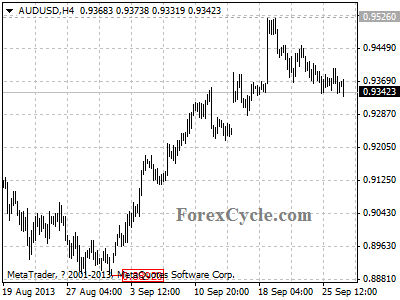
AUDUSD’s fall extends to 0.9332

AUDUSD’s fall from 0.9526 extends to as low as 0.9332. Deeper decline to test 0.9300 support is possible, as long as this level holds, the fall could be treated as consolidation of the uptrend from 0.8892, one more rise towards 1.0000 is still possible after consolidation. On the downside, a breakdown below 0.9300 support will indicate that the uptrend from 0.8892 had completed at 0.9526 already, then the following downward movement could bring price back to re-test 0.8847 (Aug 5 low) support.

audusd

Provided by ForexCycle.com

John McCamant Scans Under the Radar for Promising Biotechs

Source: Peter Byrne of The Life Sciences Report (9/26/13)

http://www.thelifesciencesreport.com/pub/na/john-mccamant-scans-under-the-radar-for-promising-biotechs

With more than 25 years of experience in the biotech market, John McCamant, editor of the Medical Technology Stock Letter, understands how the seasons of the investment cycle can influence a company’s value. But he sticks to the fundamentals: After all, a great pipeline and competent management can propel a biotech upward through blustery weather as well as blue sky. Find out how four companies fit his philosophy in this interview with The Life Sciences Report.

The Life Sciences Report: The medical biotech sector has generally been going great guns in 2013. Is there a seasonal aspect to the overall performance of biotech stocks? Are some seasons preferable to other seasons from an investment point of view?

John McCamant: Historically, January has been a good month, as many small- to mid-cap biotech stocks that were sold for tax losses before year-end can have significant price moves in the New Year. This is commonly referred to as “the January Effect.” The American Society of Clinical Oncology’s annual meeting—the world’s largest cancer meeting, held in May—can also be a strong time of year for biotech stock movement, as more than 50% of drug candidates in development are targeted toward treating cancer or the side effects of cancer treatment.

While there are some seasonal aspects to biotech investing, the primary drivers of good performance remain good news flow and a positive overall market environment for this sector of growth stocks. On the negative side, summer has historically been tough for biotech investors. This past summer is a good example of this trend not holding true. The biotech indices were up nicely, based on a good overall market and a slew of individual companies, like Isis Pharmaceuticals Inc. (ISIS:NASDAQ), delivering value-creating data.

TLSR: What biotech fundamentals do you use to decide whether to invest in a startup?

JM: We generally do not invest in startups, as there are many biotech companies to choose from and we prefer to see how the startups execute as public companies for a few years before we would recommend. Our key focus is on management: No matter how good a company’s drug candidates are, it still requires a tremendous amount of skill and patience to navigate the drug approval process. From there, we evaluate the pipelines and specific drug candidates against others in their competitive therapeutic sectors.

TLSR: How important is finding a partner in the early stages of product development to a biotech? Is stock dilution something to be wary about?

JM: Partnerships can be very important for early-stage biotech companies, as they can provide significant funding and validation. Each partnership needs to be evaluated on its own, given the myriad of variables from partnership to partnership. Some of the variables we examine are stage of development, size of disease opportunity and the expertise of the partner.

All biotech companies lose lots of money before profitability. The business model is to sell stock to fund company development. Thus we, as investors, expect to be diluted over time in biotech companies. The key is whether or not the capital raised creates value for the shareholders. Companies that execute well in clinical trials can usually raise capital after they announce positive clinical trial results. This can also minimize dilution as the higher share price after good data allows for fewer shares to be sold.

TLSR: Let’s talk about Pharmacyclics Inc. (PCYC:NASDAQ). Its stock shot from $15 in early 2012 to about $120 today. What are the market prospects for ibrutinib (a Bruton’s tyrosine kinase inhibitor targeting B-cell malignancies such as chronic lymphocytic leukemia), which is on the brink of FDA approval? Is there risk associated with the meteoric rise of Pharmacyclics shares?

JM: We recommended Pharmacyclics at $17 in January 2012. As the days count down for ibrutinib’s FDA approval, the company has enlisted a truly impressive lineup to launch in the U.S. The company has prepared its sales, marketing and medical affairs departments, led by experienced industry executives from the crème de la crème of biopharmaceutical companies.

For example, the executive vice president of sales and marketing, Paula Boultbee, joined from the company after working at Amgen Inc. (AMGN:NASDAQ), where she was involved in the development of Vectibix (panitumumab)—and, more importantly, led the global launch of Gleevec (imatinib) while atNovartis AG (NVS:NYSE). Vice president of sales Michael Crum arrived in January after 13 years at Genentech (Roche Holding AG (RHHBY:OTCQX)), cross-trained in selling cancer treatments including Rituxan (rituximab), Avastin (bevacizumab) and Herceptin (trastuzumab). A total of 62 sales representatives are ready once the FDA grants a label. Janssen Biotech Inc. (a division of Johnson & Johnson [JNJ:NYSE]) already has an oncology sales organization in place. While Pharmacyclics records all U.S. sales, some investors may forget that the company is working with Janssen—maybe the most powerful global sales force around—domestically as well, while Johnson & Johnson prepares for international launches. In addition, medical affairs with four specific functional teams are also in place—medical sciences, medical communications, medical Information and medical science liaisons.

In a nutshell, Pharmacyclics is ready. We remain confident that FDA approval will happen sooner than expected, and that the rollout of ibrutinib will be bigger than current forecasts. In our view, ibrutinib is the safest and best cancer drug to date, and is poised to blow away analysts’ estimates upon FDA approval.

TLSR: What about vaccines? What new types of platforms and manufacturing techniques are in the pipeline?

JM: Novavax Inc. (NVAX:NASDAQ) is a company that I follow in the vaccine space. While known as a flu vaccine company, in our view, Novavax’s technology represents a platform that will deliver multiple vaccine opportunities, in addition to vaccines for seasonal and pandemic flu.

The company recently presented promising respiratory syncytial virus (RSV) vaccine data at the Interscience Conference on Antimicrobial Agents and Chemotherapy. The phase 1 study of 220 healthy elderly adults was the first presentation of the data at a major scientific symposium. The company’s RSV F vaccine candidate was found to be well tolerated, compatible with co-administration of an influenza vaccine and elicited increases in antibodies with potentially protective effects, according to a company press release. The release also states, “Changes in all measures of RSV antibodies, including microneutralization assays, were positively correlated. The RSV F vaccine did not interfere with responses to the influenza vaccine”—this is critical for ultimate development of a novel combination flu/RSV vaccine that Novavax is likely to undertake.

In another preclinical study, according to that same Sept. 11 press release, “investigators evaluated whether palivizumab-competing antibodies induced by the RSV F vaccine could provide passive protection in a relevant model.” Palivizumab (Synagis/MedImmune LLC; a subsidiary of AstraZeneca) is a monoclonal antibody used to help prevent RSV disease. Novavax is building an excellent database of pre- and human clinical data that, when compared with Synagis’ regulatory success, provides the company with a foundation for registration studies. In our view, Novavax is the clear leader in developing an RSV vaccine, which could easily be a $2 billion-plus ($2B+) market opportunity.

TLSR: Anticoagulants are an important market. Do you have any picks for firms that are well positioned in the clinical trial process?

JM: We like The Medicines Company (MDCO:NASDAQ), which is focused on acute care medicine in the hospital setting. The company markets three proprietary drugs, has four late-stage compounds expected to be commercialized by 2015 and is developing an exciting early-stage R&D pipeline.

The Medicines Company is led by an experienced management team that is second to none, in our view. The team has succeeded in diversifying the company’s product line with strategic vision and a deep understanding of its customer base. As a result, the company’s future is less dependent on its anticoagulant drug Angiomax (bivalirudin), its lead product, which is expected to eventually face generic competition.

The Medicines Company has created a dominant franchise in the multibillion dollar acute cardiovascular care space. Furthermore, its novel pipeline includes both complementary and next-generation products that are easily leveraged across the company’s sales force. In addition to the cardiac suite, The Medicines Company is synergistically diversifying into surgical and perioperative medicine, and hospital-based infectious disease. The result is a core, focused and stable current revenue and earnings stream that should lead to accelerating growth rates derived from a variety of drivers. That transformation is occurring now and, we believe, will result in sustainable long-term sales and earnings power and, hence, multiple expansion.

As impressive as the near-term product opportunities are, in our view, it is the early-stage compounds that may propel The Medicines Company to become a global leader in the $40B global cholesterol market. One of the greatest strengths of CEO Clive Meanwell and the Medicines Company team is their ability to identify external product candidates at various stages of development and successfully drive them through the clinical trial process and on to the market. The team’s ability to resurrect once-promising compounds and create significant value is evidenced by upcoming new product approvals. Meanwell’s clinical and regulatory (and marketing) experience with Angiomax is an excellent example; he has laid the groundwork for the company’s continued success in making acquisitions and applying company expertise with that product.

TLSR: What is your take on a firm like Coronado Biosciences (CNDO:OTCBB), which has a product nearing late-stage clinical trials in several areas: multiple sclerosis, diabetes, arthritis, psoriasis. Is there an advantage or disadvantage to having so many irons in the fire at once?

JM: You are right; Coronado has several small, investigator-sponsored trials underway or about to start with TSO (Trichuris suis ova; CNDO-201) for the treatment of several major autoimmune conditions (irritable bowel syndrome, multiple sclerosis, psoriasis, autism, type 2 diabetes).

However, investors are clearly focused on the phase 2 trial called TRUST-I, which is a binary event and very important. The stock will likely reflect the success or failure of TSO in general based on this data event. TRUST-I is the largest well-designed clinical trial with Coronado’s lead compound to date.

Top-line results from the TRUST-I trial of TSO in patients with Crohn’s disease will be released in Q4/13. Based upon the timing of the completion of enrollment announced by the company (July 1), by our calculation, the last patient off-drug will occur by approximately Oct. 1 (a 12-week treatment period). With data collection and analysis, we believe results will be made public by mid-November, approximately.

The TRUST-I readout will likely be interpreted by the stock market as a classic biotech binary event—good or bad, win or lose, black or white. In many instances, in addition to being phase 2 “proof-of-concept data,” there is often a “gray” area with mixed results. But, for the most part, we assume the market will ascribe a “yay” or “nay” to the results, and, depending on the outcome, take Coronado shares to either extreme.

We like the risk/reward for Coronado as we approach the readout of TRUST-I. That being said, we have also advised subscribers to the Medical Stock Technology newsletter to expect a significant price move and to look at using risk-mitigation strategies.

TLSR: John, thanks for your time.

JM: You are welcome.

John McCamant is the editor of the Medical Technology Stock Letter, a leading investment newsletter. McCamant has spent 25 years on the frontlines of biotechnology investing. He has established an extensive network that includes contacts throughout the investment banking and venture capital communities. His expertise in biotechnology investments is a subject of media interest. He is frequently consulted and quoted by The Washington Post, Reuters, Bloomberg, CBS and Marketwatch. His website is bioinvest.com.

Want to read more Life Sciences Report interviews like this? Sign up for our free e-newsletter, and you’ll learn when new articles have been published. To see a list of recent interviews with industry analysts and commentators, visit our Streetwise Interviews page.

DISCLOSURE:

1) Peter Byrne conducted this interview for The Life Sciences Report and provides services to The Life Sciences Report as an independent contractor. He or his family own shares of the following companies mentioned in this interview: none.

2) The following companies mentioned in the interview are sponsors of Streetwise Reports: None. Streetwise Reports does not accept stock in exchange for its services.

3) John McCamant: I own, or my family owns, shares of the following companies mentioned in this interview: Coronado Biosciences and Novavax Inc. I personally am, or my family is, paid by the following companies mentioned in this interview: None. My company has a financial relationship with the following companies mentioned in this interview: None. I was not paid by Streetwise Reports for participating in this interview. Comments and opinions expressed are my own comments and opinions. I had the opportunity to review the interview for accuracy as of the date of the interview and am responsible for the content of the interview.

4) Interviews are edited for clarity. Streetwise Reports does not make editorial comments or change experts’ statements without their consent.

5) The interview does not constitute investment advice. Each reader is encouraged to consult with his or her individual financial professional and any action a reader takes as a result of information presented here is his or her own responsibility. By opening this page, each reader accepts and agrees to Streetwise Reports’ terms of use and full legal disclosure.

6) From time to time, Streetwise Reports LLC and its directors, officers, employees or members of their families, as well as persons interviewed for articles and interviews on the site, may have a long or short position in securities mentioned and may make purchases and/or sales of those securities in the open market or otherwise.

Streetwise – The Life Sciences Report is Copyright © 2013 by Streetwise Reports LLC. All rights are reserved. Streetwise Reports LLC hereby grants an unrestricted license to use or disseminate this copyrighted material (i) only in whole (and always including this disclaimer), but (ii) never in part..

Streetwise Reports LLC does not guarantee the accuracy or thoroughness of the information reported.

Streetwise Reports LLC receives a fee from companies that are listed on the home page in the In This Issue section. Their sponsor pages may be considered advertising for the purposes of 18 U.S.C. 1734.

Participating companies provide the logos used in The Life Sciences Report. These logos are trademarks and are the property of the individual companies.

101 Second St., Suite 110

Petaluma, CA 94952

Tel.: (707) 981-8204

Fax: (707) 981-8998

Email: [email protected]


Does Tesla’s Engine Still Going?

Article by Investazor.com

In May, this year, Tesla Motors got a boost of power and the price of its stocks started to rise at an alert pace. In less than 5 months the stocks gained 230%. Today it has reached another high at 189.69, getting one step closer to reaching 200$ per share.

The engine that pushed the price that far from the April levels gives now some bad signals. The trend continued to rise fast, but the volumes started to drop. Dropping volumes on a move usually means that the move might turn around in the near future. Another signal would be the negative divergence that appeared on the 28 days RSI.

is-tesla-motors-still-going-resize-26.09.2013

Chart: TSLA, Daily

We are expecting the price to keep on rising, targeting 200$ per share or even slightly above. This growth could be followed by a drop back to 160$ per share, an ex-resistance.  The fall could occur right before or during the earning reports period.

Tesla Motors is expected to report an estimated earnings of 0.12$ per share. If it will surprise the markets like it did in the second quarter, than our setup could be invalidated and the price might break 200 level. On the other hand not meeting these expectations we might see a steeper drop.

The post Does Tesla’s Engine Still Going? appeared first on investazor.com.

Three Aspects You Should Know about the Euro Zone

Article by Investazor.com

First of all, Greece is now feeling the peace before the storm as in November is going to be decided if it needs an additional bailout from the European countries. Since this would be the third substantial loan that it needs, the minister of finance Evangelos Venizelos is trying to persuade the International Monetary Fund and the European Union that Greece may not need another bailout because is capable to sustain its expenditure. The healthiest support would be the reintegration in the bond market by next year as it is so vital to the ongoing operation of the public and private sector. The European countries do not need to be burdened anymore since they have already bore costs of about 240 billion euros with Greece.

Secondly, it is worth to pay attention to another worrying aspect of the European zone which is Cyprus. The country is currently bearing the effects of the austerity measures which strongly affects the unemployment rate that increases with 40%. Since the dramatic episode of March when Cypriots’ bank accounts were required to contribute to help fund a restructuring of the financial sector, austerity measures have been implemented and the effects have appeared immediately. The forecast for 2014 is dark, assuming a 13% shrinking of the economy.

Thirdlt, the European banking system is currently redesigning. Thus, the European Banking Authority (EBA) decided:

– To modify the shortage for the top 42 banks in the European Union (following to be applied for all bank in the E.U.) and cut it by 29.1 billion euros, compared with six months ago.

– The core capital buffer that banks must hold increased, consisting of at least 7 percent of their assets on a risk-weighted basis.

– Separate reserves of cash and government debt by 2019.

– A leverage ratio set at 3 percent from 2018 (banks are required to hold capital of at least 3% of their total non risk-weighted assets).

These regulations are part of the new global Basel III.

The post Three Aspects You Should Know about the Euro Zone appeared first on investazor.com.

For Oil and Gas Producers, It’s All About Assets

Source: Tom Armistead of The Energy Report (9/26/13)

http://www.theenergyreport.com/pub/na/for-oil-and-gas-producers-its-all-about-assets-gpor-gst-syrg

The industry is focusing on liquid-rich plays, but some gassier regions offer solid returns, asserts Joel Musante, senior research analyst for oil and gas exploration and production with Euro Pacific Capital. With oil trading over $100 per barrel, liquids-rich plays are most attractive. Prices may pull back, even though the surge in merger and acquisition activity suggests that some companies might believe that these price levels are here to stay. Ultimately, producers must consider development costs as well as product types and margins to enhance returns. In this interview with The Energy Report, Musante discusses oil and gas companies with the right combinations.

The Energy Report: Joel, how do you identify winners in the crowd of junior oil and gas companies?

Joel Musante: I look for companies with an attractive property base, good dealmakers and resilient leadership. It’s important to have a good land position where a company could drill commercially economic wells. Many smaller E&Ps have limited financial resources, so it is also important not to overpay for properties. A poorly structured, overleveraged balance sheet could be the death knell for a junior oil and gas company. Good dealmakers usually find creative ways to buy quality properties at attractive terms. I think it is also important to have a resilient management team that can stick it out through the rough patches, which seem to be inevitable in the oil and gas industry.

TER: In the past you’ve identified keys to an oil and gas company’s success, such as valuable properties, access to funding and strategic leadership. How do those criteria rank in importance to you?

JM: It is hard to rank which criteria will be most important for a company’s success, because it depends on external factors as well. Properties are very important, but I’ve seen strong management teams do pretty well with a mediocre property base and unfocused management teams fail with good properties. Access to funding is critical in many cases to growing production and reserves, but companies generally build their investor base up over time.

TER: Are there any innovations in technologies that you find especially interesting?

JM: The improvements in horizontal drilling and hydraulic fracking is the most recent innovation that has changed the landscape of the oil and gas industry, making it possible to develop oil and gas deposits in shales and other tight formations. But this is old news at this point. Currently, most oil and gas companies utilizing this technology are trying to improve these operations in their specific development areas by finding the optimal frack design. The ultimate goal is usually to optimize returns by improving recoveries, increasing production rates and lowering costs. Some investors may find a discussion boring about the optimal number of frack stages or whether to use ceramic or sand-based proppant, but that’s where we are at now.

TER: Is there a sweet spot for the oil and gas mix in the companies’ proved reserves?

JM: When you’re talking about reserves, liquids are generally better than gas because the margins are better. However, when deciding on the best place to drill a new well, you also have to take into account the investment cost. In this case, it seems like the wet gas plays or volatile condensate/oil plays earn the highest returns. These parts of the reservoir typically have a lot of energy, resulting in higher production rates and better recoveries. This will drive the economics of the well even though the product mix may include more NGLs and natural gas, which realize lower prices than oil. By drilling in the oil window, the price realizations may be higher, but production rates and recoveries are often less. In the natural gas window, production rates and recoveries could be high, but price realizations are low.

TER: West Texas Intermediate (WTI) has ranged from $100 per barrel ($100/bbl) to $110/bbl since early July, while natural gas has remained stuck below $4 per million British thermal units ($4/MMBtu). Is this the new normal for oil and gas?

JM: I model for $90–100/bbl oil prices and $3–4/MMBtu gas prices on a going-forward basis. Obviously, the prices could go above that, but I think we lack the demand to keep prices much higher than that. If prices go below that, I don’t see them staying there for very long because development would likely fall off at lower prices.

TER: What struck me about the oil price was that it was very clearly confined within the range of $100–110/bbl since July, after lingering below $100/bbl for months before that. I’m wondering whether it’s going to stay that high, or is there something that’s going to pull it back down?

JM: There could have been a number of factors that contributed to the surge in prices. Some pipelines came online and alleviated the supply bottleneck in the mid-continent region of the country. This narrowed the gap between West Texas Intermediate and Brent prices, which had been trading at above $100/bbl for some time. The WTI price benefited from the new pipelines, increasing to above $100. The push for U.S. involvement in the civil war in Syria was also a contributing factor. Oil tends to be viewed, I think, as a hedge against the inflating dollar and concerns about the Federal Reserve’s quantitative easing policy.

TER: How are these prices affecting the earnings of the companies you cover? Are oil-rich companies doing better than companies with more gas reserves?

JM: I would say that in general, oil-rich companies are doing better. Many gas companies have already moved to a liquid development strategy by acquiring and developing properties in liquid-rich plays. But there are still some attractive places to drill for natural gas, where a company can earn high returns. It will usually take very low well costs and/or very high production rates and recoveries.

TER: What is Euro Pacific Capital forecasting for prices in the fourth quarter?

JM: I’m generally using about $3.50/MMBtu for natural gas and for oil my price deck going forward is $90/bbl. I think these levels are sustainable.

TER: The dollar’s strength has been buffeted by news from the Fed, including Larry Summers’s withdrawal and the decision to continue quantitative easing. How is the dollar’s strength influencing oil and gas prices?

JM: Oil trades inversely to the strength of the dollar. Generally, if the dollar weakens then oil prices increase and vice versa. One trend we have seen recently was an increase in M&A activity in the oilier plays like the Bakken and Eagle Ford. While not necessarily related to a weaker dollar, I think it does suggest that oil and gas producers have taken a more bullish stance on commodity prices.

TER: Has Gulfport Energy Corp. (GPOR:NASDAQ) continued its strong showing in the Utica?

JM: Yes, it continues to drill very solid wells that are consistent with what we expect from the play.

TER: Your research has indicated that pipeline infrastructure is inadequate for some of the plays where Synergy Resources Corp. (SYRG:NYSE.MKT) and Gulfport Energy are working. Is this a serious crimp in their future or just a temporary setback?

JM: No, I don’t think it is a serious crimp. I believe it is more a result of the quality of the oil and gas plays, at least in the case of Gulfport and Synergy. Gulfport and other companies see great potential in the Utica play in Eastern Ohio, given the early well performance in the play. As a result, these companies have implemented aggressive development plans in the regions, even though Ohio historically has not been a major oil and gas producer and lacks pipeline and processing infrastructure. Infrastructure in the Wattenberg Field in Colorado was insufficient to handle the acceleration in development that was caused by the success of horizontal drilling and hydraulic fracking. Synergy and other companies operating in the Wattenberg Field may experience some temporary setbacks, but horizontal development of the play has enhanced their portfolios considerably.

TER: There’s some softness now in NGL prices because so much NGL has been produced. How is that affecting your companies?

JM: Many companies are drilling in NGL-rich areas, so that heightened production resulted in a price correction. Companies can still drill economic wells, but the price that they get for the NGLs is just not as high, so you have to take that into account. As it turns out, in many cases, even though it might lower your returns, the returns are typically still attractive enough to justify the drilling of the well.

TER: You have buy recommendations for Gulfport Energy, Synergy Resources and Gastar Exploration Ltd.(GST:NYSE). Can you talk a little bit about each of them and what is causing you to issue a buy?

JM: Gulfport has 136,000 acres in a lease hold in what is probably the sweet spot of the Utica play, which means the company should enjoy years and years of drilling opportunities in one of the more economic places to drill in North America. Its acreage is very concentrated, with an average working interest of about 95%. The company will be a likely takeover target, once development is further along.

Synergy is more or less a pure-play Wattenberg name. The Wattenberg is one of the premier oil and gas plays. Some leading operators have estimated that 36 wells could be drilled on a spacing unit, which is quite a large number. I don’t know of any other play where someone has made such a claim. A deep inventory of high-return well prospects is driving the underlying value of the stock. For a small company, Synergy has a strong management team. They’re not promotional and they make good decisions.

Gastar Exploration Ltd.’s acreage position in the Marcellus is very economic even though the product mix is gassy. Additionally, the company built a significant leasehold position in a new play in Oklahoma called the Hunton Limestone oil play. It is still early days, but the Hunton play could be a game changer for Gastar. Management has pulled off some pretty impressive acquisitions.

TER: Can you offer us any parting thoughts on the energy markets and how to play them in the current circumstances?

JM: The summer driving season is behind us and we’re going into a lower-demand season for oil. Additionally, the geopolitical issues in Syria have quieted down, so I’d be a little cautious about a price correction for oil. We may see a pullback there.

TER: All right, Joel, thank you very much for your time.

Joel Musante is a Senior Research Analyst covering the oil and gas exploration and production sector with Euro Pacific Capital. Musante has nearly 15 years of research experience through research analyst positions with W.R. Huff Asset Management; Dresdner Kleinwort Wasserstein; Ferris, Baker Watts, Inc., and C.K. Cooper & Co. In 2011 he was ranked No. 1 in The Wall Street Journal “Best on the Street” analyst stock-picking survey for the oil and gas sector. Musante holds a Master of Business Administration degree from the University of Rochester Simon School of Business and a Bachelor of Science degree in geology and geophysics from the University of Connecticut.

Want to read more Energy Report interviews like this? Sign up for our free e-newsletter, and you’ll learn when new articles have been published. To see a list of recent interviews with industry analysts and commentators, visit our Interviews page.

DISCLOSURE:

1) Tom Armistead conducted this interview for The Energy Report and provides services to The Energy Report as an independent contractor. He or his family owns shares of the following companies mentioned in this interview: None.

2) The following companies mentioned in the interview are sponsors of The Energy Report: None. Streetwise Reports does not accept stock in exchange for its services or as sponsorship payment.

3) Joel Musante: I or my family own shares of the following companies mentioned in this interview: None. I personally am or my family is paid by the following companies mentioned in this interview: None. My company has a financial relationship with the following companies mentioned in this interview: Euro Pacific Capital has performed investment banking services for Gulfport and Synergy within the past 12 months, and expects to receive or intends to seek compensation for investment banking services from Gulfport, Synergy and Gastar Exploration within the next three months. Euro Pacific makes a market in Gulfport Energy and Synergy Resources. I was not paid by Streetwise Reports for participating in this interview. Comments and opinions expressed are my own comments and opinions. I had the opportunity to review the interview for accuracy as of the date of the interview and am responsible for the content of the interview.

4) Interviews are edited for clarity. Streetwise Reports does not make editorial comments or change experts’ statements without their consent.

5) The interview does not constitute investment advice. Each reader is encouraged to consult with his or her individual financial professional and any action a reader takes as a result of information presented here is his or her own responsibility. By opening this page, each reader accepts and agrees to Streetwise Reports’ terms of use and full legal disclaimer.

6) From time to time, Streetwise Reports LLC and its directors, officers, employees or members of their families, as well as persons interviewed for articles and interviews on the site, may have a long or short position in securities mentioned and may make purchases and/or sales of those securities in the open market or otherwise.

Streetwise – The Energy Report is Copyright © 2013 by Streetwise Reports LLC. All rights are reserved. Streetwise Reports LLC hereby grants an unrestricted license to use or disseminate this copyrighted material (i) only in whole (and always including this disclaimer), but (ii) never in part.

Streetwise Reports LLC does not guarantee the accuracy or thoroughness of the information reported.

Streetwise Reports LLC receives a fee from companies that are listed on the home page in the In This Issue section. Their sponsor pages may be considered advertising for the purposes of 18 U.S.C. 1734.

Participating companies provide the logos used in The Energy Report. These logos are trademarks and are the property of the individual companies.

101 Second St., Suite 110

Petaluma, CA 94952

Tel.: (707) 981-8204

Fax: (707) 981-8998

Email: [email protected]


Console Makers Respond to the Rise of Mobile

By WallStreetDaily.com

The launch of the fifth installment to the Grand Theft Auto videogame series was met with an insane level of demand.

Sales reached $1 billion in just three days. And according to Cowen & Company analyst, Doug Creutz, sales have likely reached 15 million units worldwide in just a week.

Creutz also believes that the game could go on to sell upwards of 25 million units by the end of the year.

The record numbers indicate that demand for console games is still running strong.

However, as more consumers scoop up mobile devices, it’s creating severe competition in the sector.

You see, over the past five years, the percentage of U.S. households using wireless devices for gaming jumped almost 40 percentage points – far outpacing console games.

Indeed, as throngs of people lined up outside videogame retailers last week, Apple (AAPL) stores also saw record-long lines waiting for the launch of the iPhone 5s and 5c.

What’s more, mobile gaming developer GungHo’s market cap blew past Nintendo’s earlier this year. And its mega-hit, Puzzles and Dragons, boasts almost 20 million downloads in Japan.

Needless to say, this underscores the increased competition mobile devices pose for traditional consoles.

So how are console makers responding to the challenge? Well, according to Sony’s (SNE) Japan Marketing Manager, Mayako Fukunaga, it’s important to adapt to the new market climate and give consumers what they want.

“There are a lot of devices out there. Some people want to use the PlayStation, or maybe also their smartphone for games,” says Fukunaga. “If you can’t meet the customers’ needs, you are limiting their choices. We want to support people who are serious about enjoying their games or any kind of visual content, no matter where they are.”

Both Sony and Microsoft (MSFT) are also meeting the demand head on.

Microsoft has come up with the Xbox SmartGlass ­– an app that allows gamers to connect their Xboxes to smartphones and PCs to blur the lines between consoles and mobile gaming. And Sony is supporting the development of indie mobile games like Octodad, designed by a group of students at a university in Chicago.


The post Console Makers Respond to the Rise of Mobile appeared first on Wall Street Daily.

Article By WallStreetDaily.com

Original Article: Console Makers Respond to the Rise of Mobile